Showing posts with label Anup Singh. Show all posts
Showing posts with label Anup Singh. Show all posts
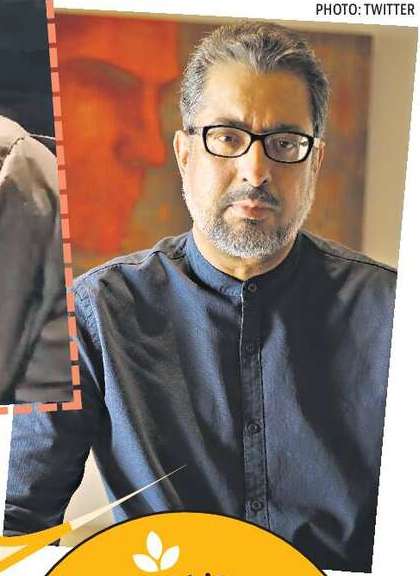
It was Irrfan Khan's deepest desire that The Song Of Scorpions be released in India-Anup Singh
8:18 AM
Rishabh Suri (HINDUSTAN TIMES; April 22, 2023)
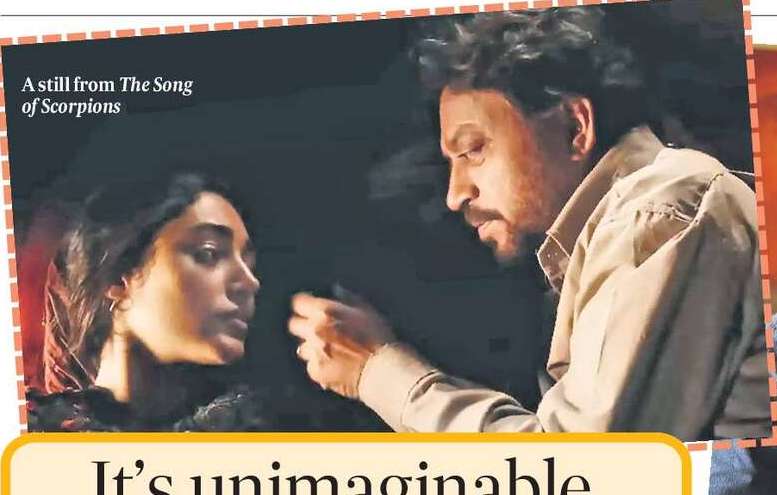
One of Irrfan Khan’s last films, The Song Of Scorpions, is set to finally release in India. It’s been a very long wait, and the leading man isn’t around to watch it. However, director Anup Singh is happy that the late actor’s film has found its way home.
“This is unimaginable; Irrfan is not with us. I am sure that he, in spirit, would be very happy to see the film getting the kind of release in India, that it is,” says Singh.
Also starring yesteryear actor Waheeda Rahman, the movie was completed in 2017 and did the rounds of film festivals for a year. It was released in Europe in 2019, and plans for an Indian release had to be stalled after the pandemic hit.
Singh adds, “It affected many films. Obviously, ours is not a masala movie. Theatres were closed for quite a while, and people were not going to the cinemas. At this moment, it seems that more and more people are ready to go to the cinema to see films. I am very grateful to my distributors in India. They have worked very hard; they stayed with the film for three years.”
Talking about Irrfan’s reaction to the movie not releasing in India back then, the filmmaker shares, “Irrfan had seen the film being released in Europe, and we got really good feedback. That made him very happy. It was his deepest desire that the film be released in India, especially when he started becoming sick. He wanted it to be released [soon]. I think he was quite sad that it wasn’t released at that time. But he understood that Covid had made it impossible.”
Having a female protagonist is no longer just an act of tokenism-Rasika Dugal
8:15 AM
Renuka Vyavahare (BOMBAY TIMES; March 7, 2022)
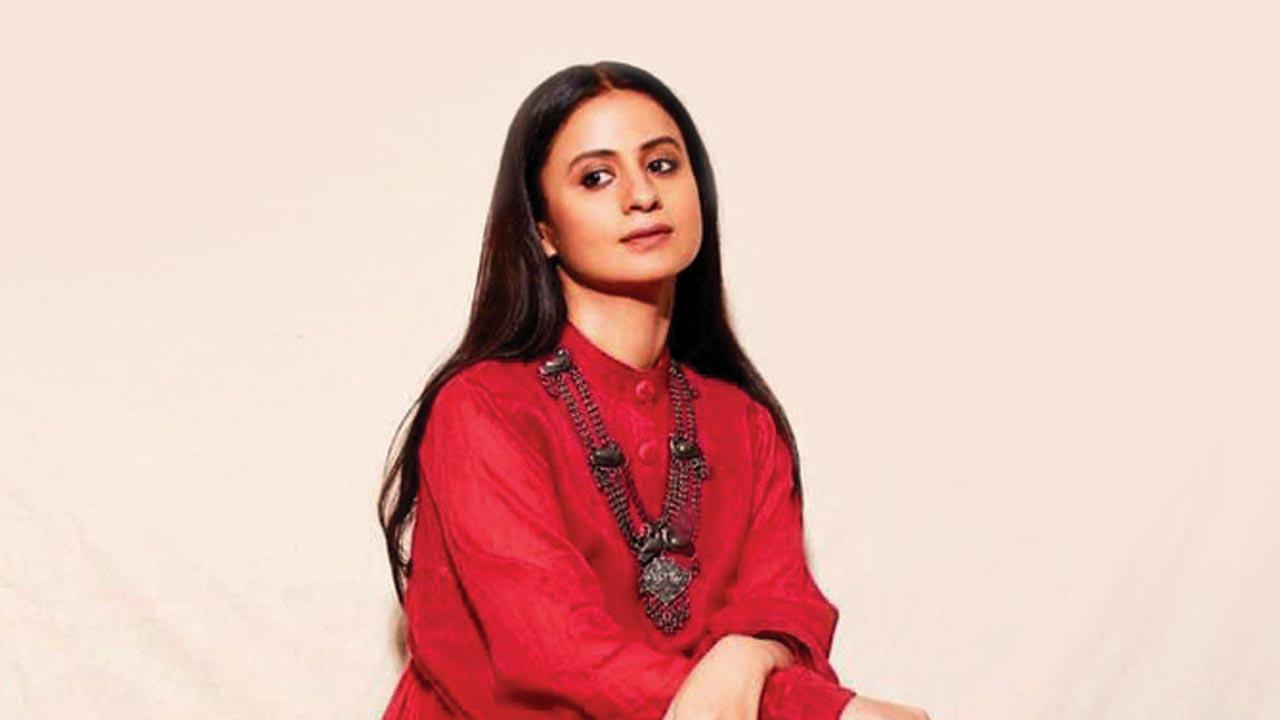
The portrayal of women in cinema and on web shows has undergone a sea change, but is that enough? Rasika Dugal, who has been a part of films Qissa, Hamid and Manto along with many web series, says, “Storytelling is transforming every day, and it’s heartening to see that not only are there more important parts for women, but they are also more nuanced. Scripts are exploring and celebrating femininity. Having a female protagonist helming a show or film is no longer just an act of tokenism. However, we still have a long way to go in the way we portray female desire. Sometimes, even the most well-written scripts end up with sexualised visuals. Possibly because of deeply-ingrained references. I feel, we find it hard to break away from those.”
The actress also makes a point about feminism. She says, “Feminism isn’t limited to a particular gender and, unfortunately, neither is patriarchy. Women can be patriarchal and men can be feminists. I have been very inspired by some of the people I have worked with — Anup Singh, Mira Nair, Richie Mehta and Nandita Das — for what they bring to their work and for the people they are. I am also hugely inspired by the women I grew up with — my grandmother, mother and aunts. They’re women who made very traditional choices, but lived with the consequences of their decisions with grace and dignity. Growing up, I don’t think I valued that enough. However, later I realised the strength and resilience it took to always be there for the people around you, and in a way, that did not compromise your self-respect even though sometimes that had to be negotiated. I will always have respect for that.”
My memories were joyful, and Irrfan and I had so much fun together as well. I rewrote much of what I had written-Anup Singh
8:17 AM
![Singh remembers in his book how memories of Irrfan kept cropping up after he passed on. He writes, “And I want this torrent of memories to stop. Yet I am relieved when they don’t. The horror in his eyes during the shoot of Qissa: The Tale of a Lonely Ghost [2014], our first film together, when I spring a scene on him in which he has to dance. During the shoot of The Song of Scorpions [2017], our second film together, he holds up a scorpion by its tail and caresses its head. At the film’s premiere at Locarno, hesitant but, finally, with a cigarette in his mouth, he joins me and Golshifteh Farahani, the Iranian actor and the female protagonist of the film, in the blue, storm-rippled Lake Como”](https://images.mid-day.com/images/images/2022/feb/irrfan-galery-a_e.jpg)
In a new book, director Anup Singh brings the late actor to life, with vignettes of how the gifted star brought to screen his unique presence
Aastha Atray Banan (MID-DAY; February 13, 2022)
“The strange thing is that I never really thought I would be writing a book about Irrfan,” director Anup Singh tells us during a telephonic interview. “But when someone close to you passes away, you are haunted by the memories, and painful ones at that.”
Singh is speaking of actor Irrfan Khan, who passed away in April 2020, after having struggled with a neuroendocrine tumour for three years. Cherished in India and internationally for his calm yet powerful performances in The Namesake, Piku, Paan Singh Tomar and The Lunchbox, he was an actor for all generations. When he died, many including his fans felt a personal loss.
Singh, who first met the actor in the ’90s, and has worked with him in Qissa (2013) and Songs Of Scorpions (2017), found a friend in Khan. “It’s his curiosity that led him along, as a man and actor,” says Singh, who is the author of Irrfan, Dialogues With The Wind (Copper Coin), a book he says he wrote to honour his friend, and remember him some more.
Excerpts from the interview.
How did the book become an idea you didn’t give up on?
Irrfan had passed away, and the days kept passing, with a storm of memories. This was painful. I wanted to not remember, and silence it all. Let’s say, I was going for a walk, and there was a cloud in the sky, and its tail was moving away from it. I would feel that if Irrfan saw this, he would embody it in his body. If I went for a drive, and there was a gentle curve in the road, I would feel that Irrfan would appreciate it. We were going to work on a movie that was about dance, and I used to feel that may be Irrfan would use this curve in his body when we spoke about dance. I was unable to get over and past him.
That’s a lovely way to direct someone.
It was in the 1990s, when I first met him, and we were doing something for television. I was in front of the front of the camera, working out a movement I wanted him to do. And I was humming. Then suddenly, I heard someone singing. It was Irrfan, watching me. When he did the shot, he was still singing the melody. He then told me, “Anup saab, now every time we work together, you have to give me a melody.” That was how we connected for the first time as actor-director.
This was a running thread, and I realised that I couldn’t run away from my memories. He was appearing [before me] all the time, there was no escape. Perhaps, there was a reason for this. Maybe he was saying that I had left something incomplete. So first, I wrote down the dance movie we were supposed to work on. As I did that, there was a calm that came over me. While I was writing the script, I kept a notebook, and whenever a memory came to me, I jotted it. I also used to sometimes share this on social media. On reading this, one of my friends called me and said, “My suggestion to you is, write more, remember more.”
As an actor, and man, he found a place in both the discerning or the aloof movie watcher’s heart. How did that happen, you think?
He had an immense curiosity about everything. For example, if he saw a pebble, he would study it for hours, and hypothesize as to what gave the pebble its colour, where had it travelled to take on the shape it had now, and how many other hands had held it. What went with that was also an insecurity—his acting was full of pauses and hesitation, and that is something we all related to without understanding it, really. All this translated on to screen, and he became a part of us.
How would you like the book to be received?
When I read it the first time, I realised it was full of grief. And that was not right. My memories were joyful, and we had so much fun together as well. I rewrote much of what I had written, and tried to bring to life the lilt that Irrfan carried within him. I got into rhythm. I hope that when the reader finishes the book, if only for a few days, he is able to live with Irrfan’s lilt.
While writing the script, Irrfan Khan’s eyes were always on my mind-Mostofa Sarwar Farooki
8:13 AM

Bangladeshi director Mostofa Sarwar Farooki shares his experience of working with the late actor for his 2017 film
Chandrima Pal (BOMBAY TIMES; February 21, 2021)
Mostofa Sarwar Farooki’s Doob — No Bed of Roses, an Indo-Bangladesh venture, is being touted as an undiscovered gem from Irrfan’s repertoire. Released in 2017, the film, co-produced by the late actor, eventually won several awards and popular love, but not before the filmmaker went through his share of trolling and bullying for the references to a controversial and charismatic public figure in his country. The headlining political context of the time is irrelevant to fans and followers of Irrfan, who recently got to experience yet another elegant and nuanced performance from the actor as a man caught in a complex separation drama. In a chat, the director spoke about Irrfan’s preparation for the role, the language of silences and his eloquent eyes. Excerpts:
How did Irrfan become a part of Doob?
While writing the script, Irrfan’s eyes were always on my mind. But I had two problems here – the language barrier, as he was not a Bengali speaker. And I didn’t know how to get him on board. I came to know he was shooting a film with a friend and brother, Anup Singh. I reached out to him and waited a couple of weeks for an answer.
There was no response from him and I started reaching out to other Bengali speaking actors. I had almost finalised someone else when Anup da replied and connected me with Irrfan bhai. I sent him a link to my films Ant Story (Piprabidya) and Television. Irrfan liked Ant Story very much, and was on board to help our project.
Irrfan was already familiar with Bengali and the cultural ethos, and had immortalised the role of Ashoke Ganguly in Mira Nair’s adaptation of The Namesake. However, in your interviews you mentioned how he took lessons in the spoken language again. Could you take us through the process that he went through to slip under the skin of the character?
Yeah, he did Mira Nair’s masterpiece The Namesake and his wife is also a Bengali with her roots in Dhaka. But the amount of Bengali dialogues in Doob was enormous and we were aware of the challenge. So we started conducting some sessions over video calls with him. We also sent out audio recordings for him to study. I am grateful to him for taking up such an incredible challenge to speak a language he doesn’t speak. I was aware of the amount of risk involved, but I needed to get those eyes to speak to the audience too. He was one of the rare actors who could evoke the most complex emotions with just a simple gaze. I believe this is clearly visible in our film.
Doob, at the time of its theatrical release, stoked controversy in the Bengali speaking community globally about the references to iconic author Humayun Ahmed’s life, especially in Bangladesh. Now there is a wider audience viewing the film with an entirely different perspective. Your views?
Love and hate are just natural by-products of what we do as an artist. But I have grown old enough to remain unmoved by external praise or criticism. I don’t let it impact the way I want to make my next film. When I made my first film Bachelor, which was a romcom, it kind of shook the nation. The OTT release of Doob has given the audience the opportunity to look at the film with a calm and cool mind. Sometimes we need some time to cool off and look at something from a fresh perspective.
You faced your share of trolling on social media, too...
I have learnt a very relevant lesson during the controversy surrounding Doob. Films can be read differently now, thanks to social media. They can be read together with what you had posted on your social handles three years ago on a completely different topic. If it had gone against someone’s political or any other views, he would have waited with a dagger in the dark to crucify me once my film released. Not just people’s personal taste in cinema, these external factors are also coming into play. I wish I knew earlier that it’s a bad idea to share your opinion on social media.

For once, his timing was wrong-Anup Singh remembers Irrfan Khan
8:10 AM

Director Anup Singh remembers the much-beloved star who died on Wednesday
MUMBAI MIRROR (April 30, 2020)
 Irrfan and I — we could chat non-stop or sit in silence for hours. While shooting, we communicated wordlessly, often through a simple glance, a shake of the head, a small gesture of the hand or we would play some music for each other to try and get a sense of what we needed in a scene. Let me try and share with you as to how we came to this kind of intimate communication and what that really tells us about this very special human being - Irrfan Khan.
When we were shooting Qissa in Punjab and then The Song Of Scorpions in the immense Thar desert of Rajasthan, Irrfan would often disappear during breaks, between shots or at lunch. When we were ready to shoot, everyone on the film set knew where to find him. We just had to look up at the sky. And wherever there was a kite dancing, we knew that’s where Irrfan was. He was obsessed with kite flying. When he arrived to shoot The Song Of Scorpions, he carried about twenty kites of all colours with him. “What’s with you and kites?” I asked him once.
“You can control it, with skill you can control it quite a bit and let it play and dance with all kinds of wind. But there’s always some gust of wind that will send it crashing to the earth. How you get it to rise again takes more than skill. Flying a kite teaches me that every little shift in the wind is important. Isn’t that what acting is, really?”
Early, during the shooting of Qissa, I chanced upon him humming and singing softly. It was a strange song, because he was improvising the rhythms and the tune with the film’s dialogue. I sat there listening to him and understood slowly what he was doing. By humming, singing the dialogue, he was finding its tone, its inflection, its melody. That which plays under the drama, that which is the real story of a character—his or her inner spirit, often hidden even from the person articulating the dialogue. But, always there, just under the surface, relating us to the deepest recesses of what it means to be a human being.
And, of course, that’s what made so many filmmakers all over the world want to work with him. It was a joy to work with him. There was no mask that he hid behind. He refused to fake his feelings or his thoughts. Those who have worked with him know that once you won his trust, he would be there for you—open, with child-like curiosity and an intense desire to travel into the creative unknown with you.
While shooting Qissa, I once walked off the set because of a problem with one of the producers. Later that night, Irrfan came into my room with his music system. He set it up himself and then played the music of Nusrat Fateh Ali Khan for me for hours. It was only early in the morning that he left when he finally saw me smiling.
He was just as giving with his co-actors. With Tillotama Shome, for instance, during the same shoot, he would never give her advice but if he saw that she was nervous, he would point to a bird or crack a small joke.
Those of us who knew him, watched him on the screen, were bequeathed a legacy whether we realise it or not. What we do with that legacy will define us.
An artist of his passion leaves behind something ineffable and yet more powerful than a thousand suns. He leaves behind the truth of feelings. Love, anger, joy, compassion. He has left us intimations of depths of feeling.
This was his covenant with us, and the sum of all his performances gives us the measure of our humanity. We’re pledged to honour it.
—The writer is a Geneva-based filmmaker who directed Irrfan Khan in films such as Qissa and The Song Of Scorpions
Pata nahi Irrfan Khan ko yeh saala cancer kaise ho gaya, says Tigmanshu Dhulia in Aseem Chhabra's book
8:59 AM

Aseem Chhabra on Irrfan Khan’s bout with illness and what makes the veteran actor stand apart from the rest of his peers
MUMBAI MIRROR (January 5, 2020)
It is hard to say when Irrfan Khan fell ill. Filmmaker Tigmanshu Dhulia told me he had suddenly begun to lose weight and that had caused concern. “He loves to eat a lot, but he’s so careful with his weight and what he actually eats,” Tishu said a few months after Irrfan had made the devastating announcement. “Especially now that he has become a star, he watches what he eats. He was growing his own organic vegetables. Pata nahi usko yeh saala cancer kaise ho gaya (I don’t how he got this damn cancer).”
Varun Gautam, Irrfan’s friend from his Jaipur days, told me that in the last few years the actor had gotten very busy with his work and it was hard to connect and spend time with him. “My Irrfan was lost in a jungle for the past couple of years,” he says, with tears welling up in his eyes. “Mera Irrfan badal gaya tha. (My Irrfan had changed.) He was not the Irrfan I knew. Irrfan’s real happiness is in flying kites and thinking, spending time in his farmhouse [in Nasik], watching a good film, listening to a song.”
“He was not just busy but he was losing himself,” Varun says. “The work took more of his time, more travelling, less sleep and yet he was making more money. He recently told me that he had forgotten he hadn’t come here to earn money.” Varun learned about Irrfan’s illness when one day he received a phone call from Sutapa. This was sometime before Irrfan officially announced his illness. “She said doctors had found some spots inside him,” he recalls. “Then she said, ‘You have always seen good things in his future. I hope nothing fatal will happen.’ So I assured her that he would be okay. Even if the doctors are concerned, he will still stay alive. He’s not going to die. I have been very confident that he will be okay.”
For a couple of months after Irrfan left for his treatment, there was near silence from his end. And then he spoke to a couple of journalists. Much of the interviews were focused on this new phase in his life. He was reflecting on all the good he had experienced in his life and seemed to be accepting whatever the future had in store for him.
Friends of Irrfan I interviewed, people who had met him in London, all seemed to suggest how positive he was about life in general. Shailja Kejriwal told me that in between treatment, Irrfan and Sutapa would sometimes go to cafes in London and even occasionally go watch plays.
Tigmanshu Dhulia told me that Irrfan had been responding well to the treatment and his weight loss was under control. But perhaps the most encouraging news about Irrfan I heard was from Sudhir Mishra. Late in August 2018, I met Sudhir in Delhi to talk about this book. He said that he had heard that Irrfan had recently been given the narration of “Hindi Medium 2” (now referred to as Angrezi Medium and directed by Homi Adajania).
That was the first clear indication that Irrfan was getting better and he was planning to be back to work in films. Angrezi Medium is set to be released in early 2020.
Irrfan and Sutapa were back in India in early 2019, much to the relief of his fans and just about everyone in the Hindi film industry. When he returned from London, there were speculations that he would still take some time to recuperate. But Irrfan’s desire to get back to work and, of course, the film’s schedule, took him to Udaipur to shoot Angrezi Medium, his first project after nearly a year. His cancer treatment was done and reports indicated he had been given a clean chit by his doctors.
But extra care was taken while he was on the set — from breaks he had to take to regain energy, to a quieter residential stay, away from five-star hotels that he found noisy and the special organic foods flown in for him from Mumbai. After Angrezi Medium’s London schedule, Irrfan spent some time in the city with his family. Reports indicated that he was on a private holiday. Later in September the paparazzi tracked Irrfan at Mumbai airport. He was being pushed in a wheelchair, while he had covered his face.
A different kind of warrior
It will take Irrfan a while to get back to normal life. But Irrfan’s magic as a performer on-screen is there for us to see and appreciate. He has already given us such a treasure trove of performances that should be revisited time and again. Even when we know how an older film of his will shape up, it is pure joy to watch and understand how this man acts, how he continues to surprise his directors, co-actors and, of course, the audience.
His friend and director Anup Singh refers to the secrets that Irrfan carries with him that he slowly reveals as he acts before the camera. For instance, in a scene that requires anger and confrontation with another character, most actors would finish off their enemy with a stroke. They would express anger by shouting or come up with a big gesture and finish off their task. But Irrfan is a different kind of warrior, according to Anup, who actually enjoys the kill.
“You might not even feel his first blow,” Anup adds. “You then realise that you are bleeding, and he will probe into the bleeding, the wound, go deeper and deeper. And then finally he will pull your heart out.”
So Irrfan’s greatest quality as an actor is that he never reveals all his cards at once, but he slowly gives you small tastes of what his entire performance will be like. There is no readymade idea about Irrfan’s character that is revealed to us. Instead, his gestures, look, postures, every breath he takes construct the character and all of it before our eyes. By the time he speaks his first few words, you begin to sense the rhythm of the performance. That is the beauty of Irrfan, the actor. He brings a certain musicality in his performance.
In his finest performances, aided by good writing, and strong direction, it is never easy to say what kind of a character he is. One can never typecast an actor like Irrfan. In films like Qissa: The Tale of a Lonely Ghost, No Bed of Roses, Maqbool or even The Lunchbox, where his Saajan breaks Ila’s (Nimrat Kaur) heart by not meeting her at the planned date, Irrfan informs us not to dislike his characters, but to understand their circumstances, their limitations and the reasons behind their actions. Instead, he always brings out the humanity of his characters. We sympathise with them even when, on the surface, their actions may not be good.
It is this quality of Irrfan Khan, the actor — the best we have — that makes him stand apart from his peers. A quality that we should cherish and celebrate.
When Vipin Sharma had first visited Irrfan’s hospital room in London, the actor and his wife were not there. The receptionist informed him that Irrfan and Sutapa had stepped out to get coffee. “On the bed I saw a book by Rumi lying open, upside down. I will never forget that image. I wish I had taken a photograph of that. I felt very good. The Rumi book was upside down and I realised, this is Irrfan. It is the ‘Rumi’ state of mind that has taken Irrfan through the toughest and the most uncertain period of his life, and perhaps these words, from the 13th century Persian poet’s poem, “Life and Death”, are of special significance:
why talk about all the known and the unknown see how the unknown merges into the known why think separately of this life and the next when one is born from the last
Excerpted with permission from Irrfan Khan: The Man, The Dreamer, The Star.
Published by Rupa Books

The irony is that people in Iran are proud of me but not the government-Golshifteh Farahani
7:46 AM

Renuka Vyavahare (BOMBAY TIMES; October 16, 2017)
Though predominantly known
for her eclectic work in world cine ma, exiled Iranian actress,
Golshifteh Farahani, who lives in France, was also seen in Hollywood
blockbusters like Body Of Lies with Leonardo DiCaprio, Pirates Of The
Caribbean: Dead Men Tell No Tales with Johnny Depp and Exodus: Gods And
Kings with Christian Bale. The actress now shares screen space with
powerhouse performer Irrfan in Anup Singh's The Song Of Scorpions. BT
spoke to the actress on her forced exile by the Iranian government and
her experience of working in India for the first time. Excerpts...
You started acting at the age of 14. In hindsight, do you think it was too early?
My father didn't want me to be an actress. After my first movie, he didn't talk to me for two months. My family wanted me to become a musician; they were investing in that strongly. My father couldn't see a future in acting and he was right to a certain extent. It is a tough job but doing cinema changed my life. It made me who I am today. Acting is an act of creation. Life is very short and acting takes you across the world. It allows you to live different characters and experience different moments. For me, it's a spiritual thing and a tool to elevate my soul. It's a sacred job, which is why I respect it so much. I don't care about the fame. If you hope for an easy life, acting is not your thing.
Your exile from Iran must have affected your family and you a lot. You faced massive flak for your nude photoshoot in a French magazine...
Of course, being away from your country feels like you are missing an arm or a leg, but somehow, you learn to cope with it. Iran is a big part of me and I am not the only one, who has faced this. This pain has given me power, wings and inspiration. It's positive I'd say. Besides, being a woman itself is very challenging. You have to fight every day - against objectification or harassment that runs much deeper than that, especially for the ones born in a specific geographical location. The exile has added to the pain but hopefully, things will get easier for the next generation.
Have your parents been able to cope with the situation?
My family faces a lot of difficulty from time to time because of the government in Iran but again, thankfully they are positive. The pressure on me and them was beyond our limitations, but they continue to be supportive of me and the path I've chosen. I always tell my father, 'You trained me for what I am today. We are part of a bigger picture'.
Indians are proud of actors like Irrfan, Priyanka Chopra and Deepika Padukone, who are making their mark in Hollywood. On the contrary, it's tragic that you face the heat in your country for pushing the envelope and doing foreign films...
The irony is that people in Iran are proud of me but not the government. What's happening in Iran, in general, is tragic, but we have been through that for hundreds of years and hopefully, we will overcome it. Also, all the tragedies (dictatorship and fascist regime) have a bright side. It gives power to individuals to bring upon a change. If given a choice, I'd love to be born in Iran again.
Who influenced your life early on?
Mahatma Gandhi has always been an inspiration for so many of us. Even actors and people from all walks of life, who create ways to change things for better, are my inspiration.
What was it like to work with Irrfan and in India for the first time in The Song Of Scorpions?
Everyone in India knows how incredible Irrfan is as an actor. Since I worked with him for the first time, it was super exciting for me and a true pleasure, as he's a great co-star and also a great listener. Not to forget, very charming too. As far as the experience of working in India is concerned, it was like everything else here - special and unpredictable, pleasant and challenging. The crew is big. If there are three people for hair and makeup elsewhere, in India there would be 10! Overall, a memorable experience.
Were you familiar with Bollywood films before working with Irrfan?
I haven't really watched Bollywood films, except for one. I was amazed by Goliyon Ki Raasleela Ram-leela (2013). I hadn't seen anything like that before. I saw it at a festival. I hadn't seen so much beauty on screen. It was extremely fascinating. I am more familiar with independent Indian cinema like The Lunchbox and old movies of Raj Kapoor. My father loves him and that's what we watched as kids in Iran. I am not familiar with today's mainstream Bollywood films.
So people in Iran are acquainted with Indian films?
People across the world watch Indian films. They are very pleasant and exotic, not only the mainstream Bollywood films but also this new wave of Indian cinema. The young directors have an interesting vision and know what exactly defines India.
Dev Patel once said how people in India would speak to him in Hindi (during the shoot of Lion) assuming he is fluent in it because of his looks. Did that happen to you as well?
It did! Though my body language is not Indian, they would think I am Indian and can speak Hindi, when in reality, I was a total stranger (smiles). But yes, they would assume that I speak Hindi. It's a privilege to look a certain way that can help you pass off as anyone but it can also be a trap especially in American cinema, where one tends to get typecast easily. It becomes tough to come out of that. So it's a blessing and a trap. Mostly the latter as people don't want to imagine anything out of their comfort zone. Thus I am thankful to people like Anup, who could see me as an Rajasthani girl. So many people told him that 'we have so many great actresses here in India, why on earth would you cast a foreign actor and go through so many difficulties? I was grateful for his vision.
What gives you more joy? Doing a big budget film with a Hollywood movie star or a smaller film with a bigger heart?
When you work with actors like Leonardo DiCaprio, people are curious to know about them as they are not accessible. Working in world cinema is different from working in a big budget Hollywood film. I belong to independent cinema, as it is more vulnerable. It's more challenging. Watching blockbusters may give you instant pleasure but you don't remember much about them or their stories later on. I watched The Lunchbox once but I remember every scene. That's the magic of (independent) cinema.
You started acting at the age of 14. In hindsight, do you think it was too early?
My father didn't want me to be an actress. After my first movie, he didn't talk to me for two months. My family wanted me to become a musician; they were investing in that strongly. My father couldn't see a future in acting and he was right to a certain extent. It is a tough job but doing cinema changed my life. It made me who I am today. Acting is an act of creation. Life is very short and acting takes you across the world. It allows you to live different characters and experience different moments. For me, it's a spiritual thing and a tool to elevate my soul. It's a sacred job, which is why I respect it so much. I don't care about the fame. If you hope for an easy life, acting is not your thing.
Your exile from Iran must have affected your family and you a lot. You faced massive flak for your nude photoshoot in a French magazine...
Of course, being away from your country feels like you are missing an arm or a leg, but somehow, you learn to cope with it. Iran is a big part of me and I am not the only one, who has faced this. This pain has given me power, wings and inspiration. It's positive I'd say. Besides, being a woman itself is very challenging. You have to fight every day - against objectification or harassment that runs much deeper than that, especially for the ones born in a specific geographical location. The exile has added to the pain but hopefully, things will get easier for the next generation.
Have your parents been able to cope with the situation?
My family faces a lot of difficulty from time to time because of the government in Iran but again, thankfully they are positive. The pressure on me and them was beyond our limitations, but they continue to be supportive of me and the path I've chosen. I always tell my father, 'You trained me for what I am today. We are part of a bigger picture'.
Indians are proud of actors like Irrfan, Priyanka Chopra and Deepika Padukone, who are making their mark in Hollywood. On the contrary, it's tragic that you face the heat in your country for pushing the envelope and doing foreign films...
The irony is that people in Iran are proud of me but not the government. What's happening in Iran, in general, is tragic, but we have been through that for hundreds of years and hopefully, we will overcome it. Also, all the tragedies (dictatorship and fascist regime) have a bright side. It gives power to individuals to bring upon a change. If given a choice, I'd love to be born in Iran again.
Who influenced your life early on?
Mahatma Gandhi has always been an inspiration for so many of us. Even actors and people from all walks of life, who create ways to change things for better, are my inspiration.
What was it like to work with Irrfan and in India for the first time in The Song Of Scorpions?
Everyone in India knows how incredible Irrfan is as an actor. Since I worked with him for the first time, it was super exciting for me and a true pleasure, as he's a great co-star and also a great listener. Not to forget, very charming too. As far as the experience of working in India is concerned, it was like everything else here - special and unpredictable, pleasant and challenging. The crew is big. If there are three people for hair and makeup elsewhere, in India there would be 10! Overall, a memorable experience.
Were you familiar with Bollywood films before working with Irrfan?
I haven't really watched Bollywood films, except for one. I was amazed by Goliyon Ki Raasleela Ram-leela (2013). I hadn't seen anything like that before. I saw it at a festival. I hadn't seen so much beauty on screen. It was extremely fascinating. I am more familiar with independent Indian cinema like The Lunchbox and old movies of Raj Kapoor. My father loves him and that's what we watched as kids in Iran. I am not familiar with today's mainstream Bollywood films.
So people in Iran are acquainted with Indian films?
People across the world watch Indian films. They are very pleasant and exotic, not only the mainstream Bollywood films but also this new wave of Indian cinema. The young directors have an interesting vision and know what exactly defines India.
Dev Patel once said how people in India would speak to him in Hindi (during the shoot of Lion) assuming he is fluent in it because of his looks. Did that happen to you as well?
It did! Though my body language is not Indian, they would think I am Indian and can speak Hindi, when in reality, I was a total stranger (smiles). But yes, they would assume that I speak Hindi. It's a privilege to look a certain way that can help you pass off as anyone but it can also be a trap especially in American cinema, where one tends to get typecast easily. It becomes tough to come out of that. So it's a blessing and a trap. Mostly the latter as people don't want to imagine anything out of their comfort zone. Thus I am thankful to people like Anup, who could see me as an Rajasthani girl. So many people told him that 'we have so many great actresses here in India, why on earth would you cast a foreign actor and go through so many difficulties? I was grateful for his vision.
What gives you more joy? Doing a big budget film with a Hollywood movie star or a smaller film with a bigger heart?
When you work with actors like Leonardo DiCaprio, people are curious to know about them as they are not accessible. Working in world cinema is different from working in a big budget Hollywood film. I belong to independent cinema, as it is more vulnerable. It's more challenging. Watching blockbusters may give you instant pleasure but you don't remember much about them or their stories later on. I watched The Lunchbox once but I remember every scene. That's the magic of (independent) cinema.

I have written a third film with Irrfan Khan in mind-Anup Singh
7:24 AM

Avinash Lohana (MUMBAI MIRROR; July 14, 2017)
 After working together in the critically acclaimed 2015 drama Qissa,
Irrfan Khan reunited with Anup Singh for The Song of Scorpions in which
he plays a camel trader who falls in love with a tribal woman played by
Iranian actress Golshifteh Farahani. The film will be making its world
premiere at the Locarno Film Festival and has been invited to ring in
the festival’s 70th anniversary on August 9 at the Piazza Grande, one of
the finest open-air venues in the world. Both Irrfan and Golshifteh
will be attending the premiere
After working together in the critically acclaimed 2015 drama Qissa,
Irrfan Khan reunited with Anup Singh for The Song of Scorpions in which
he plays a camel trader who falls in love with a tribal woman played by
Iranian actress Golshifteh Farahani. The film will be making its world
premiere at the Locarno Film Festival and has been invited to ring in
the festival’s 70th anniversary on August 9 at the Piazza Grande, one of
the finest open-air venues in the world. Both Irrfan and Golshifteh
will be attending the premiereA jubilant Anup informed Mirror that the role of the leading man demanded both fragility and ruthlessness as is characteristic of a person truly and passionately in love. “After his electric performance in my last film Qissa, I knew Irrfan was the only actor who would be able to live the heightened emotions of this character with authenticity, intelligence and flair and give us all a new and stunning insight into love,” he asserted, admitting that though they finished shooting it in 2016, the film is still not ready. “We are racing to give it its finishing touches a few weeks away from the world premiere. After Locarno we would like to travel with it to some chosen film festivals before we release it in India.”
Speaking to Mirror (July 11) earlier, Irrfan was all praise for Anup describing him as “an extremely talented director” and a “greater visual artist”. “He has crafted a heart-warming tale of love interspersed with some beautiful music, which I was immediately drawn to it,” he informed.
The film will also mark a comeback of sorts for veteran actress Waheeda Rehman, whose last Hindi film outing was Rakeysh Omprakash Mehra’s 2009 Abhishek Bachchan and Sonam Kapoor-starrer Delhi-6. “Waheedaji is in New York at the moment and was overjoyed to hear the news when I spoke to her on the phone today. She gave us her blessings and is keen to travel with the film to the next festival,” Anup shared.
After Qissa and The Song of Scorpions is he planning a third film with Irrfan to complete a hattrick? “I have written a new script with him in mind and I’m waiting for a calm moment when I can sit down without any distractions and talk to him about it,” he signed off.
To work just for money can be boring and pointless-Irrfan Khan
8:06 AM

Irrfan Khan on his choice of cinema, how Bollywood and the West are vastly different in their perception of talent and language, and that he is in no danger of losing his apartment
Roshmila Bhattacharya (MUMBAI MIRROR; April 4, 2017)
A conversation with Irrfan
Khan is always a revelation. On a Saturday afternoon, the actor
surprises you by admitting that years ago, when he was doing TV, he was
ready to get into films in any way possible and had Haasil not come
along, he might have got sucked into big budget commercial cinema and
ended up becoming a character actor. “Fortunately, Haasil was the right
break and gave me direction and clarity. After that I never accepted a
film flippantly. Yes, sometimes I did do commercial films like Thank You
and Jazbaa but that was for survival and to see how effective I could
be in that kind of a space. The focus always was on telling a story and
redefining entertainment. Even an upcoming quirky comedy like Hindi
Medium which can be described as 'commercial', is not fluffy
entertainment,“ he asserts sipping his juice.
Prod him on whether he enjoyed these films and he nods but says he wouldn't repeat himself, not even for Anees Bazmee with whom he shares a great rapport, which is why he turned down the Aankhen sequel. “I get offered a lot of money to do these roles but to work just for money can be boring and pointless. Life throws up regular opportunities so there's no compulsion to accept everything even though I don't have another business as a back-up,“ he smiles.
But like other actors, he too has jumped into production? Irrfan reasons that he's not a prolific producer who makes films for money. “I make them to enhance the chances of a story like Madaari to be told, to which regular producers may not react,“ he maintains, going on to reveal that he's just completed a road movie produced by his wife, Sutapa Sikdar. “We travelled with this sunny romcom from Mumbai to Bikaner and Jaipur, through Rewari and Delhi to Rishikesh and Gangtok.“
He looks relaxed as he leans back on the settee but Irrfan's busy. On Sunday, he started another comedy, Abhinay Deo's Raita, with Pink girl Kriti Kulhari, and is in talks for an international indie film with a strong storyline. Meanwhile, he's wrapped up two other international films, The Song Of Scorpions, with Qissa director Anup Singh, and Bangladeshi director Mostofa Sarwar Farooki's No Bed Of Roses. “While doing Hollywood films I wanted to do indie projects with a presence in the European market. I began with The Lunchbox, followed it by Qissa and did The Song Of Scorpions just so I could collaborate with Anup again. He's a passionate filmmaker and his way of working challenges your sensibility, making you look at the craft differently,“ he says.
He's equally gung-ho about Mostofa, admitting he did No Bed Of Roses just for him, but not so much about Bangladesh, which has lost many of its 700 rivers and green landscape to the virus of unplanned development and whose locals don't enjoy freedom of speech. The film has been banned in the country. Could it be because it's reportedly based on Bangladeshi writer-filmmaker Humayun Ahmed, who divorced his wife of 27 years to marry an actress and his daughter's friend who's 33 years younger? “It's not based on anybody's life. It simply explores the complexity of a relationship without showing even a kiss. Yes, there is an age difference between the couple but they get married, even if they hadn't, that is no reason for a ban. I have faith in the system and I hope better sense prevails eventually,“ he sighs. Won't our Censor Board, which plays moral guardian at times, object to the content too? Irrfan doesn't think so. “Our CBFC behaves in strange ways at times and it's time we adopted a certification model but I don't see any objections in our country,“ he asserts.
For the actor every relationship is complex and few couples live happily ever after. “We're born with a longing to submerge in God and all our lives we look to complete ourselves. The closest way to do so is to be with another person. But man and woman are made of different chemicals so their chemistry can pull each other down subconsciously. That's why relationships get complicated,“ he intellectualizes.
How does a nomad like him stay married? “For me a relationship is helping each other evolve. If that stops, the relationship, neither romance nor nostalgia can sustain it,“ he avers, saying he's never dishonest in a relationship because that creates negativity. “If you have an affair, have the courage to acknowledge it. My only morality is that I cannot ever think of a friend's wife as another woman.“
Strong words but then Irrfan is emphatic in his views on most subjects including English and Hindi creating a class divide which is the subject of the upcoming Hindi Medium. While he himself went to a convent school because his mother wanted him to speak angrezi, Irrfan's been careful to give his two sons, Babil and Ayan, a taste of our culture even as they devoured American entertainment and borrowed from their lifestyle. “Babil's discovered his culture now, the way I have even though I've often been told by industry know-alls that unless you appear to come from an English-speaking background, you won't be taken seriously. That's the burden of colonisation we carry,“ he rues.
He's okay with people from different states bringing their mother tongue to a metro like Mumbai, but acquiring the language of another country and its psyche bothers him. “Majid Majidi can direct an entire film in India working with an interpreter but if a Hindustani does not know English, usey dekhne ka nazariya alag ho jata hai,“ he reflects. It's ironic that Irrfan, who's as desi as you can get, is a big name internationally while many of our anglicised actors remain confined to Bollywood. “That's because in Hollywood it's not about language, it's the variety and diversity you bring to a role,“ he reasons. “And while the West is alert by talent, Bollywood is threatened by it. Naseer saab (Naseeruddin Shah) is the one of those rare actors who celebrates talent, for others, they've to fit into the existing machinery. Anything new is frowned upon.“
Having a Pakistani co-star today is also frowned upon and Irrfan's Hindi Medium heroine Saba Qamar is from across the border. For someone who's moved seamlessly from Bollywood to indie films, big studio Hollywood to South-Asian cinema, how does it feel to be confined creatively by political diktats? “I wouldn't want to discuss politics but it baffles me how after your film is cleared by a government body, certain groups are allowed to disrespect law and order. Inn logon ko mudda banane ki chhut kyun di jaati hai?“ he questions, arguing that if a film runs in Pakistan or if their talent enrich the Indian film industry, it would only benefit us.
His apartment in Oshiwara has been mired in controversy following discrepancies by the builder. Is he in danger of losing it? “Such discrepancies exist in half the buildings in the city. The court has ordered that owners should not be harassed and the BMC should deal with the problem,“ he shrugs, pointing out that it took him two years to find an apartment which was spacious with high ceilings. “Given a choice I would never live in the city because our cities are not planned and the quality of life sucks. I miss my home in Madh Island which is now our weekend retreat. I had to move to the city because commuting was a problem. Traffic is a nightmare. I wish we at least had cycling tracks.“
Prod him on whether he enjoyed these films and he nods but says he wouldn't repeat himself, not even for Anees Bazmee with whom he shares a great rapport, which is why he turned down the Aankhen sequel. “I get offered a lot of money to do these roles but to work just for money can be boring and pointless. Life throws up regular opportunities so there's no compulsion to accept everything even though I don't have another business as a back-up,“ he smiles.
But like other actors, he too has jumped into production? Irrfan reasons that he's not a prolific producer who makes films for money. “I make them to enhance the chances of a story like Madaari to be told, to which regular producers may not react,“ he maintains, going on to reveal that he's just completed a road movie produced by his wife, Sutapa Sikdar. “We travelled with this sunny romcom from Mumbai to Bikaner and Jaipur, through Rewari and Delhi to Rishikesh and Gangtok.“
He looks relaxed as he leans back on the settee but Irrfan's busy. On Sunday, he started another comedy, Abhinay Deo's Raita, with Pink girl Kriti Kulhari, and is in talks for an international indie film with a strong storyline. Meanwhile, he's wrapped up two other international films, The Song Of Scorpions, with Qissa director Anup Singh, and Bangladeshi director Mostofa Sarwar Farooki's No Bed Of Roses. “While doing Hollywood films I wanted to do indie projects with a presence in the European market. I began with The Lunchbox, followed it by Qissa and did The Song Of Scorpions just so I could collaborate with Anup again. He's a passionate filmmaker and his way of working challenges your sensibility, making you look at the craft differently,“ he says.
He's equally gung-ho about Mostofa, admitting he did No Bed Of Roses just for him, but not so much about Bangladesh, which has lost many of its 700 rivers and green landscape to the virus of unplanned development and whose locals don't enjoy freedom of speech. The film has been banned in the country. Could it be because it's reportedly based on Bangladeshi writer-filmmaker Humayun Ahmed, who divorced his wife of 27 years to marry an actress and his daughter's friend who's 33 years younger? “It's not based on anybody's life. It simply explores the complexity of a relationship without showing even a kiss. Yes, there is an age difference between the couple but they get married, even if they hadn't, that is no reason for a ban. I have faith in the system and I hope better sense prevails eventually,“ he sighs. Won't our Censor Board, which plays moral guardian at times, object to the content too? Irrfan doesn't think so. “Our CBFC behaves in strange ways at times and it's time we adopted a certification model but I don't see any objections in our country,“ he asserts.
For the actor every relationship is complex and few couples live happily ever after. “We're born with a longing to submerge in God and all our lives we look to complete ourselves. The closest way to do so is to be with another person. But man and woman are made of different chemicals so their chemistry can pull each other down subconsciously. That's why relationships get complicated,“ he intellectualizes.
How does a nomad like him stay married? “For me a relationship is helping each other evolve. If that stops, the relationship, neither romance nor nostalgia can sustain it,“ he avers, saying he's never dishonest in a relationship because that creates negativity. “If you have an affair, have the courage to acknowledge it. My only morality is that I cannot ever think of a friend's wife as another woman.“
Strong words but then Irrfan is emphatic in his views on most subjects including English and Hindi creating a class divide which is the subject of the upcoming Hindi Medium. While he himself went to a convent school because his mother wanted him to speak angrezi, Irrfan's been careful to give his two sons, Babil and Ayan, a taste of our culture even as they devoured American entertainment and borrowed from their lifestyle. “Babil's discovered his culture now, the way I have even though I've often been told by industry know-alls that unless you appear to come from an English-speaking background, you won't be taken seriously. That's the burden of colonisation we carry,“ he rues.
He's okay with people from different states bringing their mother tongue to a metro like Mumbai, but acquiring the language of another country and its psyche bothers him. “Majid Majidi can direct an entire film in India working with an interpreter but if a Hindustani does not know English, usey dekhne ka nazariya alag ho jata hai,“ he reflects. It's ironic that Irrfan, who's as desi as you can get, is a big name internationally while many of our anglicised actors remain confined to Bollywood. “That's because in Hollywood it's not about language, it's the variety and diversity you bring to a role,“ he reasons. “And while the West is alert by talent, Bollywood is threatened by it. Naseer saab (Naseeruddin Shah) is the one of those rare actors who celebrates talent, for others, they've to fit into the existing machinery. Anything new is frowned upon.“
Having a Pakistani co-star today is also frowned upon and Irrfan's Hindi Medium heroine Saba Qamar is from across the border. For someone who's moved seamlessly from Bollywood to indie films, big studio Hollywood to South-Asian cinema, how does it feel to be confined creatively by political diktats? “I wouldn't want to discuss politics but it baffles me how after your film is cleared by a government body, certain groups are allowed to disrespect law and order. Inn logon ko mudda banane ki chhut kyun di jaati hai?“ he questions, arguing that if a film runs in Pakistan or if their talent enrich the Indian film industry, it would only benefit us.
His apartment in Oshiwara has been mired in controversy following discrepancies by the builder. Is he in danger of losing it? “Such discrepancies exist in half the buildings in the city. The court has ordered that owners should not be harassed and the BMC should deal with the problem,“ he shrugs, pointing out that it took him two years to find an apartment which was spacious with high ceilings. “Given a choice I would never live in the city because our cities are not planned and the quality of life sucks. I miss my home in Madh Island which is now our weekend retreat. I had to move to the city because commuting was a problem. Traffic is a nightmare. I wish we at least had cycling tracks.“
I loved The Lunchbox and it would be great work with Irrfan Khan-Golshifteh Farahani
8:53 AM

Iranian actress-singer-musician Golshifteh Farahani to romance the actor in an upcoming musical
Sanyukta Iyer (MUMBAI MIRROR; May 23, 2015)
Earlier this month, Irrfan Khan in an interview to Mirror (May 15) had admitted that the reason he became an actor was to explore love. "It has taken me a long time to make my presence felt as a romantic lead. I'm glad for the opportunity even if it's come late in life. I cannot be a lover boy now but I can be a lover," he had quipped with a straight face.
Now, the actor is all set to romance Golshifteh Farahani in Qissa director, Anup Singh's upcoming musical, Mantra. The 31-year-old Iranian actress-singer-musician, currently resides in Paris and her repertoire boasts of films like Body of Lies, Exodus: Gods and Kings, About Elly and Just Like A Woman. She recently posed nude for the cover of a French celebrity magazine.
"When Anup and I were at the Abu Dhabi Film Festival last year we walked into the screening of a Middle-Eastern film, My Sweet Pepper Land and were floored by Golshifteh. I told Anup she was our girl and he asked why she'd ever say yes to us?" reminisces Irrfan. When a nervous Irrfan approached her, she smiled and said, "I loved your film, The Lunchbox and it would be great to work with you."
The actor, who is currently shooting for his Hollywood film, Inferno, based on Dan Brown's novel of the same name, can't wait to start shooting with her. "I was mesmerised when I first saw her, her beauty is like poetry," he rhapsodises. "Anup and I had instantly known that she would be the right fit for the role. We got her on board even before the festival ended," he says.
Currently, Golshifteh is filming with Johnny Depp for Pirates of the Caribbean: Dead Men Tell No Lies, the fifth instalment in the hit fantasy franchise which will open in 2017. She will fly down to Mumbai by the year end to start filming her Bollywood debut.
"Mantra is a love saga based on a folklore and will be completely shot in Rajasthan," informs Anup whose last directorial, the Irrfan Khan starrer Qissa won the Netpac Award at the Toronto International Film Festival.
Tisca Chopra to play lawyer in Ram Gopal Varma's Affair
9:38 AM

BOMBAY TIMES (March 8, 2015)
Tisca Chopra's recent
perform ances have garnered appreciation from all quarters. Her
last two releases, Rahasya and Qissa, have survived market pressures to
bring in both moolah and critical acclaim. Anup Singh, who directed the
actress in Qissa, says, “Tisca is an exemplary artiste, who can convey
emotions
effortlessly.“
Manish Gupta, who helmed Rahasya, finds the maturity of her craft more impressive.The actress is gearing up for seven releases this year. She is presently working on Ram Gopal Varma's upcoming psychological thriller Affair, where she is required to delve into the gritty character of a top-notch lawyer.
effortlessly.“
Manish Gupta, who helmed Rahasya, finds the maturity of her craft more impressive.The actress is gearing up for seven releases this year. She is presently working on Ram Gopal Varma's upcoming psychological thriller Affair, where she is required to delve into the gritty character of a top-notch lawyer.
Irrfan Khan to work with Iranian actress Golshifteh Farahani in Qissa director's next
7:51 AM

Subhash K Jha (DNA; February 20, 2015)
He’s worked with stunners — Indian and international,
everyone from Tabu to Natalie Portman — and now, it’s Iranian beauty
Golshifteh Farahani, who fits into Irrfan Khan’s scheme of things.
He’s garnering much praise for Anup Singh’s Qissa and is all set to do another film with the director, where he will be paired opposite Golshifteh. Apart from her looks. the actress is known for her screen presence in celebrated international films like Body Of Lies and M For Mother.
The rebellious actress was banned from entering Iran after baring a breast in a French video and has taken refuge in France for now.
When contacted Irrfan admits, “There is a film happening with Golshifteh. But I can’t talk about it right now.”
Qissa: Punjab in hauntingly beautiful, dimly-lit frames
7:43 AM

Ananya Ghosh (MUMBAI MIRROR; September 17, 2014)
Qissa revolves around a Punjabi girl raised as a boy by her father. It was unveiled at the Toronto Film Festival last year where it promptly picked up the prestigious Netpac award. Since then, the film has become a festival favourite.
Besides its director, the Geneva-based Anup Singh, and lead actors, Irrfan Khan and Tillotama Shome, its German cinematographer, Sebastian Edschmid, has also got his share of appreciation. A few months ago, he received an award at the International Film Festival of Queensland.
What attracted the German to a film set in a nondescript Indian village was the scope it provided. "Anup asked me to read the script with an open mind and I ended up falling in love with the story, the characters and the landscape," says Sebastian, pointing out that the film is a combination of four different genres -- historical drama, family drama, psychological drama and mystery thriller. "What a treasure trove for a cinematographer!"
Even though the story unfolds during the Partition, what makes it relatable is that, even six decades later, the problem it addresses-that of refugees-remains universal.
"The history of Europe in the 20th century is marked by expulsion and exodus. So the drama of this man and his people is a familiar one," he explains.
To get the authentic local flavour, he relied on first-hand experience, travelling extensively through Punjab with his eyes wide open. Explaining the hauntingly beautiful, dimly-lit frames and the carefully modulated tonalities, Sebastian elaborates: "Qissa is a serious drama which needed a darker, colour-reduced world. We avoided bright sunlight as much as possible, shooting the establishing shots early in the morning or in the blue hour."
He adds that the movement of the camera was another important issue: "It is a hovering movement, never rushed or abrupt. The camera never stops moving. There are no static shots in the film."
In the film, Sebastian has shot some stunning sequences using the widescreen. And to get the old-fashioned, washed-out look of the '70s, the cinematographer has relied on anamorphic lenses and tungsten light.
Today, ask him about his 'Indian' experience and with an amused smile he touches on the country's 'overwhelming' population and the unending curiosity and enthusiasm of its people. "You were always surrounded by a lot of people-not just members of the cast and crew, but also hordes of spectators! This is often a blessing but not when you are attempting a wide-angle, shot of the deserted landscape. You will always have someone or the other walking into the frame!" he chuckles.
Irrfan-starrer Qissa wowing audiences at various film festivals
8:26 AM

MUMBAI MIRROR (July 4, 2014)
Irrfan Khan and Tillotama
Shome were named the best actors at the recently concluded International
Film Festival of Queensland (IFFQ) in Australia, for their performances
in Qissa. The movie also won
the best director award for Geneva-based Anup Singh and Best
Cinematography for Sebastian Edschmid. On Thursday, after announcing
the multiple wins, Singh wrote on his
Facebook page: “Irrfan Khan is with me in Geneva at the moment.We're
celebrating and look forward to celebrating with the Qissa team soon!"
Qissa, a Punjabi movie, about a girl raised as a boy, has been screened at various movie galas including Toronto International Film Festival, Mumbai Film Festival, Abu Dhabi International Film Festival, International Film Festival Rotterdam and Curacao International Film Festival.
It is now being screened at the Munich International Film Festival in Germany and is scheduled to release in the country on July 10 in twenty screens in seventeen cities including Berlin, Frankfurt, and Stuttgard.
The film is likely to release in India in September this year.
Qissa, a Punjabi movie, about a girl raised as a boy, has been screened at various movie galas including Toronto International Film Festival, Mumbai Film Festival, Abu Dhabi International Film Festival, International Film Festival Rotterdam and Curacao International Film Festival.
It is now being screened at the Munich International Film Festival in Germany and is scheduled to release in the country on July 10 in twenty screens in seventeen cities including Berlin, Frankfurt, and Stuttgard.
The film is likely to release in India in September this year.
Irrfan Khan starrer Qissa wins audience award at the Rotterdam film festival
7:46 AM

Bharati Dubey (MID-DAY; February 4, 2014)
Qissa, a film produced by National Film Development Corporation (NFDC) and starring Irrfan, has won the Dioraphte Audience Award at the Rotterdam Film Festival. This is the first time an Indian film has won such an award. Directed by Anup Singh, Qissa is a Punjabi film set in the post-partition era and it has Irrfan playing a Sikh in it. Dealing with the subject of ethnic cleansing and general chaos that accompanied India’s partition in 1947, it is the story of Umber Singh attempting to forge a new life for his family while keeping their true identities a secret in their own community.
When contacted, Irrfan said that Qissa is a tough film that also tests its audiences. “The Lunchbox may have been a more commercial film but with Qissa, if you connect with the film, it will stay with you for a really long time. Moreover, this is the first time I have spoken Punjabi in a film and I must say that I’ve discovered a certain music in the language,” he said, adding that there has been a surge in good cinema over the last two- three years.
Interestingly, Qissa is the first film to be shot under the Indian-German co-production treaty; it is an international co-production between India, Germany, Netherlands and France. The film has earlier travelled to other film festivals such as Abu Dhabi Film Festival, New York Film Festival, South Asian International Film Festival and Toronto International Film Festival.
Subscribe to:
Posts (Atom)