Showing posts with label Anu Singh Choudhary. Show all posts
Showing posts with label Anu Singh Choudhary. Show all posts
Whose script is it, Anyway? Writers question credit and compensation
2:57 PM
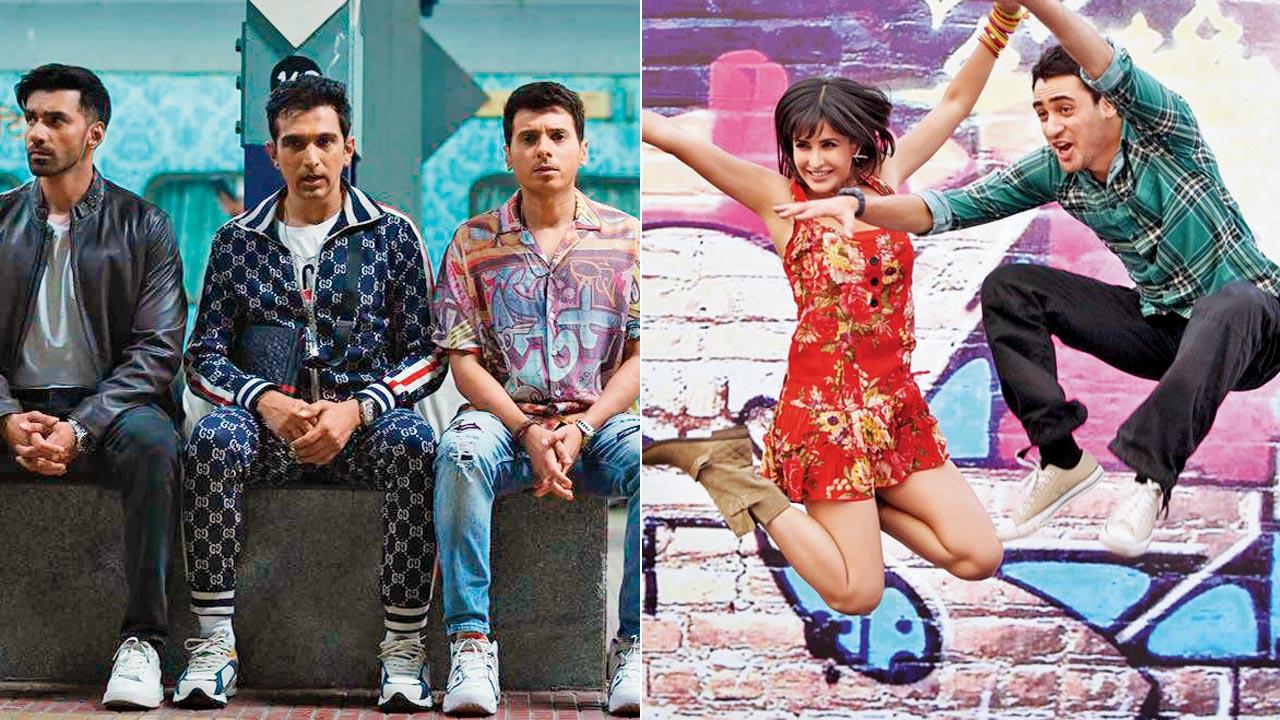
A still from Madgaon Express, which was Kunal Khemu’s first writing credit for screenplay; (right) YRF’s Mere Brother Ki Dulhan launched writer Ali Abbas Zafar
A film production house posted a call for submissions recently, but an eyebrow-raising clause has brought up the question of screenwriters’ credit and payment. It’s an age-old battle, but how should new writers navigate the system?
Junisha Dama (MID-DAY; October 19, 2025)
It was an announcement from Yash Raj Films, asking writers to send in scripts to their submission portal. Innocuous enough, until a clause screenshot from the YRF website found its way to social media, with a post titled “This is wrong on so many levels.” Soon enough, WhatsApp groups were buzzing, setting off alarm bells among film enthusiasts.
The clause reads as if it was from a dystopian contract: “Any submission, solicited or unsolicited, shall become the property of the production house unless there’s a prior written agreement, and may be exploited in any way at YRF’s sole discretion.” The fine print went on to state that those submitting their work would not be entitled to “any compensation, credit, or notice”.
What made the post blow up was its reference to YRF’s announcement just days earlier of the submission portal, “Script Cell”.
We reached out to YRF for a clarification; however, they only issued a public statement claiming that the viral clause was not part of its Script Cell terms but from a separate disclaimer (now removed) on their website.
However, screenwriters say such clauses are not unheard of. Contracts often support producers more than the writers. Independent screenwriter Sailesh Ramaswamy lists some examples, including the credit clause, which gives credit as per the producer’s or platform’s (in the case of OTTs) discretion. “Earlier, we used to be able to push back. Back in 2019, 2018, and 2020, I signed contracts where I had put in clauses that my name would be on the poster. We have regressed from there,” he says.
The second big thing, Ramaswamy says, is the shift in the payment structure. Contracts are now being structured to pay writers only 40 to 50 per cent for the final draft, and the rest in parts. Ramaswamy adds, “At times, if the writer has insisted on a buyback clause, successful producers want writers to buy it back at 40-50 per cent more than the price that they paid you for writing it.” In many contracts, payments are also tied to draft approvals: 20 per cent on the first draft, another 20 per cent on the second, and so on.
While Ramaswamy has more examples that even established writers struggle with, we wonder if it is even logical to submit scripts via a portal.
How do new writers, looking to get their foot in the door, even navigate this system? “I feel that script submissions done without knowing the person to whom you are submitting are not that useful,” says Sudeep Nigam, screenwriter and creator.
Instead, Nigam recommends pitch festivals, like the one organized by the Screenwriters Association (SWA), as better platforms to bring new scripts forward.
In the real world, where young writers have little to no bargaining power, you can’t depend only on luck. “Over the last five years there has been a lot of chatter around writers’ rights, and we want to push that discourse forward. The Writers Guild of America (WGA) strike in 2023 gave us a lot of momentum. It’s still not equitable, it’s still not great bargaining power. But at least there is chatter and there is fight,” says Nigam.
But why is credit and compensation even a question? Anu Singh Choudhary, a screenwriter who has recently transitioned to being a director and producer, says that the Copyright Act in India is strong, but it gets murky as “filmmaking is such a collaborative idea”. “At what point is a director’s voice or a producer’s voice giving input? When you have submitted your script and then they come back with feedback or “notes” and they are making it supposedly their own, does that make the material theirs? Therefore, I feel a basic minimum contract is important to have. We are only fighting for that,” she says.
The SWA, for some time now, has been working on standardizing writers’ contracts that cover fair compensation and credit with a Minimum Basic Contract (MBC). “The ecosystem is changing, and there is pushback now. Therefore, my advice to young writers is that before they sit at the negotiating table, they should be ready to walk away,” says Anjum Rajabali, a veteran screenwriter and senior activist of the Screenwriters Association.
Despite tug-and-pull, the MBC has made progress, but as Rajabali says, the contract will ensure “more vulnerable writers are protected.”
In the meantime, what can writers do at an individual level? Riya Rajkumar Sharma, counsel at AM Sports Law and Management Co, who handles gaming, media, and entertainment law, explains: “When writers submit a script on a portal, they often consent to its exploitation in line with the portal’s terms and conditions. If they’re not careful, they may inadvertently surrender all ownership and rights, including derivative rights [ie, the right to create new works based on their original material]. Moreover, when writers share their ideas through such portals, they usually have little to no bargaining power. It is therefore crucial to understand the implications of any submission. Everyone should carefully read all terms and conditions before uploading or sharing their original work on any platform.”
Sharma further clarifies that there is no intellectual property in an idea itself. “What I mean is that an idea, by itself, is merely a concept. It gains protection only when expressed in a tangible form, for example, as a written script or a painting. The intellectual property rights lie in that expression, not in the idea alone,” she adds.
Nigam also emphasizes the need for writers to speak up, instead of simply complaining about it on social media. “The more they speak up, the better it is for the entire ecosystem to not allow for this to happen. Most writers are fearful, and that’s where the problem lies. At SWA, we have a dispute settlement committee, which is specially designed just to do this. We handle over 500 cases in a year, and we have the capacity to handle even more,” he says.
Would it then help if copyright and IP law were taught as a module in film schools? It would, says Anu, adding, “Also, the art of negotiation. We can all benefit from this and learn not just our rights, but also a producer or studio’s perspective.”
Naturally, coming together as a community is crucial to this cause. Anu says that young writers should constantly check with each other on what kinds of terms and conditions one is agreeing upon. She says that trusted whisper networks do exist, and writers usually compare notes and red flags before signing projects. There is a flipside, though.
“Unfortunately, there is such tough competition and such little work that we end up taking these exploitative contracts only because everybody needs work,” she says, adding that “the responsibility of advocacy at various levels then falls on senior writers, which means constantly talking and creating awareness. And if there are red flags, let the community know. Be, in that sense, champion of the other writers. All this while, this ecosystem has really thrived on a lack of unity between the writers.”
Rajabali echoes this, “If writers stand united… collective bargaining is very strong.”
Unfortunate that so many women related to Richa's struggle in Mrs-Arati Kadav
9:32 AM

Niharika Lal (BOMBAY TIMES; March 8, 2025)
“There is no exaggeration,” says director Arati Kadav about her film Mrs, adding that the casualness of misogyny and patriarchy – not just from men but also other women – is shown in the film exactly as it is. The film, starring Sanya Malhotra in the lead role, highlights the story of an average Indian family that doesn’t realise the burden of invisible labour women carry every single day. From ‘ghar ka khana’ to ‘silbatte ki chutney’ – phrases used casually, and even fondly – Arati points out how loaded they actually are.
Both Sanya and Arati say that working on the film made them realise how they also have taken their mothers’ invisible workload for granted. “I told my mom, if I calculate the labour you put in making chips at home, instead of buying chips, suddenly that Rs. 200 will seem like nothing. But this labour is invisible because we’re conditioned not to see it,” Arati says.
Since its release, the film has sparked a debate, as many women have found the casual misogyny shown in the film very real and triggering. Arati says that women from all age groups have told her how deeply they related to the story, but it wasn’t a surprise to her – because this was a film where the research started from her own home.
With Mrs, an adaptation of Malayalam film The Great Indian Kitchen, Arati’s thought was simple: Society and families need to stop treating women like a ‘function’ – homemaker, cook, caretaker – and start seeing them as individuals with their own dreams, their own identities.
THIS IS A VERY IMPORTANT STORY, KYUNKI YE GHAR›GHAR KI KAHANI HAI: ARATI
Arati says that the research for this film started from her own home before speaking to other women. “When Sanya and I came to Delhi, we had conversations with many women. It was such a cathartic experience. There was one woman who was from an extremely privileged household. She was a housewife, same age as Sanya’s character, going through the same journey. When I heard her story, I got goosebumps. I realized then that this story had to be told with honesty, sincerity, and love, because it is the story of so many women. You can’t be casual about it. Mujhe lagta hai ye bahut important story hai kyunki ye ghar-ghar ki kahani hai. In the entire film, the camera is only in the kitchen and rarely anywhere else.”
The director says that she wanted to make it a very personal story of a girl who has ambitions, which are being crushed. “In the film, she actually makes an effort to impress. She has the excitement of a fresh-faced girl in a new job. Gradually, her morale deflates. My idea was that if a woman is respected for who she is, she will also be a good provider in the house.”
THE TEAM BROUGHT THEIR PERSONAL EXPERIENCES TO THE FILM: SANYA
Sanya adds that Arati and she interviewed many women for the film, which is why many find it so relatable. “A friend of mine, who has faced similar challenges, was gracious enough to share her therapy notes with me. Arati and Anu (Anu Singh Choudhary, writer of the film) worked on this script for almost a year, bringing their own personal experiences to it. That’s why the story resonates with so many women. I have heard people say to my mother, ‘Pura din toh ghar pe hi baithe rehti ho. Kya hi hota hai kaam ghar ka?’ I have seen Richa in my mother, my sister, and my married friends. I have not personally experienced her struggles, but of course, when you’re playing such a character, you have to have empathy. I think I have a natural empathy for women going through similar struggles. It breaks my heart, but at the same time, I’m hopeful that a film like this will bring some change. People will become more aware of these everyday struggles that often go unnoticed.”
‘LADKI KO KHANA BANANA NAHI SIKHAYA?’ THIS IS SUCH A COMMON LINE: SANYA
Sanya says how serving the family is an “everyday reality for so many women – waking up early, cooking for the entire family, going to work, and then coming home to cook again.” “Our mothers have been doing everything selflessly for so long. Now, when I see my mother, she’s tired of stepping into the kitchen. And she feels bad about it because we put our mothers on a pedestal – ‘Maa ke khaane ki toh baat hi kuch aur hoti hai.’ In the film, Richa’s husband tells her mother, ‘Agar aapne nahi sikhaya toh meri maa ise khana banana sikha degi.’ This is such a common thing to hear – not just in the film, I have heard it around me. ‘Ladki ko khana banana nahi aata? Aapne sikhaya nahi?’ Yes, cooking is a life skill – but everyone should know it. Not just women.”
Arati adds, “Even I am guilty of treating my mother like a function. We grew up without understanding this invisible workload our mothers carried day in and day out, quietly, with no day off. It is important that we don’t look at women as a function – doing laundry, keeping the home in order. We see the father as someone bringing value to society and not the mother. But the truth is, women bring immense value – to those fathers, to the families and the society. Women also need to realize that they are individuals who deserve their own passions, hobbies, and dreams – and not just keep serving others. We can’t change everything with one film, but at least we can start a conversation through Mrs.”
“The broken kitchen pipeline in the film is a metaphor for how broken the whole system is. The helper says that ‘puri pipeline badalni padegi, ye leakage local nahi hai.’ It was a metaphor for ye patriarchy puri badalni padegi. It’s not an individual problem where just fixing her husband will solve everything. A much bigger change is needed. You can introduce policy changes, a token Women’s Day celebration, but all of that is superficial. The real change has to be in attitude and mindset. Everyone has to sit together, break the system, and remake it,” says Arati
I wanted to map subtle heartbreaks throughout the story: Arati
Arati says that when she was discussing the film with a friend, he spoke about how “marriage is sometimes a series of subtle heartbreaks.”
Arati wanted to map these heartbreaks throughout the story. “I thought, let me start it with chai. On the first day after their wedding, the husband pours half of his tea into another cup and offers it to her. The next day, she takes out a teacup for herself (hoping for the same treatment), but he just leaves with his own cup. We have mapped such small moments across the film – the moments that turn Richa from a young, new bride into a person who has lost her smile.”
“It’s like a horror show in a dollhouse. Everything looks pretty from the outside. People say, ‘Ye toh kitna perfect hai. Kya problem hai meri beti ko?’ Even the mother (in the film) says, ‘Tumhare saath jaake sorry bol dete hain, itna achha ghar hai.’ She also moves from a smaller house to a bigger house, to the man of her dreams. So, what is the problem? The problem is so internal and so psychological that no one can see it, no one can understand it,” says Arati
The social media debate that Mrs sparked
The film triggered an intense discussion on social media – from some accusing it of damaging ‘family values’ to others praising it for holding up a mirror to the society and the deep conditioning that normalizes inequality in homes
-----------------------------------------------
People associate pride with women doing free labour. They try to give scientific reasons jo humne iss film mein daalne ki koshish ki hai. Silbatte se chutney nahi hai toh enzymes nahi hote, masala ghar mein grind hota hai toh chemical free hai - Arati Kadav
Two weeks (after her heart attack), Sushmita Sen walked the ramp at a fashion show-Ram Madhvani
7:48 AM
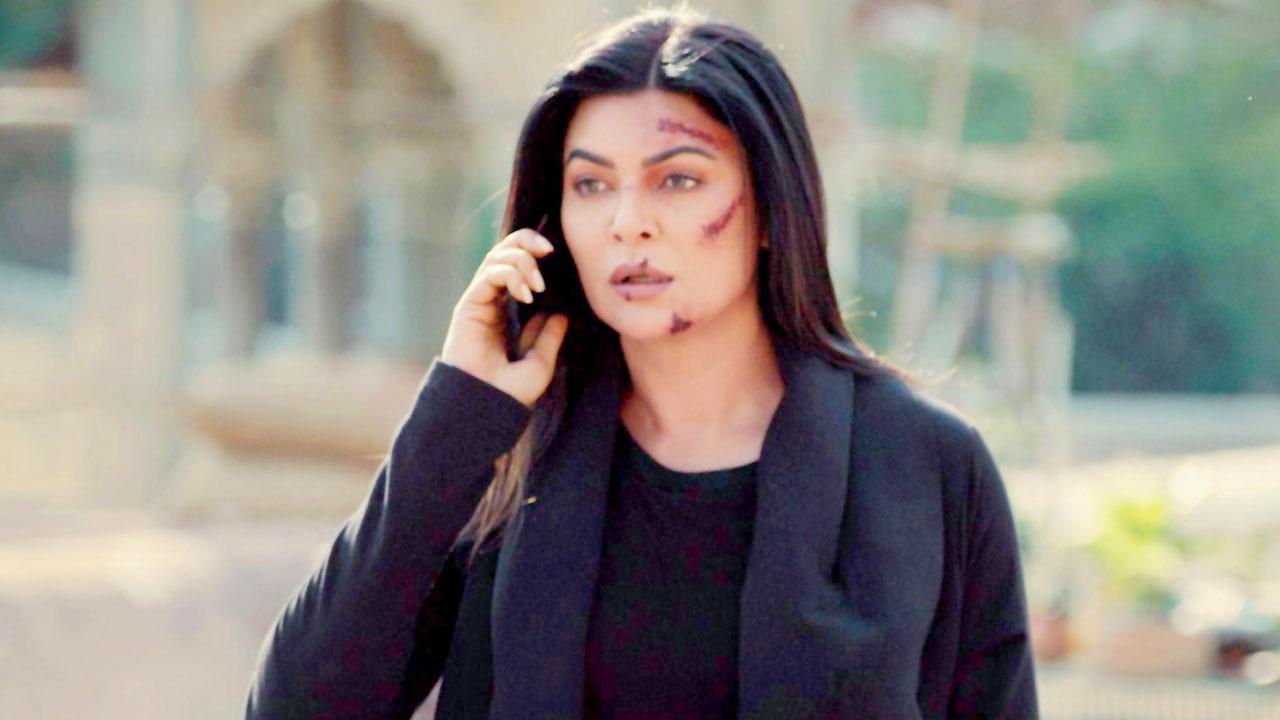
Describing Sushmita as ‘miracle lady’, Aarya creator Madhvani remembers how actor channelled her inner strength to bounce back after heart attack
Priyanka Sharma (MID-DAY; November 6, 2023)
Gratitude—that’s the emotion currently dominating Ram Madhvani’s headspace. The creator-director is grateful not only for being able to take Aarya to the third edition, but also to Sushmita Sen for saying yes to him season on season. “I cannot say yes to her. She is in power, and I am happy she said yes again,” he beams.
The crime drama, also starring Sikandar Kher and Vikas Kumar, is centred on Sen’s titular character who goes from being a homemaker to a don after her husband is killed. The Disney+ Hotstar series had the audience hooked since its first season in 2020, as much for its gripping story as for the leading lady’s confident performance. It’s the latter that Madhvani is particularly happy about—the show, after all, marked Sen’s OTT debut.
“The responsibility [I feel towards] whichever actor I am working with is greater than the series or film I make. So, after the series or film has reached the audience, I spend a lot of time [wondering] whether I can look my actor in the eye and say, ‘I did justice to you.’ Sometimes I succeed, sometimes I don’t. With Sushmita, I seem to have succeeded because we are in the third season.”
In Sen, he found a curious actor, an intelligent collaborator, and above all, a person of towering strength. He remembers how the actor suffered a heart attack earlier this year on the sets of Aarya, and overcame the difficult period with her resolute strength.
“I am happy that she is okay. After two weeks, she walked the ramp at a fashion show. That was a statement she sent out to the whole world, which was, ‘I can recover. I will be okay.’ She is a miracle lady. Everybody knows that her energy is incredible.”
Much can be said about Madhvani’s drive too. In a recent interview, writer Anu Singh Choudhary told mid-day that the reason behind Aarya’s success is the director’s relentless pursuit of creative brilliance. Mention it to him, and he laughs, “There should be T-shirts that read, ‘I survived Ram Madhvani.’ I suspect Anu is relentless too. We may get pushed off the mountain, but we will keep climbing it.”

Aarya has everybody excited. Men watch it with as much involvement-Anu Singh Choudhary
8:20 AM

Aarya 3 writer Anu Singh Choudhary says Sushmita Sen-led show’s biggest win is creating a strong woman don, who resonates with the male and female audience
Priyanka Sharma (MID-DAY; November 3, 2023)
Writer Anu Singh Choudhary is more confident than nervous as the third season of Aarya premières today. Her belief comes from the writers’ room that creator-director Ram Madhvani made for the Sushmita Sen-starrer.
“Ram has an intensive writers’ room. Sometimes, we’d work for 10 hours a day. He is relentless. After every season, I decide that I am never going to work on this [again]. Yet, here I am,” laughs Choudhary, who had Khushboo Agarwal Raj and Amit Raj as co-writers.
Season on season, leading lady Sen only elevates the crime drama that has its roots in the Dutch show, Penoza. Choudhary praises her, saying, “I have been on the set a couple of times since the first season, and to see her transform into the character was amazing. She lifted the material with her strength and confidence. The written words were elevated to a level that the [dialogues] didn’t matter after a while; only her imbibing them did.”
What warms Choudhary’s heart is how the Disney+ Hotstar series, centred on a woman compelled to rule the drug world while protecting her kids fiercely, is embraced by women and men alike.
“Aarya is one of those rare shows that is led by a woman, but has everybody excited. Men watch it with as much involvement. It’s the story of a homemaker, who becomes a don. She is surviving in a man’s world with her head held high, and will kill if need be. For a platform and producers to have the courage to back this story is rare.”
Subscribe to:
Posts (Atom)