Showing posts with label Antara Lahiri. Show all posts
Showing posts with label Antara Lahiri. Show all posts
Leading editors speak up on how production houses impose unfair cost caps on their meals
8:11 AM
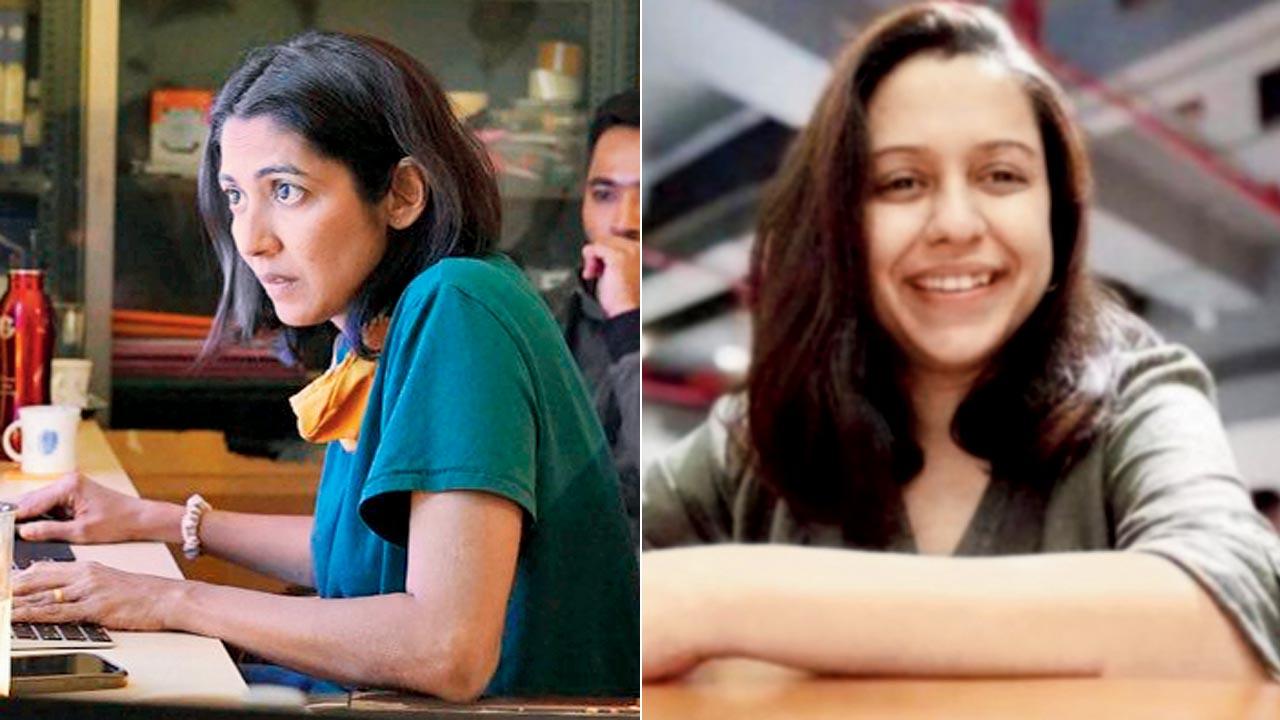
Shweta Venkat and Antara Lahiri
Leading editors speak up on how production houses impose unfair cost caps on their meals
Priyanka Sharma (MID-DAY; June 15, 2024)
Away from the spotlight, hours-long footage is scrutinized, pieced together and woven into a taut narrative that the audiences finally witness on screen. Editing is an art that’s crucial, but unfortunately invisible. Sadly, Bollywood’s leading editors too are being invisibilized by being subjected to unfair working conditions.
Last November, mid-day reported that a group of editors met the Association of Film and Video Editors (AFVE), and the Federation of Western India Cine Employees (FWICE) to pursue their demand for fair working practices (Change begins with minor edits, Nov 8). Now, it appears that their woes have only worsened with production houses discriminating against them with something as basic as meals.
Antara Lahiri, who has edited Ananya Panday’s next Call Me Bae, says until recently, many editing teams weren’t even provided food, or meal reimbursements. “It’s sad, but meal expenses have to be discussed during negotiations. If you don’t, productions assume you will never be eating in the course of the project,” she says dryly.
She highlights the recent development of caps on food reimbursement, and how they are shockingly low for editors, while production houses spend lavishly on meals for actors, filmmakers and the on-set teams.
Lahiri rues, “There is a bizarre inequity in the way caps are imposed. A head of department [the editor] can order a meal worth, say Rs. 700. But the associate and assistant editor’s meal cap is Rs. 400-500. Why there is a hierarchy in food is beyond me! [In contrast], sometimes, I’ve heard directors and production teams brag about the gourmet food that was served on set. But these same teams expect us to survive on cheap, greasy dabba. Eyebrows are raised if you or your team wants to eat healthy. Is it only an actor’s prerogative to stay fit?”
That’s not all. She has also experienced studios serving contaminated food to editors. “Once, I saw worms in the rice, and this was a tiffin service ordered by a well-known production house,” she recalls.
Senior editor Deepa Bhatia, credited with movies like Taare Zameen Par (2007) and Kedarnath (2018), says earlier, food costs would be borne by the producers. “This is a relatively new trend,” she notes.
Bhatia adds, “The food costs of assistant editors seem to pinch the producers. But entourage costs of stars, directors and other above-the-line crew is affordable. The inequality is frightening.”
An editor, on the condition of anonymity, tells us that on a recent project, two members had a per-day food limit of as less as Rs. 150. He rues that one can probably get only an omelette at that price. Another editor working on a series shares that his team was given two options—order food worth Rs. 150, or have the production house arrange lunch box for them. “My team chose the second option. A week later, we all had food poisoning,” he recalls.
The horror stories don’t end. Another insider notes that some production houses determine the food budget according to the film’s scale. “So, the team of a spectacle project was provided better quality food than that of a small-budget film,” says the source.
Shweta Venkat, who worked as the editor on the upcoming Maharaj and last year’s Thank You For Coming, says the discrimination in meals is part of a bigger disparity.
“Our community is severely underpaid. Movie budgets have increased, actors and technicians may be charging more, but when it comes to post-production and editing, we’re still working on older rates. If you have X crore as your budget, given the kind of work an assistant editor puts in, their pay has to be [sizable].” Venkat adds that it’s impossible for an assistant editor to make a living in Mumbai at the current pay scale.
As they tackle restrictive food budgets, low pay and lack of conveyance allowance, most editors feel that producers almost don’t care about treating them with dignity. Bhatia and Venkat call for urgent, affirmative action to address the discrimination. “In the last four-five years, some of us have come together to figure out how these issues can be addressed. We’ve begun working with AFVE and we’re trying to mobilize people,” says Venkat.
Lahiri, however, says that many in the community don’t speak up. “There’s a fear of being blacklisted. Every time we try to take a step forward with the union, we rarely end up making progress because very few editors are willing to make a formal complaint.”
After FTII students are attacked over Remember Babri banner, union urges institute president Madhavan to step in
8:44 AM

After FTII students are attacked over Remember Babri banner, union urges institute president Madhavan to step in; calls for academic halt
Mohar Basu (MID-DAY; January 29, 2024)
Much has happened since right-wing activists, on January 23, barged into the Film and Television Institute of India, (FTII) campus and attacked students over a banner that read: ‘Remember Babri, death of Constitution.’ Soon, on January 26, 300 FTII alumni—that included Oscar-winning sound designer Resul Pookutty, Badhaai Do director Harshavardhan Kulkarni and film editor Antara Lahiri —penned an open letter condemning the violence against the students.
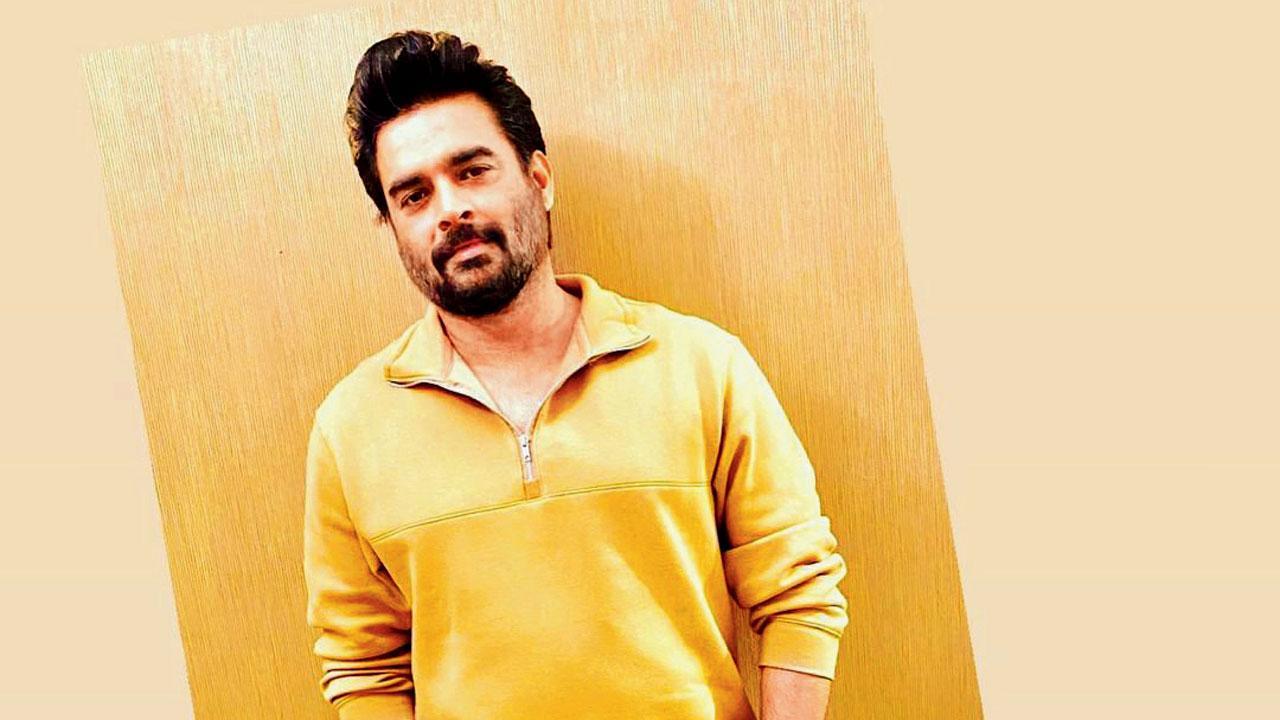
Now, the FTII Students Association (FSA) has called for an academic halt and urged the premier institute’s president, actor-filmmaker R Madhavan, to step in.
While a First Information Report (FIR) was lodged against the instigators at Deccan police station, on January 24, another FIR was registered against seven students allegedly by members of the organisation that orchestrated the attack.
A student, on condition of anonymity, tells mid-day, “[On Tuesday], they burnt the posters we had put up, hit our student body president Mankap Nokwoham and others. Now, they are levelling incorrect accusations against us—it’s being said that we had a box for suggestions on how to reconstruct Babri Masjid, which is not accurate. Two of the people named in the FIR, Mankalan Chakravarty and Nathan Chakropadhyay, don’t even belong to our campus. The registrar office has asked us to deal with the situation [on our own]. So, now, we’re going on academic halt. Our student bodies are writing to other student unions, including those of Tata Institute of Social Sciences and Satyajit Ray Film & Television Institute. It’s baffling that through it all, R Madhavan has kept mum. Thankfully, the alumni are taking care of us.”
Meanwhile, the alumni are rallying for increased security for students. A 2018 alumnus says, “We are writing to cops to make sure the security on campus is strengthened. It’s necessary to take prompt action against those who perpetrated violence against the students.”
Leading editors meet FWICE: "Some younger assistants have left town and even given up this profession"
8:33 AM
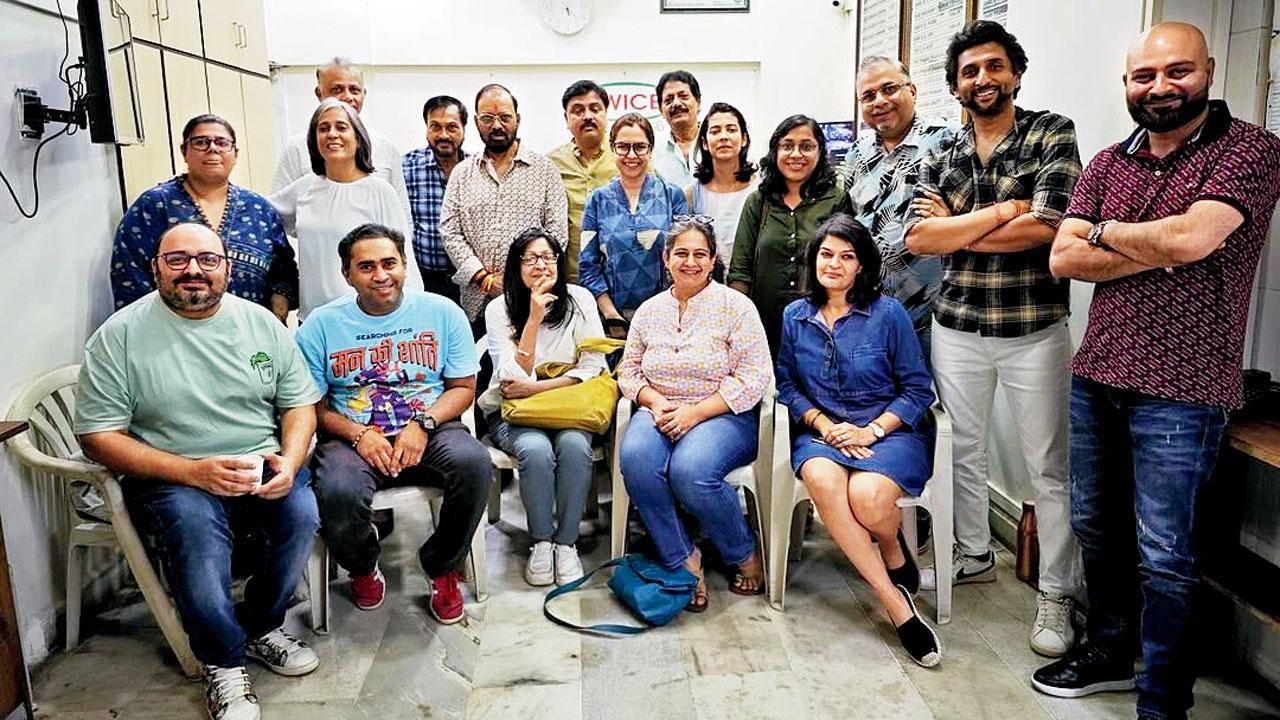
Demanding fair working practices, leading editors meet FWICE to highlight issues of poor pay and rampant replacement from projects; body to hold meeting with streamers and producers
Priyanka Sharma (MID-DAY; November 9, 2023)
In May, mid-day had reported that leading editors of the Hindi film industry were planning to meet the Association of Film and Video Editors (AFVE) to highlight the issues plaguing the community (Edit the way we work, May 27). Earlier this week, a group of over 10 Bollywood editors—including Deepa Bhatia, Antara Lahiri and Jabeen Merchant—met the AFVE and the Federation of Western India Cine Employees (FWICE) in Andheri, to pursue their demand for fair working practices.
Among their top grievances are the uncomfortable working conditions, which include long working hours, lack of proper working spaces, and unreasonable deadlines set by producers and streamers. Senior editor Bhatia, credited with films like Hazaar Chaurasi Ki Maa (1998), Taare Zameen Par (2007), and Kedarnath (2018), says almost 300 from the community are demanding change. “Senior editors have been getting constant feedback from younger editors about having to work overnight, being denied credit, and uncomfortable working conditions. All this has come to light because we are all sharing our experiences,” she says.
Editor Lahiri, who has worked on Delhi Crime 2 (2022) and the first season of Four More Shots Please, highlights a bigger issue. She says senior editors are replaced unceremoniously, without a no-objection certificate (NOC) in place. “There are contracts with extremely rigid clauses, and a rampant practice of younger and even senior editors being replaced in an ad hoc manner without a proper NOC in place from the editor being replaced,” she laments. They also hope to negotiate a basic minimum wage in an industry where several production houses are infamous for giving insufficient remuneration.
Merchant, who is the editor on Kiran Rao’s film Laapataa Ladies, says, “Some of the practices are systemic—certain production houses are habitual offenders of paying below-par fees and treating editors a certain way. Some platforms are repeatedly not following a proper system when changing editors. Some younger assistants have left town and even given up this profession under the strain.”
After hearing their complaints, FWICE has decided to hold a meeting soon with producer bodies and streamers, including Jio Cinema, Netflix and Amazon Prime Video. Birendra Nath Tiwari, president, FWICE, says the association has composed a letter based on the editors’ complaints and sent it to producer bodies and OTT platforms.
“The letter has been sent to Zee, Sony, Jio, Netflix and Amazon. We will talk to four producer bodies, including Indian Motion Pictures Producers’ Association [IMPPA], Producers’ Guild of India, and Indian Film & Television Producers’ Council [IFTPC]. The next step is to hold a meeting with producers, channels and streamers, and get the requirements raised by the editors passed. There are many issues like lack of hygiene and unfair clauses that state editors cannot approach any association and their communication will only be with the producers. We will fight for the editors’ rights,” he says.
I wanted to be thorough and knew every single shot before the movie went on floors-Shefali Shah
8:28 AM
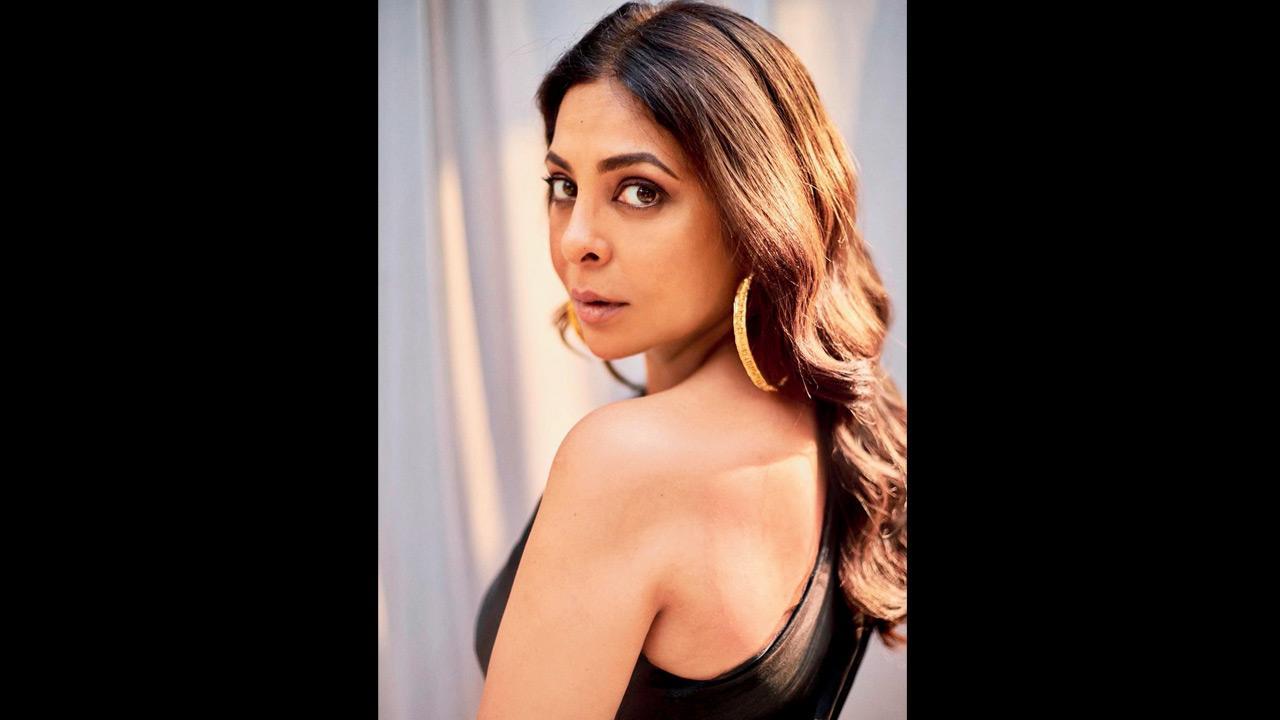
Acclaimed actor Shefali Shah turned her distant life-goal into a reality as she wrote and directed two short films during the lockdown
Uma Ramasubramanian (MID-DAY; July 23, 2021)
Shefali Shah, 48
With the lockdown putting her shoots on halt, she developed the scripts of Someday and Happy Birthday Mummyji, each reflecting post-pandemic isolation
Though happy facing the camera, Shefali Shah often wondered if she had it in her to go behind it as well. But a steady stream of projects meant that the actor had little time to explore the possibility. The desire to turn director could have remained a ‘What-if?’ thought in her head, had it not been for the pandemic.
“During the lockdown, we were all trying to fill our time. I usually write, so I wrote Someday, and I realised I want to direct it. The story was also pertinent to the situation,” says Shah, who also helmed the two short films — Someday and Happy Birthday Mummyji — during the 2020 lockdown.
For the actor-turned-director, the urge to develop Someday came from a thought that haunted her in the early days of the stay-at-home period. “The storyline of my film is that if the disease doesn’t kill you, the distance will. Not being able to meet your family is disturbing. My films are based in today’s times, and came from the thought of isolation.” Someday revolves around a frontline worker Vidhi, essayed by Shah, who returns home after a 15-day duty and practises seven-day quarantine. Over the week, Vidhi and her mother, who is suffering from Alzheimer’s, share memories from the past and plan for the future, as the present keeps them separated.
Having begun writing in June 2020, Shah took the film on floors in September, as soon as the restrictions were lifted, with a five-member crew. “Making a film from scratch was a lot of work. I wanted to be thorough and knew every single shot before the movie went on floors. I didn’t want to be on sets and wonder, ‘Ab kya karna hai?’ The editing, sound design and a few other post-production elements were done over Zoom calls. I haven’t even met Antara Lahiri yet who has edited the film, or Prasad Sashte who did the background score. It’s strange to work with them without having met them.” Confident after pulling off the first film, she shot Happy Birthday Mummyji in October at a Madh Island bungalow with a larger crew of 10.
The past 16 months have been hard on all of us. But Shah is proud to have utilised the time to pursue what might be her calling. “If my projects were on floors, I would not have been able to pull this off. It took two months of prep to shoot a short film of 20 minutes. Imagine how much time I will take to direct a feature film! I was ready to gamble with a short film because I wanted to see whether I have it in me to be a director. I wanted to take that chance. At worst, I would fail, but one needs to make an attempt.”
Subscribe to:
Posts (Atom)