Showing posts with label Anjum Rajabali interview. Show all posts
Showing posts with label Anjum Rajabali interview. Show all posts
There was a meeting at Aamir Khan’s house. It took 3 hours but producers agreed to the clauses-Anjum Rajabali
8:57 AM
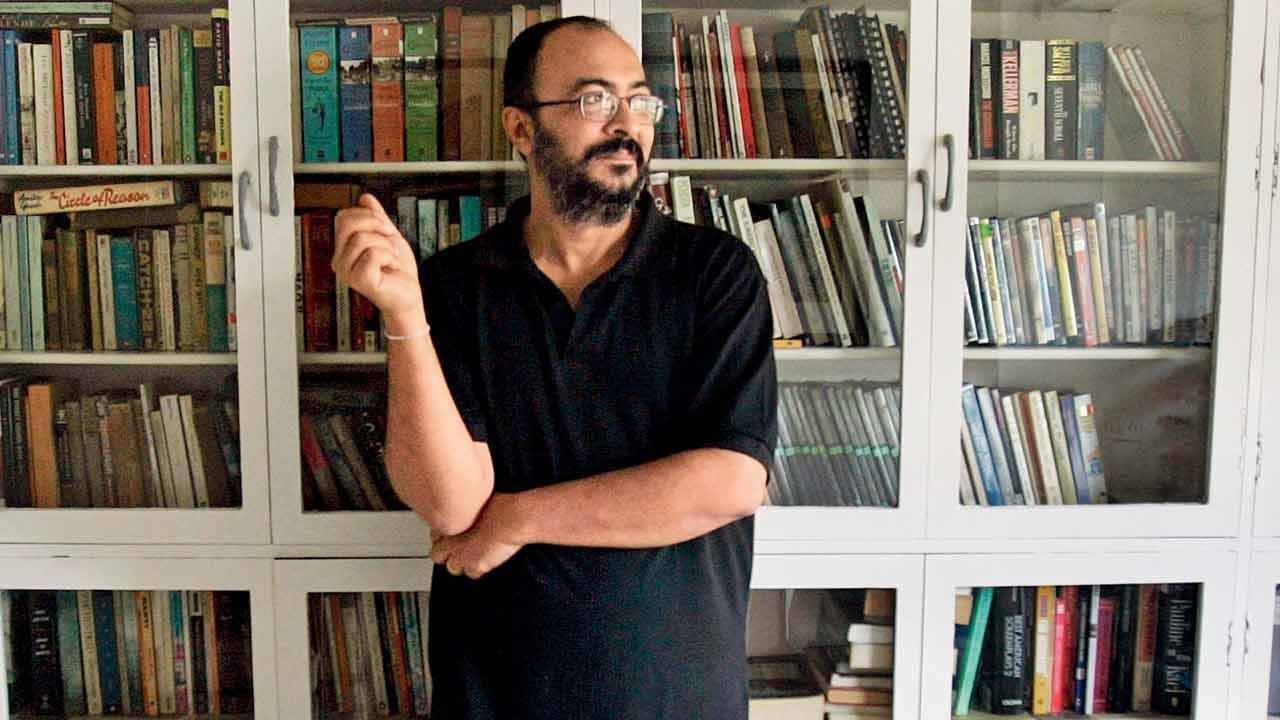
In a historic moment, leading Bollywood producers and SWA have united to standardize writers’ contracts to ensure fair fee and due credits
Priyanka Sharma (MID-DAY; March 2, 2025)
Will things change?” every writer has repeatedly wondered and asked over years of being subjected to systemic disparity in the Hindi film industry. Finally, there is light at the end of the tunnel. Last week, prominent Bollywood voices spoke to mid-day about an urgent need for change in the working conditions of screenwriters. This week, writer Anjum Rajabali, the Senior Executive Committee Member of the Screen Writers Association (SWA), has the answer—change is coming.
Twelve leading Bollywood production houses, streamers and channels, including Aamir Khan Productions, Shah Rukh Khan’s Red Chillies Entertainment, Yash Raj Films, Siddharth Roy Kapur's Roy Kapur Films, T-Series, Maddock Films, Excel Entertainment, Applause Entertainment, Viacom, Tiger Baby, Amazon Prime and Sony Entertainment Television had met with the members of SWA last August to principally agree over the guiding principles on which writers’ contracts will be based.
“This is historic. For more than a decade, SWA has been trying to arrive at some kind of standardization of writers’ contracts so that those standard clauses are fair, reasonable and they don’t have to be renegotiated for every individual. There was a meeting at Aamir’s (Khan) house. It took over three hours but the producers agreed to the clauses,” Rajabali shares.
“I called Aamir, whom I have known for a long time now. I told him, ‘Writers’ contracts need to be made more reasonable, fair, and stopped from being one-sided’. Aamir, being sensitive to writers’ concerns, agreed to call a meeting with leading producers to help SWA resolve this grievance,” says Rajabali, who also wrote the 1998 blockbuster, Ghulam, in which Aamir played the lead.
The eight essential standard clauses agreed on address several long-standing issues faced by the writers—missing credits, irregular and unfair pay, moral rights to the script, indemnity, and stringent contracts.
“For writing or co-writing credit, 33 per cent of the shooting draft must be the writer’s work, with maximum three credits per element (story, screenplay, dialogue) to be accorded. When a writer-pair or a team works as one unit, their credits are counted as one. If more than 50 per cent of the shooting draft is a writer’s work, they receive top billing. More than 66 per cent, he or she will get solo credit. If it’s less than 33 per cent, ‘Additional’ credit for that element will be accorded to the writer,” explains Rajabali.
There is also a clause that the writing credits will appear in a film as one of the top three credits, along with director and producer, and in all publicity material. “Inadvertent failure to accord credit in the film will have to be instantly rectified via a press release, a copy of which should be handed to the writer/s and by re-inserting the credit/s in all digital and other versions,” says Rajabali.
Another essential principle agreed upon is that if a sexual harassment charge against a writer is proved, the credit will only appear in the film, not in the publicity material.
As far as the fee structure goes, Rs. 13 lakh has been decided as the minimum fee for a full script. “For story: Rs. 4 lakh, for screenplay: Rs. 5 lakh, for dialogue: Rs. 4 lakh. For the first and second drafts, tranches will be released on their submission. The final draft will be on the approval of the producer,” Rajabali says, adding that the first and the second drafts will be considered legitimate only if they adhere to the story and they incorporate the feedback given by the producer.
The next step for both the SWA and the producers is to translate the agreement into a legal language. “In principle, these producers have agreed to these clauses. There are certain checks and balances, and nuances that we have to be careful about. We have engaged a law firm to help us with the process. Now, in a week’s time, we intend to put the idea into motion,” Rajabali shares.
A standard agreement between the writers and the producers is not only the need of the hour for the former, but benefits the other side as well, Rajabali argues.
“Whatever we are asking is not just reasonable and fair, it is based on mutual concern. If writers aren’t stressed out or anxious or feel resentful about their contracts being one-sided, they can devote their efforts to creative work rather than hassling about these things, which only helps the writing process and a film overall."
The age of stolen stories is over; writers will finally own their worth-Anjum Rajabali
8:26 AM
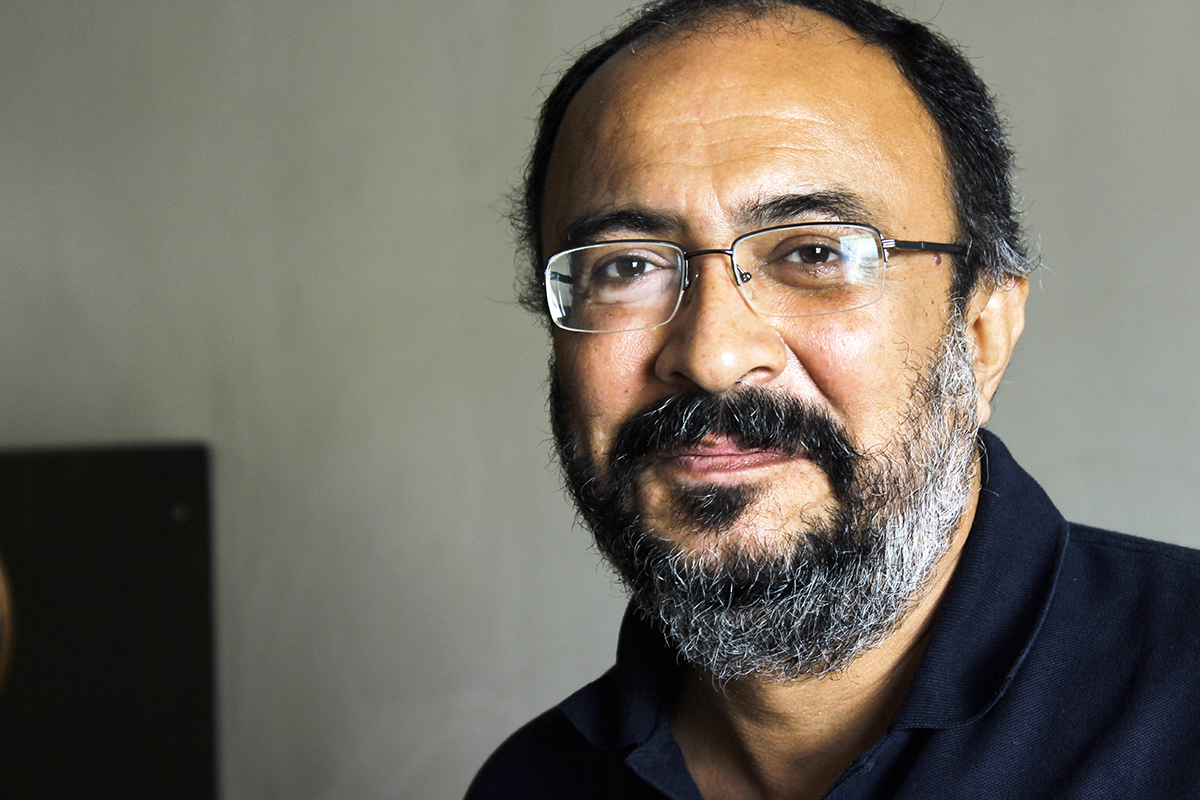
Screenwriter Anjum Rajabali on his 11-year journey of bringing copyright society to life and giving writers their due
Mohar Basu (MID-DAY; January 5, 2025)
Intellectual property, which is basically creative work, has to be seen differently than any other form of property which is owned. Because what intellectual property does is that it adds a certain enrichment to society - be it painting, music, literature, cinema. This is why every society has worked out a way of incentivizing, encouraging, and protecting the work of creative people.
Now, one way of doing it is to ensure that their copyright is not violated, because this is something which has been created as an original by them. Any creation comes from deep within the artist. It is that when that work is exploited for further commerce, then they should be receiving their due share of that.
If you buy a painting, say by Tyeb Mehta, for 1 lakh rupees and 10 years later, maybe the price goes to 1 crore so you actually sell it further. Now, from that one crore that you're making, a royalty has to be ploughed back to Mehta or his heirs, which is, actually, the law. Because what you're doing is, from that person's original work, you are actually making an extra profit. From that profit, some due royalty has to go back. That is the whole definition of royalty. Likewise, the world over, when a film is shown on cinema screens in cinema halls, for that the contract is made with the writer. The sort of assignment fee has been paid to them but once it is exploited for further commerce, like outside of the cinema hall, when it goes into, a remake, or it's adapted into some other language, or if it is sold to a foreign country, or if it appears on another platform like television, or any of the OTT platforms. Then in which case, from that additional money which is being earned, based on the writer's work, some share has to be given back to the writer.
Now, in most countries across the world, this has been accepted as a law. Even the World Intellectual Property Organization, which is a branch of the UN, there also it is very clearly established that these are the protocols, and the work of artists, their copyright as well as their royalties have to be protected.
India has the Copyright Act, which was formulated in 1957. Now, for a very long time, there was no concept really of royalties for the writers. So what would actually happen is that, if a producer is paying me even 100 rupees for a script, then all the rights, everything belongs to the producer.
He would be able to do anything that he wants with it, sell it, change it, do whatever it is that he wants with it, and there is nothing that I can do, because he has actually bought it. He is the owner of that. Now, in 2012, the law was amended, and it was a radical amendment, which actually said a few very important things. One was that if I have written a script, then embedded in that, there are certain rights under the copyright umbrella, which are mine. The right to show it to the public, the right to make a film, the right to adapt it, the right to show it anywhere else, all that is mine. After a deed, I am assigning those rights to the producer. Now the producer can use those rights to make the film, to show it elsewhere, so all that becomes his right. However, the right to receive royalty cannot be transferred.
The law forbids that, saying it is illegal. Which means that the producer in advance cannot purchase your right to receive royalty. This created a huge uproar in the film industry, amongst the producers, studios, broadcasters, etc. Because this non-assignability of the right to receive royalty is actually, as a law, it is there only in Germany, and in India now. This was quite radical, and we were very grateful for that, because we had lobbied very hard. From 2009 to 2012, we really lobbied very hard with the government. The government was sympathetic, and so were all the other parties. So it was unanimously passed in Parliament. It is well known that Javed Akhtar spearheaded this whole thing in Parliament. After that came the whole protocol as to how do you collect royalty? The law very clearly said that a copyright society has to be formed, and the right to receive royalty can be assigned by every writer to the copyright society.
The other thing the Law also said, that in the copyright, there are two dimensions. Number one, there is the author, whose work it is. And number two, it is the owner to whom the rights have been assigned. They call them owners. Now both these people should become members of the copyright society, so that they are able to collect royalties in equal measure. If 100 rupees of royalty is due on say a work of mine, which is being shown on television, then 50 rupees, 50% of that goes to the producer, and 50% of that goes to the author.
So we created a company in 2013, and then we applied to the government for it to be registered as the official copyright society. Because that is part of the law, the government has to register it. And this took a very long time, almost 11 years.
In 2016, the revised application was submitted to them as per their instructions. There was a little bit of ambiguity in the wording of the law, which had to be resolved.
Now, finally on the 30th of December, the certificate was ready, and it was handed over to us. So now we are a registered copyright society of authors and owners.
Now what is next is that two things come out first. First is that the membership drive has already begun. Which means we need to ensure that all the working screenwriters of India, from every region like 20-25 thousand of them including those who may not be alive, but whose work is still within the copyright period, have to be made members. We have to educate them, make them aware of what this means for them. We have to also ask producers to become members. Secondly, the negotiations have to begin with broadcasters.
Now in every country, there is a copyright society. So the arrangement is that the copyright society of that country, let's say in France, when our work is shown on say French TV, then they will collect the royalty on our behalf and they will transfer it to our copyright society, which will then divide the royalty between the writer and the producer. And likewise, if a French film is being shown on Indian television, then we will collect the royalty and then we will transfer it to the French society. So this becomes the arrangement across the world.
Will there be arrears? So after 2012, 21st of June, when the act was actually gazetted, royalty is supposed to be due on that. Now the thing is, and the clarification is very essential, is that because this whole thing had not become operational, the copyright society had not been registered, we had not begun negotiations at that time, so broadcasters did not budget for this.So what we may have to do, is negotiate for a certain lump sum for that period.
They may not be happy about it, but I think they have resigned themselves to it, simply because it is the law. It is. And now the law has become operative.
It is the rule, world over. So, Netflix in America, and other different places, is giving royalties. Now in America, they don't call it royalties, they call it residuals, which are actually paid to writers, collected by the union, through the collective bargaining arrangement.
The biggest challenge that I foresee, is exactly this, that the negotiated amount, of the percentage of royalties, should be fair to writers. The writer who is credited, for that film, should receive royalties. To ensure that the entire system must be cleaned up, because till now, this also used to happen, that a lot of writers were being denied their credits, especially new writers. There are a lot of complaints, that we have written this, but the director took the credit, the producer took the credit, our name didn't come on the slate. Most think that our career is starting, even if our name is in the assistant, or in the associate, it’s a start. But it is widely known that actually they are the ones who have done the work. Now with royalties coming in, that has to be changed. The royalty period is for 60 years even after the death of the author.
Obviously, every writer will get concerned about their credit, because not only are they being denied, their due fees now, and their name on the screen, but for the next 100 years, they won't get any payback for their work. There is going to be a pushback, from the writer's side, to ensure that this system gets cleaned up.
Credit has to become very transparent. We will be initiating conversation in the next two weeks. The age of stolen stories is over—writers will finally own their worth.
In Aamir Khan’s films, the screenwriter’s credit always appears after the producer’s-Anjum Rajabali
8:09 AM

Anjum Rajabali on the fifth edition of the three-day writers’ conference, which starts on August 1 with the actor as the chief guest
Avinash Lohana (MUMBAI MIRROR; July 31, 2018)
The fifth edition of Indian Screenwriters Conference, which had witnessed its biggest turnout in 2016 with over 900 screenwriters and industry professionals, is gearing up for a return from August 1–3 at the St Andrew’s Auditorium in Bandra, Mumbai. This time, Aamir Khan will be in attendance as the chief guest. Journalist and Padma Shri Vinod Dua will deliver the keynote address.
According to Screenwriters Association (SWA) member Anjum Rajabali, the conference will feature 10 sessions with topics ranging from ‘Writers v/s Producers: Can they never be allies?’ and ‘Dispute Settlement’ that focuses on how to correctly interpret the Copyright Law, to ‘Has the daily soap format reached its dead end?’. “Each edition’s theme reflects the primary concerns and questions of the screenwriters’ community. This year we’ve borrowed the words and wisdom from the opening line of Tagore’s — ‘Where the mind is without fear...’ Frankly, commercial, contractual and social pressures make writers vulnerable, forcing them towards self-censorship. To prevent that, we will have to be vigilant and, wherever necessary, wrestle with these threats to protect our creative and professional rights,” points out Anjum, who has penned the scripts of films like Ghulam, Pukar, The Legend of Bhagat Singh and Raajneeti.
 On Aamir’s presence at the conference, he explains, “He stands out
as the big star who has been the most supportive of screenwriters.
Everytime I have approached him — for counsel on issues pertaining to
screenwriters’ rights, to seek his support for collective bargaining, or
just ask for his presence at a screenwriting event — he has always
readily agreed. For the Cinestaan Storytellers Script Contest 2017, he
not only came on-board the jury and read the shortlisted scripts, but
also went out of his way to help publicise the event. As a professional
actor and producer, Aamir acknowledges scripts to be the most important
factor in filmmaking. In his films, the screenwriter’s credit always
appears after the producer’s.
His presence as the chief guest will add gravitas to the event.” Anjum is pleased with the feedback that the event has received over the years. “Writer-delegates participate in important and relevant debates, network, and go back with a feeling of communal solidarity,” he points out.
With his tribe experimenting with genres and subject matter as well as getting their due, does he think this is the most conducive Bollywood has ever been for writers? “It certainly is an exciting time to be a screenwriter. Lots of scripts based on new themes and plots penned by brave young writers are finding their way to the screen. Writers are getting better deals. And yet, we are still some distance from giving them their due in terms of fees and rights,” he says.
Subscribe to:
Posts (Atom)