Showing posts with label Angry Young Men. Show all posts
Showing posts with label Angry Young Men. Show all posts
As of today, I don’t see writers being in a position to charge Rs. 1 crore more than the leading man-Niren Bhatt
8:14 AM

Admitting that writers today can’t call the shots like Salim-Javed did, Stree 2 writer Niren confident that community being empowered by OTT and evolving taste
Mohar Basu (MID-DAY; September 2, 2024)
According to Niren Bhatt, we “live in Sarkata’s world”. The writer of Stree 2 is not far from the truth. Through its villain Sarkata that attacked progressive women, Stree 2 depicted the ugly face of patriarchy and championed women’s empowerment. The horror comedy’s runaway success unfolds at a time when the Hema Committee Report and the RG Kar rape-murder case have reiterated the lack of women’s safety in India. Bhatt acknowledges the irony, and hopes the franchise will further the conversation on female agency.
“By itself, a film can never change society. Movies further conversations. The movement in Malayalam cinema is mirrored in a big-screen experience [through films on patriarchy and gender issues]. This blend of reality and fiction sparks conversation and spreads awareness,” says the writer.
The Rajkummar Rao and Shraddha Kapoor-starrer’s domestic gross collection crossed the Rs 500-crore mark. But for writers, the bigger win is to see their messaging resonate with the audience. Is Bhatt conscious of what he shows on screen?
“Writers are also concerned about a movie’s box-office fate. If a film doesn’t work, their future projects come into doubt. Messaging is important to me, but I don’t want to sermonise. I want to deliver it with sarcasm and satire. Bala [2019] was a satire about self-image, Bhediya [2022] talked about the environment, and Munjya’s last scene was about not being a jilted one-sided lover. Stree 3 will take feminism and female agency ahead!”
There has been much chatter about who should be credited for Stree 2’s success. In such a scenario, does the writer benefit from the success? “Yes, we get to tell more stories,” he smiles. But the power that a writer wields has unfortunately changed over time. The recent docu-series, Angry Young Men showed how Salim-Javed, in the ’70s, would call the shots on their projects. Is such creative freedom afforded to today’s successful writers?
“OTT platforms have empowered writers. But in mainstream films, it will take time. Like Aamir Khan says [in the documentary] that if a writer can sell a film on their name, s/he can command [high] fees. As of today, I don’t see writers [being in a position to charge] Rs. 1 crore more than the leading man. Personally, I don’t think about money first. I’m greedy for better work. But if some writer is able to bring that, it would create a change. Stories over stars is the future.”
After talking about breakfast, Javed Akhtar said, ‘Achcha, abhi aapko shot mil gaya mere rone ka’-Namrata Rao
3:20 PM
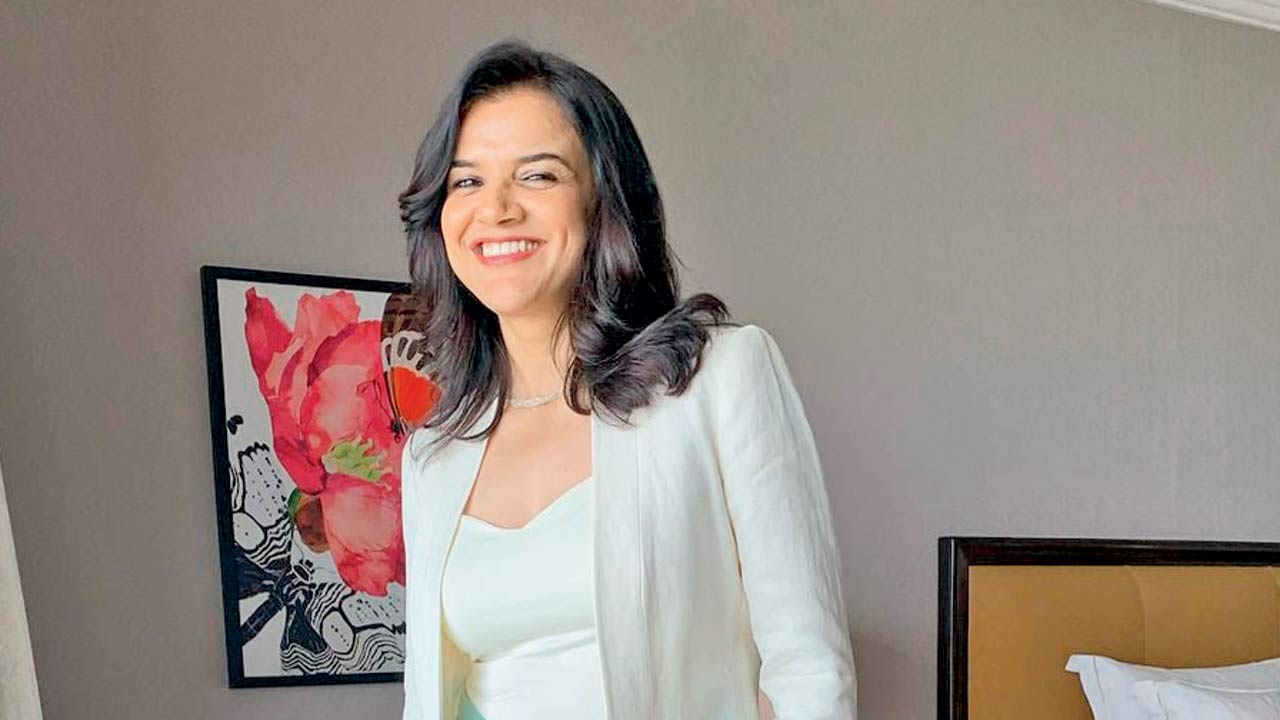
Angry Young Men director on how the docu series taps into the ‘cool’ side of Salim-Javed; says industry stalwarts have yet to pen their last promised script
Mohar Basu (MID-DAY; August 23, 2024)
Everyone has a favourite Salim-Javed film. Even Namrata Rao, the director of Angry Young Men, a docu-series that tells the story of Bollywood’s most successful screenwriter duo, Salim Khan and Javed Akhtar. She says, “Deewaar [1975] would be my favourite film, but I also love Shakti [1982].” It certainly is hard to pick, considering the duo delivered 22 blockbusters.
Together, the two writers shaped a glorious chapter of Hindi cinema. Rao, one of the industry’s most successful editors, has turned director to bring that era alive again. She worked on the Prime Video offering for three years. It all started when Zoya Akhtar, with whom she had worked on Lust Stories (2018) and Gully Boy’s (2019) songs, shared Angry Young Men’s idea with her.
“I was editing Lust Stories [2018] with Zoya. She told me then [that she had this idea]. I was very taken even then. In December 2020, she asked me if I wanted to direct it.”
The stalwarts collaborated for more than 15 years, giving us gems in Sholay (1975), Don (1978), Trishul (1978) and many more. When making a documentary that charts their career, how does one even start to make sense of such vast material?
“With a chart of their chronology,” replies Rao. “First, the anecdotes of their lives in the public domain were sought out—what was their process, the interesting things they did together and how they parted. But when we started interviewing them, the story changed. What was interesting was to tap into their personality. They are cool guys, they are badass. They dreamt big and made it happen. Like Javed saab says, ‘I didn’t think this wouldn’t happen; I always thought this could go in my biography.’ I found it beautiful how they have aged, from their young photos to the last photoshoot.”
Anyone who has seen the documentary will agree that it is true to its two subjects. The fact that it’s not a piece of glorification comes from them.
“They symbolize the wisdom about success and failure, and what it means as you age! They know storytelling better than any of us. So, they have the ability to offer what I would want. I remember when we shot the scene where Javed saab chokes up about his breakfast; he then makes light of it within minutes, saying, ‘Achcha, abhi aapko shot mil gaya mere rone ka.’ I was taken aback when Salim sir spoke about his mother because I got an insight into the vulnerabilities of this rough and tough man. They own their lives, their failures and successes, and even that they fu**ed up! I discussed a lot about Sholay [1975] with them—how they showed that a widow could be remarried, but didn’t give her a happy ending. They said, ‘You can’t push the envelope all at the same time. You first bring in the idea and then you normalize it. The story of Sholay required a tragedy to make it as big!’”
After 80-plus interviews—ranging from Amitabh Bachchan to Karan Johar, from Salman Khan to Farhan and Zoya Akhtar—Rao had 800 hours of footage. But she remained loyal to the storytelling over her favourite films. The only criticism is that Angry Young Men doesn’t have much for those who know them already.
“At the end of the day, the story represents them. As they got candid, I realized their mantra is: bolo yaar, aage dekha jaayega. That rubbed off on me. I’ve never seen their kind of confidence in anyone. That you can believe in something and stand by it, whether it goes your way or not, is what I loved about their story.”
We end the interview with two important questions. First, why did she not show them together?
“That was always the idea. We started in the pandemic when movement was limited. It wasn’t easy to shoot two people of that age. Then we fell into a pattern. I enjoyed catching them in their space. The last thing we shot was the photos when they went to Shivaji Park to inaugurate Diwali lighting. We shot at Raj Thackeray’s house!”
And is the last script of Salim-Javed happening any time soon? “Everyone at the première had that question. I can tell you they aren’t acting on it. But they are angry young men who do what they want to; maybe just as unexpectedly, they will get back someday!”
Salim Khan and Javed Akhtar's documentary expected to release by October, says Arbaaz Khan
8:28 AM

Lives of two of India’s greatest screenwriters could come on screens as early as in October, says Arbaaz Khan of the Salim-Javed documentary, Angry Young Men
Upala KBR (MID-DAY; July 29, 2024)
They’ve weaved tales that have gone on to become evergreen cinematic classics, but it is their own story that has caught the attention of cinephiles over the years. Ardent admirers of writers Salim-Javed—comprising Salim Khan and Javed Akhtar—will witness the story of how two of Bollywood’s greatest writers came to be collaborators as the makers of Angry Young Men eye an OTT release.
The docudrama that was initially announced in 2021 is set to chronicle the lives of the duo that worked together on 24 films between 1971 and 1987. In their journey spanning several decades, they interacted with and influenced the lives of several artistes, many of whom fittingly contributed to the short. Khan’s son Arbaaz says the veteran’s friends and family found in their lives enough fodder for the making of the documentary.
“They are legends and need to be documented appropriately. They have never been documented, be it in books or autobiographies. [Without this film], their grandchildren would not know about their humble existence, rise to fame, or why they went their separate ways. The platform that [our family] has in the film industry today is due to the base that they built,” says Arbaaz.
The actor-producer shares that work on the documentary has wrapped up. “I believe it has been picked up by an OTT platform. It is expected to come out in the next two to three months,” says Arbaaz, who also filmed his father and Akhtar for his show, The Invincible Series with Arbaaz Khan.
A source close to the production says that the documentary’s title traces back to the character that the two created for Amitabh Bachchan in Zanjeer (1973).
“This film will showcase rare footage of them and their movies. It will also include interviews of people they worked with and their friends and family who have shared the stories behind their screenplays, and how some of their iconic characters came to be.”
Initially slated as a theatrical release, the makers felt the film deserved to unfold on the web platform owing to the “sheer volume” of content they planned to include. “Zoya [Javed Akhtar’s daughter] has been documenting them for a while because she knew she wanted to record their rise to fame.”
Directed by Namrata Rao, the film will be co-produced by the writer-duo’s children, Salman, Zoya, and Farhan.
Subscribe to:
Posts (Atom)