Showing posts with label Ananth Narayan Mahadevan. Show all posts
Showing posts with label Ananth Narayan Mahadevan. Show all posts
I will not direct a series when a platform tells me how to direct it-Ananth Narayan Mahadevan
9:54 AM

Priyanka Sharma (MID-DAY; August 11, 2026)
Operation Safed Sagar is Ananth Narayan Mahadevan’s second web series of the year after Daldal. Interestingly, the actor-director has yet to helm an OTT series. There’s a good reason for that. “I have thought of directing for the web, but I will not direct a series when a platform tells me how to direct it,” he told mid-day.
The strong stance comes from years of observation as he acted in four to five series. Almost each set showed him that the director unfortunately had little creative control of their material. “They are all good directors. It’s a three-year project for them. In the first year, they write and rewrite. Second year, they shoot and reshoot. Third year, they edit and re-edit. When the show comes out, they’re gasping for breath,” he shared.
Citing an example of a series he shot a few years ago, Mahadevan recalled, “We did a great scene. Somebody sent the scene to the [streamer], then a person from the streamer came to reshoot that scene. I don’t understand. These are not filmmakers; they have to prove and earn their salaries. Why do they do this to directors, who have a reputation and track record?”
Admittedly, the filmmaker has a few subjects for long format shows, but he is “petrified” of approaching platforms. He said, “Their development [of material] goes into redevelopment faster than the buildings in Mumbai. I’d rather be acting in web series than directing them.”
Silence between Paresh Rawal and Aditya Rawal's characters in Pastt Tense is explosive-Ananth Mahadevan
9:22 AM

Priyanka Sharma (MID-DAY; August 2, 2026)
The joy of seeing one’s film travel to an international festival never fades, regardless of how long one has been in the industry. Filmmaker Ananth Mahadevan affirmed that when mid-day caught up with him to discuss Pastt Tense, his upcoming feature that is set to have its world première at the Indian Film Festival of Melbourne (IFFM).
“Once I started doing films like Red Alert: The War Within [2010], Staying Alive [2012], Gour Hari Dastaan [2015], all my films right up to Phule [2025] have been featured at international festivals. So now if it doesn’t feature, I would be disappointed. But then, I wouldn’t make a film that is not considered for global standards,” he said.
A newspaper report sparked the idea for Pastt Tense. While the core story of a son searching for the biological mother who abandoned him at birth came from the report, the filmmaker said “everything else I developed on my own”.
Making an intense drama right after a socially relevant biopic like Phule marks a departure, but Mahadevan said the decision was intentional because he doesn’t like repeating himself. “I want to surprise myself first. It has nothing to do with the audience because [they] would probably lap it up. But my conscience will not allow it. I am the most stringent and uncompromising with myself. So, that’s why [after] Phule, I shifted to Pastt Tense which is a complex film about social guilt and conscience. I felt I could dig deeper into the human psyche.”
On shooting with the Rawals
“The silence between their characters is explosive. Both have different approaches. Paresh Rawal is hungry for roles that would challenge him. There was a burst of spontaneity in him that surprised me. Aditya’s eyes speak a lot. But the seriousness with which the father and son approach their roles and study their parts is similar.”
I would have given the Governor role an edge, had I been given the chance-Ananth Narayan Mahadevan
9:38 AM

Upala KBR (MID-DAY; June 19, 2026)
Despite the accolades and decades of experience, actor and director Ananth Mahadevan says he is often overlooked for roles that he believes are tailor-made for him. The latest disappointment? The Manoj Bajpayee-starrer Governor.
After playing RBI governor S Venkitaramanan in Hansal Mehta’s Scam 1992: The Harshad Mehta Story (2020), Mahadevan earned widespread praise. Yet, when casting began for A Ramanan — a character reportedly inspired by S Venkitaramanan — nobody approached him.
“When Scam 1992 came out, Manoj was one of the first persons to acknowledge my performance on social media, before Nawazuddin Siddiqui and Shahid Kapoor. I would have given the role an edge and looked like the character of the Governor, had I been given the chance,” laments Mahadevan. He adds that filmmakers today often “lack maturity” in their thinking.
While Bajpayee may enjoy greater popularity, Mahadevan argues that both actors are ultimately valued for their craft. “Manoj may be a more popular star than me but he has a different grade of popularity. He is not in the rat race, as he himself admits. If they had got Kamal Haasan to play that part, I would have been fine with it.”
The actor says this isn’t the first time he has been sidelined. He recalls messaging director Neeraj Pandey about the R D Burman biopic with photographs, only to receive no response. “Maybe because they wanted more commercial options,” he says.
“If they had taken a Bengali actor who looked like the music director, that would have been alright. I have nothing against Farhan Akhtar, his father [Javed Akhtar] is a dear friend, but if I was making the film, would I cast Farhan? No.”
The roles that slipped away
- ‘Thiruda Thiruda’ (1993): Mahadevan says director Mani Ratnam had initially considered him for the CBI inspector’s role, which eventually went to SP Balasubrahmanyam.
- ‘Halo’ (1996): He says cinematographer-director Santosh Sivan had approached him for a father’s role, but filmmaker Rajkumar Santoshi ultimately played the part.
Phule director Ananth Mahadevan kicks off Marathi biopic on social leader Tukdoji Maharaj
9:44 AM
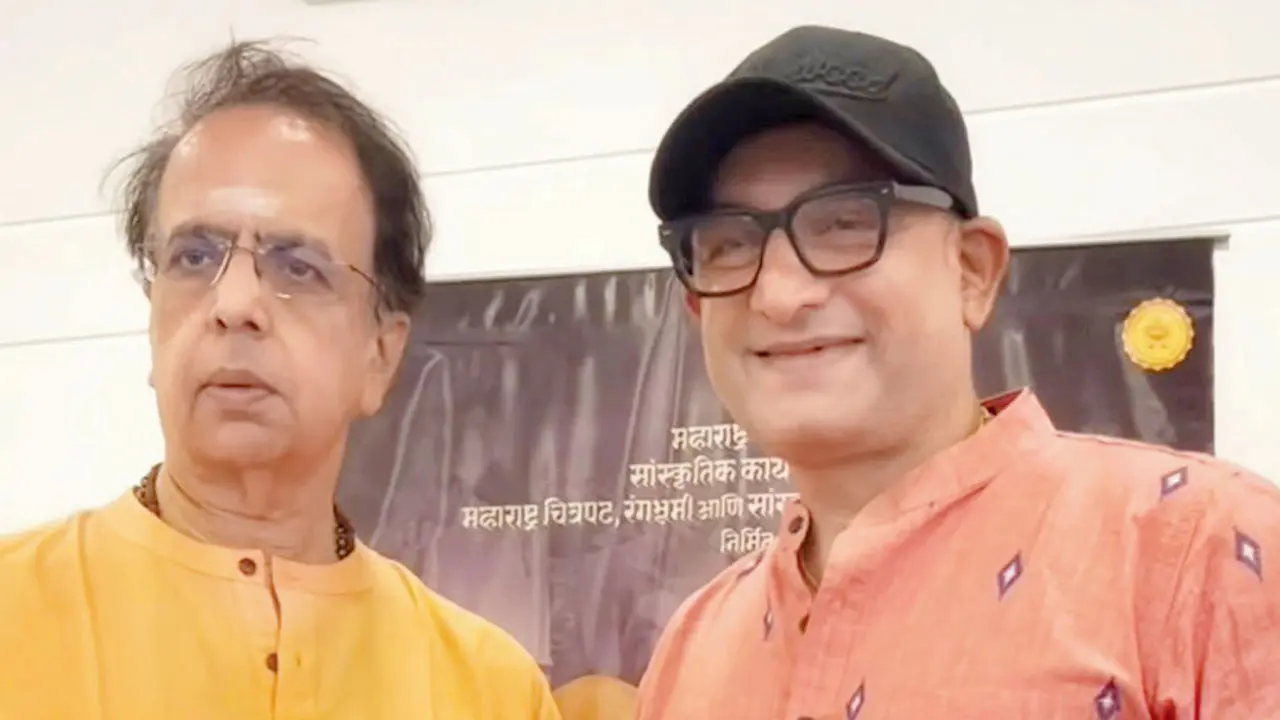
(L-R) Director Ananth Mahadevan and actor Prasad Oak
After Phule, director Ananth Mahadevan kicks off a biopic on Tukdoji Maharaj, who worked towards social equality
Upala KBR (MID-DAY; March 11, 2026)
Only a year after helming Phule (2025), director Ananth Narayan Mahadevan is bringing the tale of another social leader, Rashtrasant Tukdoji Maharaj, to the big screen. On March 9, the director kicked off his Marathi biopic, Khanjiriche Bol, which sees actor Prasad Oak step into Maharaj’s shoes.
Speaking to mid-day from his shoot in Kolhapur, Mahadevan shared, “The film will depict how Tukdoji Maharaj overcame a traumatic childhood, then marshalled the villages of Maharashtra to [bring about] social equality and rural revolution. He steered the country towards a progressive outlook.”
Active from 1937 till his demise in 1968, the leader worked towards rural upliftment and education, even writing the book Gramgeeta. He also aimed for the eradication of untouchability. While Khanjiriche Bol — that is being produced by Maharashtra Film, Stage & Cultural Development Corporation along with Shivam and Kartikee Yadav — will focus on his social messages, the director added that it will also touch upon the leader’s friendship with Mahatma Gandhi.
“Tukdoji Maharaj stood by Gandhiji in the fight against untouchability. Gandhiji helped Tukdoji in enabling the Dalits to enter the Vitthal Temple in Pandharpur in October 1947.”
A government-sponsored festival like IFFI sidelined Phule-Ananth Narayan Mahadevan
10:17 AM

Angry that his film Phule was not considered for the International Film Festival of India, director Ananth Mahadevan claims the biopic was snubbed in the Oscar race and has been ‘silently boycotted’
Upala KBR (MID-DAY; November 20, 2025)
Having one’s movie screened at the International Film Festival of India (IFFI) is a matter of pride and joy. Filmmaker Ananth Narayan Mahadevan had hoped to experience it with Phule, his biopic on social reformer Jyotirao Phule. But as the upcoming film festival unveiled its schedule, the director is disheartened that his Pratik Gandhi and Patralekhaa-starrer has not made the cut.
“I feel angry, pained, and helpless. A government-sponsored festival like IFFI sidelined Phule, despite it being an honest film with credible actors,” he tells mid-day.
The movie, released on April 25, chronicled how the social reformer and his wife Savitribai fought casteism and championed women’s education in the 19th century. What stings Mahadevan further is that Homebound, which explores casteism prevalent in the country today, has been selected as India’s official entry to the Academy Awards 2026 while his casteism drama has been “silently boycotted”.
“Phule was not selected for the Oscars either. This is the original caste revolution that happened in India. I haven’t seen Homebound, but I know it’s about caste differences today. When you have cinema of a scale like that of Phule, including solid performances and the relevance of [its subject] to contemporary times, it [being overlooked] is sad. I feel some kind of silent boycott is happening. If it was a bad film, I’d understand. But considering the kind of films that have been selected at IFFI, it’s disheartening. There are 26 films in the Indian Panorama section. Are you saying it does not deserve a chance among 26 movies?”
During the Independence Day celebrations this year, Prime Minister Narendra Modi announced that the government will mark Phule’s 200th birth anniversary in 2027 with special events. Pleased as he is that the social reformer’s contributions continue to reverberate in society even today, the director is saddened that his big-screen story didn’t get as much support.
“Prime Minister Narendra Modi spoke about the bicentenary, but not once when the film was released. He could have supported it by making it tax-free. Not a single state government gave Phule a tax-free status. The producers had applied for it and were promised, but it didn’t come true.”
Pahalgam attack: Boycott calls for Abir Gulaal grows
11:02 AM

Rishabh Suri (HINDUSTAN TIMES; April 24, 2025)
Screening of Phule cancelled
A special screening of Pratik Gandhi and Patralekhaa-starrer Phule, scheduled for Wednesday in Delhi with Maharashtra state minister Ramdas Athawale in attendance, was cancelled. Director Ananth Narayan Mahadevan condemned the act on X: “In the wake of this horrific terror attack, our hearts are with the victims and families. We stand united in our commitment to peace, resilience, and humanity. Violence will never silence the voice of compassion or break the strength of a country that stands together as we mourn.” The upcoming film is based on the lives of social reformers Jyotirao Phule and Savitribai Phule.
Boycott calls for Abir Gulaal
Upcoming film Abir Gulaal has already courted controversy over the casting of Pakistani actor Fawad Khan. In the wake of the attack, boycott calls for the film, which also stars Vaani Kapoor, began trending on X.
Ashoke Pandit, president of the Indian Film and Television Directors’ Association (IFTDA), tells us, “We as a federation have requested with folded hands to not encourage Pakistanis. They come up with bulls***t reasons like artiste, community... People think, ‘Agar mere ghar ka aadmi nahin mara toh f**k it, I don’t care’. (But) if this film’s heroine or makers’ family members had been shot by the terrorists, they won’t have worked (with Fawad)... Ultimately, it is nation first.”
Ashoke is also critical of cricketers playing matches with Pakistan in Dubai, like the Champion’s Trophy match earlier this year: “Woh bandook se maar rahe hain, aur hum bat ball ke saath khel rahe hain unke saath. Things have reached a saturation point. Public naraaz hai, aur baahar nikalke maaregi cricketers, artistes, aur singers ko. We will issue an order that anyone who works with a Pakistani artiste will be boycotted by the industry.”
Birendra Nath Tiwari, president of Federation of Western India Cine Employees (FWICE), makes it clear, “We will not let Abir Gulaal release in India. Action will be taken against the makers.”
As a filmmaker, I would not like my film to be touched-Ananth Narayan Mahadevan
10:16 AM

Mihir Bhanage (BOMBAY TIMES; April 19, 2025)
Anurag Kashyap’s post about the CBFC’s alleged approach to films about the caste system in India added fuel to the already raging fire around the release of Phule, a film based on the life of Mahatma Jyotiba Phule and Savitribai Phule. While the CBFC granted Phule a ‘U’ certificate on April 7, it had asked for certain edits, including the removal of references like ‘Mahar’, ‘Mang’, ‘Peshwai’, and a modification of the phrase “3,000 saal purani ghulami” to “kai saal purani ghulami.” But did CBFC suggest any cuts in the film?
“No, just these tweaks,” filmmaker Ananth Mahadevan tells us, adding that the suggestions were implemented. In a chat with us, the filmmaker addresses the controversy and speaks about the role of censorship in filmmaking.
Phule was certified with a 'U' rating but after the trailer was released, controversy erupted. You said the CBFC suggested changes. Were there any cuts suggested as well?
Fortunately, there were no cuts suggested by the CBFC. The so-called amendments, or tweaks as I call them, were inconsequential. Even if those weren’t implemented, it wouldn’t have made a difference. I guess we’re all becoming a little over-sensitive and want to soften things. But the audience is knowledgeable. Even if you remove certain words or modify phrases, they’ll understand it. I think some people watched the trailer and jumped the gun. They concluded that the film is against a particular community. It's not. Yes, there are conflicts, but the beauty of Jyotiba and Savitribai Phule’s life is the harmony and interaction they had with all communities.
Would you call these suggested tweaks fair?
I am quite amused at these things, because it was not something so major to be labelled fair or unfair. As a filmmaker, I would not like my film to be touched, and that too with such insignificant and innocuous changes. I don’t understand why we are so nervous about how people will react, or how sensitive they are. I think we should respect the sensibilities and the sensitivities of the audience. This film does not exaggerate or fictionalize history. It does not even interpret history. All it does is represent history. When you're so honest about a particular subject or with the people while making the film, you should also respect the intelligence of the audience.
Have these changes hampered the flow of the film, or dissemination of history in any way, considering your stand that the film is based on facts and history?
Fortunately, all this hasn’t reduced the impact of the film. It still conveys everything it has to without hiding or making anything subdued. That said, the original word always is stronger than a synonym or alternative for it. And I would always prefer the stronger words to convey what I want to.
There’s been a lot of support for the film from cinephiles as well as filmmakers, including Anurag Kashyap who highlighted the CBFC’s alleged bias in a post on social media. Your thoughts about this.
Yes, there’s been a lot of support, even from political parties, saying the film should be shown in its entirety. I think that’s encouraging and positive. There will always be disgruntled voices but that has been virtually eclipsed by this unanimous support.
You deferred the release of the film by a couple of weeks for ‘things to settle down’. How did that affect you and the team?
The only thing that I felt a little upset about was that we wanted to release it on April 11, which was Jyotiba’s birth anniversary. That would have gone down in history for posterity. But we had to sacrifice that for the betterment of the film and to help it reach the maximum number of people. It was necessary to address these concerns of those who had an objection. So, we took that little time for things to calm down.
Do you think there's a solution to this issue of people jumping the gun without looking at the full picture?
I don't think so. Not even in the future, because we are an immature society. This comes forth either through some unnecessary prejudices or provocations or whatever, but we do not seem to have progressed. In fact, we seem to have regressed in many ways, despite many things that Jyotiba and Savitribai fought for, like women’s education and independence, being achieved. But caste discrimination and gender discrimination continue to plague our society. These issues are not going to be solved so easily. So, the revolution continues. We are still so self-centered and materialistic. Technological advancements do not cover up your social regressions. What about conscience? What about social relevance?
Given the current state of cinema in the country, do you think it is difficult to make a film that highlights reality or history?
See, if you're an honest filmmaker, if you're a socially relevant filmmaker, and if you are a responsible filmmaker, you will not harbour any fears of how society is going to react or what impact it's going to have on minds. For me, it is very important to not let these things bother me. I delve into a subject, treat it the way it deserves to be treated - with honesty and with the passion that I always had, and then leave the rest to the audience. My duty is to make that film the way it should be made.
The CBFC is often referred to as the censor board, but it’s the Central Board of Film Certification. There’s a difference between censorship and certification that many aren’t aware of.
Yes, certification happens abroad where films are certified as per their content – universal, with parental guidance, restricted viewing and strictly for adults etc. In India, we did try to amend the process, but the problem is that with the certification, we retained the censorship too. I agree that there should be self-censorship while making a film and there is a cinematic language that one must use for that. I do it too. But by suggesting cuts in a film, you are just defeating the very purpose of certification. Then you might as well call yourself a censor board and not a board of film certification.
-------------------------
The lines in the trailer were taken out of context: Pratik Gandhi
In a recent interview to PTI, Pratik Gandhi who plays the title role of Jyotirao Phule in Phule, expressed his disappointment over the film’s postponement and the controversy around it. “I was shooting somewhere when I came to know that it (the film) is pushed by two weeks. I was disheartened immediately. But then I spoke to them (makers) and I got to know the reasons... These are the reasons over which you don’t have any control,” he said.
Talking about the controversy around the film and the push back from the Brahmin community, Gandhi said, “There was a sudden (uproar by a) set of people who felt that it was against them or their ideology... I was surprised by the reaction, but I can also understand where they are coming from. I’m just requesting them to watch the film and then make their opinion because whatever they have seen is just a trailer. So what you have seen right now are lines that are out of context,” he said.
Phule director Ananth Narayan Mahadevan clarifies CBFC made suggestions, not cuts
8:43 AM
HINDUSTAN TIMES (April 13, 2025)
Director Ananth Narayan Mahadevan clarified that the Central Board of Film Certification (CBFC) suggested amendments, not cuts, for Phule. “They had suggested some amendments, I wouldn’t call it cuts. I want to clarify that there are no cuts as such,” he told PTI. He also added that the film’s release was delayed due to protests from the Brahmin community, not the CBFC’s suggestions.
Ananth also addressed the controversy: “The Brahmins got carried away by a two-minute trailer,” stressing there was nothing objectionable in the film. He explained that the protests led the producers to push the release date to April 25 to clear the air. “We did not want to lose out on the audience... Let’s postpone it for two more weeks and clear all the controversies.”
The biopic, starring Pratik Gandhi as Jyotirao Phule and Patralekhaa as Savitribai Phule (anti-caste social reformers), was initially set to release this Friday. The CBFC had issued a ‘U’ certificate on April 7, with minor changes, including removing certain terms and altering visuals. After the trailer’s release on April 10, the Brahmin community raised objections, claiming a poor portrayal, with Maharashtra’s Hindu Mahasangh president Anand Dave expressing his displeasure.
CBFC clears Akshay Kumar's historical drama Kesari Chapter 2 with no cuts and 'A' certificate
9:01 AM
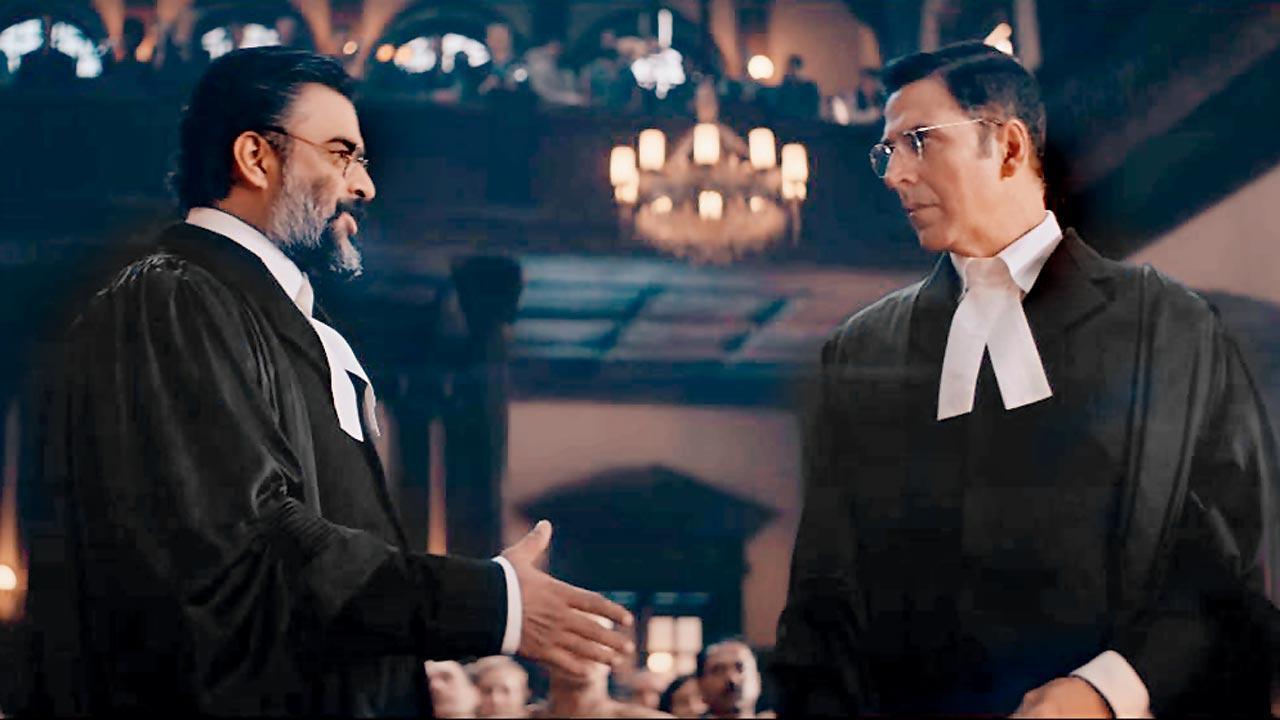
While the CBFC hands out several cuts to Phule, historical drama Kesari: Chapter 2 cleared with an ‘A’ certificate and no cuts
Mohar Basu (MID-DAY; April 11, 2025)
Recently, the Central Board of Film Certification (CBFC) granted a ‘U’ certificate to Ananth Narayan Mahadevan’s Phule after instructing that several caste references be removed. While the Prasoon Joshi-led board has come down hard on one chapter of history, it has cleared Akshay Kumar’s historical drama Kesari Chapter 2 with no cuts. Insiders tell mid-day that it has been given an ‘A’ certificate, with director Karan Singh Tyagi asked to submit a No Objection Certificate (NOC) from the Animal Welfare Board for certain sequences.
The film, also starring R Madhavan and Ananya Panday, chronicles the aftermath of the Jallianwala Bagh massacre as Kumar’s character C Sankaran Nair fights for justice.
An industry insider says, “The CBFC’s current approach is haphazard. Kesari Chapter 2 is a historical drama, so was Chhaava, but both carry separate certifications. If the gore in Kesari is the reason for its ‘A’ certificate, Chhaava’s last half-hour was gory too. That said, one can argue that the makers of Kesari provided historical proof of everything shown in the film.”
Another source notes that it’s a relief that the historical drama has been cleared without any cuts. “The CBFC has become strict when it comes to films dealing with caste, religion, or political themes. Thankfully, with Kesari, they haven’t asked for any narrative changes,” says the source.
The CBFC’s snip-happy attitude has come sharply in focus again because of Phule, starring Pratik Gandhi and Patralekhaa. The biopic of social reformer Jyotirao Phule, who fought casteism, has been handed out many cuts. “The board has sought removal of terms ‘Mahar’, ‘Mang’ and ‘Peshwai’. In subtitles, the term ‘caste’ has been replaced with ‘varna’. The term ‘shudra’ has been removed as well,” says a source.
The board’s scrutiny was just as severe with the recent Marathi-Kannada film, Follower. The source adds, “The makers had to remove mentions of political parties and visuals of political flags.”
Ananth Mahadevan pushes Phule's release after objection: "It is not an agenda film"
9:53 AM

Director Ananth Mahadevan delays April 11 release of social reformer’s biopic after Brahmin organisations raise questions over their depiction; asserts it shows them in a good light
Priyanka Sharma (MID-DAY; April 8, 2025)
Coinciding with Mahatma Jyotirao Phule’s birth anniversary on April 11, director Ananth Mahadevan’s film, Phule, was set to arrive in theatres this week. But not anymore. The makers have decided to push the Pratik Gandhi-starrer’s release by two weeks, after sections of the Brahmin community have raised doubts over their representation in the film.
“Many letters and notices have come from different Brahmin organizations. There is some misunderstanding after the trailer was launched. We want to clear those doubts so that there is no hassle in viewership,” shares the director.
The biopic, written by Mahadevan and Muazzam Beg, traces how the social reformer and his wife Savitribai Phule fought casteism and championed women’s education in the 19th century. Akhil Bhartiya Brahmin Samaj and Parshuram Aarthik Vikas Mahamandal are among the organisations that have expressed their concern over the film.
“When I met the representatives [of the Akhil Bhartiya Brahmin Samaj] and told them about how we’ve shown that [certain] Brahmins helped Jyotiba Phule set up 20 schools, they were happy. When Phule opened the Satyashodhak Samaj, these Brahmins were the pillars. I’m a staunch Brahmin. Why will I [malign] my community? We have only shown the facts. It’s not an agenda film,” states the director.
Does he intend to show Phule to these sections before its release? That’s a hard no for Mahadevan. “It’ll look as if we are justifying the film. You justify something if you’re guilty. They can see the film when it releases. The CBFC [Central Board of Film Certification] gave it a U certificate.”
Many Hindi films have opted against a theatrical release in the next two-three months
8:22 AM
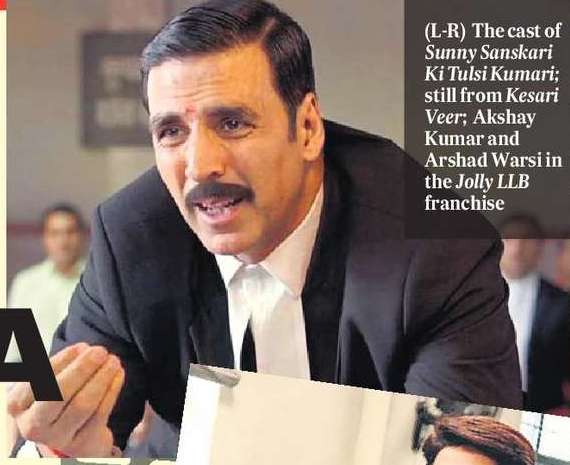
Many Hindi films have opted against a theatrical release in the next two-three months, we find out why
Rishabh Suri (HINDUSTAN TIMES; March 19, 2025)
Amid a flurry of OTT releases, a film releasing in theatres is a big deal in itself these days. It is almost a gamble, given how picky audiences are about a theatrical watch. One look at the 2025 calendar of releases, and you will realize that the next three months seem to be a rough patch for the industry. Among others, the upcoming Indian Premier League (IPL) is said to be one of the reasons for the lean patch.
Looking at April alone, many releases have been shifted. The Akshay Kumar and Arshad Warsi-starrer Jolly LLB 3 will now hit the screens in August. Filmmaker Karan Johar’s Sunny Sanskari Ki Tulsi Kumari, starring Varun Dhawan, Janhvi Kapoor and Sanya Malhotra, will now hit the screens on September 12 instead of April 18. A source tells us that while the shoot started later than intended, businessman Adar Poonawalla buying 50% stake in KJo’s Dharma Productions also added to the delay.
Metro... In Dino was originally set to come out on November 29 last year, but it got pushed to July 4. Sharing why the film wasn’t slated for a summer release, a source close to the project informs us: “We wanted a desired window looking at the other releases. So, we settled on July 4.”
Of course, the trade is not happy with the lean patch. Expert Atul Mohan says, “Every month sees one or two big releases, but small filmmakers don’t prefer to release their films in theatres when the IPL is on. So, they push their dates by a month or two.”
Ananth Narayan Mahadevan, director of Phule, isn’t perturbed by the IPL or other films releasing alongside: “April 10 is the 197th birth anniversary of Mahatma Jyotirao Phule. So, how can we miss out on that date? There won’t be any point otherwise.”
Films set to hit the screens this summer
April currently has four theatrical releases that are likely to hit the screens as scheduled — Jaat and Bhool Chuk Maaf on April 10, Phule on April 11 and The Bhootnii on April 18. May has two releases — Raid 2 and Kesari Veer.
June will see three films in theatres — Housefull 5, Maalik and Maa.
People have found The Storyteller a relief from the edgy, violent cinema of today-Ananth Narayan Mahadevan
10:21 AM
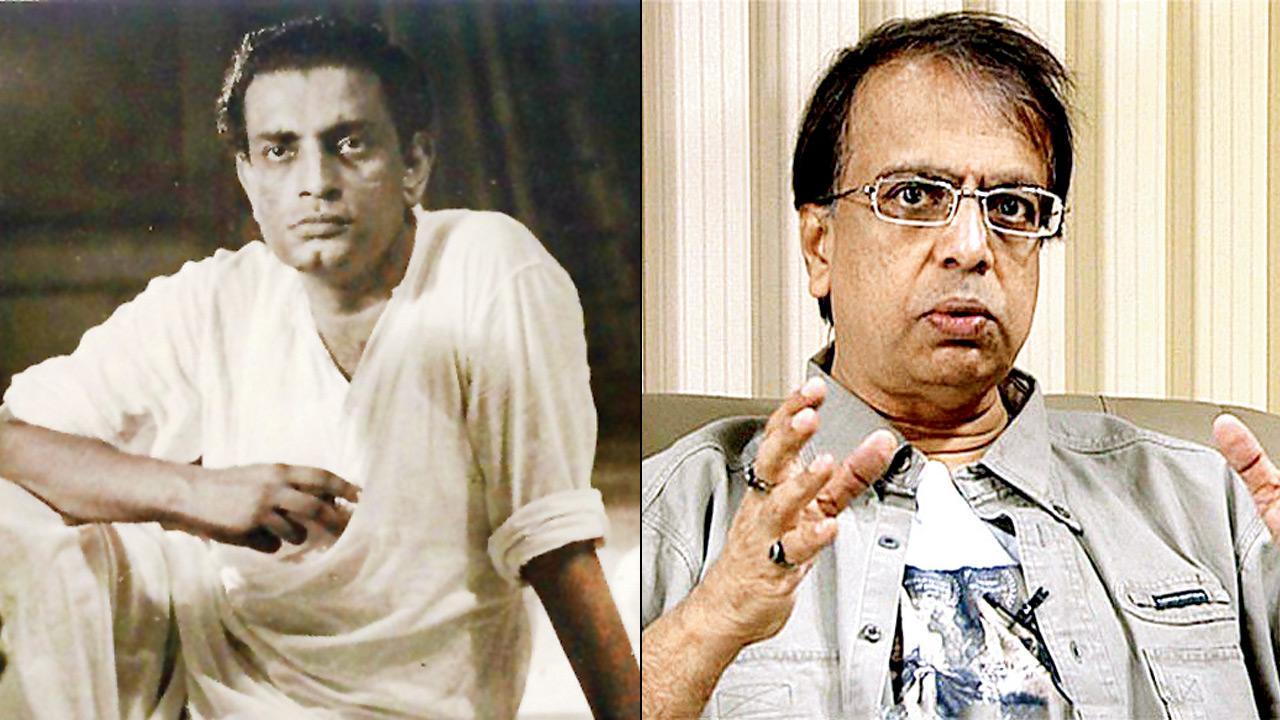
The Storyteller director Ananth Mahadevan to make a second instalment with Paresh Rawal reprising the character of Tarini Khuro, created by Satyajit Ray
Upala KBR (MID-DAY; February 15, 2025)
Ahead of The Storyteller’s première on Disney+ Hotstar on January 29, director Ananth Mahadevan had rued that he would’ve liked to see the Paresh Rawal and Adil Hussain-starrer play out on the big screen (‘One producer didn’t know who Satyajit Ray was’, Jan 24). Today, the director is elated at the warm reception his drama—an adaptation of Satyajit Ray’s short story, Golpo Boliye Tarini Khuro—is receiving. Encouraged by the response, Mahadevan has decided to make a second instalment that will see Rawal reprise the role of Tarini Khuro.
Mahadevan reveals that he has reached out to Ray’s son, Sandeep Ray, who had granted him the adaptation rights of The Storyteller. “A few days ago, I wrote to Sandip Ray, saying that he must have heard about the acclaim that the film is getting. I told him I’d like to make another movie on Tarini Khuro. Satyajit Ray had written lots of stories. People have found The Storyteller a relief from the edgy, violent cinema of today. That positive response made Paresh and me think of extending it. I’ve ordered the last available [book] of Tarini Khuro’s stories,” grins the director, eager to take the character on another adventure.
To Mahadevan, the audience’s love for The Storyteller is a marker of how “sensible content” will always attract eyeballs. It has also shown him that viewers are willing to invest in a story.
The director asserts, “This is the awakening of the audience and recognizing what cinema is. I was found guilty by many of making slow-paced movies. But with the audience waking up to [the power of] storytelling, they have interpreted it differently. I cannot [adopt] a James Bond pace in The Storyteller. The script dictates the pace.”
Satyajit Ray was probably appreciated only when he won awards-Adil Hussain
8:28 AM
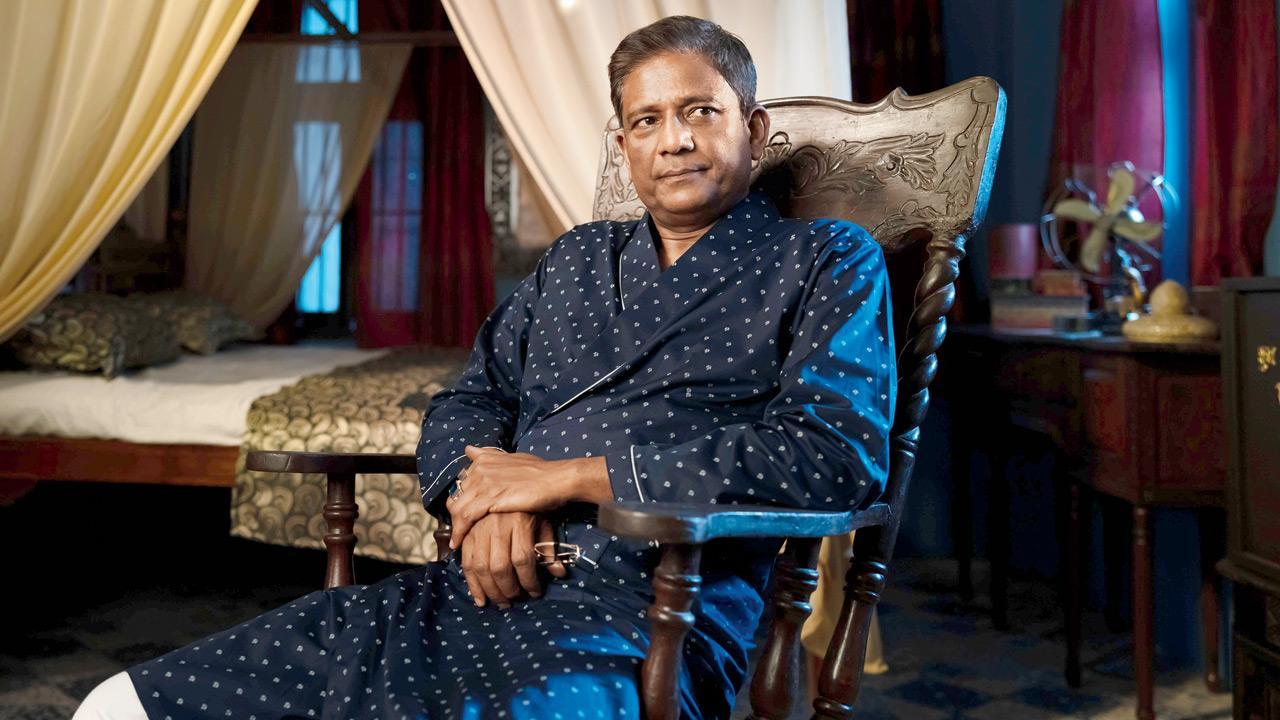
Adil Hussain on working with director Mahadevan in The Storyteller, inspired by Satyajit Ray’s Golpo Boliye Tarini Khuro
Letty Mariam Abraham (MID-DAY; February 4, 2025)
Hailing from a town on the border of Assam and West Bengal, Adil Hussain grew up in a melting pot of culture—films, literature, dance, and music. His father introduced him to Rabindranath Tagore and Satyajit Ray’s works. So, when director Ananth Narayan Mahadevan offered him The Storyteller—inspired by Ray’s short story Golpo Boliye Tarini Khuro—he knew he was going “to be part of something beautiful.”
“I think any actor, especially the ones I admire, would definitely come on board for it. The Storyteller is such a beautiful [story]. It is an actual delight to embody a character written by Satyajit Ray and wonderfully brought [to screen] by Ananth ji,” states the actor, who plays a Gujarati businessman suffering from insomnia.
He credits Mahadevan for his choice of actors—Revathy, Paresh Rawal, and Tannishtha Chatterjee—and the way he tells the story.
“It’s a delight to work with him because he is a sucker for good and untold stories. I trusted him completely, and I was right. Recently, I shot another film with him called The Past Tense—that’s another brilliant and true story,” says the actor. Hussain acknowledges that while Mahadevan has not received his due recognition, this is true of many great filmmakers throughout history.
“Tapan Sinha is the finest filmmaker in India, with films like Ek Doctor Ki Maut [1990] and Safed Haathi [1978], and has made several phenomenal Bengali films. Yet, very few people know of him. Only the rasiks probably know of his legacy. Even Satyajit Ray was probably appreciated only when he won awards. Otherwise, who would have known about him, except for some people in Bengal? So, with Ananth ji, I think it is a difficult path he has taken to tell these stories, and he has to face the consequences—just as I accept the consequences of being part of independent films. I take it with a lot of gratitude and delight,” adds Hussain.
When asked if it is a good time for independent cinema, the actor believes India is in the “initial phase of a good time.” “It can grow into a great banyan tree. It would be wonderful to see that happen in my lifetime. And I hope that actors—those who believe in the craft and the joy of acting rather than the gloss and the glitter—will have more space in the future,” he shares.
One producer didn’t even know who Satyajit Ray was-Ananth Narayan Mahadevan
8:32 AM

As The Storyteller premières online next week, director Ananth Mahadevan recalls his three-year struggle to find producers for the adaptation of Satyajit Ray’s short story
Upala KBR (MID-DAY; January 24, 2025)
One would think Ananth Mahadevan would be happy that his directorial venture, The Storyteller, is set to drop on Disney+ Hotstar on January 28. But the director has mixed feelings about his Paresh Rawal-starrer skipping the theatrical route.
“It was Jio’s decision to release it on the platform and not have a theatrical release. With the response films are getting in the theatres these days, it’s a question of taking a chance. I would’ve liked it to have a limited release,” says Mahadevan.
Also starring Adil Hussain and Revathy, the film is based on Satyajit Ray’s short story, Golpo Boliye Tarini Khuro. It revolves around an elderly man, known for spinning grand tales. Despite having the foundation of one of Ray’s best stories, Mahadevan says making the film was challenging, with some producers not even knowing of the legendary filmmaker-writer.
“It was heartbreaking. Nobody believed in a film on Ray in his centenary year. Producers wanted drama and high-pitched films. One producer didn’t even know who Ray was. I paraded the script in front of six producers over three years till Suchhanda Chatterjee came on board. Any other actor would’ve given up, but Paresh stood behind me steadfast.”
In 2022, The Storyteller premièred at the Busan International Film Festival. It was also screened at the Kerala Film Festival 2022, International Film Festival of India 2022, and the Palm Springs International Film Festival 2023. Encouraged by the positive response at the film galas, Mahadevan was hopeful that it could be India’s official entry to the Oscars in 2024.
Recalling submitting the movie to the Film Federation of India, Mahadevan says, “We tried our best to send it to the 2024 Oscars as I thought it would be a fitting entry. But I was told by a jury member that we missed it by a whisker. That year, a film on the Kerala floods [the Malayalam film, 2018] went for the Oscars because it highlighted an ecological issue. If this is the kind of judgment they have of Oscar entries, then they are sitting on the wrong chairs. The Storyteller was [based] on Ray’s story, it won accolades everywhere. Yet they didn’t send it. It was shattering. It didn’t even feature in the National Awards.”
Only Salman Khan, Rashmika Mandanna have full access to Sikandar's script
9:11 AM

In a bid to keep the film’s narrative confidential, supporting actors of Salman Khan’s Sikandar are being given access to only bit-sized portions of the entire script
Upala KBR (MID-DAY; January 10, 2025)
When the cast of the Avengers franchise participated in a mammoth promotional world tour for the 2019 actioner, a story that greatly amused fans was that only a handful of actors of the American multi-starrer were given access to the entire script. In a bid to ensure that the film’s contents did not make their way to the public domain before it hit screens, the makers had allowed most of the cast members access to only those scenes that featured them. Back home in India, matters are no different.
mid-day has it that while Salman Khan and Rashmika Mandanna, the lead actors of A R Murugadoss’ Sikandar, were kept abreast of the storyline, the film’s supporting stars, Kajal Aggarwal, Sathyaraj, Ananth Narayan Mahadevan, Sharman Joshi, Prateik Babbar, Nawab Shah, and Anjini Dhawan, were given limited access to the script.
Confirming the development to mid-day, an insider adds that the supporting actors have also been made to sign a non-disclosure agreement. “They are only being told about their scenes a few days before the filming leg begins. The makers are being secretive about the story and script as they want to keep everything relating to it confidential. Each aspect will be unveiled as a surprise, and fans will learn about the characters only when the first trailer is released,” says the source.
At a time when behind-the-scenes set images are making their way to social media without the knowledge of filmmakers, the measures being taken by Murugadoss and producer Sajid Nadiadwala seem appropriate.
“There has been speculation that the film is an adaptation of Murugadoss’s Tamil movie, Sarkar [2018], but it is not true. If audiences believe this film is a remake, they may create comparison videos on YouTube which may lead to unnecessary criticism. The makers have maintained that this is an original story, and the script has been put together by Sajid and Murugadoss.”
Given that the film features an array of actors across film industries, the makers are also taking measures to ensure that the crew adheres to a structured shooting schedule.
“Everything is being done in an organized manner so that nobody needs to [return to] reshoot any portion. The dubbing is also being done in the same way—once an actor shoots a scene, they complete the dubbing immediately. Currently, the last schedule is being filmed in Mumbai and will be completed in February, when crucial scenes with Salman and the antagonists will be shot.”
mid-day reached out to Murugadoss, but did not hear from him till press time.
Phule director Ananth Mahadevan undeterred about box office clash with Prabhas, Yash, Akshay Kumar
9:42 AM
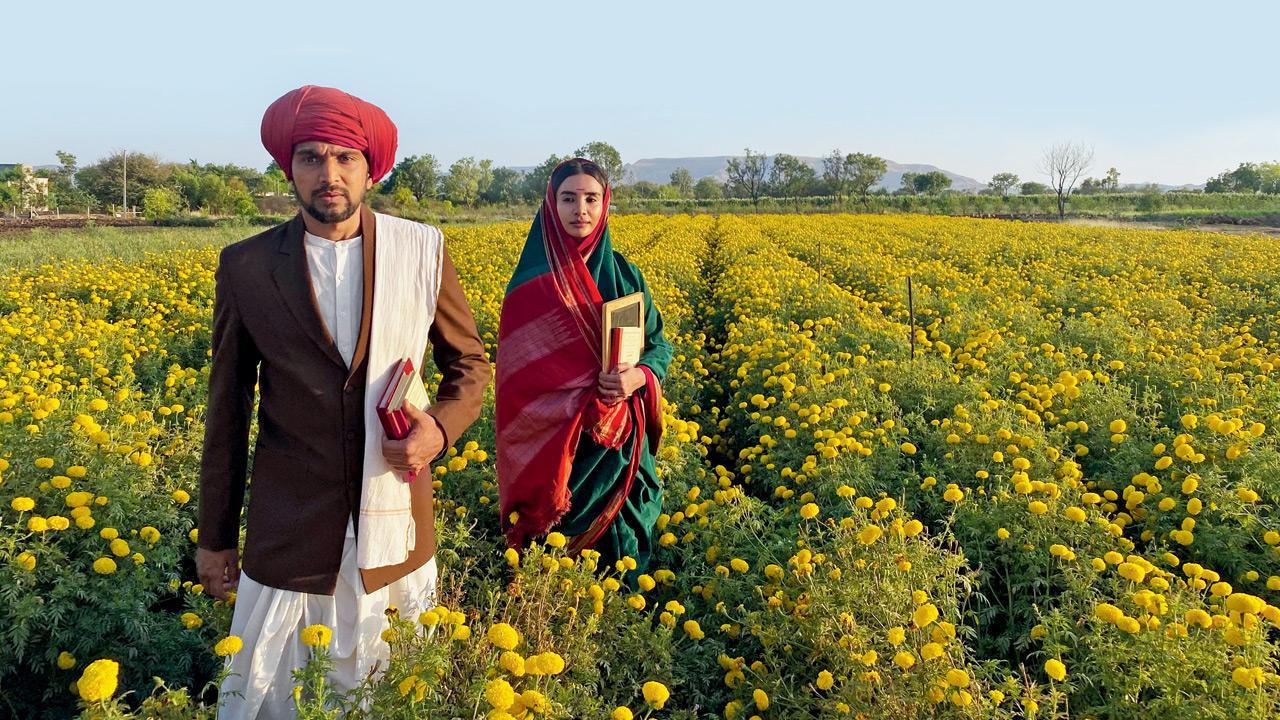
With April 11 marking the 197th birth anniversary of social activist Jyotirao Govindrao Phule, on whom his film Phule is based, filmmaker Anant Mahadevan says he’s undeterred about locking horns with mammoth projects fronted by Prabhas, Akshay Kumar, and Yash
Upala KBR (MID-DAY; January 7, 2025)
At a time when the volume of content being churned out by the film industry often leads to a tussle for screens across India, releasing a small-budget offering alongside three big-budget productions may seem like a poorly calculated move. But April 11 is a date of significance for Ananth Narayan Mahadevan, given that it coincides with the 197th birth anniversary of social activist Jyotirao Govindrao Phule, on whom his film, Phule, is based.
Mahadevan acknowledges that releasing the movie merely a day after mammoth productions like Prabhas’s The Raja Saab, Yash’s Toxic, and Akshay Kumar’s Jolly LLB 3 hit the theatres may seem daunting for a filmmaker, but he is certain that the Pratik Gandhi and Patralekhaa-starrer will catch the attention of the audience he intends to target.
“April 11 is a milestone; a date to celebrate. It is relevant for us to release the film on that day, regardless of which other film is also released. Our date is finalised. In March, we will begin promoting Phule, and ensure that people belonging to each corner of India know what the film is about. I have shot at actual locations, like at a wada [fortress] in Bhor, Kolhapur, and Satara. I did not shoot on a set because my producers, Ritesh and Anuya Kudecha, insisted that the film be made as authentically as possible,” says Mahadevan.
Celebrating the socialists, Phule, and his wife Savitribai (played by Patralekhaa) for their innumerable contributions to society, Mahadevan calls the former the “Abraham Lincoln of India.”
“When Jyotirao learnt that Lincoln abolished slavery in America, he was deeply inspired. He was fighting a battle on two fronts—against the British, and [against society]. The fight was to dispel practices like gender and caste discrimination and promote the education of the girl child. Today if women have an opinion, are educated, and are taken seriously, [it is because of them]. Savitribai and Fatima Sheikh [Indian educator] were the first female teachers in India.”
Ask him if he considered casting Rajkummar Rao as the film’s leading man to have the husband-and-wife duo Rao and Patralekhaa reprise the relationship on screen, and he responds in the negative. “Pratik is an effortless actor,” he backs his leading man.
“He is a chameleon, and we can all just marvel at him. He works hard on each role, but that effort isn’t made obvious on the screen, and that is what acting is all about. Of course, Rajkummar is very accomplished, and I could have approached him via Patralekhaa, but when I saw Pratik and Patralekhaa together, I felt the real characters had come alive.”
Paresh Rawal, Aditya Rawal to share screen space for the first time in Ananth Mahadevan's Past Tense
8:35 AM
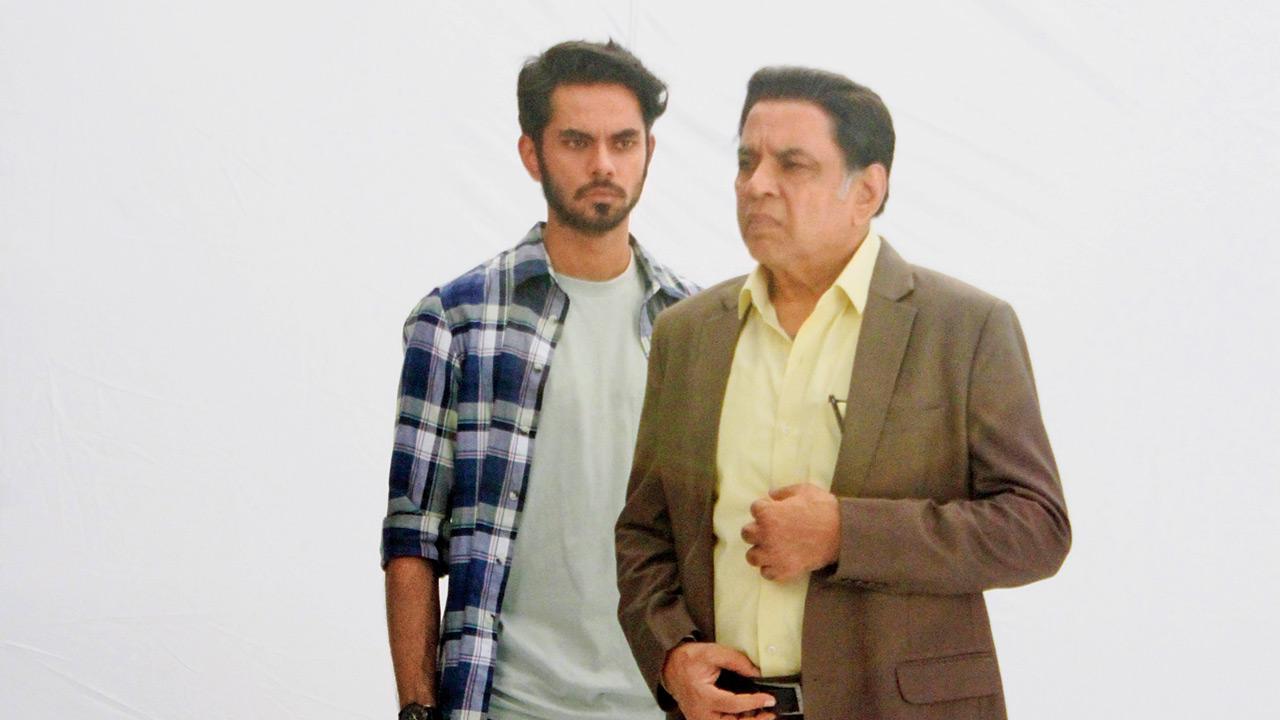
Director Ananth Mahadevan on how Paresh Rawal and Aditya shed their father-son mindset to play strangers in Past Tense
Upala KBR (MID-DAY; December 16, 2024)
Director Ananth Mahadevan’s next, Past Tense, sees father-son Paresh Rawal and Aditya Rawal share screen space for the first time. What makes their on-screen dynamics interesting is that they play two strangers confronting each other in the human drama. The director says that he had gone to narrate the script to Paresh at home, when he met Aditya.
“As I started conversing with Aditya, I realized he was the perfect fit for Past Tense. Rarely do you find an actor so sensitive to his socio-economic environment, and having cinematic sensibilities,” says Mahadevan of the actor, who was last seen in Bambai Meri Jaan (2023).
Inspired by a real-life episode, Past Tense revolves around a young man, who lives with his adoptive parents and is consumed by the desire to know why his biological parents abandoned him. “The newspapers had reported about this boy, who had discovered that he was abandoned by his biological parents [and set out to find them]. The media reports didn’t go that deep, but I took it beyond the abandonment and discovery. It’s a mistake he makes because sometimes the truth can hit you so badly that you wish you had never sought it,” shares the director.
While Aditya plays the protagonist, Paresh essays one of the five pivotal characters he meets on his journey. Mahadevan says the two actors had to undergo workshops to slip into their roles. “Their chemistry was intriguing to watch. They had to shed the father-son mindset. Since it was the first time they were acting together, it must have taken them a lot of energy to assume their volatile parts.”
The film also stars Adil Hussain and Sharib Hashmi.
'Ghunghat Ke Pat Khol' director Ananth Mahadevan: "I tell people one of my films is going to Oscars"
9:51 AM

As Ghunghat Ke Pat Khol is acquired by an OTT platform, director Ananth Mahadevan says the movie will reach a wider audience; insists it inspired India’s Oscar entry Laapataa Ladies
Upala KBR (MID-DAY; December 12, 2024)
Ananth Mahadevan’s first feature film, Ghunghat Ke Pat Khol (1999), is getting a new lease of life. In May, the Joy Sengupta and Sucheta Khanna-starrer came into focus when Mahadevan claimed that Kiran Rao’s acclaimed work, Laapataa Ladies, borrowed heavily from it (‘Mix-up in train and station straight from my film’, May 10). Now, the digital rights of Ghunghat Ke Pat Khol have been bought by Shemaroo, and the movie will stream on ShemarooMe from January.
Mahadevan says there has been renewed interest in the film ever since he pointed out that Laapataa Ladies—which revolves around two brides getting switched mistakenly, owing to their veiled faces—was inspired from his movie that had the same premise.
“It’s a pity that Ghunghat… had a two-time telecast on Doordarshan in 1999. As soon as [the officials at Doordarshan] got to know that Laapataa Ladies was similar to Ghunghat, they immediately called me and took rights for a three-time telecast. Now, [the OTT release] will ensure a wider reach,” says the director.
Laapataa Ladies has been selected as India’s official entry to the 2025 Oscars. As Rao takes the Sparsh Shrivastava, Pratibha Ranta, Nitanshi Goel and Ravi Kishen-starrer to the global stage, Mahadevan says, “Nobody will ever admit to it or prove that Laapataa Ladies was inspired. Though nothing can be done about it, the coincidences are too strong. When people call and tell me that it has been selected as India’s entry for the Oscars, I tell them, ‘That’s great. It’s the first time one of my films is going to the Academy Awards.’”
Meanwhile, Ketan Maroo, who bought the digital rights of Ghunghat Ke Pat Khol, is confident that the 25-year-old film has an eager audience. “People are saying that another movie is inspired by it, so there will be curiosity,” he states.
Ananth Narayan Mahadevan claims Laapataa Ladies has similar plot points as his 1999 movie Ghunghat Ke Pat Khol
8:18 AM
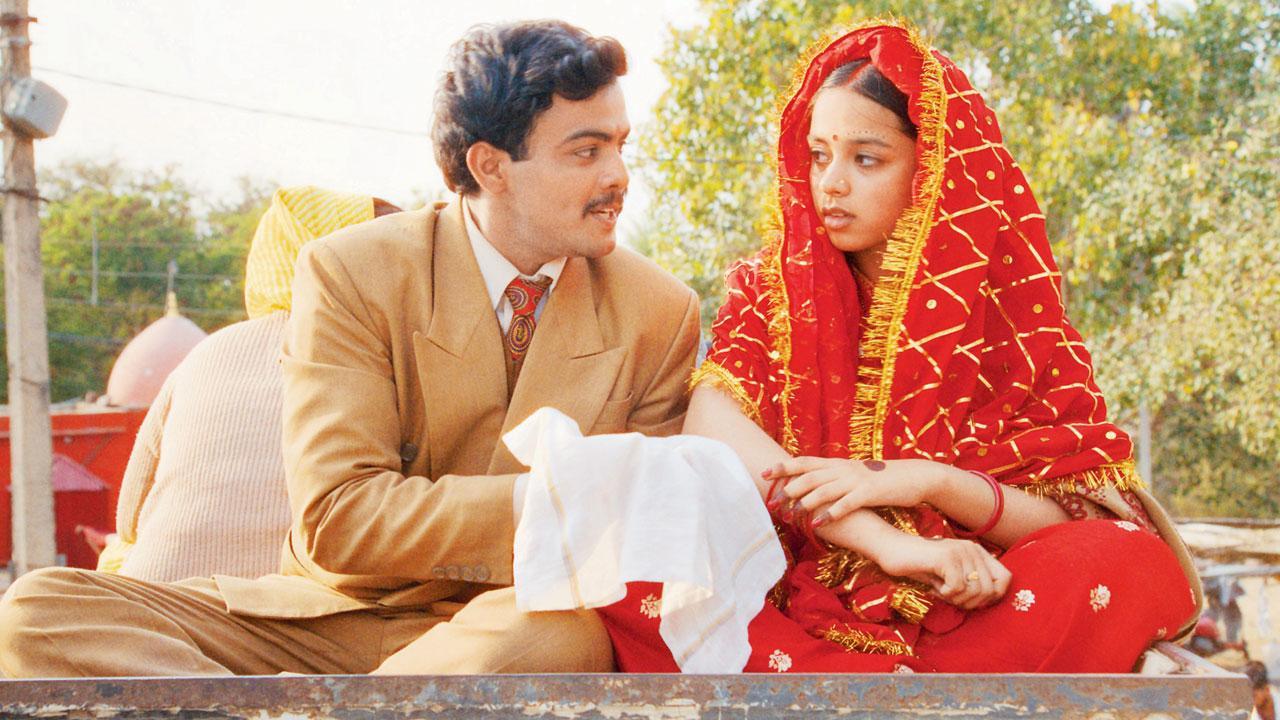
Filmmaker Mahadevan claims Laapataa Ladies has similar plot points as his 1999 movie Ghunghat Ke Pat Khol, which revolved around two brides; writer of Rao’s comedy asserts his script is ‘100 per cent original’
Upala KBR (MID-DAY; May 10, 2024)
It’s said that there are seven plots in the world, from which countless stories are born. Many stories share the same genesis then. But Ananth Narayan Mahadevan is surprised to see the striking similarities between Laapataa Ladies, and his first feature film, Ghunghat Ke Pat Khol (1999). “It seems too much of a coincidence,” he laughs.
Kiran Rao’s acclaimed film revolves around two new brides who are mistakenly swapped in a train owing to their veiled faces. Mahadevan says his film—starring Joy Sengupta, Vishal Varma, Neha Pendse, and Sucheta Khanna—has the same plot point.
“I have seen Laapataa Ladies, and the beginning as well as many incidents are the same. In our film, a boy from the city goes to his village to get married. The mix-up happens at the railway station when he asks his new bride, who is in a ghunghat, to wait on a bench [while he goes looking for some information]. When he returns, he joins the wrong bride.”
The story then follows the two women as they correct the mix-up, only to realise that they have feelings for the other’s partner. So, the four characters annul their original marriage, swap their partners again, and get married.
It’s evident that Ghunghat Ke Pat Khol and Laapataa Ladies tell different stories. With the Nitanshi Goel, Pratibha Ranta, Sparsh Shrivastava and Ravi Kishan-starrer, Rao weaves a tale of women empowerment. But Mahadevan points out another aspect.
He says, “The scene where the cop looks at the woman’s photograph and can’t make out much because she is in a ghunghat, is there in my film. Except in my film, it’s not a cop but another character.”
He is also puzzled that Ghunghat Ke Pat Khol, which was available on YouTube until a few months ago, is no longer on the video-streaming app. “I don’t have any proof if Laapataa Ladies’ writer has seen my film on YouTube. When I searched for my movie on YouTube, it had disappeared and that’s when I realized that it was pulled down. I didn’t reach out to Aamir [Khan, producer] or Kiran because they will only point out the differences. But the premise, situations and a lot of scenes are similar. The mix-up in the train and railway station, and the ghunghatwala photo are straight from my film. I’ll treat it as flattery more than anything else,” he laughs.
Laapataa Ladies’ story is written by Biplab Goswami, with Sneha Desai credited for screenplay and dialogues, and Divyanidhi Sharma for additional dialogues. Goswami tells mid-day that he had submitted the script at the Cinestaan India’s Storytellers Contest in 2018.
“I received the first runner-up award for it. I wrote the synopsis a decade ago. My story, script, dialogues, characterization and scenes are all 100 per cent original. I have not been inspired by any story, movie or novel. I have not watched Ananth Mahadevan ji’s movie. I was also recently asked if it’s inspired by Rabindranath Tagore’s Bengali novel, Noukadubi. A 60-year-old producer called me much before the film’s release to tell me that a similar episode happened with his mother when she was a bride. I studied about gender discrimination, inequality in villages and male chauvinism when I was a student at the Satyajit Ray Film and Television Institute in Kolkata. I won’t copy somebody else’s story as we are taught the basic ethics and moralities of writing.”
mid-day also reached out to Rao, who didn’t respond till press time.
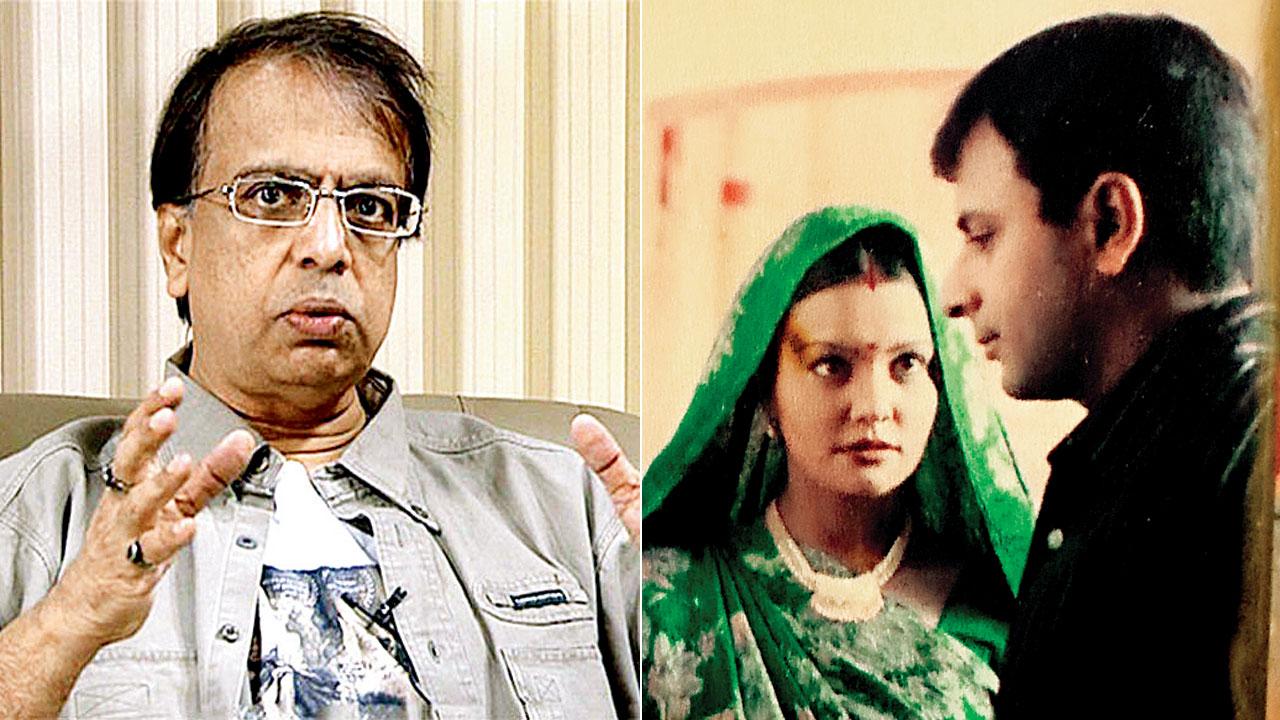
Many actors let go of the part in Yes Papa-Ananth Narayan Mahadevan
3:06 PM
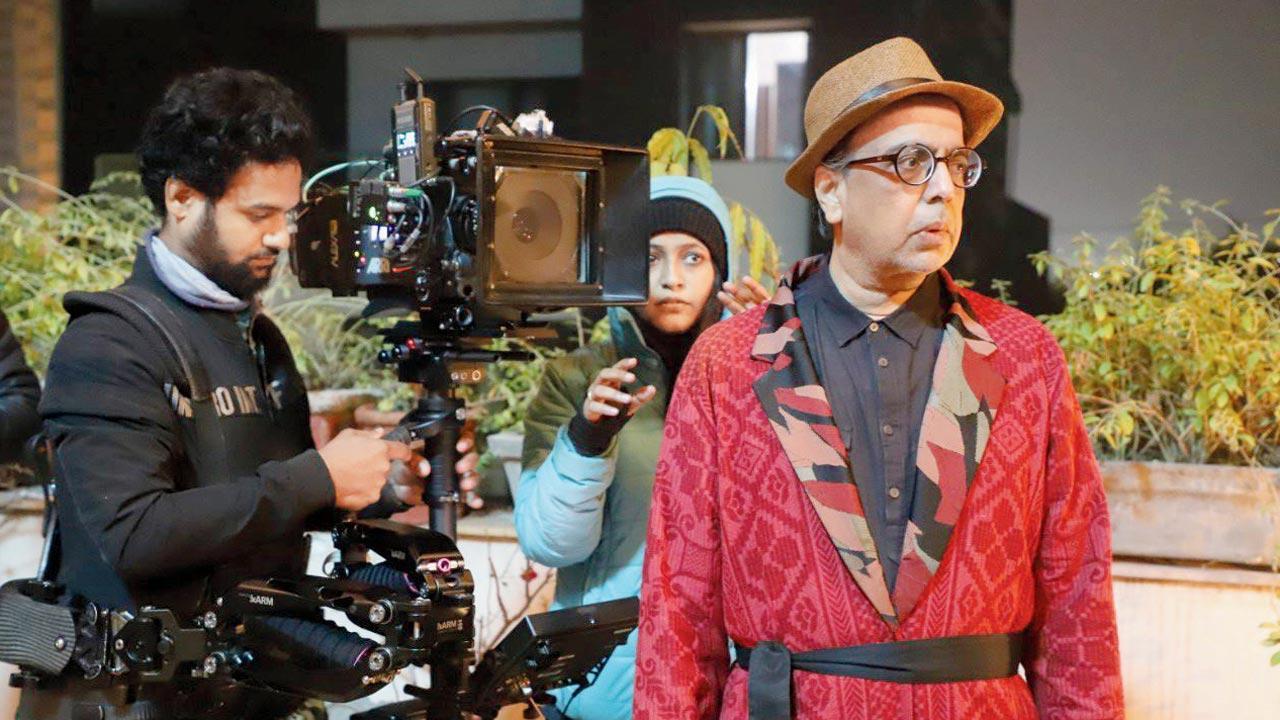
Initially scared to portray a sexually abusive father in Yes Papa, Ananth says he gave his nod to the film to highlight the issue
Mohar Basu (MID-DAY; March 29, 2024)
How do you play a character you despise? Approach it without judgment, and remain honest to the story. That is how Ananth Mahadevan played a sexually abusive father in Yes Papa, directed by Saif Hyder Hasan. Walking into the role, the senior actor knew that it would take an emotional toll on him.
“I am told many actors let go of the part. It’s eerie to play such a character. But as an actor, it’s your job to look for challenges,” starts Mahadevan. His apprehension regarding the role was outweighed by the need to shed light on the issue.
“You do the film because the subject needs to be highlighted. To some extent, the role scared me, but [you overcome it].”
What helped him in his portrayal was having a supportive director and the knowledge that the film had the right intent. “The reason why I could pull off the four scenes that depict abuse is because the director handled them sensitively. The idea and intention wasn’t to entice. The abuse is never depicted; you leave it to the audience to understand.”
It’s not often that mainstream films deal with such pressing subjects. Mahadevan says that through his role, the movie highlights how seemingly innocent-looking men can be capable of heinous acts. “We had to fight stereotyping. The character is soft-spoken, sings and doesn’t look menacing. He is your typical man-next-door. We tried to give him touches of a regular man who is capable of monstrous things.”
Yes Papa, which also stars Geetika Tyagi, was recently screened for the National Human Rights Commission.
Subscribe to:
Posts (Atom)