Showing posts with label Anant Roongta. Show all posts
Showing posts with label Anant Roongta. Show all posts
Famous Studios was Asia’s first air-conditioned studio; Raaj Kumar once came just for AC-Anant Roongta
10:12 AM

Anant Roongta on the responsibility of inheriting a city icon and his plans for the 80-year-old studio
Jane Borges (MUMBAI MIRROR; October 18, 2026)
Twelve years ago, when Anant Roongta, then a 20-something, bursting with ambition, decided to step away from his family business and build a sports tourism company with his cousin, his father Arun Jagmohanlal Roongta was surprised. “So, you are going to start a travel agency,” he had said, unsure why his son didn’t want to take the reins of a legacy nurtured by two generations of the family. It was, after all, no ordinary inheritance—Famous Studios in Mahalaxmi.
A year older than independent India, the studio had hosted shoots for some of Hindi cinema’s most celebrated films, including Taj Mahal (1963), Seeta Aur Geeta (1972) and Hum Saath Saath Hain (1999), while serving as the hub for the Indian advertising industry. Its facilities spanned six studio floors, post-production labs and a screening room.
But Roongta, who, after completing his Master’s in International Business from Aston University, UK, returned to Mumbai to work alongside his father in 2009, could sense a flattening in the business. Much had to do with external forces—the film industry in general wasn’t experiencing any major churn, with the same kind of movies being released year after year, and, with a preference for shooting in the suburbs or on location, staying relevant was becoming harder.
“At the end of the day, mind-set really matters and you have to be ruthless to do something different,” says 39-year-old Roongta when I meet him at his, “war room” in the year-old office in Santa Cruz West.
So much has changed between then and now. After four years in tourism, Roongta came back to the studio in 2018 with fresh zeal and a new vision, building a co-working space within the premises. Last year, the studio in the iconic Art Deco building that had served as the nerve centre of the family’s empire shuttered to make way for a residential tower. Famous, which has turned 80 this year, moved bag and baggage to the western suburbs, with offices in Santa Cruz and Andheri. “It was a very difficult decision to take, especially for my father, who spent a considerable part of his professional life in that building. But I think it’s all part of evolution,” says Roongta, managing director of the studio, adding that cinema still runs in his veins.
Big shoes to fill
The movies happened to the family by accident. Before 1946, the Roongtas, like many traditional Marwari business families, were engaged primarily in jute and cotton trade. They acquired the studio from producer Shiraz Ali Hakim, who had taken a loan from Roongta’s grandfather Jagmohan Bilasrai and had offered the Mahalaxmi land where he had built this, as collateral. During Partition, Hakim decided to move to Pakistan and gave up the studio. “Since it was already functional, my grandfather decided to run it.”
Back then, Roongta says it was “Asia’s first air-conditioned studio”, equipped with imported cameras and a processing laboratory. “Because we shot on negatives, experts from Japan and countries in Europe would come to visit my grandfather to learn about film.” Roongta’s grandfather was also a two-time president of the Indian Motion Picture Producers’ Association (IMPPA), founded in 1937.
The studio enjoyed a golden era that Roongta, born in the 1980s, later heard about. “My grandfather told me a funny story about actor Raaj Kumar. He was called to the set one day, but he had other plans. He came in, sat on a chair and lit a cigarette. As soon as the director said, ‘Sahab, aapka time hai,’ he replied in his typical style, ‘Jaani, aaj mood nahi hai,’ threw away his cigarette and went home. He had come just for the air-conditioning,” says Roongta, laughing.
Roongta was still at school when one of the studio’s sets was converted into a nightclub to shoot the song Koi Kahe Kehta Rahe from Dil Chahta Hai (2001). “I remember interacting with Aamir Khan, Saif Ali Khan and Akshaye Khanna. Little did I realize then that the song would become such a hit,” he says.
Incidentally, ad world figures, including Piyush Pandey and Prasoon Joshi, also spent time at the studio, he shares.
Reimagining the empire
Contrary to claims that the studio’s closure was hastened by a slump, Roongta says that its last few years in Mahalaxmi—barring the brief COVID lull—were buzzing and alive. The co-working space had breathed new life into it. “We were also opening up the place for concerts and launches.” The shift was a response to the changing nature of the work.
“We’ve always been a service-led business, whether it was renting out our studio floors or providing post-production, virtual production, motion capture and visual effects services. But when we moved out, we decided that it was time to transition into a full-fledged creative business,” he says, adding that he is now looking at developing stories for theatrical-first filmmaking.
“Today, people are seeking out more organic stories that are deeply rooted in their lived experiences. This has been made possible because of the cinema that they are being exposed to across Indian languages.” He has already set up a new team of storytellers.
This decision might seem surprising, considering the OTT boom and the influx of microdrama platforms. But Roongta says that “there has been a lot of advancement in technology, which is making the cinematic experience more immersive”. “So, I still feel there’s a huge opportunity there.”
The end goal, he says, is to create culturally relevant content originating from the length and breadth of the country, for global audiences. Roongta admits that it hasn’t been easy to sustain a legacy business like theirs. The business has had its highs and lows. Survival, he says, has required adapting to technology that now changes every quarter. “In fact, we’ve been using AI for the last 18 months.”
Apart from using AI for research and development and gathering data in real time, the studio has, in some cases, been using it to assist with storytelling at the scripting stage. “We are also training our visual effects and animation team to blend a bit of AI into their work,” he says.
In the past, the studio has been a passive film investor, with creative and production work being executed by external parties. But moving forward, Roongta says it will serve as a production house, “which means we will now be involved from concept to development to production, post production and final distribution”. “That was the one thing we hadn’t attempted as a studio.”
Before we end the interview, we visit his new office cabin, where a shelf is dedicated to scale models of different aircraft, all positioned as though about to take off. It’s exactly the mode Roongta believes the studio needs to be in.
The iconic Famous Studio turns 75
8:14 AM
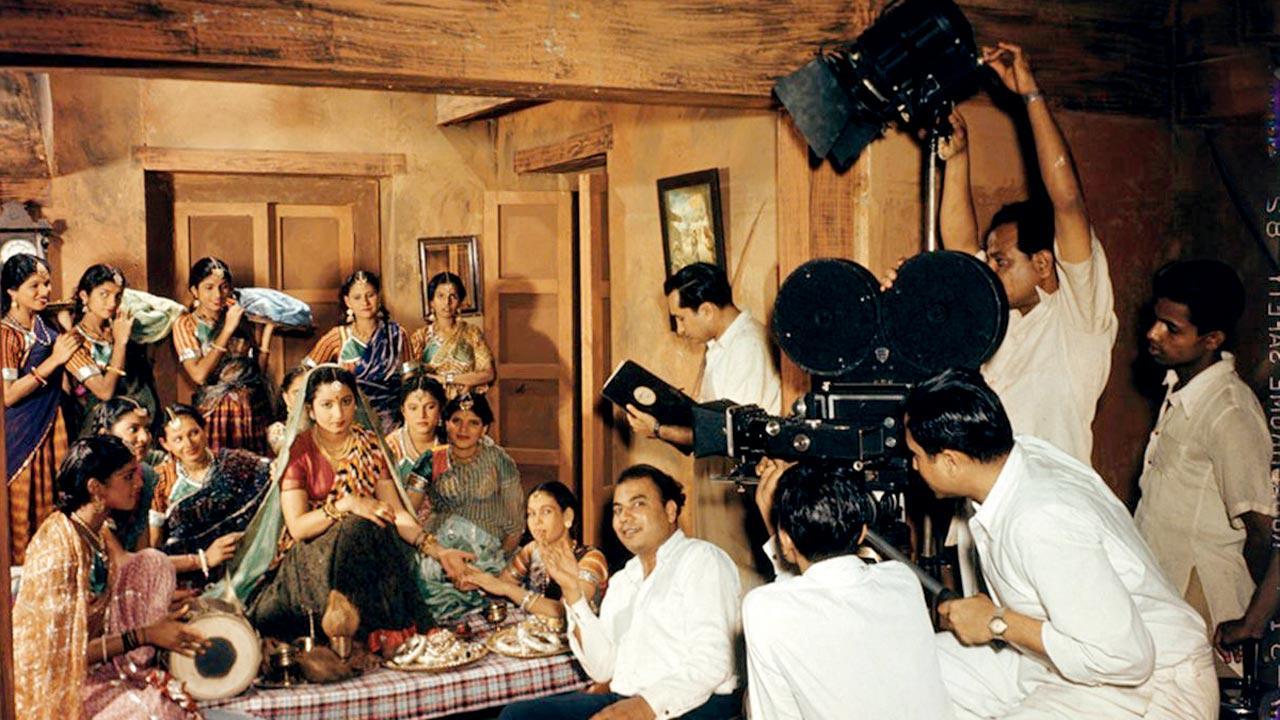
A colourised version of a photograph that shows a wedding scene being shot in Famous Studios in 1948
One of the city’s most iconic studios turns 75. Famous Studio’s Anant Roongta talks about what continues to keep them relevant
Aastha Atray Banan (MID-DAY; May 15, 2022)
It was in the early 1900s that Juharmal Roongta decided to leave Rajasthan and head to Mumbai to discover what business opportunities the city held for him. He worked in the jute and cotton industry, and even dabbled in stock trading before he came into possession of a piece of land in Mahalaxmi, where Famous Studios stands today. “A Muslim gentleman owed my great-great grandfather some money, and when he was unable to repay, he transferred this land’s ownership to him. We retained the name Famous, as the original property was called that,” says Anant Roongta, the proprietor of one of Mumbai’s most famous studios, which is celebrating its 75th anniversary year.
“Construction,” says, Anant, began in the 1940s, and “by June 1946, Asia’s first air-conditioned studio was open for business”. It was headed by J B Roongta, who was also the founding president of The Indian Motion Picture Producers’ Association, before his son Arun Roongta took over.
Much like Bandra’s Mehboob Studios, Famous become a city landmark. Spread across 1,10,000 sq ft, it grew as the go-to destination for film and advertising shoots, music recordings, events and concerts. It now also houses a co-working space. This writer has spent many an evening at Famous. Once, 12 years ago, we watched a raw MMA fight there, and then in 2019, caught international pop star Lauv in concert here.
It would seem that Famous has always been ahead of the curve. “In the ’50s and ’60s, we introduced new technology. We had the American Mitchell Cameras. Then we got into set design, collaborated with Bollywood cinematographer Fali Mistry and even entered production,” says Anant of the studio which has been the location for legendary movies such as Seeta Aur Geeta, and Mr India.
Add to that, in the 1980s, when Arun Roongta took over, it also received the first license for video services from the I&B Ministry. It then became the first studio in India to introduce video and audio production. “World-leading acoustics expert Andy Munroe, who has worked as an engineer at Shure where he designed systems for venues, and where he worked with Led Zeppelin and The Rolling Stones, also designed the recording studio,” says Anant.
Anant, who was a student at Campion High School, and later Cathedral and John Connon School, before heading to the UK to earn a degree in international business, says that he grew up in a home that knew everyone in the movie business, but weren’t star struck. “I used to walk in on my dad sitting around with celebrities, and he was never affected or fazed. He was also great friends with Mehboob Khan, the founder of Mehboob Studios.”
He did, however, take some time to find his own passion for the family business. And since 2018, he has resurrected the place by adding a co-working space, and making it wholly tech enabled. “Owing to its location [stone’s throw from Mahalaxmi station], we had many a developer reach out. It has a certain nostalgic value, and an even bigger brand value,” Anant feels. It could be this that led to State Tourism Minister Aaditya Thackeray inaugurating the revamped bus stop dedicated to Famous Studio under the tactical urbanism initiative.
Ask him what’s the defining moment for Famous, and Anant names shooting for the song, Koi Kahe from Dil Chahta Hai in 2001. “Creating that club ambience was something we did well. We have also restored the Sholay print. And thanks to the technology we have, which now includes a Dolby Atmos studio, we have been the centre of many big advertisements.”
But for the Roongtas, the goal is to bring together the best of old-world feel and new-age technology. If Anant has to list one factor that differentiates Famous from the studios that dot Mumbai, he says it is flexibility. “The whole aim was to retain the charm of the place, and keep it as modern as possible, offering all levels of comfort.”
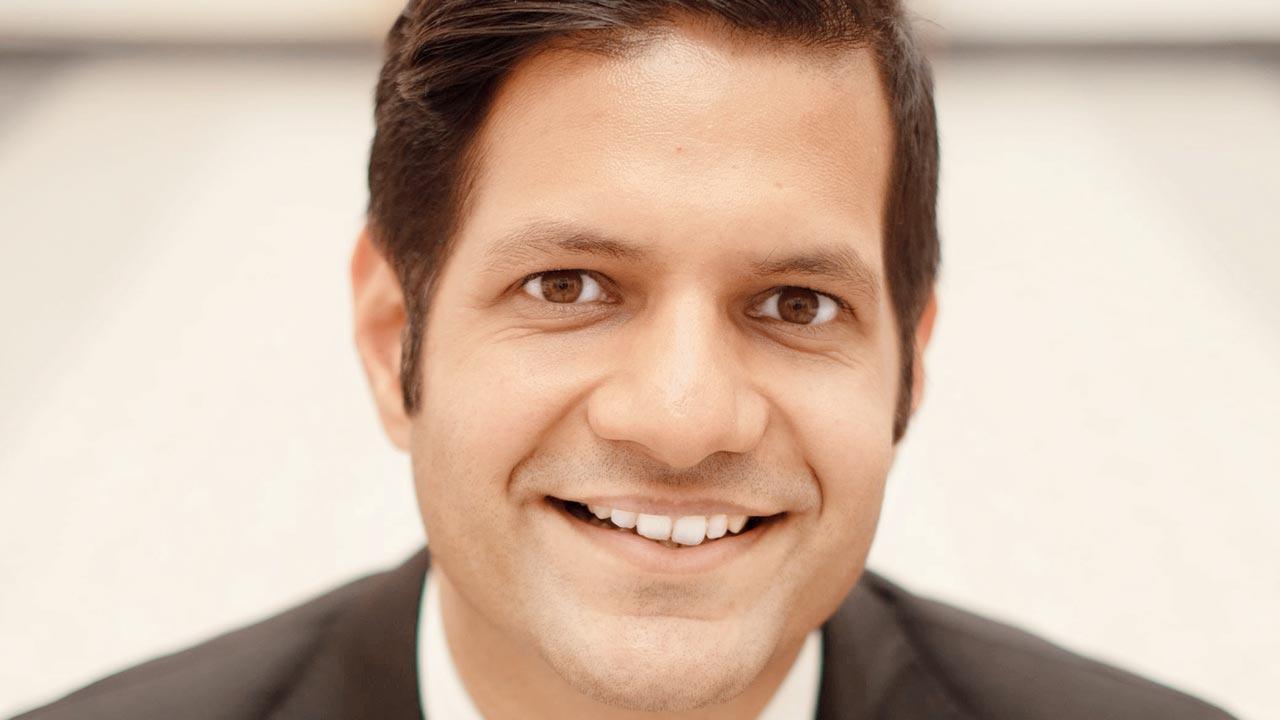
Anant Roongta
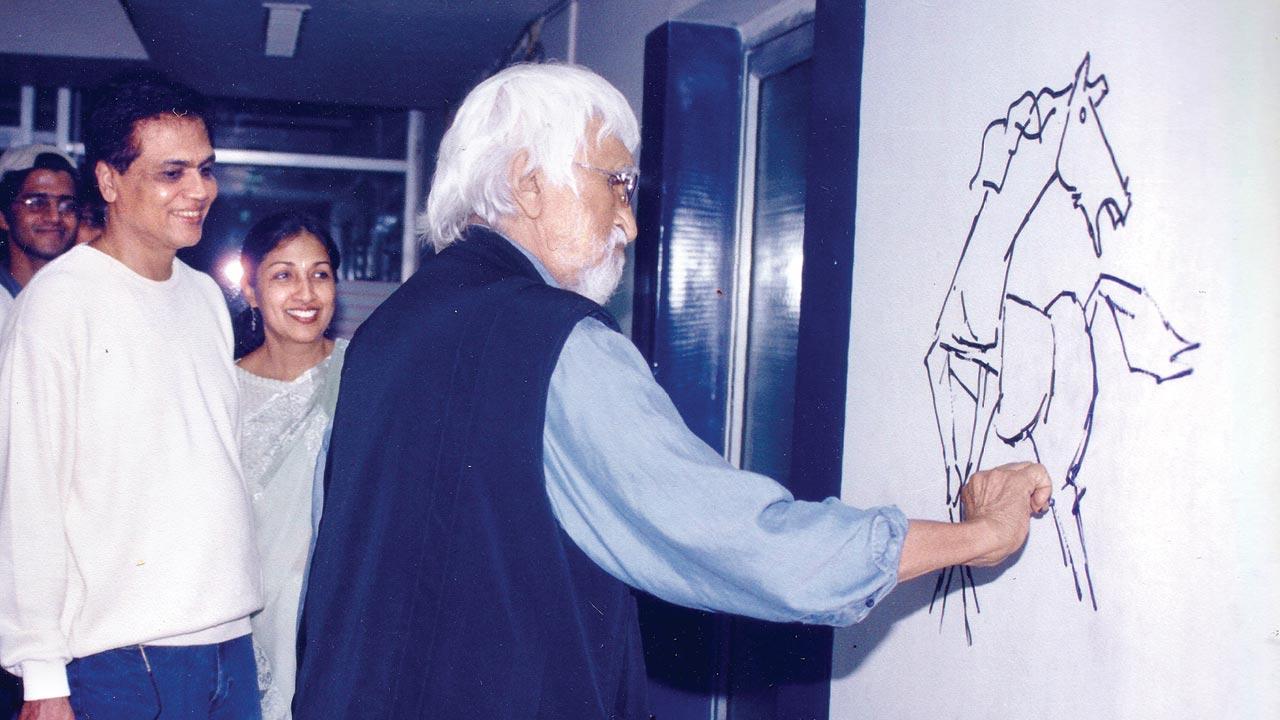
M F Husain sketches on the wall outside the animation studio in 2001, as Arun and Chandralekha Roongta watch
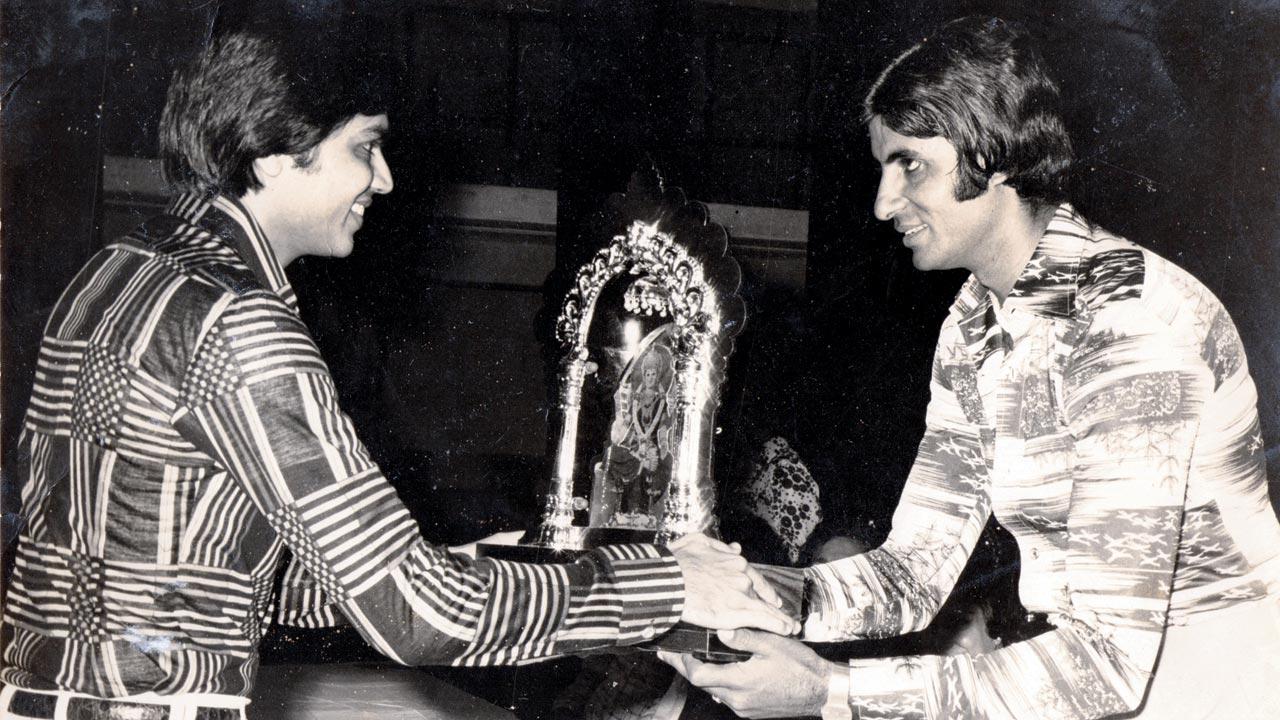
Amitabh Bachchan gives an award to Arun Roongta in the 1970s
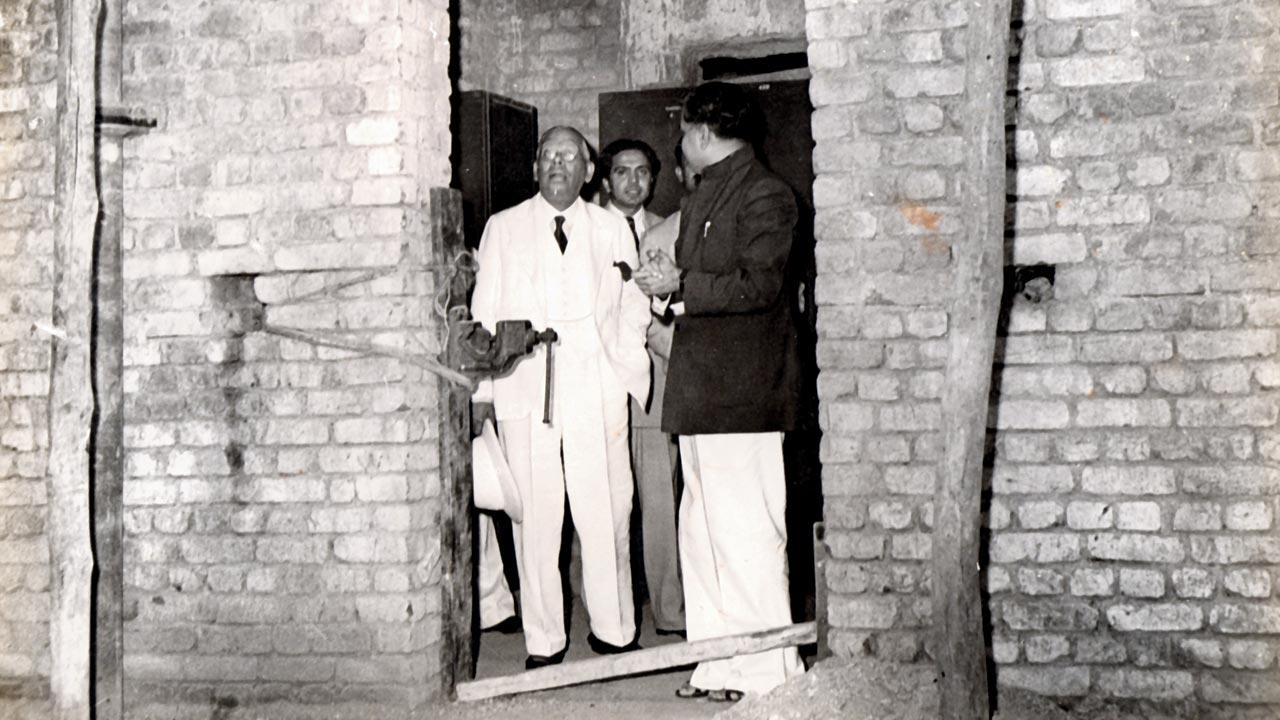
Mehboob Khan of Mehboob Studios visits the construction site in the 1940s
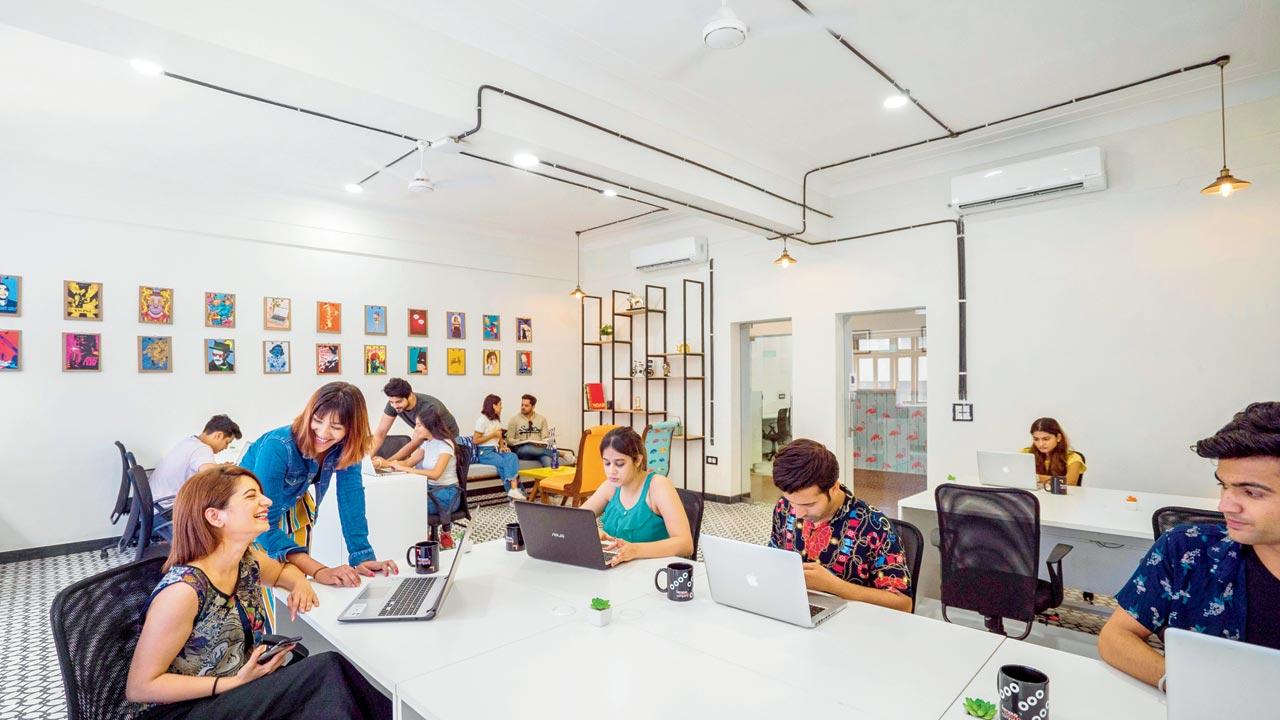
For the past three years, Famous Studios has had a co-working space
Subscribe to:
Posts (Atom)