Showing posts with label Anand Raaj Anand. Show all posts
Showing posts with label Anand Raaj Anand. Show all posts
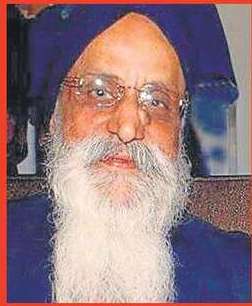
Lyricist Dev Kohli Kohli of ‘Yeh Kaali Kaali Aankhen’ fame passes away
8:12 AM
Avijit Ghosh (THE TIMES OF INDIA; August 27, 2023)
Lyricist Dev Kohli, who started his career with the sensitively-penned contemplative track, ‘Geet gaata hoon main, gungunata hoon main’ (film: ‘Lal Patthar’, 1971) but had to wait for nearly two decades before earning bigger fame and recognition with ‘Maine Pyar Kiya’ (1989) and ‘Hum Aapke Hain Koun!’ (1994), passed away at his Andheri residence on Saturday. He was 81.
“He was in Kokilaben Hospital for almost three months and brought back home ten days ago. He passed away at 4 am,” his spokesperson Pritam Sharma told TOI.
Composers Uttam Singh, Anu Malik and Anand Raaj Anand performed his last rites in Oshiwara. Uttam Singh said, “He was a saintly man — my dear friend of 50 years. I tended to him and took him to hospital over eight years when he underwent multiple surgeries. Our winning partnership in ‘Maine Pyar Kiya’ and ‘Hum Aapke..’ created such evergreen hits.” Singh, Kohli and a third friend Shailesh Sawant met regularly over Sunday meals.
Singh said, “I will miss his friendship. Kohli Sahab had no vices. He did not smoke or drink or attend parties. Over the last 8-10 years, he had stopped working. If anyone urged him to write, he would say he will only do so if Uttam Singh composes the tune!”
The 1990s were the high noon of Kohli’s career. He wrote the floorscorcher, ‘Yeh kaali kaali aankhen’ (music: Anu Malik, singer: Kumar Sanu, film: ‘Baazigar’, 1993) that Shah Rukh Khan and Kaajol jived to with verve and zing. The chartbusting track from the Abbas-Mustan film became a nightclub favourite earning Kohli a Filmfare award nomination for best lyricist. Kohli also received nominations for the title tracks of ‘Maine Pyar Kiya’ and ‘Hum Aapke Hain Koun’.
In all three cases, the award went to other nominees. Born in Rawalpindi (Pakistan) and growing up in Dehradun, Kohli had earlier penned two winners in another Abbas-Mustan suspense-thriller, ‘Khiladi’ (1992), an early Akshay Kumar hit. The songs, composed by Jatin-Lalit were, ‘Wada Raha Sanam’ and ‘Kya Khabar Thi Jaana’.
But the blockbuster success of ‘MPK’ and ‘HAHK’, both Rajshri Productions, propelled Kohli’s career to high gear. ‘Didi Tera Devar Deewana’ from HAHK (music: Raam Laxman, singers: Lata-SPB) was mandatory at every ladies sangeet. He would often collaborate with Anu Malik, in his prime then, churning out popular and populist lines such as ‘Oonchi Hai Building Lift Teri Bandh Hai’ (film: ‘Judwaa’, 1997) or ‘Akela Chal Raha Hoon Ek Gaadi Chahiye’ (film: ‘Mr And Mrs Khiladi’, 1997) that a David Dhawan film demanded. In several Dhawan ventures during this period, Kohli had a song or two. ‘Lift Teri Bandh Hai’ was also reprised in ‘Judwaa 2’ (2017).
Kohli had waited for serious success for a long time although ‘Geet Gaata Hoon’ (singer: Kishore Kumar, music: Shankar-Jaikishan), had happened when he was in his early 20s. It was the only song he wrote in director Sushil Majumdar’s ‘Lal Patthar’, a complex requiem to last-gasp feudalism in early 20th century colonial Bengal. Raaj Kumar and Hema Malini played the lead roles, though, the number was lip synced on screen by a young moustachioed Vinod Mehra.
The lyricist told this reporter in 2012, “The song’s success changed my life. I was immediately interviewed by magazines and on radio. From then on I started getting small films.” Those films include ‘Khoon Khoon’ (1973), which had the evocative bhajan, ‘Maati Ke Jalte Deepak’, ‘Kabhie Ajnabi They’ (1985) which had the melancholic 'Dil Ke Is Dehleez Tak' and several others such as ‘Ek Baar Kaho’. All these films flopped. It was only with ‘Maine Pyar Kiya’ that he vaulted to a bigger league.
(With inputs from Bella Jaisinghani)
-------------------------------------
HINDUSTAN TIMES (August 27, 2023)
Veteran lyricist and poet Dev Kohli, who gained popularity for his work in Salman Khan and Bhagyashree’s Maine Pyar Kiya (1989), died in Mumbai on Saturday. The news was confirmed by Kohli’s spokesperson, who shared that the veteran had been admitted to Kokilaben Ambani Hospital for the last few months and passed away in his sleep. Kohli was 81.
He had written over 100 songs for several Hindi films, including Baazigar (1993), Hum Aapke Hain Koun..! (1994), Musafir (2004), etc. While he was active primarily in the ’90s, the lyricist also worked on several recent films, such as Shootout At Lokhandwala (2007) and Judwaa 2 (2017). In a career that spanned from 1969 to 2013, he collaborated with different generations of composers, from Shankar-Jaikishan to Vishal-Shekhar.
Several celebs took to X to share heartfelt tributes to the artiste. Actor Renuka Shahane shared, “Kaisey bhool paaungi mein baba woh bachpan ki kahaniyaan.”
Singer-music director Shekhar Ravjiani wrote, “Had the honour and privilege of working with #devkohli sahab on Musafir and Taxi 9211 … What a wonderful human being and an extraordinary lyricist .. Thank you for the beautiful songs.”
The indie pop era was almost like a firefly, short lived but bright-Suneeta Rao
7:57 AM

Singer Suneeta Rao, who has cemented her position in indie pop music, feels songs today lack longevity
Titas Chowdhury (HINDUSTAN TIMES; October 20, 2021)
Singer Suneeta Rao kickstarted her career with Senorita, which released in 1989. While the track made her a force to reckon with in the indie pop space, it was Paree Hoon Main from her 1991 album Dhuaan, that made her popularity soar, and how! Thereafter, she went on to release albums such as Talaash (1996) and Ab Ke Baras (2000).
Rao, 54, believes the 1990s was “the golden period of indie pop in a way”. “What was different about that particular period was as artistes, we were the first ones to come up with music videos, per se. That coincided with the launch of MTV in India. It gave us exposure, as it offered us the same platform as international stars such as Madonna and Michael Jackson,” she explains.
She adds that novelty was another factor which made the period so memorable. “People got to know us for our music, we got our own gigs. Record labels began signing us,” she recalls.
However, the indie pop era was short-lived. “Like anything else in the industry, the novelty faded away after some time. We were under the condition that we’d get support for our next album only if we delivered a hit. The indie pop wave couldn’t sustain itself. It was almost like a firefly — short-lived but bright,” she says.
The Vaada Karo singer went on to do what she loved the most — performing gigs, doing theatre and writing. Despite being successful in her career, Rao admits that launching albums became an uphill task. “The most difficult one was Waqt (2008). That album had a video of a song called Sun Zara. For that, I had signed up with somebody who disappeared at the last minute,” she shares.
What makes her happy, though, is that despite film music taking precedence, people still fondly remember indie pop artistes of the 90s. “The visibility of indie pop artistes on screen made a difference. The substance that songs had was different back then. I was working organically. Every producer I worked with, including Lewis Banks, Leslie Lewis, Ranjit Barot and Anand Raaj Anand, gave different characters to my album. Today, songs lack longevity, because of sheer abundance and accessibility. I don’t listen to today’s music because it’s formula-driven,” adds Rao, who is looking forward to continuing doing theatre, promoting her last album and performing.

Subscribe to:
Posts (Atom)