Showing posts with label Amitabh Bhattacharya. Show all posts
Showing posts with label Amitabh Bhattacharya. Show all posts
For us, it’s a matter of pride if Pardesiya even gets compared to A R Rahman's work - Sachin-Jigar
10:41 PM
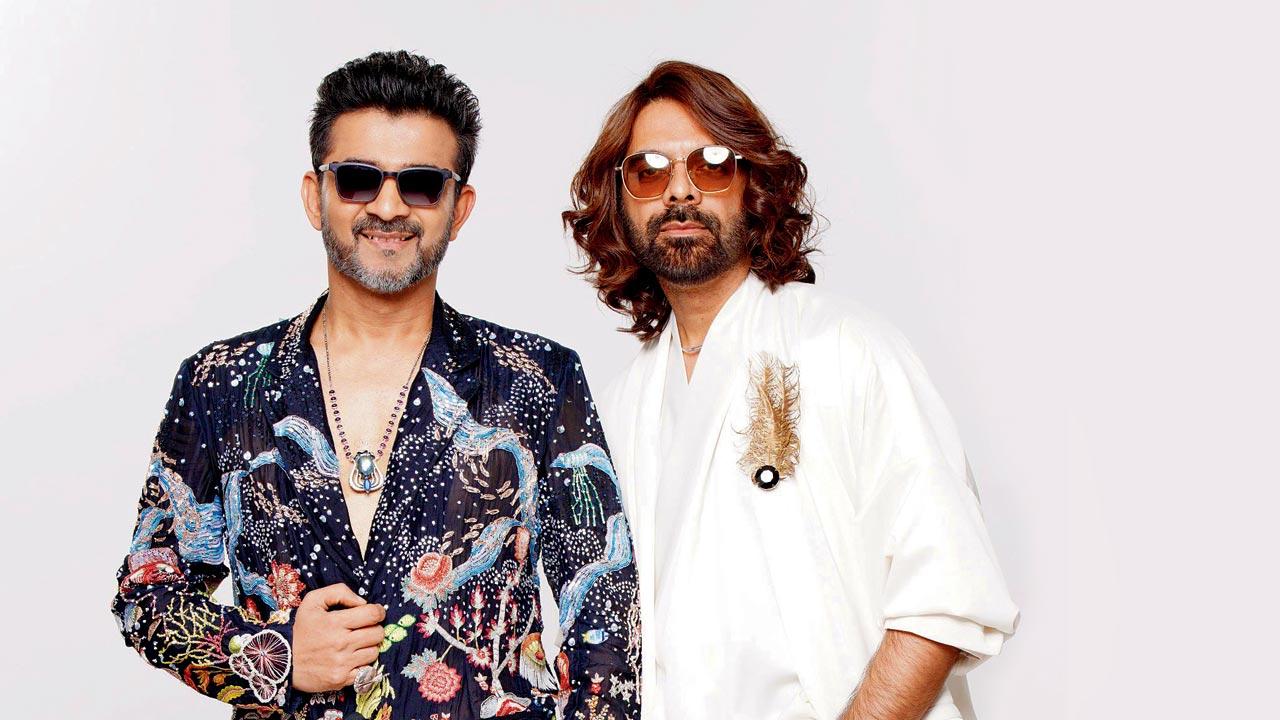
As listeners say that ‘Pardesiya’ is influenced by AR Rahman’s music, Param Sundari composers Sachin-Jigar reflect on how the album is their tribute to the maestro. They also share that they are proud that their work is being compared to A R Rahman's
Mohar Basu (MID-DAY; August 25, 2025)
Few composer duos in Hindi cinema today straddle madness and melody as deftly as Sachin–Jigar. Over the past decade, they’ve swung between quirky tracks like Kamariya, romantic numbers like Mileya Mileya, and chartbusters like Aaj Ki Raat. Ahead of their latest outing, Param Sundari, the duo talks about their mindset, music, and their tribute to the master. Excerpts from the interview.
What’s the secret of a long-term collaborative equation?
Sachin: It is destiny. We never sat in business meetings to plan this partnership — it just happened. I first met Jigar to share some workload, and there’s no way two people living so far apart could’ve just decided to become a jodi. It feels like something beyond us put us together. Let me give you a recent anecdote: I needed Jigar not just as my business partner but as family, and he came through for me. That’s when I realised I admire him beyond music. He’s five years younger but has this politeness, manners, and ability to communicate that I really look up to. He’s also the rebel in our duo, the one who pushes.
Jigar: The common thread between all of us is that we’re mad but sane enough to know that we’re mad! Otherwise, who decides to make a song “Baba Ji Ki Booti”? And when we did that track, everyone sang — Raj, DK, Anand, Kunal, me. Whoever was in the room. None of us was in it for stability. I think it’s that madness that connects us and keeps us together.
Last year was stupendous for you, with Aaj Ki Raat becoming 2024’s most-streamed song. When you start a new project after such a success, what is your mindset?
Sachin: Jigar doesn’t sleep — and he doesn’t let anyone else sleep either! (laughs) For him, the moment a song works, that gate is closed. He won’t allow us to repeat ourselves in the same way. That forces us to think differently, and that’s why we’ve managed to stay versatile. For me, that success gave me a certain ease. I’ve lived through the struggle of not finding popularity, so to be on the other side feels nice. But we were never in the game for just hits or flops. We came here to make good music, and even after success, that hasn’t changed.
Our mantra is never to define a “Sachin–Jigar sound.” We don’t want people to say, this is exactly what they always do. We move on, leave that sound behind, and try something new. If others want to pick it up, great. If not, no problem. That’s why after Stree 2, we thought, okay, we’ve done the madness in Stree, we’ve done dance numbers, now how do we break out again? That’s how Param Sundari happened. It’s become an unplanned pattern with us — one big dance number, then one big love song, then something unexpected.
Jigar : We’re also conscious of not getting typecast as “the commercial dance anthem guys.” So if we’ve just done a massive dance track, next time we’ll want to balance it with a love song or something soulful.
When the Param Sundari teaser dropped, it went viral, with Sonu Nigam’s voice everywhere on social media. How did that feel?
Sachin: A day before Jigar and I flew to Dubai for the Param Sundari music session, Dinesh Vijan called us to his office and told us this is a once-in-a-lifetime opportunity. Instantly, [A R] Rahman sir started playing in my head. Roja [1992] changed my life forever — if I’m a composer today, it’s because of those five years of listening to him. So working on Param Sundari felt like living a dream.
Jigar: South Indian music has also inspired us a lot because it stays rooted in its culture. Even in the most commercial films, you’ll hear classical influences. I trained in classical singing for 10–12 years, and often had to “unlearn” some of it to compose for cinema. But “Param Sundari” brought everything we wanted together, it felt like a dream we didn't want to wake up from. As for Sonu Nigam: growing up, albums like Yaad, Deewana, Jaan were my everyday listening. First it was a dream to see him live, then to hear him sing songs we produced. The first track we ever programmed was sung by Sonu Nigam. That was already a big moment.
But as composers, we never got to record him again. We always kept it inside us. One day, we have to make a tune worthy of his voice. I was such a huge fan, I would literally pray to him before going to school! (laughs) So when we composed Param Sundari, we both knew deep down: this is it. We didn’t even say it out loud to each other, but we knew this was the song for Sonu Nigam.
We called him, he heard it, came to the studio, and recorded it in half an hour. It was magical. For us, it’s the greatest tribute — to have the man who inspired us be part of our music. Recently, he called and told us how much love he’s receiving for the song. To hear that from your idol — that’s the biggest moment of the year.
With the first track going viral, the flip side is that the rest of the album has to match up. Do you worry about how people will receive a song?
Jigar: Definitely the latter. That’s not our job. Once we put our music out, it belongs to the audience. As fellow creators, we may form opinions, but as listeners, people have the right to completely own or dismiss what we make.
We learned early in our careers to detach ourselves from the fate of a song. It hurts when a track you love doesn’t do well, but once you release it, it’s no longer yours. You’ve shot the arrow, and it’s out in the world. What feels “good” to me might not land with someone else, and that’s okay. So yes, we’ve made peace with it. Especially today, when there’s such great indie music and such strong new artists coming through, we’re not greedy. We just try to give our best and then leave it to the universe.
Has it happened that you expected a song to be a big hit and it didn’t catch on?
Jigar: Many times! One example is Happy Ending [2014]. The album actually caught on months later. At release, it didn’t get the traction we hoped for, though we felt it was a true coming-of-age album in terms of sound and concept. The first song, Jee Phaad Ke, generated noise, but the other tracks didn’t bloom immediately. And because once a producer sees one song breaking through, he’ll naturally invest all his energy and money into pushing that one, the rest often get sidelined. We always believed the album would find its way — and it did, but very late. There are other examples too. A beautiful song like Pinjra Tod Ke in Simran, or Hoor in Hindi Medium with Atif Aslam. We thought they’d immediately catch on. They didn’t at first, but later people came back to them, and now they even request us to perform them on shows.
Sachin: It’s a part of the game. That’s why having the first song of an album break through is actually a huge victory. Because imagine if you’re waiting until the fourth track for something to click — by then the producer may lose hope, and the entire album can collapse.
Jigar: For us, every film’s music carries big stakes. Actors want to be seen in a good light, producers are investing heavily, directors have worked hard. If the first song doesn’t land, there’s panic. And in those moments, you have to put art aside and think practically: we have to make this work. When the first track works, it also gives us the liberty to experiment with the rest of the album. For example, because Stree worked, we could make Stree 2 completely different — even put a ghazal on a beat. That was a risk, and it only happened because the first one clicked. So yes, we’ve learned that “first song tracking” is the safer and better place to be in, even if the others don’t explode in the same way.
Dinesh Vijan, Amitabh Bhattacharya and the two of you almost function like a unit. And every time this unit comes together, it delivers. What makes it work?
Sachin: Dinesh is extremely critical of his own work, and Amitabh Bhai is the same. He’ll come back after six days to change just one word in the last line of an antara, or fight with us about a line even before a shoot mix is delivered. That level of self-criticism keeps the bar high.
The truth is, at the end of the day, no matter how many aspirations or ideas we all come in with, there’s only one song to be made. That perspective keeps us grounded. We keep checking each other.
Dinesh loves to experiment — he’ll come to us with a reference, or say, “Here’s this Afro-inspired song, can we make it a love track?” He’s always hustling, always infusing new ideas. Jigar, as I’ve said, is the rebel — he refuses to repeat himself, and he shares a bond with Dinesh that goes beyond work, which makes them almost like brothers.
Jigar: For me, I try to stay objective, to keep perspective when things get too passionate. And Amitabh Bhai has this magical ability to bring in a word or phrase that sparks a whole song. Among the four of us, someone always has the starting point.
Because this unit has delivered before, we have the courage to keep pushing further — to take one more risk, one more step. The balance of being able to check each other and push each other is what keeps us both grounded and moving forward.
Also, we’ve been through failures together — films that didn’t work, songs that vanished without a trace. That’s why now, even if something doesn’t work, it doesn’t shake the association. Our bond isn’t dependent on hits. It’s dependent on whether we’ve fulfilled each other’s creative soul. If between the four of us, we’ve inspired and satisfied each other creatively, then that’s success, no matter how far the song travels.
On social media, people are calling Param Sundari’s music derivative and influenced by A R Rahman. Do you worry about that?
Sachin: Never. From the beginning, this song came from a place of pure art, dedication, and a tribute to the master. For us, it’s a matter of pride if one of our songs even gets compared to his work. I look up to Rahman sir not just for his work, but for the person he is. On the inlay card of his first independent album [Vande Mataram], he wrote: ‘Hope to become the song of an independent India.’ That’s the man we’re paying homage to.
Jigar: When people say Param Sundari feels familiar, for us, familiarity isn’t bad. Familiarity can make you feel at home, and once you’re there, you can surprise the listener with new things hidden inside.
Madan Mohan's 100th birth anniversary: Under-feted in life, ghazal maestro finds a new note
8:59 AM

Chartbusting Success And Awards Largely Eluded Madan Mohan During His Lifetime, But The Decades Have Burnished The Legacy Of The Composer Whose Birth Centenary Is On June 25
Avijit Ghosh (THE TIMES OF INDIA; June 23, 2024)
Some songs have afterlives. They are reborn in other languages, repurposed as jingles and cover versions, discovered and nurtured by new generations and geographies. Madan Mohan’s haunting composition, ‘Lag Jaa Gale’, a brew of melody and melancholy, belongs to that elite club of single malt songs.
Here are the facts: the classic from ‘Woh Kaun Thi?’ (1964) was reused in a bunch of films, notably as ‘Ponmeni Thazhuvaamal’ — lensed on a teenage Jayalalitha in the 1966 Tamil film, ‘Yaar Nee?’ — and, more recently, in ‘Saheb Biwi Aur Gangster 3’ (2018). Several Pakistani singers have crooned it; there’s a qawwali version, too. The track was used to promote digital audio player, Saregama Carvaan. No wonder, the song, written by Raja Mehdi Ali Khan and voiced by Lata Mangeshkar, has over 300 million YouTube hits.
And here’s the irony: ‘Lag Jaa Gale’ didn’t figure among the top 32 songs of 1964 in Binaca Geetmala’s annual hit parade even though two other numbers from the same film — ‘Jo humne dastan apni sunayee’ and ‘Naina barse rimjhim rimjhim’ — made it to the coveted chart.
Unsung Star
Lag Jaa Gale’s fate is emblematic of Baghdad-born music director Madan Mohan’s chequered career, which brims with moody melodies that have stood the test of time and changing taste but that seldom became chartbusters or won awards. In a career spanning 25 years, the composer didn’t take home a single Filmfare statuette.
Only three of his songs figured in Geetmala’s Top 5 hits of the year. The frisky ‘Ae dil mujhe bata de’ (No.5 spot, film: ‘Bhai Bhai,’ 1956), the folksy and dancey, ‘Jhumka gira re’ (No.4, ‘Mera Saaya’, 1966), which was recast in Karan Johar’s ‘Rocky Aur Rani Kii Prem Kahaani’ (2023), and 1977’s ‘Koi pathar se na maare mere deewane ko’ (No.1, ‘Laila Majnu’). Tragically, the music director had breathed his last a couple of years before that. He was only 51.
His eldest son Sanjeev Kohli writes that the lack of mass adulation always caused him anguish and, over the years, embittered him. “The man who was acknowledged as a genius by people who understood and appreciated music was never at the top rung in the hit parades or with the big banners or the big stars,” he says in the website, madanmohan.in.
With exceptions like Madras-based production house AVM and filmmakers like Chetan Anand and Raj Khosla, Madan Mohan mostly scored music for smaller producers and directors. He worked for Devendra Goel (who gave him his break with ‘Ankhen’ in 1950), Shakti Samanta and Pramod Chakravarty, too, but that was much before they became industry biggies.
The songs he composed were invariably better than the movies they were located in. Often, they are the only notable element of a film. Some of his finest works, ‘Dekh Kabira Roya’ (1958), ‘Jahan Ara’ (1964), ‘Dulhan Ek Raat Ki’ (inspired by Thomas Hardy’s ‘Tess of the d’Urbervilles’ (1967), was for movies that were mega flops. The songs are remembered, not because of the movie, but despite its failure.
Ghazal Maestro
There is a timelessness and universality to his compositions, says film music historian Pavan Jha. Veer Zaara’s tunes were used about 30 years after his death, but they don’t sound outdated at all, he says.
Nobody composed ghazals better in Hindi films. The music director with leading man looks had the gift to imbue songs with subterranean sadness even when the words were not overtly so, notably in ‘Aapki nazron ne samjha’ (‘Anpadh’, 1962), ‘Teri aankon ke siva duniya mein’ (‘Chirag’, 1969) and Dil dhoondta hai (‘Mausam’, 1975).
Jha reasons that unlike some of the more popular music directors, Madan Mohan understood and appreciated Urdu poetry. He sang as well. “Which is why there’s a special symmetry of words and melody in his compositions,” he says. His niece, actor Anju Mahendroo, reinforces the point. “He wasn’t formally trained in music. But he was blessed with inborn talent. His music came from his heart,” she says.
He was also a master of the mega song, best illustrated in ‘Tum jo mil gaye ho’ (‘Hanste Zakhm’, 1973) and ‘Har koi chahta hai’ (‘Ek Mutthi Aasman’, 1973). Like Vivaldi’s Four Seasons, these ambitious tracks change tempo, evoking a multitude of yearnings. He was versatile, too. Few patriotic pieces are as moving as ‘Kar chale hum fida jaan-o-tan saathiyon’ (‘Haqeeqat’, 1964). And, you’d seldom have heard a more joyful track than ‘Zaroorat hai zaroorat hai’ (‘Man-Mauji’, 1962).
Songwriter-singer Amitabh Bhattacharya stumbled upon a Madan Mohan track from the unreleased film, ‘Jahan Tum Wahan Hum’. “Over the days, I kept returning to it and I think it underlines the strength and class of the composer who is making us listen to his song in an era where everything is fleeting and clutter rules our audio universe,” he says. The song goes, ‘Kaise kategi zindagi tere bagair’.
In 1970, Madan Mohan won the national award for best music director for ‘Dastak’. Writer-director Rajinder Singh Bedi’s movie had some of the composer’s most poignant and sensitive melodies like ‘Baiyan na dharo’ to ‘Hum-hain-mataae-koocha’ and ‘Mayee ree’. “He was extremely sensitive. During a song recording of ‘Hanste Zakhm’, he was so moved by a note of a sitar that he started weeping profusely,” recalls Mahendroo.
Man Of Principles
He was also a man of conviction and principles, a trait he shared with fellow composers such as Jaidev and Khayyam. “While he was convinced that Talat Mahmood was the right singer for some of ‘Jahan Ara’s’ songs, the director was insistent that Rafi saab be given all the songs. My father did not budge and was willing to give up the film. The same thing happened when he chose Rafi saab over Kishore Kumar for the songs of ‘Laila Majnu’. The directors finally gave in and these films became musical landmarks,” Kohli writes. Overshadowed by Kishore Kumar in the post-‘Aradhana’ era, the superhit songs of ‘Laila Majnu’ helped Rafi stage a strong comeback.
Like the finest of whiskeys, many of Madan Mohan’s compositions have aged remarkably well and his reputation vaulted. In the run-up to his 100th birth centenary, celebrations of his life and songs are planned in places such as Mumbai, Surat, Pune and others. The master music maker would have loved that.
I don’t put out any material that is anti government-A R Rahman
8:34 AM
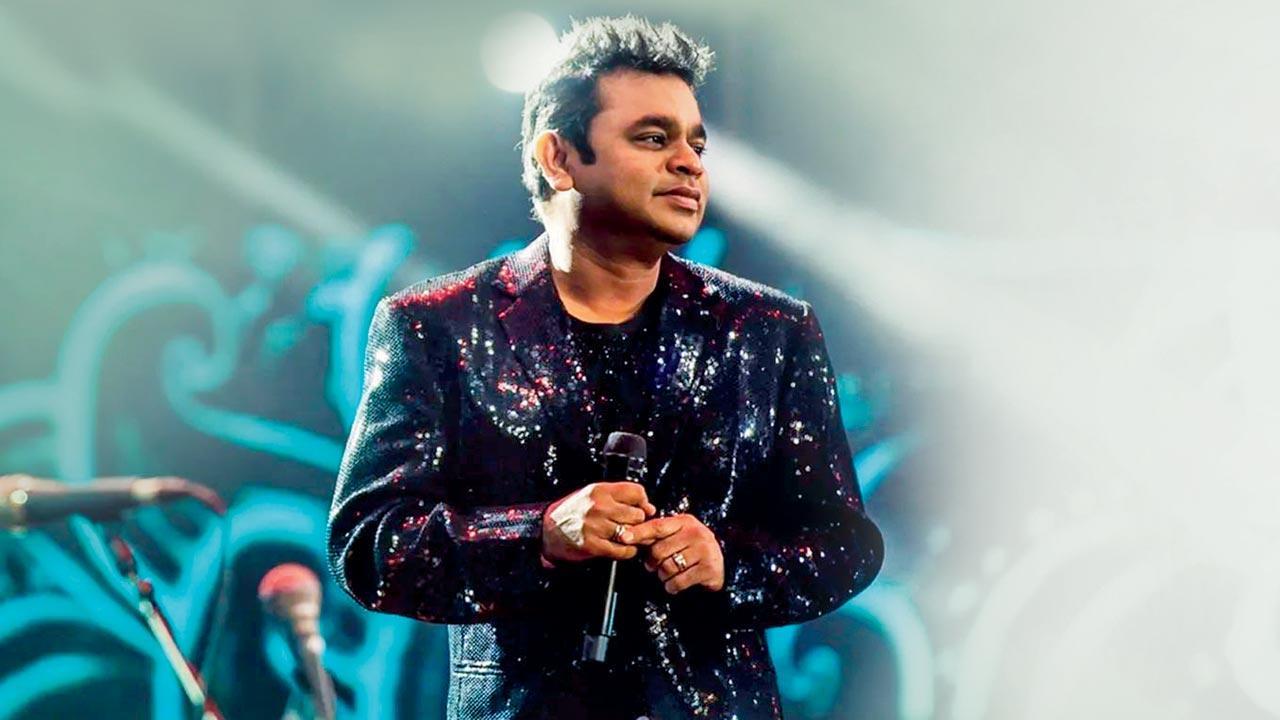
In a candid chat with mid-day to discuss his upcoming release, Headhunting To Beatboxing, A R Rahman discloses why he stays away from political banter, and the pain points in the Indian music industry
Priyanka Sharma (MID-DAY; June 10, 2024)
Touted as an offering that “exemplifies the energy, ambition and new-found confidence of Naga youth”, A R Rahman’s feature documentary, Headhunting To Beatboxing was unveiled at the 77th Cannes Film Festival in France. “From the ancient traditions of headhunting tribes to the musical renaissance in the state, the documentary promises to take audiences on an immersive and enlightening musical anthropological odyssey,” read a statement released by the Nagaland government.
In this interview, Rahman—who has also produced the film—chronicles how the artistes of the north-eastern state became the muse of his next piece of work. Edited excerpts of the interview:
What drew you to the story of Headhunting To Beatboxing?
It was a discovery. I was invited to Nagaland. I went with apprehension, because there are rumours relating to the history of Nagaland, [especially the practice of] head-hunting. I discovered this film organically and called Rohit [Gupta, director]. I told him that he should see the Hornbill festival that was taking place in Nagaland, where young people were also turning up. He came, and started shooting. The government was friendly because they wanted this to happen. They have a minister for music! It was fascinating to see the initiatives they have taken. I felt something needed to be done.
When you watch it, you will realize that two things stand out—one is that this [film depicts] India, and the other is that it is a reflection of the inclusivity that we should aim to inculcate in society. I see a section of the country that is completely ignored. That’s not good. It’s like, we have a family, but three people aren’t fed properly. It is odd.
You unveiled the film’s teaser at the recently concluded Cannes Film Festival. When you are present on an international platform, do you carry the pressure of being the Indian icon, A R Rahman?
I don’t try to be anybody else. On social media, and on our website, we are transparent about what we stand for. I don’t put out any [material that is] anti-government, because, as a musician, I should maintain a neutral stance. My music should be the haven that people seek solace in. I don’t have time for negative things. My music needs peace and healing.
But, while creating any piece of music, does the pressure to cater to your global audience play on your mind?
When Roja [1992] won a National Award, people said, ‘Isn’t it too early for you to get a National Award for your first film?’ The bar was set high. I felt I had nothing left to give, as I had given everything to my first film. But then, you meet a new team on a new film, and it gives you hope. You can create something new. For me, with the first film itself, that pressure has existed. That’s the reason I began to slow down. While others were producing songs in seven hours, I would take weeks or months to create [the soundtrack]. I slowed down intentionally, and the industry took note. They realized that we could move towards quality and be responsible instead of [urging musicians] to finish five songs in a day. Song-writing is an art that should be nurtured. Give it the spiritual energy that people can access.
At that time, my intention was to charge more and do less. It was also important to focus on the life happening around you. When you work, you become a slave, and you don’t derive anything from life. You are just cannibalizing what has come before. Unless you learn new things, how can you give people something novel? And to learn new things, you need to meet people, see what’s happening in the world, and spend time with your family.
How do you look at the music culture of today’s India?
It’s great that non-film music is becoming popular. If that didn’t happen, people would shell out a lot of money into [making] music that the masses don’t even like. They may say that the song has crossed many million views, but people won’t even know what the hook line is. The game of paid views is over. People are listening to different kinds of songs. But, there are certain lyricists who are bringing back the golden age of the ’50s and ’60s. Artistes like Irshad Kamil and Amitabh Bhattacharya have brought worthiness into lyricism. They bring a new kind of beauty to the words that they write. I feel, there could be more progress in lyric writing, especially in its ability to convey the philosophies of life, rather than simply stating, ‘I love you. Love me.’ I like lyrics that are symbolic. There’s scope for a revolution there.
I have finished writing two scripts-Javed Akhtar
8:22 AM

The veteran talks about his comeback as a scriptwriter after over a decade
Abigail Banerji (HINDUSTAN TIMES; November 11, 2023)
Having worked in the Hindi film industry for over five decades, Javed Akhtar has seen and heard it all. The screenwriter-lyricist, who co-wrote Luck By Chance in 2009 with his daughter, director Zoya Akhtar, and also wrote the screenplay for Ekk Deewana Tha (2012), is set to make a comeback to script writing.
“I have finished a couple of scripts. It might be too soon to talk about them and take the names of people, but I found producers for them,” says the 78-year-old. He adds, “I have done the narrations for the scripts and they liked them. I am writing another one and working on new songs.” Javed has also penned a song for the Shah Rukh Khan-starrer Dunki.
Not one to pigeonhole himself, the Padma Bhushan awardee is happy that there has been a change in the way lyricists get their due now, but he hopes for more. “There is still some [pay] disparity that exists, but it’s not as bad as it used to be. Young songwriters like Amitabh Bhattacharya and Irshad Kamil are doing well. They are also being paid decently. But I feel lyricists deserve much more and hopefully, things will get better,” he says.
However, with regards to lyricists getting adequate credit for a song, the veteran feels “there is a lot left to be done”. “If you watch any song on YouTube, you will find credits for the music director and the singer, but the name of the lyricist, more often than not, is missing. All lyricists should be credited, not only when your daughter is the producer of the project,” says the lyricist, who recently penned two songs, Sunoh and Va Va Voom, for Zoya’s upcoming directorial The Archies.
To ensure that lyricists are getting their monetary due, Javed, who is the chairman of the Indian Performing Right Society (IPRS), is working to get things back on track. The veteran explains, “With the kind of royalties that we now collect, the income of the writers and composers have increased manifold. There are many successful people, who don’t work anymore, but they can live off just the royalties.”
The IPRS was recently ranked as the fourth largest society in terms of revenue collected in the Asia-Pacific region, according to the CISAC Global Collections Report 2023. He adds, “Now there’s a total balance of power between the artistes and the music labels and producers. Neither can take any major decisions without the other.”
10 Years of Lootera: Amit Trivedi, Amitabh Bhattacharya share fascinating trivia
8:36 AM
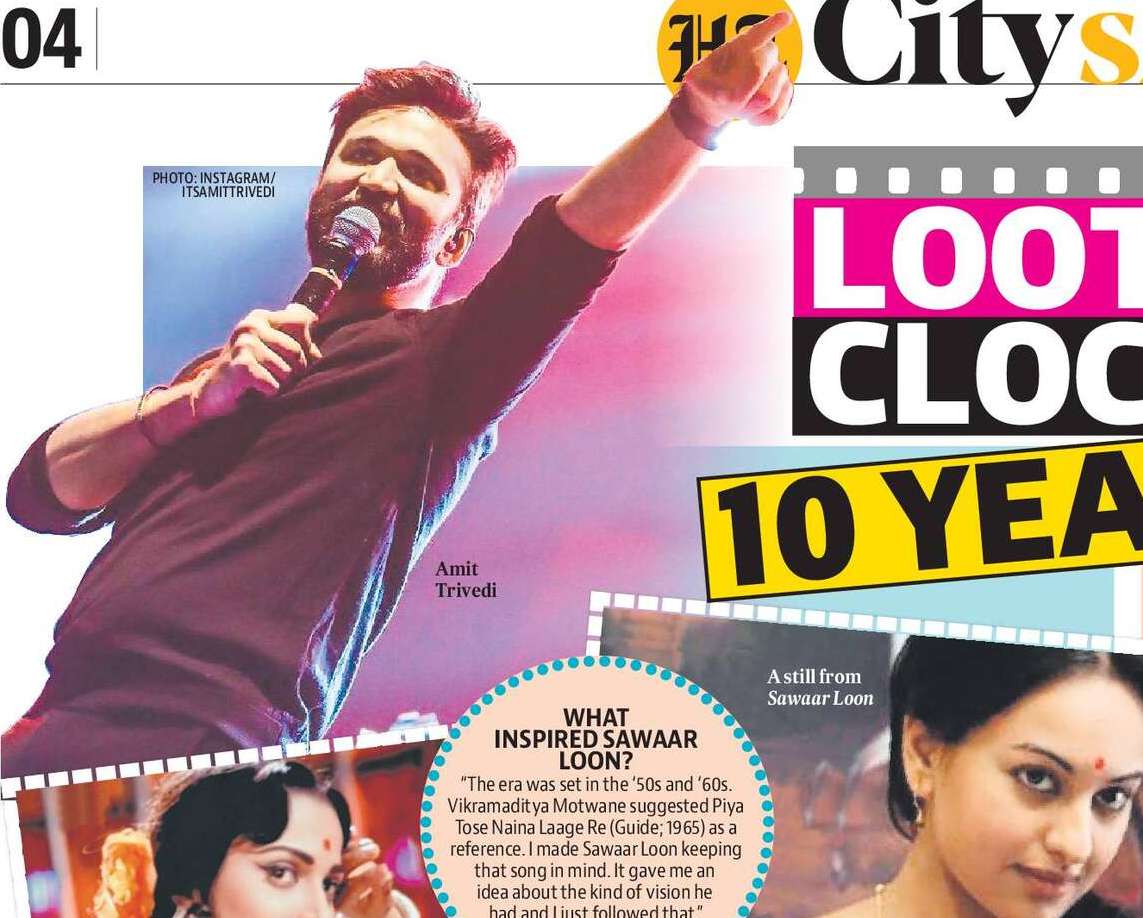
Soumya Vajpayee (HINDUSTAN TIMES; July 5, 2023)
Besides winning awards, the music of Lootera (2013) also earned a lot of respect from music aficionados. So much so that the six-track album continues to feature on their playlists. For composer Amit Trivedi, the experience of working on the songs of the Ranveer Singh and Sonakshi Sinha-starrer “was amazing”.
He shares, “I always enjoy working with Vikramaditya Motwane (director), as he always has clarity on the music he wants in his films. He gave me the script of Lootera and there was so much clarity in the way things were described that I knew exactly how to go about it. Working with Amitabh Bhattacharya as the lyricist and some amazing singers was a great experience too.”
WHAT INSPIRED SAWAAR LOON?
“The era was set in the ‘50s and ‘60s. Vikramaditya Motwane suggested Piya Tose Naina Laage Re (Guide; 1965) as a reference. I made Sawaar Loon keeping that song in mind. It gave me an idea about the kind of vision he had and I just followed that,” says Trivedi.
WHAT A SMOOTH RIDE!
“Working on the songs of Lootera was very smooth and we managed to come up with all of them in one go. When you work with people who have a clear vision and similar wavelengths, things get easy. When they enjoy your music, you get the freedom to create. I made only six songs and all of them made it to the album of Lootera,” he says.
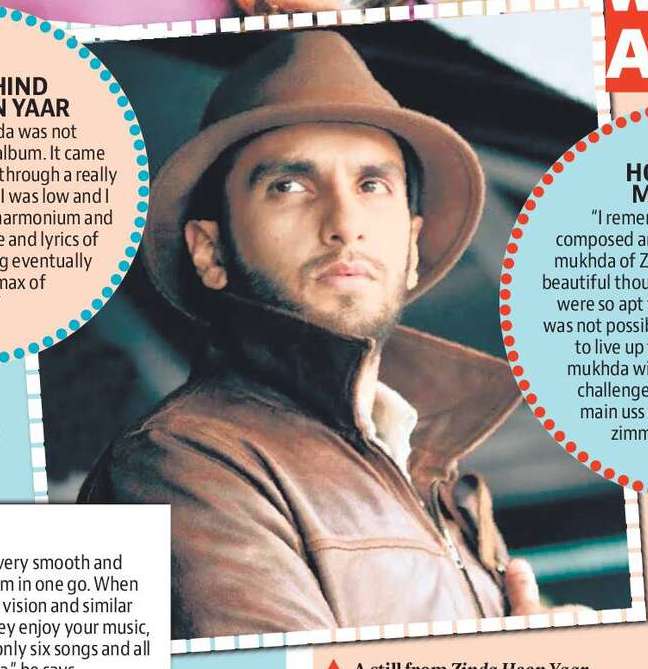
THE STORY BEHIND ZINDA HOON YAAR
Trivedi recalls, “Zinda was not supposed to be in the album. It came to me when I was going through a really tough time, personally. I was low and I just sat down with the harmonium and came up with the tune and lyrics of the mukhda. The song eventually became the climax of the film.”
-------------------------------------
Soumya Vajpayee (HINDUSTAN TIMES; July 5, 2023)
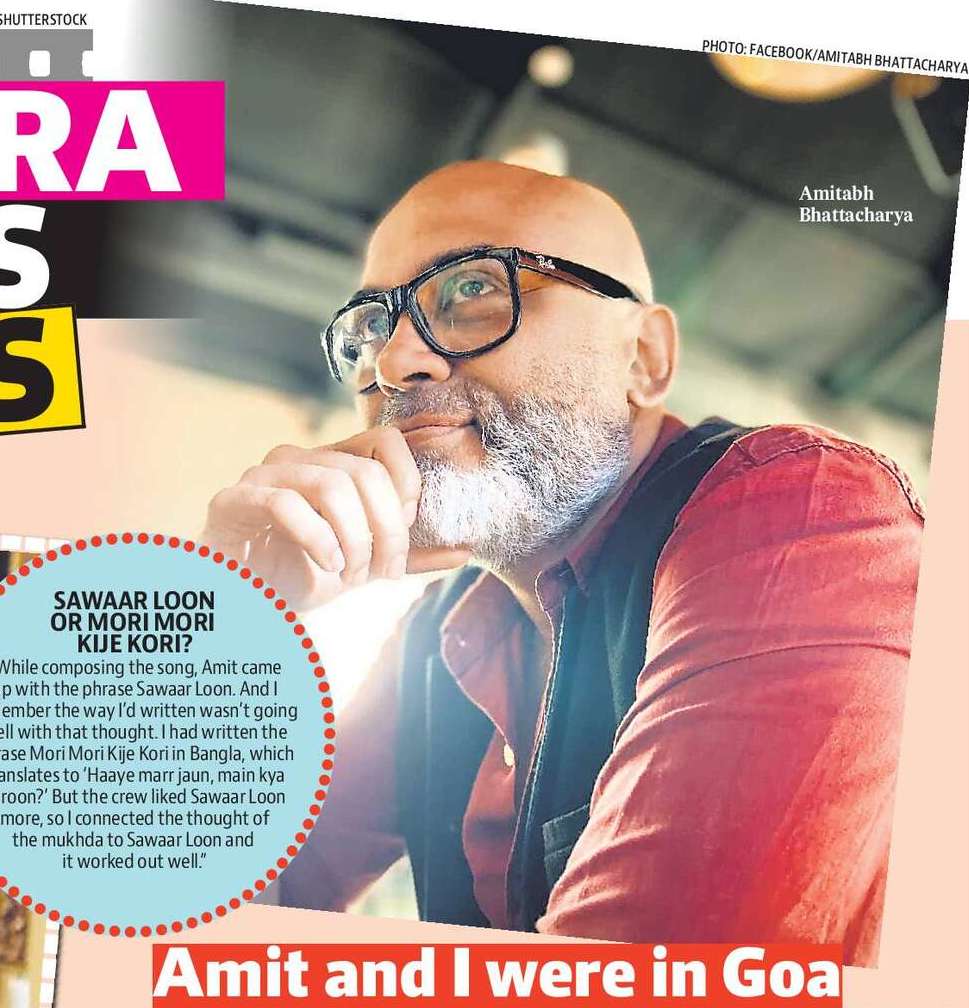
I had come to Mumbai with the vision of becoming a singer and I became a lyricist by chance. I had just found a footing as a lyricist in the industry around the time Lootera happened, so it was a special project,” says lyricist Amitabh Bhattacharya, who penned all the songs of the film. Teaming up with composer Amit Trivedi, his collaborator on many projects even before Lootera, was a memorable experience for the writer.
“Amit and I make a good team. Since we had worked on projects like Aamir (2008), Dev D (2009) and Udaan (2010) by then, we had a great tuning. He would share the melody with me and I would write the lyrics after listening to the track. All the songs in the film were the first drafts I wrote,” he says, adding, “Working on a classic like Lootera while I was also writing songs for a commercial masala film like Yeh Jawaani Hai Deewani (2013) was interesting. As an artiste, I enjoyed the variety.”
ZINDA HOON YAAR IS MEMORABLE
“I remember Amit had already composed and written the lyrics for the mukhda of Zinda Hoon Yaar and it was a beautiful thought. I realized that the words were so apt that rewriting the mukhda was not possible. For me, the responsibility to live up to the benchmark of the mukhda with impactful antras was a challenge. But mujhe khushi hai ki main uss gaane ko accha likhne ki zimmedari nibha paaya,” he recalls.
SHIKAYATEIN FOREVER
Bhattacharya reminisces, “My favourite track from the album is Shikayatein. There’s something in the melody. Amit and I were in Goa when he shared the melody with me and I wrote the song. There are some songs that you write and feel a sense of relief and catharsis. Shikayatein is that song for me. With (singer) Mohan Kannan’s voice, the song went to another level.”
SAWAAR LOON OR MORI MORI KIJE KORI?
“While composing the song, Amit came up with the phrase Sawaar Loon. And I remember the way I’d written wasn’t going well with that thought. I had written the phrase Mori Mori Kije Kori in Bangla, which translates to ‘Haaye marr jaun, main kya karoon?’ But the crew liked Sawaar Loon more, so I connected the thought of the mukhda to Sawaar Loon and it worked out well.”
Sachin-Jigar overwhelmed with Zara Hatke Zara Bachke music success, but say "social media not a landmark for us"
8:49 AM
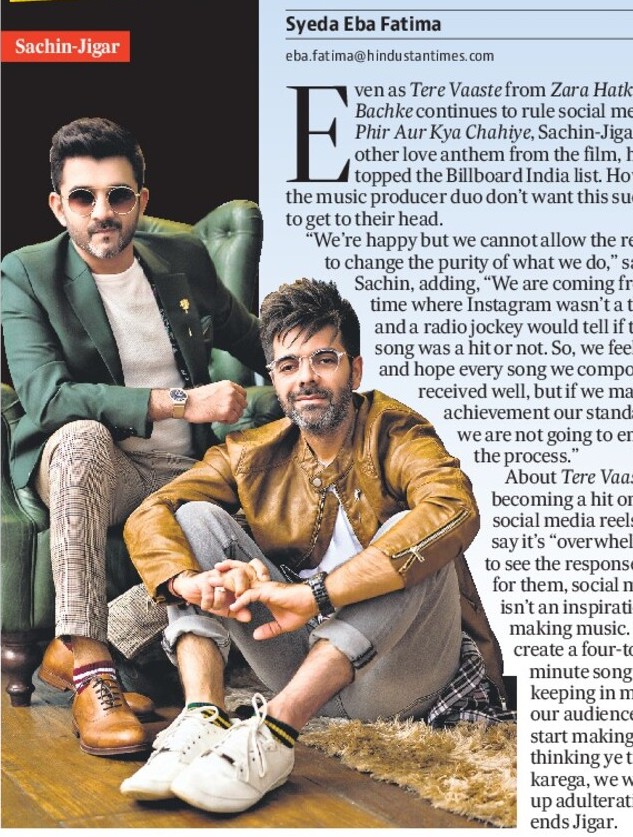
Syeda Eba Fatima (HINDUSTAN TIMES; June 26, 2023)
Even as Tere Vaaste from Zara Hatke Zara Bachke continues to rule social media, Phir Aur Kya Chahiye, Sachin-Jigar’s other love anthem from the film, has topped the Billboard India list. However, the music producer duo don’t want this success to get to their head.
“We’re happy but we cannot allow the results to change the purity of what we do,” says Sachin, adding, “We are coming from a time where Instagram wasn’t a thing and a radio jockey would tell if the song was a hit or not. So, we feel happy and hope every song we compose is received well, but if we make this achievement our standard, we are not going to enjoy the process.”
About Tere Vaaste becoming a hit on social media reels, they say it’s “overwhelming” to see the response but for them, social media isn’t an inspiration for making music. “We create a four-to-five-minute song keeping in mind our audience. If we start making music thinking ye trend karega, we will end up adulterating it,” ends Jigar.
----------------------------------------------------
Abigail Banerji (HINDUSTAN TIMES; June 26, 2023)
With over 3 million reels and way more than 100 million views, Tere Vaaste from Zara Hatke Zara Bachke has surely caught on online. And despite “not being social media savvy”, writer Amitabh Bhattacharya is over the moon. “I am glad that people listened and connected with the lyrics,” he says. The 46-year-old, who never anticipated it to go through the roof in this way, says, “One can never be sure. Every song has its destiny, which lies in the hands of the listeners.”
Bhattacharya shares what went on in his mind while writing the Sachin-Jigar track that features vocals by Varun Jain and Shadab and Altamash Faridi: “I wanted to write a song for romantics who are sincere and ready to walk that extra mile for their beloved, yet are lazy. If you hear the lyrics in the chorus and the antara, you will realize that he is ready to do the work for his lover only if she isn’t convinced by his logic of not going to actually get the stars and moon for her.”

It was only later that I learnt that they intended to use the Kahani song for Laal Singh Chaddha's poster-Mohan Kannan
8:20 AM

With Kahani from Laal Singh Chaddha emerging to be a fan-favourite in no time, singer Mohan Kannan on collaborating with the film’s composer
Sonia Lulla (MID-DAY; May 2, 2022)
Agnee band-member Mohan Kannan’s Bollywood projects may have been few and far in between, but be it Chandaaniyan from 2 States, or Yaariyan from Cocktail, the singer has left a lasting impact with his lilting voice. Having rendered the first track from Aamir Khan’s long-in-the-making Laal Singh Chaddha, Kannan is aware that he is now among the artistes who will be celebrated for the melodic song that has swiftly earned acclaim from fans.
Composer Pritam, he says, adopted a rather secretive approach when appointing him for the song. “When they were doing pre-production work in 2019, Pritam asked me to come and record for it. He didn’t tell me what it was for, but at the time, everyone was raving about Amitabh [Bhattacharya] and his lyrics. It was only later that I learnt that they intended to use the song for the poster, and I realised this was for Aamir [Khan’s] film,” says Kannan, who, despite being a star in his own right in the indie music space, continues to seem star-struck by the experience.
Since the pandemic substantially deferred the film, Kannan says they revisited the track to create a longer version that could be used in the film. “This time, Aamir was also involved in the process, and the entire team meticulously worked on specifics like arriving at the pronunciation of certain words, and elements that should be emphasized. Pritam Chakraborty had established the fact that he wanted this to be rendered in a story-telling format, and asked me to pay attention to the lyrics. Amitabh has encapsulated everything in this song. I’ve always believed that emoting the lyrics helps you connect to the masses well.
And performing a song live, on stage, gives you the chance to showcase your skills.” Pritam, he reveals, helped him analyse the sections of the song that should seem conversational, “as though you were actually saying it to someone”, casual, and melodic. “His cues are rarely related to the melody. He focusses on the approach. He often says that I should visualise myself at a New York subway, sitting with a guitar and singing about the important aspects of life for passers-by. That’s the approach he wants for his music. His assistants, Aakash and Anirush are brilliant. They’ve put in as much work into helping me dub correctly as I have in singing the song.”

12 years since Dhobi Ghat, Kiran Rao returns to direction
8:39 AM

Almost 12 years since Dhobi Ghat, Rao returns to direction with massy offering; kicks off Aamir-backed film near Pune
Upala KBR (MID-DAY; January 15, 2022)
Haven’t many of us wondered when Kiran Rao will return to direction as we watched the poignant Dhobi Ghat (2010), several times over? But you can’t hurry filmmakers true to their art; they will rekindle their romance with the camera only when they have a story to tell. And Rao seems to have found hers. Almost 12 years since her directorial debut opened to glowing reviews, the producer-director has quietly kicked off the shoot of her second project. mid-day has learnt that the drama-comedy, backed by Aamir Khan Productions, went on floors in a town near Pune on January 8.
Dhobi Ghat, which was an ode to Mumbai and the lives it witnesses, was dubbed as an arthouse movie. For her second offering, Rao has switched gears. A source reveals, “Kiran’s next is a massy entertainer. Aamir loved the script when she narrated it to him, and instantly agreed to come on board as producer. The two continue to remain friends and collaborators after their divorce.”
The film, written by Biplab Goswami with a screenplay by Sneha Desai, is centred on three characters. After an extensive hunt, Rao found her lead in Sparsh Shrivastav of Jamtara: Sabka Number Ayega fame. “Besides the Netflix series, he has acted in several serials, including Balika Vadhu. For the remaining two leads, she has zeroed in on Pratibha Ranta, who was seen in Zee TV’s Qurbaan Hua, and 15-year-old Nitanshi Goel, earlier seen in Peshwa Bajirao and Karmaphal Daata Shani.”
Owing to its subject, the film will be shot across different towns in Maharashtra. The source adds, “The first schedule, conducted in adherence with Coronavirus guidelines, will go on till January 20. Post that, the unit will take a break as per Coronavirus protocol, and resume after a few weeks in the next location. Kiran intends to wrap up the shoot by April. The film will also mark the return of composer Ram Sampath and lyricist Amitabh Bhattacharya to the banner after Delhi Belly [2011].”

(From left) Pratibha Ranta and Sparsh Shrivastav front the film
Women’s Day Special: Alokananda Dasgupta, Jasleen Royal, Kausar Munir confess that only way to success is through their work
8:04 AM

Alokananda Dasgupta, Jasleen Royal and Kausar Munir
Three female artistes on what drives them to success in the male-dominated music composing, and writing
MID-DAY; March 8, 2021)
Alokananda Dasgupta
Intricate and impassioned as they are, conversations on music composition with Alokananda Dasgupta are delightful for every interviewer. A far cry from the superficial accounts of the art, Bengali filmmaker Buddhadeb Dasgupta’s daughter always elucidates her answers with those engrossing anecdotes of the concerned project that enhanced her final creative piece. It is this obsession with the craft that, she admits, is an essential to enjoy a long career, especially in a field that, much like many others, is attuned to the needs of men.
“It may sound like a cliche, but, keep at it,” says Dasgupta, adding, “You must have a [deep] desire to keep at it, despite disillusionment, and intimidations, and know why you wish to express yourself. The truth is that scoring can get monotonous, because one is watching and re-watching [the film] over and over again. So, only if something is up my alley am I usually kicked about composing for it. I will make something that I want to hear as a viewer, and hence take my role as an audience and consumer of that project, very seriously.”
Following her acclaimed work in Sacred Games with shows like Leila, Breathe: Into the Shadows, and the fast-paced AK vs AK, Dasgupta doesn’t shy away from admitting that gender discrimination, while not exclusive to the film industry, is something she encounters owing to the authority afforded to her as music director. “Sometimes, I am egged on to analyse why certain incidents happen, and I understand that people hesitate to accept instructions from a female [musician], who doesn’t look old either. I’ve chosen to wear horse-blinders for several issues. Things may upset people, but what can I do? It is my job, I have to talk to them and tell them what has to be done.”
Admitting that gender bias isn’t the concern that initially perturbed her about a probable career as music composer, Dasgupta says she had other battles to wage, including her rather introverted nature. “I am not a people person, and prefer spending time with [my pets]. But, I learnt on the job, and could see the loop holes and inequalities. It wasn’t shocking [to see discrimination since such instances] subtly make way into every woman’s life. For me, it started with insecurities due to simple things like being unable to participate in conversation with my male contemporaries [on topics like technology, which they can freely indulged in].” Patriarchy, she says, is so deep-seated in society that “even a filmmaker making a [pro-women] documentary is likely to come home and do something that [can be classified] as patriarchal behaviour.”
Jasleen Royal
For 29-year-old Jasleen Royal, singe-songwriter-composer, an increase in representation of women’s perspectives will offer a breath of fresh air in the music industry, and some respite from the barrage of “songs on infidelity” that have been topping the charts. “I would love to see female writers hold more key positions in the industry than they do. The industry welcomes both genders, and only considers the work that one can create. But, given that women started working late, it will take time for them to catch up,” says the singer-songwriter, adding that focussing on the creative piece, instead of the artiste who is creating it, has enabled her to develop a good ear for music.
“Women have different perspectives on matters, but let’s acknowledge that several women-oriented films have been beautifully penned by [male writers like] Gulzar sa’ab too. So, it’s essential to be influenced by good art alone.”
Royal, with films like Baar Baar Dekho and Gully Boy on her resume, says despite all odds, it is her ability to create work that she loves, that has repeatedly borne fruit. “I believe that only if I love what I put out are there more chances of others loving it too.”
Kausar Munir
Mirroring Dasgupta’s opinion, lyricist Kausar Munir says a fair share of the path to acclaim in the music industry is spent in oblivion. “You are shooting in the dark because there will be no appreciation [for a long time]. You need to spend time, and effort [in enhancing] your skills, and have faith, which is what makes the process difficult. There are several sociological factors [that deter] women from exploring the field. You need women in production arts, but as far as writing is concerned, their representation is abysmal. It could be because the writing process is disordered and fluid. There is no clear path to success, so you have to be obsessed with your work. It is a rigorous path with little guarantee of return. Women want something more promising,” says Munir, adding that though she stumbled upon the career by happenstance, she was able to pave her path by exploring various avenues of writing, instead of sticking to lyrics-writing, alone.
Munir counts herself among the fortunate for two reasons — to begin with, she claims to have not faced gender discrimination, as we know it. Also, on the rare occasion that she did, she could afford to walk out of the project, without worrying about her bread and butter. However, aware that her appointment on any project is owing to a skill-set that only she possesses, Munir celebrates factors that set her apart. Responding to questions on drivers of success, she says, “I know that there is something I can deliver, which is why I am appointed for the job. If I try to be an Amitabh [Bhattacharya] or Irshad [Kamil], I am being unfair to myself. I have recognised what makes me unique, and why I am appointed for projects. So recognizing your ability, and nurturing it will take you where you want to be.”
Admitting that the “system isn’t conducive for women”, Munir says several practices would be termed unprofessional by aspiring singers. “If I am called for a project at 12 midnight, I can go. But many women cannot. They may find it unprofessional, which it is. But this system is tuned against women. I am not even going into the [sexual] harassment aspect, which is prevalent. To women, I would say, don’t be afraid to fail, and tread new paths.”
Dil Bechara's soundtrack has been carefully curated-A R Rahman
8:40 AM

The Oscar-winning composer A R Rahman hence understands that Dil Bechara will be special for Sushant Singh Rajput's fans
Uma Ramasubramanian (MID-DAY; July 10, 2020)
 "There is no formula to composing music; it depends on what appeases the heart," says A R Rahman as he gears up for the release of his next film offering, Dil Bechara. Mukesh Chhabra's directorial venture will be the last cinematic outing of leading man Sushant Singh Rajput, who allegedly committed suicide recently. The Oscar-winning composer hence understands that the film will be special for the actor's fans.
"When I write songs, I let them breathe for some time and then present them to the director. It was a great experience collaborating with Mukesh on this film; his enthusiasm is infectious. This album is carefully curated because the film has so much heart, and now, memories of Sushant," says the composer, who set the melody to lyricist Amitabh Bhattacharya's words.
Being presented by Sony Music India, the soundtrack releases today, and has a mix of numbers based on friendship, and love.
An assorted bunch of artistes including Sunidhi Chauhan, Shreya Ghoshal, Arijit Singh, Shashaa Tirupathi and Jonita Gandhi, among others, are part of the album, that releases today. Chhabra says, "Rahman beautifies the narrative and takes it forward. I can only hope that listeners enjoy the music."
Dil Bechara, also featuring Sanjana Sanghi, will stream on Disney+ Hotstar on July 24.
The entire nation is standing by my side, making me believe that Teri Mitti is beyond awards-Manoj Muntashir
8:24 AM

Nikita Deb (HINDUSTAN TIMES; February 19, 2020)
 The debate about the fairness of award systems in India has existed for as long as the entertainment industry has been around. And recently, after rapper Divine, and Ankur Tewari won the Filmfare award for best lyrics given in the song Apna Time Aayega (Gully Boy; 2019), lyricist Manoj Muntashir took to Twitter to express his disappointment and said that he will not “attend any award show till I breathe my last”.
Manoj, who had written the lyrics for the song Teri Mitti (Kesari; 2019) is upset that his song lost out to what he calls “a song which no parents would like their children to sing”. He clarifies that his problem is not essentially with awards, but with “award shows”. “Award shows are meant to be entertaining and ready to be sold to the highest bidder. Like any other commodity, award shows are designed to create wealth for the organisers. The film industry is still stuck in medieval times. Only an insider can tell you how unequally and heavy-handedly we are treated as opposed to the stars, who are stars because we decorate them with our skills,” says Manoj, adding that he wouldn’t have felt bad if he had lost out to Amitabh Bhattacharya or Irshad Kamil, who were both nominated in the same category. But, when he lost to Gully Boy, he felt like “Lord Krishna who was killed by a hunter”. Manoj adds, “He deserved a better death, and I deserved a better defeat.”
 The lyricist remembers first hearing the song Apna Time Aayega when his eight-year-old son was singing it. “My first reaction was that he has learnt this gaali-galauj by staying in the wrong company. I refuse to be judged by the prejudiced minds. Obviously, you can’t make everyone happy, but the least you can do is to not sell your soul. Teri Mitti has become the anthem of our 40 lakh soldiers and paramilitary forces. So, fairness is a no brainer here,” Manoj laments.
The writer, who has also written lyrics of songs such as Galliyan (Ek Villain; 2014) and Kaun Tujhe (M S Dhoni - The Untold Story; 2016) goes on to share that for films and actors, special categories such as critics’ choice and popular choice are invented so as to not miff the actors. He says, “The organisers want to keep as many of them happy as they can. So, why can’t the same rule be applied to music as well? Let’s be fair and have popular and critic categories in music. But they are not interested in wasting time on us. Let’s face it — musicians, writers, technicians, don’t matter [to the organisers]. To them, we are just liabilities. Given a chance, they would stop inviting and honouring us, but traditions can’t be broken easily so they bear us like unwanted guests. It’s high time for us to find our lost self-respect and stop showing up where we aren’t welcome.”
Manoj signs off by saying, “In a few hours, I had an entire nation standing by my side, making me believe that Teri Mitti is beyond awards. Kisi ki jeet se zyada meri haar ke charche hain.”
Check out Hrithik Roshan in Super 30's second song, Paisa
7:48 AM

Himesh Mankad (MUMBAI MIRROR; June 21, 2019)
Two and a half years after Kaabil, Hrithik Roshan returns to the big screen with the Anand Kumar biopic, Super 30, which chronicles the tale of a math whiz’s efforts to help underprivileged students get into the premiere Indian Institute of Technology. After the romantic track, “Jugraafiya”, for which Udit Narayan and Shreya Ghosal have given playback, the second song from the film, composed by Ajay-Atul, is titled “Paisa”. “Every person who started making money after years of struggle will relate to it,” says Atul Gogavale.
His brother Ajay describes it as a dance number with meaningful lyrics written by Amitabh Bhattacharya. “It’s not a dance number in the film. But it can be a dance number for the audience once it gets popular. I am confident that today’s generation will love listening to the peppy tunes in pubs and theatres,” he asserts.
The film marks a reunion for the composer duo with Hrithik seven years after Agneepath. “Hrithik is a sweet and humble personality. He shared feedback on the songs and background score, and constantly kept in touch throughout the process,” Atul smiles.
The song is sung by Vishal Dadlani as, Ajay points out, the vocals required a powerful voice. “The word ‘Paisa’ has a lot of power because it makes every individual work hard. Vishal was a natural choice for this song because we wanted to highlight the power of this term. 'Paisa' is a contemporary composition yet takes us on a nostalgic trip,” Ajay explains, adding that he, Vishal, Shekhar Ravjiani and Atul share a brotherly bond and often discuss their work for feedback.
Amitabh Bachchan sings a lullaby in Thugs Of Hindostan
8:18 AM

DNA (November 5, 2018)
This is definitely the most well-kept secret of Thugs Of Hindostan. Amitabh Bachchan has sung a soulful lullaby in the film that highlights his character Khudabaksh’s relationship with Zafira, played by Fatima Sana Shaikh. Khudabaksh, who is a father figure to Zafira, vows to protect her. Though what happens to her parents is not revealed in the trailer, it’s obvious that she is mentored by him.
In the scene, Khudabaksh will be seen trying to put Zafira, who fights the brutal memories of her past, to sleep. “Mr Bachchan was moved while filming this shot and decided to lend his voice to the number. Moreover, he recorded it himself and that, too, at his home! The initial idea was to make it a short cradle song, but he went a step further and converted it into a full-fledged track,” reveals the source.
While Ajay-Atul have composed it, the lyrics have been penned by Amitabh Bhattacharya. Big B says, “The song tells you the depth of the bond that Zafira and Khudabaksh share. I was excited to sing a lullaby because it isn’t every day that you get to render one. The lyrics are beautiful and the composition highlights the emotional journey of these two characters. I’ve been asking Adi (producer Aditya Chopra) to incorporate it into the soundtrack. I’m sure he will do it because it has turned out to be a beautiful song.”

Marriage makes life fulfilling-Urmila Matondkar
8:09 AM

Hiren Kotwani (DNA; April 2, 2018)
She was last seen in EMI: Liya Hai Toh Chukana Padega a decade ago. While she did a few cameos in Hindi cinema and the Marathi film Ajoba in the interim, one missed seeing Urmila Matondkar on the big screen, where she truly belongs. With the song, Bewafa Beauty, in Blackmail, the actress, who has films like Drohi, Rangeela, Kaun?, Judaai, Daud, Deewangee, Bhoot and Pinjar and chartbusters like Kambakht Ishq (Pyaar Tune Kya Kiya), Chamma Chamma (Chinagate) to her credit, is once again grabbing eyeballs. We catch up with Urmila who talks about her sabbatical, marriage and more. Excerpts from the conversation...
It’s great to see you back on screen. Why did you go missing for so long?
It’s not about going missing; but there was nothing interesting or exciting enough to take up. If you notice, I had done a variety of roles in diverse genres within a short span. Unless something that was offered to me went beyond that, it didn’t make sense to do it. Also, over a period of time, there are other things that you want to do and they become your priorities. I wanted to travel. It’s different when you’re not married. That’s not the reason in my case. It’s just that unless I was doing something I hadn’t done before, I wasn’t going to take up any and every offer that came my way.
Talking about marriage, one didn’t even hear a whiff of a love story brewing till you announced that you were tying the knot with Kashmir-based model-businessman Mohsin Akhtar Mir.
I’ve always been a private person. There was nothing to talk about. People got to know about my marriage, which was the important part, when it happened.
Having been away from the screen for quite a while, what prompted you to break the hiatus with just a song for Blackmail?
When you listen to the track, you’ll understand the reason. The magical duo — composer Amit Trivedi and lyricist Amitabh Bhattacharya — has done a superb job. When director Abhinay Deo approached me, he said I don’t wish to do just another item song. And though this dance number will have thumkas, nakhras, jhatkas, it will have more to do with expressions, rather than just movements. I thought it would be amazing to do something like this. Moreover, Abhinay’s humour is also different. The way the song has been treated is important and the expressions had to be more sultry. My character is trying to convey the lyrics through her eyes and expressions. I’ve also been known for my glamorous and out-and-out dance numbers; and I’m game for something new and exciting.
Earlier, you had said that marriage would happen at the right time. In the two-odd years you’ve been married, how have you changed as a person?
Not much. If you have to change yourself or the other person too much, the purpose is lost. Marriage makes life fulfilling, you explore more things with a partner than when you are alone. When it happens at the right time, with the right person and for the right reason, only then does it have a meaning. There are not too many changes. I travel more often now. And since both of us like to travel, we take the opportunity to do that more than before.
Since your husband Mohsin is based in Kashmir, do you stay there more often now?
I do visit Kashmir a lot, but we don’t stay there for long. His work is managed by his team. If someone asks me if I’d love to go (to Kashmir), I’d say yes every time. You’ll find it strange but despite having travelled all over India for work, Kashmir is the only place I had not gone to. It’s a breathtakingly beautiful place. And the food is awesome.
Today, actresses are venturing into producing movies. Do you want to step behind the camera?
No, producing or directing is not my cup of tea. I’m happy being in front of the camera. It’s a big high and if it’s not a high, it’s no fun. So, I’m going to stick to acting for the time being.
For someone who started early — you were barely four when you debuted as a child artiste in B R Chopra’s Karm (1977) — how does the long break feel?
It doesn’t feel like a break. You’re very much part of films, being on the jury of award ceremonies or constantly mingling with the fraternity. At the same time, I also believe that there’s a beautiful world out there. It’s better to explore what the world has to offer. You realise that one lifetime is not enough to experience it. While it’s amazing to be in front of the camera, you need to do a lot of other things as well. When you’re acting, you can’t do all that and I’ve never been the kind of person to do 10 things at a time. So, it’s good to have a break and do other things. When something excites you, then you take it up.
Will it be this long before we see you on screen again?
As I said, if something exciting and interesting comes up, then I’ll take it up.
Chull, Matargashti, Dhingana: When Bollywood songs taught us quirky lingo...
7:43 AM

Purvaja Sawant (BOMBAY TIMES; July 7, 2017)
When Gulzar saab wrote the
lyrics of the song Mere Miyan Gaye England
(Rangoon), perhaps even he didn't realise that the lines 'Udan khatole
mein saiyaan
jo pehli baar ude, aasmaan mein chaand pakad ke jhapp se kood pade' will
pique the curiosity of a whole new generation, who wondered what an 'udan khatola' (flying machine) was! In the recent past, Bollywood
lyricists have caught our attention with not-so-common yet catchy words
and hooks in songs, often making us look up the word on the internet to
know what they mean. Be it OK Jaanu's Kaara Fankaara (hissing sound made
by a snake), Tamasha's Matargashti (strolling about aimlessly), Raees'
Dhingana (joy) or Fitoor's Haminastu (if there's heaven on earth, it's
here), all these sound exotic and add a tadka to the song.
A SEA CHANGE IN LISTENERS' TASTES
Bollywood music has evolved over the years, with musicians experimenting with different sounds, instruments and techniques. According to lyricist Kumaar, one of the reasons why unusual words have made their way into songs is because of the change in audiences' preference. His Kar Gayi Chull from Kapoor & Sons became a chartbuster, and it Bollywoodised the word 'chull'. Kumaar says, “In the 90s, there were a few key words that were present in almost every song - sanam, deewana, jigar, mohabbat, dil etc - because these were a hit with the audiences back then. Now, the trend has changed. Today, listeners expect non-filmi lyrics in Bollywood songs! Earlier, we would be asked 'What is the mukhda of the song?' and now, it's 'What is the hook?' Composers don't want 'used' words. The requirement is for unconventional lyrics. They want catchy lines that will get people instantly hooked to the song.“
Amitabh Bhattacharya, the lyricist behind songs like Raabta and Dhaakad, is of the opinion that Dhaakad, is of the when one comes across a non-familiar word in a song, it automatically automatically piques their interest, especially if they don't know the meaning. “The idea is that people should take the effort to find out the meaning of the word,“ he says. The song writer, who likes using khaalis (pure) Urdu in his songs like Zehnaseeb (Hasee Toh Phasee), believes it works well. He adds, “I think if the word sounds nice to the ears and is meaningful, it should be used in the song.“
DRAWING INSPIRATION FROM INDIA'S HEARTLANDS
Varun Grover, whose 'womaniya' has now become a cult word, says that the inspiration behind some of his unusual lyrics has come from the milieu that the film has been set in. He shares, “For Gangs Of Wasseypur, I decided to use local phrases like 'chhichhaledar' (a mess). Today, many film stories are set outside Mumbai, so there is scope for lyricists to write songs, which draw inspiration from different dialects and regions. Also, there is so much competition. To stay ahead, we need to be on our toes and come up with catchy lyrics. We have to capture the audiences' imagination in just those few words before they change the radio channel! Lyrics need to be flashy, but at the same time, they need to complement the setting and characters of the film.“
Amitabh agrees that it's often the script that demands the use of unconventional words. “When I was writing Dhaakad, I used a word which people in the northern belt were familiar with because the film was based in Haryana. Luckily, pan India, the word isn't common and so, it stood out. As lyricists, our job is to make a song stand out,“ he states.
Ustad Zakir Hussain to launch Rahul Bose's directorial, Poorna's music album
7:46 AM

Zakir Hussain will cheer on Arijit Singh, Salim-Sulaiman and his protégé Raj Pandit at the music launch of Rahul Bose’s next directorial
Sanyukta Iyer (MUMBAI MIRROR; March 3, 2017)
Sixteen years after tabla maestro Ustad Zakir Hussain collaborated with Rahul Bose on his directorial debut, Everybody Says I’m Fine, the duo will re-unite at a suburban theatre today for the music launch of Rahul’s upcoming directorial, Poorna.
The Padma Shri who composed the 15-track album, performing three of them, “Zindagi”, “Discovery” and “Somewhere”, for the 2001 film, is not a part of Poorna but his protégé, Raj Pandit, is one of the playback singers. But the Ustad will be launching the album with the other singers.
“Zakir is always there when I need him,” says Rahul who shares a close friendship with the maestro who often plays the piano and sings in the choir at Rahul’s charitable events.
The event will also have live acts by Salim-Sulaiman who’ve composed the album and Arijit Singh who has crooned two songs, “Kuch Parbat Hilayein” and “Babul Mora”.
“I wanted the music of Poorna to be soulful, emotional and inspirational. I narrated the story to Salim-Sulaiman and they immediately came on board,” says Rahul, adding that Amitabh Bhattacharya as the lyricist was a boon. “And I’m also delighted to have Zakirbhai join the live jamming session. All the singers are excited to meet Zakirbhai too,” Rahul beams.
Poorna follows the journey of Poorna Malavath, the youngest girl to climb Mount Everest, at 13.
“The film talks about gender equality, asserting that girls who dare to dream are determined to succeed too. The music had to be just as inspirational as the real-life journey,” Rahul signs off.
I wanted to be a singer, so I wrote dummy lyrics for Dev D-Amitabh Bhattacharya
8:14 AM

As told to Avijit Ghosh (THE TIMES OF INDIA; January 1, 2017)
In 2007 when Amit Trivedi got an offer to compose music for two films Anurag Kashyap's Dev D and and his assistant Raj Kumar Gupta's Aamir he wanted me write the songs. But I wanted to be a singer, not a songwriter. Before coming to Mumbai in 1999, I used to belt out Kishore Kumar hits for a band called The Violent Orchestra in my hometown Lucknow. To impress music directors during those days of struggle, I had even prepared a demo CD of songs written, composed and crooned by me. But Amit, who was also a friend, kept persuading me. Finally, we came to this understanding that I would write “dummy“ lyrics for his tunes. Once the melody was approved, a regular songwriter would step in. The first song I wrote was Dev D's Yeh Duniya Badi Gol Hai. The number plays in the background when the protagonist is battling heartbreak. I listened to the tune on a Walkman and I remember having written it in a day! Anurag and everybody else loved my work. Till then, I had no idea that I was embarking on an entirely new career. Today barring the odd music buff, few can recollect that track. However, everybody remembers another number I wrote for the same film: Emotional atyachaar.
My father wasn’t one, but I knew people who had haanikarak bapus-Amitabh Bhattacharya
6:50 AM

Amitabh Bhattacharya on his craft, the industry, Dangal and the other films he’s worked on, the pen name he dropped and more...
Bryan Durham (DNA; November 26, 2016)
A good lyricist uplifts a good tune, a great one makes it unforgettable and a humble one, makes for some great conversation. Amitabh Bhattacharya falls in all three categories. He is proud of his journey and over sips of green tea, fields questions on films, friends, Dangal, perceptions and more...
Do you pick your projects or do the projects pick you?
It works both ways. But mostly, I get picked. At times, if I come across a project that’s open, I listen to the script, gather information about the project and if am interested, I do it.
Lyricists are generally known for their associations with music directors. Over the course of your career, you have worked with several. Who made for the best partner in the song-making process?
The flipside is, everybody has a different style and process they follow. For example, Amit Trivedi from the word go has his basic structure and melody ready. I write to the melody. Pritam works on options. If there’s one particular situation, he’d like to present two three options. Whatever options he finalises, he’ll then juggle roots, productions, lyric styles singing... stuff like that. Shankar Ehsaan Loy work in jam sessions. Loy and Ehsaan kick in a groove, Shankar composes a piece, records it, I listen to it on my headphones, go out, come back, he records it again and we play it. Ajay-Atul, too, have their melodies ready and we just go ahead with it.
How did you pick your one-time pen name Indraneel? Why did you drop it?
I did an album for this band called Om The Fusion Band. At the time, I was writing under pen names on the side. I wrote some songs for them and told them not to feature my name. That Mujhe toh singer banna hai aur koi lyricist mujhe kaam nahi dega... that sort of stuff. So, I asked them to use the name Indraneel, but eventually Aamir and Dev.D happened. Amit and others insisted that it was time to come out in the open and the rest just followed.
One thing in your career you didn’t want to do, but were compelled to do.
Now, I strictly try and do complete albums. That is something I started my career with. But I didn’t do all the songs in Dev.D. I wrote eight songs. For Aamir and Udaan, I wrote them all. Band Bajaa Baaraat too. That’s what I wanted to do. There have been films where I’ve written one or two songs in a few projects I had to do because I had to be in circulation or if I felt the song or film was good and I wanted to be part of it.
Did you have a Haanikarak Bapu? Or is it you having fun with words?
My father wasn’t one, but I knew people who had haanikarak bapus.
We heard bits of the Dangal title track on the trailer and are quite kicked about it. Do you ever go back to your writing and wonder, ‘Did I write that?’
In a good way? All the time. And I think it happens to all artistes. Because when an idea comes that moment takes over. Of course, every couple of years, I do feel like that. I relate with what you’re asking...
Did you have to do a crash course in Haryanvi for Dangal? Or Punjabi/Urdu for Ae Dil Hai Mushkil?
The songs in Dangal are pretty close to Hindi, if you see. So, no. It was a conscious decision not to keep the songs Haryanvi, but to retain the flavour. Kahin kahin pe, a few Haryanvi nuances need to be brought in. As far as other films go, my source material is whatever I’ve heard over the years in conversations around me or through songs that I’ve heard. That’s where I’ve learned from.
Would you do/ have you done any projects in another language, say Bangla?
I think and write in Hindi having grown up in a place like Lucknow, so no, I don’t think I’d be able to write Bangla lyrics.
At least two movies in recent memory have stressed that great musicians/singers come from a place of pain and longing. Do you buy into that thought process?
I believe, not in the stereotypical way, but yeah. I believe artist wohi hai — dard is the filmi part of it — but you cannot be great if you don’t pick up a few scars along the way.
People criticise the generalisation.
Isnt it true, though?
Across the board?
I feel it has happened to me. You’ve gone through pain, heartbreak, disappointment... of some sort and it’s something that makes you express yourself better. Definitely, I have strongly felt it.
Rapidfire
Amit Trivedi or Pritam?
Both obviously. That comes my way pretty often. I feel they’re two wheels of the system. They balance it out for me.
Md Rafi or Kishore Kumar?
I was always a Kishore fan.
Shiv Kumar Batalvi or Nida Fazli?
Nida Fazli, because I’ve read more of his stuff.
Lavs or shabd?
Depends on the rhyme.
Aamir Khan will enquire about the logic behind every line-Amitabh Bhattacharya
8:18 AM

Lyricist Amitabh Bhattacharya on penning songs at the superstar’s Panchgani bungalow
Soumya Vajpayee Tiwari (MID-DAY; November 17, 2016)
Aamir Khan may have a reputation of being a stickler for details, but not many would know that the superstar is also actively involved in the development of music for his films, unwilling to forego phrases and tunes he is wary of. Lyricist Amitabh Bhattacharya, who took off to the actor’s Panchgani bungalow along with composer Pritam, to craft the music of Dangal, reveals that Khan constantly kept them on their toes throughout the weeklong process.
“Aamir sir enjoys the process of music making and wanted to be abreast about the developments. Pritam da and I would jam and make melodies inside the room and he would sit outside. As soon as we would step out, he would ask: Accha gaana bana kya koi,” laughs the lyricist. “He also carefully listens to each line, understanding the logic behind it. If he doesn’t agree with something, you cannot get away with it. He will enquire about the logic behind every phrase,” says Amitabh, adding that the actor’s inputs helped him hone his craft.
While Aamir isn’t easily swayed, the lyricist further states: “If he doesn’t like something, you can get him to like it. If he likes it in the first hearing, he won’t welcome any further changes to it.” Meanwhile, music aficionados have lauded Amitabh’s latest work in Karan Johar’s romance-drama, Ae Dil Hai Mushkil. He acknowledges the compliment but says that the best praise came from Johar. “He said, ‘Your words gave the soul to my film.’ It meant a lot.”

Dangal kiddie anthem Hanikarak to be launched on Nov 14; will feature the younger actresses
8:13 AM

Upala KBR (DNA; November 10, 2016)
Here’s something that Aamir Khan ensured in advance — even before leaving for Arunachal Pradesh to celebrate his wife Kiran’s birthday. The first song of Dangal will be launched on Children’s Day (November 14) on air across channels. It will be shown in an event on November 12, where Aamir will introduce two young actors to the media.
Like an anthem
Says a source, “While his directorial film Taare Zameen Par had the soulful and intense Maa song, this one is a more tongue-in-cheek fun take on the father. The first song from Dangal goes like this: Bapu, Tu Sehat Ke Liye Hanikarak Hai. Written by Amitabh Bhattacharya and composed by Pritam, the training song is penned like an anthem, where the children (Geeta and Babita) are telling their father (Mahavir Phogat played by Aamir) that he is too strict.”
Launch with the li’l ones
Shot in Ludhiana, “the song is a representation of all the emotions undergone by the little kids on being coaxed to achieve higher goals. Aamir will launch it with the younger Geeta Phogat (Zaira Wasim) and Babita Kumari (Suhani Bhatnagar) along with Dangal director Nitesh Tiwari,” adds the source.
The journey
The film’s spokesperson adds, “Hanikarak brings to the forefront the rigorous journey that led to the making of a female Olympic medal winner Geeta Phogat and encapsulates the feelings of Geeta and Babita towards their father during their training phase.”
Subscribe to:
Posts (Atom)