Showing posts with label All We Imagine As Light. Show all posts
Showing posts with label All We Imagine As Light. Show all posts
Cannes is like the stock exchange of global cinema-Guneet Monga
9:14 AM
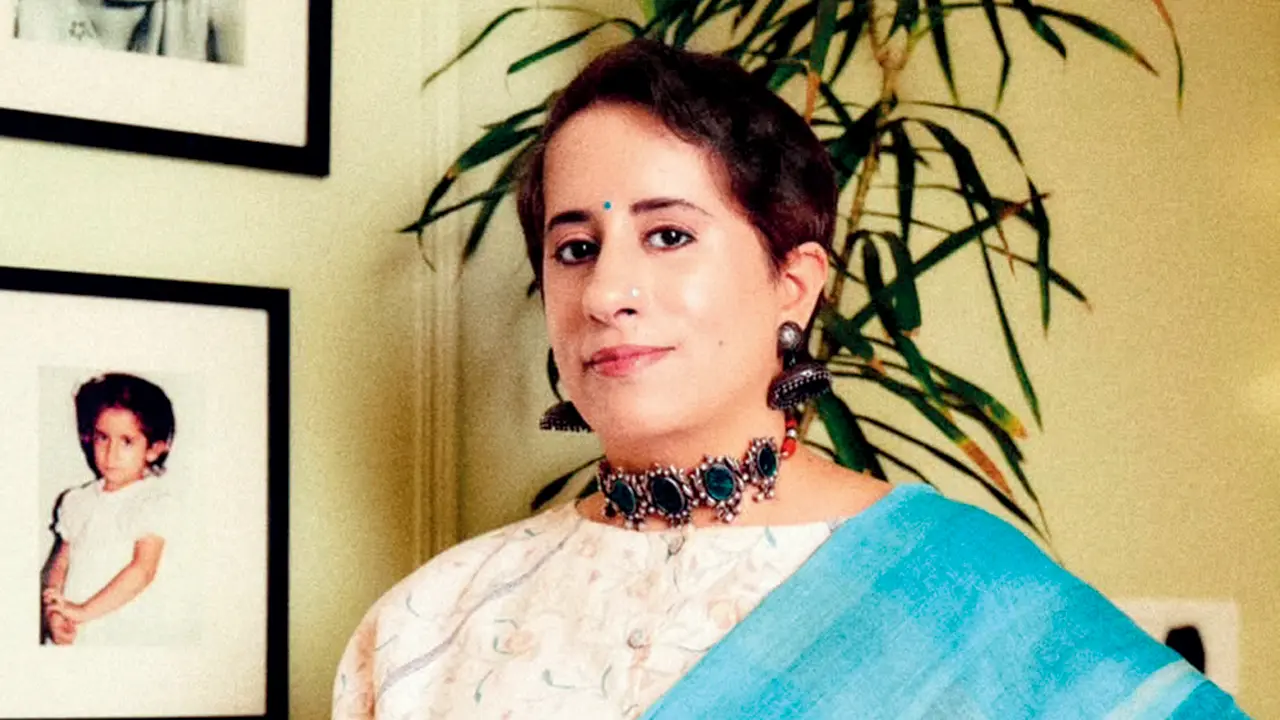
While the glamorous red carpet and the race for the prestigious Palme d’Or dominate public perception, that’s not why most people travel to the Cannes Film Festival. In fact, in the words of Guneet Monga, Cannes is “like the stock exchange of global cinema.”
At the heart of this film fest is the Marché du Film, the business arm of the Festival de Cannes, a market designed exclusively for global film professionals – including buyers, sales agents, producers, and financiers – to gather to present upcoming projects, negotiate distribution rights, and initiate co-productions.
From festival to blockbuster
But does a festival run translate to commercial success? Absolutely. Just look at The Lunchbox (2013). As the film’s producer, Guneet used the Cannes Producers Network breakfasts to secure an international co-production. That exposure didn’t just fund the film; it created a global marketplace. The Lunchbox is a blueprint for how standard market access at Cannes can catapult a localized Indian story onto the global stage.
Annually, the Marché du Film unites more than 15,000 industry professionals from over 140 countries under one roof. It acts as a launchpad where nearly 4,000 films and early-stage projects take center stage. Industry insiders can explore an unparalleled variety of content, with over 1,200 screenings – ranging from highly anticipated blockbusters to hidden documentary gems – running across 31 premium screening rooms.
What really happens at Marche du Film
Guneet Monga explains, “Some films at Cannes are literally here to be sold. At Marché du Film, market screenings happen where filmmakers, producers, studios, streamers, distributors and buyers from across the world make multimillion-dollar decisions.”
One such success story is Parasite (2019). Long before it made Oscars history, Bong Joon-ho’s masterpiece sparked an absolute frenzy at the Marché du Film. Neon snapped up the North American rights early on, while international sales agents carved out record-breaking territorial distribution deals across Europe, Asia, and Latin America. The massive baseline of guaranteed global theatrical distribution secured at the market laid the groundwork for its historic box office and award-season run.
Todd Haynes’ dark comedy-drama May December (2023) became one of the buzziest market titles in recent years. Following its screening, Netflix swooped in with an $11 million domestic rights deal for North America.
Payal Kapadia’s All We Imagine As Light (2024) is arguably one of the most brilliant and textbook examples of how the Cannes ecosystem – from early-stage market incubation to competitive screening and subsequent global distribution – can completely manufacture an international arthouse phenomenon. Before it made history as the first Indian film in 30 years to compete for the Palme d’Or, ultimately winning the prestigious Grand Prix, its entire existence was stitched together by European coproduction markets and Cannes-associated incubation pipelines.
I cannot struggle anymore. I will not keep pushing anymore-Kanu Behl
9:32 AM
Priyanka Sharma (MID-DAY; November 15, 2025)
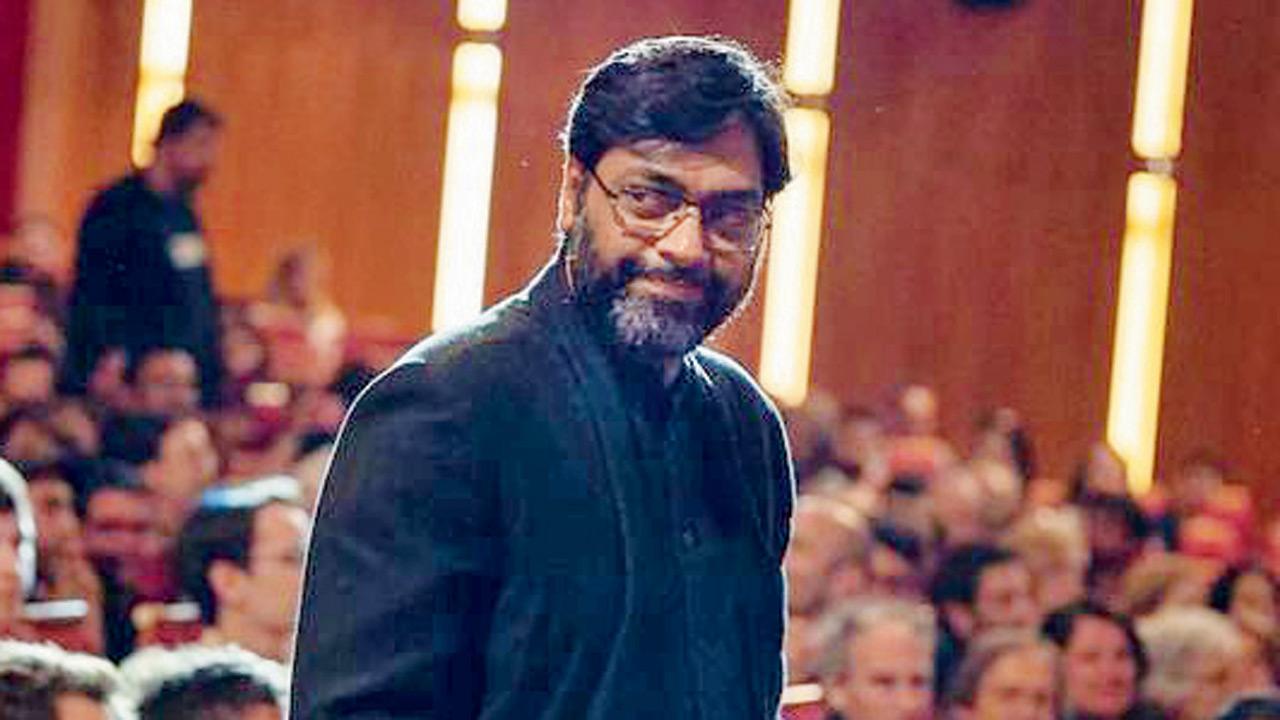
The morning of a release day for a filmmaker is usually filled with hope, excitement and anxiety about the audience’s response. But for director Kanu Behl, it was marked by struggle and disillusionment. After a wait of almost two years, Behl’s Agra released on Friday on 70 screens across the country. The filmmaker criticised multiplexes on social media over the film’s showcasing. “We’re being denied shows because small films ‘don’t fit into’ multiplex chain programming,” he wrote on X.
On a call with mid-day, Behl shared his frustration over the relentless fight he had to put up until the day before the release. “Till the last minute, we were told [by theatres], ‘We’ll figure, but nothing [happened],” he said.
When told that only four shows were available in Mumbai on the opening day, Behl pointed out the irony. “On Thursday night, we held a screening in Bengaluru. We had to turn away people because it was houseful. We got a standing ovation. I did around 12 pre-release screenings in India and at least 10 were with aam janta. It played to packed halls,” he said.
Agra has also gained recognition on global platforms, premiering at the Cannes Film Festival 2023. The anticipation was heightened because this is Behl’s theatrical comeback after the 2015 acclaimed Titli. It’s why the cold response of theatrical stakeholders has alarmed Behl — not for himself but for the future of young filmmakers.
“If this is their treatment of a film that opened at Cannes, I shudder to think what younger filmmakers and the next generation will go through. Then they [multiplexes] turn around and say, ‘Aisi filme chalti nahi hain.’ And those they run across 2000 screens, play to empty theatres. So when is this system going to change?”
Behl shared that releasing a film on the big screen is becoming a mental health crisis for independent filmmakers. “The illusion that multiplexes were there to accommodate all kinds of films is long gone. Now it is just about fighting for survival. But I am not going to fight for survival anymore. Either this system has to work or I’m out. I don’t want to do this anymore. How long will a filmmaker fight? This is a larger mental health issue within the industry. This happened with All We Imagine As Light and Sabar Bonda. It will keep happening,” he lamented.
Unless, the audience proves the decision makers wrong, Behl said. Even though the director never believed in putting the onus on the audience to make a film breathe on the big screen, this time he could only look towards the viewers for some hope. Behl said that if Agra doesn’t find audience support, he would quit filmmaking.
“I really want to reach out to the audience and say, ‘It’s in your hands. You come and watch this film and show these guys how much money a film like this can earn or I'm quitting filmmaking. Mujhe nahi karna. I cannot struggle anymore. I will not keep pushing anymore. I will leave filmmaking. (In any other scenario) I would never put this sort of a responsibility on the audience. It's not their responsibility. It is of the gatekeepers. It is these guys who should be doing their job. But in the absence of that, I think the responsibility finally comes upon the audience, including me. This has to be a protest and some sort of a coming together for the audience. So, if there’s only one show available, it should run houseful. If the audience wants to give them an answer and tell them what it wants, this has to come out of the social media echo chamber. Only that will wake these guys up.”
Shouldn’t the industry also unite against the crisis, we asked the filmmaker. The industry would never do it, he replied. “Because they are a cabal. They're a mafia. They all have their families. They all have the kids within the families to protect. It is an incestuous sort of mafianess. So they are not going to move,” he said.
Will US tariffs turn our silver screen grey or open new doors?
10:38 AM

The US plays an important character in Jaan-E-Mann, Kal Ho Naa Ho, and English Vinglish. PIC/PINTEREST@Sonika Kara; Pic/Dailymotion; Pic/Pinterest@Zofia Dycfeld
US President Donald Trump’s announcement of 100 per cent tariff on movies made outside the country is a wall between America and the rest of the film world. Will this mean roadblocks for Indian cinema, or open new doors?
Akshita Maheshwari (MID-DAY; October 5, 2025)
The American dream has lived as vividly in Indian cinema as it has in Hollywood itself. Bollywood has had its Swiss meadows and London skylines, but the United States has always represented something more aspirational. In Kal Ho Naa Ho (2003), New York’s skyline and lifestyle are inseparable from the storytelling. Kabhi Alvida Naa Kehna (2006) uses the city’s loneliness and urban pace to frame extra-marital relationships. Ta Ra Rum Pum (2007) is perhaps the ultimate representation of the American dream — fame, cars, and money, and what it means to lose it all.
My Name Is Khan (2010), New York (2009), and English Vinglish (2012), are stories that would make no sense if they were not set in the US, these cities almost becoming characters themselves. English Vinglish famously described Manhattan as aadmi, topi, dhoop ki chhaon (man, hat, tan). When he thinks of Times Square, film commentator Pulkit Kochar doesn’t picture the blinding lights or dazzling billboards. Instead, he remembers, “Salman [Khan] in the song Sau Dard [from Jaan-E-Mann (2006)] crying there.”
“My Name Is Khan encapsulates modern US [culture] like no other movie, with dark themes like racism and gun culture in schools,” says Kochar. “But beyond that also what comes to my mind is Rizwan [Shah Rukh Khan] showing a sunrise spot in San Francisco to Mandira [Kajol] and her immediately proposing marriage to him there,” a reminder of how deeply these cities are stitched into Bollywood’s imagination.
“The American dream’s kind of turned into a nightmare now, na?” laughs culture writer Sucheta Chakraborty, as the week brings a stunning new reality: US President Donald Trump has announced a 100 per cent tariff on all films made outside America. “Our movie-making business has been stolen from the United States of America, by other countries, just like stealing candy from a baby,” he wrote on Truth Social.
Every expert we spoke to admitted they are still unsure of how the policy would work in practice. “At this stage, there are more questions than answers. Would the tariff apply to licensing deals? If a US distributor buys rights from an Indian producer, would that distributor then pay tax on the value of the licensing agreement? Or would it be applied on the final product — the DCP, the digital cinema package [the encrypted exhibition copy sent to theatres]?” asks Chakraborty.
The scope is also unclear. Director of Academics at Whistling Woods International Rahul Puri asks, “Does this tariff apply to films shot abroad, or only to films whose production has taken place abroad? If it turns out to be an import tariff — a tariff on films being imported into the US — then yes, it will have a significant impact on Indian films.”
If the first interpretation is to be held true, the move could even hurt Hollywood itself. “About half of the $3.7 billion spent on making 40 of Hollywood’s biggest hits last year was spent outside of America,” says media and entertainment specialist Vanita Kohli-Khandekar. The US is a notoriously expensive shoot location, and recent box office successes like Dune (2021) and its sequel were filmed extensively abroad because of lucrative tax rebates offered by other countries. If the tariff is to take back Hollywood’s stolen candy, how come it hurts Hollywood the most?
“For India, the US is a secondary market. But it’s Hollywood’s primary market. This policy will hurt them more than us,” says Kohli-Khandekar, suggesting that domestic shooting should be incentivized if the goal is to promote the US as a shooting location.
The implications could be serious. Puri, who is also managing director of Mukta Arts, says, “The Hindi market alone makes around $100 to $150 million a year from the US; that’s what is at stake.”
Kalki 2898 AD (2024) earned US $18.57 million in North America, making it the second highest-grossing Indian film in the region, behind only Baahubali 2: The Conclusion (2017), which grossed at approximately US $20 million. Big budget blockbusters like Jawan (2023), Pathaan (2023), RRR (2022), and Pushpa (2021) also shone in American waters.
“Kalki perhaps did not do as well domestically. It relies on the diaspora audience for that extra bang,” says Puri. Big-ticket spectacles are increasingly struggling to resonate with Indian audiences but continue to draw NRIs to theatres, fuelled by nostalgia.
“The average ticket price in India is about Rs 120, whereas in the US it’s $15 to $20 (Rs 1300 to Rs 1700 approximately). So the overseas market offers a much higher bang for the buck,” Puri explains. “For producers, it’s almost pure profit, with costs mainly for marketing and distribution — not production. That profitability will suddenly be eaten away if such a tariff is applied.”
The US is considered the halo market — the one every film aspires to crack. China is the only other territory that compares in scale. “China allows about 32 foreign-language films a year. Around 18 of those slots are for US films; the rest are shared worldwide,” says Puri.
If America closes its doors, India could pivot harder toward China, where stars like Aamir Khan already enjoy massive followings. “The Indian government has already signalled a thaw in certain areas of its relationship with China,” Puri notes, “There’s no doubt we’ll need to push harder there.” According to him, Trump’s move is “yet another way to squeeze the diaspora”.
Culture wars increasingly blur into political ones under the Trump administration. In 2020, when Parasite won the Oscar, Trump mocked the decision: “What the hell was that all about? We got enough problems with South Korea with trade. On top of that they give them best movie of the year? Was it good? I don’t know. Let’s get Gone With the Wind. Can we get Gone With the Wind back please?”
The prestigious EGOTs (Emmy, Grammys, Oscar, and Tony Awards) are all American. If all high honours remain American and Trump remains hell-bent on only letting American art win them, it may spell doom for the Indian Oscar dream.
The policy is especially bad news for Indian indie cinema. These films rarely thrive at home and rely heavily on US screenings to recover costs. In 2023, Kill completed a long festival run before its India release, even premiering in the US first. Mira Nair’s Monsoon Wedding (2001) became a global phenomenon through festivals before gaining distribution. Neeraj Ghaywan’s Homebound (2025) created a name for itself through festival runs.
Without the US festival-to-distribution pipeline, many such projects could struggle to exist. “If we won’t get picked up there, maybe indie films will stop going to Sundance, Tribeca, SXSW,” speculates Chakraborty.
She also points to the deeper cultural loss. “Roger Ebert once called cinema an ‘empathy machine’ — a way to step into someone else’s shoes and see from their perspective. With this tariff, we lose that multiplicity of voices, narratives, and viewpoints. It stems from a move toward economic and cultural nationalism, but it also means perspectives outside the dominant narrative will be erased.”
The films that thrive under this policy, Chakraborty warns, will be the ones with the most “homogenized, myopic, inward-looking ‘American’ perspective.” For Indian filmmakers, this could mark a turning point in their long relationship with America. “People from every walk of life are revisiting their relationship with the US in the current climate.
Young filmmakers will look at the US through a different lens,” says Puri, “The allure of Hollywood may just be dying.” “We may have spent years looking at the US in this wide-eyed manner,” adds Chakraborty, “but that quality is getting shattered.”
The uncertainty spreads across other sectors of filmmaking as well. India’s technical prowess has made it a hub for Hollywood VFX work. Would such collaborations also be hit? What about licensing for streaming platforms? “He’s [Trump] made similar threats before — in May, for instance,” Puri reminds us, “Often, he makes big announcements but later rolls them back. Even if implemented, it usually takes months for the fine print to be worked out. We’ll only know the exact scope when that order comes out.”
Chakraborty wonders whether the way out is collaboration with US-based productions houses, adding, “Even Payal Kapadia’s All We Imagine As Light [2024] was an Indo-French co-production. As they say, it takes a village to make a film, right? Different stages of work in these co-productions can also be outsourced.”
We are fortunate to have actors like Om Puri, Manoj Bajpayee, Irrfan Khan-Nawazuddin Siddiqui
9:38 AM
Niharika Lal (BOMBAY TIMES; June 23, 2025)
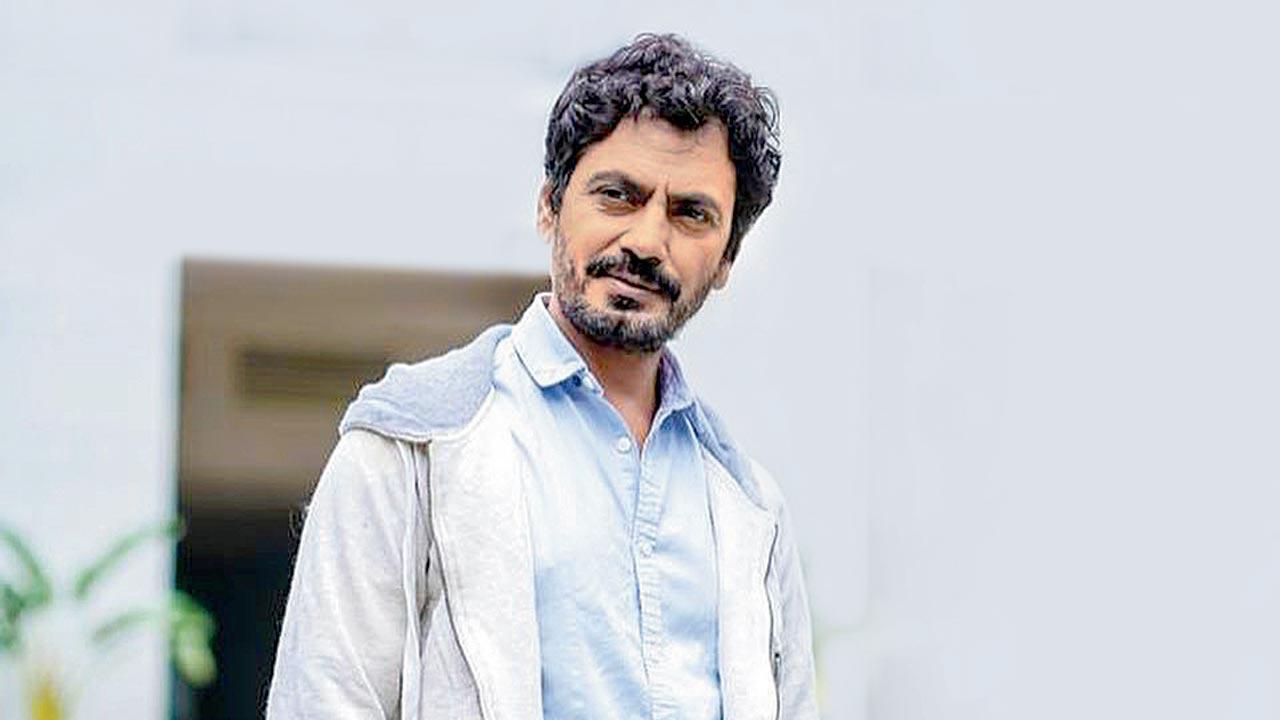
Nawazuddin Siddiqui, whose cinematic journey began in a theatre in the remote village of Budhana (Uttar Pradesh), believes that Indian cinema’s global recognition has been largely driven by independent filmmakers. With their work being appreciated in Europe, this acknowledgment, he feels, was long overdue and keeps him anchored to the kind of cinema he has always loved – from Naseeruddin Shah’s powerful performance in Sparsh (1980) to Irrfan’s in The Lunchbox (2013).
“These films, performances, and my theatre training shaped me into the actor I became,” he says. In conversation, Nawaz speaks to us about the deep impact films have had on him.
‘BERLIN HO YA CANNES YA VENICE, ITNE LOG AATE HAIN SIRF CINEMA KE LIYE’
According to Nawaz, film festivals expanded his vision of what Indian cinema could be. Sharing that he has been in screening rooms from Venice to Berlin, where audiences come for cinema, not spectacle, Nawaz says, “Berlin ho ya Cannes ya Venice, itne log aate hain sirf cinema ke liye. You go there, watch films from around the world, and then you see the ones that went from India, aur tab lagta hai ki ‘Thank God! Hamare yahan se bhi itni achhi filmein gayi hain.’ Even if they didn’t run in India, even if people here didn’t know about them – they worked globally.”
He adds, “Be it All We Imagine As Light (2024) or The Lunchbox – these films went on to become global phenomenon.”
‘OUR INDEPENDENT FILMS ARE MORE APPRECIATED IN EUROPE’
This year, Neeraj Ghaywan’s Homebound made it to Cannes. Payal Kapadia was on the Cannes jury. About the growing global recognition of Indian indie films, Nawaz says, “Indian cinema ko global level pe kisi ne crack kiya hai toh woh independent directors ne . Most of our commercial films are preferred by Indian diaspora and Middle East. But in Europe, our independent films are more appreciated.”
‘I keep going back to Dilip Kumar’s films and Naseeruddin Shah’s Ijaazat, among others’
Nawaz reveals he has always been a cinephile, drawn to movies by actors who pushed boundaries. “There are so many films I keep going back to Dev Anand and Dilip Kumar’s films, Naseeruddin Shah’s Ijaazat (1987), Om Puri’s Ardh Satya (1983), Pankaj Kapur’s Ek Doctor Ki Maut (1990). Yeh filmein main baar-baar, hazaar baar dekh sakta hoon .”
For him, it’s not genre or director, but the power of performance that links them. “It’s the actors,” he says. “Hamare country mein aise actors ka hona, yeh hamari khushnaseebi hai. Naseeruddin Shah, Om Puri, Kamal Haasan, Manoj Bajpayee, Irrfan – they’re great actors.”
“The first film I ever watched in a cinema hall was Jaggu (1975),” Nawaz recalls, adding, “I must’ve been five or six. Hamare yahan toh Shatrughan Sinha bahut hi popular thay western UP mein.”
It always feels patriotic to do a film that goes to a prestigious festival-Neeraj Ghaywan
9:07 AM
Niharika Lal (BOMBAY TIMES; May 22, 2025)
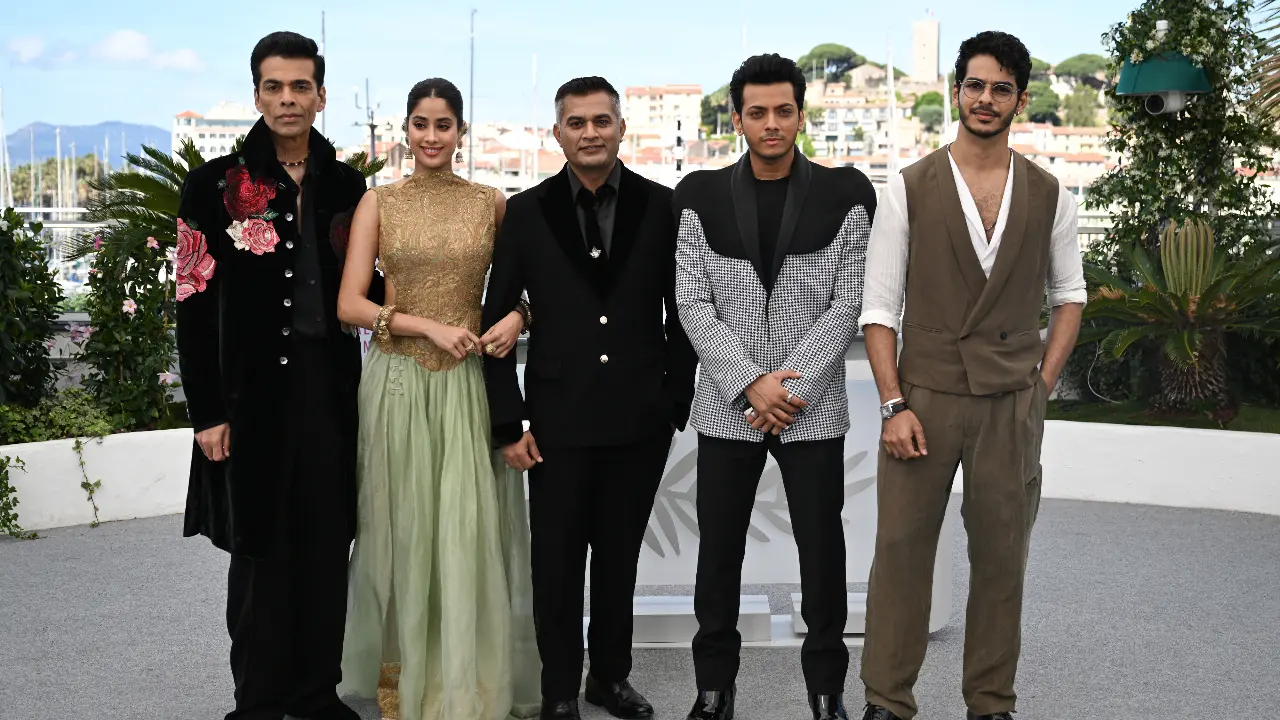
When Neeraj Ghaywan first attended Cannes, it was in 2015 for his directorial debut Masaan. The film was selected in the Un Certain Regard and won two awards – FIPRESCI Award and the Prix de l’Avenir Prometteu. A decade later, he’s back at the fest with Homebound (2025), another human story, but this time with a little help from some very big names including Martin Scorsese and Karan Johar.
As Ghaywan’s new film made the screening in the Un Certain Regard section this year, the filmmaker was joined by the team at the red carpet, the makers discussed Homebound at the Bharat Pavillion at Cannes.
‘WE SEE URBAN STORIES IN FILMS, AND THEN THERE IS A GAZE THAT IS TOWARDS SMALL-TOWN INDIA’
“The story that I wanted to say was about these two friends,” Neeraj said during a discussion at the India Pavilion at Cannes ahead of Homebound’s screening. He added, “What I also feel is that more than 60 per cent of our economy, our people, live in villages, and in our films, we don’t see villages anymore. We see urban stories in films, and then there is a gaze that is towards small-town India. But where are we talking about the stories from the heartland? That was one of the motivators for Homebound.”
The filmmaker continued, “Whenever we talk about films across the world, say, people of colour, creed, they’re all spoken of in numbers. They are part of the statistics. And when you say that, it’s like you’re trying to persuade your urban guilt – like hiding your apathy by showing false sympathy. I felt, what if we pick one person out of that statistic and see what happens in their life and how they arrive at this point? That will make for some great story, and will truly represent the kindness, empathy – that has been my intent so far.”
I feel this collaboration is quasi-disruptive in a way: Neeraj Ghaywan
Talking about collaborating with Karan, Neeraj said, “I’ve been wanting to work with Karan. (He also directed Geeli Pucchi, a part of the Ajeeb Daastaans anthology in 2021). I feel this collaboration is quasi-disruptive in a way. Independent filmmakers are always trying to figure out how to go about it.
Either we’re doing co-productions or seeking government funding, which comes with a lot of paperwork. But here, if Karan is producing my film, then it’s a different thing altogether – it paves the way for different kinds of possibilities. Our default perception is: go to a co-production, make it happen. But for me, this is a new model.”
NEERAJ AND I WANT TO TELL EMPATHETIC, HUMAN STORIES: KARAN JOHAR
“Neeraj Ghaywan and I come from two different schools of cinematic syntax,” Karan Johar said, “but I think one thing that lies common in both our belief systems is that we want to tell empathetic, sensitive human stories. That is common in both our cinemas. And it has nothing to do with syntax – it has to do with the heart the film offers.”
He explained, “I think when you see Masaan and when you see Homebound, you realize that interpersonal relationships, the handling of the emotional aspects of both the movies, and the spectrum of emotions they cover are the same.”
Karan said that’s what he tries to do in his films too. “My syntax is more theatrical, more opulent, a little more on-the-nose, because that is the kind of filmmaking I love and what I grew up watching. But even when I was eight or nine years old, while I loved the glory of Yash Chopra and the social drama with the opulence of Raj Kapoor, I also loved the empathy of Guru Dutt and the deep-rooted messaging of Bimal Roy. I could enjoy the brilliance of Satyajit Ray and dance to a song from a Raj Kapoor film in the same breath,” he said.
‘We’re beaming with pride that we have this kind of representation’
About Indian cinema finding global resonance, Karan said, “One important thing for me is: how to take our cinema to the world, apart from catering to our domestic audience. Last year, we had Payal Kapadia shine at Cannes with All We Imagine As Light (2024), and now she is on the Cannes jury.
This makes my heart so full. We are all beaming with pride.”
He added, “And the very next year, we have Homebound – this means we really are on the global map. I know these are baby steps. Every year, we have to make sure our stories continue to travel.”
‘Being at Cannes is proof that I’m not a one-film wonder’
“When Neeraj Ghaywan sir told me our film was selected, I was happy but didn’t grasp how big it was. After reading up, I understood its value – and it boosted my confidence as an actor,” says Vishal Jethwa, who made his Cannes debut this year.
“My dream was as simple as standing outside the Yash Raj Films (YRF) gate just to see what it looked like. Today, I’m part of a Karan Johar film directed by someone as brilliant as Neeraj sir. Attending Cannes with Homebound is a massive moment in my life. My debut (Mardaani 2) was successful, but some of my later films didn’t perform well at the box office. This film, however, has taken me to an international platform. It feels like proof that I’m not a one-film wonder – that I’m here to stay and meant for good things.”
India's women directors bring the female gaze to film festivals
8:15 AM
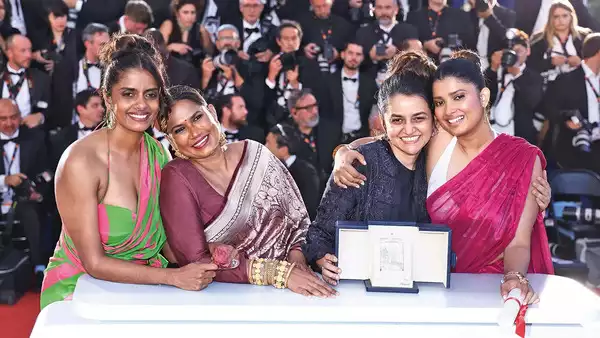
Akshita Vohra (BOMBAY TIMES; January 11, 2025)
2024 was a standout year for India’s female directors in the film festival circuit. The highlight of the past year was All We Imagine As Light’s two Golden Globe nominations – while the film didn’t win, it came very close to making history. However, despite better representation and support, women directors say there’s still a long way to go when it comes to celebrating the female gaze in the film festival space.
‘Women filmmakers are finally finding the recognition and support they deserve’
Deepti Dcunha, artistic director MAMI Mumbai Film Festival, says, “MAMI has had a great ratio of female filmmakers over the years, and in 2024 specially. When we are programming or constituting our selection committee, we ensure that we do have a conversation about giving a platform to directors who are otherwise discriminated against. But at the same time, it is not that a director is only selected because she is a woman.”
In 2023, the percentage of films directed by female filmmakers in the fest was 2%, which changed to around 25% in 2024. Out of 45 feature films screened at the Dharamshala International Film Festival (DIFF), 24 were directed by women.
Festival co-founder Ritu Sarin tells us, “All films are selected on merit, which is why the fact that 24 out of 45 feature films were directed by women is an incredible milestone. It demonstrates that women filmmakers have always been capable of making high quality cinema but are finally finding the recognition and support they deserve.”
Talking about providing this support and recognition at one of the biggest film festivals in India, International Film Festival of India’s Associate Film Programmer, Kanika Katyal, says, ‘‘The programming was done in such a way that we ensured gender parity in the curation, especially in the competition. A broad range of films were offered to the selection committee to choose from which were directed by women filmmakers. This would ensure that enough films from female filmmakers and also other diverse options made it to the competition.”
About the change in numbers at IFFI 2024, she adds, “We have had nine female directed films out of 15 in the main Golden Peacock Award. That comes to 60%, which is a rare occurrence. How often do you see that happen in a film festival?”
‘It’s not easy to go into a room full of men & try to sell your film’
Even after these recognitions at the film festivals, taking a female directed film for distribution, release in the male dominant space is still a challenge.
Vaidaangi Sharma, whose film Chhat was screened at MAMI, says, “I am just waiting for the day when there are more women in the distributor room. It’s not easy to go into a room full of men and try to sell your film. What has happened with All We Imagine As Light is difficult to happen with a purely independent regional film made here in India. Distribution for a festival film is very small, specially for a female directors’ film.”
Adding to this insensitivity that sometimes female filmmakers have to go through in this country, Prachee Bajania tells us, “At my panel at MAMI, a man walked up to me and said if everyone is going to talk about women now then who is going to talk about men, and I told him that there has been so much conversation around men that I don’t know why it should even be a concern now. We have seen this happen a lot in popular media in India. Thankfully the audience at the festivals is niche so it changes the dynamics there.”
‘Important to tell stories from the female gaze’
Prachee Bajania, whose film Umbro won Best Documentary at Beijing International Film Festival and was screened at DIFF, says, “Seeing festivals prioritize female-directed films not just for representation or tokenism but for the unique narratives women bring to the screen is encouraging. It’s not just about these being films made by female filmmakers — it’s also about the importance of the stories they tell, which might be why they are being selected.”
Talking about these stories bringing a female gaze to the film festivals, Farha Khatun, a two-time National Award-winning filmmaker and jury member at Kolkata International Film Festival, feels, “I saw Payal’s film and you can notice that when a female director tells a story, it’s a very different perspective. But because we are so used to seeing a man’s perspective in cinema, it is taking us time to accept this. And now I feel these nuances are finally being picked up with the selection of more such films at Indian film festivals.”
Nidhi Saxena, who was the first female filmmaker from India to win the prestigious Asian Cinema Fund 2024 and had her film screened at DIFF in 2024, says, “It was interesting to see people watch the film from a female gaze and have so many women appreciate and relate to it. I felt it was a newfound sisterhood at these festivals for me this year. Women filmmakers today are trying to not just find new stories but also new form and narrative for their stories.”
‘When we see the west being more inclusive, it trickles down’
Over the past year, female directed films like Payal Kapadia’s All We Imagine As Light, Shuchi Talati’s Girls Will Be Girls, and Kiran Rao’s Laapataa Ladies have earned nominations and awards at prestigious events such as Cannes and Sundance. While some female filmmakers feel this progress is insufficient to bring lasting change to Indian film festivals, others view it as a ray of hope.
DIFF co-founder Ritu Sarin says, “Over the past few years, there has been a growing awareness in the global film industry that women filmmakers were being discriminated against, and consequently, a conscious push to redress this imbalance. Although this signals a shift in perception, the film industry is still largely a male-dominated one, and systemic change will take time.”
Deepti Dcunha, Artistic Director MAMI, also resonates with the sentiment as she says, “We are still looking at what the west is validating as a good film, when it comes to programming. When we see them make a conscious decision of being more inclusive, with women directors, women jury members, it trickles down here as well, leading to a better representation.”
30 seconds of Payal Kapadia’s All We Imagine As Light trimmed for OTT release
9:44 AM
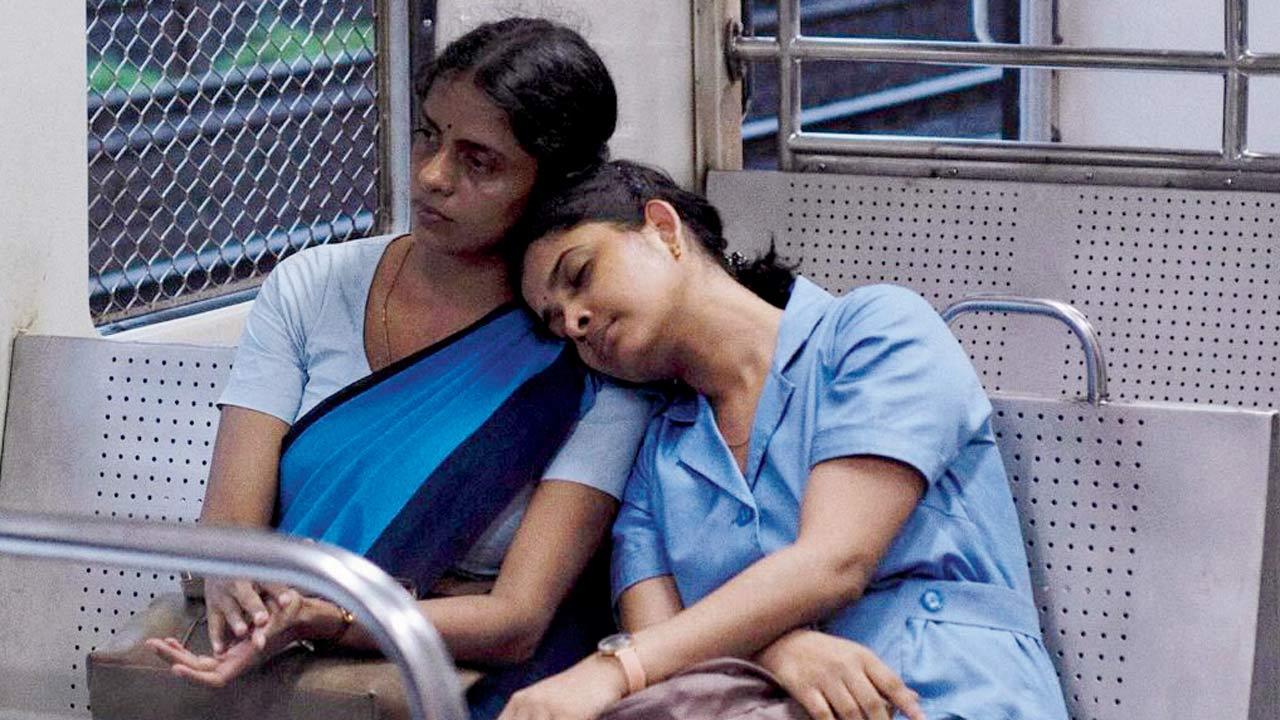
As though CBFC’s censorship isn’t stringent enough, OTT platforms further alter acquired content before their web premiere; Payal Kapadia’s All We Imagine As Light that runs 30-seconds shorter on Disney+ Hotstar is the latest case in point
Mohar Basu (MID-DAY; January 8, 2025)
The autonomy that web platforms exercise while censoring shows became evident in May 2024, when Jio Cinema dropped from its platform a 2019 episode by British comedian John Oliver that revolved around Indian elections. In the latest case of self-censorship, select scenes of Payal Kapadia’s All We Imagine As Light were altered for its digital release on Disney+ Hotstar. Interestingly, additional disclaimers relating to the consumption of cigarettes and alcohol have also been added to the OTT draft.
A source tells mid-day, “About 30 seconds of the film has been trimmed, but none of the key scenes have been tampered with. Even a contentious scene involving frontal nudity has been left untouched. With that said, at a later point in the film, when the characters are seen drinking, a disclaimer has been added. This wasn’t in accordance with the recommendation of the CBFC but an additional [call] taken by the platform.”
While the web platform didn’t respond to our query till press time, an insider from Hotstar shared, “The norm is to upload what’s given to us. Rarely are revisions or changes made. But, when there is an S&P [standards and practices, terms networks use to self-regulate content], we abide by it. The platform is liable for what it shows, so a legal clearance is due on both original and acquired content.”
Kapadia’s film, which has gone on to earn multiple awards across festivals upon its September 21, 2024, release, and even bagged two nominations at the recently concluded Golden Globes, isn’t the only film that has been tampered with. The 2012 gangster drama Gangs Of Wasseypur, which is available on Jio Cinema, is presented with a version that does not include cuss words.
“The death scene of a character has been censored, and anything alluding to sex has been trimmed. Since the film is open to all ages, it is protocol to make it suitable for viewers,” said a platform insider of the crime drama that includes abusive language and violence in abundance.
As for Kamal Haasan’s Vikram, which a CBFC certificate states has a runtime of 174.24 minutes, runs two minutes shorter on Disney + Hotstar. “Some brutal scenes have been edited out,” says a source.
Mid-day reached out to Kapadia, but she was unavailable for a comment till press time.
An A list actor might receive better treatment, while others don’t. Everyone should be treated equally-Kani Kusruti
9:15 AM

Niharika Lal (BOMBAY TIMES; January 4, 2025)
Kani Kusruti says she is happiest at home with her plants in Goa, practicing the sitar - a routine that got disrupted due to the year-round celebrations of All We Imagine As Light and Girls Will Be Girls, two internationally critically acclaimed films she was part of this year.
Kani says, "I think this is mostly the first time I felt there was more celebration than work. I feel it’s very disproportionate in terms of celebration - it’s like too much celebration. I’ve never had a year like this."
'Like in every field, in cinema, I think sometimes people get picked up by chance rather than the most deserving ones'
Kani shares, "I will honestly say, I don't think acting is really my cup of tea. I just happened to become an actor at a young age, and I ended up practicing it and continuing with it. I have many fellow actors and colleagues from Kerala, theater, and elsewhere who are way more talented, passionate about acting, and hardworking than I am. But, like in every field, especially in cinema, I think sometimes people get picked up by chance rather than the most deserving ones."
She continues, "Payal is a really nice person, a good director, and it was a great team. So, I loved working on Payal's film. Some projects come along like that, and I feel truly happy about the way we work together. But when I talk to other actors, I know they feel very happy just acting alone, just being able to play a character - they're genuinely happy. I don't have that kind of happiness. For me, happiness comes when the team is great or when we enjoy the process. I find joy in other things, like the stories we tell, not necessarily in my character."
"I thought maybe Payal reached out to me for a diploma film at FTII, didn't know it was feature film." Payal contacted Kani Kusruti for the film when she was studying at FTII. Over the years, Kani has seen different drafts of All We Imagine As Light. Payal initially offered her younger part and years later when the project was finalized she ended up doing the elder nurse role."
Today, it's understandable when someone is excited to work with Grand Prix winner Payal Kapadia. But back then, when she was just a film school student, what was it about her that made you look forward to working with her? Kani says, "It was not so much about the character for me. Why should women bear the burden of making only good films and proving themselves constantly? They should be able to make bad films too."
Kani has worked with many female directors. She says that she didn’t plan it; it just naturally happened. She says, "I’m just very happy every time it’s a female director - I feel a different kind of happiness. Maybe it’s because I’m a woman in India, and when I see female directors coming up, I already feel a sense of joy. It’s like, 'Oh, who is she? How is she thinking?' You also feel a little safer and that you can express yourself. I’m not saying all women directors are always going to be nice and amazing- not necessarily. In fact, true diversity will come when more women enter the field. Then, we’ll have all kinds of films - even bad films - made by women. Why should women bear the burden of making only good films and proving themselves constantly? They should be able to make bad films too, just like everyone else."
Kani says that the female directors who have helmed projects in the last 10 years, whether in commercial cinema or other sections, have really paved their own paths by putting in a lot of work on themselves. She says, "I believe these women are slightly exceptional in some way, which is why they’ve reached where they are today. It’s not an easy journey. They’ve worked hard, and some may have had certain privileges, but they’ve earned their place."
She says, "I’m sure male gazes and patriarchal perspectives may sometimes come from female directors too. Most female directors I’ve worked with have been kind, collaborative, and understanding. They created environments where we felt safe. And it’s not just about female directors - the sets are often run by women. Right now, we mostly talk about two genders, women and men, but there are many genders. When the industry becomes more inclusive of all genders, I think everyone will feel safe. I believe all artists, regardless of gender, have to work hard on themselves to create a healthy workspace. I consider myself fortunate that most of the male directors I’ve worked with were also good, with only a few exceptions where I felt the working environment wasn’t healthy. Most of the male and female directors I’ve collaborated with have had good spirits. However, there have been instances where I worked with female directors and felt that the workspace wasn’t ideal. So, it’s not exclusive to one gender. Creating a positive and healthy working environment is everyone’s responsibility."
Often luxuries take away from ensuring that other crew members get enough rest
What does she mean by a healthy working space? Kani explains, "What I meant by a healthy workspace is that there are often different kinds of abuses that happen- taking people for granted, exploiting their time excessively, underpaying them, making them work overtime, not providing proper contracts, or verbal abuses that sometimes occur during shooting. We have many such practices in India. I understand that someone may get angry once during a 60-day shoot. People are under stress - that much I can understand. Everyone is human. But when such behaviour becomes a habit is what is a problem. For example, an A-list actor might receive better treatment, while others don’t. Everyone should be treated equally. That’s what I meant by a healthy workspace."
Kani says that it is normal that people may occasionally misbehave, but that’s not the only issue. There are entrenched hierarchical and unethical practices in workspaces that need to be removed. She shares that fortunately, the next generation is already bringing in new ideas, and she is hopeful things will change. However, even when people don’t intend to misbehave, bad workspace practices and lack of resources can lead to stress-induced behaviors, like shouting. She says that’s why she believes the resources of a film should be allocated properly, not just for stars. Sometimes, the allocation feels excessive - for instance, spending disproportionately on entourages.
She says, "I understand the need for one or two assistants in some cases, but often, these luxuries take away from ensuring that people, like those in lighting crews, get adequate rest. These crew members often sleep the least, leave last, and arrive first."
Kani shares, "We have a history of bad practices; how to change it, I don't know. For example, in Kerala, they are trying to have an ICC (Internal Complaints Committee), but what kind of power it can have depends on whether people are willing to consciously change and whether producers are willing to put the money in the right places to establish good ethics and practices, such as ensuring people get enough rest. Are we able to allocate money in a way that we can give everyone an ample amount of rest, proper conveyance, and good food? In Hindi projects that I’ve been a part of, I see there are different eating places. Actors eat in a separate mess with specific catering, technicians have a different one, and daily-wage artists who work on the film have another buffet. I don't understand this. It's unbelievable. That disparity is so clearly visible, even in the food. So, we have to work a lot to achieve equality and treat everyone with equality."
Kani on her directors
Payal Kapadia, All We Imagine As Light
Payal was completely different. At the location, we were just trying to remake what we had achieved all day in the rehearsals. It was more like a theater production. Before going to the location, we already knew everything. Payal shot all that rehearsal on camera. Then she also edited it to see how it looked. So, she already made a film, which looked very similar, sometimes even with the actual costumes. Sometimes, it wasn't the actual actor, but another actor playing the role. We all felt we knew how the film was turning out because she made everyone involved in the film - like an equal collaborator
Shuchi Talati, Girls Will Be Girls
We would first rehearse, then every department would watch it. Everyone would know what the actors are going to do. Everybody is part of it. Then everyone would prep for the scene, right there, and then we would shoot the scene. Also, Shuchi had a completely different interpretation of the characters. The same dialogues were said with completely different intentions. So, I was very curious to watch Girls Will Be Girls finally because I was like, which Anila is coming out? I was also curious Is it the Anila close to the script, or the Anila that was discovered on the set? Shuchi made Anila different on set. She interpreted Anila very differently on set, so that was very interesting.
Richie Mehta, Poacher
Richie is not much of a rehearsal kind of person. He'd rehearse a bit on the spot but doesn't really fix the performance exactly how he wants it. He also goes with the spontaneity and what the actor brings to the scene. Most of my scenes in Richie's series were shot with handheld cameras. So, the DOP (Director of Photography) had a free-flowing approach, following the actor's movements. The DOP also chooses which parts to focus on, and sometimes it's not your face; it might be yourzfingers or what your hands are doing. This approach brings out a different kind of performance.
Why do we have only men in the FFI jury?-Richa Chadha
8:34 AM

Yashika Mathur (HINDUSTAN TIMES; December 28, 2024)
Actor Richa Chadha has never been one to mince her words. In the wake of Laapataa Ladies failing to make it to the Oscar shortlist, Chadha asserts the need for women’s representation in the Film Federation of India’s (FFI) 13-member jury, which selects India’s official entry to the Academy Awards.
“It has been a great year. Santosh (directed by Sandhya Suri) has entered (Oscar shortlist in the International Feature Film category) from the UK. While that’s great, it also means that we have a responsibility to look at our stories. Whether it is Santosh, or Anuja (produced by Guneet Monga Kapoor), we have to acknowledge ki ye bhi kahaaniyan hai,” says Chadha, who has turned producer with the coming-of-age drama, Girls Will Be Girls.
Pointing out the lack of female representation in the FFI jury, she adds, “In a year when there are so many feminist films, like Laapataa Ladies and All We Imagine As Light, why do we have only men in the selection committee? Women need to have a representation.”
Earlier, the FFI had created an uproar with the choice of words used in the citation that announced Laapataa Ladies as India’s official entry to the Oscars. In it, they had referred to Indian women as a mix of “domination and submission”. “Laapataa Ladies is a great film, but the citation was funny. As a woman, I remember it,” she signs off.
"All We Imagine As Light's lack of screens has no connection with Pushpa 2", says trade
9:47 AM
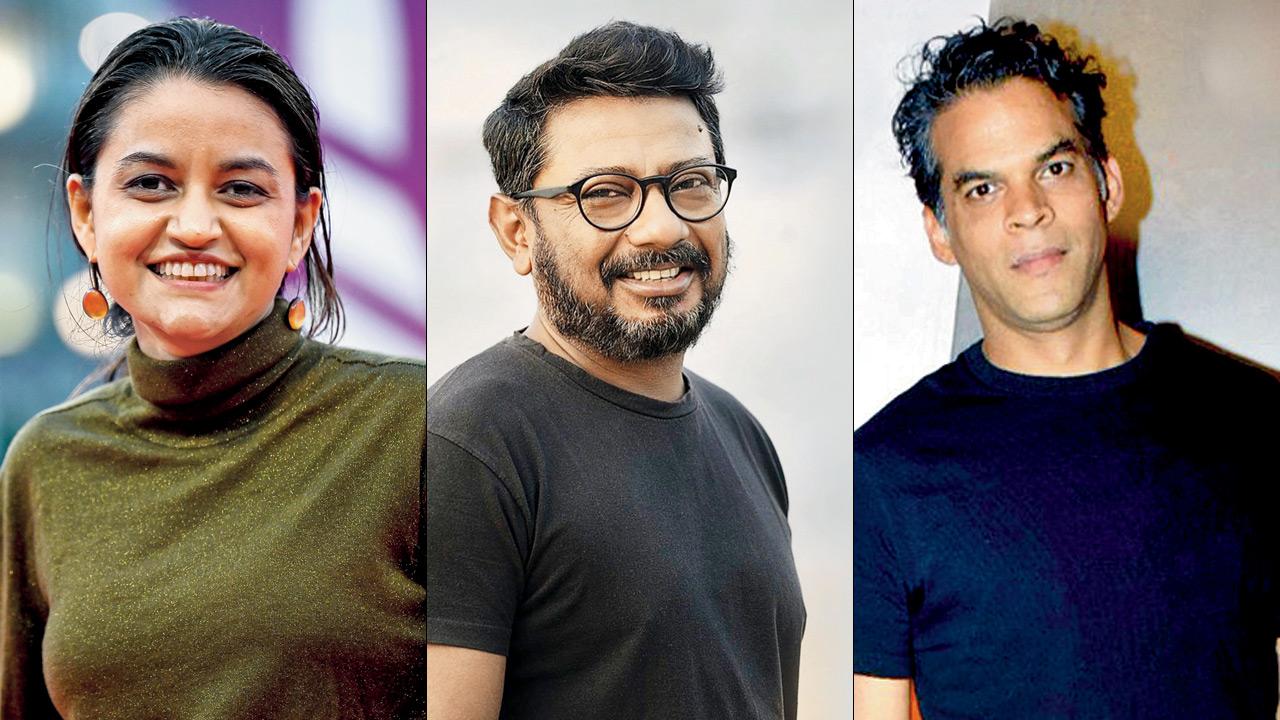
After Motwane slams Pushpa 2 for dominating screens and sidelining All We Imagine As Light, trade says Payal Kapadia’s gem couldn’t register 40 per cent occupancy in two-week run; Onir rues indie films are shortchanged
Mohar Basu, Priyanka Sharma (MID-DAY; December 12, 2024)
In a space of two weeks, the Indian audience was treated to two different releases. Cannes Grand Prix winner All We Imagine As Light made history by making Payal Kapadia the first Indian to score the Best Director nomination at the 2025 Golden Globe Awards, while Pushpa 2 – The Rule rewrote history at the Indian box office with its stupendous collections. Yet, only one of them finds a place in theatres. On Tuesday, filmmaker Vikramaditya Motwane called out the Allu Arjun-starrer for dominating screens across multiplexes, leaving no room for Kapadia’s gem to “breathe” or “find an audience”.
With All We Imagine As Light set to be re-released in select theatres, Motwane’s post has brought the question out in the open: Do mainstream entertainers sideline independent films, making it difficult for them to survive?
Trade expert Girish Wankhede strongly disagrees with Motwane. “All We Imagine… released on November 22 and had a two-week run. One understands that such a film needs institutional push, but any film needs to show 40 per cent occupancy for it to be carried forward. It couldn’t fill the occupancy requirement; its lack of screens has no connection with Pushpa 2. Since Pushpa 2 is showing 80 per cent occupancy, it is preferred,” reasons Wankhede.
If one looks at the screen count, it is skewed. Pushpa 2 – The Rule is running in 4,500 screens across the country; in contrast, All We Imagine… is expected to be re-released in 200 screens on Friday. But trade expert Akshaye Rathi says that films like the Kani Kusruti, Divya Prabha and Chhaya Kadam-starrer require alignment of all channels, especially in today’s unpredictable market.
Rathi says, “The makers of Pushpa 2 were in discussion with cinema owners for eight months before the film was released. All We Imagine’s distributors should’ve engaged with the exhibition sector and figured a way to make it reach the masses. For instance, Cinepolis is doing a week-long Japanese anime film festival in January, and it will be robustly promoted. We need to engage to make space for each other. No one wants to kill independent cinema because for theatre owners, people who appreciate such cinema are also [a source of income].”
Weighing in on the debate, filmmaker Onir says that indie films have been shortchanged for long in this country. He, however, asserts that the onus is not on exhibitors alone; he believes everyone, from the media to the audience, should do their part to support small films. “All We Imagine... didn’t get funding in India. Even the media didn’t talk about it. Not enough viewers watch indie cinema whereas the masses make sure that the [mainstream] films work,” he notes.
Onir says that change must begin from the top. “Has All We Imagine... been made tax free? Why are ministers not watching it? There has to be government support. Multiplexes have bled during the pandemic. So, now they are trying to recover money. Every producer will want their film to make money. So, whom do you blame? It’s a vicious cycle.”
Payal Kapadia scripts history, bags twin Golden Globes nods for All We Imagine As Light
8:18 AM
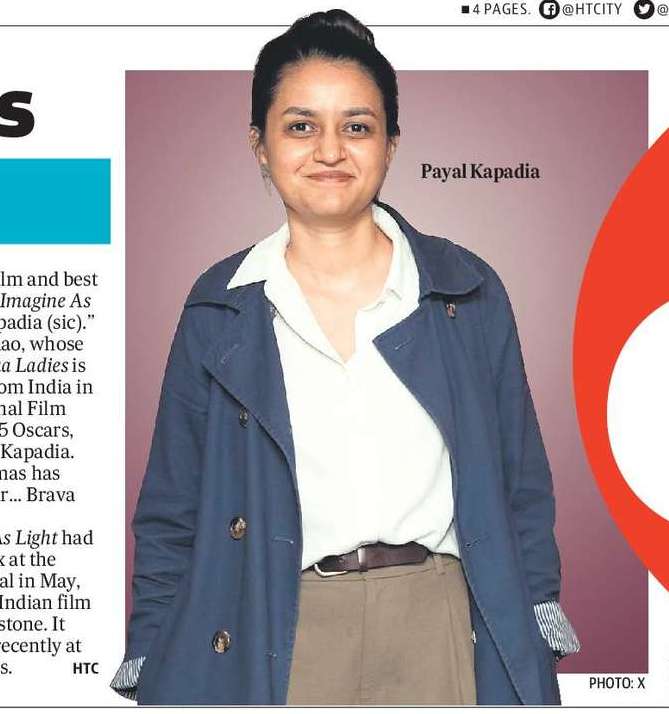
Payal Kapadia’s All We Imagine As Light receives twin Golden Globe nominations for Best Director and Best Motion Picture in Non-English Language categories
BOMBAY TIMES (December 11, 2024)
Payal Kapadia’s All We Imagine As Light is on a winning streak this year. After bagging the Grand Prix award at Cannes, it was recently named the best international feature at Gotham Awards. Now, Payal has been nominated for the Best Director category at the 82nd Golden Globe Awards and the film has secured a nom in the Best Motion Picture in a Non-English Language category.
Reacting to the news Payal stated, “I’m deeply honoured by this nomination and grateful to the HFPA for this recognition. This is a celebration of everyone who worked so passionately on the film. To everyone in India, All We Imagine as Light is still in theatres, please go watch it and support us!”
Filmmakers and actors also congratulated the team on social media. Laapataa Ladies director, Kiran Rao wrote on Instagram Stories, “Christmas has come early this year! Brava, Payal!” Divya Prabha, who is a part of AWIAL shared her story and added, “Let’s celebrate this together”. Anil Kapoor called it “what a monumental recognition of Indian cinema and storytelling prowess of Payal Kapadia. So incredibly proud!”
The film will be competing with Emilia Pérez, The Girl with the Needle, I’m Still Here, The Seed of the Sacred Fig and Vermiglio in the Best Motion Picture in a Non-English Language category. Earlier, Shekhar Kapur was nominated in the Best Direction – Motion Picture category at the 1999 Globes for Elizabeth. – Inputs by Mihir Bhanage
Golden Globes 2025 race
Emilia Pérez is leading the noms list with 10 nods. The Brutalist (7), Conclave (6), Anora (5) and Wicked (4) will be among the other films contending for the top prizes. In the TV space, The Bear, Shogun, Only Murders in the Building and Baby Reindeer are among the top contenders for key categories.
---------------------------------
HINDUSTAN TIMES (December 11, 2024)
Payal Kapadia has scripted history at the 82nd Golden Globe Awards by becoming the first Indian director to be nominated in the Best Director— Motion Picture category. She was nominated for her debut fiction feature, All We Imagine As Light.
The film also scored a nomination in the Best Motion Picture in a Non-English Language category. The 38-year-old reacted to the nomination and expressed her gratitude in a statement: “I’m deeply honoured by this nomination...This is a celebration of everyone who worked so passionately on the film. To everyone in India, All We Imagine As Light is still in theatres — please go watch it and support us!”
Soon after the announcement, congratulations began pouring in for Kapadia. Actor Anil Kapoor tweeted, “What a monumental recognition of Indian cinema and the storytelling prowess of @PayalKapadia86! So incredibly proud!” Filmmaker Hansal Mehta, who has long supported the movie as India’s “official selection for the Oscars”, too, took to X: “India’s official selection for the Oscars secures 2 nominations at the Golden Globes. Best non-English language film and best director for All We Imagine As Light and Payal Kapadia (sic).”
Director Kiran Rao, whose film badge Laapataa Ladies is the official entry from India in the Best International Film category at the 2025 Oscars, also congratulated Kapadia. She wrote: “Christmas has come early this year... Brava Payal!”
All We Imagine As Light had won the Grand Prix at the Cannes Film Festival in May, becoming the first Indian film to achieve the milestone. It was also awarded recently at the Gotham Awards.
I am not that white campus American liberal who thinks no one else can talk-Sudhir Mishra
3:36 PM
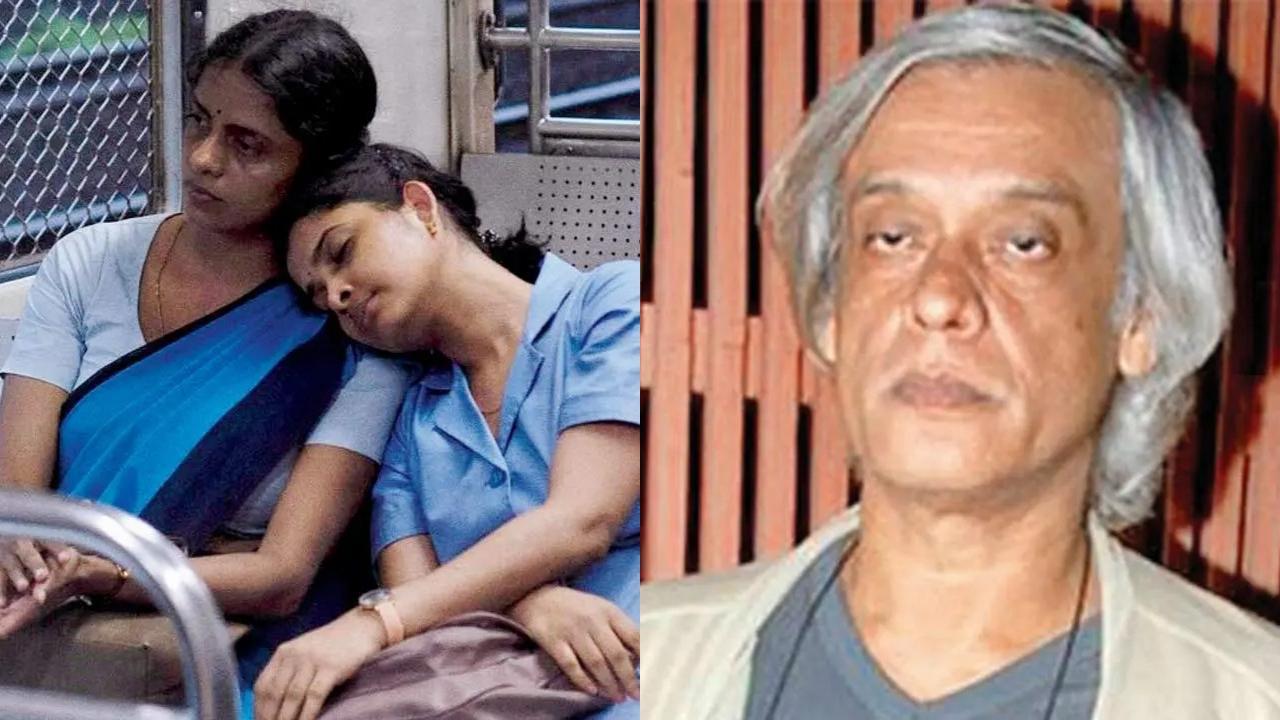
Tanaav 2 director Sudhir Mishra talks all things industry, from the surge in propaganda films to the big directors sidelining and patronising female storytellers
Priyanka Sharma (MID-DAY; December 6, 2024)
There are no pre-release jitters for Sudhir Mishra as the second season of Tanaav drops today. The director is confident of the thriller—an adaptation of the popular Israeli show, Fauda—that is set in Kashmir. To tell a story involving Kashmir politics, he has a fundamental approach.
“Luckily, I know my country. I am inquisitive, I travel and meet people not just for the sake of making something, but for its own sake. Also, I follow the craft of filmmaking, which means every character should be nuanced. I listen to the characters, and people of Kashmir. I don’t sensationalize. I am not coming into it with any agenda. Neither is there a need to create a jingoistic piece in order for it to become a hit,” he says.
Over the past few years, there has been a surge in political films. Does it pain him to see thinly-veiled propaganda films or political stories that sensationalize?
Absolutely, says Mishra. “It is sad. Why do young, talented people submit to other forces? They should stay true to their calling. Some people aren’t faithful to their own talent. I’m not here to ban anyone. I am not that white campus American liberal who thinks no one else can talk. I’m not woke; I’m a leftist. I am not here to fulfill any agenda.”
In the post-pandemic years, mid-budget films have struggled to find their deserving place on the big screen—be it Mishra’s last theatrical release Afwaah (2023), or Kiran Rao’s gem Laapataa Ladies that was rediscovered on OTT. In the current climate of horror comedies and franchises, where does it leave smaller films?
“The problem is theatrical releases are expensive. I’ve always said that films are a public service. Film theatres should be tax-free. There has to be space for all kinds of films. If somebody likes RRR [2022] or Pushpa, so be it. But there should be space for other films too, like All We Imagine As Light and Kennedy. There should be space for smaller voices. Why do the big boys want everything? Let Payal Kapadia’s film be shown,” he urges.
The director wants more female filmmakers to come to the fore. Critiquing the industry for not encouraging diverse voices, he says, “Women have told stories with great difficulty. Does the industry applaud them? No. They will say put women’s films in a festival. We need to pat them, not patronize them. Women filmmakers are much better than most of the men. All We Imagine As Light should have one good show in every town. We don’t encourage talent; we get scared of it.”
Fenil's Bollywood Talk # 858
10:57 PM

WILL CINEMA LOVERS DAY BENEFIT MOANA 2, THE SABARMATI REPORT?
The dry period continues in Bollywood and to get some spike in footfalls, the theatres have decided to once again celebrate Cinema Lovers Day on Friday, November 29. This is the fourth edition of Cinema Lovers Day of 2024. Earlier this year, it was held on February 23, May 31 and August 9. A National Cinema Day, meanwhile, took place on September 20. Hence, on November 29, theatres will sell tickets for Rs. 99 for the fifth time this year.
Moana 2 will be released in cinemas this Friday and is expected to benefit big time. The first part was a decent success as it collected Rs. 9.50 crores. Over the years, it has been consumed widely and has a fan following. And with the Cinema Lovers Day offer, the collections are expected to be encouraging. This will be a good sign for the film as it has only six days before Pushpa 2 releases on December 5 and takes away most of the screens.
The other major beneficiary of Cinema Lovers Day's offer will be The Sabarmati Report. It has held very well and will fall around Rs. 60 lakhs on Thursday. If it can jump to Rs. 1 crore on November 29, it’ll be a good sign.
Kal Ho Naa Ho, meanwhile, is having a rocking re-release run. Its tickets are priced at just Rs. 150. But the Rs. 99 offer can prove tempting and result in house-full shows. All We Imagine As Light is also doing well in select theatres and will continue to get audiences on Friday. Singham Again and Bhool Bhulaiyaa 3 will also have some benefit.
I Want To Talk sadly has failed to get any audience due to niche genre and title. Its collections fell to just Rs. 8 lakhs on Monday and it remains to be seen if the Cinema Lovers Day offer helps this film in any way.
(Crisp) Movie Review: ALL WE IMAGINE AS LIGHT by FENIL SETA
10:08 AM

All We Imagine As Light is the first film in 30 years to compete in the main competition at the Cannes Film Festival and also the first film ever to win the Grand Prix. Directed by Payal Kapadia,
it tells the story of three working-class women living in Mumbai. The
narrative is unhurried and the film soon grips viewers tightly. The
execution and camerawork are such that one forgets that it’s a film. It
almost makes you feel that you are peeping into their lives. A few
heartbreaking and funny moments stand out. However, the film gets
abstract, which, in my opinion, was needless. Some questions are also
left unanswered. The performances, however, are of a tall order. Kani Kusruti speaks a lot through her eyes and is an actor to watch out for. Divya Prabha makes her presence felt. Chhaya Kadam, as expected, rocks the show though her role gives a déjà vu of the one she performed in Laapataa Ladies. All in all, All We Imagine As Light is worth watching for the performances, poignant moments and the honour it has got India.
My rating - *** ½ out of 5!
My rating - *** ½ out of 5!
Kani Kusruti recalls she was almost rejected for Payal Kapadia's All We Imagine As Light
7:58 AM
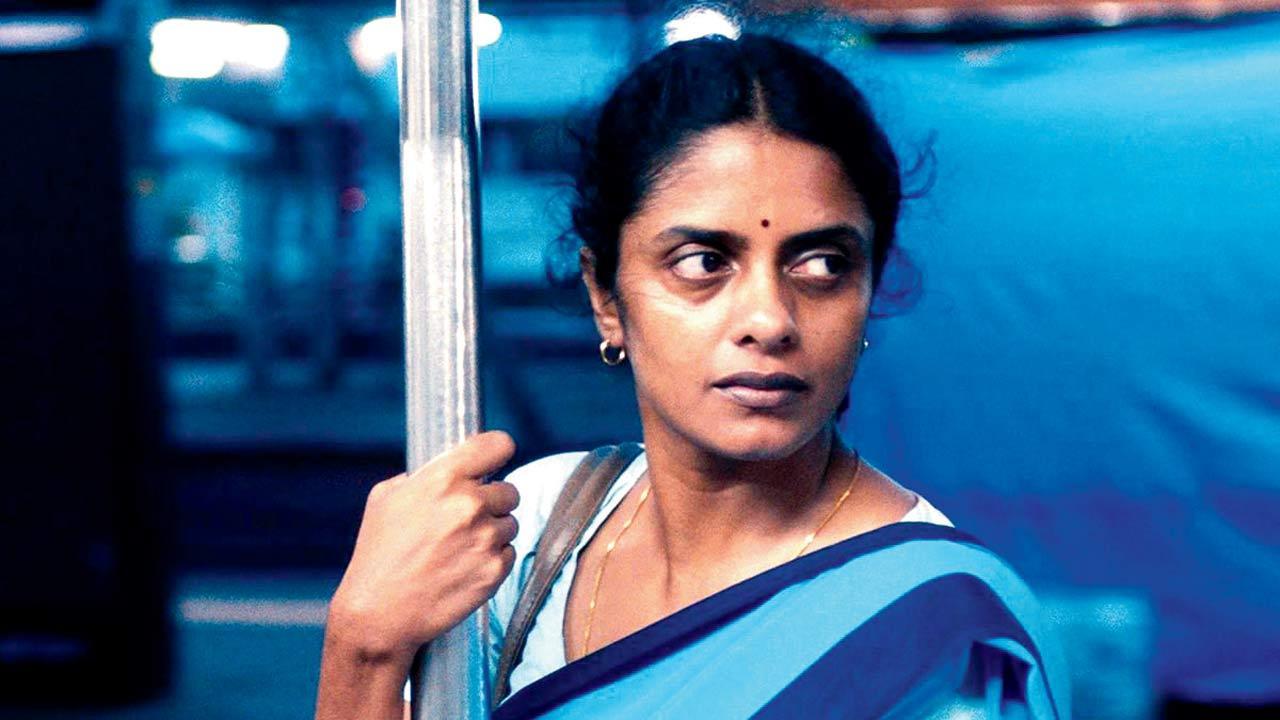
From initially being considered for another role to almost being rejected after a bad audition, Kani Kusruti reflects on her three-year journey with All We Imagine As Light
Priyanka Sharma (MID-DAY; November 22, 2024)
If movies are fated, All We Imagine As Light definitely was for Kani Kusruti. This, even before director Payal Kapadia had penned the story. Kusruti shares that the director, then a student at the Film & Television Institute of India, had reached out to her right after developing the idea.
“Payal said she was thinking of me while developing the protagonist. She had liked my work in a short film. I just wanted to be a part of her film,” she smiles.
In the Cannes Grand Prix-winning movie, Kusruti plays a nurse, Prabha, who develops an unlikely friendship with another nurse, Anu. She reveals that Kapadia had first chosen her for the role of Anu.
“Then years passed [without the film going on floors]. Since I had aged, I thought the chance was gone. Then Payal asked me if I wanted to audition for Prabha.”
While she jumped at the idea, there was a longer wait for Kusruti. Her first audition, held two years ago, didn’t quite go well, and Kapadia began auditioning other Malayali actors. The actor laughs that at one point, many actors she knew in Kerala were screen-testing for the film.
What’s more, she not only encouraged Divya Prabha to audition for the role of Anu, but also requested Kapadia if she could audition again. Lady luck smiled on her this time. Kusruti recounts, “After the second audition, when Payal asked me whether I’d like to be part of the film, I was in tears.”
All We Imagine As Light, which released today, is centred on three women’s friendship and their relationship with the city of Mumbai. Kusruti says the city is aspirational for people of Kerala. “When I was living here, a friend from Kerala visited me. She looked outside my beach-facing house and said, ‘Lovers, lovers everywhere. This is heaven.’ We discussed how you can just go out and sit. In Kerala, even that is difficult.”
Fenil's Bollywood Talk # 857
11:09 AM

WILL KARAN ARJUN AND NEW RELEASES ATTRACT FOOTFALLS?
The trend of re-releases is going on in full force and tomorrow, the biggest experiment in this regard is going to take place. Karan Arjun, the much loved film starring Shah Rukh Khan and Salman Khan, will be re-released on a grand scale. It’ll have the biggest screen count for a re-release in India and also abroad. Producer-director Rakesh Roshan has gone all out to promote the film with his son Hrithik Roshan even giving voiceover to the re-release trailer. The film has been remastered and hence, now looks as good as a fresh film.
The advance booking began in full force on Wednesday evening. The makers are keeping their expectations within limits but the exhibitors are hopeful that it can surprise.
As for the new release, the biggest is I Want To Talk, starring Abhishek Bachchan. It is directed by Shoojit Sircar of Piku and Vicky Donor fame. The trailer is intriguing and Abhishek seems in top form. However, the film also looks quite niche. The pre-release screening reports are positive and hopefully, it can see a jump in the collections from the second day.
All We Imagine As Light, which made waves for India abroad, will finally get an all-India release tomorrow. The film has got a limited release and might surprise in select pockets due to the extremely positive buzz around it. Of course, since it’s a film festival cinema, it’s meant for a minuscule audience.
Interestingly, Naam finally arrives in cinemas tomorrow. It was shot 20 years ago and stars Ajay Devgn, Bhumika Chawla and Sameera Reddy. It is directed by Anees Bazmee of Bhool Bhulaiyaa 3 fame. None of them are promoting the film and even the audience is aware that it’s a dated movie. As a result, the awareness is limited and the excitement to see it is negligible.
Lastly, the big Hollywood release is Wicked. The musical fantasy is all set for a very huge opening in North America. In India, the buzz is hardly there but it’s a film that can surprise and keep getting audiences for weeks, albeit in select premium multiplexes, if the reports are positive.
The trend of re-releases is going on in full force and tomorrow, the biggest experiment in this regard is going to take place. Karan Arjun, the much loved film starring Shah Rukh Khan and Salman Khan, will be re-released on a grand scale. It’ll have the biggest screen count for a re-release in India and also abroad. Producer-director Rakesh Roshan has gone all out to promote the film with his son Hrithik Roshan even giving voiceover to the re-release trailer. The film has been remastered and hence, now looks as good as a fresh film.
The advance booking began in full force on Wednesday evening. The makers are keeping their expectations within limits but the exhibitors are hopeful that it can surprise.
As for the new release, the biggest is I Want To Talk, starring Abhishek Bachchan. It is directed by Shoojit Sircar of Piku and Vicky Donor fame. The trailer is intriguing and Abhishek seems in top form. However, the film also looks quite niche. The pre-release screening reports are positive and hopefully, it can see a jump in the collections from the second day.
All We Imagine As Light, which made waves for India abroad, will finally get an all-India release tomorrow. The film has got a limited release and might surprise in select pockets due to the extremely positive buzz around it. Of course, since it’s a film festival cinema, it’s meant for a minuscule audience.
Interestingly, Naam finally arrives in cinemas tomorrow. It was shot 20 years ago and stars Ajay Devgn, Bhumika Chawla and Sameera Reddy. It is directed by Anees Bazmee of Bhool Bhulaiyaa 3 fame. None of them are promoting the film and even the audience is aware that it’s a dated movie. As a result, the awareness is limited and the excitement to see it is negligible.
Lastly, the big Hollywood release is Wicked. The musical fantasy is all set for a very huge opening in North America. In India, the buzz is hardly there but it’s a film that can surprise and keep getting audiences for weeks, albeit in select premium multiplexes, if the reports are positive.
I sang and showed Payal Kapadia how people from Ratnagiri dance-Chhaya Kadam
10:50 AM

Determined to bag the role in All We Imagine As Light, actor Chhaya Kadam on how she listed out many similarities between her and the Ratnagiri-bred character to director Kapadia
Priyanka Sharma (MID-DAY; November 15, 2024)
Once in a while, an actor comes across a role that resonates so strongly with them that they almost become possessive about it. For Chhaya Kadam, director Payal Kapadia’s All We Imagine As Light gave her that role. The actor was so enamoured by the character of Parvaty that she pitched hard for it.
“At one point, I thought the role shouldn’t go to any other actor. So, I started listing out similarities between the character and me. I told Payal, ‘I am also from Ratnagiri. My father was a mill worker. We used to live in a MHADA building and now we live in a tower. Everything is the same between us.’ I even sang and showed her how people from Ratnagiri dance,” she laughs.
In the Cannes Grand Prix-winning film, Kadam plays a hospital staff member, who strikes an unlikely friendship with two nurses. She had complete faith in the story and in Kapadia’s vision. That it was the director’s maiden feature did not deter her.
She reasons, “For me, the most important part is my character, then the story. I started my career with Nagraj Manjule’s Fandry [2013], which was his debut. I feel first-time directors work very hard on their film.”
This may just be Kadam’s year. She began 2024 with Laapataa Ladies that saw her as the wise Manju mai, followed it up with Madgaon Express, and then had the Cannes win for All We Imagine As Light. The one thing common in all her outings is her characters’ feminist streak.
She reflects, “I always liked characters that felt like one of us. I enjoyed films that saw the hero defeating the goons with one punch, but they never felt real. I was drawn to Smita Patil and Shabana Azmi’s brand of cinema. Now, it has become a habit to do work that I enjoy, and if we can give a social message, then nothing like it.”
It’s only in cinemas where you can cry in front of strangers-Payal Kapadia
10:18 AM
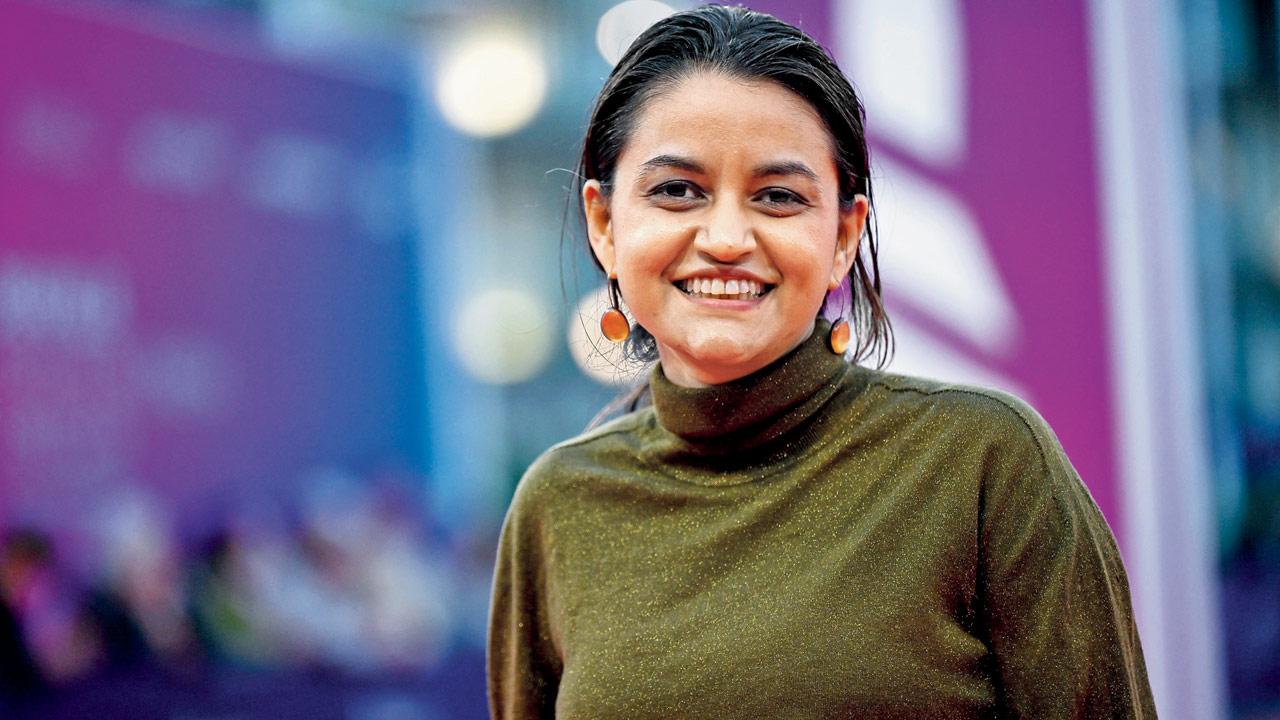
Niharika Lal (BOMBAY TIMES; November 18, 2024)
Despite her historic Grand Prix win at Cannes for All We Imagine As Light, Payal Kapadia says she didn’t want too much spotlight.
“I didn’t want to put so much out there because I felt that somewhere the film’s story gets lost in my personal story. It’s too much about ‘me, me, me’, and that sometimes overshadows the film. And I always felt like I (should) guard myself from that. As things moved on, I’ve tried to reconcile more to talking about myself and my work. Now that the film has got a lot of love, I’m feeling a little bit more confident. I want to show it around.” The filmmaker speaks to us about the themes in her film and the role that FTII played in her journey.
This FTII alumna, who brought the institution so much glory, was rejected in her first attempt when she applied for the editing course. Interestingly, becoming an editor was her first choice. "Woh safety bhi hota hai ki aap editor banoge toh you can get some work and job," she says. But then this rejection pushed her to work as an assistant director and in several other capacities in advertising and documentaries before attempting FTII again five years later in direction.
Payal believes in the importance of public institutions and says, "I love public institutions where you get some time to focus on your work, kyunki kuch bhi artistic cheez padhna aise jaldi se nahi hota. Hamare public institutes humein bahut support karte hain in sab cheezon mein. I'm totally for it. Ek accessibility honi chahiye ki aapko kuch bhi padhna ho toh ek university jahan pe aap afford kar pao. Journalism, filmmaking, or engineering - ek institutions hona chahiye jahan pe har koi ja sake. Normally, private film institutes are very expensive. It's too expensive! In our country, it is ridiculous to have it like that, I feel."
She adds, "For me, FTII was also about other students who were there. Itni diversity thi, pure desh se log aate thay wahan. Jab bhi itni diversity hoti hai toh koi bhi art school, film school, ya journalism school mein ek discourse banta hai jisse as a human being you can grow. That helped me a lot." Excerpts from an interview-
‘I love the catharsis cinemas bring’
Payal shares that when she is in India, then she go to watch films too and feels that the theater is only place where we can cry in the company of strangers. She says, "That's something you can only do in the cinema. To do it in a cinema, and where you feel so open, which is something you never do with people around. I love that catharsis. As an audience, I cry in most movies. For me, I want to be able to create that experience for the audience as a filmmaker."
Talking about the cinema scene from All We Imagine As Light she says, "The scene in All We Imagine As Light where Kani's character cries in the cinema hall is a homage to that feeling. She has tears; she is crying in the scene. I was thinking about a woman like her who's always saying - you should not show your emotions to anybody - and then she is sitting in the cinema where she finds a place to cry. Woh tab tak royi nahi aur cinema ke andar usne chhor diya aur woh aansu aane lage. That was what I was feeling."
‘I think my film is like QSQT in a way’
Whenever asked about the films she loves, Payal often says that while growing up, she used to watch Govinda's films and says, "Some of Govinda's films are really good, you have to watch them! I used to love QSQT (Qayamat Se Qayamat Tak). That was my favourite film as a kid. I used to love it. And I think my film (All We Imagine As Light) is that only. You see, how it is! It's connecting to my childhood days of QSQT (the escape theme). I loved that they were running away with the song - humne ghar chhora hai. It's a Romeo-Juliet. I loved that. And yes, so many more movies."
Hamara system aisa hai ki woh female friendship se bahut darte hain
The film is also about inter-generational friendships and female friendships. Elaborating on how female friendships are often not encouraged in our society and how women are frequently pitted against each other - whether in families, society, or the workplace - Payal said, "I wanted to make a film about this kind of internalized misogyny - hamara system aisa hai ki woh female friendship se bahut darte hain. Unko lagta hai agar ye sab auratein dost ban jayengi toh pata nahi kya ho jayega. So, that's what I wanted to make the film about. Sometimes, responses toward other women come that way, not because you're really feeling that way, but because the whole conditioning is such that it’s like we are pitted against each other."
She added, "That's something I wanted to talk about in the film because sometimes I find myself falling into that trap too. Then I think - why did I respond like this? It was a kind of self-reflexivity that I was thinking a lot about, and it came out in the writing. As I grow older, I'm reflecting more on my responses. I want to tackle that."
'So many times men are not physically in our lives, but they are still lingering there'
Talking about how she wrote about those men who seem to be present in women's lives even when they're either gone or not physically present, she shared, "Actually, my nani, to whom I've dedicated this film - when she was in her late 90s, she was kind of losing her memory, so I encouraged her to write a diary so that she could recall her past. So, she would write every day, and sometimes she would write – he (her husband) has come, and I can see him over there and smell tobacco. I started thinking about it because he died when my nani was 50 years old; she lived up to 98, so more of her life she was alone than she was with him. And I got the feeling she didn’t like him very much. Phir bhi woh aa rahe hain, woh 98 ke age mein woh tapak ke aa rahe hain, unke husband. Usko leke main bahut sochne lagi – what's this thing in our culture? That she would never remarry - at 50, you're still very young, but it's still hard for women that age to move on. Or be with somebody else because life can go on without men too, it's totally fine. That's what Parvati (Chhhaya Kadam's character) wants to do. It's her choice. I was thinking a lot about that. "
She continues, "Also, I have met women like Prabha (Kani Kusruti's character). So much of her life - how these women think and how they would respond to things - was about this guy who was not even there. Even when they were not estranged, just living somewhere else. Woh mujhe ek lady mili jo kehti thi – 'You're wearing jeans, I also want to wear jeans.' And I would say – 'Then wear jeans.' So, she would say – 'Mere pati rehte hain Dubai mein aur agar unko pata chalega ki main jeans pehen rahi hoon toh woh pareshan ho jayenge bahut, toh woh nahi pehen sakti.' He is far away, but still lingering there.
"There was another girl I met who was wearing a sari, and I asked her – 'Aren't you feeling hot? It's Bombay.' And she was like – 'My father-in-law lives in the village, but he will be very upset if I wear salwar.' Then one day, I spotted her on the street, and she was wearing a salwar. I asked her – 'What happened?' And she said – 'Off ho gaye.' (Laughs)."
Payal adds, "Toh yehi hai, ye log hote nahi hain tab bhi itna control karte hain. I connected the dots that how so many times men are not physically in our lives, but they are still there."
'It is so interesting to discover your own mother at the age of 21 - how she was and how she would think'
The title of Payal's film All We Imagine As Light has been borrowed from the title of one of her mother's paintings. Talking about how her mother and her work have encouraged her, she shares, "It took me a long time to make films. My mother was always encouraging - 'What do you want to do with your life?' Recently, she had an exhibition at Chhatrapati Shivaji Museum where they have the Jehangir Nicholson Gallery section, and they have the earliest paintings of my mother from when she was in her early 20s. So they decided to do an exhibition, and in that, I saw one of her works when she was 21. I'm just saying it is so interesting to discover your own mother at the age of 21 - how she was and how she would think."
She says, "I wish I had known at 21 what exactly I wanted to do. Seeing that painting was like meeting her again, but in a younger version. It really overwhelmed me. She was always pushing me, but never too much. She was like, 'Take your time and figure it out.' I was anyway doing odd jobs, making documentaries and all kinds of stuff. But she was always telling me - 'Maybe you want to study.' She herself went to JJ School of Arts in Bombay, where she studied for five years."
'These actresses are really the ones who made the film. They were not like actors who came to do the job'
These actresses are really the ones who made the film. Unke bina koi film hoti hi nahi. I thought it was very normal to take them there on the stage. They were not like actors who came to do the job. Hum bahut saath mein kaam kiye, script pe kaam kiye, dialogues pe, gestures pe. Nobody gives this kind of time to, especially, first-time directors like me. They were so giving and so generous. They didn't think, "Oh! It's your film, and we're part of it. They were like, hamari film hai. And not just them, but the entire crew - from make-up to costume - it became like a true team. It was really a collaboration, and I think that can only lead to a true feeling amongst all of us. Audience mein sab log baithe thay toh mujhe laga ki we should take everybody, but they were already giving me dirty looks, so I just took the three main actresses.
All We Imagine As Light director Payal Kapadia says, "I wanted to normalize female nudity"
8:25 AM
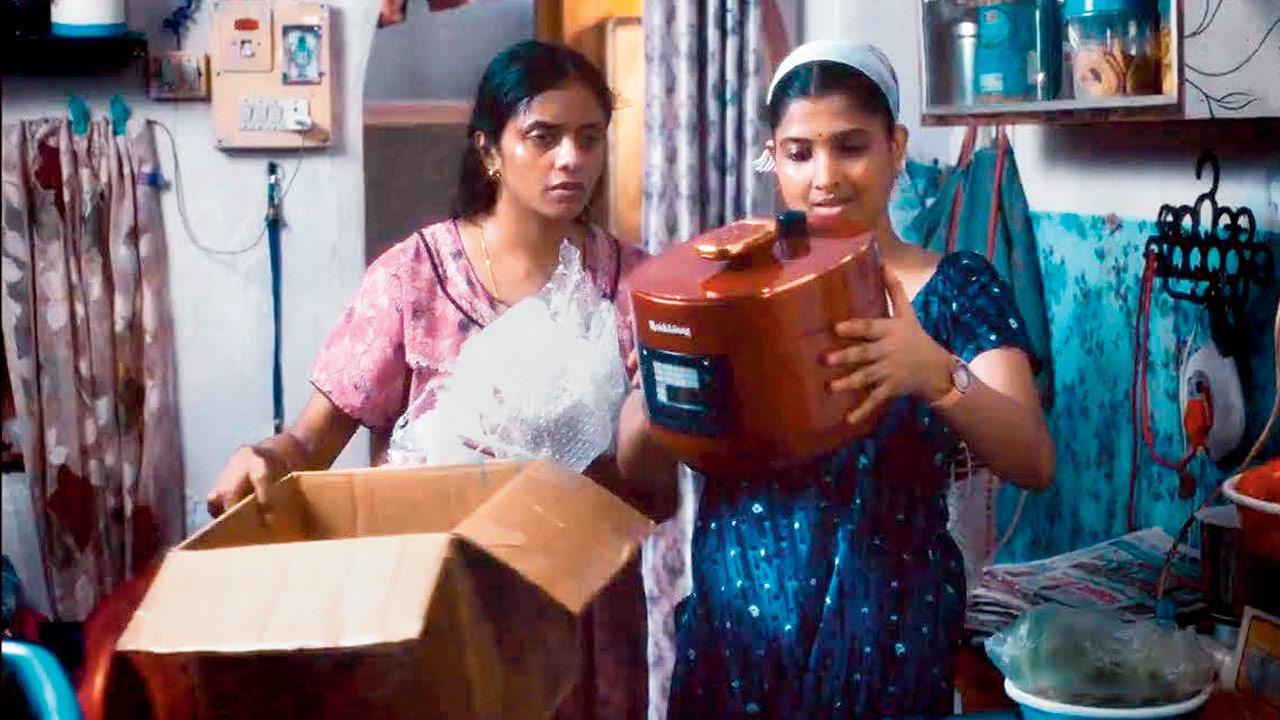
As Cannes Grand Prix-winning film All We Imagine as Light gears up for India release, director Kapadia says she wanted to authentically address the theme of desire
Priyanka Sharma (MID-DAY; November 12, 2024)
Bringing your Cannes Grand Prix-winning film home is an exhilarating feeling. But director Payal Kapadia has a specific reason, among others, to be excited about showcasing All We Imagine as Light to an Indian audience—that she won’t have to explain monsoon to viewers. “When I show my film in different countries, I have to introduce what monsoon is to us. Here when the film premièred at MAMI Film Festival, I didn’t have to explain anything,” she grins.
The Kani Kusruti, Chhaya Kadam and Divya Prabha-starrer tells the story of an unlikely friendship between women of different ages. The November 22 release is Kapadia’s attempt to resolve a conflict that has long brewed within her. “I wanted to make a generational film about female friendship. I felt it is convenient for society to be designed in a way that women shouldn’t be friends with each other. It doesn’t want us to be supportive of each other. I’ve made many mistakes with friends and other women I was close to, where I didn’t respond to them in the right way. We make films to answer certain questions that are within us. This was a core conflict, and I wanted to talk about it,” she says.
Kapadia has beautifully explored many themes pertaining to womanhood, one of them being sexual desire. As she showed female nudity, did she view it as a risk? “I wanted to normalize it. It’s a part of everyday life, like eating and drinking. I wanted to be authentic to one of the main themes, which is desire, and there are ways to get to it. But this felt the most organic thing to put into the film.”
She has had an eventful journey, from being one of the Film and Television Institute of India (FTII) students who protested against the 2015 appointment of Gajendra Chauhan as chairman and being arrested, to becoming one of the most sought-after directors. Does she feel vindicated today?
Reflecting on it, she says, “I feel FTII is a great institute. Artistes who have come before us have contributed greatly to our country. Since people from different backgrounds, regions and languages come to FTII, it adds to the diversity of the industry. Only then can interesting things happen. I’ll always be thankful for my time there.”
Hope we will have state support next year, says MAMI Mumbai Film Festival director Shivendra Singh Dungarpur
8:17 AM
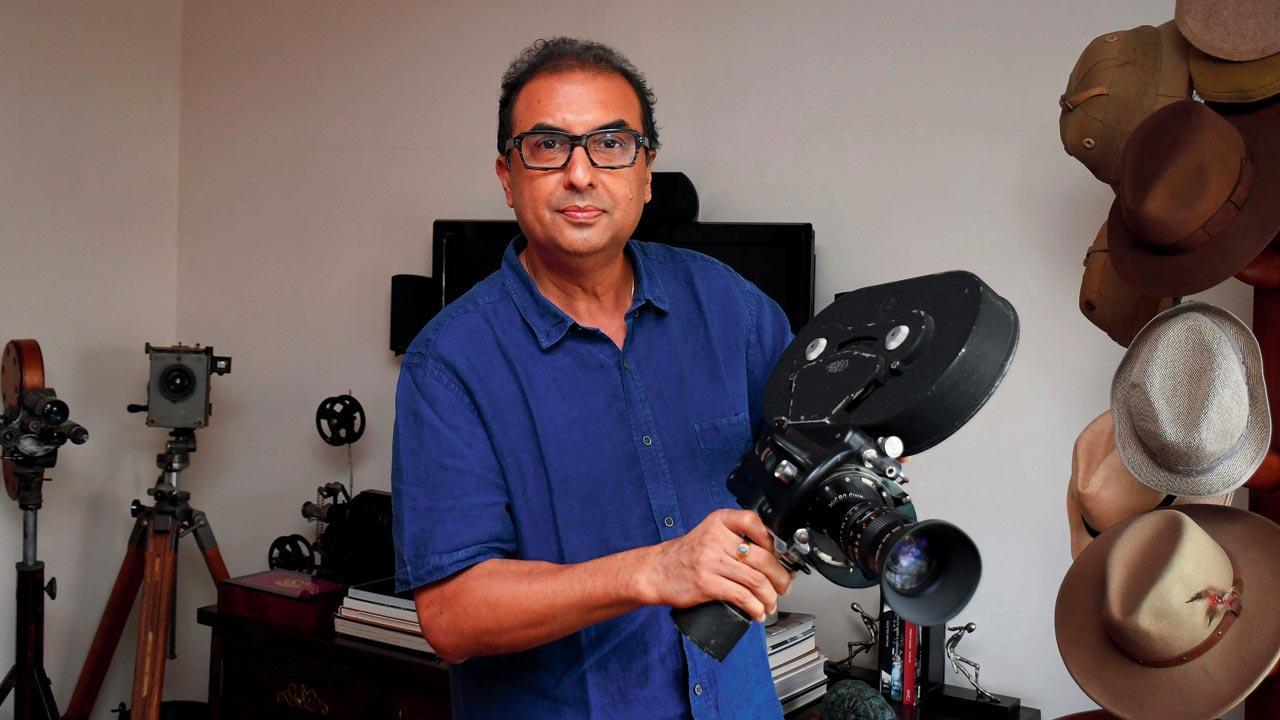
Before MAMI Mumbai Film Festival kicks off tomorrow, festival director Dungarpur confident that funding from the govt can make it a global cinematic event à la Cannes
Mohar Basu (MID-DAY; October 18, 2024)
The MAMI Mumbai Film Festival, over the years, has become a symbol of the city’s love for the movies. As the prestigious film gala sees a change of leadership this year, with film archivist Shivendra Singh Dungarpur taking on the role of the festival director, he says the idea is to bring independent cinema to the forefront. The festival, which opens tomorrow, aims to celebrate both emerging and established voices.
“This year, we are in a phase of transition. One [change] is that it’s just MAMI. No festival in the world has a tagline. We have come back to the original name,” starts Dungarpur, addressing head-on that Jio, the long-standing festival sponsor, has pulled out this time.
“The second important thing is that [over time], we didn’t feel like a festival. It has to be made into a celebration. We shouldn’t be spread out so massively that a guy from Juhu cannot meet a director, who is presenting [his film] in Goregaon. In film festivals, you should have to make little effort to go and experience the whole thing. Even with limited funding, we have got great programming this time—there is the South Asian competition, novel competition, we’ve got classics and the best of world cinema. But what was essential for me was to have an opening film that is truly Indian.”
This pursuit led him to Payal Kapadia’s Cannes Grand Prix-winning film, All We Imagine as Light. Dungarpur says the drama stands for two things that the festival stands for—the city of Mumbai, and rooting for indie filmmakers.
“A young filmmaker finds it difficult to raise funds, then she makes a film, and then he is able to take it to the world. Payal’s film will be an inspiration because it has reached the goal of the Grand Prix. We want to make sure that this festival is not about big films, it’s about independent films. We want it to be a people’s festival.”
Kapadia started her career with Dungarpur at Film Heritage Foundation, and to have his mentee’s work open the festival is a moment of great pride for him. “I have a special relationship with her. I told her that All We Imagine as Light should be the opening film for MAMI because it reflects the city. It’s rare to find a film that reflects everyone’s struggle in this city; a city where people come from different parts of the country and make a home. Usually foreign movies are chosen as the opening film. But to me, Payal’s film was the correct catalyst. There is so much buzz around this movie. Our phones have not stopped ringing; people want to come and see it. It’s wonderful to see this kind of response for an independent film. India doesn’t have the concept of a grant. It’s very tough for an independent filmmaker. That’s why you see so many sources of funding in Payal’s movie.”
Dungarpur believes MAMI has the potential to be on par with international film festivals like Venice and Cannes. He notes that the lack of state support holds India back from making a festival of that scale.
“If a movie goes to Cannes or Venice, then it goes everywhere else. I want to make Mumbai [one such destination for cinema]. We are hoping that by next year, we will have support from the state because the festival represents the city and its spirit. We want the state to be involved. You will see the reflection of state’s support of what the coming days and the next six years are going to be like.”
Mumbai’s date with MAMI
- Over six days, the festival will showcase 110-plus films from over 45 countries. These include Demi Moore’s The Substance, Emilia Perez that is France’s official entry to the 2025 Oscars, and Manoj Bajpayee’s Despatch.
- To attend screenings and events, one needs to register for a delegate badge on the MAMI website. There are badges for the press, industry delegates, cinephiles as well as for senior citizens.
- Screenings and events will be spread across prominent venues in Mumbai, including Regal Cinema and PVR Juhu. Soho House Mumbai will host the Industry Programme from October 21 to 23.

Subscribe to:
Posts (Atom)