Showing posts with label Alia Bhatt. Show all posts
Showing posts with label Alia Bhatt. Show all posts
Alia Bhatt was amazing; learnt a lot from Anil Kapoor-Pavleen Gujral
3:07 PM

The actor reflects on taking roles that align with her artistic ambitions
Shagun Roy (HINDUSTAN TIMES; October 16, 2026)
Actor Pavleen Gujral is riding high on the good reviews she has been getting for Hunkkaar: The Roar . “I am ecstatic to get compliments from everyone. Friends, family and film fraternity also have only good things to say, and that’s something that makes you want to go even bigger the next time,” says Gujral, who is stil getting compliments for portraying Dr Preeti in Alpha.
But that’s not her only take away from this big-budget multi-starrer. “The film set was a learning experience. The bigger the star, the more grounded and warm they are. Alia Bhatt was amazing. And especially with Anil Kapoor ji, I learnt a lot.! He has accomplished so much in his life, and he still has the same enthusiasm and, perhaps, more energy than anybody else on set. He talks about the character, he discusses the scene with you. I, who is just starting out, it was very rewarding,” says the 43-year-old.
She adds that the cherry on top was, when he “complimented me” saying, “the dialgoue delivery is very impressive”.
But this has only fuelled her ambition. “I have reached this far due to a lot of hard work and having honed my skill every step of the way. Now, I feel I am ready for a character-driver lead role,” says Gujral, who is also an enterprenuer and a certified nutritionist who co-owns a Sir Lankan-cuisine restaurant, Zetu, in Delhi.
“I have always wanted to do a lot of things. And hosting events, running a restaurant and consulting have helped me pursue my acting career in a big way. This has given me liberty to choose only roles which are meaningful or are integral to the story. You know, I don’t want to do a bad project just for the money, for acting is for creative expression and not financial gratifictaion for me.”
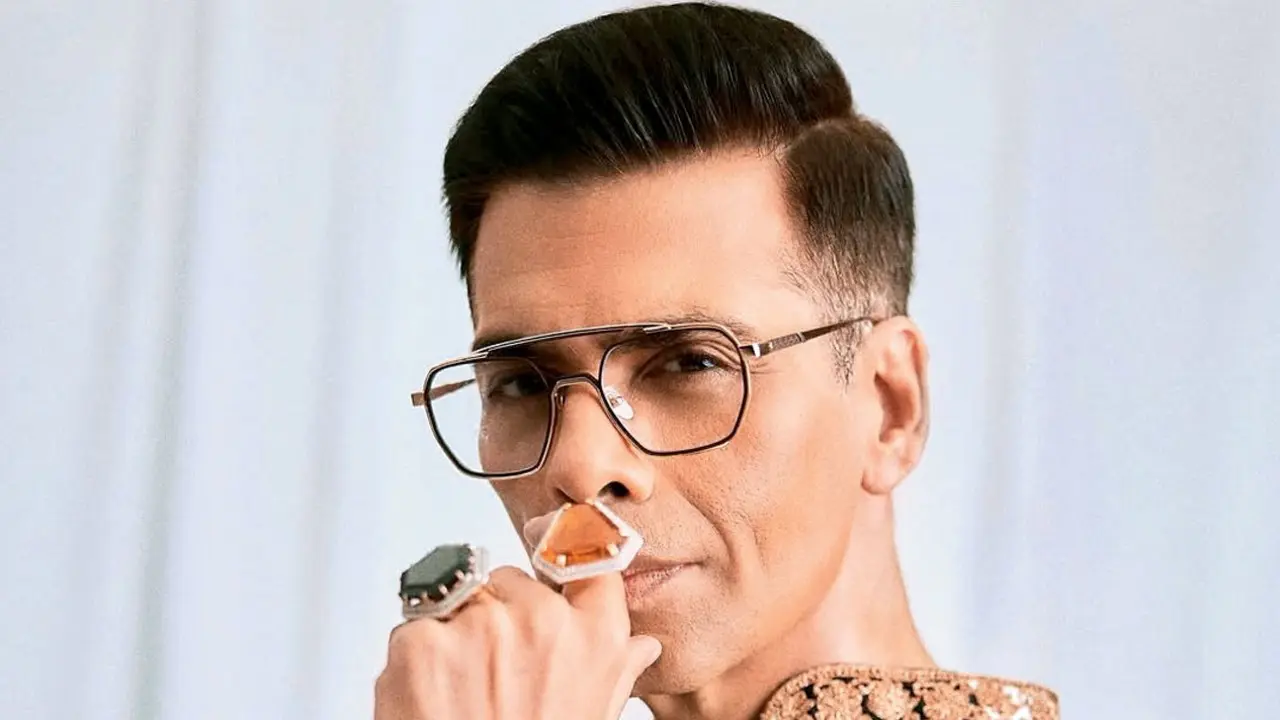
Karan Johar plans to return with new gossipy chat show after Koffee With Karan 9
9:53 AM
Upala KBR (MID-DAY; October 10, 2026)
It’s the last season of ‘Koffee With Karan’. That’s something Karan Johar made clear when he announced the ninth season of the JioHotstar show. But is it the filmmaker-host’s final brush with a chat show? Not really. mid-day has learnt that he is planning to launch a new chat show. And since it’s Johar at the helm, you can count on the glitz, glamour, and gossip.
Sources have indicated that Johar is keen to launch his own creation, considering JioHotstar owns the intellectual property that is ‘Koffee With Karan’.
A source shared, “While speculation is that Karan has decided to wrap up ‘Koffee…’ to focus on direction, he wants to create a new IP. He is a sharp businessman and a brilliant host. So, he is considering making a new chat show that his banner will hold the rights to. Today, there are many shows that first launch on YouTube, become popular, and are eventually picked up by a streamer.”
For now, however, his energy is directed at ‘Koffee With Karan 9’. This year, he has whipped up an all-stars line-up.
The source further revealed, “Salman Khan shot his episode on Thursday. The buzz is that Alia Bhatt will open the show, but Salman is also a strong option. Alia will come with husband Ranbir Kapoor and ‘Love & War’ co-star Vicky Kaushal on the show. Shah Rukh Khan and son Aryan will appear together.”
Sanjay Leela Bhansali and Alia Bhatt in talks to revive Inshallah
9:35 AM

Sources suggest Alia Bhatt and filmmaker Sanjay Leela Bhansali are in talks to revive ‘Inshallah’, which was stalled after Salman Khan’s abrupt exit
Mohar Basu (MID-DAY; October 5, 2026)
Will Sanjay Leela Bhansali and Alia Bhatt unite for a third time after ‘Love & War’? That’s the buzz in the industry circles. Rumours are rife that the filmmaker-actor duo has begun conversations to revisit their long-stalled project, ‘Inshallah’. Originally announced in 2019 with Salman Khan as the male lead, the movie was shelved following creative differences between the superstar and Bhansali.
With ‘Inshallah’ said to be back on the table, sources indicate that it will undergo substantial writing changes as Bhansali and Bhatt are discussing a reimagined version of the love story.
“It’s not being looked at as the same film that was announced years ago. The core story remains the same, but the material will be reworked and given a fresh spin,” a source told mid-day.
Earlier this year, there was also chatter that Shah Rukh Khan was being considered to lead the movie. However, our source stated that the filmmaker is clear about finalising the material before taking any casting decisions.
The source added, “No casting gets locked on a Bhansali film without the script being finalized. Salman is occupied with Raj-DK’s film while Shah Rukh hasn’t decided his next after ‘King’. It’s also possible that the story will seek a younger actor.”
Why do I have to get back in shape right after childbirth?-Parineeti Chopra
3:32 PM

Onkar Kulkarni (BOMBAY TIMES; September 27, 2026)
For Bollywood actresses, motherhood often comes with an unwelcome spotlight on their bodies. While becoming a mother is a personal milestone, actresses often find themselves facing public scrutiny over everything, from weight gain and post-pregnancy changes to how quickly they “bounce back”.
Katrina Kaif is the latest example to face trolling and commentary around her appearance after embracing motherhood. In a candid chat with Bombay Times, Parineeti Chopra, who welcomed son Neer last October, questions why a woman should be expected to “get back in shape” soon after childbirth.
The Amar Singh Chamkila actress says, “I have done an incredible thing of creating this human being, which not every woman in this world gets to do. So why do I have to get back in shape right after childbirth?”
‘I will get back in shape because I want to do it, not because I produced a baby’
She draws a parallel with the way people treat other changes to their appearance, pointing out that nobody expects someone to immediately undo the physical effects of a holiday. “I will get back in shape because I want to do it, not because I produced a baby and I need to get back into shape. There is this understanding that human beings need to have. If I could go on a holiday, eat a lot of food, put on weight, get tanned, get a haircut, maybe get a tattoo and come back – will you say, ‘Now your holiday is over, you need to remove your tattoo, you need to grow your hair again and remove that tan immediately?’ No, right? So when I’ve had a baby, why does the evidence of the beautiful experience need to go immediately?”
For Parineeti, the issue goes beyond body positivity and into the larger question of why women are constantly expected to explain or justify changes to their bodies. “And secondly, who are you to ask me? You cannot keep asking women this question; it is insane. Did you ask the woman who birthed you this question? No, right? Let’s not even waste time on these discussions. It is ridiculous to me.”
‘For me, family comes first; work is second to that’
The actress says that motherhood has not altered the way she approaches her career. If anything, it has reinforced a philosophy she has followed for years — balancing work and personal life, with family taking precedence.
“I’ve always lived this half-and-half life. I don’t watch content. I don’t live a very filmi life, and I don’t spend too much time at work. I do a pure 50-50. I work for like three or four months a year. The rest of the year, I’m doing other things. So that doesn’t change. In fact, it reinforces my belief – that my family comes first and work comes second to it. That will never change," says the actress who's seen in Netflix's mystery thriller Shaque: Trust No One.
------------------------------------------
Priyanka Sharma (MID-DAY; September 24, 2026)
A heroine’s career is over as soon as she embraces motherhood. For far too long, the Hindi film industry perpetuated this misguided notion. Parineeti Chopra is glad that the myth has been debunked over and over again by her peers. And now, by her too. The actor, who was pregnant with her son Neer while shooting her debut series, Shaque: Trust No One, praised producers Siddharth P Malhotra and Sapna Malhotra for supporting her.
All it needed was an honest conversation with the makers of the Netflix thriller, said Chopra. “I told them, ‘These are certain things I’ll now have to do, and certain things I’ll have to avoid. How can we make this work?’ Here is when producers like Siddharth and Sapna matter because their minds switched to management mode. They immediately spoke to our director [Rensil D'Silva] and started creatively finding solutions because I had to do a lot of action in this show. We’ve done all of it, but in a way that was safe for me,” the actor told mid-day.
However, she is aware that not every filmmaker would be as supportive. “There are certain filmmakers who might make the mother feel guilty. It’s the craziest thing to do to her during this emotional time,” she reflected.
Chopra is tired of it all — the scrutiny that comes with actors turning mother and the speculation about their careers ending. Especially when the latter has been proved otherwise. “All of us — Alia [Bhatt], my cousin Priyanka [Chopra], Deepika [Padukone], Kareena [Kapoor Khan], and now Katrina [Kaif] — are here to prove that motherhood only inspires us to do more. It’s also got to do with the audience. The audience is not cancelling mothers, [saying] they don’t want to see us on screen anymore. Nothing else that happens in my life impacts my career. So why should having a baby impact it?”
Parineeti Chopra also appreciated Karan Johar for being supportive of Alia Bhatt, who was pregnant during the shoot of ‘Rocky Aur Rani Kii Prem Kahaani’.
Suddenly one day, Alia Bhatt gave us a date, we had only 4 hours of her time-Vijay Ganguly
10:29 AM

Upala KBR (MID-DAY; September 21, 2026)
An early morning shoot later, you’d think that Alia Bhatt would call it a day. But even if the actor in her is tired, the producer in her knows that work doesn’t stop. Bhatt recently completed a morning shoot of Sanjay Leela Bhansali’s Love & War, and reported straight to the set of her upcoming production, Don’t Be Shy, squeezing in a five-hour filming of the song, Re Bawri.
Choreographer Vijay Ganguly revealed that both Bhatt and director Sreeti Mukerji were certain from the start that the campus caper needed a music video.
“Though it was to be picturized on the four leads earlier, eventually we wanted Alia to feature in it too as she is a fabulous dancer. But the dates were not working out. Suddenly one day, Alia gave us a date, and we had only four hours of her time as she was doing many things back-to-back,” Ganguly told mid-day.
The uptempo number was shot in early September at Chitrarth Studio in Powai. For Bhatt, featuring in Re Bawri was a strategic decision — she knew her presence would grab eyeballs, and in turn, bring attention to the four newcomers. “Alia wanted to promote the kids as much as she could. She did not have time to even rehearse for Re Bawri. She came on set after an early morning shoot and did what she had to do in five hours. She learned the hook step in five minutes,” recalled Ganguly.
He is impressed not only by her dancing skills, but also by her dedication as a producer. “Alia is a hands-on producer. She called me to say she is making a film on a small budget, and wanted me to choreograph this song.”
Bollywood armed its heroines, yet producers invest far less in women-led films
4:41 PM

Bollywood armed its heroines, promoted them to spies and handed them leading roles. Yet producers invest far less in women-led films, even though numbers suggest they are often the better bet
Anindita Paul (MUMBAI MIRROR; September 6, 2026)
For years, the question of women in commercial cinema was simply whether they were there. Today, women headline action films, lead spy missions and carry franchises. The change is visible. But visibility can be deceptive. A woman can be at the centre of the frame without being at the centre of the story. Alpha, the first female-led film in YRF’s spy universe, puts Alia Bhatt and Sharvari in a world historically dominated by male agents. Yet questions remain about whether the sexualization's of its female stars belongs to an older visual grammar. Toxic, directed by Geetu Mohandas and featuring five prominent actresses alongside Yash, was positioned as a film with a female gaze, but questions have also been raised about whether its female characters have stories independent of its male protagonist.
The female gaze is ultimately about point of view: whether a character has an interior life, and whether her choices carry narrative weight.
Where the money goes
Data journalist Surbhi Bhatia’s analysis of Bollywood from 2000-2022 found that female-led films received less than a fifth of the capital and resources invested in the top films in any year. Yet these films can be highly profitable, often delivering returns comparable to, or better than, those of male-led films. Bhatia illustrates the disparity through the returns on investment of women-led films. Lipstick Under My Burkha, made for around Rs 6 crore, generated approximately Rs 25 crore, a return of more than four times its investment. Raazi, starring Alia Bhatt as a spy, was made for around Rs 40 crore and generated Rs 195 crore worldwide, returning 4.8 times its investment. By comparison, a male-led film made for Rs 250 crore and earning Rs 500 crore delivers a 2x return.
The issue, she argues, is “not that women-led films perform badly, but that producers are less willing to assume the risk of producing, distributing and promoting them at scale.”
Bhatia will discuss these findings during her talk Kuch Kuch Data Hai: Bollywood, Visualized today at Woodside Inn, Bandra, as part of a Pint of View Lecture. Her research also shows that roughly one-third of working characters in paid occupations in films are women. They are more likely to be doctors, teachers, journalists, dancers, actors and models, while police officers, military personnel, politicians and criminals remain more likely to be male. Characters associated with power, danger or institutional authority are still more often written as men.
Aditi Govitrikar, actor, sees a similar gap between discussions and opportunities. “The conversation is happening, but whether it will translate into work or not remains to be seen,” she says, pointing to Delhi Crime, The Great Indian Murder and Made In Heaven as rare examples of women-centred storytelling.
Who controls the story?
That gap becomes more complicated once a film moves from the idea on the page to the finished product. Sidharth Jain, founder and producer at The Story Ink, explains, “Commercial filmmaking is inherently a collaborative process. Writers, filmmakers, producers, actors, studios and marketing teams all enter the equation, along with the pressure of the box office.”
With larger budgets and more stakeholders, an original idea is not necessarily discarded, Jain explains, but can gradually become something different from what the filmmaker first set out to make. Creative control can therefore be as consequential as casting.
A female lead, or even a woman directing the film, does not automatically determine the perspective through which her character is understood. That point of view has to survive from script to screen.
Arati Kadav, director of Mrs., takes the argument back to the writing itself. “We don’t depict women as whole people,” she says. Creators need to “step in the shoes of their characters” and “live those stories with the fullness they deserve”. Even smaller female characters, she argues, should have “a strong point of view, a proper backstory and some duality, rather than becoming too one-tone”.
Jain adds, “My biggest problem is that we don’t have a large pool of good screenwriting.” A filmmaker may have the right intent, but without the craft to communicate it, the idea, he says, can get lost in execution.
A shift, but a slow one
Revati Mahurkar, who has worked across Indian and international music videos including Qatal, Mascara and Tevar, believes that sensuality and self-expression can coexist beautifully when women have a say in how they are presented—from performance and costumes to the images that make the final cut. “I think women having agency in how they are presented changes the entire perception of their presence on the screen,” she says.
“It’s what moves us away from objectification towards having an active role in picturizing and presenting the content, whether a song or a film.” Mahurkar also feels that respect for women in the industry may be growing, but “entertainment only reflects what is happening in the real world around us.”
Jain, too, sees the industry moving beyond its traditionally male-star-driven model, in which “the heroine is just there for three songs”, towards a greater emphasis on story and content.
He sees it most clearly among younger writers, who are “more self-aware, more responsible” about how women are written. But he is wary of treating this as a complete transformation.
“It’s a generational shift,” he says, one that will happen slowly, as filmmakers and audiences continue to shape and respond to each other.
Change on the cards
Films such as Kabir Singh and Animal are reminders that stories built around male desire and violence still have considerable commercial currency. But their success does not cancel the growth of female-led cinema; it only exposes the marketplace in which those films must compete. Counting more heroines, too, tells us little about how much narrative power women have acquired.
Representation cannot, after all, be measured by counting women on screen. A heroine may have substantial dialogue, fight scenes and even a plot of her own while the film continues to view her chiefly through male desire. The real measure is whether she has an inner life, consequential choices and ambitions that do not exist merely to advance a man’s story. Bollywood may be changing the stories it is willing to tell, but the more difficult shift lies in who gets to shape them, and whose perspective is allowed to endure from the first draft to the final frame.
Sanjay Leela Bhansali plans exclusive jewellery collection launch ahead of Love & War release
9:25 AM

Mohar Basu (MID-DAY; September 16, 2026)
In a Sanjay Leela Bhansali movie, you can be assured of three things — moving storytelling, visual grandeur, and swoon-worthy costumes and jewellery. The filmmaker’s upcoming project, ‘Love & War’, is expected to be no different.
We’ve heard that an exclusive jewellery collection inspired by the film is being planned for a December launch. The line is expected to feature pieces drawn from the period jewellery created for Ranbir Kapoor, Alia Bhatt, Vicky Kaushal, and other actors in the movie.
Bhansali had joined forces with the leading jewellery brand, Tanishq, ahead of the release of ‘Padmaavat’ (2018).
A source shared, “The brand had launched a special collection in collaboration with the film, recreating jewellery inspired by the pieces worn by its characters. The same will be done with ‘Love & War’ as Bhansali has brought 1950’s jewellery — from chokers to elaborate bracelets and exquisite pearl pieces — with the love triangle, set in the 1950s and 1960s. It will be launched a month before the film’s January 2027 release.”
The filmmaker is currently locking the movie’s final edit, teasers, and deciding between the three different trailer cuts. “The jewellery line will be finalized by November-end after the trailer has been released,” added the source.
Sanjay Leela Bhansali had launched a special jewellery collection ahead of ‘Padmaavat’ (2018) release as well.
Alia Bhatt would have looked lovely as Sita-Dipika Chikhlia
11:04 AM

Shagun Roy (HINDUSTAN TIMES; September 13, 2026)
Dipika Chikhlia, who became synonymous with Sita after Ramanand Sagar’s TV hit Ramayan, says she is no longer rattled by new actors taking on the role. Reacting to Sai Pallavi playing Sita in the upcoming adaptation, Nitesh Tiwari’s Ramayana, she says, “If it’s Sai Pallavi, she’s a fab actress,” adding that she has no doubt the actor “will perform well”.
But asked which contemporary actor she would have liked to see as Sita, Chikhlia picks Alia Bhatt. “She’s very spontaneous, and that’s the kind of person I am,” she says, adding, “She would have looked lovely as Sita.”
Having spent decades being identified with Sita in Ramanand Sagar’s 1987 television series Ramayan, actor Dipika Chikhlia admits that stepping into another character from the epic would not be easy.
If she had to choose, though, Kaushalya would be her “best next option”, largely because she sees the character as a positive one. But entering another Ramayan remains emotionally complicated for someone whose identity has been so closely tied to Sita.
For Chikhlia, the bigger goal now is to be seen beyond the role that defined her career. Having played Sita convincingly at 18, she believes there is no reason she cannot take on a wide range of characters today. “I want to discover myself as an actor,” she says. She now wants to explore films and OTT, particularly unconventional roles beyond the stereotypical parts she feels may come her way. A judge, lawyer, doctor or NGO worker are among the characters she would like to play — “something off-beat” that excites her and makes her happy to return to work.
I’d love to invite Ranbir Kapoor and Ramayana team to our Ram temple-Shiv Sagar
10:09 AM

Upala KBR (MID-DAY; September 11, 2026)
Long before Ranbir Kapoor’s epic Ramayana: Part 1, there was Ramanand Sagar’s landmark 1987 TV series Ramayan. Almost 40 years on, the late filmmaker’s grandson, Shiv Sagar, is bringing a documentary that will chronicle the making of the Arun Govil and Dipika Chikhlia-led show.
Shiv told mid-day that the 60-minute documentary is currently in post-production. “It will show what happened behind the scenes — including anecdotes, never-before-seen footage, and retakes — during the making of my grandfather’s Ramayan. We have interviewed the cast, crew, and technicians connected to the series. We have [archival] videos of my grandfather and father. Its working title is Behind The Scenes Of The Ramayan, and we are planning to release it in the Diwali week,” he said.
Diwali is also when Ramayana: Part 1 will hit the screens. Shiv’s documentary will be launched on Tilak channel on YouTube and played at the Ramanand Sagar Museum in Karjat.
Close to the museum is the Ram temple built by Shiv’s father Prem Sagar and him at their Karjat property. He would like to invite Kapoor and the Ramayana: Part 1 team to the temple. “My sister Shabnam Gupta has designed Ranbir and Alia’s [Bhatt] new home in Bandra. I’d love to invite Ranbir and the Ramayana team to our Ram temple.”
Ranbir Kapoor’s Love & War teaser to be attached to Ramayana Part 1
9:43 AM

Mohar Basu (MID-DAY; September 7, 2026)
Don’t be surprised if you see another avatar of Ranbir Kapoor minutes before ‘Ramayana: Part 1’ plays out on the big screen. Word is that the teaser of Sanjay Leela Bhansali’s ‘Love & War’ — starring Kapoor, Alia Bhatt, and Vicky Kaushal — will be attached to filmmaker Nitesh Tiwari’s epic.
Initially, the plan was to unveil the romantic drama’s teaser on September 28, coinciding with Kapoor’s birthday. However, that plan has apparently been scrapped, with a different asset drop lined up for the actor’s birthday.
A source close to the development told mid-day, “The September 28 plan is not achievable as the final schedule of ‘Love & War’ got over only in the first week of September. Now, Bhansali sir wants to give the teaser a theatrical launch instead, and ‘Ramayana: Part 1’ provides the perfect platform. It’s one of the biggest films of Indian cinema, and with Ranbir being the lead in both projects, the teaser of ‘Love & War’ can create the impact the makers are looking for.”
While the teaser will be out in November, the trailer is expected to drop in late December before its January 2027 release.
One of the greatest roles Alia is playing today is the role of a mother-Mahesh Bhatt
11:18 PM

Vinay MR Mishra (BOMBAY TIMES; August 8, 2026)
Filmmaker Mahesh Bhatt has directed some of Hindi cinema's most memorable actresses. Yet, when he speaks about daughter Alia Bhatt, there is genuine surprise in his voice. During an interview when asked if he is proud of her daughter being the biggest star in the country, he first corrects us, 'one of the biggest stars of the country', and then goes on to say,
"She's astounded me because Soni and I never thought she had this kind of latent talent in her. We didn't really have what you would call a film culture at home. I kept making movies, but that was my work. When I saw her in Highway, I was astounded. I'm again astounded by her in Gangubai Kathiawadi. From where did she get that body language? She was never exposed to that kind of society or culture. I woke up to her exactly the way the nation woke up to her."
One compliment, in particular, convinced him she had truly disappeared into the character. "For me the greatest compliment to performance came from an event to Jharkhand. A tribal woman who watched Udta Punjab said she believed Alia belonged to her community. I thought, 'Oh my God, this is as real as it can get.'"
He goes on to add, "I always tell my children that whenever you feel you're soaring towards the zenith, remember you haven't even scratched the surface."
'One of the greatest roles Alia is playing today is the role of a mother'
Asked whether he sees shades of his younger self in Alia, Bhatt smiles before saying evolution has made her better than the previous generation.
"She has a drive. Every generation is superior to the previous one. Evolution has its own way of improving itself. There is this thirst she has. She oscillates between Mumbai, Cannes, Singapore and Hyderabad, shoots films, fulfils professional commitments, comes back home and continues to play the role of a wife and a mother. It is an astounding kind of energy. (However), One of the greatest roles she's playing today is the role of a mother. It is very humbling to watch. You're such a big star, but you never make anyone around you feel that. The role of a mother becomes the most important role you will ever play. She's promoting films across the country, yet she's constantly running her home," he explains.
'Raha is a vibrant version of Pooja'
If Alia continues to surprise him as an actor and mother, granddaughter Raha Kapoor has transformed the entire family's dynamic. "She'll outdistance Ranbir Kapoor and Alia by miles. She's different. She has a different vibe. When she comes, the whole house becomes hostage to her energy. For those few hours, she becomes the centre of everything," he confesses.
Does he spend a lot of time with her? Bhatt replies, "I recently went with Neetu (Kapoor) to her school for her Grandparents' Day. Soni was in Istanbul. We were walking through a cloud of soap bubbles. I was holding Raha's hand while Neetu was holding the other. It was a beautiful moment. That was something which I remember doing with only Pooja. It brought back memories of walking with Pooja when she was little. Suddenly, time collapsed. She is a vibrant version of Pooja. (Eventually) The same kind of family."
Bhatt laughs while describing his unusual bond with his granddaughter. "She can't quite figure me out. She probably wonders, 'Who is this man and why does he speak the way he speaks?' I manage to tell her one story. She enjoys correcting me whenever I pronounce the name of an animal incorrectly. Soni is very protective of her. She has got the best Nani, and Dadi," he explains.
He continues, "And her father. Oh my God. I'm also astounded by the role he's playing as a parent. And they both are stars. It just shows that this narrative that, working actors especially stars neglect their children, which we heard in our days is a thing of the dark past and is not true anymore. Today you have better communication. You have CCTV cameras shooting for and you can see what's going on at home."
'Pooja and I grew up together'
As Raha reminds him of Pooja, his eldest daughter, one cannot help but mention her. Bhatt's bond with eldest daughter Pooja Bhatt has often fascinated the industry, but he believes their closeness was forged long before fame arrived.
"When you become a father at 22 and you're struggling, life is different. I'd carry her water bottle to school. I'd wait around Bandra because I didn't have enough money to travel back and forth. I was unemployed. I spent a lot of time with her. I'd take her to my music sittings. She would sit there in her school uniform while the sessions went on. She, amongst my children, has spent the maximum time with me in those days. She has the courage to stand alone," he ends.
Clean social image makes stars the new heroes of the ad world
3:47 PM

Advertisers focus on net positive sentiment around a celebrity; Shah Rukh Khan still tops brand charts, finds a study
Rajesh N Naidu (THE ECONOMIC TIMES; August 6, 2026)
Mumbai: Box office success is no longer the defining factor in film stars' endorsement deals, with advertisers increasingly prioritizing celebrities' meaningful, controversy-free social media presence as a key metric, according to a latest study.
For example, actor Shah Rukh Khan, who did not have a film release in the past three years, is still the country's biggest celebrity by brand valuation, shows the latest brand valuation study of India's top 25 celebrities by financial and risk advisory firm Kroll.
The actor endorsed 30-35 brands in 2025, compared with 25-30 the year before.
He has maintained his endorsement fee at Rs 10 crore per brand between 2024 and 2025, indicating the strength of his brand equity and digital presence.
“Today, box office success is not a key criterion in endorsement deals. Brands focus on the digital presence of stars. This has made social media engagement an important factor in selecting celebrities for endorsement deals," said Umakanta Panigrahi, managing director of Valuation Advisory Services at Kroll.
The rising share of digital endorsement deals has contributed to this trend.
According to Kroll, the share of digital endorsement deals in total endorsement deals has increased to 60-75% from 40-60% over the past two to three years.
Against this backdrop, advertisers are evaluating specific digital parameters of film stars, according to independent brand valuation experts. One of the most important metrics is the net positive sentiment surrounding a celebrity.
“Advertisers look beyond box office success, with digital influence becoming a key consideration. They closely track the net positive sentiment around a film star," said Ajimon Francis, managing director of brand valuation consultancy Brand Finance.
“Today, negative sentiment spreads rapidly online. As a result, stars with a positive or neutral public image continue to attract advertisers regardless of how many films they have released.”
A star's ability to create original content is another factor advertisers consider.
"Advertisers prefer celebrities who create original content, post regularly, and stand for meaningful causes instead of simply reposting others' content. These qualities build trust and strengthen engagement," Francis said.
Advertisers also place equal importance on a star's legacy, with endorsements extending beyond short-term or episodic popularity, according to brand merchandising experts.
"Long-term legacy matters a great deal. Advertisers prefer stars who stay away from controversy and have a strong future film pipeline. Ultimately, endorsements are driven by reputation, relevance and brand fit, not just box office numbers,” said Navin Shah, joint managing director of EMC Solutions Worldwide, a branded entertainment company.
Advertisers also consider the emotions a star evokes, according to influencer marketing companies.
"Advertisers select personalities with unmatched mass appeal who can connect with audiences across generations," said Anirudh Sridharan, cofounder of influencer marketing company HashFame. “Stars fulfil these criteria. They represent memories, emotions and nostalgia, reminding people of different phases of their lives. These qualities help them continue to attract endorsements even after their peak years.”
According to the study, Ranveer Singh was the second most valuable celebrity by brand valuation in 2025, followed by Alia Bhatt and Deepika Padukone. Among sportspersons, Virat Kohli and Sachin Tendulkar were the top two most valuable celebrities.
There are four clear trends emerged from the study.
“The first trend is legacy icons such as Shah Rukh Khan, Sachin Tendulkar and M S Dhoni continue to command a premium because they enjoy trust, familiarity and recognition across generations. Their appeal goes well beyond their current professional achievements. They are valuable brands even years after their peak. The second trend is female celebrities are growing much faster than their male counterparts in brand valuation. Nearly half of the top 25 most valuable celebrities are now women. Women stars are increasing both their endorsement portfolios and brand value,” said Umakanta Panigrahi, Managing Director, Valuation Advisory Services, Kroll.
“The third trend is about Southern stars becoming national brands. Celebrities such as Rashmika Mandanna and Samantha Ruth Prabhu have significantly improved their rankings because of their growing pan-India appeal. Finally, younger Bollywood stars are also rapidly building their endorsement businesses through strong engagement with Gen Z audiences. Ananya Panday and Janhvi Kapoor have recorded notable growth in brand value,” he added.
These trends reinforce the point that box office success alone does not determine a celebrity’s brand value. Long-term relevance, cross-generational appeal and meaningful engagement with fans particularly on digital platforms are becoming equally important drivers of commercial success.
Love And War shoot to be wrapped up before Ranbir Kapoor starts Ramayana promotions
8:58 AM

Sanjay Leela Bhansali is set to kick off the Love & War final schedule today and wrap it up by August 31 before Ranbir Kapoor dives into Ramayana: Part 1 promotions
Mohar Basu (MID-DAY; August 3, 2026)
Multiple schedule revisions and months of filming later, Sanjay Leela Bhansali is finally on the home stretch of Love And War. mid-day has learnt that the filmmaker will begin the love triangle’s last schedule on August 3 at Royal Palms in Goregaon.
According to insiders, Bhansali is working towards an August 31 deadline, something that has become crucial given the packed calendars of his three leads, Ranbir Kapoor, Alia Bhatt, and Vicky Kaushal.
For Kapoor, the timeline is particularly important. The actor is expected to move on to the promotional campaign of Ramayana: Part 1 by mid-September.
A source close to the production said, “The delays have pushed Love And War further than originally planned. Everyone has blocked out August for this final leg; beginning September, the actors will move on to their next commitments.”
In the final schedule, Bhansali will shoot two sprawling war sequences and two dance numbers. The source elaborated, “The war scenes will involve approximately 50 stunt performers and 300-500 junior artistes. The production team has allocated 10 dedicated rehearsal days to choreograph the combat and crowd movement.”
Sharan Sharma is very critical. It comes from a place of tough love-Akansha Ranjan Kapoor
4:49 PM

Komal RJ Panchal (MID-DAY; July 22, 2026)
It’s been a heady few days for Akansha Ranjan Kapoor. Only 10 days ago, the actor tied the knot with her partner of four years, director Sharan Sharma. Even as the couple keeps their professional and personal lives separate, Sharma remains the first person she turns to for honest feedback.
Revealing that he is often the first person to watch her projects, Kapoor said, “He is very critical. It comes from a place of tough love. After watching Gram Chikitsalay, he hugged me and said that I looked like I belonged in that world.”
That was heartening for Kapoor, who plays a rural doctor in the slice-of-life series. One of the reasons to join Gram Chikitsalay was to steer away from the perception built about her. “I wanted to be part of TVF’s [The Viral Fever] storytelling and world-building. A lot of people couldn’t see how I would fit into this world, so I was keen on showing a different side of me.”
It’s widely believed that Kapoor, who is best friends with Alia Bhatt, has benefited from being part of a well-connected social circle in the industry. She is unfazed by this chatter. “People are allowed to have their opinions. Time will tell. Till then, I want to do good work.”
Few films create a world as immersive as Tumbbad-Alia Bhatt
3:53 PM

Renuka Vyavahare (BOMBAY TIMES; July 14, 2026)
After much speculation, Bombay Times can now confirm that Alia Bhatt has officially joined the critically acclaimed Tumbbad franchise. The actress will appear in a pivotal role alongside Sohum Shah and Nawazuddin Siddiqui in Tumbbad 2, an anticipated sequel, marking one of the most significant collaborations in Indian cinema.
Known for her remarkable range and fearless choice of roles, Alia’s arrival marks a defining moment for the film. Her ability to seamlessly move between intimate character-driven performances has consistently made her one of the most compelling actors of her generation.
Alia told Bombay Times, “Tumbbad has stayed with me ever since I first watched it. Very few films create a world that feels this original and immersive, and even fewer continue to grow in people’s imagination years after they’ve released. That’s what makes this opportunity so exciting. To now become a part of that world is incredibly special. I’m looking forward to working with Sohum and Nawaz, two artists I’ve admired for a long time, and to exploring a character that belongs to a story as rich, mysterious and unforgettable as Tumbbad. I can’t wait for audiences to experience what we’re creating together.”
Celebrated for its rich world-building, atmospheric storytelling and visual ambition, Tumbbad redefined the folklore fantasy genre in India and has earned a cult following over the years. Its re-release went on to become the highest-grossing re-releases in Indian cinema. With Alia joining the cast featuring Sohum Shah and Nawazuddin Siddiqui, Tumbbad 2 is set to expand its canvas.
'Having Alia Bhatt come on board for Tumbbad 2 is truly delightful': Sohum Shah
Sohum Shah shared, “Having Alia Bhatt come on board for Tumbbad 2 is truly delightful for all of us. She is undoubtedly one of the most talented actresses of this generation, and I am sure the audience will get to witness something unique with her in the film. We have all witnessed her incredible performances on screen right from her debut. This is my first collaboration with her, and I am genuinely looking forward to working together.”
Tumbbad 2 is directed by Adesh Prasad and spearheaded by actor-producer Sohum Shah under his banner Sohum Shah Films, in collaboration with Pen Studios. The film is slated to release in cinemas on 3rd December 2027.
Producer Dr. Jayantilal Gada said, "Alia Bhatt is undoubtedly one of the finest actresses in our industry, and her joining Tumbbad 2 is truly incredible. This also marks our third collaboration with Alia after the phenomenal success of Gangubai Kathiawadi and RRR, making it even more special for us. She is the perfect choice for this film, and the audience will see her in a way like never before."
Ranveer Singh, Vicky Kaushal, Alia Bhatt have been doing a phenomenal job-Atul Mongia
2:34 PM

As he launches a three-month actor’s training programme, Atul Mongia, the acting mentor behind stars like Alia Bhatt, Ranveer Singh, and Vicky Kaushal, tells us why talent trumps stardom
Mohar Basu (MID-DAY; June 28, 2026)
For over two decades, acting coach Atul Mongia has worked with some of Hindi cinema’s most celebrated performers. Among his former students are superstars Deepika Padukone, Alia Bhatt, Ranveer Singh, and Vicky Kaushal. Beyond being enigmatic on screen and holding the attention of teeming millions, they are actors who have built successful careers while repeatedly reinventing themselves with every project.
For over two decades, acting coach Atul Mongia has worked with some of Hindi cinema’s most celebrated performers. Among his former students are superstars Deepika Padukone, Alia Bhatt, Ranveer Singh, and Vicky Kaushal. Beyond being enigmatic on screen and holding the attention of teeming millions, they are actors who have built successful careers while repeatedly reinventing themselves with every project.
According to him, one of the biggest changes is that stardom alone is no longer enough. “The game has completely changed from what it was earlier. Over the last 15 to 20 years, talent has come to matter a lot more in the case of people with longer careers. Even today, the actors who are getting the meatier parts are good actors. I also feel that the era of stardom is kind of over,” Mongia tells Sunday mid-day.
And that was his cue. Mongia says, “When people are casting for a film or are training their actors for a specific role, they don’t have the luxury of doing intensive work over months. The longer format has always been normative; whether it is the module at The National School of Drama (NSD), The Film and Television Institute of India (FTII), or other places in Mumbai where three- or six-month courses have been conducted for decades. I would actually say that the shorter workshop format is more of an exception. I began with a shorter format at a time when maybe just Neeraj Kabi and a few others were doing it. One reason I started with a nine-day workshop was because I wanted to ensure that each day counted in some way. As for the three-month conservatory I am doing now, I feel I am ready to pour more than two decades of my experience and my understanding of what actors need to grow into a 12-week module. Here again, I want to ensure that every single day, an actor can learn something substantial and meaningful instead of just doing exercises where they jump, shout and scream and derive nothing from the experience.”
Having seen a sea of change in how casting is done, Mongia believes the education has to keep up with the demands of the industry. “Few years ago, casting became a formalized department with someone at the helm unlike earlier, when assistant directors used to do that job. Often friends or friends of friends or people who were already visible in the talent pool would get cast, unlike now when there is more specificity to each part and actors are cast accordingly. For instance, if a part is written for somebody from a specific region, background, or a certain cultural context, then the casting directors often go to those spaces and look for actors and not just the ones available in the city. I remember when I was working with Kanu Behl’s Titli [2014], even for tertiary parts, we had tested 15–20 people. It was an exhausting process but we wanted the right person for each and every role, even if it was a non-speaking part.”
He says the explosion of social media, advertising, and digital platforms has altered the relationship between stars and audiences.
“Earlier we used to see stars only on cinema screens twice a year and their aura was much bigger. Now you see them every day on some platform, on some social media site, or in advertisements. So, the aura does get diluted as you’re not seen as someone unreachable. So, this is where your acting chops come into the picture.”
For Mongia, longevity today depends on one’s ability to adapt rather than image-building. “In this context, Ranveer Singh, Vicky Kaushal, and Alia Bhatt have been doing a phenomenal job. They have not put themselves first. I think a lot of stars earlier always had to be at the forefront but the younger actors don’t have that need. These actors are malleable and want to change according to whatever part they’re doing. This school of thought has really made a difference to their longevity. Another thing that makes an actor last long is to not have too many insecurities or excessive ego.”
The arrival of OTT platforms has accelerated these demands further. Mongia argues that long-form storytelling requires actors to operate at a level of emotional depth that wasn’t always necessary in conventional films.
“There is more breathing space, even space for mundane details and for the exploration of a character at a much nuanced, deeper level. Good shows that are written really well are multilayered in that respect.”
The conservatory will also expose participants to the realities of the industry by bringing casting directors and filmmakers into the classroom. While social media remains an unavoidable part of an actor’s life today, Mongia stops short of calling it a deciding factor in casting.
“We may hear that social media presence does not matter but I think it can matter where there are two actors of similar capability. Then a wider network and visibility may count.” Yet, he insists that strong performances continue to trump follower counts. “If a director or producer really believes in the suitability of a certain actor for a part, they will still make the best choice.”
Interestingly, Mongia is less convinced by another popular industry narrative — that Indian cinema is already conquering the world. “I’m sorry, I kind of disagree that Indian films are finding global audiences. I don’t think it’s happening enough,” he says.
When Indian cinema eventually expands its global footprint, he says, improvements will be required across the board. “And when it does, definitely we’ll also have to up our game in every department, not just acting.”
Alia Bhatt entrusted me with designing her home. That project opened an entirely new chapter-Rupin Suchak
5:59 PM
Rupin Suchak, production and interior designer, on the illusion of wealth, tight deadlines and homes he builds for Bollywood’s stars
MUMBAI MIRROR (June 20, 2026)
I often joke that I have spent most of my career building worlds that people either inhabit for years or encounter for two seconds on screen. The tools are similar, but the pressures of these twin careers are not. My fascination with design started long before I knew it could be a profession. I grew up in a Gujarati family where I was constantly making things, whether miniature installations for Navratri, religious backdrops, stage sets for school productions or drawings for competitions. I was never the student who came alive in conventional academic subjects. Once someone put a pencil in my hand and ask me to create something, though, everything changed.
The first major validation arrived when I secured an All India Rank of 50 in the NIFT entrance examination. Suddenly it felt possible as a career path. My route into interiors was far from straightforward. For years, I worked in production design, first under Sabu Cyril and later independently. Sabu was a huge influence. I became fascinated by the idea that entire environments could be built solely to serve a story.
The commercial grind
When I struck out on my own, I worked on films such as Go Goa Gone, Happy Ending, Dear Zindagi and SPYDER. I also worked on more than a thousand commercials and TV productions. People often underestimate how demanding advertising can be. A commercial might require an entire world to be conceived, designed and executed in a matter of days. You learn speed, adaptability and precision very quickly.
After nearly five years in production design, the turning point came unexpectedly when I was commissioned to design the office of filmmakers R Balki and Gauri Shinde. What started as a single project altered the direction of my career.
During the project, Alia Bhatt visited the office and responded strongly to the design. Not long afterwards, she entrusted me with designing her home. That project opened an entirely new chapter. One commission led to another and before long interior design had become a major part of my practice.
Clients become the story
One of the biggest lessons came from discovering that homes are fundamentally different from film sets. A set exists to tell a story. A home exists for people to live their lives. On a film set, the narrative comes first. In a residence, the people become the narrative.
That sounds obvious now, but it required a significant shift in mindset. In production design, I was accustomed to creating highly immersive environments with strong personalities and unconventional ideas. In interiors, many clients initially wanted something safer. There was one early project that left me deeply dissatisfied because it looked pleasant enough but lacked any real character. I remember finishing it and realizing I never wanted to create generic spaces again.
I never wanted to create generic spaces again.
That project became an important lesson. It forced me to define what kind of designer I wanted to be. Since then, I have approached every commission with the belief that a space should reveal something about the people connected to it. A home should not simply look attractive. It should possess an identity.
Life after cut
Ironically, the biggest challenge in moving from film sets to homes was not creativity but patience. Film production runs on relentless deadlines. Interiors demand long conversations, planning, collaboration and attention to how people actually live. I am fortunate to work with architects who help translate my ideas into technically rigorous spaces, while I push them to think beyond convention.
Whether I am working on a film, a commercial or a residence, the objective remains remarkably similar. I want people to feel something. The medium changes. The story changes. But my desire to create memorable worlds does not.
Bollywood bets on South heroines amid fading 'bankable' Hindi stars
9:00 AM

Pan-India appeal and freshness of South India’s actresses a big draw for filmmakers
Rajesh N Naidu (THE ECONOMIC TIMES; June 25, 2026)
Mumbai: Well-established heroines based in South Indian film industries with fan followings are being increasingly cast in mainstream Hindi films as Bollywood grapples with a thinning bench of bankable female stars.
Unlike in the past, when south-based actresses entered the Hindi film industry at a very early phase of their acting careers like Vyjayanthimala, Rekha and Hema Malini, in recent years, well-established south-based actresses such as Rashmika Mandanna (Cocktail 2, Animal), Sai Pallavi (Ek Din, Ramayana), Keerthy Suresh (Raftaar), Nayanthara (Jawan, a new untitled film with Salman Khan) and Pooja Hegde (Hai Jawani Toh Ishq Hona Hai) are filling the gap in mainstream heroines in Bollywood, producers, casting directors and distributors told ET.
In the past few years, the pool of dependable and well-established heroines has shrunk. This is a key reason why filmmakers are considering established south-based actresses, casting directors said.
“Today, the pool of established Hindi film heroines is relatively small. Also, accessing this pool can often be a lengthy and complicated process. In contrast, many south-based actresses are highly professional, approachable and easy to collaborate with. Even audiences enjoy seeing fresh on-screen pairings,” said Kunal M Shah, a casting director known for works such as Phule and Bhaukaal.
“For instance, the pairing of actor Salman Khan and actress Nayanthara in one of my upcoming films is creating buzz. Also, Bollywood filmmakers have a much wider and more exciting talent pool to choose from with south-based heroines in contention,” he explained.
“On the one hand, well-established Hindi film actresses such as Kareena Kapoor, Katrina Kaif, Deepika Padukone and Alia Bhatt are entering a different phase of their careers. On the other hand, the frequent failure of films featuring the new crop of very young actresses has proven that they lack striking talent. This has shrunk the pool of mainstream heroines in Bollywood,” observed Shaaminder Malik, a film distributor and trade analyst.
Also, economics favour casting well-established south-based actresses, producers said.
“Established south-based heroines have pan-India appeal thanks to their acceptance among non-south audiences through dubbed films. Casting these actresses in mainstream Bollywood films also boosts collections from their home territories,” said producer Vishesh Agrawal.
Producers also cited factors such as rootedness, freshness and the range of south-based heroines as reasons for their increasing presence in mainstream Bollywood films.
“Today, the industry is compelled to rethink the archetype of a mainstream Bollywood heroine. Audiences are demanding fresher, more rooted and more authentic female leads,” explained Suniel Wadhwa, co-founder and director of Karmic Films.
“Established south-based actresses have been successfully filling this gap with their range and suitability for both rural and urban roles,” he added. “For instance, Rashmika Mandanna looks suitable not only as a village woman in the Pushpa franchise films but also as an urban mainstream heroine in Cocktail 2,” he explained.
Though there is a shift towards casting established south-based heroines, casting directors bemoan the larger problem of a lack of interesting roles being written for heroines.
“Though there is no denying that the new crop of heroines in Bollywood either look very young or lack acting chops. Also, their exposure on social media is relatively higher than that of south-based heroines. But where are the interesting roles for heroines in today’s films?” said a casting director, requesting anonymity.
Love & War resumes shoot with enhanced safety audits and inspections after the tragedy
9:26 AM

Mohar Basu (MID-DAY; June 23, 2026)
Five days after a tragic accident claimed the life of a crew member on the set of Love & War, filmmaker Sanjay Leela Bhansali resumed the period drama’s shoot at Royal Palms in Goregaon on June 22. We’re told the latest schedule, which already faced months of delays, commenced under heightened safety measures.
In the wake of the accident that happened around 3 am on June 17, Bhansali Productions has apparently put an immediate stop to all night shoots of the Ranbir Kapoor, Alia Bhatt, and Vicky Kaushal-starrer until further notice.
The demise of carpenter Chandradhari Yadav, 42, who was working on the film’s set when he allegedly suffered an electric shock, has naturally affected the crew.
A source from the set told mid-day, “The electric wire was loose and he got a shock. After the accident, the makers have decided that no night shoots will be conducted going forward. They have also ordered additional electrical inspections, mandatory safety audits before every shift, and stricter monitoring of on-set work conditions to prevent such an incident in the future.”
--------------------------------------
S Farah Rizvi (HINDUSTAN TIMES; June 23, 2026)
Following an accident that led to the death of a carpenter on the sets of filmmaker Sanjay Leela Bhansali’s upcoming film Love & War on June 17, Bhansali Productions has offered compensation of Rs. 40 lakh to the victim’s family.
The incident took place in the early hours of June 17 at Royal Pump Studio in Mumbai’s Film City, where 42-year-old carpenter Chandradhari Singh Yadav died after suffering a severe electric shock. Preliminary findings suggest a short circuit may have caused the electrocution.
FWICE general secretary Ashok Dubey says, “Humne Rs. 50 lakh kaha tha aur humne apni taraf se prayatna kiya hai for Yadav’s family to get maximum compensation. Unhone (production team) hume bataya hai that insurance se bhi Rs. 10-15 lakh direct victim ki family ko mil sakta hai.”
The film body’s chief advisor Ashoke Pandit adds that members are urging the administration to “form a joint committee to get an audit for old structures and check on safety measures”.
--------------------------------------------------
We’ve been in talks with the production team since the day of the accident. Humne apni taraf se prayatna kiya hai for Yadav’s family to get maximum compensation.
- ASHOK DUBEY, FWICE GENERAL SECRETARY
Many people will go for banners and co-stars, but Alia Bhatt is different-Soni Razdan
9:24 AM

Priyanka Sharma (MID-DAY; June 23, 2026)
Alia Bhatt’s Alpha is set to hit the screens in less than a fortnight. The conversations at home then, we assumed, would be all about the movie.
Laughing at the thought, Soni Razdan, actor and Bhatt’s mother, revealed, “We talk about films less than people think we do. We talk about smaller domestic things, like babysitting Raha [Bhatt’s daughter] and what she’ll have for lunch. We talk a lot about food.”
Films surely can’t be far behind. In her 14-year career, Bhatt has become among the leading stars of Hindi cinema, building a filmography on stories that revolve around her characters — an exception for female stars. Razdan takes it all in with gratitude.
“She has been smartly intuitive in her choices. She probably gets offered many more [projects], but she chooses the ones her gut tells her to do. It’s remarkable because many people will go for banners and co-stars, but Alia is different and it’s paid off. You have to thank the universe for the good things that come your way.”
But with success also comes the trolling. For instance, last month, the actor was subjected to incessant negativity during her Cannes red carpet appearance, where online users alleged she wasn’t being clicked by photographers. Having been an actor for over three decades, Razdan understands that stardom comes at a price.
“You don’t need to react to everything. You can be objective. It’s a survival skill that you learn. If you can’t develop it, don’t be in this business. We get a lot of love. We don’t want to look at the other side at all.”
Subscribe to:
Posts (Atom)