Showing posts with label Alfonso Cuaron. Show all posts
Showing posts with label Alfonso Cuaron. Show all posts
Chaitanya Tamhane on lack of support to indie filmmakers: "Stars can do one for the kitchen, one for the soul"
9:35 AM

As he turns producer with Next, Please, National Award-winning director Chaitanya Tamhane rues the lack of institutional support for indie filmmakers; urges India’s top stars to empower the community
Mohar Basu (MID-DAY; February 24, 2025)
It’s hard for a new voice to be heard in the Indian film industry. Director Chaitanya Tamhane of The Disciple (2021) fame knows this all too well. That’s why he has turned producer for Next, Please, a short film directed by Rishav Kapoor that explores modern relationships through the lens of virtual reality.
“If I can support other voices and make projects materialise, why not? There are a bunch of films that I’m involved with unofficially,” says Tamhane, happy that he gave the reins of the short film, written by him, to Kapoor.
The past year has been wonderful for independent cinema. Girls Will Be Girls won two awards at the Sundance Film Festival, while Payal Kapadia’s All We Imagine As Light won the Grand Prix at the Cannes Film Festival. But Tamhane emphasizes that indie filmmakers aren’t empowered in India.
“There is no institutional support for most of these films. Independent creators could always do with more support. Documentaries from India have been nominated for the Oscars, but the mainstream film industry isn’t even aware of them. They are living in a different world. I’m sure actors can help in a big way, especially in India where everything is so star-heavy and star-obsessed. It’s the responsibility of these stars to support good projects and independent voices. You can always do one for the kitchen, and one for the soul.”
With Next, Please—starring Jim Sarbh, Shreya Dhanwanthary and Shardul Bharadwaj—Tamhane wanted to marry several ideas while telling the story of a dating club. “On dating apps, people put up their best versions. People are being judged on shallow factors like their pictures, outfits and where they travel whereas that person’s reality is different. I also wanted [to explore] the illusion of choice where people believe there is someone better out there and they keep going on dates,” he explains.
Tamhane is already working on his next, which is being produced by Oscar-winning filmmaker Alfonso Cuarón. “We’re trying to raise funds for it,” says the director. When we express surprise that a film that boasts an Oscar winner and a National Award winner is struggling to raise funds, Tamhane laments, “It’s still difficult because it’s an Indian film. I took two-and-a-half years to write it, then another year to do several drafts. I was one of the five shortlisted candidates for the Rolex Mentorship Program. In the final round, Alfonso was to select one person. I was sure I had no chance. We met in a restaurant in London, and he mentioned Andheri, Bandra and he was like an India expert. It felt so comfortable. He then selected me, and that friendship is now nine years old. I feel blessed to have him as a mentor and producer.”
I was the only one who had read Roma's script; not even the cast and crew had read-Chaitanya Tamhane
8:08 AM
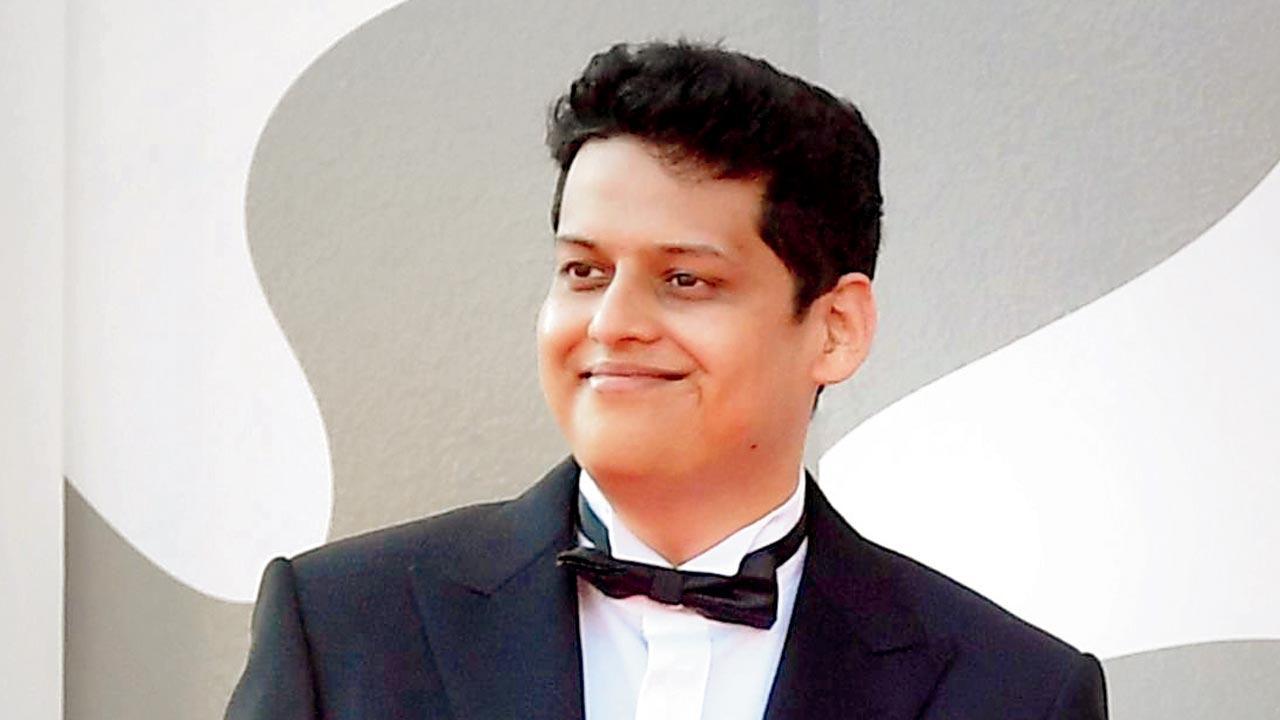
Director Chaitanya Tamhane decodes Venice's Best Screenplay and Special Jury award-winning Marathi film, The Disciple, as it drops on Netflix
Mayank Shekhar (MID-DAY; April 30, 2021)
While it’s not listed on his IMDb, director Chaitanya Tamhane feels almost as if he has three features to his credit — Court (2014), The Disciple (2020, which drops on Netflix, April 30). Third being? Alfonso Cuaron’s Best Director, Cinematographer and Foreign Film Oscar winner, Roma (2018).
Tamhane was around all through the filming of Roma, besides during the edit. He’s the only one who had read the movie’s script; not even the cast and crew had. And the only one allowed to sit before the monitor, while the movie was being shot: “It was that kinda super-secret project!”
A mentorship programme had brought Cuaron (Y Tu Mama Tambien, Gravity), and Tamhane together, wherein the latter was neither assistant nor student: “It was a dialogue between two creators. Just that one artiste happens to be in a different phase of their career.”
Cuaron treated Tamhane as an equal, “a friend.” As is usual with the securely accomplished. There was a scene during Roma’s shoot that Tamhane felt wasn’t consistent with the rest of the film. Cuaron tried a different take, and turned to him to remark, “Your questions really freak me out!” Tamhane doesn’t specifically recall which scene, perhaps to not deflect attention from the master’s work.
He was, for the most part “a fly on the wall” — on occasion unwittingly distracting Cuaron, by performing magic tricks during lunch break, that the producers had to drag him out of. Which isn’t a surprise: “Any film-lover and filmmaker would be fascinated by magic. It’s so close to cinema. Cuaron kept asking me to show him more tricks.”
He would’ve of course been first drawn to Tamhane, like film-buffs across, for a proverbially Tiger Woodsian directorial debut, the multi-lingual Court — a devastatingly realist portrayal of lower judiciary in India.
This is how the Mexican master is now executive producer of Tamhane’s second film, The Disciple — altogether in Marathi, set in the “thriving” sub-culture of Hindustani classical music (in Mumbai). The only recent Indian folk/classical music and global-cinema connect, I can think of, is Paul Thomas Anderson’s concert doc Junun (2015), filmed at the Mehrangarh Fort in Jodhpur.
That’s a soundtrack. The Disciple dives way deeper into the guru-shishya (master-disciple) parampara, which frames traditional learning of Hindustani classical music.
It’s a world Tamhane was himself a journalistic outsider to, taking around two years to simply interview/research, examining “truth and untruth, point and counterpoint”, and actually drafting the final script in about a month and half, once he’d eventually got to the tough first page!
A patient process, I guess, quite similar to Court. Which he recalls was triggered off by a story he’d heard of a person falsely arrested in a case. The accused just needed a printout to prove his alibi/innocence. But the cops in the station were bumbling over how to plug in the printer, or produce a printout. Tamhane was watching a typical American courtroom drama thereafter, wondering for a comic idea, “What if I do a ‘Bong Joon-ho court-room drama’, set in a lower court of Mumbai?” He learnt about the ‘system’, as he went along.
He isn’t sure if there was an equivalent trigger for The Disciple. But the starting point was essentially legends and anecdotes he’d listen to — presumably from audiences, experts and exponents — about the masters of Indian classical music: “Modern day mythologies about djinns, secret ragas, long hours of practice…”
The film, primarily placed in 2006, follows the life of a young, dedicated vocalist (Aditya Modak), and his evolving relationship with classical art, his aged mentor/guru (Arun Dravid), and the world around. Hopefully I’m not revealing the script’s secret sauce to suggest this isn’t quite a hero’s journey, as it were.
That standard structure Tamhane wanted to steer clear of, anyway: “What’s the point of a story that I know, from the first scene, how it’s gonna end? There is anyway too much focus on the hero, and his conquest-driven journey, and his achievement. A discourse like: ‘If you try hard enough, and believe in yourself, you’ll get it’. No. That’s not true for 99 per cent — people who work for us, or clean our toilets, have dreams and aspirations. But they have zero upward mobility.”
The other trope he evidently avoids, given the subject, is an aggressive tone/drama, often associated with the tyranny of the master-student culture in music, in particular. Recall the more recent series, Bandish Bandits (Amazon Prime Video). Or, for that matter, Damien Chazelle’s Whiplash (2014).
Tamhane reasons, “Those deviations are based on personal, observable truth — that artistes are just humans, like you and me, with down time, contradictions and temptations. There is no extreme success, or extreme tragedy. And we don’t all end up either superstars, or drunk on the road! We adapt to situations with so many greys.”
The film therefore isn’t fully clouded by the mythology surrounding the idea of the great artiste, so to say. It isn’t an unquestioning hagiography, purposed around bhakti. It is dialectic enough.
This may have something to do with Tamhane’s journalistic approach itself, and the attendant occupational hazard — that Shakespearean saying about familiarity, and contempt: “Research is a journey [you set off on with] romance in your head. The more you know, the romance gets demystified, which can also happen by knowing the artistes, rather than merely hearing about [them]. As a [fiction] writer, you have to infuse the romance back into the work — reminding yourself why you were fascinated by the subject in the first place.”
The film’s third lead character (or perhaps second, in order of appearance) is a voice-over of a late, great vocalist, named Maai. On the script, Tamhane had written this part as God. Hearing an interview of veteran Marathi filmmaker Sumitra Bhave, 78, he knew he’d found that authoritative voice that almost guides the narrative — managing to convince her to make her acting debut. Bhave passed away on April 19.
Similarly, Vira Sathidar, Nagpur-based Dalit activist, who played the protagonist (the lok shahi poet) in Court is no more. “His death [on April 13] has completely changed my relationship with the film. He was the face,” Tamhane says. Like Court, The Disciple chiefly stars non-professional actors.
The lingering, steady, wide frames from a distance allow audiences an interrupted access into the world Tamhane surveys — revealing through layer after layer, the fine details of classical music as a scene/sub-culture — playing with sound, and playing off real people, if you may.
The Bombay, for the most part, is a quieter version of the city: “[There is some] sorcery to depict the period — 2006 is very different from Bombay in 2021. Also the city starts out as full of possibilities for [the young lead character] Sharad. The [quiet] night becomes his haven/cocoon, where he doesn’t have to confront reality. The city starts getting noisy, dynamic and closing in on the character as his journey progresses.”
Through that journey you discover more than a thing or two about classical music, of course: “That, like a politician, you’re young at 40 in this field — that it’s impossible to be a fluke/overrated.”
Subtly, Tamhane also round-trips to make a more personal point about art itself, and its relationship to patronage. The guru-shishya in The Disciple belongs to a fictional Alwar gharana. The gharanas, as their names suggest, relate to princely states, that don’t exist anymore. Does art suffer as a result?
Tamhane points out: “Look at patronage for cinema. Is that why we confuse breadth for depth; quantity for quality? There are no independent institutions to fund cinema [in India] anymore. Like there are in Europe, and elsewhere —and that’s why you find more refined films, commenting on the human condition. Here it’s a do or die kinda situation.”
The Disciple is the first Indian film, in 20 years — ever since the New York-based Mira Nair’s Monsoon Wedding (2001) — to compete at the main competition stage of any of the Big Three (global film festivals) — Cannes, Berlin, Venice.
Tamhane picked up Best Screenplay, along with FIPRESCI (special jury) prize for Best Film at Venice. Having seen the film only now, unlike when Jallikattu was sent as India’s Oscars entry, it’s a mystery to me why The Disciple was overlooked. It should piss Tamhane off. He reasons, “But this is a question for others to ponder over. We did what we could, which is to apply.” Maybe guru Cuaron should’ve weighed in!

You can never get used to such acclaim-Chaitanya Tamhane
8:27 AM

Chaitanya Tamhane opens up about his historic double win at the 77th Venice Intl Film Fest & reminisces about his directorial debut, Court
Roshmila Bhattacharya (MUMBAI MIRROR; September 14, 2020)
In 2014, his directorial debut, Court, was adjudged Best Film (Horizons) at the Venice Film Festival. He had also bagged the Lion of the Future Award. Six years later, The Disciple was honoured with the prestigious International Critics’ Prize, awarded by Federation Internationale de la Presse Cinematographique (FIPRESCA) jury. A day later, Chaitanya Tamhane also won the Best Screenplay Award for his Marathi feature film at the closing ceremony of the Venice Fest that was live-streamed globally. And that prompts the first question to the 33-year-old director who has done India proud…
How different were your reactions to the dual honours, given that six years later, you are no stranger to acclaim?
It was a big moment for us because even if your previous film has won some awards, every film is a new battle. So, there was a lot of curiosity and suspense over how The Disciple would be received, and it was nice to know that the FIPRESCA jury thought it was the best film for them in the competition. Also, to win the Best Screenplay Award given by the official jury with such stalwarts in the mix made it very special given that this time it was the main competition. You can never get used to such acclaim.
The last Indian to win the FIPRESCA in Venice was Adoor Gopalakrishnan for Mathilukal 20 years ago...
Yes, we are honoured and humbled because my generation is standing on the shoulders of such giants as Adoor Gopalakrishnan, Satyajit Ray, and so many Indian filmmakers who have had a great history with Venice.
And what was it like being a part of a festival during the Coronavirus pandemic?
Well, we were curious to see how a festival would be organised this year and were pleasantly surprised to see the energy and vibe were intact despite the safety protocols. It was heartening to see cinema lovers watch films together, even though everyone was wearing masks and practicing social distancing.
Has the lockdown brought about any changes in you as a person and a filmmaker?
The lockdown has made everybody pause and reflect. It’s the most apt time to watch a film like The Disciple. It will definitely have a direct or an indirect impact on not just me but what everyone does in the world.
Your mentor and executive producer, Alfonso Cuaron, won the Best Screenplay Award for Y Tu Mamá También in 2001. Would you say you are a disciple too?
Alfonso is very chilled out and modern in his mindset. So, the equation between us is like a dialogue between two artistes. He generously calls me his friend and collaborator. For me, he will always be one of my mentors who helped me grow as a filmmaker and expand my vocabulary. I hope to retain the values and lessons learnt from him in the last five years and will continue to be a good student in that sense.
You’ve said that The Disciple is influenced by the play, The Grey Elephants in Denmark, that you wrote in 2008. Any plans to revisit it on stage?
It’s a spiritual successor, a grownup adaption. The setting and mediums are very different but the core conflict and theme comes from there. Vivek Gomber, my producer, was the lead actor of the play. But now, I am done with that story. I will tell others.
How difficult was it for you to enter the closed world of Hindustani classical music? Will The Disciple revive interest in a dying art?
I see it as a dynamic, thriving art form and sub-culture, with many affordable concerts, music schools and brilliant artistes. Maybe it’s not as dominant in the mainstream as it was in the 19th century, but there’s still an audience that appreciates this music. And online platforms give you unlimited access to all music recorded, officially and unofficially. With all the material available, I was like a kid in a candy store, I just had to decide what to retain and what to let go. The intention wasn’t to revive it, but if that happens, great.
Venice, Toronto, New York, three big festivals are showcasing your film…
Yes, we couldn’t have asked for a better Fall festival launch. We feel incredibly grateful that in such an uncertain year, we could put our film out there for people to watch. The idea is to take it to a wider audience now.
With theatres in India still shut, what is the plan?
We will definitely bring it to India, be it a theatrical or an online release. We are talking to different players but nobody has an answer yet.
Court was India’s official entry for the Academy Awards. If The Disciple is picked, are you confident of bringing the Oscar home this time?
So far, we were only focused on the world premiere in Venice. If we do get picked, it would be a massive honour and we will do our best not just to promote our fim, but represent Indian cinema on a global stage.
Looking back, what do you recall about Court, and what will you remember The Disciple by?
I remember Vivek and my naivety, the innocent energy with which we got a crew together, convinced them to believe in our vision and with no film background or reference, just made Court. We were lucky that it turned out well, and proud that it was accepted. The Disciple is more ambitious in its scope, scale and budget. And I will always remember the time, patience, sweat and blood that has gone into its making. A two-year writing process, one year of prep and shoot and then, one more year on the post production.
You had mentioned that you were working on another subject when you were hooked by The Disciple. Will that be your next?
That was back in 2015-2016, when one was in a certain frame of mind. That project has been abandoned and I’m curious to know what I will give so many years of my life to next. It will be something new and totally different. But yes, maybe some ideas from that project will return in some form in a future one.
Both Court and The Disciple are about singers…
That’s a coincidence. In Court, the singer was just a catalyst, a springboard for us to get into the lives of people who are a part of some institutions. The Disciple is really about a singer, his inner struggle and survival, his artistic journey in the city of Mumbai.
So, are you a singer yourself now?
(Laughs) No, I’m not a singer, I’ve never even learnt music.

For Alfonso Cuaron fans visiting Mexico, all roads lead to ‘Roma’
7:08 AM

A woman walks by a day care centre in the neighbourhood where the Netflix film ‘Roma’, with 10 Oscar nominations, was filmed in Mexico City
THE TIMES OF INDIA (January 28, 2019)
The success of ‘Roma’, which garnered 10 Oscar nominations this week, has made a star out of one of the movie’s key protagonists: the Mexico City neighbourhood that gave it its name.
Directed by Academy Award-winning filmmaker Alfonso Cuaron, who sumptuously shot it in black and white, the movie is set in the 1970s in the Mexico City neighbourhood where he grew up, La Roma — today a magnet for filmbuff tourists seeking the modern-day, full-colour version.
The neighbourhood Cuaron depicts as an upper-middle-class bastion of spacious art-deco houses and fancy chrome-clad cars fell on hard times when it was devastated by a 1985 earthquake that killed more than 10,000 people in Mexico City. But its central location and leafy streets helped bring it back, and today it is a hipster paradise of trendy bars, cafes, restaurants and shops.
One of those streets in particular has drawn an unprecedented flow of tourists since ‘Roma’ came out, according to residents: Tepeji street, where Cuaron grew up and meticulously recreated his boyhood home for the film. Outside number 22 Tepeji, a newly installed metal plaque informs visitors: “This is where ‘Roma’ was filmed, 2016-2017.”
“We loved the movie. It captivated us from the first moment. We decided to come see the house in person,” said Esteban Alvarez, 27, a musician from Costa Rica who was making the pilgrimage with his girlfriend. They have joined a stream of tourists hunting for locations where the highly autobiographical film was shot.
There is even a guidebook for people trying to retrace the film’s steps, while Conde Nast published an article this week to help tourists find “Mexico City Airbnbs that Could Have Been in ‘Roma.’” ‘Roma’ is an intimate portrait of the two women who raised Cuaron: his nanny, played by breakout star Yalitza Aparicio, and his mother, played by Marina de Tavira — both up for Oscars.
From being a fan-boy of these filmmakers to contending with them, it has been an incredible journey-Vasan Bala
8:03 AM
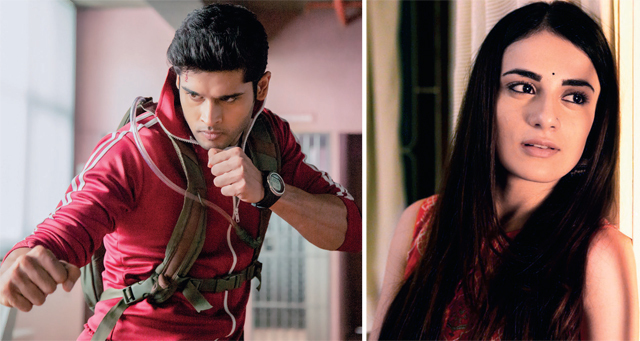
Vasan Bala’s upcoming directorial has outdone several Hollywood heavyweights to claim the People’s Choice Midnight Madness Award at the fest’s 43rd edition
Avinash Lohana (MUMBAI MIRROR; September 18, 2018)
Six years after he took his directorial debut Peddlers to the Toronto International Film Festival (TIFF), Vasan Bala’s follow-up feature, Mard Ko Dard Nahin Hota (The Man Who Feels No Pain at the fest), has bagged the People’s Choice Midnight Madness Award at its 43rd edition. The Ronnie Screwvala production was in contention with Iron Man 3 director Shane Black’s The Predator, David Gordon Green’s Halloween featuring BAFTA-winning actress Jamie Lee Curtis and Sam Levinson’s Assassination Nation, among others.
The award, which was instated in 2009, is presented to the film that is rated as the most popular among the underground and cult titles in contention. At each screening, attendees are invited to vote for the film by leaving their ticket stubs in voting boxes outside the theatre post the show.
Vasan, who was on his way back to Mumbai from Toronto, informs that the standing ovation his film received on September 14 will forever remain etched in his memory. “The section had some great genre filmmakers from around the world who have been making the best films for years. Just being among them was amazing, so this outcome has come out of the blue. From being a fan-boy of these filmmakers to contending with them, it has been an incredible journey,” he smiles.
 Speaking of fanboy moments, Vasan informs that seeing his favourite
stars in person was another highlight for him at the fest. He saw Paul
Greengrass, who has made three films in the Bourne series, in the
corridor of his hotel, and came across Bradley Cooper and Robert
Pattinson at the Roma premiere. “The director, Alfonso Cuaron, was just
20 feet away from me,” he exclaims.
Speaking of fanboy moments, Vasan informs that seeing his favourite
stars in person was another highlight for him at the fest. He saw Paul
Greengrass, who has made three films in the Bourne series, in the
corridor of his hotel, and came across Bradley Cooper and Robert
Pattinson at the Roma premiere. “The director, Alfonso Cuaron, was just
20 feet away from me,” he exclaims.
Vasan’s new film marks the acting debut of Bhagyashree’s son Abhimanyu Dassani as a man who suffers from a rare condition called congenital insensitivity to pain. Using it to his advantage, he wants to rid his city of petty thieves. “It is like a homage to all the martial arts film I grew up on and is partly inspired by the relationship I shared with my grandfather,” Vasan adds.
After the screening, Abhimanyu left for New York, while Radhika returned to resume promotions for Vishal Bhardwaj’s Pataakha. Vasan can’t wait to be reunited with his wife, Prerna, who has edited the film, and their kids.
Meanwhile, an elated Ronnie adds, “I am ecstatic with the win and equally thrilled that it is a first for an Indian film. We are always striving to push the boundaries of story-telling and genres and Vasan has made his mark with his debut entry in direction.”
Court director Chaitanya Tamhane is getting mentored by Alfonso Cuaron
7:43 AM

Chaitanya Tamhane has been watching Alfonso Cuaron at work on Roma while also wrapping up a Marathi script that rolls this year
Avinash Lohana (MUMBAI MIRROR; January 8, 2018)
After his 2014 legal drama Court won the Best Feature National Award, Chaitanya Tamhane was picked by Oscar-winning filmmaker Alfonso Cuarón under the Mentor & Protégé Arts Initiative. The 30-year-old director joined Cuarón on the sets of his new film, Roma, in Mexico in late 2016 where he spent a month observing the filmmaker at work. He has now flown to Los Angeles to work with the 56-year-old Mexican on post-production.
Speaking to Mirror from LA, Chaitanya admitted that he was delighted when, after a five-month process and a personal interview with Cuarón in London, he was selected as his protégé for the initiative that has featured Martin Scorsese and Mira Nair as mentors in the past. “Cuaron had seen Court and had really liked it,” exults Chaitanya, informing that one of the first foreign films he had seen was Cuarón’s 2001 Mexican drama Y Tu Mamá También, and was blown away by his 2006 British-American dystopian thriller, Children of Men, as also the Sandra Bullock-George Clooney starrer Gravity. “I’m not really assisting Alfonso, it’s more of a creative dialogue between two artistes and since he’s so accessible and caring, I can ask him whatever I want. It feels surreal to spend time with him and get to see him at work,” Chaitanya says.
The young director also admits that having debuted with a low-budget indie, watching Cuarón who’s not just directing and producing Roma but has also scripted it and is the cinematographer, is an eye-opener. “His expertise in executing his vision is staggering and I feel privileged to be privy to this process,” says Chaitanya, who will be joining Cuaron early next month in Berlin for the closing ceremony of the initiative.
The gala will have mentors and protégés from across disciplines, including dance, theatre, visual arts, music, literature and film. Cuarón and he will do a small talk after which, towards February-end, he joins his mentor in London to observe sound mixing. “I asked him how he dealt with big studios and Alfonso told me that he had five magic words which was his response to any feedback, ‘I will think about it,’” Chaitanya narrates with a laugh.
He was in touch with Cuarón all through 2017 over emails and has even shared his new script with him, hoping to get some feedback on his current trip. Siddharth Roy Kapur will produce the film. “It’s a coming-of-age Marathi film set in Mumbai and very different from Court. I will be working with non-professional actors mostly and plan to shoot this year,” says Chaitanya who is open to a Hindi film if he finds the right subject.
Adding to his joy, the DVD and the Blue Ray of Court will now be released in the US by Kino Lorber. “The cover has two-time Oscar-nominee Joshua Oppenheimer describing it as a ‘masterpiece’ and Sean Baker asserting it as one of the strongest debuts ever,” says the excited maker acknowledging that after Court it’s been easier to find support for his next film.
Court director Chaitanya Tamhane to be mentored by Gravity director Alfonso Cuaron
8:08 AM

Subhash K Jha (DNA; June 12, 2016)
 Chaitanya Tamhane, director of the Marathi film Court, one of the most acclaimed Indian films in recent times, is all set to spend six months with celebrated Mexican filmmaker Alfonso Cuaron of Gravity and Children Of Men fame.
Says Chaitanya, “It’s an initiative by Rolex, the Swiss watch makers, in their Mentor & Protégé Arts endeavour. I will be joining Cuaron in October to observe and assist him on his next feature film.”
Chaitanya says he is not at liberty to reveal more about Alfonso’s next film or its location. “All I can tell you is that I’ll be with Mr Cuaron from October on location for three months. And I am truly looking forward to it. He is a master filmmaker and I am sure he has plenty to teach me.”
The 29-year-old says he was pleasantly surprised to be selected for this honour. “It was Cuaron who personally selected me from filmmakers across the world. I met him for two hours in London after I was selected. It was an amazing experience to just speak to him. He has travelled to India. He knows so much about us and about Indian cinema.”
Cuaron had seen Court. Says the Indian director, “I was bowled over by his understanding of the film. He is familiar with Marathi cinema and literature. He has read the entire Dnyaneshwari! I was deeply impressed and embarrassed. I have not read the Dnyaneshwari.”
Meanwhile, Tamhane will also be scripting and preparing for his next directorial venture. “Court fetched me immense recognition. When it was selected as India’s entry to the Oscars, my producer and I went to Los Angeles and spent months lobbying. Though Court did not make it into the nominees’ list for Best Foreign Film, I got to learn a lot about the way the West perceives Indian cinema.”
How Prime Focus played a huge part in the success of Gravity
7:54 AM

Ankur Pathak (MUMBAI MIRROR; February 12, 2014)
Alfonso Cuaron’s Sandra Bullock-George Clooney starrer space drama Gravity, which has recieved 10 Oscar nominations, including Best Picture, was partly shot in 3D, but chunks of it was converted to the format from 2D by Prime Focus India.
To make the space spectacle look as astounding as it does, about 400 technicians from the Indian branch of Prime Focus, a company that specialises in rendering visual effects, animation and 3D-conversion, worked in tandem with teams from London and Los Angeles.
Before it came on board, Cuaron asked the team here to do test-runs, and impressed by the results, Prime Focus was aboard the space mission. It helped that the VFX firm enjoyed tremendous goodwill in LA circles, having worked on the visuals of Avatar and on the 3D conversion of Clash of the Titans in a record-time of eight weeks.

 Working with technicians based in LA and London meant juggling multiple
time-zones. But rather than it being a hindrance, the team made optimum
use of it. “We would get a detailed update from Framestore, London,
which did most of the visual effects. This included the number of shots
to be converted,
the treatment, and also the sense of distance that had to be created
between the foreground and the background. While they’d sleep, over 100
programmers worked on it and packed it off to LA, before these guys woke
up and punched in a feedback.”
Working with technicians based in LA and London meant juggling multiple
time-zones. But rather than it being a hindrance, the team made optimum
use of it. “We would get a detailed update from Framestore, London,
which did most of the visual effects. This included the number of shots
to be converted,
the treatment, and also the sense of distance that had to be created
between the foreground and the background. While they’d sleep, over 100
programmers worked on it and packed it off to LA, before these guys woke
up and punched in a feedback.”The final output of this relentless research, complex coordination and constant sharing of programming data concluded to extravagant results. “The long, unbroken, floating camera-shots which Cuaron worked on translated spectacularly well in space, and led to us producing the longest continuous shot that we believe has ever been converted – 15,531 frames, or 10 minutes 47 seconds of screen-time,” he proudly says.
Tavaria says the film is a big leap for several Indian technicians as it breaks the West’s stereotype of India just being a hub of cheap labour. “Gravity and the other films we’ve worked on prove that we’ve artistic merit and creative capabilities, not only technical prowess,” he says, adding, “Our next big project is Sin City 2. Watch out for it.”
Subscribe to:
Posts (Atom)