Showing posts with label Akshaye Khanna interview. Show all posts
Showing posts with label Akshaye Khanna interview. Show all posts
Whenever Ajay Devgn and I have worked together, we have made good films-Akshaye Khanna
8:07 AM
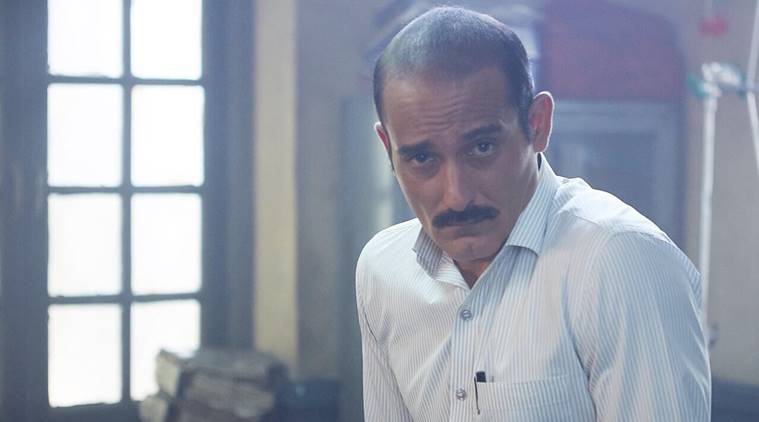
Harshada Rege (BOMBAY TIMES; May 9, 2022)
Akshaye Khanna, who has displayed a wide range as an actor over the years, admits that the thriller genre is among his favourites. From movies like Humraaz (2002) and Naqaab (2007) to Race (2008) and Ittefaq (2017), his filmography is proof that the actor not only enjoys watching thrillers, but also likes to be a part of them.
Akshaye has recently started shooting for his upcoming film, Drishyam 2, helmed by Abhishek Pathak. The movie, a sequel of Drishyam that had released in 2015, will see him locking horns with Ajay Devgn. A remake of the Malayalam film of the same name starring Mohanlal, there are some twists and turns in the Hindi version to add an element of mystery and surprise.
Talking about the franchise and his role, Akshaye says, “I have seen the first one, but not the second. Our film follows the basic premise of Drishyam 2, but the character that I am playing is not there in it. It’s a fresh character, and that makes it more interesting for me. It’s always nicer to do something that is written originally. Yes, it is fun to do a take on somebody else’s role, too, but I prefer it this way. I have played characters in uniform before, but this character is intriguing in the way that he thinks. ”
Akshaye adds, “His modus-operandi is highly intellectual and is a great play-off against Vijay Salgaonkar (Ajay’s character), making them worthy adversaries.”
The film will also see him reuniting with Ajay, with whom he has worked in movies in the past like Deewangee (2002) and Aakrosh (2010). Talking about his equation with Ajay, Akshaye says, “We have a nice, casual, fun relationship. Whenever we have worked together, we have made good films. Deewangee was a commercial success, Aakrosh was not, but still, it was a quality film. It’s something that has stood the test of time. It’s a good history to share.”
Point out his affinity for thrillers in particular, and he shares, “The genres that you watch and enjoy as an audience, it’s very natural to want to do those kinds of films. So, it all stems from being a fan of the thriller genre. These are the films that, over the years, I have enjoyed watching and maybe that subconsciously attract me to them. As a film buff, I practically enjoy everything, but yes, this genre is definitely one of my favourites.”
Besides remaking South Indian films, many filmmakers are now aiming to put together projects that can be viewed as pan-India movies with actors and filmmakers from across the country collaborating on them. Reflecting on it, Akshaye says, “I think it’s long overdue. The imaginary Lakshman rekha between the South and the North was never a negative, but it wasn’t a positive thing either. I don’t see why there should be any kind of divide or segregation between the different film industries in India. After all, we are essentially a part of the same business. As talent, if we are able to pool our resources together, whether it’s in the acting department or any other department, I think it will not only help us enrich each other, but also the content that we provide to the audience. It’s a fantastic thing that has now captured the imagination of the audience as well as the filmmakers.”
Though there was a brief break in Akshaye’s career between 2012 to 2016, post that, the actor has been facing the cameras continuously. Apart from films like Mom (2017), Ittefaq (2017) and Section 375 (2019), he was also seen in the direct-to-OTT film, State Of Siege: Temple Attack (2021).
Is he looking at his career through a new lens or setting new goals? “Not really,” he says, adding, “There are no such goals… you take it one day at a time. The only thing that I do before I close my eyes at night is, pray that I will be able to work till my health and body permit.”
I don't think I would have done a better job than Aamir Khan in Taare Zameen Par-Akshaye Khanna
9:20 AM

Actually sits down for one, and opens up on his professional and personal lives for the first time. Akshaye Khanna unplugged in the latest edition of Sit With Hitlist
Mayank Shekhar (MID-DAY; January 2, 2020)
There are two ways to look at a chat with actor Akshaye Khanna. One, that he is so painfully shy, no matter how hard you try, he's unlikely to dig deep and open up (about his life; or otherwise). That said, for the same reason, anything you pointedly ask is likely to elicit a response you haven't heard before. Because we know so little about him anyway — right down to something as rudimentary as his name, which is what we start this edition of Sit With Hitlist with.
Excerpts from the interview
If you Google 'Akshaye', ending with the letter E, the only person likely to show up is you! Is there a story to your name (is it different from 'Akshay')?
You know, I had asked my father this many times, as to why my name's spelt the way it is. There was a specific reason that he had given me, on two or three occasions. And I can't remember. My mum's gone, and my dad's gone as well, so I don't know who to ask.
Even the mystery around your name persists?
So, it was very logical. It has got nothing to do with astrology, or numerology — so there's no juggling or changing of spellings, or anything later. It is my name on the birth certificate. It does mean something that 'Akshay' does not. And there was a specific reason.
The other mystery: Where do you live?
I've lived at Malabar Hill (in South Bombay) all my life.
You're perhaps the only one in Bollywood who continues to work from South Bombay, which can often be a two-hour commute to where the movie industry is (Bandra northwards)!
No, a lot of people, even from my father's generation, lived in South Bombay — Shashi Kapoor, Shammi Kapoor… Suniel Shetty still lives there. Now with the Sea Link, I can [travel] in 50 minutes. In a couple of years, once the coastal roads come up, there won't be any real distinction between different parts of town. It will be an even easier commute.
Another thing I can't find: Which school did you go to?
I went to Bombay International, which is in Babulnath. Then I went to HR College for a year (for junior college), where I flunked. Then my parents sent me to a boarding school in Ooty, after which I started working. I am not very well educated, and I wasn't very focused on academics.
I'm told you always wanted to be a movie-star ever since you were a teenager. Where did that come from (doing stage in school, perhaps)?
Oh, from much before [my teens], I always knew this is what I wanted to do. But more than that, I never saw myself being able to do anything other than be an actor. I think it was more from seeing my father (Vinod Khanna). I spent a lot of time going to work with him as a kid, which influenced me a lot. I did amateur theatre in school, but I am not a fan. I have huge stage fright. Still do.
Somehow I always felt this [film] was the right fit for me. The first hurdle to cross was telling parents. Once I did that, then it was, kind of, out of my hands! Because dad said he wanted to make a film for me. I have always been naive in life — unable to plan things. Still am. I just go with the flow.
But you were sure of a movie-star career, 'launched' with Himalay Putra (1997), whereas your brother [Rahul Khanna], as anchor, became the face of American MTV in India. Couldn't have been more dissimilar, no?
You'd have to ask him [about that]. But entertainment is a funny industry, in terms of what you can start off with, and end up doing. There're so many who wanted to be directors, ended up being actors; or wanted to be actors, but maybe found love for cinematography, editing or sound design. It is that kind of place. You might know you want to be in this environment. But you don't always know exactly what you want to do [within it].
But you were clear about being the Bollywood star, as it were.
I have been, although it's unusual for me to be clear about anything. And I didn't say I wanted to be a movie star. I wanted to be an actor. But if you are a successful actor, then you're a star!
You're also asking me about what I thought about, a long time ago. It's impossible for me to remember. It's really scary how I can't remember things — events, faces, names, it's very blurry. So anything about the past... If you ask me two years from now what I spoke to you about [here], I wouldn't remember. It's always been that way, ever since I was a child. It's very embarrassing.
Okay, let me ask you stuff from (user-generated trivia on) the Internet, and check if you remember any of it being true. One, that Feroz Khan was supposed to launch you first with the film Prem Aggan, which he eventually did with his son Fardeen. And then, Janasheen, which again, he did with Fardeen. True?
No, he had signed me up for a film called Janasheen, I think. It wasn't Prem Aggan. And at that time Fardeen hadn't told his dad that he wanted to be an actor. He did, maybe about six to seven months after he (Feroze) had already signed me up. So obviously [Feroze] came to my dad and said that he will have to make a film with [his son] instead. So, yeah, that's true.
You were supposed to debut with [top director] Mukul Anand in 1994?
In 1994? I can't remember that. No, it can't be 1994, because I started [Himalay Putra] in 1994; it took about two and half years [to make]. But [Mukul Anand] died shortly after that. What year did Mukul Anand die? (1997).
According to Karan Johar, you wouldn't step out of your Alibaug weekend home, even if invited to pick up the Academy Award. True?
Yeah. I like my weekends in Alibaug.
You apparently have a laundry list of films that didn't roll after you signed up. One that caught our eye is Farhan Akhtar's Voice From the Sky, that he shelved, to make Don 2. True?
True. I've no idea [why]. You'll have to ask Farhan. I remember, it was a really good script. I would do anything with Farhan. He was really excited and keen to make it. He still hasn't.
[Coming to Farhan], you were originally cast in Aamir Khan's role in Dil Chahta Hai (DCH), Aakash, as against Siddharth, that you played eventually; true?
No, out of all three [lead] actors, I was the first person to hear the script [of Dil Chahta Hai]. When I first read it, the role that I wanted to instinctively play was Aamir's. And that's not the role that Farhan wanted me to play. When [Farhan] heard me out, I think he was a little disappointed.
He went and got the cast that he wanted [in place first], and then he came back to me and said, "I know this is what you wanted to do, but this [Sid] is the role I have written for you, and so will you please consider it again?" I heard [the script] again, and again, and again, until I was convinced that what Farhan was saying was right, and I was wrong. So I did that [role].

Aamir Khan returns to your life with Taare Zameen Par. Director Amole Gupte had actually approached you for the lead role?
[Amole Gupte] was a friend of Aamir's and he had approached him to get in touch with me. He asked Aamir if he could help [introduce him to me, and to make me hear a narration], since he didn't know me, and Aamir and I had worked together in Dil Chahta Hai. Aamir being Aamir said, "You know I can't recommend a script, unless I hear it first. If I like it, I will tell Akshaye."
He liked it [Taare Zameen Par] so much that he ended up doing it! I was once shooting at one of the studios — if I remember right, Mehboob. Aamir was also shooting on one of the floors. I went to his van to say hi. He was like, oh you know what —this happened. I said, okay, no problem.
Was that a miss?
I don't think I would have done a better job than Aamir. He was superb. So it was good that destiny took him, instead of me.
The other thing about your career are the big gap years —at least two or three blocks of them in your filmography.
Having worked continuously from a very young age, not working is the hardest part. It's depression time — not something that I seek, or look forward to. But somehow, destiny has played its cards in such a way that I've taken certain forced breaks in my career. They never have been by choice, and never will be in future. This is rare, especially in the Hindi film industry, because there are such few actors, and there is so much work.
How do you overcome that phase? Other passions you pursue, playing squash at Willingdon Club, maybe?
You don't. You just go through that phase. Can't play [squash] for three years, no? I am not going to tell you what my day looks like, when I'm not working. Why would you even want to know?
You mentioned somewhere that you had a personal reason for the last break that you took.
I wasn't getting the material that I liked. I didn't want to do anything that was offered to me. So I decided to not do anything, as opposed to something that I just didn't find my heart in, simple — nothing really complicated.
You lost your mom last year, only a year after you lost your dad. Did that have a huge impact on you, personally?
Of course, it would impact anyone. It was a deeply sad time. But everybody has to lose their parents at some point. It is tough. And it is always good that it happens that way; and not the other way round —where parents lose their kid. That would be even worse.
We know nothing about your mother (Kavita Khanna).
That's how she wanted it.
When your father (Vinod Khanna) passed on, the obituaries in the press revealed an incredibly committed yet uniquely free-spirited man. Are there any stories you can recall?
I think once a person who's been in public life for decades is gone, if there is a side of them that they wanted people to know about, they would have managed [to convey] that in their own life, right? So I don't know if there is any aspect of him that I'd like to throw light on, which maybe he didn't [want].
What's in public domain: a man who left everything at the peak of his career to join Osho. You were probably four or five then. Did you want to know, who's this guy [Osho]?
One doesn't look at it like that at five. Osho had nothing to do with my thoughts about why my dad wasn't there. That came much later. As one grows, maybe 15 or 16, you start learning, listening or reading about the person who…
Influenced your father so much...
To not only leave his family, but to take 'sanyaas' (renunciation). Sanyaas means giving up your life in totality — family is [only] a part of it. It's a life-changing decision, which he felt that he needed to take at the time. As a five-year-old, it was impossible [for me] to understand it. I can understand it now.
You can, in what sense?
In the sense that something must have moved him so deeply inside, that he felt that that kind of decision was worth it for him. Especially, when you have everything in life. And when life doesn't look as though there's much more that you can have.
A very basic fault-line/earthquake has to occur within oneself to make that decision. But also stick by it. One can make the decision and say this doesn't suit me — let's go back. But that didn't happen. And circumstances in America with Osho and the colony, friction with the US government — that was the reason he came back.
Oh, I was given to believe that a lot of people like him got disillusioned with Osho eventually, which led to their return.
From whatever memories I have about my father talking about that time in his life, I don't think that was a reason at all. It was just the fact that the commune was disbanded, destroyed, and everybody had to find their own way. That's when he came back. Otherwise I don't think he would've ever come back.
And you read up on Osho when you became older?
I've read a lot of Osho's discourses and seen hundreds of thousands of videos, I love him.
You could join an Osho commune? They still exist.
I don't know if sanyaas is something that I could do. But that doesn't mean I can't enjoy his discourses, respect his intellect, oratory skills, and his way of thinking. I have deep respect for him.

[Back to movies] and trivia list, your favourite director is Priyadarshan. True?
One of them. I've done five films with him. And if you take Malayalam, Tamil, Hindi, I'd say Priyan would've done 100-plus films, which is a rare achievement for any director. Some directors like to move on. But he's also tended to repeat actors he's enjoyed working with — Akshay Kumar, Paresh [Rawal], there're many. He has done 30 films with Mohanlal. I always know when Priyan likes an actor. He makes it obvious. When I was doing Aakrosh (2010) with him and Ajay [Devgn], I told Ajay, he'll definitely offer you a couple of films in the future. They did a film together right after.
You tend to protectively advise co-actors about directors, it seems. Saif (Ali Khan on Sit With Hitlist) told us about how you advised him about becoming warm and breaking ice with Abbas-Mustan during Race (2008), and that he was behaving too much like a star!
Did I? If he [Saif] says so, maybe I did. Abbas-Mustan are very gentle people. I've done four films with them. When they direct you, and even in their personal life, they are very soft. You have to be very soft with them, otherwise they clam up. You cannot be loud and aggressive. And Saif, sometimes, can be a little, you know how Saif is... I must have told him something to that [effect], I don't know. But I think they got along fine.
(Audience) Loved your film Section 375. What did you think of the timing of the film's release — coming a year after the #MeToo movement? How do you think it changed the narrative around the movement itself?
The timing was never the intention. Neither was it the purpose of making the film. It was just a great story. It [delved on a] topic of the time. Which it always will be, because there are always people from both sexes, who don't know how to behave appropriately. Having said that, Section 375 is a film that I am very proud to have in my filmography.
Sometimes, box-office numbers of a film are not always commensurate with the quality of a product. This film I will continue to be proud of. It will age well. Take Andaz Apna Apna (1994), it flopped, when it released. It is considered one of the comedy classics of Hindi cinema. Another example: Shawshank Redemption, it was a disaster at the box-office, but it tops all lists of greatest films ever. I'm not comparing Section with Shawshank, but it is an example.
Having been an actor for over 20 years — with Section 375, one sensed that you were totally stepping out of the usual tropes and mannerisms that we've of course admired you onscreen for. Would you agree?
On the contrary — to be able to engage an audience purely through dialogue, without other things, itself is not easy. And it's a combination of how you are directed, and how you perform. But the direction side is more important. That's why I felt very satisfied, creatively, with the way Ajay [Bahl] directed Section 375. It's very easy for a director to impose direction on an actor, when it's really not required. And I think Ajay has a very good sense of when to direct an actor, and when to not direct. That's very important. I don't know if I am making any sense.
Yes, you are.
Acting has been primarily one thing — being in the moment. Like, in the last few years, I've been noticing that we always do photo-shoots for a film's poster and publicity material. I just don't like the quality of photo-shoots — no matter how good the photographer or subject is. Since everything is digital now, a great alternative is you remove a frame from a scene of the film. It is always more honest. Eyes are more honest. The actor is acting. That 'being in the moment' doesn't come across in the photo-shoot. You understand what I'm saying?
Would you say that about dubbing as well, as against sync sound?
I wouldn't compare it with dubbing, no. But I know what you're saying. Sync sound is way more honest than dubbing. It has to be, right? It is like real life is more honest than fiction.
Saying this because Dil Chahta Hai also got credited with reviving sync sound in mainstream Hindi films in a way.
Yeah, the realism of sync sound was lost to Hindi cinema for many decades. I think millions of performances that have been dubbed for so many decades would have lost a certain edge [as a result]. I've worked the majority of my career dubbing in my films. Only in the last 10-12 years, we've been spoilt with sync sound. I really feel bad for actors who never had sync sound. Not that they knew the difference, because they never experienced it, but I still feel bad for them.
Do you closely follow latest releases/films?
Yeah. I primarily watch at home. I might wait three months for it to come on one of the platforms, but I will watch it.
Two back-to-back releases in 2019 were Bala, and Ujda Chaman (by the same producers as Section 375). Did you get to watch them?
Haven't watched yet. But will, when it comes (on web platforms).
They were both on premature balding, and how it affects confidence levels. You've had that situation in your life. Is it such a big deal?
Well, because it started happening to me at such a young age, it was like a pianist losing his fingers. It almost felt like that to me, in those days. Till you really come to terms with it, and then it starts bothering you less. It's like, I suppose, waking up one morning and saying, "Oh shit, I can't read!" So it would affect you, right? Or you get up in the morning and your knees are paining, and the pain just won't go away. You take a Combiflam for pain relief, and you might realise you need a knee surgery at a very young age. And you might be a sportsperson, so it is heartbreaking. You might lose a year or two of your career. So, as I said, it is like a pianist losing his fingers. Because the way you look as an actor is very important.
And especially this part (pointing to the face upwards). [Balding] at 19 or 20 is devastating. It can mentally like kill you. But, as I said, it is like anything else — someone needs glasses, someone needs something else... It's up to you, and what you are comfortable with doing [about it].
Did it affect your confidence levels as an actor at some point?
I think it did affect my self-confidence as a young actor — more than I'd like to admit, actually. Definitely.
(Audience) Lot of actors these days interact with their fans through social media. Do you ever intend on doing so?
Can't say for the future, but right now, whatever I hear from my colleagues, especially my friends on social media, I've never got a sense that it is something constructive. It just doesn't serve any purpose. I am not comfortable with it.
(Audience) Do you think you resonate more with the scripts being offered/churned out today than, say, 2001/2002?
People's memories are short. So they kind of think that what I'm doing now, is what I have always wanted to do, but never got those opportunities before. That's never the case. Your current choices in films, at least for me, are very instinctive. They are not well planned, or thought out. And some of those films might not appear to be hardcore commercial cinema.
But when I view myself as an actor, I see myself as a very hardcore commercial actor, given the choices of my films, right from the beginning of my career. I do understand, especially since I have started working more regularly in the last two to three years, that my choices have been a little cerebral — if that's a word you could use for, say, even Mom, Ittefaq, The Accidental [Prime Minister], or Section [375]. But that is just some choices of films. I don't intellectualise it. And neither should you.
Are there films you've seen lately that you wished were offered to you?
When I watch most films I always feel that the person who has done those parts has done them better than I could.
Any script you can remember saying no to, which turned out to be a pretty good film?
Yeah. Saif's role in Parineeta (2005). I didn't do it for some reason. I don't know why. After the film released, I called up [producer Vidhu] Vinod [Chopra] and said I really enjoyed the film, and wish I had done it. You know how Vinod is. He said, "Yeah, I told you, you should have; you're such a b******, d***, and this, and that!" I was, like, fine.
There are times you could be in a bad mood, when you hear a script. There could be so many things that influence your decision. So, yeah, sometimes things slip out of your hands. And sometimes things fall into your lap, which you never expected.
For example, I did an out-and-out negative role in [Abbas-Mustan's] Humraaz (2002), which I believe five or six major leading actors were approached for, and they'd said no to. But when I heard it, I loved it. That was one of the first negative roles I did. So it happens all the time.
Last question: You might be the only person in Indian showbiz to take a stand on an institution, and say that you'll never get married! And that you want to live alone "forever".
I have always known instinctively that I would very much prefer to live my life without someone by my side all the time. I find that suffocating. That's the only reason.
Do you go on dates?
All the time. But to commit to a lifetime of togetherness is virtually impossible for me.
Serially monogamous — is that what it would mean?
No, it means knowing oneself reasonably well enough to not ruin somebody else's life!
Okay, final question: Are you (mentally) exhausted (after this interview)?
No I loved it, really enjoyed it.

I have never felt neglected when I didn’t win an award-Akshaye Khanna
7:59 AM

Rachana Dubey (BOMBAY TIMES; December 29, 2019)
 Akshaye Khanna is considered to be a reclusive actor, but when he speaks, he doesn’t hold back. Ahead of the release of Sab Kushal Mangal, he spoke to Bombay Times about working with new talent, being a secure actor and why he was drawn to a comedy after all these years. Excerpts:
Your portrayal of a lawyer defending a rape accused in Section 375 was appreciated by the audience as well as the critics. When your name was skipped in the nominations at recent award shows, it created a stir on social media. Does winning an award affect the work you choose to do?
No, it’s always the writing. If people liked my work in Section 375, it’s because I was backed by good writing. As for awards, it’s for the jury, and not me, to decide if I really deserved one. The awards in India are based on popular choice, and they make no bones about it. In a lot of other countries, the box office does not count when judging. In fact, it’s the opposite. Once you win a BAFTA, Golden Globe or an Oscar, your box office takes off. It’s a matter of time before that happens in India. To answer your question, I’ve never been disappointed or felt neglected that I didn’t win an award. And how does one possibly know while signing a film that the role can get them an award?
You said that it’s the writing that attracts you, is that the reason you signed Sab Kushal Mangal, too?
Yes, a film’s writing is the first interaction you have with the subject. Your reaction to that matters and then, you go into other details like what’s in it for me, who’s on board and who’s producing it. It was the sheer sweetness of the story that got me in.
Sweetness does not mean sugar-coated. The world of the film is really sweet. The last Hindi film that I could compare it to is Badhaai Ho (2018), which had an awesome topic. People in India have always been attracted towards cinema that can add that dash of sweetness to their lives. Such films are not necessarily escapist, like Sab Kushal Mangal is not. It has a strong, meaningful story.
Sab Kushal Mangal has two newcomers, Riva Kishan and Priyaank Sharma, making their debut. Do you, as a senior actor in the cast, feel a sense of responsibility to land them well into show business?
Yes, I do feel a little responsible, but not entirely. There is a degree of fondness for someone who is starting out with you. However, they have put their trust into the project, not me. They chose this as their first film. So, a lot depends on them, as well. Priyaank and Riva are kids, and they are sweet, innocent and raw, so you feel protective towards them, but not responsible for their debut.
The scenario when you began your career in the 1990s was hugely different from what it is today, wasn’t it?
Right from my first film, I had the privilege of working with some very senior actors like Hema Malini, Danny saab (Danny Dengzongpa) and my dad (Vinod Khanna). In Border (1997), I worked with Sunny Deol, Suniel Shetty, Puneet Issar, Kulbhushan Kharbanda, Rakhee ji. I have even worked with Rajesh Khanna and Sridevi. I don’t think too many people from my generation or the one after me have worked with any or most of these actors. I worked with some incredible artistes, some of who were in the last years of their work life and were working very sparingly. Sridevi worked selectively; it’s rare, and I cherish the work that I did with her. I feel fortunate that so many people, apart from the actors, were so considerate towards me. They were so giving and caring that it is impossible to forget their gestures. Had they not been so, things could have turned out very differently. As a young actor starting out, you’re so vulnerable.
Why do you say that?
When you come into any form of public life, you put yourself out there for love, hate, appreciation and brickbats. It takes guts to allow people to assess you. Sometimes when I speak to aspiring actors, I ask them, ‘When you start in any career with the energy of youth, besides imagining the highs and adventures that you will possibly experience, do you also visualise what will happen if things go the other way?’ I ask this because I know that anything can happen. As a young person, you could almost block it all out and think that everything will turn out fine. When I ask these questions, most kids say that they haven’t thought about the other eventuality, which is interesting.
Sab Kushal Mangal is a comedy and you haven’t worked in one in a fairly long time. How different do you find the current world of a comedy film as compared to your last experience?
I think it’s got nothing to do with a genre, but less time is spent on writing and more time on other things. The audience notices everything. Yes, there will be those comedies that aren’t great, but they are money spinners. However, today, the audience also equally appreciates a film with quality writing. Karan V Kashyap, who wrote and directed this film, is familiar with the industry. He was the dialogue assistant on Dil Chahta Hai (2001) and has worked with Mani Ratnam as well. His sensibility in terms of humour, the world and the characters that he has created are of quality and standard. There is a certain cleanliness in his film.
Your co-actors Richa Chadha (Section 375), Priyaank and Riva, have said that you’re an extremely secure actor, who doesn’t hesitate to say or help another actor cope under pressure on difficult days…
Okay, first and foremost, I would only do that with a co-actor I feel comfortable with. Richa is an experienced actor. If I felt like telling her something that could help her on a tough day, it’s entirely because of who she is, and how I felt about her. A lot of people here are not open to that, they don’t like it, irrespective of whether they are seniors, peers or younger. Had I felt that Richa won’t accept a word from me or won’t be receptive to it, then I wouldn’t have approached her. I wouldn’t have the nerve to go to an actor if I don’t share that level of comfort with them. And I would never hold back on my own performance to make someone else look better, even if they are newcomers. There is not a single time when I felt like going easy to let Riva or Priyaank cope with a certain scene. To their credit, they never requested me to do things differently to help them out. Most newcomers, in their first few films, tend to have the entire unit focussing on what is good for them. These two kids didn’t have anything of that sort. Priyaank and Riva were being equally competitive; that distinction is huge. My respect for them as actors and debutants is even more for this very reason. Not many people would even be remotely bothered to give this any consideration, but it matters to me.
Does any newcomer remind you of a younger version of yourself?
No, and that’s because I was an extremely unprofessional guy. If I look back at my behaviour and attitude in the first five or seven years of my career, I feel it was unacceptable. I don’t see that in any newcomer today. What I did was a disaster. My immaturity and inability didn’t let me grasp my responsibilities; it didn’t strike me for a long time. Thank God, but I don’t see newcomers who are like that today.

I’m one of the luckiest few who enjoys going to work every day-Akshaye Khanna
8:37 AM

Akshaye Khanna talks about the choices that he has made and why he opted for risks over security and commercial viability
Roshmila Bhattacharya (MUMBAI MIRROR; December 21, 2019)
Even before you arrive at producer Nitin Manmohan’s office for the interview, you learn, to your surprise, Akshaye Khanna likes chocolates, but only one particular brand, and would order it even when they were shooting for the upcoming romcom, Sab Kushal Mangal, in Jharkhand. He is also always punctual, even when he has to drive to the ‘burbs all the way from town. Noon strictly means 12 pm. By the time we’re done, you know a lot more about the reclusive actor. Excerpts:
You have had two releases this year with one coming up on January 3. For someone who has always been super selective how does it feel?
It’s been a satisfying year as both The Accidental Prime Minister and Section 375 are films I believed in and I’m proud to be a part of them. That’s a great place to be.
So, we can hope to see you around for another five years?
Five years is just a number, a small one. I hope to be around till I drop dead. There’s a perception over the last few years that I tend to not do too much work, but it’s the opposite. Ayushmann (Khurrana) is doing three-four films a year, that’s the space I want to be in. I’ve always preferred a certain pace, but life has not always allowed it. If it happens, I’m the happiest. Sometimes a film requires 150-200 days of shooting, so you end up doing just one film a year. There are so many permutations and combinations in our business, it’s not like a factory assembly line where you can just churn out stuff.
Yet you seem optimistic about the future of Hindi cinema...
That’s because all kinds of films, be it Housefull 4, Bala and Pati Patni Aur Woh, are getting good releases. Ten years ago, if it wasn’t in the commercial bracket, a film wouldn’t get screens. Today, even Section 375 and Saand Ki Aankh get an audience and a voice. It’s like the social media, anyone can offer an opinion. The numbers may be small or large, but at least they get heard. The Accidental Prime Minister was the first authentic political film and that made it controversial in that it evoked different opinions. Ditto Section 375, as the topic itself was sensitive and so people reacted strongly and emotionally.
Yeah, one review described it as “a myopic ignorant train wreck” and another as a “gripping courtroom drama”.
That people would comment on both sides of the spectrum was to be expected. I might not agree with the one who calls it a “train wreck” but I can’t stop the critic from writing what he wants. I, too, have views about other people’s films. I might say I didn’t like it or that it could have been better...
In retrospect, would you have changed anything in the film?
Sometimes I feel—though it’s not my job or specific to one film that we can market and position our films better. You can never control a narrative, but you can balance it out. But that sometimes gets lost in too much information.
From the trailer of Section 375, one perceived a kind of a #MeToo trial so the twist in the tale was disappointing.
I’ve also got such preconceived notions and reactions. But that would be the obvious expectation and end, which is a choice my director didn’t make. Had it been a typical film, it might have fared better commercially. But the choice was to go in another direction. And that’s what made it interesting for me as an actor. If you believe in a certain premise, you have to live with the consequences. I really respected the thought process and the writing, and if I had to choose again, I’d go for the same. Unfortunately, in our country, while we have always celebrated democracy, freedom of speech and expression, and pluralism, when it comes to art—be it a book, an article or a film—if it offers a different perspective, we are not as accepting.
The upcoming romcom, Sab Kushal Mangal, seems less contentious even though it’s about a reality shows, goon politics and abductions.
It’s the sweetest script I’ve heard in a long time, a film I’d watch before I go to sleep as it leaves you with a nice feeling and no tension. I’d not done a comedy in a long time and my co-stars, Priyaank Sharma and Riva Kishan, are cute kids. Though they’re just starting out, I’m sure once people see the film, they’ll be pleasantly impressed by their performance. They have a certain maturity and focus which I didn’t in my first few films. This applies to all debutants across departments, which is fab and brave.
Brave? How so?
When you come into the public eye and put yourself out there as an actor, director or writer, you could be loved, hated, even ridiculed. So, that takes courage. You read about millennials in large numbers going into depression in their own private space, some even committing suicides over social media posts. Then, you see these kids who, irrespective of success or failure, are ready to give it a try. You can only win the game if you are playing it, not sitting outside. Life is about being on the court.
According to IMDB, you have signed up for two sequels, Phir Hulchul and Kick 2?
The information is incorrect.
Do you watch reality shows?
I rarely watch TV, I prefer movies. I’m getting less and less interested in information because anything you read or hear, unless coming directly from the source, arrives with layers of interpretation and so is never completely accurate. Even an article in the op-ed page of the newspaper, reflects someone’s opinions. Take the Talwar case. Despite years of articles, TV reports, films and a court case that cumulatively ran into thousands of hours, do we know the truth of what really happened the night Aarushi was killed? We don’t, which is why I’d rather read fiction, it’s always dependable.
Why aren’t our digital shows meeting expectations?
Our storytellers are used to the three-hour format. We have a history of television where shows go on for years. That’s why we are still struggling. But it won’t take our writers and directors too much time to get there. We are an extremely talented nation, look at the leap we’ve made technologically. We may not be there with the best of the best, but we can still produce a Baahubali which is a milestone in Indian cinema. It’s a beginning, we will build and improve on it. It’s happening already and the audience is rewarding the effort which is good.
 That wall behind you has posters of several Nitin Manmohan productions, including your dad Vinod Khanna’s Insaaf and your Deewangee.
(Turning to look) Insaaf was one of dad’s fave posters. What an amazing shot! There are so many actors up on this wall, but I don’t know anyone who had his kind of body language... So fluid! It’s nice to be on a wall which has so much talent. You want to hear a great story?
Sure...
Nitin had gone to Mumbai airport to pick up a relative. Two-three decades ago, the entire family would go to pick up or drop off someone. I’ve many pictures of my dad leaving for an overseas shoot, in a suit, with all of us waving. But that day, there was no one to receive dad when he landed in India because hadn’t told anyone in the family that he was coming home from the US. He’d planned on taking a cab, but Nitin recognised him, even with the long white beard when he walked out. Nitin’s dad, Manmohan, and mine used to be very friendly and he insisted on dropping dad home in his car. They must have chatted on the way and that’s how Nitin produced his first film, Insaaf, with my dad making a comeback.
And what’s the story behind Deewangee?
There’s none, it was just a good film and very different from Anees Bazmee’s other movies. After that, he only concentrated on comedies and larger-than-life magnum opuses. He was a delight to work with as he has a good sense of drama. We also did a comedy, No Problem, which didn’t do well.
Looking back, are you happy with your choice of career? At 40, do you wake up eager or are you unhappy about it like so many?
I’m one of the luckiest few who looks forward to going to work every day because our job and days are not filled with monotony. One day, I could be doing a dramatic scene in Ooty, the next, a song in London, and on the third, an action sequence in a city studio. We’re meeting different people. Of course, you never know when the party will pack up, but at least till then, you can do what you love and that’s a gift life gives very few.
You know, I skipped my exams in the first year of junior college on purpose as by then, I was not interested in continuing with academics. I was so underprepared, I knew I’d fail and didn’t go. I had decided this was what I wanted to do. It was a question of when I was going to tell my parents because I was just 17 then. You fear resistance about your career choice from parents, and that delays communication. As a kid you don’t have the power to say “Bugger off!”
How did your parents react?
They were disappointed. Any parent would be hurt. They felt it was not my place to do what I did at that age. Parents of that generation were conservative, taking such risks was frowned upon. Even today, society is chasing security, and for the masses a government job is priority. It’s amazing that millions put their heads down, complete 60 years in service, do their duty with honesty and integrity and retire. It’s an achievement.
You opted for jittery Fridays. How long did it take your parents to accept?
They were fine after a while. Parents always come around.

Not working is an uncomfortable experience for me-Akshaye Khanna
8:34 AM

Akshaye Khanna on changing his work strategy, doing more than one film a year and his latest outing Section 375
Sonil Dedhia (MID-DAY; September 15, 2019)
Akshaye Khanna is a man of few words. The actor, who stole hearts with Taal (1999), Dil Chahta Hai (2001) and, more recently, Mom (2017) and Ittefaq (2017), accepts that the nature of filmmaking is changing because the "audience is evolving". Khanna sits down with mid-day to discuss his latest release Section 375, how it's a conversation starter and why the film is open-ended.
Excerpts of the edited interview.
What prompted you to take up Section 375?
I was particularly thrilled with the script because it was well written and an intelligent film, where everything was sketched out thoroughly. As opposed to films which tackle similar topics. Section 375 doesn't take sides or a moral stand. It allows the audience to decide. It takes you through a case and shows the different perspectives of the society, judges and the lawyers. I believe, if a film doesn't take a stand, the audience is bound to make an opinion. I don't know to what extent the film will be watched, but it would be a good thing if it encourages a conversation.
Do you feel that the film can bring about a change in the society?
Having a difference of opinion means controversy and it's not necessarily a bad thing. Controversies have been termed as a bad connotation but in this particular instance, if you would like to label it controversial, which it is, then let's look at it positively and start a conversation about it. It will have an influence on people from the legal fraternity or people in the parliament —basically people who matter. What happened in the Nirbhaya case? The law was forced to change because public opinion was strong and immovable. Section 375 encourages the conversation by citing one particular case.
NGOs and activists have been raising awareness about fair treatment to the victim and accused. They are of the opinion that law is tilted towards women.
As an individual, I am aware that a section of people feel this law is skewed in the favour of women. I am sure people debate over the laws of rape worldwide. These debates will go on as the society evolves. As a collective consciousness, we have to decide the direction in which we need to change.
Did you personally research about rape laws in the country?
It was not required thanks to writer [Manish Gupta] and director's [Ajay Bahl] extensive research.
How did you prep for the role without any homework?
It's difficult to put it in words as it's an internal process for me. As an actor, I am always absorbing things and noticing behaviour. So, I am constantly, but not consciously doing it. For me acting is being in the moment. If I am true to it, then I have done my job.
Since your first film in Bollywood, how do you think content in films has changed?
The audience drives the change in filmmaking. The changes are never internally driven by the film industry. Films are almost like politics. Politicians follow in the direction of the majority. Take the example of Kabir Singh. It has smashed the perception of how a typical Hindi film hero should be. The character was seriously flawed but the film was widely accepted by people; and now you will see many such characters coming in. Even Uri: The Surgical Strike was an amazing subject. Films are breaking stereotypes because the audience is ready to accept them.
Does the success of these films affect your film choices?
Yes, it does influence the decision making. It plays in your mind and registers as important indicators while choosing roles as an actor.
Is it a conscious decision to be less frequent on screen?
It's something I personally want to change. I want to reduce the gaps between films and be prolific in the amount of work I do. I am also open to OTT platforms because it is the future. People are watching more content on the web than the silver screen.
Does it have to do with the fact that you are not as socially active as your contemporaries?
I don't think so. If only everything was in my control, including the scripts. [Going forward] I'd like to do two to three films a year. Contrary to the popular belief, I am not a person who does not like to work. My entire adult life has been about work, so not working is an uncomfortable experience for me. People assume that I enjoy relaxing but that's not true.
Why did you decide to hire a PR manager to promote your work, something you've never opted for in your entire career?
There are certain things I am good at and I am not at the rest. The most obvious one is having a public relations manager. I resisted it for a long time but it is pointless and stupid not to have one now. Instead of doing it myself [interacting with the media], for which I lack skills, it's better to hire a professional. I feel it's a step in the right direction.
I have never had an issue with any character or its moralities, in any of my films-Akshaye Khanna
8:12 AM

Rachana Dubey (BOMBAY TIMES; September 11, 2019)
 With every film, Akshaye Khanna reminds us that there’s no role that he’s not at ease with. As someone who had pulled off a vanishing act between 2012 and 2016, the actor has three films releasing this year. Yes, he’s deeply committed to his acting career, even though one won’t say that he’s fiercely competitive or ambitious. He has his way of doing things, at his pace, and he’s glad that the audience doesn’t feel that they have seen enough of him. The actor spoke to BT about his upcoming film, Section 375, and why he doesn’t feel the need to socialise to a degree that makes him uncomfortable. Excerpts:
As someone who is so selective about his work, it’s quite a surprise that you have three releases this year...
This wasn’t planned (smiles). As an actor, one is constantly reading scripts and interacting with creative teams. Sometimes, things work and sometimes, they don’t. It’s never in an actor’s hands. I mean, I can’t predict what I might like in the near future and just how much work I might end up doing in a year or so. The thing is, I don’t go looking for anything. I’ve never consciously chased a particular kind of a film or role. I choose from what is offered. I am not a writer, so I don’t write my stuff. I usually don’t even suggest anyone to write something for me. Of course, I am trying to change that now.
In today’s day and age, it’s as important to be seen and heard as it is to act well. But you keep an arm’s distance from attending parties, events and even being on social media... Do you feel the need to change this, too?
I don’t enjoy being on social media or at events. Honestly, if my last film or any of my last 10 films had done Rs 200 crores, one would probably not ask me this. You wouldn’t see it as a gap that needs to be plugged. In my case, not just today, but for many years, it has been seen as a gap that needs to be filled. I don’t think I am doing any injustice to my fans by not being accessible socially. While there is nothing right or wrong, to me, being an actor or a singer doesn’t mean that I have to be everywhere. What makes it so compelling that one has to be social to the extent of feeling uncomfortable to continue being an actor? I don’t see the correlation at all. And honestly, I am sick of seeing some of the actors — as they are coming out of my nose and ears. Every day and night, they are everywhere, displaying themselves to the world. I admire the stamina, and I respect it. It’s so much display for public consumption, but I can’t do it and I salute people who can. It takes talent to keep yourself on display continuously. I understand where your question comes from, but I can’t wrap my head around it. If at all there are notional or actual disadvantages of being the way I am, I’ll happily go with them.
In recent years, your brother Rahul and you have lost your parents, has that changed your relationship in any way?
My relationship with my brother was independent of my parents. In that sense, it hasn’t changed. But the immediate family for an individual is parents and siblings, and once that starts getting smaller, you hold to what is left even more.
In 22 years, you have just 44 films to your credit, of which five have not released, which makes it less than two releases a year. Some of your peers have thrice the number of releases to their credit. Why have you been so excessively selective?
Nothing wrong with it, no? It irritates me when actors blame things on other people or circumstances. Be brave enough to take the onus for what you do and learn to take the bad with the good. This, what you see, is my doing, entirely. If someone feels that I have not done enough, I would take that positively because it essentially means that people have not seen enough of me. Which also means they’re not shouting, ‘Enough of this guy!’ The work that has come my way has given me a lot of space to display my skills as an actor.
Section 375 revolves around a rape case being heard in court. You are playing a lawyer who defends an individual, who, the society strongly feels, doesn’t deserve the defence. That is not an easy role to step into, and the premise of the film itself can lend itself to controversies?
I wouldn’t call this film controversial. The debate on whether the law is skewed in favour of a particular sex, could be the controversial part of the narrative at hand. If a section of society, big or small, feels a certain way, then it’s an interesting topic for a film, and it has the potential to strike a conversation. I looked at this film as something that could spark a conversation or debate and something that can lead to a positive outcome, not as something that can be seen as biased, unfair and titillation. It’s not that sort of a film. It doesn’t take sides. The writer and director, right till the end of the film, have not taken sides. The film depicts certain facts and circumstances and leaves you to make up your mind. Being able to stay on the fence is the USP of the film’s writing. I also liked the characterisation, dialogues and how the film not only shows what is happening in the particular case, but it gives a glimpse of what we call behind-the-scenes life in the legal system.
Did you ever feel conflicted about playing criminal lawyer Tarun Saluja in this film? Have you ever been at conflict with any role that you have played in the past?
No, I have never had an issue with any character or its moralities, in any of my films. It’s possible that an actor could feel uncomfortable with the morality of his character. Having said that, what is morally correct is so fluid, it changes with time. I mean look at Kabir Singh. It’s a flawed character. Traditionally, a lead character would not be expected to show such behaviour, but people accepted the film. Maybe my character is not going that far, but people can have an issue with his morality. People have issues with some of the biggest lawyers representing criminals in our country. Some of the biggest lawyers in the world have represented people who were alleged criminals. Sometimes, people in society decide someone is a criminal even if it is yet to be proven. That’s not how the law works. Even Ajmal Kasab got a fair trial, although one would have felt he didn’t deserve it. That is how civil society works.
While the law does not allow one to name a rape victim or a complainant, but nothing stops anyone from naming an accused. The trailer of Section 375 makes a statement about how an accused, whether found guilty or not, leads a tainted life. Many activists have been speaking out and raising awareness about the need to be fair to both the parties involved (until one is proven guilty). Your thoughts...
The laws pertaining to rape were amended after the Nirbhaya Case. The burden of proof in any other criminal case is on the person who is prosecuting, but not in a rape case. A man has to prove that he didn’t do it. Now, there are many people who feel against this. It’s an ongoing debate in legal circles. These are debates that will go on as the society evolves, and as a collective consciousness, we have to decide the direction in which we need the change. Right and wrong are difficult things to assess as one size doesn’t fit all. I think this is a tough phase for those in the legal system today. In a civil society, even if a man is not proven guilty, he faces public trial and his family suffers, too.
Section 375 was dragged to court in Pune over allegedly misrepresenting lawyers and court proceedings.
I’d rather let the lawyers on both sides discuss this. But I very strongly feel that if this person is so offended with the trailer and its content, he must go to court but if his claims are even slightly frivolous, he must not waste its time. There are thousands of cases awaiting trials; the courts are backlogged. Why should someone waste the court’s time on a film’s trailer? Whether one feels I’ve done a great job or not, is it fair to waste the court’s time? That’s the bigger question here.

I was lucky to not be typecast even by the audience-Akshaye Khanna
7:53 AM

Akshaye Khanna on bending showbiz rules for over a decade, playing a criminal lawyer in his next and why he was forced to go on a sabbatical
Roshmila Bhattacharya (MUMBAI MIRROR; August 27, 2019)
 Even though he has reached a suburban studio after a two-hour drive from SoBo, Akshaye Khanna is far from exasperated. Gearing up to field questions about his second release of the year, the actor is in his element as he sits down for a chat. Excerpts from an interview:
What are the first reactions to your upcoming film, Section 375? Under this section of the Indian Penal Code, a man is said to have committed rape if he has sexual intercourse with a woman without her consent or if she is a minor.
Well, just from within the family and friends circle, the strongest reactions, in a positive way, have come from women. And I find this interesting.
One of the reasons could be the #MeToo movement which exploded in the country last year and has alerted women on what amounts to sexual harassment. In the promo you see the girl being asked in court why she went back after being violated by the man once. That’s an argument one has heard in many real-life cases too.
I’ve read the headlines but I haven’t followed the details of every case so I can’t comment on this. But yes, it’s something a defense lawyer would bring up, arguing that a subsequent pattern of behaviour does not substantiate the accusations. For me per se, it was an interesting case from the point of view of an actor. As a person, I’d say variations in behaviour have been known to happen.
The main players in this courtroom drama are a director and a costume designer who has accused him of rape. The film industry is infamous for the casting couch. Have you heard or seen anything that, in context of what you know today, presents a different picture?
Since I am a part of the film business, my perception would not be accurate. But I’d like to point out that even though it’s working 24x7, only a small section of the film industry is visible to the public eye and only a small number of faces recognised. Within its purview is also TV, advertising, digital, even pornography, so sexual harassment is a definite possibility. At the same time, it’s unfair to target this as a place of bad behaviour vis-à-vis. sex. Every profession has its rotten apples, and going by statistics, this industry normally provides a beautiful and safe environment for both sexes to collaborate in, which I’m proud of. The term ‘casting couch’ may have been derived from showbiz, but simply put, it means sleeping with someone for a job. That can happen in any profession.
But one has heard of chorus dancers in films having to sleep their way from the last row to the first…
True, but there’s much less chance of that happening today when the focus is on talent. If you’re good, you will get the opportunity without having to trade favours.
Was the Shiney Ahuja rape case one of the muses for this film?
You’ll have to ask the writer. It could be one of many cases that triggered someone to write a story, I wouldn't know.
How much law have you learnt in the process of making this film?
Not much, but the film was an eye-opener. In our country, as common citizens, no matter your profession, we know very little about the laws which apply to everybody, including the government. They’re complex, I don’t know why, with the result that justice can be delayed, which is justice denied.
Films like Article 15 and Section 375 are an encouraging trend given that they function within the parameters of mainstream Bollywood and feature recognizable actors...
There’s always an audience for a good story, specially one about law enforcement agencies, as Article 15 proved. But as one grows older, one realises that in the world we live in, it’s so easy to pass judgements because of all the information constantly being thrown at us. But out of a lakh maybe only 1 per cent knows the facts while others are judging prematurely, on fragments of information, rather than the whole picture and that’s not healthy for any society. Section 375 holds a mirror up to the audience to underline this.
Your character, criminal lawyer Tarun Saluja, is defending someone even his family believes is guilty. Did the morality conflict spark your interest in the project?
Morality plays a significant role not just in this film but even in fields like journalism, medicine, government, law and politics. My character is comfortable rather than conflicted in what he believes to be right even if it’s contrary to that of a large section of the society. It’s a job for him. We are not a Banana Republic, even the worst criminals like Ajmal Kasab responsible for the terror attacks on Mumbai got proper legal representation, from the sessions to the Supreme Court. India did not succumb to public outcry and hang him the next day. He was sentenced after going through the due process of law.
What was your first reaction to the narration?
I wanted to do this film and believed I would enjoy playing this character. One reason for it was that the writing was of a calibre I’d not come across in a long time. It takes a subject like rape and engages instead of titillating or repelling the audience. That’s quite a feat, given that for our audience, cinema is an escape from everyday problems, into a world of song-and-dance. Bit it’s good for them to experience a mature, unbiased take on a subject which traditionally has been treated in a shallow, immature manner. Of course, it took many drafts for the script to evolve into what you finally see on screen.
And did your character evolve with these drafts too?
Oh yes. Even one dialogue can change a character and an entire draft can change a whole lot more. But the basics remained unchanged, we just polished and refined the script.
It must be satisfying to be at a stage in your career when you can attempt such characters…
This is not new for me; 10, maybe even 20 years ago, my producers, directors and writers never restricted me but gave me the opportunities to experiment with different roles and genres. This has not been the case with many other actors, with filmmakers playing safe and not letting them deviate too much from their image. That’s changed with new actors today thankfully. I was lucky to not be typecast even by the audience. They have accepted me in romantic, serious, comic and also negative roles. It has been a good mix.
Among the diverse characters you’ve played, does any performance stand out in your mind?
Not really but recently, when I was browsing online, I came across a song from Border featuring Pooja Bhatt and me. “Hamein Jab Se Mohabbat Ho Gayi Hai” is a love song filmed simply. I’d not seen it since the film’s release and it brought back memories of Pooja, a wonderful actress to watch and work with, with whom I’d chat till three at night during the shoot in Himachal. I should surf the net more often.
There are many young boys like Border’s Dharamveer Singh Bhan who are still dying in border skirmishes every day…
(Sighs) Yeah, young soldiers whose lives haven’t even begun. Playing a character in uniform is a humbling experience, more so when you are shooting with real soldiers for around 60 days. It gives you a window into their minds. It’s a different world, a remarkable departure from civilian life. For them, serving the country is a privilege and I believe the army should organise weekend camps to give civilians a chance to interact with soldiers. It’d inspire youngsters. I was enriched by the experience.
Were you happy with your first release of the year, The Accidental Prime Minister?
I’m proud of it because it was the first authentic political film coming out of Bollywood. The ones made earlier didn’t talk of real people and incidents. I’m sure this will open doors for more such films. I wish it hadn’t released just before the elections but after all the rhetoric was done. Then, perhaps, the audience might have been more amenable to our film which was an honest portrayal of politics.
It must be a welcome change for you to have two releases this year.
Three, a sweet romcom, Sab Kushal Mangal, should release by the year-end. I’ve liked some scripts and zeroed in on a film which should roll by the year-end.
So, you’re not planning to go away from the screen anytime soon?
I never did, it’s against every fiber in my being to not working. Taking a sabbatical was never out of choice, it was thrust on me because there have been periods in my career when inexplicably I did not get the kind of work I wanted to do. Since I didn’t come across material I wanted to be a part of, I chose not to work.
It must have been frustrating and stressful for you...
More than you can imagine, because I have this need to express myself like any creative person. Imagine how you’d feel if someone snatched away your pad, pen and laptop from you. For me, acting is akin to eating. I need to do it to stay alive.
I see myself playing golf till the time I die-Akshaye Khanna
7:47 AM

Akshaye Khanna shares notes on his new passion, which involves a sitting ball, the most difficult thing to hit
Roshmila Bhattacharya (MUMBAI MIRROR; August 22, 2019)
Akshaye Khanna is not just a phenomenally talented actor but, by his own admission, has been a good sportsman all his life. He grew up playing badminton and asserts that he was a “really good player”. But then, he went away to boarding school where there were only squash courts. “So, I switched to squash and have not gone back to badminton since,” he informs. Now, since the last two-three months, he has taken up golf.
Of course, in this case the going has not been that easy. Golf was one of those rare things which have intimidated Akshaye. He attempted to play it twice before—once when in South Africa, and on another occasion, when he had some time off from shooting— but after a couple of days, he quit, frustrated that he was unable to connect with the ball. “It was frightening. When you are used to playing different sports at certain level, trying another which is so difficult, can be bad for ego. Which is why I gave up so easily in the past, but this time I will give it my best shot,” he promises.
He is still being coached and admits that while he’s loving it, it’s sometimes unnerving when among the five-eight fellow golfers on the drive, he spots a 10-year-old kid who is just threeand-a-half feet tall but can hit the ball 100-metres more than him. “I am beginning to understand that this sport is not about strength, there’s no power in this equation. It’s pure technique which allows the kid to go double the length,” Akshaye points out. He adds that another fascinating thing about golf is that here you are hitting the ball which is stationary. “In squash, tennis, football and cricket, the ball is moving, and while common sense says that is more difficult, the opposite is actually true. The ball that is just sitting there is the toughest to hit. It’s all about practice, practice and more practice,” he avers.
A golf course also involves a lot more walking than a treadmill, right? Akshaye smiles and says he has yet to go on a course because he’s stilllearning the game. “Every sport demands different levels of fitness. But those who believe that golf is a leisurely game for someone who is not all that fit, the truth is very different. It’s an intense workout,” Akshaye informs.
Does he see himself playing golf professionally some day, you wonder, and pat comes the answer, “No way! It takes one anywhere between six months to a year depending on how good you are, to just go out and play it. I’m still discovering the sport, but yes, I can sees myself playing it till the time I die,” he signs off with a smile.
Don't care about reactions, I did my job-Akshaye Khanna
11:11 PM

Akshaye Khanna on how he is undeterred by controversies around the film 'The Accidental Prime Minister', Anupam Kher's performance as Dr Manmohan Singh and his next Article 375: Marzi Ya Jabardasti
Sonil Dedhia (MID-DAY; January 6, 2019)
Did you anticipate a backlash at the unveiling of The Accidental Prime Minister's trailer?
I don't think anyone can predict what is going to happen in the future. Considering it was a powerful trailer, a strong reaction was expected, but I am sure all controversies will be laid to rest once the film releases. While it is a political film, we have made it an entertaining one. We haven't deviated from what has already been documented in the book. The Accidental Prime Minister is not a biopic. It tracks a decade of Prime Minister Dr Manmohan Singh's reign in office. I am sure people will enjoy it once they see it.
There is chatter that the film is deliberately being released before the elections to run down Congress. Comment?
Like I mentioned earlier, if you make an authentic political film, reactions are expected. Frankly, I am not focussed on people's reactions; they can think whatever they want to. I have done my job as an actor and now I am going to promote my film with a proud heart. I genuinely love the film and I am sure people will appreciate it.
Did you meet Sanjaya Baru to prepare for your role?
No, I didn't need to. I read the book twice and watched his interviews to gauge the kind of person he is. I learnt that he is a colourful character and spoke with conviction; moreover, I was never trying to imitate him. Vijay Gutte [the director] had done all the research for me, all he requested me to do was follow his direction and I did just that.
How would you judge Anupam Kher's portrayal of Dr Manmohan Singh and how was it to work with him?
Manmohan Singh is a man of big stature and to interpret him is a great feather in Anupam's cap. It is an actor's interpretation of a person, who has been in public life, for more than five decades. I believe he has given an interesting performance and I am proud to be associated with it. As for working with Anupam, I enjoy his company and had a blast working with him. He kept me entertained with his stories. We even share a good chemistry in the film.
It's common occurrence in the West to make films or shows on political leaders or government institutions. Why do you think Indian directors shy away from replicating the same here?
The fact that filmmakers haven't already made films on the prominent historical figures, especially politicians, is testament to the fact that they don't want to rock the boat or cause a stir in the society. But I feel it must change. Being the largest democracy in the world, I have no inhibitions on being part of authentic political films. I am sure in the future we will see films on Narendra Modi or Amit Shah also. A film on Bal Thackeray is already in the works. The Accidental Prime Minister is based on a book [with the same name], which is written by a political commentator; and if one can write a book, why can't a film be made? Every other form of media has the liberty to criticise governments, politicians, but you cannot make a film? People have a right to opinions and they can be different. My only concern is why should anything be banned even before viewing it? In the end, the political class will have to give in and not snub this kind of creativity.
The Thackeray biopic is being produced by a member of Shiv Sena. What happens when a film like Padmaavat faces issues? Do you feel that filmmakers have no freedom of expression?
I am not a political commentator so, I do not want to talk about other people's films. I think there should be discussion or an open forum on why when it comes to films, the freedom of expression is curbed. The public need to decide and somewhere I feel the decision is made. The interest that this film has generated, shows that people want to watch films in this genre.
Upcoming film
Akshaye Khanna, who has been quite choosy about his projects off late, has a courtroom drama in the pipeline. He said, "I am working on a film titled Section 375: Marzi Ya Jabardasti. It is interesting as I am playing a lawyer for the first time."
No matter how good an actor you think you are, without a good script and director, you are nothing-Akshaye Khanna
10:45 PM

Lasyapriya Sundaram (BOMBAY TIMES; January 8, 2019)
Akshaye Khanna has always made a mark with his performances. He started out as the quintessential leading man, but over the years, he not only impressed in supporting roles but also in characters that required him to play the anti-hero. Not one to follow the norm, when Akshaye’s films didn’t work, he took a break and took time off to find his way back,which he eventually did, but only with roles that challenged him as an actor. With The Accidental Prime Minister, the actor is all set to play a real-life character. In a candid chat with BT, Akshaye talks about why a political film needs to be made and released in India, why he never intellectualises acting and also elaborates on how acting is an insecure profession. Excerpts...
In The Accidental Prime Minister, you play Sanjaya Baru, media advisor to the then Prime Minister, Dr. Manmohan Singh. The trailer of the film shows you saying, “I don’t work for the party, I work for the Prime Minister.” Also, your character comes across as a cunning man. Looks like you had a lot of fun playing this role...
Yes, I did. Through the years, I have realised that when you have had fun playing a role, it comes across on screen. Even today, if you watch Dil Chahta Hai (2001), you will sense that we had a blast making it. Talking about The Accidental Prime Minister, my character is like that ingredient — salt. Politics has friendship, enmity, intrigue and even humour.
This film also has a lot of humour, which mostly comes through my character. The time I spent making this film with my director Vijay (Gutte) was enriching, and I think that it has made me a better actor. It is a role that he wrote for me. Sanjaya Baru was not as well known as Sonia Gandhi or Manmohan Singh. So, this was the only character which the director could create. All the other characters are real people. Vijay is a visual director. He had a clear image of what he wanted me to look like and people have seen that in the promo. If people like my performance in the film, I would give a lot of credit to my director.
You have been part of romances, dramas, action films as well as comedies. As an actor, when you are offered a film that belongs to the genre of political dramas, do you feel challenged, excited and even scared? Do you worry about the repercussions it might have?
When I first read the script, I sensed that it’s an important film in terms of how and why we haven’t made authentic political films in our country for all these years, despite being the largest democracy in the world. Had we not been the largest democracy, this question would have been slightly less significant. We need to be able to make all kinds of cinema. We have made films on Gandhi in the past, even I have made a film on Gandhi (Gandhi, My Father, 2007). Our constitution gives us freedom of speech and expression, and it is about time films like these are made. People should have the freedom to watch or not watch it. However, I was very unhappy with that draft because of the way my role had been fleshed out. I had a meeting with Vijay and I told him that it’s a fabulous script... it is an important film and he must make it. But I also told him that I didn’t like my role and I won’t do it. He then asked me about my thoughts on the role, and then I explained to him that the way I see it, the role has far more scope and potential. I told him to take as much time as he wanted because I wanted to be part of such a film. Vijay and Mayank (Tewari, writer) reworked the script, and what they came back with was something that I loved. Having said that, its good to be on the same page with your director, but it doesn’t mean that he has to take my permission for everything, because he is operating on a much larger vision. One must respect that; it is that vision that allows him to make the film. If a director has not already seen the film in his mind, chances are less that he will make a good film.
Over the years, even when films have been panned, you have always been praised for your performance. Can you give us an insight into your craft?
I don’t think about acting. When someone starts a conversation about acting, I move back because I have never intellectualised it. Acting comes naturally to me. I read the script as many times as I need to read it. That’s about it, and then I am on the set. Till the clap is given, even I don’t know what I am going to do. I give myself a basic outline of how I will do it, but I don’t know what I am going to do. Whether it is magic or utter crap, it is for the director to decide.
You have acted in a war film like Border (1997), a romance like Aa Ab Laut Chalen (1999), a film that explored friendship like Dil Chahta Hai (2001), thrillers like Humraaz (2002) and Race (2008),a comedy like Hulchul (2004) and biographical drama like Gandhi, My Father.Was there a method to the way you chose your films?
There has never been, but I can understand why that question is asked. There are some actors who have a method in the way they choose their films. If you see my filmography, the choices are random and there is no pattern to it. I don’t have a great body of work, but I have decent body of work. You can’t join the dots. My selection of scripts depends on instinct. Sometimes, my instincts are right and sometimes they are not. That’s all we have as professional artistes. We can consult others, but it’s only our gut that can tell us. After working for many years, that instinct gets honed.
Post Race (the first installment of the franchise), your films didn’t work. It was clearly a lull period for you as an actor…
Many of my films didn’t work. It was a lull period and there is no doubt about that. Why on earth would I even attempt to deny that? It’s a period that I wish not to dwell upon because it was a very unhappy one, but that is behind me now. When life throws tough challenges at you, then you need to sit back and absorb them. If you are unable to handle the situation, it’s unfortunate. Until a few days back, I was in a happy space. Life hits you hard again, but one has to go through it. Time is a great healer.
Do you think that today, because of the kind of films that are being made, you are getting the opportunity to play better roles as opposed to the 1990s, or even the early 2000s?
It’s a difficult question to answer. With time, everything evolves. As an individual too, one must evolve, especially being an artiste. Getting stagnant as an artiste can be dangerous. The tragedy of being an actor is that no matter how good or talented you may think you are, without a good script and director, you are nothing. That’s why it’s a unique art form in that sense. Filmmaking is a collaborative art form; individually you are zero, until everything around you is perfect. Acting is an insecure profession because you can’t do anything on your own. How a director uses an actor is the biggest gift that a director can give to an actor. See how Brian De Palma has used Al Pacino in Scarface (1983). Over the years, people have continued to allow me to be part of cinema. Every artiste has a lifespan. The artiste never knows when that day will come when the audience says, ‘We don’t want to watch him anymore’. I have gratitude in my heart because people still want to watch me.
You lost your mother last year. That must have a difficult period...
Losing both parents in a short period of time has been very tough. My mother was a very private person. If I speak about her on any public platform, she will not approve of it. So, I would like to respect that.

At the end of the day, The Accidental Prime Minister is just a film, not an earthquake or a Tsunami-Akshaye Khanna
4:11 AM

Akshaye Khanna on his upcoming political-drama, which he describes as a ‘mature entertainer’, the lack of desire to share his space with someone and being on a big high at the moment
Roshmila Bhattacharya (MUMBAI MIRROR; January 3, 2019)
He’s agreed to the interview being pushed by half-an-hour. He will be there on the dot, we’re warned. He arrives 15 minutes earlier and is raring to go when you are shown into the hotel room. Here’s Akshaye Khanna, uncensored…
Your upcoming film, The Accidental Prime Minister, based on Sanjaya Baru’s 2014 memoirs of Manmohan Singh, has already stirred up much controversy. With the first spate of interviews, it has made it clear that it is a political film consciously coming in the election year. What’s your take?
I don’t have one. Yes, from what I’ve seen and read, I see a definite interest among the audience to see the film which from the outside and the way promo has been cut, may look like one that is out to court controversy, but when people see it, they will realise that it’s not true. Yes, we have made a political film, but it has not deviated from the book or from facts that are already in the public domain. We’re not showing anything new in terms of what people already know, have seen or heard. What we have made is a mature entertainer and I know people will come out of the theatre with a smile.
Vijay Gutte has said he approached you for the role of Baru because your family has a background in politics…
No, what he said is that Akshaye’s father (the late Vinod Khanna) was in politics so when I gave him the script, he understood it from the point of view of a film and maybe also a little bit from the political perspective. But that’s his opinion. I personally don’t agree with him. I read the newspapers, watch the news, but I don’t actively follow politics nor do I understand how it works. And I was not the first person he approached. He took the role to many actors. They all said “no” before he came to me.
What made you say “yes”?
Actually, when I read the first draft even I said “no” because my role wasn’t fleshed out. But I told Vijay that this was an important film and he should go ahead and make it, he had my support. He asked me some questions, then asked for some time to write something for me. Mayank (co-writer Mayank Tewari) and he wrote for quite some time before they called me for another narration. This time I loved what they had done with the role and instantly said “yes”. I didn’t want to miss out on this kind of writing.
From the initial promotions and the fact that it’s coming on the same Friday as the film on Uri attacks, it seems that perhaps The Accidental Prime Minister was made consciously to run down Manmohan Singh and the Congress Party.
If you make an authentic political film, which talks of real people and real events, in a politically conscious country like India, it is but natural that people will react to it in different ways and there will be a collage of opinions. That’s to be expected and if it didn’t happen, I would have been disappointed. But at the end of the day, it’s just a film, not an earthquake or a Tsunami, so let us not get too carried away.
Are you saying this political film will not shake public opinion given its timing? If it had come in another year it may well have been treated as just another film but not when it’s coming five months before the elections…
This question is a valid one and bound to be asked, but unfortunately, no matter what I say, opinions have already been formed and my statement will not make even an iota of a difference. Let people think what they wish. This is too in-your-face to defend. As much as I may want to defend it, it’s better to move on.
Given how choosy you are, what was it about the film that caught your attention?
The director... the way he spoke, his thoughts and interpretation of things, intrigued me. Vijay never sounded like a first-time director and proved that on the set. I read the book twice, then, read the screenplay again and was amazed with the way Mayank and Vijay had cracked the book. That’s exactly what I told Rajkumar Hirani when I first heard the narration of Sanju. He had the whole of Sanjay Dutt’s life to write about and he chose exactly what was needed to make for an engaging script. Ditto with this one! There’s a maturity in the writing, no chichorapanti or nautanki, and my character is incredible. There’s a fifth reason too…
And that is?
We’ve seen films on the Buckingham Palace, the White House and 10, Downing Street, but never about the office of the Prime Minister of India. And I was convinced that people would be interested in an inside peek into this world and given that we are the largest democracy in the world, the time had come to open a door that had many, many locks on it. I was impressed that a producer had the vision, confidence, integrity and guts to spend money on a film like this one. After The Accidental Prime Minister, with the correct paperwork and permissions, you can make a film on anything.
Can we make a film on Godhra riots and would it be allowed to peacefully release it at such a time?
Have we not watched hundreds of films on the Holocoust, the darkest period in human history? And it’s the Jews who made them.
But they were not made when the Nazis were in power...
Who cares when they were made? The fact is that films have been made on the Holocaust and on the two World Wars. Richard Attenborough’s Gandhi showed Hindus and Muslims killing each other during the Partition. I myself have made a film on Gandhi on how he treated or rather mistreated his elder son, Hiralal. Nobody asked me such questions during Gandhi, My Father, even though there was no bigger and more respected political figure than Mahatma Gandhi. He was the Father of the Nation and nobody raised objections.
Today, as an author I can write what I want. Sanjaya Baru told the Prime Minister he was writing this book and was asked, “Tu mere baare mein likhega? Kadwa sachh bhi likega?” And when he said “Yes,” he was allowed to write the book and publish it. Manmohan Singh himself has read it, and though the PMO issued a statement against the book, no one sent Baru a legal notice. Had they taken him to court, no one would have bought the film rights to the book.
Getting back to your question, if one can write articles on Godhra, discuss it and analyse it, why can’t one make a film on it if it was to be made honestly and authentically? It’s a human story that happened. People come on TV every night and give gaalis to someone or the other, no one has a problem with that. But when it comes to films, it’s a big problem. That’s unfair, that’s hypocrisy!
Your father was in politics, during the time did you get an insight into politics?
No, politics doesn’t interest me.
If you were asked to campaign for a political party during the elections or given a ticket? Would you be open to it?
I campaigned once for my dad and I was miserable. After that I told him not to call me because I don’t like it, it’s uncomfortable, and I don’t want to be there. And he never did. I hope that answers your question.
Will we see you doing more films this year?
If I had my way, I’d do two-three films every year. But God has not given me my way for a long time now. If the universe gives me three films a year or one film every three years, it’s not in my hands, I have to be patient, wait for the right scripts and be excited about what I am doing. Right now, I’m on a high because the best film of my career is up for release. It’s an incredible time for me. And to answer your question, I will have three films this year.
One of them is Section 375: Marzi Ya Jabardasti which I’m told is finally on course...
I’m starting the film this month. It’s my first courtroom drama, a tough role so I’m nervous, but it’s a good script.
Both you and your brother, Rahul, have always looked to do something different and with so many avenues opening up, this seems like a good time to come back?
I don’t like being clubbed with anyone, be it my father or brother. I am my own person. As far as opportunities go, it’s a fantastic time for creative people. Today producers have to book shooting floors months in advance because so much work is happening, be it films or TV, web series, advertising, theatre or stand-up comedy. The whole world is one with great crossovers happening. As long as I can speak the language, I would love to explore too.
What keeps you busy between projects?
I’ve been working since I was 19, that’s all I know how to do, so I don’t like it when I’m not working. But I’ve had several such bouts and have come to realise that it’s also an important part of an actor’s life as it helps one grow. I need my time-off when I enjoy doing nothing. I would hate a life in which I’m constantly busy. I salute those who when they are not working, are partying. I would collapse in 24 hours flat, I need my aaraam.
A few weeks ago, you lost your mother. Do you feel the vacuum that you spoke about when your dad passed away?
My dad was a public figure but also a very private person. My mother was a very, very private person. I never spoke about her when she was alive, she would not want me to speak about her after she is gone. It’s a terrible loss and the only way to console myself is with the thought that it’s 10 times worse for parents who lose a child in their lifetime.
Is there anyone you would like to share your life with?
No, I don’t want to share my life with anyone, I would like to keep it mine. Neither do I have the desire to share anyone’s else life. Many of my friends can’t be alone for even a few hours. It’s normal to want to have people around but it doesn’t bother me. People ask me how I can you spend so much time by myself. I tell them, “I can spend much more time alone, now go.”

Subscribe to:
Posts (Atom)