Showing posts with label Akira Kurosawa. Show all posts
Showing posts with label Akira Kurosawa. Show all posts
Satyajit Ray's filmography is capturing hearts anew in Japan, paving the way for Blu-ray release
11:10 PM

Yuka Okuda, a Rabindrasangeet performer, delivers a talk on Ray’s ‘Charulata’.
Priyanka Dasgupta (THE TIMES OF INDIA; March 6, 2026)
All seats look taken in a mediumsized Tokyo theatre on an Aug evening in the Japanese summer. The audience listens rapt to a woman sitting on stage, framed by the movie screen behind her. Clearly, it’s not just another screening, but then, neither can the topic be called usual for this part of the world. For the woman on stage is discussing Rabindrasangeet, and the context is ‘Charulata’, maestro and auteur Satyajit Ray’s 1964 masterpiece, one of the seven films that were shown last year in Japan as part of a retrospective of his works.
The lineup — featuring ‘Jalsaghar’ (1958), ‘Mahanagar’ (1963), ‘Charulata’ (1964), ‘Kapurush’, ‘Mahapurush’ (both 1965), ‘Nayak’ (1966), and ‘Jai Baba Felunath (1979) — earning their first theatrical release in Japan, spans a two-decade arc of some of Ray’s most memorable films. The films were also made available on VOD and home video with Japanese subtitles. The demand has grown to the point that these films are set for a Blu-ray release in March.
To Sandip Ray, filmmaker and Ray’s son, however, none of this is surprising. After all, it was the Japanese film great Akira Kurosawa who’d said, “Not to have seen the cinema of Satyajit Ray means existing in the world without seeing the sun or the moon.”
Sitting in his Lake Temple Road residence in Kolkata, he recalled the role of a Japanese distributor, Toho-Towa Co. Ltd, founded in 1928 by film pioneer Nagamasa Kawakita, and said Kawakita’s wife, Kashiko Kawakita, was a Ray admirer.
“She was very close to our family and a die-hard Satyajit follower right from the start,” he said. When Ray first visited Japan, it was Kashiko who arranged a meeting between Ray and Kurosawa in 1966. “I think till the 80s, they distributed all of Baba’s films in Japan. The films must have done good business. Otherwise, why would she ask about new films every year?” said Sandip Ray.
The seven restored titles began their theatrical run on July 25 at Le Cinema Bunkamura in Tokyo. The retrospective was to run for three weeks, but a further week was added due to the demand. “The films were not only screened in Tokyo, but in cities like Hiroshima, Osaka, Kyoto, etc, covering 15-20 cinemas nationwide,” said Varsha Bansal, who helmed the restorations of the Ray classics produced by her grandfather, R D Bansal.
The screenings were paired with discussions and talks. If film researcher and producer Eri Morinaga spoke after ‘Mahanagar’, Asian cinema researcher Tamaki Matsuoka delivered a talk following a screening of ‘Jalsaghar’. Yuka Okuda, a Rabindrasangeet performer and Bengali language instructor, led a session after a ‘Charulata’ screening. “I offered some reflections on the impact of the Rabindrasangeet in the film... Some in the audience said they wanted to watch the film again. It made us realize all the more that Ray’s cinema is a deeply layered and magnificent creation,” Okuda told TOI.

A Tokyo theatre that took part in the retrospective
This is one of those rare occasions when my thriller will not feature Mohanlal-Priyadarshan
8:30 AM
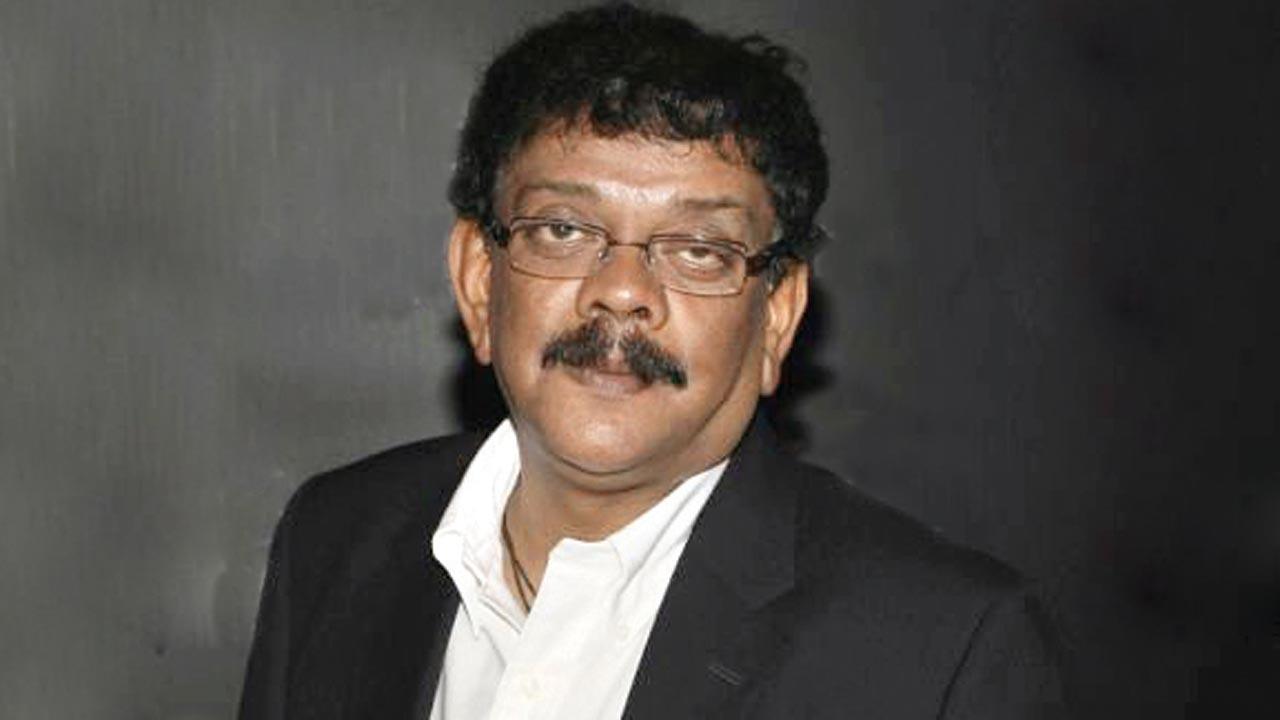
Priyadarshan to present newcomers with Malayalam film loosely inspired by a Japanese movie
Upala KBR (MID-DAY; August 21, 2022)
With his social comedy starring Akshay Kumar deferred until 2023, National Award-winning filmmaker Priyadarshan has trained his attention to his next directorial venture, a yet-untitled Malayalam thriller starring a host of newcomers. Given that his last Malayalam outing, Marakkar: Lion Of The Arabian Sea, with Mohanlal, earned him three National Awards in 2021, one would assume that Priyadarshan would join hands with the actor again for his next, but he clarifies,
“This is one of those rare occasions when my thriller will not feature Mohanlal but young actors like Shane Nigam, and Arjun Ashokan, apart from a good supporting cast. This is the first time that I will produce a movie, and it is also my first stint as director of a thriller.”
While Priyadarshan knew that producers would be apprehensive about investing heavily in a Malayalam film, especially one with fresh faces, he says he had to take the plunge since the storyline won him over. The filmmaker, who also wrote the movie during the pandemic, adds, “We begin the shoot in November in a start-to-finish schedule of 45 days in Cochin. [I was inspired by the Japanese film,] Akira Kurosawa’s Stray Dog, but only the basic idea has been used. The rest of the story has been completely written by me. It is the story of what transpires after a young boy steals a police officer’s gun.”
Following this venture, he plans to “come back and try my luck in Hindi movies”, given that his colleagues have highlighted that the industry is in need of the kind of humour that he can produce. As for his film with Kumar, he says, “I don’t want to direct something in haste. Why should I make something which is not exciting for me, as a director? I have told Akshay the same. A movie that involves our participation has to be better than what we have made before.”
Five filmmakers come together to interpret the COVID pandemic
8:34 AM

Anubhav Sinha, Sudhir Mishra, Hansal Mehta, Ketan Mehta and Subhash Kapoor are planning an anthology film based on stories and experiences from the Coronavirus pandemic
Anshul Chaturvedi (BOMBAY TIMES; July 26, 2020)
For Indian cinema, the anthology — a collection of short films with a similar subject — as a collaborative project with multiple filmmakers has now become a relatively familiar concept. This is courtesy the OTT space, which has been host to several popular ones, stitching together tales on a variety of topics, ranging from stories of lust to stories of ghosts.
For the big screen, however, this remains unfamiliar territory. In 2013, we saw Bombay Talkies, an anthology that had four short films, directed by Dibakar Banerjee, Karan Johar, Zoya Akhtar and Anurag Kashyap, to celebrate the 100th year of Indian cinema. However, when the sequel for it, Lust Stories, with the same directors, came out in 2018, it released on OTT and not in theatres. All subsequent anthologies have also released on OTT platforms. Before this, there have been films like Darna Zaroori Hai (2006) and Dus Kahaniyaan (2007) with each story being helmed by a different director.
Does that make Bombay Talkies Bollywood’s last big screen collaborative anthology? Perhaps not, if something being planned by five directors presently works out — a project that may release sometime around April 2021.
Anubhav Sinha, Sudhir Mishra, Hansal Mehta, Ketan Mehta and Subhash Kapoor are working on making an anthology focused on the subject that we are living through presently — the experiences of life amidst the COVID-19 pandemic.
“This is such an interesting time, you know — even though I realise interesting may not be the best word,” explains Anubhav, who is informally spearheading the collective effort. “Sudhir bhai’s driver had contracted COVID and he was unable to get a bed — and we were making all sorts of phone calls just to get him a hospital bed. Uss raat mere dimaag mein aaya ki humein usko document karna chahiye. And what better way to do it than different filmmakers looking at different things? Sudhir bhai ke pitaji ki death hui COVID period mein. We lost Irrfan — aur hum Irrfan ke janaaze par bhi nahi jaa paye. Nikloon ki nahi nikloon… Tigmanshu ko police se jhagda karna pada – he said main toh jaaonga, bhai hai mera!”
He adds, “Yeh saari cheezein disturbing thi. Mujhe laga inko record karna chahiye. Maine phir baat kari sab doston se — and they all said haan yaar karte hain. And that’s how the idea behind it began to formalise. This seemed like a good collaboration for all of us. There’s one story by Subhash, one by Hansal, one by Sudhir bhai, one probably by Ketan. These are filmmakers that I believe that the socalled ‘Bollywood’ has largely ignored.”
Ketan Mehta? It’s been a while since we saw his work. How did he get persuaded?
Anubhav pauses to make an impassioned point. “The corporate world doesn’t know who Ketan Mehta is. Unhone Mirch Masala ka naam hi nahi suna, dekhna toh chhor do! I saw it a month back. Log mujhe bolte hain ki Anubhav makes feminist cinema, etc etc. I say look at Mirch Masala — that’s what a film is! Thappad is not a film — Mirch Masala is a film! If I had any power, I would be chasing Ketan Mehta to make films all the time. I heard this story once about (Akira) Kurosawa not making a film for many years and (Quentin) Tarantino met him and asked him about it — and he said, I don’t have funds. And Tarantino called up the studio and said, ‘Hey, Kurosawa doesn’t have money to make a film — produce one!’ And then Kurosawa made his next film. This is an authentic story I believe... Today Ketan is not making films. Govind Nihalani is not making films — arrey yaar Ardh Satya banai thi unhone! Sharam karo, doob maro, iss sheher mein Govind Nihalani ko film banane ko nahi mil raha hai!”
Angry point made, Anubhav returns to the original topic. “Sudhir Mishra and Ketan Mehta are the stalwarts here — jinka cinema dekh kar hum ne picture banana seekha hai. Then the three of us, aaj ke — myself, Hansal and Subhash Kapoor.”
Anubhav adds, “So, it will be an interesting bunch of names, to tell stories of an interesting time in our lives. Yeh meri neeyat thi when I thought of the directors. I would have wanted (Anurag) Kashyap to also be part of this, but he is starting a big project so he couldn’t join us.”
The pandemic stories, essentially, then? “Yes. We will all interpret this period — starting February/March 2020 — and we will all tell a story from it.” And the sub-stories? “Hansal’s story is quite comic and quite tragic. Sudhir bhai’s is political, quite political. Subhash’s is also political, but in a different way. I am still struggling with my story — I want to tell an atmospheric story, which is about fear. I live on the 20th floor and I can see a very large expanse of Mumbai from my window. It has suddenly started looking like a deserted, dead city. And Ketan is saying ‘main dekh ke batata hoon’ (laughs).”
Hansal Mehta adds that he was very excited about the idea and is ready to begin shoot. “We have been meeting virtually very often during this lockdown. In one of our virtual parties Anubhav came up with this idea of chronicling this extraordinary time in history through this anthology of short films. I jumped at the idea. I think I was the first among our entire group to submit a script! I’m ready to begin shooting next week. It will be exciting to have like-minded directors with diverse styles tell their stories.”
Sharing why telling these stories is important, Subhash says, “The world has not seen anything like this ever before, it’s crucial to chronicle this period and explore stories around, I look forward to this journey with like-minded friends.”
“Reflections during the COVID time” is how Sudhir Mishra puts it. “It is not just ki chalo anthology banate hain and this is a good topic,” he explains. “It has developed organically. We talk a lot. We are envious of each other in the right ways. We have some sort of loose federation of common interest. This developed like that — and we said, let’s do this together.”
“We will all hopefully be able to start shooting by November,” says Sudhir, “If someone has to shoot indoors, then that is easier. But if the story demands outdoor shots, crowds — which you assume a political story will — then we have to see by what time that becomes possible.”
Satyajit Ray ‘classics’ tumble out of loft in his son Sandip Ray’s lockdown clean-up
3:08 PM

TREASURE TROVE: Sandip Ray found 100 unseen photos of his father (like the one above) and over 1,000 negatives of stills from sets of the master’s movies
Priyanka Dasgupta (THE TIMES OF INDIA; April 26, 2020)
Kolkata: Feluda might be proud of what filmmaker Sandip Ray did during the Coronavirus lockdown – snoop around the attic of his Bishop Lefroy Road house in south Kolkata to discover a treasure trove of Satyajit Ray memorabilia tucked away without anyone seemingly knowing about its existence.
The priceless find includes, among other things, negatives of 100 hitherto unseen photographs clicked by Satyajit Ray, over 1,000 unseen negatives or transparencies of working stills from the sets of the master’s early movies, and letters and telegrams from stalwarts of world cinema such as Frank Capra, Arthur C Clarke, Akira Kurosawa and Richard Attenborough.
According to Sandip, who has carried the Ray legacy forward with a series of whodunits revolving around his father’s fictional sleuth Feluda, the long overdue clean-up had thrown up the perfect collection for Ray fans to feast their eyes on during his birth centenary on May 2 next year.
“We used to clear a bit of the loft once in a while, but there was never this kind of uninterrupted time to check if there was anything terribly important lying there,” Sandip said.
Till 1959, the Ray family’s address had been south Kolkata’s 31, Lake Avenue. From there, they shifted to 3, Lake Temple Road, before finally moving to their 1/1 Bishop Lefroy Road address. While shifting homes, a lot of stuff kept piling up, but throwing these away was never an option because the family didn’t want to risk disposing of something precious. But it wasn’t until Sandip decided to do some unhurried tidying that he realised what an invaluable treasure the loft held.
Some of the negatives in the collection have never seen the light of day. “I don’t remember seeing them printed. Among them are working stills from Pather Panchali,” Sandip said. When shooting for Pather Panchali began at Boral in South 24-Parganas in 1952, acclaimed photographer Nimai Ghosh hadn’t yet joined Ray’s unit.
Art director Bansi Chandragupta, who had done the production design of the Ray classic, used to shoot stills on the sets. Chances are these negatives, once printed, will add a fresh perspective on the making of the classic.
Asked to give a rough estimate of the retrieved negatives, Sandip said the count was huge. “During those days, one exposure meant 36 photos. We have retrieved at least 25 such wallets,” he said.
It's a crying shame, say Shyam Benegal and Sai Paranjpye after Doordarshan loses priceless footage
7:59 AM

A recorded discussion lost: Michelangelo Antonioni and Akira Kurosawa with Satyajit Ray during their visit to India in 1977
Stalwart filmmakers Shyam Benegal and Sai Paranjpye rue the rigid unaccountability of Doordarshan, which has resulted in the loss of priceless documentary footage, exclusive interviews and several serials
Khalid Mohamed (MUMBAI MIRROR; July 3, 2019)
Even as the hallowed Doordarshan has announced recruitment for 89 vacancies in its English news channel, beyond priceless footage has gone missing or has been cavalierly erased.
No official in the public service broadcaster initiated by the government of India on September 15, 1959, has an answer to the missing documentary footage, exclusive interviews and several of its commissioned TV serials.
 Filmmaker and writer Sai Paranjpye (left), who incidentally was among one of the first six women to be recruited as a producer at DD in New Delhi, states, “For years, I went blue in the face asking officials—senior and junior—to locate four of my programmes. I should have persisted for an answer. Admittedly, now I’ve become lackadaisical because of the who-cares! attitude about the disappearance of its treasure trove.”
Gone missing are Paranjpye’s documentaries on Captain Lakshmi Sahgal, revolutionary of the independence movement, on movie-hoarding painters including bytes from M F Husain, a human-interest story The Little Tea Shop on a feisty woman running a dhaba single-handedly on the Delhi-Agra highway, and a portrait of the revered composer and singer Pankaj Mullick.
According to a source in the capital, a 1980s documentary on the proposed statehood of Gorkhaland featuring the first teleinterview of the leader of the Gorkha National Liberation Front, Subhash Ghisingh, and the then West Bengal chief minister Jyoti Basu, is untraceable.
A programme on Tamil Nadu politics including an interview with Jayalalithaa after the passing away in 1987 of the state’s chief minister M G Ramachandran, is either inaccessible or has been binned.
The same fate has befallen the original video-tapes of the two-part documentary Footprints Across India on the global media baron Rupert Murdoch’s visit to India in the 1990s, as well as a bold account on the dacoits of the Chambal Valley.
These, in fact, form just a miniscule part of the missing DD footage. A majority of the official as well as independent producers and directors are no longer living. Most of the surviving filmmakers contacted shared the view, “Why re-open wounds? Over the decades, the various chiefs of Doordarshan have pinned the blame on their predecessors.”
Clearly, the lapse –unintentional or not-—is part of a larger issue of lost content in the history of broadcasting. Besides DD, the All-India Radio and Films Division, have remained rigidly unaccountable. From personal experience, I can recall that shortly after the imposition of the Emergency, the International Film Festival of India had hosted the legendary Akira Kurosawa, Michelangelo Antonioni and Elia Kazan. A round-table discussion between them and Satyajit Ray was recorded by columnist Amita Malik, simultaneously for DD and AIR. And it has been confirmed that those were erased since there was a shortage of recording tapes. A producer at DD is lored to have recorded another programme over the valuable interview.
Malik, during her lifetime, would often lament that her exclusive with the iconic actor Marlon Brando, interviewed during his UNICEF-sponsored visit to India circa 1967, was also wiped out.
There is no news either of the tapes of interviews with the legendary actors Jeanne Moreau from France and that of Vanessa Redgrave from Britain – in the course of their visits to the International Film Festival of India.
On the sports front, archived tapes of the tied 1987 Ahmedabad test between India and Pakistan are one among the many disappearing chronicles. The match was singularly important, showing Sunil Gavaskar as the first cricketer to cross the 10,000-run mark.
 On being quizzed about this, Gavaskar had described the incident as “unfortunate” adding that perhaps in the 1980s technology wasn’t as advanced, leading to the loss of an incalculable number of files, tapes and papers. “At least from now on, they should ensure that they archive stuff properly,” he had suggested.
In response, a Doordarshan official had stated that of late tapes are being digitised to ensure there is a back-up support in case a tape has to be re-used. Seemingly, earlier there wasn’t an option. In the absence of “proper guidelines, it was easy to overwrite a tape.” Easy? The word speaks for itself.
Filmmaker Shyam Benegal (left), who has consistently demanded the need for preservation of documented footage, states candidly, “It’s a crying shame really. Supposedly DD is required to hand over its material to the National Film Archive of India in Pune. How many have been handed over is a mystery. The archive is meant to store and preserve our national heritage of cinema and TV series. Clearly, the archive has never been looked after or given any priority.”
 Although some episodes of Benegal’s seminal series Bharat Ek Khoj (right) (1988)– based on Jawaharlal Nehru’s book Discovery of India --have been officially uploaded on YouTube, the original tapes shot on 35 mm gauge have disappeared. “The storage facilities at the archive are awful,” Benegal remarks. “I am clueless about how many of the 53 episodes are still surviving.”
His documentaries revolving around the subject of the various forms of music like rhythm and melody were given to the archive but are no longer accessible. Moreover, the auteur’s documentaries on the sarod maestro Ali Akbar Khan, and the sitar wizards Ravi Shankar and Abdul Halim Jaffer Khan, have either perished or are mouldering in the cans somewhere.
Any salvaging operations possible? To that, Benegal ripostes, “None that I can think of. Except to raise the consciousness that it’s never too late to start preserving filmed material.”
And he makes the point, that it’s not only the national film heritage which has been squandered over time. What about our books, which should have been looked after? Where have all the original parchments gone? We must have lost out, he contends, on at least a millennium of our literature.
To encapsulate the topic, Benegal has a one-liner. And that is, “Whatever token attempts have been made, they have amounted to zilch.”

Also gone missing is Sai Paranjpye’s documentary on Captain Lakshmi Sahgal (seen above with Subhash Chandra Bose), revolutionary of the independence movement
Subscribe to:
Posts (Atom)