Showing posts with label Ajeeb Daastaans. Show all posts

A life lesson I learnt from my teacher was to respect others’ point of view-Jaideep Ahlawat

(L-R) Jaideep Ahlawat with his FTII batchmates Rajkummar Rao, Prabhas, Vijay Varma and Sunny Hinduja

The actor talks about his experiences at the film institute & his favourite teacher Arvind Pandey
Renuka Vyavahare (BOMBAY TIMES; September 5, 2024)

Raazi, Paatal Lok, Jaane Jaan and Maharaj, to name a few, are testament to Jaideep Ahlawat’s acting range and command over his craft. Hailing from Rohtak, Haryana, the Film and Television Institute of India (FTII) alumnus has created a space for himself in a rather demanding industry. On Teacher’s Day, the actor looks back at his beginnings and the teachers who played a vital role in his life and career growth.

Jaideep reminisces, “There have been a couple of people who have had a positive influence on my life. If I were to talk about my acting career, I must mention my first guru Sunil Chitkara, who hails from Haryana and is now based in Delhi. He taught me how to walk on a stage and work in theatre. Shurvat ka jo abhinay maine seekha woh unhise. He was the one who helped me learn the basics before I went to the FTII.”

‘Arvind sir taught us how to craft characters’
The film institute helped Jaideep hone his talent by introducing him to workshops and gifted artistes. One name stayed with him though.

He shares, “One teacher who had a massive impact on me at the FTII was Arvind Pandey, sir. He makes you work on your basics, which is most essential for an actor, without resorting to anything fancy. He taught us how to craft characters, build a scene and why teamwork is most important. He taught us how to use our imagination to build these characters and create their background, which may not be mentioned in the script, but can make the story more relatable. Woh mere favourite thhe and I was his favourite student. Later, we also acted together in Shashank Khaitan’s segment of Ajeeb Daastaans.”

‘Uncha bolneko loud acting nahi bolte’
Beyond acting, another valuable lesson Jaideep recollects learning from Arvind sir was understanding another person’s point of view. “I never saw him angry. He was one acting teacher who never dismissed our thoughts and opinions about how we approached a character. He never shot down ideas. He always asked what the thought was behind what we did. He tried to understand your choices and the logic behind it. He made me understand that there is no good or bad acting, just believable versus non-believable. Uncha bolneko loud acting nahi bolte. Whatever is not believable is loud acting. Dus actors ek scene ko dus tarikese karenge. Everyone will have a different point of view. It’s important to not be dismissive as long as it’s relatable. He taught us to respect other person’s point of view, which is a valuable life lesson,” he says.

Jaideep’s advice for aspiring actors
On a parting note, Jaideep, who now visits FTII occasionally to boost the morale of aspiring actors, says, “I want to tell budding actors galtiyaan karnese matt daro. Don’t be conscious about who’s watching you. When you are training to be an actor, everyone wants to help you grow. Your time at the film institute is your opportunity to make as many mistakes as possible. Life doesn’t give you those opportunities once you start working.”

I don’t see myself getting married-Manav Kaul

I don’t see myself  getting married,  says Manav Kaul
Vinay MR Mishra (BOMBAY TIMES; January 5, 2024)

After his debut in 2003 with Jajantaram Mamantaram, actor Manav Kaul took a sabbatical till his next film Kai Po Che! released in 2013. However, Manav admits that the break made him the actor he is today. Excerpts from a chat…

‘The break saved me’
Talking about how crucial the break was to his career, the Trial Period actor shares, “I started saying no after my debut film, and eventually, I thought it is much better to take a break. The kind of actor I am right now, is because of the 13-year break. Otherwise, I would have been terrible. I would have earned a lot of money, but I would have been unhappy. So, the break actually saved me. I am an idealist, that is a problem. I have never done anything that I don’t like.”

‘I don’t know what joy doing 500 movies gives an actor’
Along with quality films, Manav has always been focused on writing and doing theatre. The Tumhari Sulu actor says, “When you are older and you look back, I don’t know what joy those 500 movies would give you. If you are not proud of those movies, even sitting in a bungalow on Peddar Road won’t give you happiness. I find more happiness in writing a book. So, my priorities are very clear. For me, Ajeeb Daastaans (web anthology) is more rewarding than a bungalow. It defines me as an actor,” he explains.

‘I am single right now and happy’
At 46, Manav is content with his personal and professional life. “I am single right now and happy. I know myself and I don’t see myself getting married. This is how I always wanted my life to be. I am completely in love with my work, and I find absolute comfort and solace in it. Now, to get someone else involved in this won’t do justice to them. If you don’t give them enough time and work on a relationship, it won’t last. My idea of love is broader. I feel romantically connected with each character that I write or enact.”

I am still waiting to be offered a role by a big banner-Nushrratt Bharuccha

Nushrratt Bharuccha: I couldn't have asked for a better co-actor than Akshay Kumar

Yesha Bhatt (BOMBAY TIMES; September 27, 2023)

While it has been 17 years since Nushrratt Bharuccha made her debut in films and been a part of movies like Love Sex Aur Dhokha, Pyaar Ka Punchnama, Dream Girl, Janhit Mein Jaari, Ram Setuand the more recent Akelli, the actress feels that she is “still struggling as an actor”.

Nushrratt, who was in Ahmedabad recently, says, “I don’t mind playing any role if the director can visualize me in his/her film. Tweaking the character is an actor’s job, but I must be given that chance.” 

The actress, who has roots in Bharuch and Ahmedabad, adds, “I have cousins in Gujarat and whenever I come here, I have a list of places to visit. One thing I eagerly look forward to is having a Gujarati thali.”

‘I have a problem when directors don’t have a reason for not casting me’
Nushrratt, who has played unconventional roles in her career, says, “I am still struggling as an actor. I don’t think I have made a mark yet. I am still fighting for the same roles, attention, and space. I am somebody who can call up the director and ask, 'Why not me?' I am very practical and level-headed and if you give me a reason why I won’t be cast in a role, I can accept that. But I have a problem when they don’t have a reason. If the director is very sure about another actress, I can understand that because they have the freedom to choose whoever they want to cast. I have a problem when a director says he/she would love to work with me, but never offers me a role.”

She adds, “When I interact with the audience, I know that they love me. So, maybe I have left a mark there, but not in the trade. If you see my filmography, I have either worked with the same directors or new directors. I am still waiting to be offered a role by a big banner.”

'Can't take away the magic of cinema'
During the lockdown, the only thing that kept us sane was OTT. It offered jobs to people and I’ll forever be indebted for that. However, you can’t take away the magic of cinema. I want a world where the audiences do not have to pick between the two mediums.

On whether she will do Gujarati films
If I am offered a Gujarati film, it won’t be too long before you see me in one. I was offered a role in the remake of Chhello Divas but somehow, things didn’t work out. But I have not been offered a full-fledged Gujarati film yet.
--------------------------------------------------------------
When Raj Mehta cast me for Khilauna (from Ajeeb Daastaans), he asked me if I could do the role of a maid. He couldn’t believe that I had washed utensils at home. I sent him a video of me doing that to make him believe that I could do it!

Strong, real, imperfect: Is OTT redefining female characters?


Renuka Vyavahare (BOMBAY TIMES; September 17, 2022)

Kate Winslet’s scruffy, vaping detective in Mare Of Easttown went on to become one of the most-talked-about characters on OTT last year. The actress attributed the success of the series to viewers, who are ‘starved’ of shows that realistically portray women and their bodies. She revealed in an interview that she was fascinated with people falling in love with a wildly flawed, messy, broken, fragmented, difficult woman. The moral ambiguity of Jennifer Aniston’s Alex Levy in The Morning Show was equally intriguing.

Are women-fronted stories on streaming platforms increasingly straying from the conventional perceptions, even in India? Do women no longer need to be good or bad, victims or warriors, in order to be leading ladies?

‘OTT HAS CREATED SPACE FOR FULL-FLEDGED FEMALE CHARACTERS’

It is not that Shefali Shah hasn’t impressed us with her performances on the big screen for years, but today, she is among those actresses who are setting the OTT space on fire. The digital space has changed the course of her career. She says, “OTT has definitely changed the game for me. Unfortunately, a lot of heroines were accessories in films before. On OTT, there are full-fledged female characters. They are not just fillers for a project around the main hero.

Shefali adds, “Characters are now written for women of all ages. In commercial cinema, the shelf life of women for lead roles used to be between 18 and 25 years. Uske baad seedha maa bana do. Like in real life, even in cinema women would be recognized by the relationship they had with the key people. Mera role kya hai? Iski maa ka role hai, uski behen ka role hai. Woh sab relationships hai. Mera role kya hai? It’s ridiculous and changing finally.”

‘IN THE ’90S, ACTRESSES HAD TO PORTRAY A GLAM & DAINTY IMAGE BEFORE LANDING A SUBSTANTIAL ROLE’

Raveena Tandon, the quintessential ‘sheher ki ladki’ of Bollywood in the ’90s, made her OTT debut and a powerful comeback to acting with the web series Aranyak. The whodunit set in the hills showed the actress in a completely different light. But why didn’t Bollywood trust her more often with such roles? 

Raveena says, “The film industry is evolving, and female-led stories have found a home today, on streaming platforms and in Bollywood as well. If you look at the 90s and early 2000s, actresses had to portray a glam and dainty image for years before landing a role that would actually do justice to their acting prowess, but with streaming platforms, that gap has bridged. The streaming space definitely allows for more freedom to explore and tell more nuanced female-led stories.”

She further adds, “My character in the series – Kasturi Dogra is one of the main reasons why I chose Aranyak for my streaming debut. She is a strong, ambitious cop, but not perfect. Aranyak and many other stories today are those of real, strong, imperfect women that deserve to be told.”

‘WE CAN NOW WRITE STORIES OF FIERCE, INDEPENDENT, IMPERFECT WOMEN’

Screenwriter Kanika Dhillon (Haseen Dillruba) agrees that OTT has changed the game for female characters. She says, “OTT is definitely giving a medium to storytellers where we don’t need to portray unidimensional women, or women as a subplot to the men. We can write them as ‘leading ladies’ in the true sense. Historically, the term leading lady is used for a female actor paired opposite the male actor leading the story, however, small or insignificant the role, as long as there is a romantic angle. But I am glad, we can now write stories of fierce, independent, imperfect women who truly lead stories and carry the project on their shoulders.”

Speaking of the business and creative point of view, she explains, “OTT has a major role in providing the platform that can make these female stories economically viable, give them reach and an audience, at par with a male leading the story. When I write for OTT, I am unfettered by the norm, historical patterns, and market diktats, compared to other mediums. So yes, I can definitely have my women go the Madonna route. As she says, ‘I am tough, I am ambitious, I know what I want and if that makes me a b***h, okay!’ Rather than a coy, de-mure, lovable ‘Hindi film heroine’! And with this kind of an attitude, I can write my characters without adhering to stereotypes of a certain approved look and standard of beauty or behaviour.”

‘OTT HAS MORE WOMEN IN POSITIONS OF POWER SO THAT HELPS IN GETTING NUANCED FEMALE STORIES ACROSS’

Renuka Shahane wrote and directed Tribhanga, a film that follows warring women from a dysfunctional family, starring Kajol, Tanvi Azmi and Mithila Palkar. As a writer and director, she says, “I couldn’t get my mind out of Mare Of Easttown. OTT allows you the space and possibility for nuance. When you go to a theatre to watch a film, the idea is to get entertained. There is nothing wrong with that, but it keeps you from having certain emotional experiences. OTT exposes you to global content, so you also feel compelled to follow your conviction. I wanted to do this (what I did with Tribhanga) for a long time on the big screen but didn’t take the risk. With prominent female actors like Deepika Padukone, Kangana Ranaut, Priyanka Chopra or Alia Bhatt becoming producers, more incredible female stories will find a voice. OTT has started that revolution of sorts. There is space for all genders and ages, which is rare in films. I liked Fleabag and the female characters in Bombay Begums, and even the tone and humour of Sumukhi Suresh’s Pushpavalli. OTT has a lot more women in positions of power so that helps for sure in getting nuanced female stories across.”

‘NON-LEAD FEMALE CHARACTERS ARE REDUCED TO ‘HEROINE KI DOST’ OR ‘HERO KI BEHEN’ ON THE BIG SCREEN’

Aahana Kumra says that OTT is a breath of fresh air for female artistes. She says, “It has given us a voice. Non-lead female characters are simply reduced to heroine ki dost or hero ki behen in films. If you turn 40 or 50, you will end up playing a mom-in-law in TV serials doing kitchen politics. OTT has ensured that stories are far more powerful now. Thanks to these platforms across languages, incredible female roles are now being written across the globe. I don’t need to wear layers of makeup and look pretty always. I can look realistic.”

She adds, “Of course, there have been some powerful female characters in films in the past as well. I can’t deny that, but they are more relatable now. Shefali Shah in Delhi Crime, Konkona Sen Sharma in the short Geeli Pucchi (part of the anthology Ajeeb Daastaans) were incredibly realistic. I just hope we don’t get stuck in the loop of star-driven culture that plagued our films before. I hope the digital platforms don’t go that road as I am getting an inkling of that already.”

Tamannaah Bhatia believes that OTT has helped us shed our inhibitions as a society to a huge extent. She shares, “The digital space is breaking stereotypes for sure! Now we can pick roles without thinking log kya sochenge. That time of finding the courage to play a hatke part is long gone. Hatke roles are the real parts today.”

Panchayat worked because people liked it, not due to a promotional campaign-Manav Kaul

‘I PLAN TO DO MORE
FILMS, GOING FORWARD’
Manav Kaul on the importance of taking breaks between projects, and making time to travel and write
Kavita Awaasthi (HINDUSTAN TIMES; June 20, 2022)

He has been acting for almost two decades, and perhaps is now reaping the benefits of his hard work. After being a part of films like Kai Po Che (2013) and Tumhari Sulu (2017), actor Manav Kaul got a standing in the industry and with web projects like Ajeeb Daastaans (2021) and The Fame Game (TFG), he has surely upped his game.

“Now, I am getting a lot of romantic roles,” he quips, adding, “It is a good thing, as I haven’t explored a full-fledged romantic film, yet. Having done Ajeeb Daastaans and TFG, I think people now know that I can do more than the usual stuff. I am happy that my future projects will surprise everyone.”

While web projects are keeping him busy and excited, Kaul is keen on doing films, too. He explains, “Apart from acting, I do so much more, including travelling and writing. Since I need time for that. I choose projects carefully. I also take a break between projects. Currently, I am working on two films and a web series. In fact, I plan to do more web or theatrical films going forward [to save time], as one ends up working for six months on one series.”

When OTT boomed, everyone jumped on the digital bandwagon. Initially, it was new and exciting, but soon, people realised the kind of time and commitment a web show demands, especially a project that has multiple seasons. Kaul feels it’s only now that we are realising the potential of seasons and how long a season should be.

“I would say we are still learning and trying to understand how to work the digital platform. We have had some great shows, including The Family Man, Delhi Crime and Panchayat. The audience got hooked and wanted more seasons. Earlier, people were apprehensive about doing an OTT show, but the kind of viewership a web project gets is humongous. You get money, good roles, audiences and it is a democratic platform as the content doesn’t work due to PR, but word of mouth. Panchayat worked because people liked it, not due to a promotional campaign,” he signs off.

I truly cherish it when someone comes to me and says that they have enjoyed reading my book-Manav Kaul

Manav Kaul is happier when people talk about his books

Titas Chowdhury (HINDUSTAN TIMES; April 9, 2022)

Actor-author Manav Kaul’s eighth book, titled Shirt Ka Teesra Button, hit the stands recently. The novel, which is based on a young boy, takes one back to their childhood days. Talking about it, Kaul says, “It is about a boy growing up in a village, who’s in the sixth grade. It encapsulates his journey, childhood and memories, and his first idea of literature. This idea of a kid experiencing so many things for the first time mesmerized me.”

The book has earned positive response from bibliophiles, many of who sent in handwritten notes of appreciation to Kaul. He tells us that it’s always special to hear people talk about his books rather than his films or web shows. “I have been receiving a lot of attention for The Fame Game and Ajeeb Daastaans (2021). But the [number of] people reading my books are way lesser. Jo cheezein kam hoti hain, woh aapko zyaada pasand aati hain. I truly cherish it when someone comes to me and says that they have enjoyed reading a book written by me or a play directed by me,” he says.

The Nail Polish (2021) actor often takes off to quiet places, as they help keep him grounded and write more. “I like to meet people who aren’t part of the industry such as actors, writers, directors and fans. When I travel, I meet so many interesting people who do amazing things like running a bakery or coffee shop in a tiny nook of the mountains,” he shares.

For Kaul, there’s more to life that just a film set. “Life is so much more than just being famous. The perspective of life we have has always been very lopsided and it’s getting narrower by the day. So, I like knowing about other people’s lives,” he ends.

If I have to call and remind someone that I am there and I don’t mind auditioning, it’s okay-Fatima Sana Shaikh


Kavita Awaasthi (HINDUSTAN TIMES; May 19, 2021)

Having been a popular child actor and later making a mark with the Aamir Khan production, Dangal (2016), Fatima Sana Shaikh admits that she has no qualms about approaching filmmakers that she wants to work with. She doesn’t shy away from sending texts or calling people in the industry and feels at times, it is necessary.

“I do that to remind people that I exist. I don’t do a lot of films, so I am not always there. Kabhi kabhi log casting mein bhool jaate hain ki yeh bhi actor hai. It is very important to hustle. Until and unless you don’t fight for your space and your positioning, no one else will. If I have to call and remind someone that I am there and I don’t mind auditioning, it’s okay. It’s not a bad quality to have. I know of many actors who have achieved a lot in their lives by doing so. I like to create opportunities for myself and just not sit at home and wonder mere paas kaam kyun nahin hai. Aapko mehnat karni padegi aur kaam mangna padega,” she says.

She is glad that she has been able to entertain people in the last six months amid a pandemic with three releases – Ludo, Suraj Pe Mangal Bhari (both 2020), and the anthology Ajeeb Daastaans. “I am glad that people are getting to see my work. Eventually, you work to entertain people. Pandemic hai, things are shut, and I can’t be more grateful that people are able to see my work that I shot before the pandemic. I feel great that we have OTT platforms that are airing films, which are not able to release in theatres. We now have a new medium to connect with the audiences.”

Glad that the reaction to her last release Ajeeb Daastans was encouraging, she shares, “Many people from the industry reached out. It’s always special when people from industry appreciate your work as it gives you validation and hope. But, also the audiences’ response matters, who are the king and if they don’t like your work, it is game over.”

Earlier this year, she shot for a film with Anil Kapoor, who she admits she admires.

“He is the life of the set and an incredible person. Always excited and passionate,” she states.

She further adds, “When I sign films, it is more about instinct. My driving force is not always a big project or that this film has this big actor, and that’s why I should do it. What drives me is a good script and good director.”

Anthology films gain momentum on the web


Content creators, actors open up on this digital trend and what attracts them to the format that binds several short films together with a similar theme
Titas Chowdhury (HINDUSTAN TIMES; May 15, 2021)

The first decade of the 21st century witnessed a bevy of films offering a cluster of stories tied together by a common theme. Films such as Darna Mana Hai (2003), Dus Kahaniyaan (2007), I Am (2010), among others, introduced the Indian audience to this new format of cinema, known as anthology films.

While these films failed to create a stir at the box office, the concept gradually moved to the web space, where it is gaining both traction and prominence.

Following the critical success of theatrical release, Bombay Talkies (2013), filmmakers Karan Johar, Anurag Kashyap, Dibakar Banerjee and Zoya Akhtar took a plunge and helmed Lust Stories (2018), that proved to be a trendsetter. Since last year, the OTT space has witnessed an array of anthology films such as Ghost Stories, Unpaused, Paava Kadaigal, Zindagi inShort (all 2020), Pitta Kathalu and Ajeeb Daastaans, which went on to win acclaim for their motifs and treatment.

Filmmaker Shashank Khaitan who directed Majnu in Ajeeb Daastaans agrees that the format has generated a conversation. “It’s interesting because you get a combination of at least four filmmakers together and then they’re able to bring in extraordinary actors too. And that’s a treat for the audience. Bringing many actors in a feature film might be difficult as one might not be able to justify their characters,” he says.

Going ahead, there is an impressive slate of anthology films lined up for release including Ray (based on Satyajit Ray’s stories), Feels Like Ishq and Aisa Waisa Pyaar (both themed on love). Tamil anthology film Navarasa is also in the making.

Actor Ali Fazal who’ll be seen in Ray, says, “It’s interesting because we can weave in different stories and characters in an anthology film. This is an interesting way to collaborate with amazing filmmakers and talents. As an audience, I like the common string that connects all stories together.”

Actor Divya Dutta who was seen in Zindagi inShort says anthology films are crisp and offer different takes on a single theme: “Isn’t it more fun to watch four distinctly different films made in four distinct styles than one? An anthology film is all about the magic of a short film being told in that much time with an equivalent way of storytelling as much as a feature. It’s nice to watch a bouquet of stories told from the perspectives of different people.”

Ridhima Lulla, chief content officer, Eros Group, producer of Aisa Waisa Pyaar feels that “limited storylines” inspire and connect more with the audience. She says, “It provides a greater variety of content to the viewers within their preferred genre. It presents an opportunity to watch their favourite celebrities in diverse roles.”

Ashish Saksena, COO – cinemas at BookMyShow, believes the format has picked up steam recently with newer content making its way through OTT services. “With growing access to and adoption of OTT platforms, such films have gained more visibility amongst diverse audiences as creators get more liberty to experiment with both narratives and form,” he signs off.

We rarely see women making bad choices on screen-Konkona Sen Sharma


Winning praise for her Geeli Pucchi act, Konkona Sen Sharma discusses how writer-duo made her character human by lending it grey shades
Upala KBR (MID-DAY; April 28, 2021)

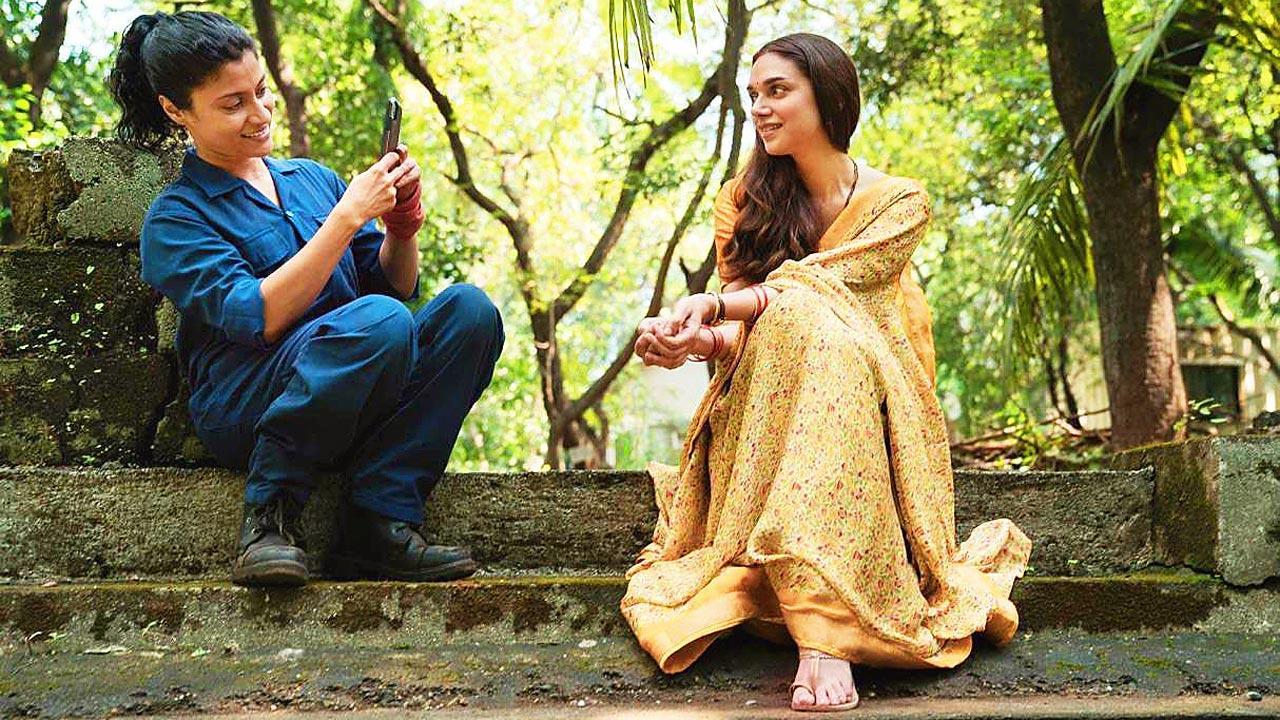
With Geeli Pucchi, one of the short films in Ajeeb Daastaans, director Neeraj Ghaywan highlighted two truths — that our society, even today, refuses to rise above casteism. And, if you have a demanding role, Konkona Sen Sharma is your best bet to portray it with all heart and honesty. The actor has won glowing reviews for her portrayal of Bharti Mondal, an efficient Dalit factory worker who is keen to climb up the ranks but is sidelined due to her caste. “I am used to my films not being seen by or not reaching many people, so this outpouring of love has been overwhelming. It’s my first film that has received such a strong response,” says Sen Sharma.

Through the principal characters, the film studies queer love, gender politics and caste conflict. The true win, according to her, lies in its nuanced writing. “For me, the trickiest scene was where Bharti talks to Priya [Aditi Rao Hydari] in the locker room after her confrontation with a male worker. That’s the turning point of the story. Bharti was a complex character, but her complexities make her more human on screen. It’s thanks to Neeraj and co-writer Sumit Saxena’s nuanced writing that these characters have come to life. We rarely see women making bad choices on screen. But here, [Bharti] is not a monolithic identity; there are shades of grey to her.”

When the segment was being shot last October, the makers were hunting for an appropriate title. “We had other titles in mind, including Deewani. Sumit suggested Geeli Pucchi once the film was ready. As a Bengali, I wasn’t familiar with the term, but I love that it comes straight from the characters.”

I have never been comfortable with using my sexuality openly-Fatima Sana Shaikh


Fatima Sana Shaikh on navigating a complex character as she plays a woman seeking love outside her marriage in Ajeeb Daastaans
Uma Ramasubramanian (MID-DAY; April 25, 2021)

Though Shashank Khaitan’s short film in Ajeeb Daastaans falls short on the promise of understanding human relationships with all their flaws and frailties, its central character, Lipakshi, holds your attention. Played by Fatima Sana Shaikh, Lipakshi is at once vulnerable and cunning as she seeks affection outside her loveless marriage. The actor says she understood her character’s motivations even though she has little in common with her. “I don’t relate to Lipakshi. My parents have never pressured me to be with somebody or lead a certain life, so that’s not my world. But I understand her need for love. Everybody looks for attention in different ways, and does stupid things for their loved ones. I have also been a hopeless lover [at one point], so I understand her core emotions,” she states.

For Shaikh, the role—that sees her seduce Armaan Rehlan’s character even as her husband, played by Jaideep Ahlawat, threatens her with dire consequences—was well out of her comfort zone. “It was difficult to be as bold as Lipakshi. I am bold in my personal life with my choices and decisions. But I have never been comfortable with using my sexuality openly as I have been a tomboy all my life.”

Among other plot points, the Netflix film highlights how society unfairly judges women who are comfortable with their sexuality. Broach the subject with Shaikh, and she says, “I think in every era, there is a generation that makes a film where women’s sexuality is not judged; then suddenly, we become regressive and start judging again. We tend to believe that a woman is ‘too modern’ or ‘too forward’ if we see her smoking. We also tend to judge men—they are told they can’t cry. So, [in a way] you are telling men to desensitise themselves. I hope people become more accepting of one another.”

I am looking good on screen because of Shefali Shah-Manav Kaul


Manav Kaul says his romantic act in Ajeeb Daastaans has made audience see him in a new light
Uma Ramasubramanian (MID-DAY; April 21, 2021)

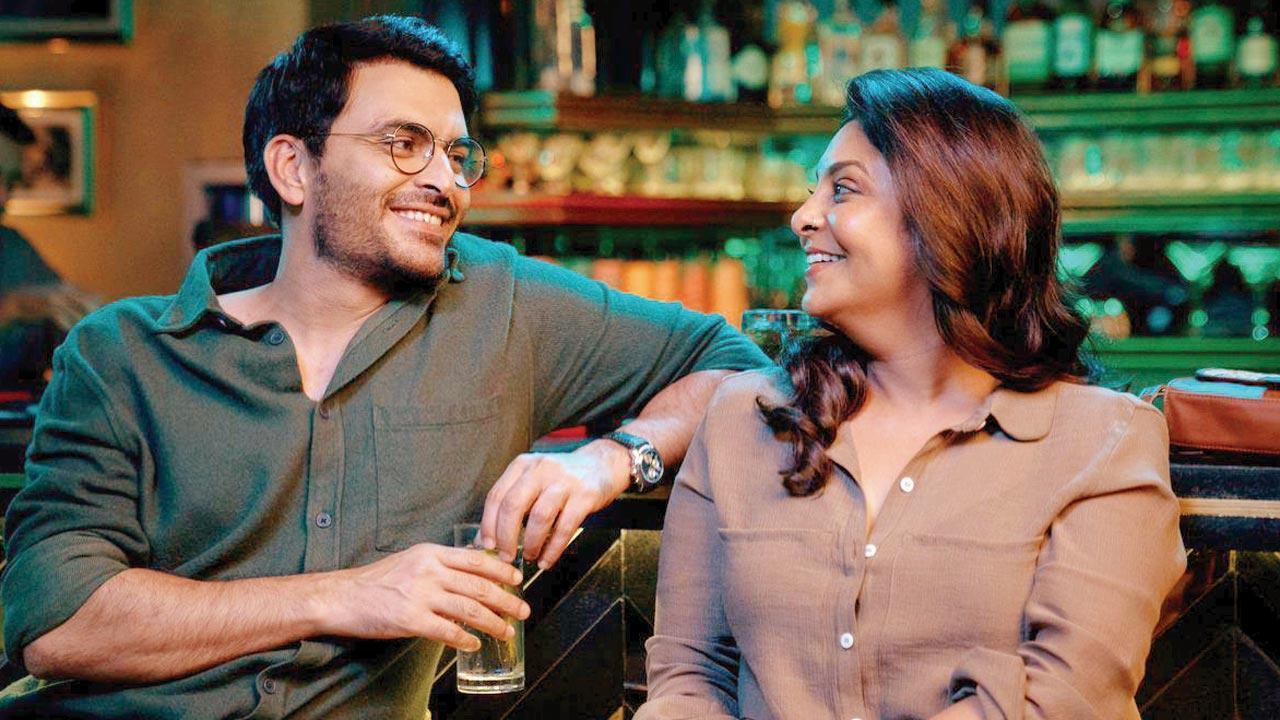
Scroll through your Twitter feed and chances are you’ll find more than a fair share of social media users raving about Manav Kaul in Ajeeb Daastaans. The actor, usually associated with sombre roles, has now become the darling of netizens, courtesy his lover boy act in Kayoze Irani’s segment, Ankahi, in the Netflix anthology. 

He admits playing Kabir in the charming love story has been a refreshing change of pace. “People offered me more serious and complex roles because of my theatre background. I want to let the world know that I also have this side to me as [a romantic] actor,” says Kaul, who plays a speech-and hearing-impaired photographer in the drama. “[Before the shoot], I was wondering whether I can pull off this role. It was difficult because [I had to learn] the sign language, and the character came with a lot of complexity. I kept asking Kayo [director] if I can do this, and I am glad I attempted a role that I have never done before. There is something [endearing] about love stories, and this character is close to my heart.”

Interestingly, Shefali Shah was one of the prime reasons Kaul came on board the short film. An ardent admirer of her craft, he says, “When I learnt Shefali is playing the character of Natasha, I told Kayo, ‘Please cast me. Come what may, I want to work with her.’ If your co-star is a fantastic actor, it ups your game as well. I am looking good on screen because of Shefali.”

Contrary to popular opinion, Karan Johar has a fine creative sensibility-Neeraj Ghaywan


Highlighting caste divide in his story in Ajeeb Daastaans, director Neeraj Ghaywan says film mirrors prejudices seen in offices, other walks of life
Uma Ramasubramanian (MID-DAY; April 19, 2021)

Rarely has a steel tea-cup been used to such great effect. Or for that matter, a glass cabin, as Konkona Sensharma stands outside, looking in at the world she’ll probably never be a part of. With her character at the centre, director Neeraj Ghaywan has woven a delectable tale of queer love, gender, and caste conflict, showing how one influences the other — sometimes subtly, and at other times, brazenly — in Ajeeb Daastaans.

Ghaywan’s first feature film, Masaan (2015), too explored the rampant caste divide in our society. Asked if the country has come a long way since then, he says, “I feel things are the same since Masaan. My idea was not to address a particular subaltern, but to look at everything in the context of intersectionality. In Geeli Pucchi [his short film], you also see patriarchy, gender, caste and class.”

Geeli Pucchi revolves around Sensharma’s Bharti Mandal, a Dalit factory woman who vies for the position of a data manager, which is conveniently given to Aditi Rao Hydari’s Brahmin character, despite her lacking the skill set. “Sometimes, there is preferential treatment [meted out] if you belong to a certain section of the society. Konkona’s character is smarter and more experienced, but she is denied the opportunity. We see this bias in our workplaces, and it is essential to speak about it.”

Interestingly, the idea of a woman factory worker had been with Ghaywan since the past six years. “I had seen a Malayalam woman factory worker when I was developing Masaan. I thought of this story then, but felt it was too radical for the universe of that film. So, I let it brew in my head for several years, and [finally] wrote the story about two women from completely different backgrounds.”

Most would believe that the universes of Karan Johar and Ghaywan’s films have little in common. But having closely worked with the producer on the Netflix anthology, Ghaywan begs to differ. “Contrary to popular opinion, Karan has a fine [creative] sensibility. There were certain things that he suggested in the script, and I thought, ‘What an opinion! He has a good take on the film.’”

Movie Review: AJEEB DAASTAANS by FENIL SETA

Ajeeb Daastaans consists of four short stories, each based on unconventional plotlines. It is directed by 3 prominent directors and one newcomer director, and some of the most reputed actors feature in these short segments.

1. Majnu (Directed by Shashank Khaitan)
It is a love triangle but with an unexpected twist in the finale. It was a great idea to place this as the first story as it’s quite impressive. It starts off as a usual Saheb Biwi Aur Gangster type drama but goes on an unpredictable path in the end. Fatima Sana Shaikh shines in the role of the seductress. Jaideep Ahlawat underplays his part and is too good in the last 5 minutes. Armaan Ralhan is a great find.

2. Khilauna (Directed by Raj Mehta)
On surface, it is the story of a house help trying to survive while serving her masters. But there are a lot of tracks in the film. The non-linear narrative adds to the intrigue. Sadly, director Raj Mehta takes too long to come to the point. A particular scene in the end is chilling to say the least. But one could guess the culprit beforehand. Talking of performances, Nushratt Bharuccha is quite convincing as the maid. Abhishek Banerjee is fine but has done a similar role before, in Unpaused. Inayat Verma (Binny) and Maneesh Verma (Vivek Agarwal) are surprise packages of the film.

3. Geeli Pucchi (Directed by Neeraj Ghaywan)
This is the best story of the lot. It raises lot of issues about homosexuality, casteism, patriarchy etc and everything is well executed. The cute moments shared by the protagonists are sure to bring a smile. But it’s the last part which is one of its kind and never before seen. Konkona Sen Sharma is outstanding and proves yet again why she’s one of the finest actresses of our times. Aditi Rao Hydari is adorable and gives an equally brilliant performance.

4. Ankahi (Directed by Kayoze Irani)
This turned out to be the weakest one. The film had its moments and in the absence of dialogues in a lot of places, the background score by Tanuj Tiku enhances the mood. However, the character of Manav Kaul and his actions are very unconvincing. This gets magnified in the end. Thankfully, the performances are fine by both the actors. Shefali Shah looks stunning and yet again delivers a memorable performance. Manav Kaul, too, puts his best foot forward but is let down by the writing.

Special mention should also go to Studio Kokachi for the opening credits. It’s something to watch out for!

All in all, Ajeeb Daastaans is a fine effort and tries it’s best to surprise audiences with the ajeeb and unexpected twists. While the first and third stories are the best, the second one is average while the last one is poor. Nevertheless, it’s surely worth a watch.

My rating - *** out of 5!

Fenil's Bollywood Talk # 669

KARAN JOHAR’S ANTHOLOGY AND A R RAHMAN’S MUSICAL TO RELEASE TOMORROW

The lockdown has once again been imposed in Maharashtra due to the increase in Coronavirus cases. All Hindi film releases of April have been pushed ahead. Down South, the situation is still better but is gradually deteriorating. Yet, no one was prepared when the makers of Telugu film, Love Story, starring Naga Chaitanya and Sai Pallavi, announced that they have pushed their film ahead. Theatres are open down South but with the cases increasing, there’s a fear that theatres can get shut anytime.

However, the situation isn’t as alarming, as of now. Films are still being released in the South. And one film which hits the cinemas tomorrow is 99 Songs. It is produced by A R Rahman and the music maestro has also written the story besides composing the music. The film launches two newcomers, Ehan Bhat and Edilsy Vargas, and is the story of a singer. The film was conceptualized way back in 2015 and was shot soon after. It’s probably ready since 2018. Thankfully, it doesn’t look dated and a person who is unaware about when it’s shot would assume that it was filmed recently.

99 Songs is a trilingual film and will be released in Tamil, Hindi and Telugu. The film, however, has a lot of challenges. The trailer has not got a great response. And for a film which is publicized as a musical, it’s songs should have been picked up by now. Unfortunately, not a single song has worked in any way. Most viewers are not even aware that a film by this name is releasing. It’s Hindi version’s business will be poor as the main market of Maharashtra is shut. Even in other places, the increase in cases have led to a drop in the footfalls. And in some cities, a weekend lockdown has been put in place. In such circumstances, a film can’t score at the box office. And if a film releases without hype, then one can imagine how disastrous the business would be. However, the film might be able to do well in the Tamil version.

The other release is Ajeeb Daastaans, a Netflix original. It’s an anthology, produced by Karan Johar. The four stories are directed by Shashank Khaitan, Raj Mehta, Neeraj Ghaywan and Kayoze Irani. The star cast is interesting, comprising Jaideep Ahlawat, Fatima Sana Shaikh, Nushrratt Bharuccha, Abhishek Banerjee, Konkona Sen Sharma, Aditi Rao Hydari, Shefali Shah and Manav Kaul. The casting, the trailer and the title has sparked interest. It’s sure to trend, at least during the weekend, and would be a big talking point.

I want to tell everyone that I am a dancer as well-Jaideep Ahlawat


Paatal Lok star Jaideep sheds his brooding image as he attempts love story in Ajeeb Daastaans; is keen to put on his dancing shoes for future projects
Uma Ramasubramanian (MID-DAY; April 15, 2021)

Jaideep Ahlawat has an appeal for filmmakers — he wishes to be cast in a project that explores his dancing skills. The actor and dance don’t seem to go together, did you say? But here’s the thing about Ahlawat; he is a step ahead of the sometimes unimaginative ways of the industry. Before Bollywood — inspired by his stellar performances in Paatal Lok (2020) and Raazi (2018) — can pigeon-hole him into brooding roles, he has shed the image and charted the unfamiliar territory of love stories with Netflix’s Ajeeb Daastaans. 

“I am grateful Shashank [Khaitan, director] thought of me for this character. Considering the way he narrated Bablu bhaiya’s [his character] complexities, I was keen to try my hand at the role. [That said], I was fearful whether I would be able to tell the story the way he intended,” begins Ahlawat, who is joined by Fatima Sana Shaikh and Armaan Rahlan in the short film. 

For the actor, the anthology is the first step towards dabbling in romance. “I would love to play a romantic hero. I want to tell everyone that I am a dancer as well. I might not be one of the finest dancers around, but I can catch the beat, and have done several stage shows in my college days. I want [filmmakers] to write a script [that helps me explore the art].”

The raging success of Paatal Lok last year made him an overnight star. But with success, comes the pressure to sustain it. He admits that whatever he does here on, the audience will “view it through a different lens”. “Since we delivered a show that was deeply loved by people, the pressure is to deliver something better. I want to explore different roles, otherwise the audience and I will get bored. I must say, I am amazed to read the kind of scripts that have come my way, post the series.”

The second season of the gritty crime drama was to roll early this year. Asked about the developments on that front, he says, “We can’t travel due to the current situation, so everything is on hold. We hope to start [shooting] once normalcy is restored.”

I would love to do a silent love story-Shefali Shah


Glad to finally explore romance in Netflix’s anthology Ajeeb Daastaans, Shefali Shah hopes to do a silent love story some day
Uma Ramasubramanian (MID-DAY; April 13, 2021)

She has breathed life into several powerful roles, but oddly enough, love stories have largely eluded Shefali Shah in her 26-year career. Which is why she lapped up the opportunity to be part of Ajeeb Daastaans, the upcoming Netflix anthology that studies different shades of love.

“I am a hard-core romantic at heart. So, this project was a dream come true. I prefer sequences and moments that are [subtle]; the unsaid is always so much stronger and more heartfelt. I would also love to do a silent love story,” says the actor, who briefly flirted with romance in Once Again (2018). 

Directed by Kayoze Irani, the short film in the anthology sees Shah play a woman struggling with her husband’s cold behaviour and daughter’s hearing impairment. She finds solace in a hearing- and speech-impaired man, played by Manav Kaul. For her role, Shah learnt sign language. “We had a wonderful teacher in Sitaram sir. If you understand the language instead of only learning the [corresponding signs for] the dialogues, you have the freedom of expanding your character. When I learnt the language, I realised there is so much noise around us. I want to continue learning it.”

Through her character Natasha, the film beautifully explores a forbidden love story that stems from loneliness. “Natasha may come across as selfish, but you are not in her shoes to understand what she feels. What I like about the script is that it does not give a justification for [her actions].”

I was scared as my role in Ajeeb Daastaans was challenging-Jaideep Ahlawat


Though intrigued by role, Jaideep reveals he was initially scared to play complex character of Babloo in Ajeeb Daastaans
Uma Ramasubramanian (MID-DAY; April 8, 2021)

The more layered a character, the more Jaideep Ahlawat enjoys immersing into the role, certain that he will make it his own. However, the actor, who has been on a hot streak since Paatal Lok (2020), admits it wasn’t an immediate yes after he read the script of the Netflix anthology, Ajeeb Daastaans. He features in Shashank Khaitan’s Majnu as Babloo, a thuggish political leader who thrives on exercising power and is deeply possessive of his wife.

“I thought the story was complicated, and I was scared as it was a challenging role, unlike anything I have done before. When Shashank handed over the script to me, I took nearly two days to finish reading the material,” recounts Ahlawat.

Still unsure of how to approach the part, the actor says he had a long discussion with the director to understand the motivations of the character. “Babloo is a thug, but he is totally [reserved], and that makes him complicated and difficult to read. The challenge made me eventually take up the role,” says the actor, who is joined by Fatima Sana Shaikh and Armaan Rahlan in the drama.

We are doing Indian documentaries for the first time, says Netflix content head Srishti Arya

Madhuri Dixit-Nene plays a superstar in Finding Anamika

From unscripted originals to marking the web debut of Madhuri, Raveena and Sonakshi, Netflix India announces 41 titles for 2021; content head Srishti says aim is to champion diverse stories
Upala KBR (MID-DAY; March 4, 2021)

The year gone by brought about many changes, one among them being that digital platforms became the new face of Indian entertainment. Naturally then, Netflix India is ready to go full steam ahead, giving the country’s talented storytellers the platform they deserve, thus putting Indian stories on the map. The streaming giant rolled out its 2021 slate of 41 titles — if the year ahead will see Madhuri Dixit-Nene, Raveena Tandon and Sonakshi Sinha making their web debut, it will also have familiar series like Kota Factory, Delhi Crime, Jamtara and Masaba Masaba, among others, returning with their second instalments.

For Srishti Arya, director international original film, Netflix India, the keyword this year is diversity. “We are doing Indian documentaries for the first time. [We are focusing on] unscripted stuff, especially after Fabulous Lives [Of Bollywood Wives], which brought us a lot of encouragement. We are doing the Indian version of Predator, which will be a crime documentary. We also have Searching For Sheela, where we see Ma Anand Sheela returning to her country after 35 years. We’re exploring different kinds of humour through Kapil Sharma’s web show and stand-up comedy,” she says.

On its roster are 13 movies that include Kartik Aaryan’s Dhamaka, Taapsee Pannu’s Haseen Dillruba, Mani Ratnam’s Navrasa and Chaitanya Tamhane’s The Disciple. Having invested in anthologies right from Lust Stories (2018), Arya is particularly excited about Ajeeb Daastaans, a collection of five relationship dramas backed by Karan Johar. It stars Konkona Sen Sharma, Fatima Sana Shaikh, Jaideep Ahlawat, and Aditi Rao Hydari, among others. “Some stories work better in a condensed form. What is exciting for our viewers is that in an anthology, they get four viewpoints on the same material.”

Dixit will foray into the web world with Finding Anamika while Tandon will play a local cop investigating a big case in Aranyak. “The idea is to do what is best for the story. When you see Madhuri’s show, she adds tremendous value to it because she is Madhuri Dixit,” states Arya.

At a time when OTT platforms have truly come into their own, she asserts that the prudent move is to back stories, not stars. “Last year was a hard time for people, but it gave Netflix the opportunity to be there [for viewers]. We constantly want to find great storytellers and back their vision. We see ourselves as a champion of [powerful] stories.”