Showing posts with label Ajay Bijli. Show all posts
Showing posts with label Ajay Bijli. Show all posts
PVR INOX executive shown door in April after probe into alleged developer kickbacks
3:09 PM

Shally Seth Mohile (THE ECONOMIC TIMES; September 5, 2026)
Mumbai: PVR INOX, India's biggest film exhibitor, asked a senior executive to leave in April following an internal investigation into alleged kickbacks from developers involved in building cinema properties, people familiar with the matter told ET.
The alleged kickbacks were made over several years and could aggregate up to Rs. 200 crore, said one of the people cited above. The allegations involve a senior executive who was close to the company's promoters, raising questions about how long the alleged payments continued and whether others were aware of the malpractices, the people said.
The circumstances could also bring scrutiny on PVR INOX co-promoters Ajay and Sanjeev Bijli, who have been running the company since the merger of PVR and INOX became effective in February 2023, said the people cited above.
The executive in question, Pramod Arora, was the chief executive officer for growth and investment at PVR INOX, the people said.
The investigation also sought to establish the extent of the alleged wrongdoing and determine whether others were involved, said the sources. The matter has also been discussed by the company's board in recent meetings, they said.
"This was going on for several years.," said a person with direct knowledge of the matter.
Expansion Beyond Metros
"The company got to know about it sometime in April, following which Arora and a few others were asked to leave with immediate effect," the person said.
PVR INOX did not respond to questions sent by ET. WhatsApp messages sent to Pramod Arora were not answered until the publication of this report. ET could not independently establish the identities of the developers allegedly involved in the kickbacks scandal.
As part of the PVR INOX merger contract, Ajay Bijli is responsible for running the company for the first five years starting March 2022, when the union was announced.
Arora played a key role in PVR's expansion into Tier II and Tier III markets through asset-light formats, including franchise-owned, company-operated (FOCO) cinemas and the SMART/Smart Screen initiative.
These formats offer lower-priced, digital-first multiplexes aimed at value-conscious audiences in smaller towns.
PVR INOX, India's largest multiplex chain, was created through the 2023 merger of PVR and INOX Leisure. As of late August, it operated 1,786 screens across 356 properties in 113 cities in India and Sri Lanka. The company plans to add another 1,000 screens over the next five years, largely through franchise-led expansion.
The allegations come as PVR INOX's financial performance has improved. The company reported consolidated net profit of Rs 56.5 crore in the April-June quarter of FY27, compared with a loss of Rs 54.5 crore a year earlier. Revenue from operations rose 11.9% year-on-year to Rs. 1,622.2 crore, while EBITDA increased 30.8% to Rs 528 crore.
Its EBITDA margin expanded to 32.5%, helped by higher occupancy, a stronger film slate and increased contributions from advertising and food and beverage.
PVR INOX had net cash of Rs 80.7 crore at the end of the quarter. Its board has also approved a Rs 300-crore share buyback at Rs 1,450 a share.
Promoters hold about 27.5% in the company, with the remaining stake held by foreign investors, domestic institutions and public shareholders.
According to a declaration signed by Arora, he was restricted from joining rival cinema chains and from contacting PVR INOX's existing vendors. The declaration also provides for potential legal action in the event of a breach.
(With inputs from Javed Farooqui and Rajesh Naidu in Mumbai)
Ramayana: Rs 4,000-crore epic bets on global audiences beyond the Indian diaspora
2:36 PM

Javed Farooqui (THE ECONOMIC TIMES; August 19, 2026)
Mumbai: Ramayana, a two-part mythological epic starring Ranbir Kapoor, Sai Pallavi and Yash, is emerging as a test of whether Indian film IP can be turned into a global entertainment business beyond the diaspora.
Directed by Nitesh Tiwari and produced by Namit Malhotra, the 4,000-crore project is being mounted at a scale more commonly associated with Hollywood event films. Sony Pictures is handling worldwide distribution, giving the film access to a global distribution network from the outset.
The film is targeting audiences across North America, Europe, Australia, the Middle East and Southeast Asia. Malhotra believes it could eventually reach more than 50,000 screens worldwide, in addition to around 9,000 screens in India.
But the bigger commercial bet is whether an Indian story can be sold to audiences who have no prior cultural connection to the epic, rather than primarily to the Indian diaspora.
Indian films have crossed borders before. Dangal, Baahubali, RRR, Pathaan and Kalki 2898 AD have found audiences outside India, with some performing strongly at the global box office. Ramayana, however, is being positioned differently: the non-diaspora audience is intended to be part of its core market rather than an extension of the overseas Indian audience.
The strategy comes as India’s government is encouraging creators to build audiences beyond the domestic market. At the WAVES summit last year, Prime Minister Narendra Modi urged Indian content creators to embrace the vision of “Create in India, Create for the World”, describing India’s storytelling tradition as a cultural asset built over thousands of years.
For Ramayana, that ambition creates a challenge beyond distribution: audience education. The film is being developed for viewers who may have little familiarity with the characters, mythology and cultural context of the epic.
Malhotra sees the project as fundamentally different from simply taking an Indian film overseas. “There has never been a story from India for the world,” he said. “We are genuinely approaching it as an Indian film, made by Indian people, acted by Indian actors, but being presented on a global stage.”
The team spent 18 months to two years travelling, meeting studios and explaining the project before Sony came on board, Malhotra said. “When something has not happened for 100 years, the first question people ask is why me? why now? why this project?” he said.
The film is being developed in multiple Indian languages, while an English version is also being worked on. Malhotra said the objective is to give international audiences an experience that feels as seamless as watching films from their own markets.
The release strategy reflects that ambition. Malhotra believes Ramayana could eventually reach more than 50,000 screens worldwide, compared with roughly 8,000-12,000 screens for some of the largest previous Indian releases. He cautioned, however, against directly comparing the film with established global franchises such as Avatar, Spider-Man or Avengers.
The marketing spend could also be on an unprecedented scale. Malhotra said he could not say whether it would be 200 crore or 1,000 crore, but that the project was operating in the “orbit of money” required to market a film worldwide in the manner Hollywood markets its biggest event releases.
“We are one amongst 30 films of the year of the world that will get this kind of distribution,” he said.
Industry executives see the project as part of a broader expansion in the ambitions of Indian cinema.
PVR INOX managing director Ajay Bijli said the film represents an opportunity to take a story with universal appeal to audiences around the world. “If there is a story that can resonate with global audiences, then why not?” Bijli said. “Ramayana is a universal story, and Namit was very keen that the whole world should know about this powerful Indian mythological story.”
Former Zee Studios CEO and film producer Shariq Patel said an Indian distributor would not have been able to secure the same breadth of global distribution.
“It’s a bold, audacious and important move. Reaching a global audience beyond the diaspora required a partnership like this,” Patel said. He said Prime Focus’s decades-long relationships with US studios and distributors, built through its VFX business, were significant in making such a partnership possible.
Nitin Menon, managing partner at NV Capital, sees the project as part of a broader push to turn Indian mythology into globally recognisable intellectual property.
“Ramayana and Mahabharata are our Marvel and DC,” he said, describing the ambition as an expression of India’s growing confidence in its storytelling and soft power.
The two-part structure is also central to the commercial strategy. Malhotra said the first film is intended to establish the characters and world, creating a foundation for the second instalment.
“Everybody plays that one and two game because they all know that if one gets established, then the two becomes a multi-bagger,” he said.
For India’s film industry, which produces around 1,800-2,000 films a year across Bollywood and multiple regional industries, the opportunity extends beyond a single blockbuster.
India has historically had little economic incentive to build global audiences because its large domestic market has been sufficient to sustain a vast film ecosystem. Its films have nevertheless begun finding audiences well beyond the diaspora, creating a potential path for Indian intellectual property to become a larger export.
The test for Ramayana, therefore, is not whether an Indian film can travel overseas. Dangal, Baahubali and RRR have already shown that it can. The bigger question is whether Indian IP can be packaged, distributed and marketed as a global event from day one, with audiences beyond the diaspora forming part of its core market.
PVR INOX bets on smaller multiplexes as single-screens decline
11:02 PM

Co targets 1,000 new screens in 5 years, identities 300 smaller cities to step up play
Javed Farooqui (THE ECONOMIC TIMES; August 8, 2026)
The structural decline of India's single-screen cinemas is creating a fresh growth opportunity for multiplex operators, with PVR INOX betting on smaller, affordable multiplexes to expand into underserved markets, Managing Director Ajay Bijli said.
The country's largest multiplex operator plans to add at least 1,000 screens over the next five years, focusing on franchise-owned, company-operated (FOCO) and other asset-light models, with developers funding a significant share of project costs.
The opportunity is significant. About 16,350 of India's 19,000 pin codes still have no cinema screens, leaving vast parts of the country underserved despite rising consumption, according to EY's The Story of Film Exhibition in India.
India had 10,033 cinema screens at the end of 2025, only marginally more than six years earlier. Meanwhile, screen density declined from 7.6 screens per million people in 2018 to 6.8 in 2024, while nearly 1,000 single-screen theatres shut during the period, underscoring the structural challenges facing the traditional exhibition model.
"I started with a single screen myself, and the reason I moved into multiplexes was because it became very difficult to fill a 1,093-seat cinema throughout the year. I used to struggle to achieve optimum occupancy across all 52 weeks because you don't get 52 films that can fill the cinema to the threshold where you make money," Bijli told ET.
Unlike a traditional single-screen theatre that depends on a single film to drive admissions, a three- or four-screen multiplex can programme multiple films simultaneously, improving utilization while giving audiences greater choice, he said.
The economics are increasingly prompting single-screen owners to convert their properties into multiplexes. PVR INOX is itself converting Mymoon, a prominent single-screen cinema in Kochi, into a five-screen multiplex in partnership with Lulu Group.
"One compelling reason many single-screen theatres are converting into multiplexes is that the business becomes much more viable with four or five screens. Instead of showing just one film, we can screen five, six, seven or even 10 movies a day. Consumers benefit because they get a wider choice under one roof, while producers benefit as more films can be showcased simultaneously," he said.
The company has identified around 300 smaller cities, including Jabalpur, Muzaffarpur, Barrackpore and Rampur, for its affordable multiplex format. Ticket prices will be comparable to, or only marginally higher than, balcony tickets at single-screen theatres.
"Ticket pricing will be designed keeping in mind the paying capacity of the local catchment. For comparable formats and locations, ticket prices will generally be 30-35% lower than similar PVR INOX cinemas operating today," Bijli said. PVR INOX's average ticket price stood at Rs 273 in the June quarter.
The expansion marks the next phase of PVR INOX's growth strategy as it looks beyond major urban markets.
Under the franchise-owned, company-operated (FOCO) model, partners invest in developing the cinema while PVR INOX manages operations. In its asset-light model, developers or landlords contribute between 30% and 80% of project costs, allowing the company to accelerate expansion while conserving capital.
PVR INOX currently operates 1,779 screens and expects to spend Rs 300-350 crore this financial year on around 100 new screens, as well as renovating and preimmunizing its existing circuit. Around 60-70% of the new additions will come under the asset-light model. As the share of such projects rises, the company expects the same level of capital expenditure to support a larger number of screen additions.
Bijli believes India has the potential to support around 25,000 cinema screens over time but said achieving that would require greater policy support, including rationalizing GST on cinema tickets, lowering local entertainment levies where applicable, and reducing electricity and property taxes.
Alongside expanding its footprint, PVR INOX will continue investing in premium formats such as IMAX, PXL, 4DX, ICE, ScreenX, Director's Cut, INSIGNIA and LUXE, while expanding alternative content, including live sports screenings and concerts.
Box office boom pushes film industry back to theatre-first strategy
10:13 AM

Javed Farooqui (THE ECONOMIC TIMES; May 12, 2026)
The Indian film industry is firmly reverting to a theatrical-first release model as streaming platforms tighten spending and studios increasingly prioritise box office revenues, according to industry executives.
The shift marks a decisive move away from the post-pandemic phase, when several films premiered directly on OTT platforms. Today, films are typically arriving on streaming services around eight weeks after their theatrical release.
“Movies are reaching OTT platforms much later after their theatrical release. So OTT is no longer a substitute. In fact, it never really was,” said Ajay Bijli, managing director of PVR INOX, adding that box office performance continues to act as a benchmark for how OTT deals are structured.
According to a FICCI-EY report, while the total number of films released on OTT platforms remained steady at 500, direct-to-digital premieres fell 50% from 60 in 2024 to 30 in 2025. In contrast, 470 films released in theatres first before arriving on OTT platforms, compared with 440 in 2024.
Gross box office collections rose 14% from Rs 11,400 crore in 2024 to Rs 13,000 crore in 2025, marking an all-time high for the sector.
“Theatrical performance, word of mouth, and box office collections have a very positive impact on viewership when a film arrives on OTT platforms after eight weeks,” Bijli added.
While theatrical revenues surged, demand for digital licensing weakened amid consolidation and tighter spending by streaming platforms. The merger of Disney+ Hotstar and JioCinema into JioHotstar further reduced movie acquisitions compared with the post-pandemic years. As a result, digital and OTT revenues for films declined 7% to Rs 2,900 crore in 2025, according to FICCI-EY estimates.
For streaming platforms without cricket rights, theatrical films continue to remain a key subscriber acquisition driver, with cricket and Bollywood still the two biggest tentpole content categories.
At the same time, there is growing acknowledgement within the industry about the need to build a sustainable economic model that benefits all stakeholders.
During a recent interaction, Gaurav Gandhi, Vice President, Asia-Pacific and ANZ, Prime Video said consolidation in the streaming market has reduced both content investments and overall output. With fewer buyers acquiring video content, demand has softened, leading to a natural demand-supply correction and rationalisation in pricing and spending.
“There has been some rationalisation of demand. But there is also an acknowledgement across the industry that while we have to grow, some of these costs are not tenable. Therefore, people have made choices. I think those choices have taken multiple forms. You don't necessarily buy what doesn’t work for you, but you can also build your own,” Gandhi said.
He added that Prime Video India has expanded from co-productions after the pandemic to creating original films while continuing to acquire film rights. Reflecting the renewed push towards theatres, Prime Video recently unveiled a five-film theatrical slate under Amazon MGM Studios India.
OTT craze grows, but film lovers can't stay away from theatres
9:47 AM

Streaming platforms’ impact on footfalls in theatres hasn’t been severe, finds a report
Rajesh N Naidu (THE ECONOMIC TIMES; November 21, 2025)
Mumbai: Despite the growing perception of theatres losing viewers to streaming platforms, studies and recent box-office collections of several Hollywood, as well as non-English, mid-sized, and a few big-budget Hindi films showed audience interest in watching films in theatres has far from ebbed and instead remains intact.
In its latest study, titled Venn It Happens: SVOD & Theatrical audience intersection, media and entertainment research firm Ormax Media said the audience base watching content only on streaming platforms and who do not visit theatres is at 81 million. In comparison, those watching films solely in theatres and not having any access to a streaming platform service is 76 million, indicating limited impact of the increasing consumption of content on streaming platforms on theatre footfalls.
“The data in our report highlights that the impact of streaming platforms on theatrical footfalls is far less severe than commonly believed, significantly weakening the 'OTT killed theatrical' narrative,” said Sanket Kulkarni, head, business development (theatrical) at Ormax Media. “The data suggests that both ecosystems have sizeable exclusive audiences, and that the extent of cannibalisztion is far smaller than popularly assumed.”
During the pandemic, when theatres were shut, audiences latched onto streaming platforms to satiate their hunger for entertainment. Over the years, streamers have been successful in gaining a relatively loyal subscriber base, evident in their subscriber growth, financials, and market share.
According to Ormax Media, the total subscriber base of India’s streaming platform industry, currently at 601 million, is expanding at 10% annually. This amounts to 41.1% of India’s population, indicating the growing acceptance of streamers as a preferred mode of entertainment.
“I don't think streamers have killed cinema in any way,” said Rajesh R Nair, the producer of Hindi films such as Kaminey and Adipurush. “Cinema is killing cinema by not giving out the right content to audiences. This is more pertinent in the case of Hindi films. Audiences are quite happy with films in non-Hindi languages,” he said.
“The simplest example is the noteworthy performance of the Gujarati film Laalo - Krishna Sada Sahaayate, which collected more than Rs. 50 crore at the box office. This performance shows that audiences are open to coming to theatres provided the makers give them a proper entertainment deal,” he added.
The all-India box office collection during January-October 2025 is at Rs11,077 crore. This marks a 24% rise from a year earlier, reflecting sustained audience interest to visit theatres.
Recently, Ajay Bijli, managing director of PVR Inox, India’s largest multiplex operator, told ET that theatrical and streaming entertainment will co-exist without one canonicalizing the other.
“It is a business of interdependence today. Films which do well in theatres when released on streamers also find audiences. This saves promotion and advertising costs of streamers required to create awareness around films,” said Girish Johar, producer and film business expert. “Also, streamers are viewing theatres as an additional source of revenues by releasing their originals in theatres. Besides, cinema is a community experience which can never compensate for the individual experience of streamers. Both will co-exist and benefit from each other’s strengths.”
Mid-budget films, not big starrers driving audiences-PVR Inox MD Ajay Bijli
9:11 AM

12 films crossed Rs. 100 cr in Sept qtr, signalling shift towards good content, says Ajay Bijli
Javed Farooqui & Rajesh N Naidu (THE ECONOMIC TIMES; November 18, 2025)
Multiplex audiences are no longer driven solely by large-scale spectacle films. Ajay Bijli, managing director of PVR Inox, told ET that a steady run of mid-budget releases has quietly reshaped the market, turning several into sleeper hits that have each crossed the Rs. 100-crore mark at the box office.
Bijli pointed out that in September quarter 12 films crossed the Rs. 100-crore mark. This, he said, signals a structural shift towards content-led performance.
In the first half of FY26, 22 films crossed the Rs. 100-crore mark, most of them mid-sized productions.
Titles such as Saiyaara, Mahavatar Narsimha, Lokah: Chapter 1 – Chandra, and Su From So drew large audiences despite modest budgets.
"The most encouraging aspect is that we no longer need big starrers. The script has become the star," he said. "People are asking for good content, and what I appreciate is that the appetite to go out and watch films remains strong. The content does not need a major star for audiences to come and watch."
Bijli highlighted the example of the Gujarati film Laalo - Krishna Sada Sahaayate. "It opened with only 17 shows. It is now playing in a thousand shows. Ultimately, the consumer decides a film's fate," he said.
The PVR Inox head stressed that exhibitors' interests are fully aligned with those of producers. "We are simply a conduit," he said, adding that the cinema exhibition industry is just another out-of-home entertainment category.
"It is similar to hotels, concerts or restaurants. It is simply another form of physical, out-of-home entertainment that comfortably coexists with what is available at home," he said.
Bijli said that while a 12-week theatrical window is preferable, the current eight-week gap still gives films adequate breathing room through wide releases and orderly monetization. Films currently release on OTT after an eight-week theatre run. He argued that cinemas and OTT platforms will continue to coexist since India is an "and market, not an or market".
"A 12-week window is certainly better than eight, but the current structure is acceptable because films still receive wide exposure across many screens. This gives them adequate breathing room for a strong theatrical run," he said.
According to him, the current window works for all stakeholders. "It is a well-balanced arrangement," he said. Bijli reiterated that streaming and cinemas are not in a zero-sum battle. India's entertainment market, he said, thrives on coexistence.
PVR Inox logs strong quarter as footfalls, content hold firm
8:49 AM

Steady film content, higher footfalls and rebound in ad revenue help
THE ECONOMIC TIMES (October 18, 2025)
Cinema exhibitor PVR Inox posted a net profit of Rs 127 crore for the quarter ended September, up sharply from Rs 22 crore a year earlier, driven by steady film content, higher footfalls, and a rebound in advertising revenue.
Revenue rose 12% year-on-year to Rs 1,843 crore, while EBITDA jumped 58% to Rs 327 crore, with margins improving to 17.8% from 12.6% a year ago. Footfalls increased 15% to 44.5 million, the average ticket price rose 2% to Rs 262, and spends per head on food and beverages fell marginally by 1% to Rs 134.
Advertising revenue touched Rs 126 crore, the highest since the pandemic, rising 15% from a year earlier on the back of longer brand campaigns linked to major film releases.
“There’s no question that the momentum is back,” said Ajay Bijli, managing director of PVR Inox. “Cinema, like any other out-of-home leisure and entertainment format, is here to stay. People can shop online, but they still go to malls; they can order food, but still go out to restaurants; they can listen to music at home, but they still attend concerts. Cinema fits in the same category.”
The September quarter saw no Rs 500-crore blockbusters, but 12 films crossed the Rs 100-crore mark, underscoring a structural shift towards content-led performance. Titles such as Saiyaara, Mahavatar Narsimha, Lokah: Chapter 1 – Chandra, and Su From So drew large audiences despite modest budgets.
“Hardly any major blockbusters came this quarter, but smaller films and sleeper hits did exceptionally well,” Bijli said. “People have fatigue from staying home and watching on smaller screens. They want to come out.”
PVR Inox’s gross box office collections (GBOC) grew 17% to Rs 1,170 crore, led by a 21% rise in Hindi films to Rs 542 crore, while Hollywood revenues nearly doubled to Rs 286 crore, driven by F1: The Movie and Jurassic World: Rebirth. Regional films brought in Rs 308 crore, up 3% from last year. Hindi contributed 46% to the exhibitor’s total GBOC, followed by regional (26%) and English (24%).
Industry-wide box office collections for the first half of FY26 stood at Rs 6,241 crore, up from Rs 5,446 crore a year earlier. Collections from films earning between Rs 100 crore and Rs 500 crore surged to 59% of total receipts, compared with 21% a year ago, indicating that mid-range performers are now driving growth.
Bijli said the return of audiences is also spurring a renewed emphasis on quality content from filmmakers. “From the content creators’ point of view, they’ve realized that good storytelling connects with audiences,” he said. “Big-budget films are important, but at the end of the day, it’s the script, music, and cinematography that pull people in.”
He said this was the second-highest quarter PVR Inox has had post-COVID. “So both engines that drive our business — the consumer and the content creator — are firing well,” he said. “While there were no Rs 500-crore films, it has been a blockbuster quarter for the industry.”
The exhibitor continued to pare down debt, with net debt more than halving to Rs 618 crore from Rs 1,430 crore at the time of the PVR-Inox merger. Bijli said the company remains on track to add about 100 new screens in FY26, with a mix of owned and asset-light FOCO (franchise-owned, company-operated) models.
He added that screen expansion will continue across tier-two and tier-three cities, particularly in South India. “India remains under-screened compared to other markets,” he said.
Looking ahead, Bijli expects the momentum to carry through the rest of the fiscal year. “Q3 has started off with a bang, with Kantara: A Legend Chapter – 1 expected to cross Rs 500 crore and major titles like Avatar: Fire And Ash and Dhurandhar lined up,” he said.
PVR Inox Q4 Results: Loss narrows to Rs 125 crore, revenue falls 0.5% YoY
11:16 AM
THE ECONOMIC TIMES (May 13, 2025)
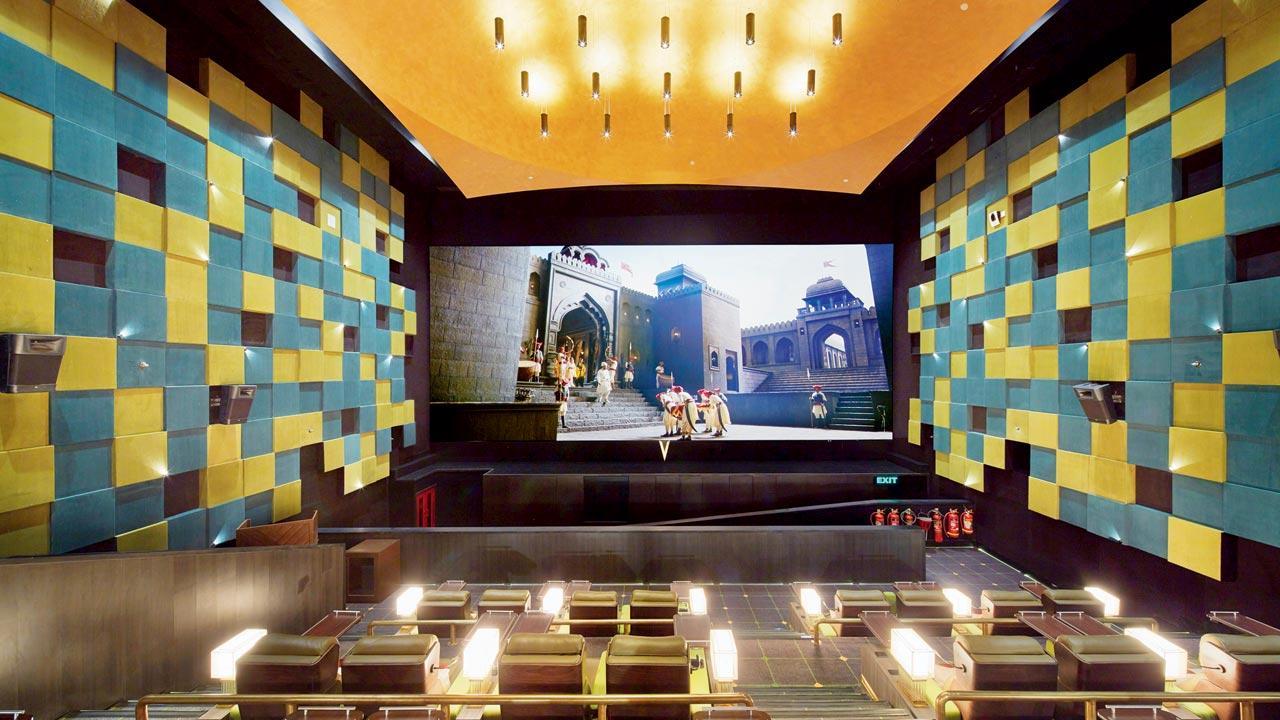
Multiplex chain PVR Inox on Monday reported consolidated net loss of Rs 125 crore for Q4FY25 versus Rs 130 crore in the year-ago period. The loss is attributable to the owners of the company.
The revenue from operations in the March-ended quarter stood at Rs 1,250 crore, which was marginally down at 0.5% versus Rs 1,256 crore in the corresponding quarter of the last financial year.
On a sequential basis, the company reported a loss against profit after tax (PAT) of Rs 36 crore in Q3FY25. The top line, though, witnessed a 27% fall versus Rs 1,717 crore in the October-December quarter of FY25.
The earnings were announced during market hours, and PVR shares remained unfazed amid an upbeat mood in the market, trading at Rs 958 on the NSE, up by Rs 36.55 or 4% over the Friday closing price. The headline Nifty50 index was trading over 3% higher around 1:30 pm.
The company's Earnings Before Interest, Taxes, Depreciation and Amortisation (EBITDA) stood at Rs 344 crore, up from Rs 327 crore reported in the year-ago period.
In the quarter under review, patrons that visited the company's cinemas stood at 30.5 million with an average ticket price of Rs 258. The F&B spend per head (SPH) stood at Rs 125. As of date, PVR Inox operates 352 cinemas with 1,743 screens across 111 cities.
The box office in FY’25 was impacted by an uneven release calendar, marked by inconsistent content availability across quarters, the company filing said. Both Bollywood and Hollywood underperformed, contributing to a 9% decline in the company's overall gross box office revenue.
Hindi box office collections dropped 26%, primarily due to a 14% reduction in film releases, the absence of major superstar-led titles, and multiple postponements. Hollywood revenues fell by 28%, reflecting the lingering effects of the previous year’s strike and a lackluster tentpole slate. In contrast,
Hindi-dubbed films saw a remarkable 153% surge, driven by nationwide hits like Pushpa 2 – The Rule and Kalki 2898 AD, underscoring a growing audience appetite for large-scale pan-India narratives.
Chhaava emerged as the highest-grossing film in the 4th quarter, earning approximately Rs 700 crore at the box office.
Commenting on the results and performance, Managing Director Ajay Bijli said, "FY’25 was a year of transformation — defined by our renewed focus on innovation and agility. We evolved from being reactive to becoming resilient and emerging as a more agile, future-ready organization, laying the groundwork for long-term sustainability and relevance in a rapidly changing entertainment landscape”.
------------------------------------
Mumbai: PVR Inox, India’s largest multiplex operator, said its net loss narrowed to Rs. 125 crore in the March quarter compared with Rs. 129 crore a year ago. Multiplexes in India have been seeing declining footfalls amid lackluster box office performances.
For the full year FY25, PVR Inox’s net loss surged to Rs. 281 crore, up 751% from Rs. 33 crore in FY24. Earnings before interest, taxes, depreciation, and amortisation (Ebitda) for the quarter rose by 5.2% to Rs. 344 crore from Rs. 327 crore. For the full year, however, it declined by 12.8% to ₹1,715 crore from Rs. 1,966 crore in the previous year.
Quarterly revenue from operations stood at Rs. 1,249 crore, down by just 0.6% from Rs. 1,256 crore a year ago. Full-year revenue dropped by 5.4% to Rs. 5,779 crore from Rs. 6,107 crore a year ago. Expenses for the quarter were nearly flat at Rs. 1,478 crore, compared with Rs. 1,480 crore in the previous year, while annual expenses rose by 0.3% to Rs. 6,327 crore from Rs. 6,307 crore.
The company’s cinema count declined by 2.8% to 349 for the year ended March, even as screen count increased by 0.3% to 1,723. Total admits dropped by 9.5% to 136.9 million and occupancy declined by 261 basis points to 23%. The average ticket price (ATP) remained flat at Rs. 259, while food and beverages (F&B) spend per head rose by 1.5% to Rs. 134.
PVR Inox adds 77 screens, exits 67 underperformers amid shift to capital-light model
9:22 AM

Rajesh N Naidu & Javed Farooqui (THE ECONOMIC TIMES; February 7, 2025)
Mumbai: Multiplex chain PVR Inox's net screen addition stood at 10 as it added 77 new screens and exited 67 underperforming screens for the nine month period ending December 2024 at a time when it has pivoted towards capital light model which has also brought down its capex deployment.
For the 12-month period ending March 2025, capex will be Rs. 400 crore, down 35% from a year ago. Majority of the cinema chain's future screen expansion will be under the capital light model. PVR Inox's screen portfolio currently stands at 1,728 screens across 350 cinemas in 111 cities in India and Sri Lanka.
"We have already opened 77 screen this year and will be opening another 30 in this quarter (Q4) and every year our run rate will remain between 100 to 110 screens," MD Ajay Bijli said, adding that the screens closed have reached the end of their life cycle and the multiplex has opened new screens that already services that catchment area.
Bijli added that the screens that are being shut down have either reached the end of their life cycle or due to the presence of a new PVR Inox property that is serving the same catchment area.
Under the capital light strategy, the company has signed 100 screens across 22 cinemas till date including 31 screens across eight cinemas under management contract and 69 screens across 14 cinemas under the asset light model. These screens are expected to come up over the next 2-3 years. Under the management contract, the entire capex is deployed by the developer while in the asset light model 40-80% capex is borne by the developer.
PVR Inox's Q3 net profit also expanded 2.5 times year on year to Rs. 35 crore while operational revenue rose 7% to Rs. 1,595 crore on the back of Pushpa 2's exceptional box office run.
The total admits rose 2.1% to 37.3 million while average ticket spend (ATP) and spend per head (SPH) rose Rs. 281, up 3.9%, and Rs. 140, up 6.5%, respectively.
Analyzing the trend of re-releases: "Films are available for free online, but moviegoers want to see them on big screen"
8:21 AM
Niharika Lal (BOMBAY TIMES; August 31, 2024)
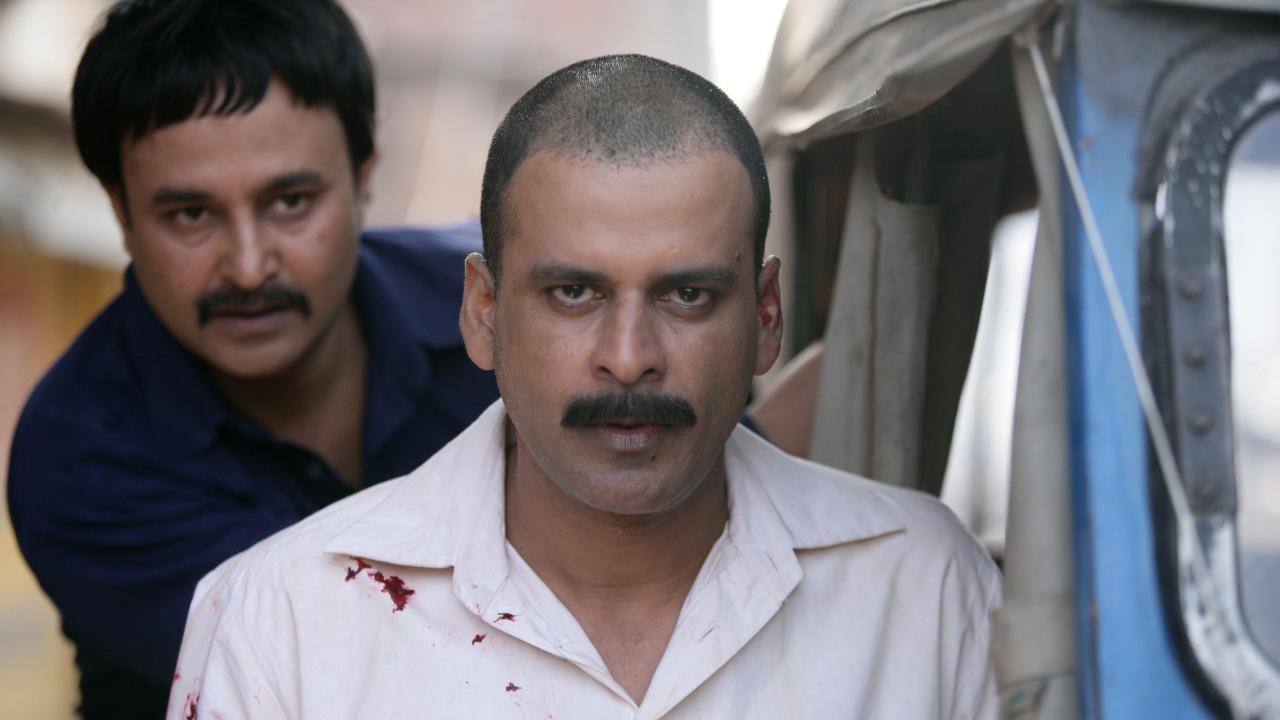
If the recent re-release announcements of Gangs Of Wasseypur and Rehnaa Hai Terre Dil Mein have you rushing to book tickets, you’re not alone. Cine buffs have been in for a treat with theatrical re-releases this year. Whether it’s to mark a film’s anniversary, generate buzz before a sequel, or simply revisit a cinematic hit, actors and filmmakers have been bringing their old films back to the big screen.
Films with a fan following being re-released
Ajay Bijli, MD of PVR INOX, says, “What’s interesting is that these films are available for free online, but moviegoers are still excited to see them on the big screen.”
Amit Sharma, MD, Miraj Cinema, adds, “September only has a couple of Hindi films scheduled for release. This is a major reason why cinemas are opting for re-releases of films with a strong fan following.”
‘The success of re-releases validates that people enjoy the theatrical experience’
Talking about re-releases, Yogesh Raizada, VP of Wave Cinemas, says, “Rereleases majorly work for two reasons – nostalgia for all things related to the 1990s, and a new audience that had only heard about these films but never had the chance to see them on the big screen.”
Kamal Gianchandani, president of MAI (Multiplex Association of India), adds, “The success of the re-releases validates how much people enjoy the theatrical experience. They are willing to come to cinemas despite these films being on TV and streaming platforms.”
A selection of Zoya Akhtar’s films were recently screened as part of her retrospective. Zoya Akhtar had said, “When we spoke about retrospective, there was one aspect of me which was like well, retrospective? Am I kind of done? And another part of me was jumping with joy that these films will be on the big screen again”
Imtiaz Ali’s Laila Majnu, which was first re-released in Srinagar, received an overwhelming response from the audience recently. “It gives us hope that people are coming to cinemas in huge numbers to watch old films,” the director said.
'A 3-4 week re-release calendar for Gangs Of Wasseypur'
Exhibitors say that the whole of September looks very empty and dull, with only a couple of Hindi films scheduled for release this month. This is a major reason why cinemas are opting for re-releases of films with a strong fan following.
Amit Sharma, MD Miraj Cinema says, "Whenever a film is re-released, it takes a little time to grow. People start learning about the film and its re-release. It's in the second and third week when the film starts picking up. So, we are planning a 3-4 week re-release calendar for Gangs of Wasseypur, which makes more sense."
'Playing of these older films in cinemas is a reflection of the fact that these films are doing well'
Kamal Gianchandani, president of MAI (Multiplex Association of India) says, "Some of these films can't even be classified as classics. There are several reasons for this - when these films were originally released, they were ahead of their time, or they simply didn't click with audiences. It's also a validation to how much people enjoy the theatrical experience that they are willing to come to cinemas to watch Rockstar or Jab We Met, despite these films being available on TV channels and streaming platforms. While there are various reasons why these re-releases work, the bottom line is that people are enjoying some of these older films, and it’s our job to bring them to all audiences. If people are enjoying older films in cinemas alongside new releases, then we are happy to offer them to our customers. Playing of these older films in cinemas is a reflection of the fact that these films are doing well."
Cinemas cut number of shows as major releases tank
8:08 AM

Niharika Lal (BOMBAY TIMES; May 16, 2024)
With fewer moviegoers heading out to catch the latest releases, several cinemas have reduced the number of daily shows for these films. Industry insiders suggest that while there are multiple theories, the major reason is that many recent movies simply aren’t attracting audiences.
There's a huge flow of films after May: Ajay Bijli
Cinemas say that while they have to work with the content pipeline they have, offerings such as summer festivals, re-release screenings, and anime festivals are receiving a positive response from the audience.
Ajay Bijli, Managing Director of PVR INOX Limited, says, "It is very difficult to predict box-office success just by looking at the pipeline. In March, 'Crew' has done incredible numbers, 'Laapataa Ladies' has done incredible numbers, so we never really know which movie is going to work. The pipeline is what it is. Because of elections, not much is coming until the end of May; however, after May, there is a huge flow of films." There is a lot of focus on scripts, so cinemas are expecting many sleeper hits this year.
‘No night shows this summer’
Cutting down shows is not the norm. In fact, when a film performs well at the box office, cinemas in the past have added 4am/7am shows to accommodate the audience.
Raj Bansal, a veteran business analyst and exhibitor, says, “Summer is the time when the audience is ready to come for even 11pm shows, but the industry is losing out on these slots. If cinemas are filling empty day slots with older popular content and cutting down shows, then why would they add any night shows? We just need a few good movies to turn around the situation.”
Re-releases, concert screenings adding to summer lineup
“It’s summer, and losing this box office may affect not just the business of cinemas but also the habit of moviegoing. Even if movies have failed to entertain, there are still enough people coming to cinemas out of habit, boredom, or a desire to get out of the house. Hence, cinemas have also launched movie passes, curated summer specials, and some upcoming releases to bring back the scenario of 10-20 shows again,” says a multiplex source.
“This summer, the box-office isn’t that exciting in terms of the choices that moviegoers have. Last time, we saw it during the COVID period. The summer box office is usually lucrative because exams are over, holidays begin, and in the past, several big-budget films have been released, so the box office is always brimming. But this year, exhibitors are facing a situation where certain screens are being shut,” says Girish Johar, a cinema business analyst.
PVR Inox to invest Rs. 700 crores in FY2024
8:23 AM

Pankaj Doval (THE TIMES OF INDIA; May 23, 2023)
New Delhi: With average ticket prices crossing pre-Coronavirus levels, PVR Inox will invest Rs 700 crore this fiscal to add up to 175 new screens and retrofitting many of the existing ones even as it continues with the exercise of rationalizing certain locations, where business has become unviable.
Ajay Bijli, MD of PVR Inox, the country’s largest multiplex chain, said the company is looking at aggressive expansion as it expects cinema viewing to remain strong with Covid ending and smaller towns and cities becoming attractive destinations. The company closed FY23 with average ticket price of Rs 236 (for merged entity) against Rs 204 (PVR standalone) in pre-Covid FY20.
“PVR Inox is expected to spend cumulatively close to Rs 700 crore in FY24 for adding new screens and retrofitting existing ones with new tech, formats, ambience, among other features. We will also be expanding to certain tier-2 and tier-3 cities, which will include locations such as Rourkela, Bhubaneswar, Dharwad, Cuddalore, Jodhpur, Hubli, and Ajmer,” he told TOI.
PVR and Inox had decided to merge last year as the competing companies pooled in businesses to create synergies in order to tackle challenges arising out of lockdowns and the growing popularity of streaming companies such as Netflix, Amazon and Disney+ Hotstar.
PVR Inox last week announced cumulative numbers for the merged entity for the first time, reporting a net loss of Rs 334 crore in the January-March quarter and revenues of Rs 1,143 crore. The company also said it will be shutting 50 loss-making screens, as the properties had become financially unviable or reached end of lifecycle. It currently operates 1,689 screens across 361 cinemas, and will continue to add more screens in new sites.
Bijli said the synergies will add to the operating profits of the merged entity significantly. “We are targeting to deliver Rs 225 crore of annual recurring ebitda synergies over 12-24 months. Currently more than 75% of our screens are in Metros and tier-1 cities. But we are entering new cities every year and will expand footprint in tier-2 and tier-3 cities, where multiplexes haven’t been experienced till now. ”
Merger was the best way to make balance sheet stronger-Ajay Bijli
8:28 AM

Vinod Mahanta and Javed Farooqui (THE ECONOMIC TIMES; March 27, 2023)
A key priority for PVR-Inox currently is improving margins through better capital and operating expenses, says managing director Ajay Bijli. In an interview with ET’s Vinod Mahanta and Javed Farooqui, Bijli talks about the contours of the deal to merge the two companies that has created the world’s fifth largest multiplex chain and what lies ahead for the combined entity. Edited excerpts:
What was the rationale behind the merger of PVR and Inox?
This (multiplex) business has always been about scale. Only when you reach a certain scale, do economies kick in. Achieving a certain scale allows for operating and cost efficiencies, as seen in large companies worldwide with 4,000-5,000 screens or more. The pandemic completely devastated our balance sheets and business. And, the best way to make our balance sheet stronger and address the challenges we faced was through the merger. The merger allowed us to take on the challenges that lay ahead in the the exhibition industry. But it also means we have more responsibility now with more screens, seats to fill, people to manage, and expectations to meet.
How is the integration process going on?
Fortunately, the integration process is going well. We started with the day-one structure and prioritized bringing people together. We hired Kornferry about three–four weeks ago to assist with this process. We developed the day-one structure to give clarity on everyone's roles and responsibilities, which was essential for our 23,000–24,000 employees. Now we are looking at synergies in every revenue line, and we have launched a new 100-day initiative called Parikrama. We're currently exploring ways to improve various aspects of our business, such as ticket prices, advertising revenue, and cost items, whether its capex or opex. There are about 13-14 initiatives that are going on simultaneously, which BCG is monitoring. We've informed the markets that it will take at least 12-24 months before we start seeing the benefits of our efforts. We have given it a value of Rs. 225 crore in synergy.
PVR and Inox promoters would own 10.6% and 16.9% of PVR-Inox, respectively. How will operational side of it work?
I have been appointed as the MD of the company by the board and shareholders, along with the Jain family as executive directors with equal representation on the board. The chairman is Pavan Jain. As MD, I am responsible for running the company for the next five years. At the operating level, we have two co-CEOs due to the large scale of our operations. We have roughly 1,700 screens, including 180 that are currently being fitted out. So, the span of control of Gautam Dutta, who is CEO of North and South, is equivalent to the span of control of Alok Tandon, who is looking after West, East and Central. Our focus is on economies of scale and adopting best practices from both companies.
Has occupancy reached pre-Covid levels? Will the higher ticket pricing hold after the Coronavirus bump subsides?
Occupancy rates vary by region, with the South having reached pre-Covid levels while West, North and East have not. We do think the ticket prices will hold. They haven't gone up by that much; it’s less than inflation in a three-year period. By the way, minimum wages have gone up, electricity has gone up, and so have all input costs. We have stayed below inflation.
Do you see a recovery in ad revenue once big-budget movies start doing better?
Everything is dependent on footfall — all our revenues are binary. The FY23-24 line-up is looking good. We have Ajay Devgn’s Bholaa releasing now, and John Wick: Chapter 4 has been released and has gotten a lot of traction. Then we have Karan Johar’s Rocky Aur Rani Ki Prem Kahani. Ajay Devgn’s Maidaan is coming.
PVR, Inox draws up Rs. 850 crores expansion plan
8:18 AM

Merged entity to invest Rs. 700 cr on new screens and the rest on retrofitting: PVR MD
Javed Farooqui (THE ECONOMIC TIMES; March 2, 2023)
Mumbai: The merged entity of PVR and Inox Leisure is expected to spend Rs. 800-850 crores for adding new movie screens and retrofitting the existing ones, PVR managing director Ajay Bijli said. As much as Rs. 700 crores of this will go into new screen expansion and the rest for retrofitting screens.
They have set a 100-day action plan to complete the integration of the two firms, and once completed, the merger will generate annual cost and revenue synergies of Rs. 225 crores over the next 12-24 months, said Bijli.
As part of the action plan, the merged company will focus on integrating human resources, technology and operations, and once the integrations are complete, it will focus on unlocking cost and revenue synergies, said Bijli. They expect the synergy benefit to come from areas like box office, food & beverage and advertising in terms of revenue. The cost synergy is expected to accrue from areas like supply chain and overhead rationalization.
In the next two years, the merged entity plans to add 200 screens per year, Bijli added. In the current fiscal year to date, they together have launched 143 screens across 26 properties in 21 cities.
On Wednesday, PVR launched an 11-screen superplex in Lucknow’s Lulu Mall. With this launch, the company's screen count will increase to 158 screens in 32 properties across Uttar Pradesh.
The merged entity now has 438 screens in 100 properties across North India. PVR-Inox’s growth plan involves expanding the screen count in South India, tier-2 & tier 3 cities and increasing its share in the premium format segment, Bijli said.
The combined entity will be called PVR Inox, with Bijli serving as its MD. It, according to Bijli, will have an 18% market share in screens and 30% in box office collections in the country. The joint entity will have 1,642 screens in 113 cities and 354 properties in India.
On January 12, the National Company Law Tribunal sanctioned the scheme of arrangement between the cinema chains. In a February 23 regulatory filing, PVR announced that the company's board had approved the allotment of more than 36.70 million shares to equity shareholders of the erstwhile Inox Leisure.
----------------------------------------------------
PTI (THE ECONOMIC TIMES; March 1, 2023)
Leading multiplex operator PVR is working on "getting economies of scale" after the merger of rival Inox Leisure and expects a double-digit growth in its top-line in FY24, said managing director Ajay Bijli. PVR is working on synergies on revenue from ticket prices, food & beverage, advertising, and operating costs, he said, adding that the merged entity has plans to add 200 screens every year, and tap the potential of smaller markets.
"If you look property by property, in certain places there are disparities in the ticket price. There are opportunities for improving programming, and scheduling the peak-hour ticket pricing," Bijli told PTI.
Besides, some of the properties would also have to be upgraded, he said.
"We both are operating in the same environment and look at the demographics in a similar way. But whatever tweaking needs to be done for both brands to give a consistent experience, we are working on it," Bijli added.
When asked about the growth in terms of the top-line of the merged entity in FY24, Bijli said he expects double-digit growth.
"In calendar year 2019 which was normal year of operations pre-pandemic, PVR and Inox recorded a combined turnover of about Rs 5,600 crore. We are adding about 200 screens every year with a capex of about Rs 700-750 crore," he said.
A merger of PVR and Inox Leisure is effective from February 06, 2023.
"We felt that coming together would make the balance sheet stronger and this business is all about scale... I truly believed that if we has not come together, there would have been a problem in growth, and we will grow together," he said.
Like in the F&B space, Inox was serving vegetarian food only and post-merger it will also have a non-vegetarian menu, which can take the ATP (Average Ticket Price) up.
"Advertising is another area, where the minutes on the screen, which we were charging can be taken up," he said.
Besides, Bijli also plans to share some benefits with the consumer from the economies of scale after the merger.
"Not everywhere it will be value-driven, it would be volume driven as well. Where ever we feel that ATP has to come down, it's fine for us," he said, adding, "the ATP will come down at several places."
According to Bijli, he is more concerned with film income rather than ticket price multiplied by the number of people.
"Our focus is more on getting more and more people inside, rather than looking at ticket price," he said.
Regarding the operation cost, Bijli said the joint entity PVR Inox would have 23,000 people and have operations in 113 cities.
Post-merger Inox Leisure would cease to exist and Bijli would head the merged entity PVR Inox as managing director.
After the merger with Inox, PVR on Wednesday announced the launch of an 11-screen 'superplex' at Lucknow at Lulu Mall, the largest shopping mall in the city.
This will have all formats, including the multi-sensory 4DX format, premium large screen format P[XL], two auditoriums of PVR's luxury format, LUXE along with 7 auditoriums with last-row recliners.
After this, PVR's foothold in Uttar Pradesh with 158 screens in 32 properties consolidates the merged entity's presence in north India with 438 screens in 100 properties.
In the current fiscal, the merged entity has opened 143 screens across 26 properties in 21 cities.
PVR plans big South India push this year amid rapid mall development
8:06 AM
Javed Farooqui (THE ECONOMIC TIMES; December 3, 2022)
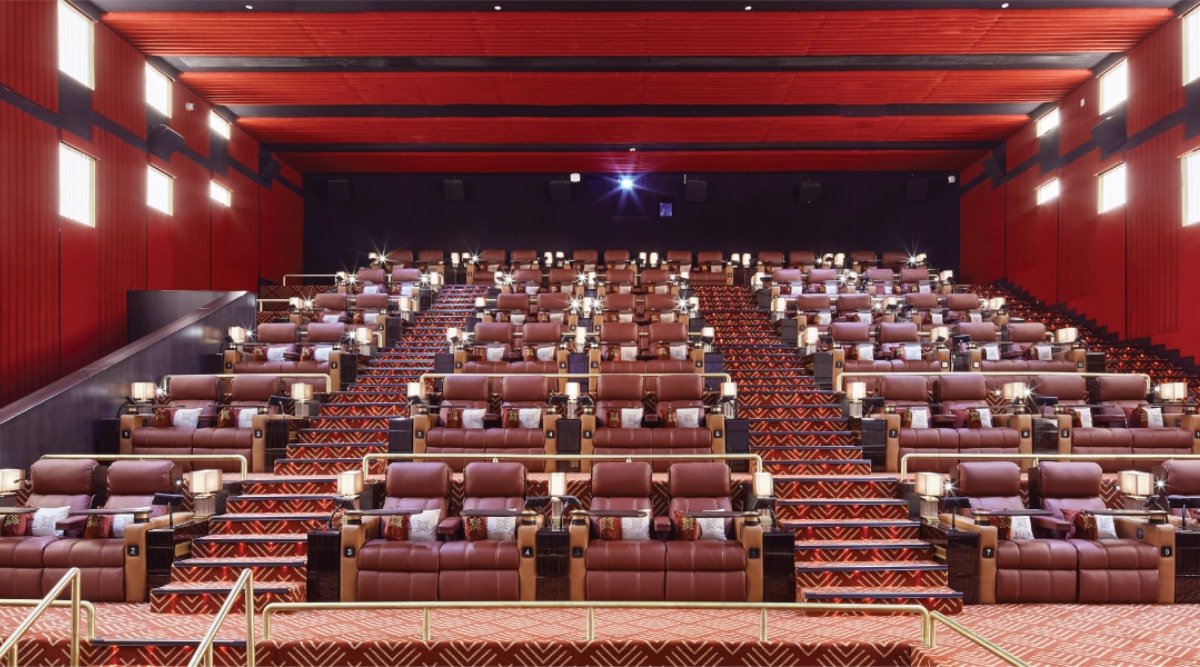
Mumbai: Multiplex chain PVR’s screen expansion in 2022 has been skewed towards South India due to the rapid mall development activity in that region, its chairman Ajay Bijli said. “We are South-skewed in terms of screen expansion this year because a lot of malls have come up in the South,” he said. “We are joined at the hip with mall development, which changes every year from region to region. This year, it just so happens that the retail expansion has happened in the South.”
Bijli said PVR aims to open its Director's Cut format in every major city in the country. “In the first phase, we will look at Delhi, Mumbai, Hyderabad, Bengaluru, Gurugram, and Noida. The second phase will be smaller cities,” he said. “This year, our capital expenditure for screen expansion would be Rs. 350 crore.” The average cost per screen is Rs. 3 crore, he added.
PVR will launch its first super luxury cinema format PVR Director’s Cut in South India in Bengaluru on December 9, Bijli said. With this launch, the multiplex chain will have 88 screens in 12 properties in Bengaluru and 316 screens across 51 properties in South India. PVR has set a goal to open 100 new screens every year. It has opened 44 screens so far this fiscal, and is aiming for 20 more screens in this quarter with plans to add another 35 in Q4.
On its merger deal with Inox, Bijli said the same will be closed this fiscal year. “We have got all the necessary approvals but there are still one or two approvals left,” he said. “Everything is on track. Hopefully, in the next couple of months, we should be done with it.”
PVR chief financial officer Nitin Sood said, “We are waiting for the final approval from the NCLT because the regulatory authorities must give their consent as a part of the process. If they don't have any objections, the tribunal passes the order for the merger. Our next date of hearing is scheduled mid-December. ”
PVR and Inox to merge, will create largest multi-screen player in India
8:26 AM

Pankaj Doval (THE TIMES OF INDIA; March 28, 2022)
New Delhi: PVR and Inox, India’s top two multiplex chains, on Sunday announced a surprise merger to create the country’s largest multi-screen player as they looked to emerge from the pandemic-induced slump and seek to tackle the onslaught from content streaming giants.
Ajay Bijli of PVR and Siddharth Jain of Inox Leisure told TOI that the move would help the merged entity — to be called PVR Inox with over 1,500 screens — better compete with the new-age deep-pocketed rivals, and added that the benefits of the synergy may be passed on to consumers in terms of aggressive ticket prices.
“We will become an entity with much stronger balance sheet. There is a lot to be done, and India is still an under-screened country,” said Bijli, who will be the MD of the merged entity.
-----------------------------------
The merger of PVR and Inox comes in the aftermath of the pandemic, when there’s a need for a consolidation in the multiplex industry and “creating scale to achieve efficiencies critical for long term survival of the business” and to fight OTT platforms, said PVR’s Ajay Bijli, who will be MD of the merged entity.
“There is no doubt that consumer (content viewing) habits got changed (during the pandemic). One can say that there was no choice but to consume a lot of content on small screens and OTT platforms… you have big OTT players with very deep pockets. Only if you become stronger can you do that (compete). The pandemic expedited consolidation and made it more of an important thing to happen,” Bijli added.
Jain, who will be a non-executive director on the board of the merged entity, said that multiplex cinema screens were the “hardest hit” in the past two years and a stronger, merged entity was an effective way to make a comeback while also growing operations. “Someone has to start the investment cycle. What better way to do that than come together and do it… This partnership will bring in enhanced productivity through scale, a deeper reach in newer markets and numerous cost optimisation opportunities.”
The amalgamation is subject to regulatory approvals, which may take six to nine months. With the biggest screen population for any entity (India has around 9,600 theatre screens), the merger will also require approval over competition issues.
As part of the plan, Inox will merge with PVR. After merger, PVR promoters will hold 10. 62% stake while Inox promoters will have 16.66% in the combined entity. Inox shareholders will receive three shares in PVR for 10 shares of Inox.
The new company will have a board strength of 10 members, and both promoter families would have equal representation with two seats each.
-----------------------------------
INOX promoters to hold 16.66%, promoters of PVR to hold 10.62% in combined entity
Gaurav Laghate (THE ECONOMIC TIMES; March 28, 2022)
Mumbai: India’s leading multiplex chain, PVR, will merge with INOX Leisure, the second biggest, to create the country’s largest film exhibition company — with 1,546 screens in 341 properties across 109 cities. The move is a surprise as PVR had reportedly been in advanced talks with the local unit of Mexican company Cinépolis for a possible merger.
Boards of both companies approved the all-stock amalgamation of INOX with PVR on Sunday. After the merger, INOX promoters will hold 16.66% in the merged company, while those of PVR will have 10.62%. The merger is subject to approval by regulators, shareholders and stock exchanges.
It will likely not require Competition Commission of India (CCI) approval, said some analysts, as the threshold of Rs. 1,000 crore won’t be exceeded, given the damage to the sector caused by Covid-19, which closed theatres for months on end. INOX shareholders will get three shares of PVR for every 10 they hold, according to the terms of the deal. On Friday, stocks of PVR and INOX traded at their 52-week highs.
PVR closed at Rs. 1,827.60, up 2.8%, for a market value of ₹11,120 crore on the BSE. INOX ended at Rs. 470.50, up 6.3%, for a market value of Rs. 5,740 crore.
The combined entity will be named PVR INOX, although the current branding of existing screens will continue. New halls will be branded PVR INOX.
“This decisive partnership would bring in enhanced productivity through scale,” said INOX director Siddharth Jain.
PVR chairman and managing director Ajay Bijli said, “The film exhibition sector has been one of the worst impacted sectors on account of the pandemic. Creating scale to achieve efficiencies is critical for the long-term survival of the business and (to) fight the onslaught of digital OTT platforms.”
The deal, if completed, will reshape the country’s film exhibition industry that’s seeing its first consolidation in the past decade and a half. After the merger, the promoters of INOX will become co-promoters in the merged entity along with the existing promoters of PVR. The board of the merged company will be reconstituted with a total strength of 10. Both promoter families will have equal representation with two board seats each.
INOX’s Pavan Kumar Jain will be non-executive chairman, while PVR’s Ajay Bijli will be MD and his brother Sanjeev Kumar Bijli will be executive director of the merged company. Jain will be non-executive, non-independent director in the combined entity.
Despite the second wave, cinemas will sustain themselves-Ajay Bijli
9:39 AM

Gaurav Laghate & Vinod Mahanta (ECONOMIC TIMES; June 19, 2021)
Though the second wave of the Coronavirus pandemic was worse than the first, cinemas will sustain themselves, said Ajay Bijli, chairman and MD, PVR Limited. In a chat with ET’s Gaurav Laghate & Vinod Mahanta, Bijli talks about the impact of the second Covid-19 wave on the multiplex industry, the competition from OTT and the recovery of the cinema exhibition sector. Edited excerpts:
How has the pandemic affected PVR and the film industry?
The world hasn't seen anything like this, and of course, our industry has got badly impacted. Short term, we've been extremely badly hit, but I do believe that in the long term, cinemas will sustain themselves. I'm not saying it just as a self-fulfilling prophecy. There are important engines of growth, which have moved us forward and made us survive all these years not just in India, but globally. India, as a market, has the highest number of movies that get released in the cinemas. It’s a heterogeneous, very disparate and very volume-driven market and it’s not just dependent on Hollywood content.
Was the first wave of Covid more dangerous or the second one for business?
During the first wave, because the government lockdown was so strict, and from March 15 till mid-October cinemas did not open, we could go to the developers and get rental reliefs. There was no ambiguity. From that point of view, we were able to control costs. Of course, the losses were phenomenal, but we could manage the costs, our people took a haircut, and so on. Even overall, if you look at it, how humanity suffered was not as bad as in the first wave.
The second wave is euphemistically being called a wave, but everybody knows it was a tsunami and it destroyed everything, and everybody was shell shocked. It created a lot of confusion in the minds of the consumers, mall developers and multiplexes. So, the second wave was worse from not just the point of business and overall humanity, but also for people's confidence levels.
When cinemas open, would you have enough films in the pipeline to have sustained interest from the audiences?
There are many films ready to release. One must understand that for economic reasons, and not for any romanticized emotional reasons, the film fraternity internationally, and in India, has realised that the first window of releasing the movie theatrically is still very important. And it's important not only for the exhibition industry, but also for the film industry. I would argue that even for the OTT industry, the theatrical window is important as it sets a quantitative and qualitative benchmark. You get to know how the movie has performed at the cinema – did people like it or not.
What were your thoughts when the filmmakers decided to release films directly on these OTT platforms?
To be honest, I had a very contrarian view. I did not panic when these movies were getting sold at all, and not because of some sort of belief in equanimity, but because the money was flowing back into the industry. I believe if the money flows back into the industry, they get encouraged to make more content. For economic reasons, cinema will always be there as first harbinger of this monetization journey of content as it is getting 70% of your revenues.
So you are pretty sure that cinemas will come back and will have no competition from OTT?
OTT has become extremely accentuated, because if my door is shut, and people are at home, what else are they going to do. But the two growth engines I spoke of have made us survive this long and will continue to make cinemas thrive. Also, earlier there was home entertainment, so it's not the first time. But it’s just that because there was no choice. I think water will find its own level when things normalise. Now you can argue, when will things normalise? And that is anybody's guess.
How do you see the recovery for the cinema exhibition sector?
I was reading the interview of the gentleman who owns the highest number of screens in the world. He said four factors have brought cinemas back into life in the UK and two of those factors are government support. One was all the furloughs, the bank loans and moratoriums that were given, and the second factor was the high level of vaccination. With these two factors in place, cinemas survived, and with that, consumers got the confidence to go to the cinemas and confidence came to the film fraternity. I think these are the ducks that must come in a row in India.
I don't know when we will open. Also, will consumer confidence come back with such a low percentage of vaccinations happening is a big question. I think vaccination is going to be the key and I am not the only CEO saying this.
I'm genuinely a dream come true-Shah Rukh Khan
7:56 AM

MUMBAI MIRROR (October 26, 2019)
Shah Rukh Khan wants people to have faith in the power of dreams. Talking on the sidelines of an event in Delhi, the 53-year-old actor was quoted as saying, "Some of the things that you don't think about, will happen to you and they are the best things of life. You just don't know it yet. I don't want to show off, but I'm genuinely a dream come true. I'm a lower middle class boy without his parents bound to the city of glamour and become a movie star. The world has showered me with their love. This happens in only dreams, but I never thought of it.”
SRK went on to add that he never thinks of himself as a star in Delhi but must behave like one sometimes. "It bores me to be a star that way. I love my job and promise to everybody that as Ajay Bijli and Sanjeev Kumar Bijli keep on making cinema theatres, I'll keep on making movies to fill them," he shared.
When asked about the first time he saw himself on the big screen, Shah Rukh said it was the rushes of 1992 film Raju Ban Gaya Gentleman, directed by Aziz Mirza, at the R K Studios. "I found myself so ugly. I had such bad hair. I was doing such bad acting in front of Nana Patekar, Amrita Singh and Juhi Chawla. I took the late 4.15 am flight ticket that our producers used to get for us at 25 per cent off and went to the airport, thinking I can't work in films. Aziz and Juhi convinced me that it's not that bad. The final cut would be better. Just like Ajay Bijli lied and got Yes Boss to play at this theatre, those two lied to me. I never looked better, I looked just the same," he recalled.
Shah Rukh Khan inaugurates revamped PVR Anupam, India’s first multiplex
7:55 AM

BOMBAY TIMES (October 26, 2019)
It was recently announced that PVR Anupam, India’s first multiplex, will go under renovation. The property, introduced in 1997, has been an epitome of a modern cinema theatre in its era and has been loved for over two decades. The cinema opened with the screening of Yes Boss in 1997 and has mapped an extensive journey celebrating India’s cinema culture since.
The curtain was drawn in the presence of Shah Rukh Khan, Ajay Bijli, the Chairman and Managing Director, PVR Ltd, as well as Sanjeev Kumar Bijli, the Joint Managing Director, PVR Ltd. Carrying ahead the legacy of PVR to offer a differentiated experience and modern cinema-viewing, PVR Anupam is set to come back with a new style for the capital’s movie enthusiasts. Addressing the media, Ajay Bijli said, “This shows we have come a long way and the journey would not have been possible without the love and support of our partners, the film fraternity and the audience. This theatre is extremely special as it is the first multiplex in India and marks the beginning of my journey in this industry. The cinema will come back with new and exciting features, living up to the expectations of today’s audience. It is a great feeling to be here today and to look back at the journey. We are sure PVR Anupam will continue to receive the same love when it reopens.”
Marking his presence at the event, Shah Rukh Khan stated, “It has been two decades of the theatre spreading laughter and entertainment among cinegoers. It is a great feeling to be here. Cinema has been an integral part of India’s entertainment ecosystem and as actors, producers, directors or exhibitors, it is the love for movies that motivates us to work hard and live up to the expectations of the audience.”
With over 800 screens across 170 properties, pan-India and a customer base of over 100 million annually, PVR’s unique and diverse offerings stand tall in the exhibition industry.
Subscribe to:
Posts (Atom)