Showing posts with label Aditya Kripalani. Show all posts
Showing posts with label Aditya Kripalani. Show all posts
Universal Music India acquires a stake in Excel Entertainment; can corporate investments ever be married to creativity?
9:45 AM

Akshita Maheshwari (MID-DAY; January 25, 2026)
In December last year, when we first heard rumours of Netflix acquiring Warner Bros, the thinkpieces came thick and fast. People said this was the final nail in the coffin for theatrical films, the moment algorithms would officially replace auteurs, and boardrooms would decide not just what gets made, but what kind of stories are even worth telling. A streaming giant swallowing one of Hollywood’s oldest studios seemed to confirm everyone’s worst fears, that cinema would finally become content, IP would matter more than ideas, and risk, originality, and the mid-budget film would be the first casualties.
Closer at home, Universal Music India (UMI) just acquired a 30 per cent stake in Farhan Akhtar and Ritesh Sidhwani’s production house, Excel Entertainment. This comes after Saregama Music invested in Bhansali Productions in December last year, and vaccine billionaire Adar Poonawalla acquired a 50 per cent stake in Dharma Productions in 2024. When corporate deals that haven’t even gone through in the West cause such a stir, is there any panic of a corporate takeover of the movies at home?
Managing director at Mukta Arts production house, Rahul Puri, says, “Giants have always existed in the business. Mukta was one of the first companies that went public and raised money from the equity markets. Then you had PNC [Pritish Nandy Communications], Balaji [Telefilms], Tips [Industries] in those early days. Even when there was a corporate interest, companies — like the [Aditya] Birla Group with Applause — tended to build organically. They didn’t necessarily partner with anyone because they had enough capital to come in and attract talent.”
He adds, “Now the mindset has changed. Corporate houses have recognized the value that creators and production houses bring. They bring a network of talent and relationships, and our business is very much about those networks.”
The style of filmmaking too has changed today. Going to the cinema is a theatrical event, reserved only for big-ticket spectacles.
“Whether it’s action films with big sequences or films on a large canvas with international travel, budgets are much bigger,” says Puri, “There’s also the ambition to make Indian films competitive globally, so quality has to go up, which affects production costs. Corporate investment is a way to de-risk producers while also giving them capital to be able to make these large projects.”
Among the three deals mentioned, interestingly, two of them happen with music labels entering films. In Indian cinema, music and films have always shared a special relationship, in business and in bed. Even bad films could rely on a banger album to be able to succeed. Before phones and social media, music was the first taste of a film, and often the biggest factor that invites the audience in.
“Unfortunately though in India, music is perceived as free. We never want to pay for music. Since the piracy boom, music has been seen as an add-on to everything else,” says Rajdeep Anand, who works in music licensing, “With UMI and Saregama getting into films, music will finally get its due.”
For Anand too, the deal is like music to his ears. “The older model was that someone would come up with a movie and a set of songs, and then labels would bid for it. But now, everything in Excel’s future that relates to music will go through UMI. Universal doesn’t have to worry about any other player coming in. If I already know my slate for the next five to ten years — what’s coming on OTT, what’s coming in theatres — I can spend time developing new talent and strategically placing which singer gets attached to which project. It gives artistes a platform even before they start off,” he explains, “Look at something like Mismatched (2020-26), Kho Gaye Hum Kahan (2023), or Gehraiyaan (2022), or something as big as Dhurandhar (2025) — they could take much bigger bets with their music. Excel has always had a great ear for music, so I am hopeful that this collaboration will bring music to the forefront.”
Puri also adds, “It is also a play to give music labels a strong flow of content separate from their traditional business, which is essentially just music distribution. They’re taking advantage of a dynamic content monetization space.”
Filmmaker Arati Kadav, whom you may recognize from Mrs (2025), shares why she thinks corporates are investing in films. “First of all, there is always the charm of being associated with the film industry,” she says, “We hear of many films making Rs 100 or Rs 200 crore, but we confuse revenue for profit. Even if a film makes Rs 100 crore, the production cost has gone up so much that the profit we earn is very less.”
Puri argues that big-ticket films might actually help with cash flow. “If a film like Dhurandhar [Jio Studios] does really well, that money can flow into smaller films. Big stars can’t make infinite films, so the surplus has to go somewhere. Ideally, into more creative films.”
Kadav also agrees, “Corporates coming in might actually impart some autonomy to production houses. For example, Dharma [Productions] could make the beautiful film, Homebound (2025) because they had the backing of Adar Poonawalla.”
We ask, what if algorithms start to dictate storytelling? She says, “Unfortunately, the climate has already become like that. Algorithms are dictating the shape of our stories already. Actors are chosen by follower counts. The world has become like that, regardless of corporations. At least if a producer with a good sensibility gets corporate money and support, and if they have good convincing power, they might actually be able to break out of that.”
Although Puri, Kadav, and Anand make this sound like a sweet deal, there are still sceptics who worry that this might mean a death for their creative vision. Filmmaker Aditya Kripalani shares his concerns, “Within corporations, you have a whole board of people and their aim is to not lose their job. I’m not saying they are wrong. But for them, the peak point of their life is to keep that job at the platform,” he says, “If I’m at a platform, it’s easy for me to have a checklist: Did it go to Cannes? Does it have a star? What numbers has that star’s previous film done? Once I have that checklist, my head will not roll if I take the film. But if I say ‘I like the film’ and the film doesn’t work, my head will roll.”
Kripalani calls back to when Netflix co-CEO Ted Sandoros said that he thinks Sacred Games (2018-19) may not have been the best choice to open in the Indian market; he would have liked to go with something more “populist”. “Exactly, there you go,” says Kripalani, “For me, the 100 per cent corporatization is when a platform makes a film. Because then the creative individual — which is the director — has no power. They are hired hands, no matter how big that director is.”
Eros International, a music giant, produced Raanjhanaa (2013), while Aanand L Rai directed it. When the film was re-released, Eros could change the ending of the film with AI, without the director’s consent, completely changing the meaning of the film. Rai was then dragged in a copyright infringement lawsuit by Eros for making Tere Ishk Mein (2025) too similar to Raanjhanaa.
An important loss in the race to corporatization is the mid-budget film. “The '1-crore films, we used to call them,” says Kripalani. According to him, movies will now split into big-ticket spectacles or OTT releases. The traditional trajectory for a director to get a big-budget would be to start with AD-ing, get to mid-budget, and then big-budget event films. With corporatization, we may just be witnessing the death of a mid-budget hit.
“In the 1990s, you used to get 2 to 3 such films a year each from Ram Gopal Varma, from Dharma [Productions], from Yash Raj [Films]. Even Munna Bhai MBBS (2003), Rock On!! (2008), Dil Chahta Hai (2001) were all mid-budget films. A film made for a certain budget with a known face, these are gone,” he says, “In the last couple of years, you have seen Superboys Of Malegaon (2024), Laapataa Ladies (2024), and maybe one or two more — there’s a handful of this kind of film that I can name.”
“I think the people who are in the biggest problem are the mid-level people. New people — like a crazy YouTuber making great content — can still get picked up. And if you’re already an established [Martin] Scorsese or [Christopher] Nolan, you’re okay,” says Kripalani, “But the people who have made five to eight films and are in the middle of their career. There is no platform left for them.”
But what do we lose when we lose mid-budget films? “We lose stories with depth. They may not deal with dark subjects, but they touch you deeply — family dynamics, interpersonal relationships,” says Kripalani, “The indie space deals with the darker sides of society. Big films are just popcorn films, which is fine. Now you’ll get either mindless spectacle or very dark films. When was the last time you got something like Dil Chahta Hai? That middle space is disappearing.”
Nothing in the system is designed to nurture our stories-Arati Kadav
10:13 AM

Arati Kadav, Kanu Behl, Aditya Kripalani
As 46 filmmakers sign a joint letter demanding equitable screens, Kanu Behl and Arati Kadav discuss forming a body to secure minimum rights for indie cinema after years of being stifled by theatres and OTT
Mohar Basu, Priyanka Sharma (MID-DAY; November 19, 2025)
Change is what Kanu Behl urged for, as he spoke to mid-day last week after his film Agra was allotted only 70 screens across the country (I will quit filmmaking, Nov 15). Within days, his appeal has transformed into an industry-wide call for action. On November 17, 46 independent filmmakers across India signed a joint letter asking multiplex chains to give their films a fair shot by providing them equitable showtimes, transparency in how the screens are allotted, and urged OTT platforms for acquisition parity. The signatories include acclaimed voices such as Nandita Das, Chaitanya Tamhane, Cannes Grand Prix-winning director Payal Kapadia, Orizzonti Award winner Anuparna Roy, National Film Award winner Rima Das, Arati Kadav, Vasan Bala, and many more.
The first step
Behl reveals that the idea of a joint statement sprung from his conversation with a bunch of filmmakers right after Agra’s release. After all, each of their films, at one point or the other, had been snubbed the way Agra was. “So, we felt it was high time we came together and spoke about this in one voice,” he tells mid-day.
The letter appeals the industry to make space for independent films. It points out the irony of how countless indie movies have been celebrated at renowned film festivals — Cannes, Venice, and Busan — but fail to reach the Indian audience. It highlights that small films face limited screenings, morning or weekday-only slots, and cancellations even.
A wave of reactions
The letter has received an overwhelming support from the industry, with actors, filmmakers, and writers spreading the word through their social media accounts. The reaction itself is telling, notes Behl. “If there is such a huge public outcry, it’s because every single person in the town feels stifled in one way or another.”
Echoing the sentiment is Mrs director Kadav. She voices what every indie filmmaker feels when she says, “Nothing in the system is designed to nurture our stories! Indie filmmakers spend five, six years shaping a film, and when it’s finally ready, there is barely any space for it — not in theatres, not even on OTT, which was supposed to be the great equaliser! We’re constantly told to make what ‘works’, but what about what the artiste needs to say?”
Filmmaker-writer-editor Sumit Purohit, another signatory on the statement, believes solidarity in the industry needs to go beyond words.
“Everyone needs to actively support and promote independent voices. Especially actors and filmmakers who began their journeys with indie films and have gone on to do bigger work. They can make a huge difference by backing new, smaller films. If they cannot always be part of them as cast, they can still support as producers, executive producers, presenters, or by helping the films find funding,” he says.
Actionable change
Kadav terms the letter as “just the beginning”. The plan ahead is to make a filmmakers’ guild. Behl elaborates, “We are developing a collective of filmmakers, which will become an official body and will have a larger conversation about securing minimum rights for this kind of cinema.”
Main Actor Nahi Hoon director Aditya Kripalani highlights that a formal body will give filmmakers far stronger leverage than fighting these battles alone. It will also provide a streamlined approach to champion each other’s work. He cites an example from Hollywood to show how a community of filmmakers can bring the change they want to see. “Agnès Varda, Martin Scorsese, Francis Ford Coppola, Brian De Palma, and so many others were friends who backed each other’s films and ambitions. The same is true of the three Mexican auteurs — Alfonso Cuarón, [Alejandro Gonzalez] Iñárritu and [Guillermo] del Toro.”
Et tu, OTT!
Streamers, once considered the harbinger of a new wave of storytelling, have also been called out in the letter. It questions why OTT platforms consider a movie’s theatrical performance as a prerequisite for acquisition. Here, Kripalani points out that OTT has perhaps benefited the most from indie talent. “They find all their directors for their series from indie films — be it Avinash Arun [who directed Paatal Lok], Devashish [Makhija] who is now making Gandhari, or Vasan,” he shares, before making an appeal. “What would help us is if OTT platforms can keep aside some budget every year for indie films. Even if it’s one-tenth of the big films, it’s enough.”
Nawazuddin Siddiqui's Main Actor Nahin Hoon to be screened at Lee Strasberg Theatre and Film Institute
9:49 AM
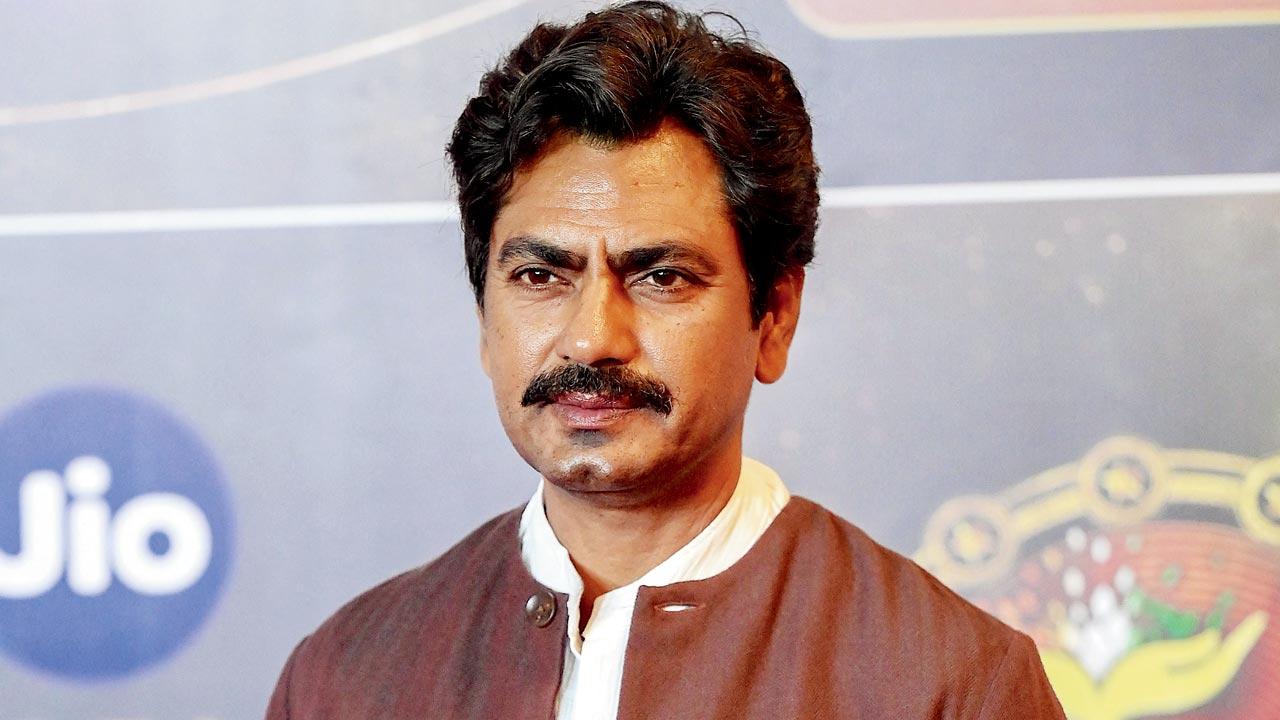
After presenting Main Actor Nahin Hoon at film festivals, Nawazuddin Siddiqui to take a masterclass at the Lee Strasberg institute of method acting
Mohar Basu (MID-DAY; May 21, 2025)
Would you believe it if we said Nawazuddin Siddiqui is a bad actor? Fortunately, you don’t have to as he aims to convince us in his next film, Main Actor Nahin Hoon (I’m Not an Actor).
After making waves at the New York Indian Film Festival, the actor is taking the movie to an institute that has shaped generations of performers — the Lee Strasberg Theatre and Film Institute (LSTFI). The film revolves around a retired banker-turned-bad actor — played by Siddiqui — who virtually connects with an actor for acting lessons. The cast also includes Chitrangada Satarupa and Naveen Kasturia, along with Ayushi Gupta, Yasir Iftikhar Khan, Meenakshi Arundhati, and Vibhawari Deshpande.
Main Actor Nahin Hoon will be screened exclusively for the school’s current students and alumni on 24 June. It will be followed by an intimate conversation with Siddiqui and writer-director Aditya Kripalani. “We are so excited about this. It is a film about acting, so for it to go to a prestigious establishment like this is a huge honour,” says the filmmaker.
Siddiqui, who has trained in method acting, will conduct a masterclass about the process behind his performance and the many interpretations of the craft. “As artistes, we feel bankers have it easy. They feel we have it easy because our lives are far less regimented. [We assume] that the grass is always greener on the other side. I want to debunk these labels,” says Kripalani.
He adds that, while he understands the notion is rooted in reason, “people are not as one-toned as we make them out to be. Their worldview makes them, not their choice of profession. I wanted the other party to get into our psyche.”
The director aims to release the film theatrically in India around October or November this year.
Aditya Kripalani shoots Main Actor Nahin Hoon with Nawazuddin Siddiqui in Mumbai and Frankfurt simultaneously
8:16 AM
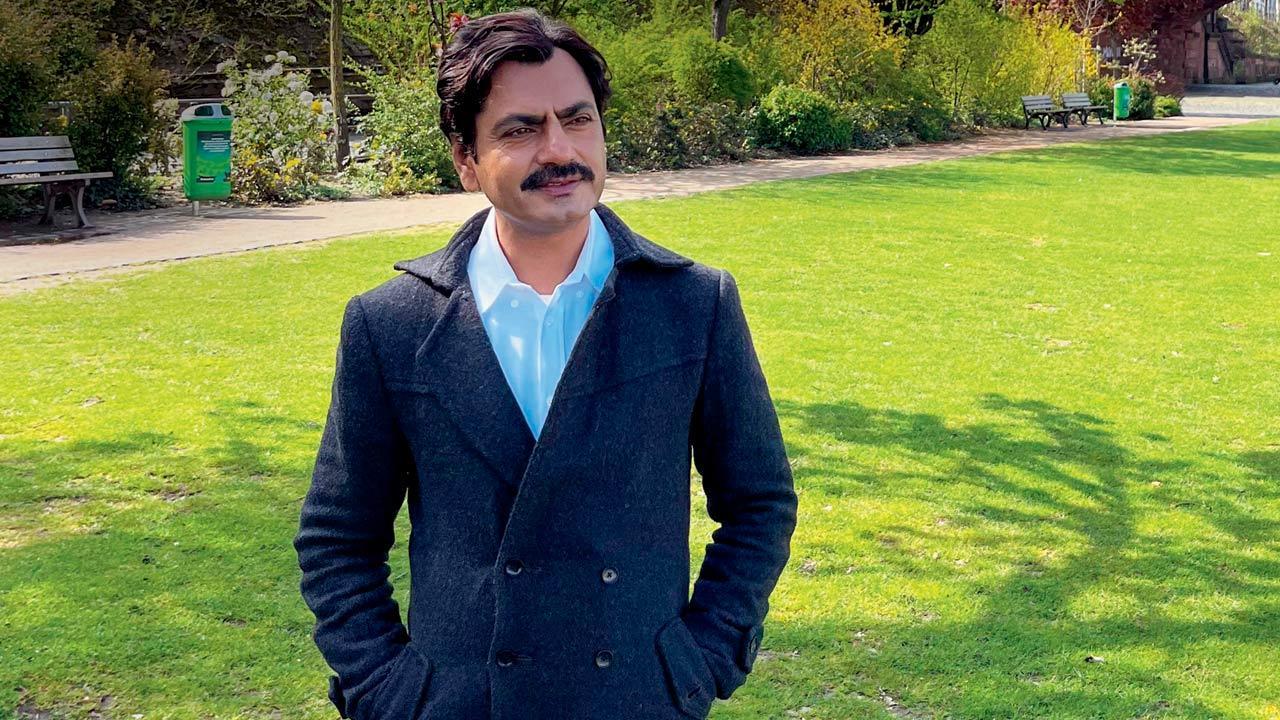
Mohar Basu (MID-DAY; January 29, 2025)
We’re bemused when Aditya Kripalani says Nawazuddin Siddiqui plays a banker-turned-bad actor in his next, Main Actor Nahin Hoon (I’m Not An Actor). How do you make Siddiqui act badly, is the first question that enters our mind. “He is such a brilliant actor that when he has to act badly as part of a film, he knows how to be pitch perfect at that as well,” laughs the director, before adding, “Usually bad acting is simply loud acting. When you think of a bad actor, you won’t think of Nawaz bhai in a million years. We wanted that shock value.”
I’m Not an Actor, also starring Chitrangada Satarupa and Naveen Kasturia, revolves around Siddiqui’s Frankfurt-based character, who, upon retirement, pursues his love for acting. At an audition, he comes across an actor from the Film & Television Institute of India (FTII). The film follows the protagonist as he, over phone and video calls, does acting workshops with the FTII graduate. With the movie set in Frankfurt and Mumbai, the director shot it in the two cities simultaneously over 36 days. While Kripalani led a team of 40 in the German city, he supervised chief assistant director Anubhav Jain and another crew that filmed the Mumbai portions.
“It’s a unique way of shooting. For instance, if Nawaz’s character is taking a tram in Frankfurt, Chitrangada’s character would be taking a train at the same time in Mumbai. For the next 14 minutes, we’d shoot it across the two locations in sync,” explains the director.
What made him adopt this approach? He reasons, “We wanted the performances to be authentic and on point. You can shoot the portions separately. But here, the conversations, when synced, felt like an extension of a fresh equation that started virtually.”
The director plans to tour with Main Actor Nahin Hoon for the next six months, beginning with its première at the Cinequest Film & Creativity Festival in California in March. At a time when OTT platforms are being careful of acquiring films, he believes having Siddiqui as an actor-co-producer will be a big push.
“Nawaz bhai is the face of OTT. He really pushes good stories and smaller films. I feel middle-of-the-road cinema is alive only because of actors like Manoj Bajpayee and him. Everyone else is either too mainstream or too indie.”
Anurag Kashyap lends support to Not Today; Aditya Kripalani says "He went through two years of depression"
8:25 AM
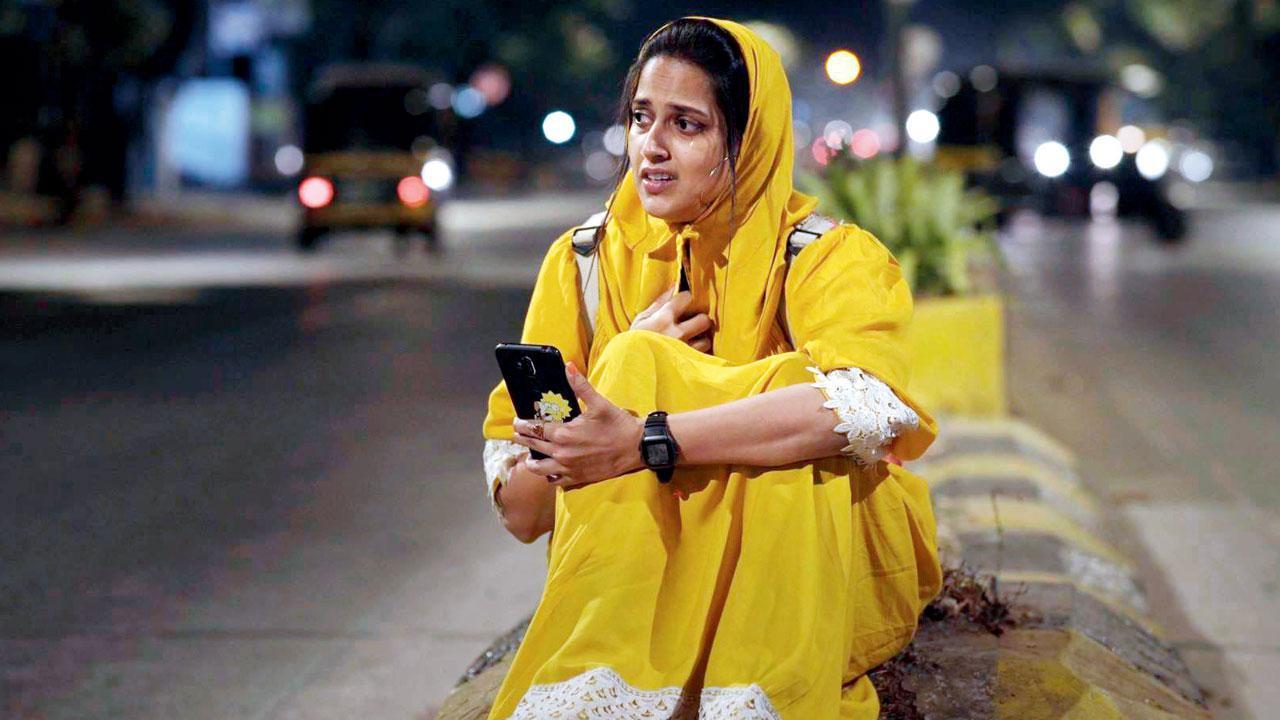
As Kashyap lends support to Not Today, director Kripalani on tackling subject of suicide through the movie and making a tangible difference through viewers’ donation
Mohar Basu (MID-DAY; August 31, 2024)
Countless movies have been made on love and heartbreak, on friendship and family, but where are the films on suicide prevention? This thought led director Aditya Kripalani to make Not Today. Now, Anurag Kashyap has thrown his weight behind the project. The filmmaker has launched its trailer, before it premières on YouTube tomorrow.
Decoding his fourth feature film, Kripalani says, “The idea was to make a film that makes people feel less lonely. When you have a break-up, you listen to heartbreak songs. When you split with friends, you watch Dil Chahta Hai [2001]. There should be films that help you through suicidal thoughts. We need to feel heard, understood. There are 4,00,000 people who feel this every year. There should be movies for hope.”
Not Today spans a day in the life of a young Muslim woman, who begins working as a suicide prevention counselor in secret. Kripalani says the film will be available for free on YouTube, with a QR code provided for viewers to donate and all proceeds will go to a Mumbai-based suicide prevention centre.
“We have all lost friends and family to suicide. I want people to invest in understanding suicidal thoughts. We want to donate everything from this to a suicide prevention centre.”
Overjoyed that the film has received support from many in the industry, including Sobhita Dhulipala, Vasan Bala and Shonali Bose, the director is grateful that it took only one call for Kashyap to come on board.
“He went through two years of depression. I went and met him. He was there for me when my films have not been able to find release.”
Priya Bapat and Geetika Vidya Ohlyan to play lovers in an international film
8:00 AM

The acclaimed actresses talk about the depiction of same-sex relationships in Indian cinema and more
Renuka Vyavahare (BOMBAY TIMES; January 25, 2021)
Renowned Marathi film actress Priya Bapat will team up with Geetika Vidya Ohlyan, known for her powerful performances in Anubhav Sinha’s much-acclaimed social drama Thappad and Ivan Ayr’s Soni, for Aditya Kripalani’s English language film, Father Like. The two will be seen playing a same-sex couple in a long distance relationship in the film, which is essentially about finding your roots and a sense of belonging.
Speaking of the portrayal of samesex relationships in Indian cinema, Geetika said, “I have rarely seen a humane portrayal of the (LGBTQIA) community in our films, unless it is a beautiful film like Aligarh that takes upon itself to dissect the societal prejudices. Sadly, it is rare to find a sensible depiction of a member of LGBTQIA when they aren’t the protagonists. What I find beautiful about Father Like is that it normalises homosexual relationships in a gentle and intelligent manner.”
Priya, who plays Sarah in the film, explained, “I think the depiction of same-sex relationships in cinema is improving. People are now open to understanding and embracing the natural orientation of an individual. It is an important change. In this film, too, the relationship they share is like any other long-distance relationship. Their sexual orientation is just a part of their life. What matters is the bonding and understanding they have.”
Director Aditya Kriplani added, “The love track is just a part of the narrative. Sarah (Bapat), the protagonist in the film, happens to be gay and in love with another woman, it could have been another man or a transgender woman. I find that there is nothing different, it is like any other relationship where two people are in love, feel strongly for each other and are trying to make things work.”

Social media users outraged over Tikli And Laxmi Bomb poster; director defends film
7:49 AM
Mohar Basu (MID-DAY; November 23, 2017)
It was during the MAMI festival that Sanal Kumar Sasidharan’s S Durga had its first brush of resistance because of its allegedly explosive title. While Sasidharan’s battle has reached its finale, debutante director Aditya Kripalani’s struggle has just begun. The filmmaker has invited the wrath of many on social media after he released the poster of his upcoming film, Tikli And Laxmi Bomb. A drama about sex workers, the poster sees a revolver covered in a pink condom. In multiple hate tweets sent to him, the filmmaker has been abused and threatened for “sexualising goddesses.”
A bemused Kripalani says, “In this country, every second person has the name Lakshmi and Durga. This film has nothing to do with any goddess. But the fringe elements have sent these hurtful messages to me.”
One user accused him of hurting religious sentiments while another wrote, “Why is there a condom on the poster of a film that has Lakshmi's name? This is against our culture!” Kripalani adds, “We may have to take serious steps if this culminates into anything more serious than online trolling.”
It was during the MAMI festival that Sanal Kumar Sasidharan’s S Durga had its first brush of resistance because of its allegedly explosive title. While Sasidharan’s battle has reached its finale, debutante director Aditya Kripalani’s struggle has just begun. The filmmaker has invited the wrath of many on social media after he released the poster of his upcoming film, Tikli And Laxmi Bomb. A drama about sex workers, the poster sees a revolver covered in a pink condom. In multiple hate tweets sent to him, the filmmaker has been abused and threatened for “sexualising goddesses.”
A bemused Kripalani says, “In this country, every second person has the name Lakshmi and Durga. This film has nothing to do with any goddess. But the fringe elements have sent these hurtful messages to me.”
One user accused him of hurting religious sentiments while another wrote, “Why is there a condom on the poster of a film that has Lakshmi's name? This is against our culture!” Kripalani adds, “We may have to take serious steps if this culminates into anything more serious than online trolling.”
Swara Bhaskar to play sex worker in adaptation of Tikli And Laxmi Bomb?
10:33 AM

Gaurav Dubey (MID-DAY; August 23, 2016)
Swara Bhaskar to star in novelist Aditya Kripalani's directorial debut based on his book, 'Tikli And Laxmi Bomb'
Last seen as an illiterate domestic help in 'Nil Battey Sannata', Swara Bhaskar is set to go bold for her next. She will feature in the adaptation of Aditya Kripalani's 'Tikli and Laxmi Bomb' centered on two sex workers. The project will be helmed by the novelist himself.
Last seen as an illiterate domestic help in 'Nil Battey Sannata', Swara Bhaskar is set to go bold for her next. She will feature in the adaptation of Aditya Kripalani's 'Tikli And Laxmi Bomb' centered on two sex workers. The project will be helmed by the novelist himself.
Subscribe to:
Posts (Atom)