Showing posts with label Aarakshan. Show all posts
Showing posts with label Aarakshan. Show all posts
Adipurush makers to change controversial dialogues; even in the past, scenes have been re-shot or removed
9:05 AM
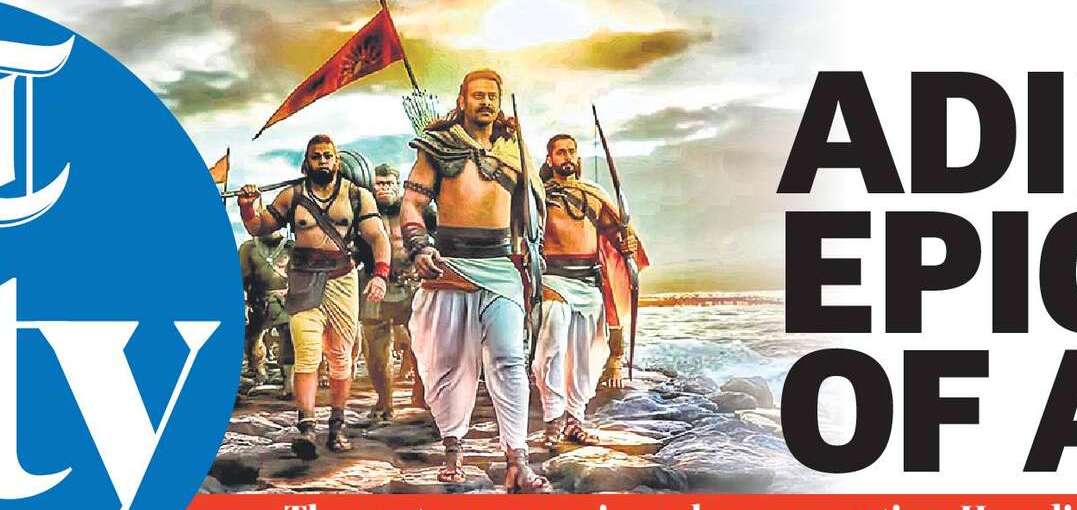
Modifications post release aren’t common, but scenes have been re-shot or removed, and songs have been dropped, too, in the past
Niharika Lal (HINDUSTAN TIMES; June 20, 2023)
Adipurush dialogue writer Manoj Muntashir Shukla believes it’s a case of just five lines. “I wrote more than 4,000 lines as dialogues in Adipurush, some sentiments got hurt on five of those lines,” he wrote on social media.
The jury is still out on whether it’s five lines or more, but the fact remains that the dialogues of Adipurush have sparked caustic reactions from audiences, politicians and film critics alike ever since its release last weekend.
The film has been widely panned for showing divine characters – especially Hanuman – speak lines that the film’s makers call colloquial, but many film-watchers have found to be crass. Bowing to the pressure, the film’s team announced on Sunday that the dialogues would be altered, “valuing the input of the public and the audience”. The makers said that they are “revisiting the said dialogues, and the same will reflect in the theatres in the next few days.”
However, such moves of altering scenes and dialogues post a movie’s release are not unprecedented. Over the years, filmmakers from Guru Dutt and Bimal Roy to Sooraj Barjatya have sought post-release changes in dialogues and songs for various reasons.
ADIPURUSH DIALOGUES THAT HAVE DRAWN FLAK
“Jo hamari beheno ko haath lagayenge unki lanka laga denge”
“Teri bua ka bageecha hai kya jo hawa khane chala aaya?”
“Kapda tere baap ka, tel tere baap ka, aag bhi tere baap ki toh jalegi bhi tere baap ki”
“Aap apne kaal ke liye kaaleen bichha rahe hain”
“Mere ek sapole ne tumhare sheshnaag ko lamba kar diya, abhi toh pura pitara bhara para hai”
WE WILL REVISE SOME OF THE DIALOGUES: MANOJ MUNTASHIR
I wrote more than 4,000 lines as dialogues in Adipurush, some sentiments got hurt on five of those lines. In those hundreds of lines, where Shri Ram was glorified, Maa Sita’s chastity was described, I was hoping to receive praise for them, which I don’t know why I did not get. For me, there is nothing greater than your feelings. I can give countless arguments in favour of my dialogues, but this will not lessen your pain. I and the producer-director of the film have decided that we will revise some of the dialogues which are hurting you and they will be added to the film this week
– Manoj Muntashir Shukla, dialogue writer of Adipurush, on social media
WHY MAKERS CHANGE FILMS POST RELEASE
While there are no recent examples, films that saw post release changes include those that were banned in some states or where the makers have made fresh edits, voluntarily. For example, Prakash Jha agreed to some changes in his film Aarakshan on the eve of its release after Uttar Pradesh and Punjab banned it over controversial scenes and dialogues. Whenever a film makes any changes, it has to get the approval of the CBFC. Sometimes, these changes are also made for the film’s satellite or streaming rights.
NINE MINUTES OF DABANGG 3 (2019) WERE CUT
The makers of Dabangg 3 announced after the release of the film that they voluntarily removed certain scenes from the film’s title track, Hud Hud Dabangg. The film was trimmed by nine minutes. As per reports, about eight minutes were edited from the first half, which included a song, Awara, featuring Salman Khan and Saiee Manjrekar. Another song Naina Lade was also shortened. The film faced controversy when several groups objected to a sequence in the title song that featured saffron-clad sadhus dancing with guitars.
FILMMAKERS SOMETIMES VOLUNTARILY SEEK MODIFICATIONS AFTER CERTIFICATION: CBFC OFFICIAL
Elaborating on the topic, a CBFC official says, “It is not uncommon for filmmakers – especially in the case of well-known directors and big-budget films – to revise dialogues and scenes. Many filmmakers voluntarily seek modifications after certification. On an average, we receive eight to ten requests from filmmakers across languages. While the film retains the original certificate in the cinemas, any updated modifications are endorsed on back of the certificate.”
SONGS WERE CUT FROM HUM AAPKE HAI KOUN! (1994)
The initial reaction to Hum Aapke Hai Koun! after the industry screening was not very positive. The film, which has a running time of 3hr 26 mins, was even longer. In a recent documentary, the film’s maker, Sooraj Barjatya, said, “For Hum Aapke Hain Koun!, we had a screening and that show was a disaster. However, Adi (Aditya Chopra) told me, ‘Dhai gaane katoge toh nikal jayegi’. And honestly, it was on my mind for the last five months. He pinpointed the exact two-and-a-half songs, which I removed the next day (sic).”
GURU DUTT, BIMAL ROY ALSO CHANGED FILMS POST RELEASE
Film archivist and historian Shivendra Singh Dungarpur shares that it was quite common in the ’50s and ’70s for filmmakers like Guru Dutt and Bimal Roy to modify their films if they felt the audience was not connecting with the story. Dutt reportedly reshot scenes of Pyaasa after the release and also removed a song. When Dutt visited a cinema showing Sahib Biwi Aur Ghulam, he decided to reshoot the climax after seeing the disappointed audience but later changed his mind and didn’t change it. However, he did remove Meena Kumari’s song Sahil Ki Taraf and some dialogues. Similarly, Bimal Roy also changed some parts of Devdas post-release.
---------------------------------------
"Meghnad is reduced to look like a cheap WWE wrestler with tattoos all over his body and made to mouth chindi dialogues. 'Beta teri jali', how can these words ever fit Ramayan? Was he a tapori character?"
-Mukesh Khanna, who played Bhishma Pitamah in B R Chopra's Mahabharat
---------------------------------------
"In my understanding, the issue is not of VFX, but of characters'' representation. Mool bhawna ko barkarar rakhna chahiye tha"
- Arun Govil, who played the role of Ram in Ramanand Sagar's Ramayan
---------------------------------------
The controversy raises a larger question: How did a film that seemingly ridicules deities receive clearance from the Central Board of Film Certification (CBFC) without any objection?
Syeda Eba Fatima (HINDUSTAN TIMES; June 20, 2023)
The uproar surrounding Adipurush shows no signs of abating. From objectionable dialogue to problematic scenes and inappropriate character representations, audiences remain dissatisfied with the movie’s content. In a shocking turn of events, on Monday, the Kshatriya Karni Sena, during a press conference in Madhya Pradesh, gave death threats to writer Manoj Muntashir and director Om Raut. Amid outrage, Nepal banned all Hindi films in its capital Kathmandu and the tourist town of Pokhara.
INDUSTRY INSIDERS SPEAK
PAHLAJ NIHALANI
The producer and former chairman, CBFC, slams the censor board saying, “It’s filled with random officers, clearing movies without objections; chairman is not available to look after the operation. In the absence of a proper system, a film like this getting a certificate is obvious.”
KOMAL NAHTA
The trade expert calls it a “grave error” on the part of the writers, and he agrees that the censor also seems to have overlooked it. “Revising them now won’t change the fate of the film because there are more issues than just these few lines.”
TARAN ADARSH
The trade analyst says that while watching the film, he wondered how the censor could clear the movie considering the makers had made a clear mockery of religion. “However, CBFC comes into the picture much later. The onus is on the director and writer, and for me, they are to blame,” he adds.
APURVA ASRANI
The filmmaker says, “If you don’t like a film, don’t recommend it. If you don’t like its message, counter it with another story. But there are people keen to watch Adipurush. Also, if the makers are being threatened or pressured, we should stand by them in the name of free speech.”
ARUN GOVIL
The actor, who is famous for playing Lord Ram in TV show Ramayan, says, “Makers are revising the dialogue because they don’t want people to react further. Par jin logon ne film already dekh li hai, woh dobara dekhne toh jayenge nahin.”
DIPIKA CHIKHLIA TOPIWALA
“The damage is already done. How such a film was cleared by the censor board is surely something to think about,” says Chikhlia, who played Sita, in the same iconic TV show.
MUKESH KHANNA
“The problem is not only those five lines... What will you do about costumes, like Raavan made into Khilji or Hanuman made to look like a cartoon? Aur censor ko kya knowledge nahi hai hamare dharam ki?” questions Khanna, who shot to fame as Bhishma in the TV show, Mahabharat.
MAKERS ARE SAYING...
The makers of Adipurush, on Sunday, decided to change a few controversial dialogues (see box). Dialogue writer Manoj Muntashir said, “I can give countless arguments in favour of my dialogues, but this will not reduce [anyone’s] pain. I and the producer-director have decided that some of the dialogues which are hurting you, we’ll revise them. They’ll be added to the film this week.”
As the controversy continues to gain steam, Muntashir has sought protection from Mumbai Police. Meanwhile, in an interview with Zee News, he said that he trusted director Om Raut during the making of the film, and requested that any questions pertaining to the story and screenplay be directed to Raut.
“We have not shown the entire Ramayana; it is extracted from one corner of the epic, Yuddha Kand. The only questions that remain are about the dialogues. The producers and I have announced that those dialogues would be changed.”
Film fraternity lauds Supreme Court's decision to lift 4-state ban on Padmaavat
8:15 AM

BOMBAY TIMES (January 19, 2018)
After anxiously waiting to announce the release date of Padmaavat, the film’s makers earlier this week officially announced that the movie will hit the theatres on February 25. But their troubles were far from over as its release was banned by the governments of four states — Rajasthan, Gujarat, Madhya Pradesh and Haryana. However, yesterday, the makers heaved a sigh of relief when the Supreme Court stayed the ban imposed on the Deepika Padukone-Ranveer Singh-Shahid Kapoor-starrer, directed by Sanjay Leela Bhansali. The court’s order said, “We direct that there shall be a stay of operation on the notification and orders issued and we also restrain other states from issuing such notifications or orders in this matter.”
A bench of Chief Justice of India Dipak Misra and Justices AM Khanwilkar and DY Chandrachud observed that the film has been cleared by the Central Board of Film Certification (CBFC) with a U/A certificate for an all-Indian screening, after considering the provisions of the Cinematograph Act, which prohibits scenes that denigrate women. Bhansali’s legal counsel Harish Salve cited the 2011 judgment of the SC that allowed the screening of Prakash Jha’s controversial film Aarakshan as an example.
BT spoke to filmmakers whose labour of love has faced opposition from fringe elements, which indirectly posed pressure on the respective state governments, leading to an unofficial ban on several movies. And they were unanimous in saying that every ban — whether official or unofficial — ultimately affects their film, months of hard work and their freedom of expression.
– Team BT
-------------------------------

FILMMAKER RAHUL DHOLAKIA (HIS NATIONAL AWARD-WINNING FILM PARZANIA FACED AN UNOFFICIAL BAN IN GUJARAT)
I just feel that we keep wasting the Supreme Court’s time. The Chief Ministers of various states should know better than to ban films at their own whim and fancy. It’s about time someone told them that they are not above the law and that we should be left alone.
 SHOOJIT SIRCAR (HIS FILM MADRAS CAFÉ FACED OPPOSITION IN TAMIL NADU FROM TAMIL OUTFITS)
The SC has taken the right decision as it’s perfectly democratic. No one has the right to take law and order in their hands and resort to violence. If you have a problem, take your grievances to court. Today, it’s about a film. Tomorrow, it will be about someone’s personal life. A state should give complete security to the film-goers and the film, which didn’t happen in the case of my film, Madras Café. People were scared to go to theatres at the thought of them being vandalised. Ironically, it was Tamil Nadu that saw the maximum sale of the film’s DVDs. If I have made a film and say it goes beyond the validity of society, you have a body like the CBFC, which will decide that. As filmmakers, we can’t go door-to-door and show our film when we have an authority like the CBFC, which is a democratic and government body. When every film or character that is even remotely close to real life faces trouble, the realism that a filmmaker wants to bring to cinema, suffers. If you feel that a filmmaker has gone overboard, you have a right to oppose, but not in this fashion. Responsible filmmakers won’t take creative liberties and create stories that are not in the history books. That’s our social responsibility as filmmakers. We need to make sure our work is rooted in reality.
 ANURAG KASHYAP (HIS FILM BLACK FRIDAY FACED A BAN)
Until and unless the government doesn’t make a statement on this and make this into a non-practice, we will have to keep going to the courts. I hope the time comes when we don’t have to do that. I wish the makers (of Padmaavat) had done this earlier. I have been wasting my time and resources for a long time. In a country that easily takes offense and people taking offense scares the votebank politicos, this is and this will be a normal practice. So, either one takes the road of the law till the very end or give into what is expected of us. Either way, there is no point complaining. You fight or you give in…call it unfair but your rights won’t be given to you. You have to fight for them and stand up for them.
 SHABANA AZMI (HER FILM KISSA KURSI KA WAS BANNED BY THE GOVERNMENT DURING THE EMERGENCY OF 1975; FIRE (1996) FACED PROTESTS IN MANY PARTS OF THE COUNTRY)
The film has been cleared by the CBFC. Of what value is it if the State cannot defend its own certificate? The filmmaker has been crying hoarse that there is nothing objectionable in the film that the CBFC has cleared. I’m sure it will become a huge success and I wish it all the best. The law of the land must apply with immediate effect so that a strong message is conveyed that the government has zero tolerance for violence or a call to violence against any citizen of this country.
 MADHUR BHANDARKAR (HE WAS DRAGGED TO COURT OVER HIS FILM, INDU SARKAR)
The Supreme Court decided in my favour a day before Indu Sarkar released. And this, when I was fighting three different battles: one political, one with the CBFC and one with a girl who claimed she was Sanjay Gandhi’s daughter. Imposing or demanding bans have been happening for years to filmmakers. The courts have cleared films that were also banned by the CBFC on numerous occasions. People are diverse, their thoughts and opinions differ and they all want their opinions to be given prominence.
We have to be mentally prepared to face these challenges as filmmakers. I understand that and today, I welcome the decision of the SC. The state governments will now have to look into the law and order situation and ensure that the film gets a smooth release.
-----------------------------
As first reported in mid-day, Padmaavat makers cite Prakash Jha’s Aarakshan as precedent to overturn state governments’ ban
Sonil Dedhia (MID-DAY; January 19, 2018)
It was a victory of freedom of expression as the Supreme Court yesterday cleared Sanjay Leela Bhansali’s Padmaavat for release, by staying the ban imposed by the governments of several states including Haryana, Rajasthan, Gujarat and Madhya Pradesh.
Comprising Chief Justice of India Dipak Misra and Justices A M Khanwilkar and D Y Chandrachud, the bench said it is the duty of states to maintain law and order and that the creative content is an inseparable aspect of Article19 (1), freedom of speech and expression.
As told to mid-day (January 18 edition), the producers’ counsel cited the example of Prakash Jha’s caste-reservation drama Aarakshan (2011), which was banned in certain states until the SC overturned the decision. Using that as precedent, the legal team argued that once the Censor Board has certified a movie, no state can ban it. It also argued that the makers had complied with the changes recommended by the Censor Board.
For an industry that largely shied away from commenting on the Bhansali’s months-long battle, it welcomed the SC decision with open arms. Shabana Azmi, one of the few actors to initiate a petition asking PM Narendra Modi to offer protection to Deepika Padukone, said, “I welcome the decision. But there remains the unresolved matter of no action being taken against those who placed a bounty on Deepika's head. Immediate action needs to be taken against these criminal elements so as to send out a clear signal to the country that the dignity of women is supreme and neither abusive language nor violent threats will go unpunished.”
Director Hansal Mehta reiterated how the banning of a film that has been cleared by the CBFC in the first place, is unconstitutional. “It’s a good sign that the Supreme Court has upheld the decision. The entire team of Padmaavat can heave a sigh of relief.”
Raza Murad, who plays Jalaluddin Khilji in the magnum opus, described it as a “victory of democracy.” “I think true change can be brought about when the government deals with people who create nuisance with an iron hand.”
Fenil's Bollywood Talk # 500
2:31 PM

~ 500TH POST ~
WILL PADMAAVAT MAKE IT TO THE THEATRES?
The much in the news Padmaavat is all set to release next week, if all goes well. The film is facing problems right from the time it was being shot. A year back, in January 2016, it faced its first blow when Sanjay Leela Bhansali was shockingly assaulted on the film’s sets in Jaipur. The attack was orchestrated by Sri Rajput Karni Sena who alleged that there was a dream sequence between Alauddin Khilji and Queen Padmavati. The makers clarified that there’s no such scene and yet, the protests continued. These protests in fact grew as the release date closer. The film initially was to release on December 1 but owing to protests and with five states banning the film, the makers postponed the film indefinitely.
Padmaavat also faced a problem at the Censor Board for not filling the form completely. As a result, it had to re-apply and that took a while. The film was viewed reportedly on December 28 and the members didn’t find anything objectionable as such. They agreed to grant the certificate but after certain modifications are carried out. One of them was that the name of the film be changed from Padmavati to Padmaavat. The makers then announced that their film will arrive on January 25. Yesterday, it came to light that the film will have paid previews from January 24 evening.
Sadly, the protests didn’t end. Moreover, the states of Rajasthan, Gujarat, Madhya Pradesh and Haryana placed a ban on the film. The makers moved the Supreme Court and today, they passed the verdict in favour of the makers. It made it clear that states don’t have the authority to ban a film that’s passed by the Censors. This is a huge victory for Padmaavat producers. Its upto the state governments to ensure that law and order is maintained. If any state or local authority would stop the release of Padmaavat due to any incidence of violence, it will be in violation of Supreme Court’s orders.
However, anything can happen in India. The protesting groups can still go on a rampage and stop the film’s release at certain places. Even during Aarakshan, the Supreme Court had given a landmark order and yet, it is unfortunate that one more film had to knock on Supreme Court’s doors for justice. Padmaavat is an expensive film and needs a pan-India release to just break even. Here’s hoping the film manages to shine at the box office!
Padmaavat makers move SC against ban in 4 states; to cite the example of Aarakshan
8:03 AM

MUMBAI MIRROR (January 18, 2018)
Producers of Padmaavat on Wednesday moved the Supreme Court to convince four states — Rajasthan, Haryana, Gujarat and Madhya Pradesh — to withdraw the ban on the film.
In their plea, the producers questioned the right of these four state governments to ban the film when the apex court has already clarified that the film’s screening can only be suspended in a particular area if there is law and order situation.
Chief Justice Dipak Misra has reportedly agreed to hear the plea today. The aforementioned states banned the period drama saying its release may pose law and order problems.
Featuring Deepika Padukone, Ranveer Singh and Shahid Kapoor in lead roles, Padmaavat is based on 16th century Sufi poet Mohammad Jayasi’s poem Padmavat. Film director Sanjay Leela Bhansali has been under fire for allegedly distorting history, which he has denied.
The film’s producers on January 14 announced that it is all set for a worldwide January 25 release in Hindi, Telugu and Tamil, adding that the period drama will be the first Indian film to get a global IMAX 3D release.
-------------------------------------
Mohar Basu and Sonil Dedhia (MID-DAY; January 18, 2018)
After trying for long to appease protests, Padmaavat makers have finally decided to approach the Supreme Court. The lawyers will cite the example of Aarakshan, and argue that once the censor board has certified a movie, no state can ban it.
When mid-day reached out to Mahesh Agarwal, one of the lawyers representing the case for Viacom18 Motion Pictures (co-producer of Padmaavat), he said that citing the example of Prakash Jha’s Aarakshan (2011), the counsel will argue that the state government cannot ban a film that has been cleared by the Central Board of Film Certification (CBFC). “The ban is illegal. Once the movie has been certified by the CBFC, the state government has no power to issue a ban. A similar issue has been earlier settled by the Supreme Court in the case of Aarakshan. So we’ll take that as an example in our argument.”
For the uninitiated, Aarakshan, which dealt with the policy of caste-based reservations in educational institutions, was granted a U/A certificate by the Censor Board. However, the film was viewed as ‘anti-Dalit’ and banned in several states. But the Supreme Court cleared its nationwide release.
As for Padmaavat, Agarwal pointed out that the Censor Board examined all the allegations made against the drama and recommended modifications accordingly. “The Censor Board took advice from a special panel as well. The makers made the necessary changes, after which the certificate was granted.” It may be noted that besides changing the title (the original title was Padmavati), the film also carries the disclaimer that it doesn’t promote the practice of Sati, among others.
Shobha Sant (CEO, Bhansali Productions) is hopeful of the SC ruling in the film’s favour. “We have total faith in our judicial system. Jodhaa Akbar (2008) too was banned in seven states before its release and the apex court’s intervention resolved the matter.”
Padmaavat is currently banned in Rajasthan, Gujarat, Haryana, Himachal Pradesh, Uttarakhand and Madhya Pradesh.
I’m done doing films for hits-Saif Ali Khan
8:16 AM

The Nawab on endings — happy and otherwise, his forte and films
Sarita Tanwar (DNA; October 30, 2014)
You’ve never really done a romantic film with an unhappy ending, have you?
I
think I must have. Maybe Kya Kehnaa. If getting the girl means happy
ending, which generally does. (pauses) I think Agent Vinod too. He saved
the world but didn’t get the girl. Also, Ek Hasina Thi, I was eaten up
by rats in the climax scene, which is not an happy ending either.
(Smirks) A few filmmakers I know would like the idea of unhappy ending.
Interestingly, for Love Aaj Kal, Imtiaz Ali had an alternate ending in
mind, where my dithering character finally comes back to the girl and
finds her pregnant and he doesn’t go up to her and goes back to Rishi
Kapoor and has a drink with him, who tells him it is unfortunate that it
didnt work out but life goes on. But we all felt that that he should
get the girl and finally Imtiaz relented.You like happy endings?
I read somewhere in a filmmaking instruction kind-of-a-book that the ending should be satisfying. So it doesn’t matter if it’s sad or not. And I agree with that. An open ending is also nice for the right kind of a movie. Sometimes, a happy ending can be contrite. I hate films with open endings...
Maybe there is a dimension to movies...
I mean there definitely is a dimension to movies — where the audience fills in the blanks and that is also an interesting thing. I feel that if someone has started telling a story, they should end it. (Grins) There are films by people like David Lynch for which you have to get on the internet to check what it means, which can be pretty annoying, like The Ring. The movie ends and you go WHAAAT! Mulholland Drive is another film like that. Someone said the clue is in the title sequence, and I watched that a hundred times and I could not figure it out. It drove me mad.
Whose idea was the naughty title?
The directors (Raj and DK). I had very little to contribute with the film apart from trying to make it happen. I hope we are lucky enough to have news guys like this all the time. And maybe we will be, that’s the nature of film life. Their specialty is to bring things..in the past they haven’t realised on budget, show formula..They are funny, witty and strong on content. They said the title should be Happy Ending and we said, ‘No, no that’s really suggestive.”
You said that!
Well, yes. But you know my interactions shape me slightly. So if I meet too many people playing safe, I would like to be different. But if somebody comes and tells me you have the control and I want to keep the title as Happy Ending, I would be like, ‘let me think about it’. But it was the right decision. Film titles have also changed with fashion. From Lahoo Ke Do Rang to now we have Bodyguard. It’s English title time now, so that’s good.
What is your space: Romance, comedy or drama?
I was thinking, it’s remarkable that I have kind of grown up rather publicly in a way. I started out when I was 20 and now I am 44. Someone made a montage of my films with Preity Zinta, because I have worked with her many times sporadically through out those 20 years. And there is a lot of uncertainty on my face. It’s a cross between a very protected upbringing and something else I cannot define. I don’t know what the answer to what space I fit into, is. But what comes comfortably, is romantic comedy and I think people feel comfortable accepting.
Please continue...
Also, I should be doing such films but earlier when people said I would feel a little slotted and I would say I wanted to do an Agent Vinod and Ek Haseena Thi. I want to do a Parineeta and Omkara too but those are edges. There is a sense of urban timing and comedy that comes naturally, which I would think is silly not to capitalise on it as a USP because it is not everybody’s gift. A lot of good-looking guys in Bollywood who have star presence perhaps can’t do that.
True. But you moved away from your kind of cinema with Bullett Raja and Humshakals. Were you trying to find a different space?
Maybe.Yes. You talk about doing different things, experiment with different kind of roles, different makers,... Also, at the time, my thinking was, that the box office of the kind of films I was doing was not as wide as some of the other films that were being made. And I thought it would be nice to have one of those films. Also I felt that maybe after all these years I had learnt enough about acting to try and so that was the attempt. But now, I have realised that even if the box office is not that wide, one should stick to a certain culture of film. and respect that and be surrounded with people like that and say this is my world and be happy with that. But of course there are always exceptions. If Rajkumar Hirani came to me, I am sure there would be meeting of minds..I mean I don’t mean to..everyone caters to what they do is best.
So you are done doing a film for a hit?
Yes, I think now I am done with that. Some lessons have been learnt after quite a lot of thinking about it. But the lessons I learnt were something that I had always suspected. Happy Ending has not come about because of a failure and introspection that let me sign this. It was always there. And because it was always there, I thought I could take a bit of a chance.
You play all kinds of roles, so it’s safe to say you have never been slotted. Is that a good thing or a bad thing?
Well, ultimately it is a good thing. Because there is so much choice out there and for a consumer to associate you with one thing, is a nice thing. It’s better than nothing. Because you have given them a feeling that if they want to see...You might think you are very cool but they might want to see action from this guy and romance from that guy and at least they want to see something from you and that’s nice in a competitive market. and one should respect that and I do. And I also actually really enjoy that kind of cinema and if I didn’t that somewhere that might come across. It’s just that in real life I would probably watch those films than a thriller..
Speaking of films, we never see you at previews or even in theatres catching a film. Do you watch movies in which you don’t star?
Very rarely. All my life I thought, it would be nice to stop thinking about movies. It’s such a consuming profession that it takes over your life. So, when you are not on a set, it’s nice to stay a little away from that. As for this preview culture, it is something that I avoid because you are at your wit’s end trying to figure out what to say to so many people. And I, personally, would never have a trial. If someone wants to see your film, show it to them by all means, but you don’t show up there and stand at the end of it and ask them how did you like it. Asking people there how they liked the film, is petrifying for me. Because the kind of friends that I have would probably tell me they didn’t like it. And that also hurts. And the truth will be out in two days, so what’s the point of your commenting on it. Also, the atmosphere of a trial is only for the people who want to watch the film. It is not even a realistic gauge of what the film is like. I believe when you buy a ticket and go to the theatre, you want to love the film. When you go to see a trial, you probably don’t. Some of them are there to see the movie, some are there to check out the competition and some of them to run away from there. It is a competitive industry.
But by not watching films aren't you losing in touch with what is happening in terms of scripts and makers?
Watching films and watching other people's acting... I probably should. It's just that -- and this might sound like a really lame reason --but all my film I thought it would be nice to kind of stop thinking about movies for a little bit because it is such a consuming profession. It can swallow you completely. You dont talk about anything else, you don't meet anybody from outside the industry, you don't think of anything else, which is fine at a certain age but this will not last forever. There is a certain thing I have of also living life, you know? And say ok, now lets talk about something else.
But aren't you sort of alienating yourself and missing out?
Oh, but everybody hears of good films and good makers. It's not as if one is living in an ivory tower. And professionally one would zero in on new talent. Like I heard of Raj and DK and the lunch box director (name) It's just that coming home from a set and putting on either a Zoom type of show or watching a movie, would make me want to shoot myself in the head. I would want to watch Agatha Christie period show or hercules poirot and drift off somewhere else until I have to go back to the set next morning at nine am. Of course one should be aware who is doing what kind of action or acting but it's also that ever since I was a kid really, I didn't watch Hindi films because I didn't like the kind of emotions my mother would go through on the screen. I mean who wants to watch their mom crying throughout the movie. So I think it started there and it never really stopped. But it is a professional requirement and I should watch the work everyone is doing. I keep wishing I had seen every film on a Friday so I could say what people were talking about, as a professional and be able to say that this guy is fab, and this guy is not. that much you need to know.
You haven't had a hit jodi with an actress. Has that worked for you or against you?
It's means both things, I think. Cinema is..it's kind of hard to slot people, or me perhaps. Because there it is. It also means that I have not been part of an iconic love jodi.
Do you find it easier to work with new actresses or someone with whom you have a comfort level?
Comfort is normally the enemy. Strangers are always easier. But somebody who has always been a professional is easier as well. If you get to know somebody that is different. That is not an advantage when you are playing a romantic pair, I think.Unless you have always been costars. The initial chemistry should be that of hero and heroine; that's important. I guess there are women that make you feel For example working with Preity feels good, but working with Illeana is different. She is a sparkling actress. She is really, really good. And I thought I was good at this sort of a role because it is a world that I have kind of been in, but it really falls flat without the timing at the other end, which she has. She reminds me of Kajol and Rani except she is more western.
Your last two films didn't do very well. Does that make your reflect on the kind of films you should do? Do you now know that you wont do a particular kind of film?
I mean, yes and no. It recently dawned on me that being one of the first multiplex actors, I should understand that sensibility more than anybody else, which shows how much I think about it. It's like when we did Parineeta, I liked the idea, and everybody liked it and I didn't connect with the end and nobody it, so I should be sitting here and saying, ok guys this is what people will connect with but no one can predict that, so...you know I thought when you work with a guy who has made huge hits hopefully he will make a huge hit with you but it doesn't work out like that sometimes. I mean, film to film, everyone has got a rhythm
So are you done with a certain kind of cinema?
I don't know. I am done with doing anything that I personally am not moved by. I have made these mistakes sporadically in the past and they have happened chronically, you know..They keep turning up. And while I should have learnt from my mistake, history shows that every three four years I will say, lets lets try and do something different. But this time I hope lesson learnt to the point that you have to somewhere connect with the script. if you are somewhere feeling, listen I dont think it is going to work, then it probably wont. But there will come a time...like a good maker comes and says listen you are wrong, and it is going to be great, one might succumb again.
The roles that you do which seem like an extension of yourself work for you more than maybe an Aarakshan. Do you agree?
I completely agree. We rushed a bit into Aarakshan also.
Yes, it hard to see you as an untouchable.
(laughs) Genetically, I am at disadvantage to play this role, ironically. But you know the right haircut, the right look can help, if it is worked on. There are certain films that Prakashji makes, and I am no one to judge or talk negatively about him negatively, but some of his ideas will be great while suited to him. And some will be not really exciting to other people. so what I am saying is that I think Aarakshan falls into the latter category. But that's the thing he is passionate about, because you know he is politically motivated.
In hindsight do you think it was wrong to disown Humshakals?
I didn't disown Humshakals. I played a shining main lead and worked very hard for all the four roles.
Three roles!
No, there was that female character too. I had a blast working with Sajid, who I love personally. My colleagues tell me you haven't promoted any other film with so much heart. But if the film doesn't run, I feel something is wrong. We have made a wrong kind of movie. That's all I am saying.
Was Sajid upset?
Apparently yes.
Have you reached out to him to sort it out?
I will. I haven't sorted it yet. I mean I have sent messages to him, but he hasn't replied. I am allowed to say that I think we have made a wrong film because I have also worked for it. It's not that I have insulted his jagir, as such.
Do you have any directors on your wishlist?
Raju Hirani. and maybe Sanjay Leela Bhansali. (Smiles) But I don't know if I can dance like he would expect me to.
'The Narendra Modi government should trust us filmmakers'
10:35 AM

From left: Rohan Sippy, Prahlad Kakar, JD Majethia, Tejiswini Kolhapure, Ajit Andhare, Vikas Bahl, Mukesh Bhatt, Prasoon Joshi and Subhash Ghai. Pics/Shadab Khan
Filmmakers Mukesh Bhatt, Subhash Ghai, Rohan Sippy and Vikas Bahl, writer- lyricist Prasoon Joshi, adman Prahlad Kakar, producer Ajit Andhare, actor- producer JD Majethia and actress Tejaswini Kolhapure got together at the mid day office to discuss what the Narendra Modi- led government might mean for the entertainment industry
Moderated by Shubha Shetty-Saha and Transcribed by Shreya Aggarewal (MID-DAY; May 25, 2014)
HITLIST: What does the film industry, including you all, hope from the new, Modi government?
PRASOON JOSHI: Changes in the business side are important. The government could start by reducing entertainment tax. I don’t think we were particularly free and liberal in the past, so I don’t see drastic changes happening there. Hopefully, this will be a decisive government.
AJIT ANDHARE: The film industry must be treated as an industry first.
ROHAN SIPPY: Interestingly, Sushma Swaraj was the one who first accorded the industry status to Bollywood back in 1998. Now that they’re back, they will hopefully implement it.
AJIT ANDHARE: Absolutely. After being recognised as an industry, it should be treated as one, too. How will you encourage the industry? Look at your tax regime. Is it uniform? Let’s take the issue of entertainment tax, which is 35 per cent or higher. Earlier, theatres under-reported their revenues because the system was fragmented and disorganised. The entertainment tax helped them maximise returns. Now, we must either eliminate the tax or bring it down to be in line with other industries. You cannot have VAT, service tax and a high entertainment tax. And if the tax is high, what is the government’s investment back into the industry to improve the economics? However, I would not like to see the same level of involvement by the government when it comes to content. Content is about liberty and freedom of expression. Within that, the only area I would want the government to intervene on is when it concerns the Censor Board. If, say the Board censors a movie, the government of the day should do everything to ensure its screening. If the government does not have the power to help a certified movie screen in cinemas, I’d say the law-and-order situation is fractured.
PRAHLAD KAKAR: The government never takes the movie industry seriously because of the way the Censor Board is structured. You have an eminent person as the head, and the rest are ministers’ wives, MPs’ cousins and so on. Why are they there? Because they want to watch free movies. Some of them are illiterate. The Censor Board should sack the current members and get sociologists, historians and academicians on board.
PRASOON JOSHI: But how will that be done? People who believe in freedom of expression, don’t want to be on the Censor Board.
PRAHLAD KAKAR: Because they think it’s not right to censor creative expression. But, again, not all these filmmakers are liberal.
PRASOON JOSHI: Should the government have any right to censor at all? Other countries don’t have it — why do we need it in India? Should there be a government board, or another regulating body?
ROHAN SIPPY: Television, for instance, is not censored.
JD MAJETHIA: I think policies will be progressive now. Modi did not ban a Gujarati play called Aa NaMo Saho Nade Che (NaMo Fights With Everyone).
HITLIST: But in a democratic country, that is basic freedom, is it not?
ROHAN SIPPY: Ideally, yes.
MUKESH BHATT: What JD said is heartening, because I have not had a good experience with the BJP. My film Zakhm (1998) was banned. It revolved around the 1993 riots in Mumbai. Everybody knows the saffron brigade was a problem and we were told to change the colour of a band used in the film — from saffron to maroon. My brother (Mahesh Bhatt) did not compromise because the film was close to his heart. Back then, Ashaji (Parekh) was the chairman of the Censor Board. The film went on to get a National Award for its theme of national integrity. The old guard was different. Now, the fear is of the government becoming a cultural dictator. In his inaugural speech, Modi spoke about progress and development. Progress, also means not clipping wings of creativity; expression must not be choked and suffocated. Give us the freedom of speech. That’s a fundamental right in democracy. We should see to it that there is no cultural control on cinema.
HITLIST: How do we do that?
MUKESH BHATT: You should be given the creative freedom to make whatever film you want.
PRAHLAD KAKAR: That is a utopian idea.
MUKESH BHATT: It is okay as long as it’s not something that is going to affect the national integrity of the country, and nothing that hurts the religious sentiments of any community. We are sensible people, but there will be people who misuse the freedom. In the last five years, the Censor Board has come a long way. True, the board should not consist of friends of ministers and their wives. But I do feel that things have improved.
HITLIST: Are things really as good as you say they are? The last few years have seen many bans in spite of the getting a clearance from the Censor Board.
MUKESH BHATT: Hopefully, the Cinematographer’s Act will be implemented soon. Javed Akhtar and I have had a great debate on that. We have raised these bans as a critical issue. I know what problems we faced during Aarakshan and Vishwaroopam.
AJIT ANDHARE: We couldn’t release Madras Café, which was certified by the board. To me that’s a failing of the law. If we have a Censor Board, like Prahlad says, it must be well-constituted. If a Censor Board had issued a certificate, does the government have the right to ban a film?
MUKESH BHATT: Prakash Jha’s film Aarakshan was cleared in Maharashtra, as I had spoken to Chhagan Bhujpal and even Prithviraj Chavan. Everything seemed okay. But suddenly in Latur and Aurangabad, a local cop instructed not to screen the movie.
AJIT ANDHARE: This is what we are talking about. Why do you have to speak to a Bhujpal if the film has been certified by the Censor Board?
MUKESH BHATT: This is because the judiciary is also confused. Sometimes they say it is a problem of the Centre, other times they point to the State. When the judiciary comes in, the government becomes handicapped. The judiciary should be introspected.
AJIT ANDHARE: Which was the last film the judiciary blocked? The problem is with vested political interests in the state government that bans the film.
MUKESH BHATT: We have mentioned in the new Cinematographers Act that if anyone has a problem with a film, they should appeal to the tribunal. It’s the tribunal’s duty to find a solution. There should be a tribunal in every state, not just in Delhi, and it should hold the final authority.
PRASOON JOSHI: There has to be a political will that if someone tries to sabotage a film, he shouldn’t be allowed to do so. I suggest that representatives of the film industry should voice our concerns and have an open dialogue with the government.
JD MAJETHIA: We have a fantastic representation in the Parliament from the industry this time. We should address these issues before they impose new rules on us.
PRASOON JOSHI: There are two aspects to be considered here — the business part and the artistic expression. While it is easy to address business issues, it is the artistic expression that will face difficulties, which cannot be handled by one certification. If you have a creative voice, a counter-voice is equally important.
ROHAN SIPPY: The media should frame these things correctly at the time of release. Rather than looking for sensational headlines, they should be framed as criminal acts. The media also puts pressure. They justify the stand of the illegal protestors, which motivates them.

JD MAJETHIA: Today, even producers have thought of taking the advantage of a controversy. When a film is about to release, they feel that a sensational news will give it mileage. The need of the hour is to have our industry representatives in the house.
VIKAS BAHL: I don’t think those elected from the film fraternity are going to stand up for the entertainment industry. They have their own vested interests.
JD MAJETHIA: I have known Paresh Rawal as a theatre person. If you put your case correctly in front of him, he will fight for us.
MUKESH BHATT: Shatrughan Sinha is a vocal man, too.
VIKAS BAHL: Do you believe that things are actually changing?
PRASOON JOSHI: This is a huge victory. Would that reflect that the change of discourse would automatically reflect the way you create entertainment, the way you make art? Would it reflect in the way you do business?
VIKAS BAHL: The important thing is the basis on which they have won. For the first time, elections have been won on governance and not on caste and religious sentiments. If you change the approach of running the country, everything will change.
PRAHLAD KAKAR: There is a fundamental issue that needs to be addressed. The kind of people who have voted for Modi are essentially Hindi and vernacular. Therefore they are far more conservative than the pseudo-intellectual elite.
PRASOON JOSHI: That’s being judgmental.
VIKAS BAHL: Riding the elections is one thing, running the country is another. For the first time, the reason why you fight elections and the reason why you will continue to succeed is the same. And that changed a lot because of Arvind Kejriwal.
PRAHLAD KAKAR: Let’s look at all the BJP-ruled states. You think Karnataka didn’t have a spate of moral policing? There has to be a political will at the Centre to say this won’t be tolerated. RSS won because of BJP’s scaly structure, but we are all hoping that that’s not the case. The RSS is going to get stronger. We all hope that Modi understands that the youth and the population is going to scrutinise every move of the new government.
AJIT ANDHARE: I think the central question is: will this right-wing extremism lunatic fringe get the kind of importance that it can control the cultural discourse? Will it trickle down to the kind of content that is getting shaped in the country? Personally, I would not worry about this for the following reasons. I look at the state of Gujarat. I see no khaps nor moral policing there. I see a four-year-old steady government. It gives me confidence that Togadia has been externed from Gujarat. There is grand symbolism in Narendra Modi’s speeches post the elections. But the ritual of the Ganga aarti was just that, a Hindutva symbol.
HITLIST: Hope it stays that way.
AJIT ANDHARE: Like Vikas pointed out, his central idea has always been of development. So as long as there is a balanced approach, I don’t think we need to worry so much about the right wing.
PRASOON JOSHI: When people say ‘Narendra Modi jitna jeeta hai utna nahi jeet sakte hai’, there is sense of denial. And, I don’t want that sense of denial in the industry. In the last three months when my agency handled the campaign, people thought the campaign led to the victory. But no, the campaign didn’t do the work — it only said, ‘Abki baar Modi sarkar’. The mood of the nation got reflected in the electorate’s decision. But, how should we keep practicing as free artistes? I suggest an open forum for those who are going to govern us and the creative industry. It is important that the industry’s fears and views are heard and tabled at the forum.
AJIT ANDHARE: What worries us are statements by people like Mithilesh Tripathi — he said they will look into whether the creative media is in line with Indian culture — that statement is scary.
VIKAS BAHL: Our biggest problem right now is that we have a really warped sense of fear and fearlessness. At one level, we are scared of so many things because there is no one protecting us. There are so many things beyond the control of law and order. If I, for instance, take a film to the Censor Board, they may disapprove a film out of the fear that someone is going to protest somewhere. At the same time, there is always someone who’s going to stand up and be fearless about what he’s going to do about his reaction to the film. This imbalance is largely because there is no clarity. Who protects whom? Who can stand up for anything? What is the government to do? What is their stand?
PRASOON JOSHI: I think it is wrong to say they will give clarity.
VIKAS BAHL: Prasoon, most of our solutions are so superficial. If we are looking at the recent elections as a revolution, I think everything has to thought of in terms of ‘ 10 years from now’. These elections are not important. The elections five years from now are important.
MUKESH BHATT: What will you do if the state is against your film, but the Centre has supported and even given it a certificate? Prakash Jha’s film Aarakshan was banned by Mayawati. I spoke to Manish Tewari and he said the film should be released. We approached the Supreme Court and the film was released two or three weeks later. But, by then, the damage was done. The state manipulates and is the opposition. If the state government is not the same as the one at the centre, then for the sake of political vendetta, they will do something. Movie bans have nothing to do with you or me.
VIKAS BAHL: About 70 per cent of state governments is the same as the one ruling at the centre.
There was always confusion about whether we should vote for the centre or the local guy. So what if in the next couple of years, we start voting for the centre, for the first time? That will be a huge change in the way people vote.
PRASOON JOSHI: This is impractical. India is a diverse nation. You can’t say there is a uniform code of
culture running through the country.
VIKAS BAHL: It’s about governance. If something has to be implemented, can it be implemented in the country or not?
JD MAJETHIA: We are talking about state law and order. A film like Ram Leela, in the best of governance, got 26 out of 26 but they could not do anything because one religious community got offended. What is the government going to do about that?
VIKAS BAHL: But there is a difference between cultural difference of opinion and the vested interest. We are unable to differentiate between the two.
PRASOON JOSHI: Vested interest should be kept aside. The government shouldn’t interfere with that. For instance, if a theatre owner of a certain community decides to not run a film in his theatre, explaining that its his theatre and that the film is not in tune with his sensibilities, then it’s his choice.
VIKAS BAHL: We are unable to figure out the difference between vested interest and a genuine cultural difference of opinion. In Queen, because I showed the prostitute as a Muslim girl, the Censor Board asked me if I want to go ahead with the film because there might be a dharna outside my house. And I said, go with it. It didn’t become an issue. The Censor Board was supportive.
PRASOON JOSHI: After Bhaag Milkha Bhaag, I was told that the end of the film is manipulated and that I have shown that he’s won in Pakistan. I was asked, “Uski life mein Olympics important hona chahiye. Jab ki aapne Pakistan ko important dikhaaya. Are you being artistically manipulative?” How do you answer such questions? What do you do if someone blames you for exploiting a cultural difference?
AJIT ANDHARE: The question is, who draws the line?
VIKAS BAHL: Meddling is the problem. I remember in Kaminey, something was written on the door — Apna Haath Jagannath — and those people stood up. You really don’t know if they genuinely mean it or whether it’s for mileage.
AJIT ANDHARE: All we want is the government to provide us with law and order so that those with vested interests will not be able to disrupt films.
PRASOON JOSHI: That’s why I am saying, we should go the new government with our issues.
SUBHASH GHAI: I would like to know one thing. What is your fear?
PRAHLAD KAKAR: Our fear is the fringe folks like the Bajrang Dal.
MUKESH BHATT: We should be on our guard. We shouldn’t like be Alice in Wonderland. Jab aayega tab dekhenge.
TEJASWINI KOLHAPURE: It is too early to preempt anything — all eyes are on Modi. The BJP manifesto is pretty impressive. I hope freedom of speech, expression and creativity isn’t hampered. I don’t want old wine in a new bottle.
SUBHASH GHAI: The censorship issue has remains unresolved since the past 40 years, and I don’t see things improving in the next 40 years, either. Cinema is a democratic art — you will have both good and bad filmmakers. The difference in the sensibilities of the Censor Board and filmmakers will not disappear anytime soon. The Board wants us to censor ourselves, and we don’t want to do that either, because individual expression is subjective. How does one censor one’s own project, then?
PRASOON JOSHI: Let them know that we’re not a bunch of irresponsible people. Interacting with them will make them realise that they can trust us.
SUBHASH GHAI: Based on my personal talk with a few BJP leaders, I feel this time they are
receptive because they are coming after 10 years. They really have to look into this with a fresh mandate. They will definitely approach the industry with a more open mind.
JD MAJETHIA: Their mindset is progressive.
VIKAS BAHL: I remember the way Kai Po Che happened, and the way the government supported it. I remember Gattu going there and meeting the government. And they did not ask him, “What is your script? How are you going to promote Gujarat?”
ROHAN SIPPY: Rang De Basanti got wiped out because of that. They were banned by BJP. There was another film that the Gujarati exhibitors banned — Fanaa.
JD MAJETHIA: That was because of Aamir’s Narmada statement.
HITLIST: It’s good to be hopeful but the fact remains that the government’s entertainment cell will look into the cultural content in films.
MUKESH BHATT: That is not acceptable.
JD MAJETHIA: How you percieve it is also important. Modi connects with the youth and as the convenor of the BJP’s Cultural Cell, he is only trying to make his job description better.
PRASOON JOSHI: I think Modi is open to suggestions provided
VIKAS BAHL: If someone claims that his/her film promotes Indian culture and pays 40 per cent subsidy, what’s wrong with that? It happens everywhere.
PRASOON JOSHI: But the definition of culture is subjective. When you make a film on a dog fight, will you consider it to be a film showcasing the culture of Latin America? Culture isn’t religion.
AJIT ANDHARE: If you can actually promote cultural discourse on a global level, it will help fix industry issues.
PRASOON JOSHI: It’s more complicated than that.
AJIT ANDHARE: I am sure it’s complex. But I hope this government ponders over what we are saying.
MUKESH BHATT: China collects five per cent entertainment tax and the government doesn’t use it for any other purpose. Instead, it invests that money to open more theatres. China has got more than 50,000 theatres. We’ve got 12,500 theatres, out of which 6,000 screen regional cinema. Our fate is decided on weekends by 5,500 theatres.
JD MAJETHIA: Today, TV has become a medium of spreading awareness. All TV shows begin with outdoor shoots but eventually go back to the studios, which reduces the entertainment quotient. Training institutes in major cities lack infrastructure. This country is full of talent but only the few who have access to this city get a platform. There are tax- free benefits for films based on social issues. If similar policies are introduced to revive Doordarshan, or incentives are given to satellite channels, we will have more shows like Satyamev Jayate.
HITLIST: To sum it up, are we more optimistic than fearful of the new regime?
EVERYONE: Yes!

Subscribe to:
Posts (Atom)