Showing posts with label Aandhi. Show all posts
Showing posts with label Aandhi. Show all posts
In the battle of bans and tax-free benefits, cinema is the loser
9:48 AM
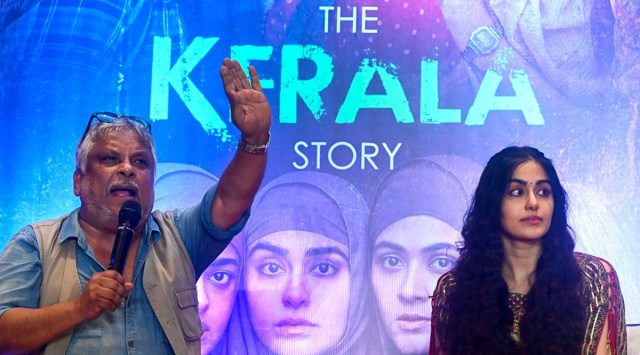
Avijit Ghosh (THE TIMES OF INDIA; May 21, 2023)
Nothing reflects India’s polarized polity better than the conflicting reactions to ‘The Kerala Story’, a film that recounts the ordeal of three girls — two Hindu and one Christian — who suffer in different ways at the hands of a bunch of radicalized Muslims. One of them ends up accompanying an ISIS terrorist.
On Thursday, the Supreme Court stayed a ban on the film imposed by Trinamool-run West Bengal. The film is not banned in DMK-ruled Tamil Nadu but theatres in the southern state are not showing it; just like cinema halls in Gujarat had once bypassed ‘Parzania’ (2005) and ‘Fanaa’ (2006). ‘Parzania’ was based on the 2002 Gujarat riots. ‘Fanaa’ landed in trouble after its lead actor Aamir Khan spoke up for those displaced by the Narmada dam project.
On the other hand, several BJP-ruled states such as Uttar Pradesh, Madhya Pradesh, Haryana and Uttarakhand have declared ‘The Kerala Story’ tax-free. Similarly, ‘The Kashmir Files’, which focused on the impact of terrorism on the lives of Pandits in the Valley, earned a tax-holiday in at least eight BJP-governed states last year. Assam even granted a half-day leave to its government employees to watch the film.
Granting tax exemption or banning a film is a state government’s prerogative. However, the privilege was meant to be given to award-winning films and to movies that helped forge a more progressive social order. But as recent events show, banning a film or declaring it tax-free is part of a new playbook where support or opposition depends on the ruling party’s ideological moorings and vote base. In this running battle, ‘ban’ is the other of ‘tax-free’.
It wasn’t always like this. To understand how the sands have shifted in the politics of tax exemptions and bans, one must look at the past. Since Independence, dozens of films have been banned temporarily (like ‘Aandhi’ during the Emergency) or permanently in India. Hundreds have been declared tax-free, many for dubious reasons.
In June 1970, TOI reported that many big daddies of Bombay cinema were rushing to Bhopal for tax exemptions. In a short period of 10 months, as many as eight films were declared tax-free in then Congress-ruled Madhya Pradesh.
“Some ministers and ex-ministers are alleged to have specialized in exerting pressure on reluctant officials, who see no point in sanctioning such requests at the cost of the state exchequer. One such official who refused to attend a special show of a third-rate film and be a party to the exemption business incurred the wrath of a prominent ex-minister,” the report said.
In 1980, Feroz Khan’s guns-and-glamour yarn, ‘Qurbani’, which began with a panegyric to the late Sanjay Gandhi, was declared tax-free by the Congress government in Maharashtra. “The controversial award…was widely discussed in the media,” noted Ashish Rajadhyaksha and Paul Willemen in ‘Encyclopaedia of Indian Cinema’.
According to the Bombay Entertainment Duty Rules, 1958, exemption could be granted to films winning the President’s Gold medal (later National Award winners) or to films which fulfilled criteria of educational, cultural or social purpose of a high order, following the recommendation of an advisory committee appointed by the state government.
But the Maharashtra government routinely flouted rules announcing tax-holidays for 55 films over a period of seven years in the 1990s, a CAG report said. The report, which did not mention these films by name, estimated that the government had lost at least Rs 19 crore. Congress (1990-95) and BJP-Shiv Sena (1995-99) were at the helm then.
Several of the tax-exempted films were routine formula films. ‘Agni Sakshi’ (1996), a remake of the Julia Roberts thriller, ‘Sleeping With The Enemy’ (1991) produced by Binda (Bindumadhav) Thackeray, the eldest son of Shiv Sena supremo Bal Thackeray, received tax exemption. That apart, regular commercial films got a no-tax run.
Producer Pooja Bhatt’s film, ‘Dushman’ (1998) starring Kajol and Sanjay Dutt, was given a 40% tax exemption by the BJP-Shiv Sena government after a special committee endorsed its “social and educational value”. The same year, letters to TOI raised questions over the tax-free status of films like ‘Major Saab’ and ‘Satya’.
The trend continued in the new millennium. In 2005, ‘Fareb’, an extra-marital thriller with Manoj Bajpayee and Shilpa Shetty in lead roles, was granted tax exemption in UP, then governed by Samajwadi Party (2003-07).
Evidently either proximity to power or corruption were key to earning tax exemption to undeserving films. The reasoning is different in the case of ‘The Kashmir Files’ and ‘The Kerala Story’, both major box-office winners. In these cases, it seems, tax concessions are being weaponized to boost ideologically aligned films in an effort to capture cine-goers’ minds and hearts.
On the other hand, banning the same film reveals the hollowness and the cynical side of those claiming to offer an alternative, discourse-driven politics.
Ironically last year, director Nagraj Manjule’s ‘Jhund’, a sledgehammer film on caste, class and the transformative power of sports, was denied the concession. Art and film lovers were the losers.
I loved Haribhai to death but he had one very irritating habit. He just couldn’t make it to shoots on time-Sharmila Tagore
8:55 AM
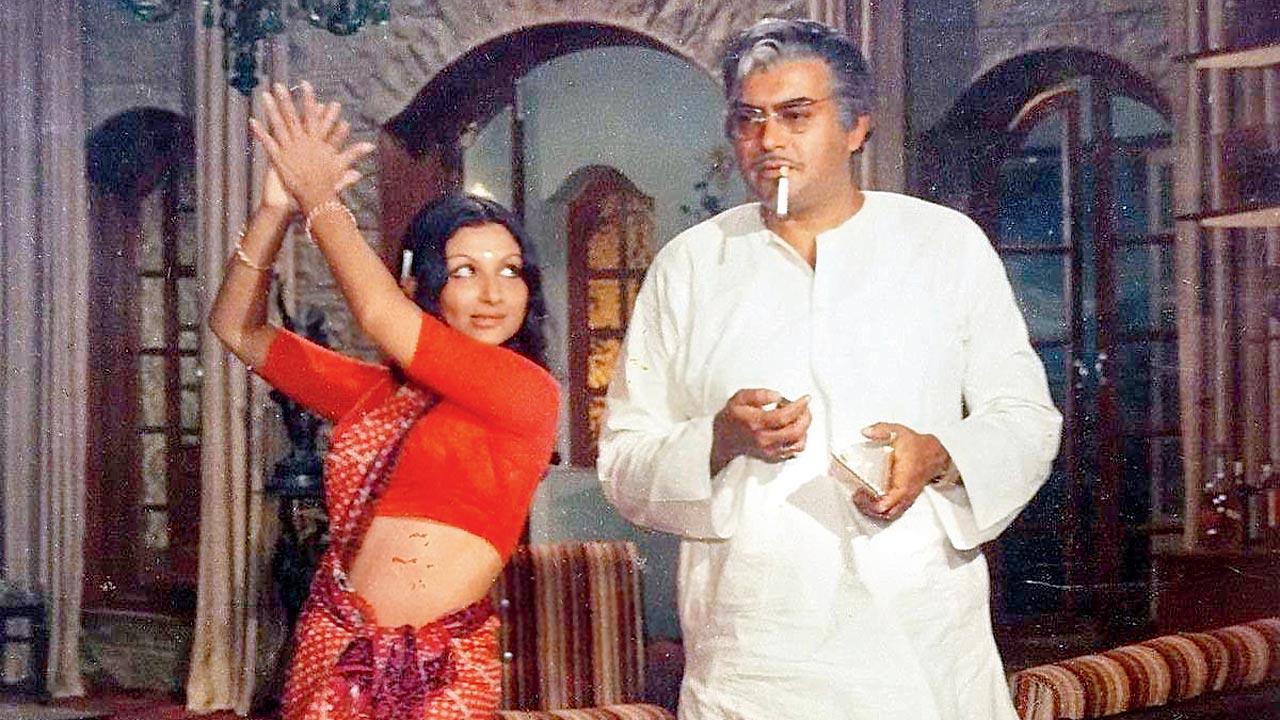
Sanjeev Kumar and Sharmila Tagore in a scene from Mausam (1975)
In a new biography on Hairbhai Jariwala aka Sanjeev Kumar, co-actor Sharmila Tagore remembers a stellar actor who drove her up the wall
MID-DAY (June 19, 2022)
I don't quite remember when I first met Haribhai. It was probably on the sets of Shandaar. He was already a big star. Our working equation began on a note of mutual respect and friendship. Shaandar was shot in 1974 in Chennai. The film industry there is extremely disciplined and strict about the language. Since Hindi is not their native tongue, they are very hesitant about changing even a single word of the dialogue that is sent from Bombay.
In one of the scenes, I had to say, “Mera dil huk uthega.” This to me sounded overly dramatic. I couldn’t identify with its sentiment. I got into a vehement argument. The director and the assistants tried to convince me that I had to say that line, but I wouldn’t listen. In those days there were no mobile phones, so they couldn’t get in touch with the dialogue writer in Bombay to suggest an alternative. Being a Bengali, I couldn’t come up with better suggestions either. This stalemate continued for a couple of hours at least.
Finally, Haribhai came up to me and whispered, “Rinku, [my nickname] do you want to stay here all night? It doesn’t matter, whatever the dialogue is, if you say it with the right emotion, I am sure you will sound convincing, and the scene will also work.”
I understood the wisdom of his words and did just that. That day I learnt an important lesson from him—that to make a scene work, one needs to cooperate. As long as you deliver your dialogue sincerely, the audience will also believe it.
Although I loved Haribhai to death, he had one very irritating habit—he just couldn’t make it to shoots on time. At one time, I was doing a double shift, Faraar in the morning and Mausam in the evening. In both the films, Haribhai was my co-star.
Those of you who have seen Mausam would know that I played a double role in the film. On my first day’s shooting as Kajri, I was extremely excited, and all keyed up. I was portraying this kind of a character for the first time and was really looking forward to the day’s shoot. I was ready with my make-up and dialogues by 2 pm, and guess at what time Haribhai came? 8 pm. I had been waiting for about six hours, and by the time we went to the set, I was exhausted and livid. I was so angry that I had a meltdown and said very nasty things to him, which had absolutely no effect on him. He remained totally calm, and that made me more angry.
Finally, Gulzar sahab, in a very conciliatory tone, said, “Can we at least take one shot?” Haribhai had no problem doing the scene. He did his part perfectly, and I, on the other hand, kept giving retakes after retakes. I don’t remember how the day ended, but again I learnt a valuable lesson—that you shouldn’t allow your temper to get in the way of your performance. We continued to work together for 14 hours a day, for Faraar in the morning and Mausam in the evening, but I refused to talk to him. I was still very angry.
Ten days went by, and I went to see Aandhi. I loved the film, and particularly Haribhai’s performance. The next day, when we were shooting for Faraar, I went and knocked on his dressing room door and told him, “You really are an awful person and very irritating but because you are such a brilliant actor I would like to shake hands and make up. Just one request, if you’re going to be late, please let me know so that I can adjust my time as well.”
He heard what I had to say calmly. If he felt anything, he didn’t show that, and of course, he didn’t apologize. But he had a twinkle in his eyes. I think our friendship became stronger from that day on. I had accepted him the way he was.
Once I visited his home. When I went to his room, I was so taken aback. It didn’t look like a ‘star’s’ room at all. Every inch of his bed, every chair was stacked with either his clothes or his papers; there was no place for me to sit. Finally, I asked, “Haribhai, where do you want me to sit? On the floor?”
So he transferred some clothes from one chair to another and made some space for me. This was his lifestyle. He was comfortable anywhere, whether in a crammed room or working with an annoyed co-star. Puffing away on his cigarette, which couldn’t have done him any good because there was a genetic cardiac problem in the family, he always managed to stay at peace with himself.
On many occasions, he came to our house. Tiger [Mansur Ali Khan Pataudi, husband] liked him very much. They would drink and chat, and sometimes Haribhai would have one too many. I remember that, on one occasion, Haribhai had to hold one hand with the other to ensure that the spoon of food actually landed inside his mouth. He loved his alcohol. But he would ring up the next day to ask if he had misbehaved in any way. And I would tell him, ‘You only wiped your hands on the curtain. But not to worry, I will send you the laundry bill.’
On another occasion, I forgot his birthday. The next day at a shoot, I apologized to him for my lapse and wished him a belated happy birthday. One of our co-stars made a snide remark, “This is a very convenient excuse.”
But Haribhai instantly checked her and spoke in my defence, ‘If Rinku says it, she means it. She doesn’t make up stories like you.’ Which still makes me smile. I knew then that he really liked me.
He was extremely devoted to his family, and his mother meant the world to him. In between shots, among other things, he would discuss his marriage plans with me. His mother was looking for a bride for him, but he didn’t agree with his mother’s choice. He wanted someone who was beautiful and dignified and would understand and appreciate his work. In that context, he mentioned a couple of co-stars, but nothing ever came of them.
Excerpted with permission from Sanjeev Kumar: The Actor We All Loved by Reeta Ramamurthy Gupta and Uday Jariwala, published by HarperCollins India
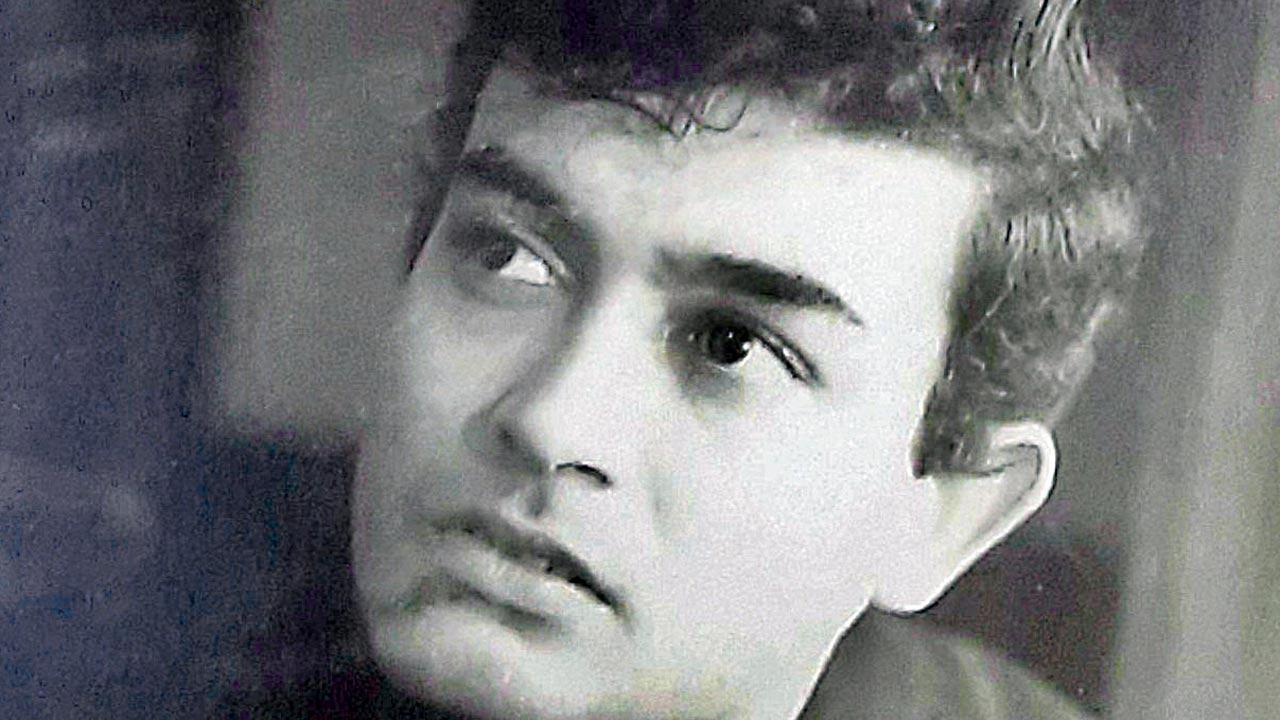
A pensive Hari. According to Paresh Rawal, he had the ideal actor’s face: plenty of space for expression and an excellent sense of proportion. PICS COURTESY/Sanjeev Kumar: The Actor We All Loved, HarperCollins India
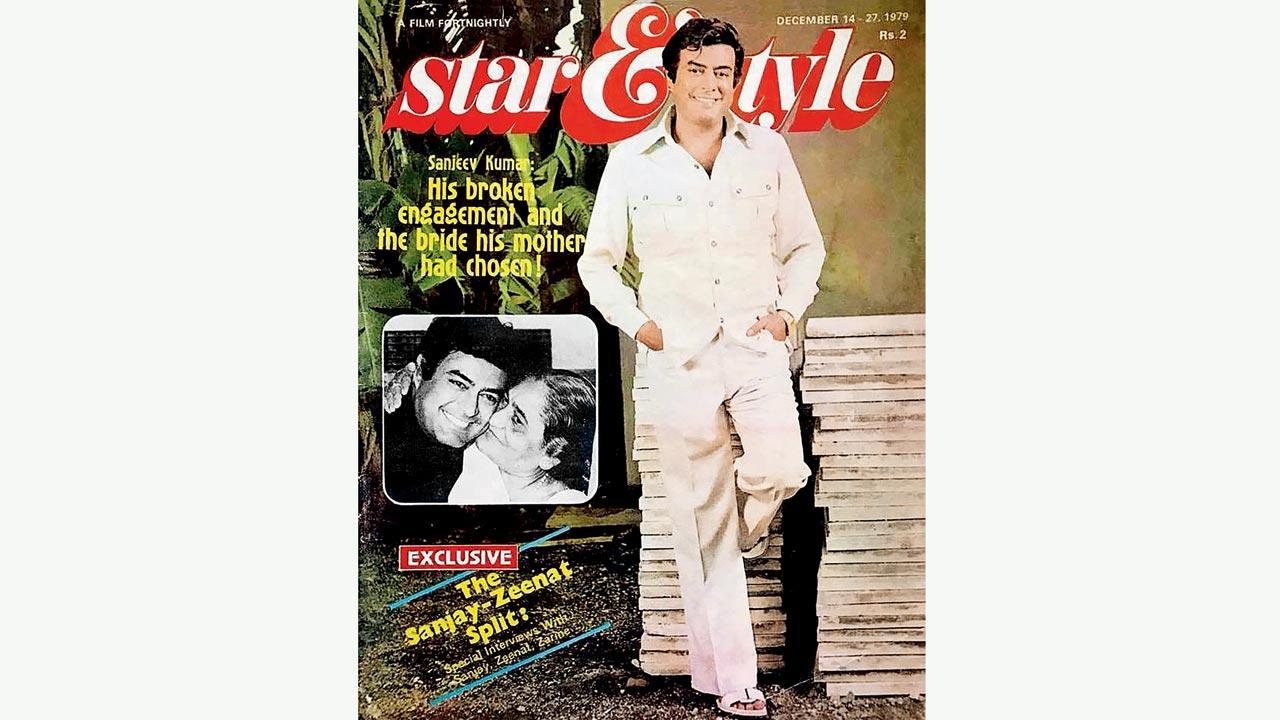
The great obsession of media, in those days, was to get Hari married. His relationships, marriage plans, Baa’s preferences, etc. were a hot selling point for the press. Courtesy/RJ Anirudh Chawla
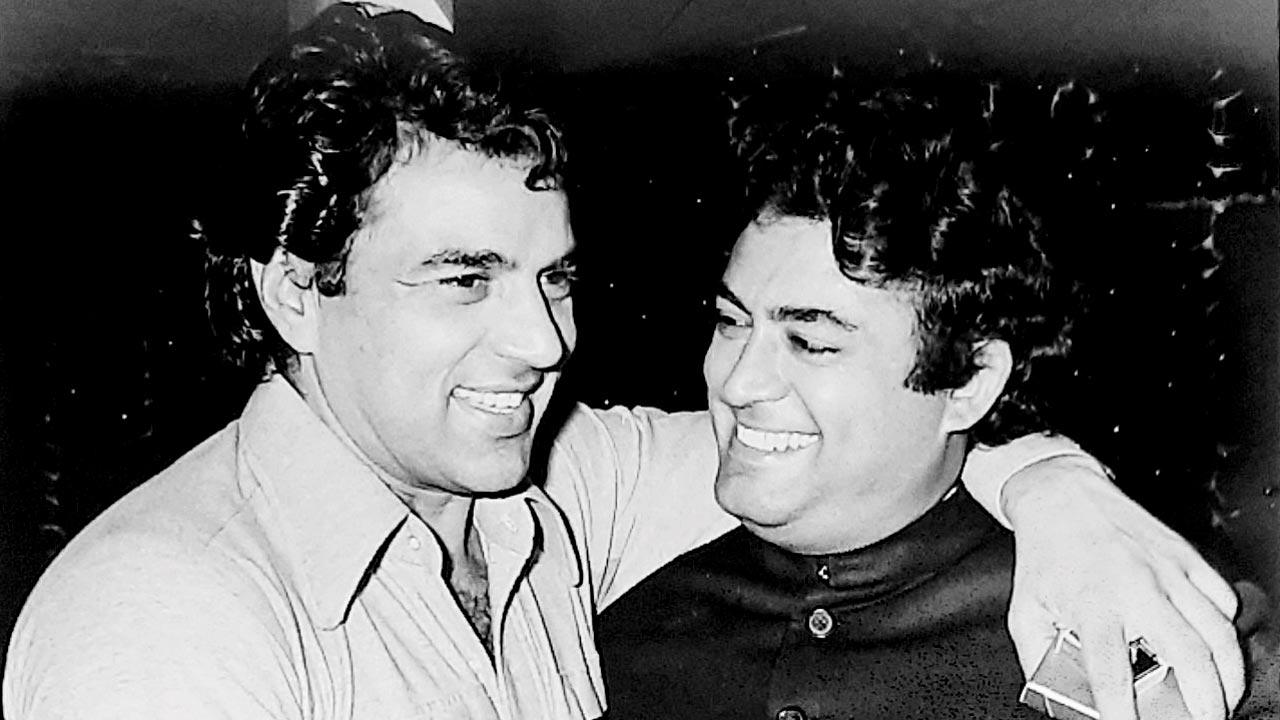
Hari seen here bonding with Dharmendra
I watched several iconic films again, including Aandhi, to prep for the role of a politician in Satyameva Jayate 2-Divya Khosla Kumar
8:15 AM
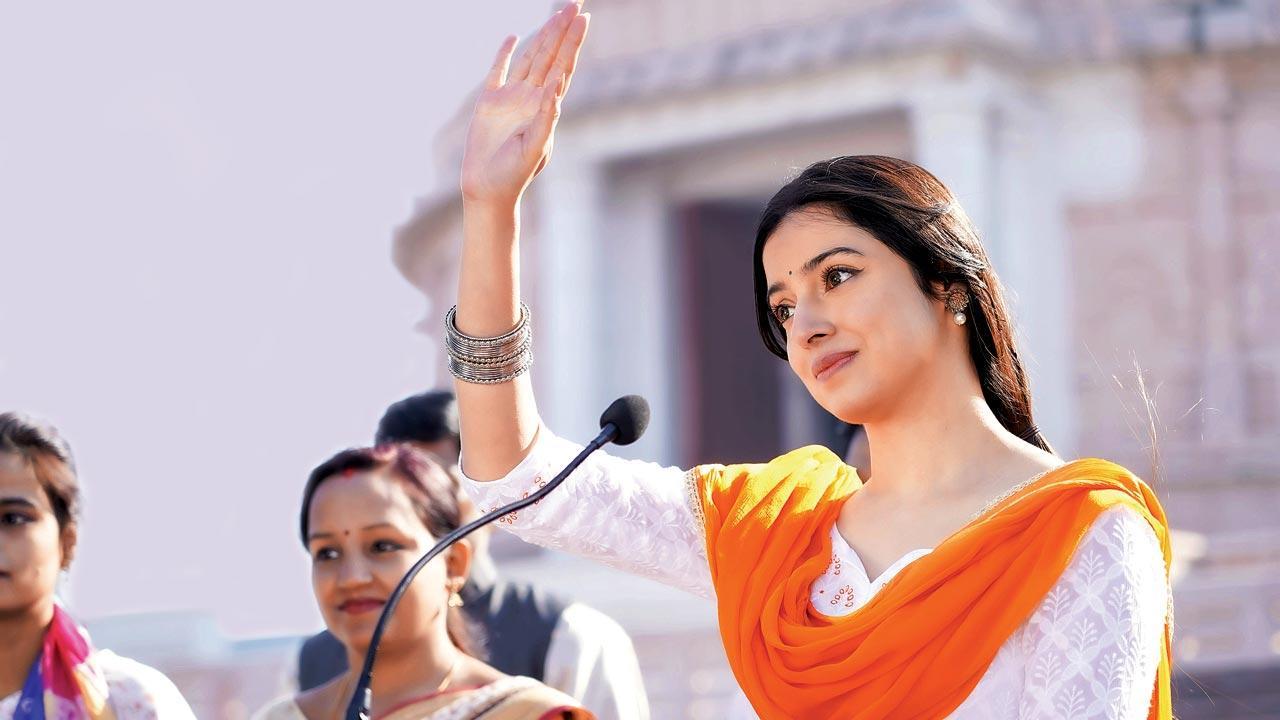
Divya Khosla Kumar reveals she watched Aandhi several times as prep for her politician role in Satyameva Jayate 2
Mohar Basu (MID-DAY; November 16, 2021)
Where John Abraham plays a triple role as he fights corruption in Satyameva Jayate 2, Divya Khosla Kumar stands shoulder-to-shoulder with him. The actor, who returns to the big screen after over 15 years, essays the role of a politician in the vigilante action film. Director Milap Zaveri apparently developed her character as a tribute to the empowered women of today.
Sharing her look from the film, Khosla says, “Milap had briefed me that my character [reflects] the strong and empowered women of today’s generation, who maintain the ideal work-life balance and stand for what’s right.”
Khosla claims that ahead of the actioner going on floors, she prepped extensively to become one with the character. “I watched several iconic films again, including Aandhi [1975], to understand how to portray my role to the best of my ability. It was tough for me as I had to put on weight for my role. I am glad to have got this chance to showcase a new side of me,” she says.
Last of the movie moguls: Khalid Mohamed pens a tribute to J Om Prakash
8:17 AM

J Om Prakash with Hema Malini and Dharmendra on the Aas Paas set
J Om Prakash will be cherished for his super hits backed with star power, chartbusters, verdant locations and breezy storytelling
Khalid Mohamed (MUMBAI MIRROR; August 8, 2019)
 Synonymous with a rapid fire series of silver jubilee hits – the buzz-phrase now replaced by the Rs 100 crore club – the monarch of breezy entertainers would sport speckless white outfits and converse in a voice which rarely rose to high octaves.
Through the 1960s spilling over to the next three decades, J Om Prakash would attend his Filmyug production office at Santa Cruz religiously. With advanced age, he handed over the reins to his son-in-law Rakesh Roshan, and basked at his Juhu bungalow in the adulation amassed by his grandson Hrithik Roshan.
As a knee-high child, Hrithik had made flash appearances in a few of his grandfather’s films, drawing rave reviews for his act in Bhagwan Dada (1986).
Affectionately called Om ji, he once spoke to a whiskerless wannabe reporter seeking an elaborate interview for Filmfare. Fixing an appointment for a five-star buffet, he ordered a couple of Camparis, an offer which I tetchily refused.
Try it, it’s like sweet medicine, he had insisted, a way perhaps to ensure that I wouldn’t quote any of his off-the-record statements. The afternoon lenghtened, the drinks swirled on, resulting in, let’s say, an interview brimming over with heartspeak.
Born in Sialkot, Punjab (now in Pakistan) he had none of the rancour of someone who had to start from scratch in Bombay. Shyly proud of his success, he believed that an emotionally stirring story could fit snugly into the commercial groove. “That’s why I produced Aandhi (1975) directed by Gulzar,” he had smiled. “When there was a brief ban over the parallels to the life of Mrs Indira Gandhi, I stayed calm. I would love to produce another film with Gulzar and Suchitra Sen. Although Suchitra has become reclusive, she will never say ‘no’ to me.”
As a producer, he had become a major Bollywood player with the black-and-white Aas Ka Panchhi (1961), directed by Mohan Kumar. Narrating a story about a patriot who wants to join the army, it boosted the careers of Rajendra Kumar and Vyjayanthimala. His innings as a director was initiated with the Rajesh Khanna-Mumtaz-Sanjeev Kumar dramedy Aap Ki Kasam (1974), which touched upon the subject of adultery.
He would use the B-Town formula with a certain playfulness, frequently touching upon the divide between the ultra-rich and the rising middle class. Exploring verdant hill town locations and extracting chartbusters, were his forte.
Coining ‘lucky’ titles beginning with ‘Aa’ or ‘A’, Om ji’s signature began to be identified with the A-list heroes Dharmendra, Rajesh Khanna and Jeetendra. His high glam heroines, kitted in glitzy bespsoke outfits, ranged from Asha Parekh, Saira Banu and Raakhee Gulzar to Rekha, Reena Roy and Sridevi. However, at a point, when Bollywood’s dependence on stars had swelled, the filmmaker was disenchanted, particularly during the protracted making of Aas Paas (1981), with Dharmendra and Hema Malini.
Rakhee Gulzar recalls, “At the early stage of my career, I did one film with Om ji – Aankhon Aankhon Mein (1972). For that, horse-riding and a Bollywood-type dance were required. He made me comfortable. Years later, on my wedding day, he looked after all the minute arrangements like a guardian would. Then he produced Aandhi. We became close family friends. At my suggestion, he bought a farmhouse neighbouring mine in Panvel. Few know that he was extremely knowledgeable and an avid reader of non-fiction.”
Asha Parekh who starred in the musical triptych Aaye Din Bahaar Ke (1966), Aya Saawan Jhoomke (1969) and Aan Milo Sajna (1970), remembers Om ji rushing her to a hospital when she fractured her foot. “For a scene in Aan Milo Sajna, I had to wear tight shoes with Rajesh Khanna carrying me in his arms. The scene was shot with slippers on – a continuity jump, but Om ji didn’t care. No one noticed it in the final edit either.”
Towards his end years, the movie mogul was bed-ridden and couldn’t visit his Panvel farmhouse where he had built a Shiv Mandir. The 93-year-old leaves behind an oeuvre of over 25 films. And he leaves me with that interview topped by Camparis which I have never tried again – wouldn’t be the same without Om ji.
Subscribe to:
Posts (Atom)