Showing posts with label Aanand L Rai. Show all posts
Showing posts with label Aanand L Rai. Show all posts
I was shocked to see that logon ko bas jo maar-dhaad karne wala ho...wahi hero chahiye-Paramvir Singh Cheema
10:11 AM

Akash Bhatnagar (HINDUSTAN TIMES; May 24, 2026)
Actor Paramvir Singh Cheema is enjoying the success of surprise hit series Sapne Vs Everyone Season 2 and Punjabi debut Pitt Siyapa. These have added to his hit streak that began with Tere Ishk Mein (2025) and Border 2.
“I was skeptical before Border 2, wondering if I would get lost in the entire cast or if people would stop looking at me as a hero... But with Sapne Vs Everyone, people said ‘Param ka show hit hua’ or ‘Ambrish (Verma, actor-director) ka show hit hua’, and that hit differently,” he gushes.
While the audience sees him as the ‘good guy’ on screen, the 31-year-old points to the rise of hypermasculine, alpha heroes after films such as Dhurandhar and Animal (2023): “I was shocked to see that logon ko bas jo maar-dhaad karne wala ho, jo baat baat pe gun nikaal le, jo cigarette peeta ho, wahi hero chahiye. Tabhi log pasand karenge,” he says, adding, “Very few ‘true to nature, good guy’ parts are being written now. I prefer doing those parts, but seeing the trend, even I want to try an alpha-male role and see where I land.”
This pressure, he says, comes from how the youth is positioned now. Tere Ishk Mein, too, featured such a character, portrayed by Dhanush, which was later criticized for glorifying toxic characters. “When I read the script, I understood that they are targeting obsession and what alpha men portray. But when I had a word with (director) Aanand L Rai sir, he said that’s why my character was important, as in the end, a girl would want a guy like my character. He said I was the audience’s view, and it was necessary to have both these portrayals because today, it’s up to the audience who they want to choose. Thankfully, that landed nicely,” he says.
NCLT upholds Aanand Rai's plea in row with Eros International
9:54 AM

Maulik Vyas & Rajesh N Naidu (THE ECONOMIC TIMES; May 5, 2026)
The National Company Law Tribunal (NCLT) has allowed filmmaker Aanand L. Rai’s application to refer a dispute between him and a listed movie production house Eros International Media Ltd (EIML) to arbitration.
The division bench of judicial member Sushil Mahadeorao Kochey and technical member, Prabhat Kumar, while allowing the filmmaker’s application, observed that the petition filed by Eros is a ‘dressed-up petition’ instituted with the sole intent of ‘circumventing the arbitration’ contractually agreed upon by the parties and is therefore vexatious in nature.
“Although the petitioner (Eros) has claimed certain reliefs by way of declaration and injunction under the garb of alleged oppression and mismanagement, a holistic reading of the petition, its pleadings and the reliefs sought points to it being a dressed-up petition,” said the tribunal in its April 28 order.
The genesis of the dispute lies in the term sheet signed by the parties in 2014, under which Eros International had acquired a 50% stake in Colour Yellow Productions Pvt Ltd, a company founded by Rai and his wife. The agreement split the responsibilities between parties, allowing Rai creative control while vesting Eros with authority over financing, budgeting and other production decisions.
Under the term sheet, it was agreed that Colour Yellow Productions could collaborate with third parties only if Eros International declined to fund the project.
However, the dispute between the parties began in 2019-20, with Eros International alleging mismanagement at the company, diversion of funds, and Rai's non-disclosure of financial information to the company. The company also claimed it was excluded from key management decisions despite being an equal shareholder.
Countering this, Nausher Kohli and Prachi Wazalwar, advocates appearing for Rai, argued that the 2014 term sheet and a subsequent 2023 agreement both contain arbitration clauses. Therefore, as per the arbitration clause in the term sheet, the dispute ought to be referred to arbitration.
Rai’s lawyers also argued that the entire petition under Sections 241-242 of the Companies Act, 2013, is dressed up to avoid the agreed-upon forum of arbitration between the parties.
When contacted, Pradeep Dwivedi, group chief executive of EIML said Eros remains committed to protecting its rights and is actively evaluating all legal options available to it, including appropriate appellate remedies.
“Our position has consistently been that the matters in question involve serious issues of oppression and mismanagement, including concerns around financial governance and related-party transactions at Colour Yellow Productions which we believe merit full and proper adjudication,” said Dwivedi.
“We are confident that the appropriate forum will allow the complete facts to be brought on record, and we will continue to pursue all necessary steps to safeguard the interests of the Company and its stakeholders,” he added.
The tribunal, while allowing an application filed by Rai and disposing of Eros International’s petition, observed that the petition is nothing but an attempt to circumvent the agreed arbitration clause under the term sheet and may also amount to an effort to oust the respondents (Rai and Colour Yellow Productions), who are the original promoters of the company.
The moviemaker Rai and Eros have been at loggerheads at multiple judicial forums. In January, Eros International approached the Bombay High Court, accusing Rai and his production house Colour Yellow Media Entertainment of allegedly illegally riding on the goodwill of its 2013 blockbuster ‘Raanjhanaa’ while promoting and releasing the 2025 film ‘Tere Ishq Mein’.
Yami Gautam to kick off Aanand L Rai's horror comedy Nayyi Navelli from April 7
10:43 AM

Upala KBR (MID-DAY; April 4, 2026)
Things are moving fast on Yami Gautam Dhar’s Nayyi Navelli. In January, mid-day had reported that the actor was finalised for producer Aanand L Rai’s next (Yami Gautam preparing for Aanand L Rai’s horror comedy, Jan 8), and Prime Video officially announced the horror comedy in March. Now, it’s time for execution. From April 7, Gautam will face the camera for Balaji Mohan’s directorial venture that revolves around a new bride who is not what she seems.
The director will begin with a month-long schedule in Mumbai.
A source told mid-day, “Yami and some of the cast members, including theatre actors, will begin shooting in Malwani near Malad. Production designer Ravi Srivastava and his team have built a massive set reflecting an Indian town, where Yami’s introductory scenes with her friends and family as well as her wedding sequences will be filmed.”
In May, the cast and crew will move to Bhopal and then Meerut for a two-month schedule. That’s where the story will unravel, as Yami’s character is shown moving into her in-laws’ house in a small town after her wedding.
The source added, “They will film the sasuraal portions, in which certain inexplicable events take place. At first, her character is shown as a picture-perfect bride. But soon, her brother-in-law and his family members start suspecting her motives and wonder whether she possesses supernatural powers. The story blends horror, comedy, and mythology.”
While Rai previously backed the horror film Tumbbad (2018), this marks his first supernatural comedy.
Eros files Rs. 84-crore copyright suit against director Aanand L Rai
9:25 AM

Vinay MR Mishra (BOMBAY TIMES; January 17, 2026)
Eros International Media Ltd has approached the Bombay High Court accusing filmmaker Aanand L Rai and his Colour Yellow Media Entertainment LLP of illegally riding on the goodwill of its 2013 hit Raanjhanaa while promoting and releasing the 2025 film Tere Ishk Mein. In a commercial IP suit and a related interim application, Eros has alleged trademark infringement, copyright infringement, and passing off, claiming that Tere Ishk Mein was deliberately projected as a “spiritual sequel” to Raanjhanaa, without any permission. Eros is demanding Rs. 84 crores as compensation for the damages done by Rai.
Eros has named multiple parties in the suit — apart from Aanand L Rai and the Colour Yellow Media Entertainment LLP, the defendants also include Super Cassettes Industries (T-Series), writer Himanshu Sharma, and Netflix Entertainment Services India LLP, making it a multi-party copyright and trademark battle over Raanjhanaa and Tere Ishk Mein.
What is the case about?
According to the complaint, Eros says it is the producer and “exclusive owner of all intellectual property rights” in Raanjhanaa, including copyright, trademarks, characters, dialogues, and sequel and remake rights.
The suit states: “The Plaintiff is the producer and exclusive owner of all intellectual property rights in the highly successful Hindi language film ‘Raanjhanaa’ including without limitation… copyright, registered trademark rights in ‘Raanjhanaa’, character rights including in ‘Kundan Shankar’ and ‘Murari’, and remake, prequel and sequel rights.”
Eros claims the defendants — Colour Yellow Media Entertainment LLP, Colour Yellow Productions, Aanand L Rai , and others — misused these rights to market Tere Ishk Mein, which was released on November 28, 2025.
'From the World of Raanjhanaa’
A major trigger for the lawsuit was the teaser of Tere Ishk Mein that appeared online in July 2025. Eros says it found that the teaser used phrases like “From the world of Raanjhanaa” and hashtags such as “#WorldOfRaanjhanaa”. The interim application notes: “The Defendants have made unauthorized use of the Applicant’s Rights / Applicant’s Film/brand/mark ‘Raanjhanaa’ for the promotion… of the Impugned Film titled ‘Tere Ishk Mein’.”
It further states that the teaser even used footage, background score, and music from Raanjhanaa, despite Eros not owning the music rights anymore.
Same Actor, Similar Characters
One of the strongest allegations is about the use of the same actor, Mohd Zeeshan Ayyub, playing a very similar character in both films. The complaint says: “Murari, portrayed by Mohd. Zeeshan Ayyub, in both films, is a sharp-witted friend whose perspective adds conscience to the plot… The Respondents’ unauthorized reproduction and commercial exploitation of these characters… constitute a clear violation of the Applicant’s exclusive rights.”
Eros also claims that the lead character played by Dhanush in Tere Ishk Mein — named Shankar — mirrors Raanjhanaa’s Kundan Shankar, along with similar emotional arcs, dialogues , and themes.
Cease-and-Desist, Then Release Anyway
Eros says it issued a cease-and-desist notice on July 25, 2025, followed by reminders in September. Some references were briefly removed from promotional material, but the company alleges the film still carried strong similarities when it released. The complaint states: “Despite receiving explicit legal notices… the Defendants proceeded to release and exploit the Impugned Film on 28th November 2025 while persisting in wrongful acts.”
After watching the released film, Eros claims it found “extensive copyright and trademark infringement,” alleging that the film was repeatedly described and projected as a “spiritual sequel”.
We reached out to Rai and Eros for a comment, but did not get a response till the time we went to the press.
Yami Gautam gears up for a horror-comedy film with Aanand L Rai
11:17 PM
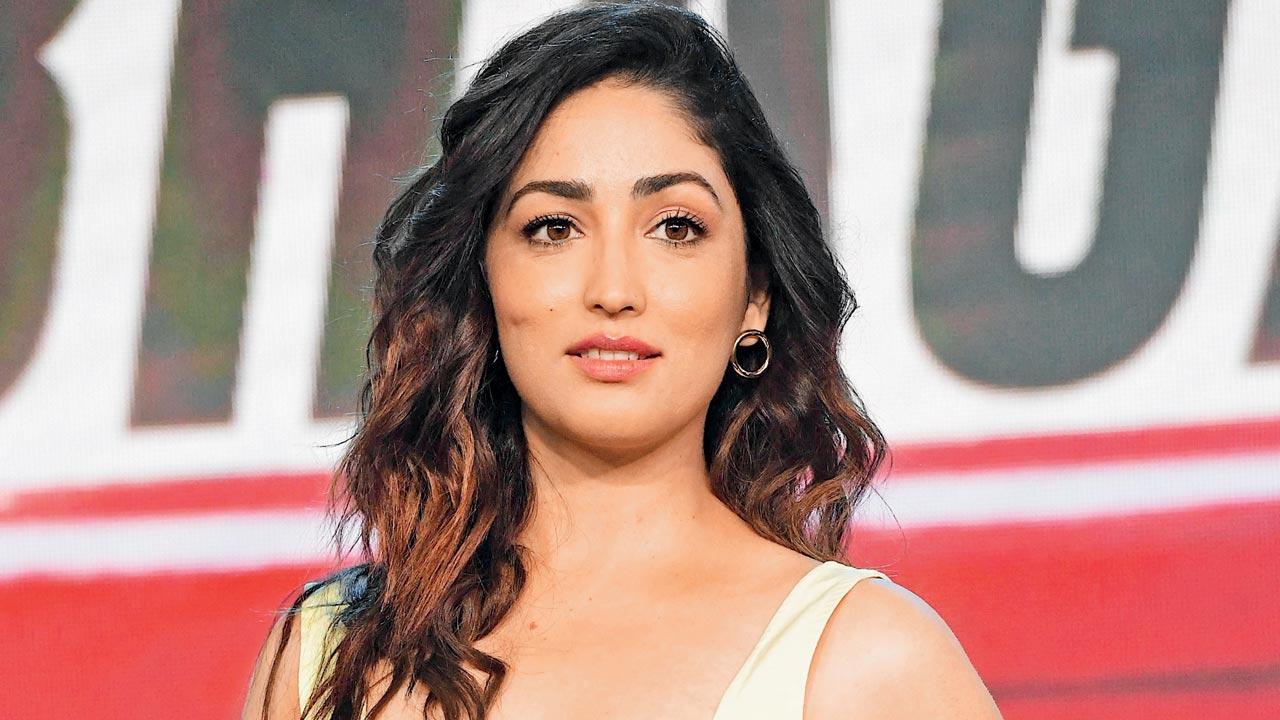
After her intense role in Haq, Yami Gautam is now stepping into a new genre with a horror-comedy produced by Aanand L Rai
Priyanka Sharma (MID-DAY; January 8, 2026)
Horror-comedy has quietly turned into Hindi cinema’s most reliable crowd-pleaser these days. Everyone, it seems, wants in. So, why shouldn’t Yami Gautam have a piece of it, especially after her heavy-duty turn in the social courtroom drama, Haq (2025), which had an OTT release last week. mid-day has exclusively learnt that Gautam has been locked to headline a horror-comedy in Aanand L Rai’s next production. Titled Nayi Naveli, the film is set to go on floors in February.
“It will mark Yami’s first collaboration with Colour Yellow [Rai’s production house]. It will be a new territory for Yami. It’s an ensemble film,” says a source.
The horror-comedy rooted in Indian folklore and mythology is penned by Divy Nidhi Sharma, who previously wrote Aamir Khan’s Sitaare Zameen Par (2025), Laapataa Ladies (2024), and Heeramandi: The Diamond Bazaar (2024), among others. This is Sharma’s second collaboration with Rai after the yet-unreleased romance Nakhrewaalii.
“The humour is atypical of Aanand L Rai’s slice-of-life productions. After Haq, Yami was looking to do something in a lighter zone, but with substance. Nayi Naveli is that perfect combination because while it’s a funny film, it’s not without elements that offer intrigue and emotionality. It is being envisioned on a big scale,” says an insider.
While the script is ready, the film is currently in pre-production, and the rest of the cast is still being locked, adds another insider. Nayi Naveli will reportedly be helmed by Tamil filmmaker Balaji Mohan, of Maari (2015) fame, marking his Hindi directorial debut.
Also in the works
Aanand L Rai is reportedly also planning his third film with South star Dhanush, after ‘Raanjhanaa’ (2013) and ‘Tere Ishk Mein’ (2025).
I wanted a movie like Cocktail 2, especially after Tere Ishk Mein, which was so intense-Kriti Sanon
8:27 AM
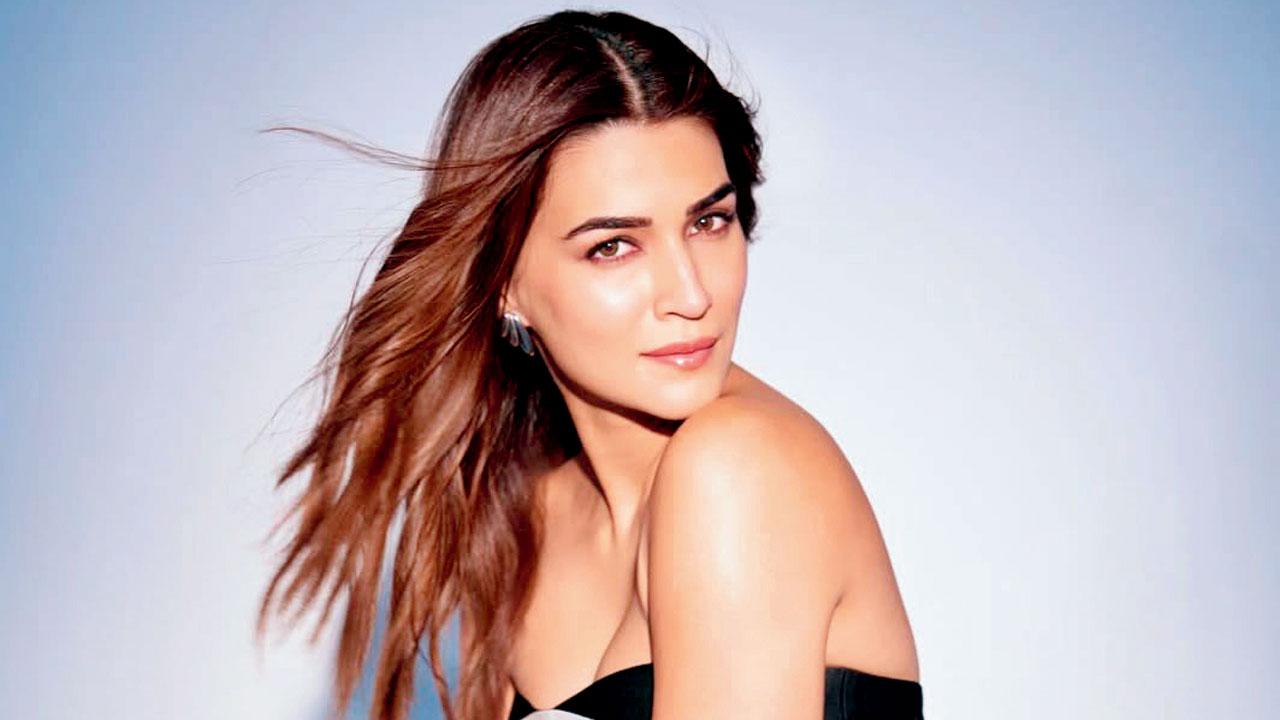
Upala KBR (MID-DAY; December 26, 2025)
“Happy, positive, fun,” rattled off Kriti Sanon, describing the mood on the Cocktail 2 set. Earlier this week, the actor wrapped up the shoot of Homi Adajania’s directorial venture, which teams her up with Shahid Kapoor and Rashmika Mandanna.
“I wanted a movie like Cocktail 2, especially after Tere Ishk Mein, which was so intense and heavy. I wanted to be in this light, fun, rom-com space. Things fell in place at the right time,” she said, smiling.
For Sanon, Cocktail 2 is a mix of something old and something new. While it reunites her with Shahid Kapoor after Teri Baaton Mein Aisa Uljha Jiya (2024), it also marks her first collaboration with Adajania.
Reflecting on working with the director, she said, “Homi has this fun energy and coolness that he brings to his characters and movies. He likes to find his characters. He does not want them to be perfect; he wants them to make mistakes and do things that real people do, and still be cool. It has been an absolute mad ride.”
Even as she looks forward to opening 2026 with the rom-com, Sanon is equally grateful for how 2025 shaped up. She had a sole release in Aanand L Rai’s Tere Ishk Mein, which crossed the Rs 100 crore mark in early December.
“When a film’s critical appreciation is combined with box-office numbers, that is the best thing anyone associated with the film can ask for.”
The movie may be widely debated for its depiction of toxic love, but to Sanon, it will remain special as it gave her Mukti.
Expressing her love for the character, she said, “Mukti has been one of my most layered characters to date. A lot is unspoken; a lot is [implied] between the lines and [through] the eyes. That’s where the character can come across as grey. But the fact that she is flawed makes her relatable. While shooting, Aanand sir told me, ‘My story lies in Mukti’s conflict and dilemma’.”
‘Cocktail 2’ reunites Kriti Sanon with Shahid Kapoor after ‘Teri Baaton Mein Aisa Uljha Jiya’. “It was amazing working with Shahid, since I was a human being this time,” joked Sanon, who played a robot in their first outing.
Chitrangda Singh opens up on turning down Gangs Of Wasseypur, Tanu Weds Manu, Chalte Chalte
9:55 AM

Vishakha Pandit (HINDUSTAN TIMES; December 22, 2025)
Actor Chitrangda Singh who is loved by critics and audiences alike for her acting chops turned down films that went on to become successful at the box office. In a conversation with HT City, she says she listened to too many people and lost out on many good films. Including a Shah Rukh Khan-starrer.
The 49-year-old says, “I made some really bad mistakes. I said no to (filmmaker) Anurag Kashyap for the role Richa Chadha portrayed in Gangs Of Wasseypur (2012)... (Filmmaker) Aanand L Rai offered me the role Kangana Ranaut did in Tanu Weds Manu (2011), and I said no. At that time, I listened to too many people and made some bad choices. You think other people know better, but that’s not always true.”
Chitrangda also recalls missing out on Chalte Chalte (2003) opposite Shah Rukh Khan, not because she declined it, but because she had stepped away from work and changed her phone number: “SRK told me himself when we were shooting an ad together that they were looking for my number. I had left work for seven or eight years. That’s when it really hits you.”
Recently seen in Raat Akeli Hai: The Bansal Murders, she adds that visibility remains a constant challenge in the industry. “It has a very short memory. If you’re not around, people forget, and you have to keep reminding them of what you’re capable of,” she shares.
I love it when people say, ‘This is her best performance’ after every film-Kriti Sanon
11:00 AM

In a season marked by blockbuster love and personal growth, Kriti Sanon reflects on screen power, confidence and creative freedom
Rishabh Suri (HINDUSTAN TIMES; December 5, 2025)
One can hear the joy in her voice. Kriti Sanon is riding a wave of acclaim — both from the box office and the love pouring in for Tere Ishk Mein (TIM). With Cocktail 2 and Don 3 up next, she’s clearly in a strong season. Excerpts from a conversation:
You’ve been everywhere with TIM — theatre visits, housefull shows. How does this success feel?
It’s extremely overwhelming. The film has received so much love. I, as an actor, have received so much love. It’s rare for a film to get great reviews, critical acclaim for performances, and strong box office numbers. I’m getting all of it at the same time. I couldn’t have asked for more.
It’s also rare for both the male and female leads to get equal limelight, instead of the male star walking away with it. Was that refreshing?
Very refreshing. When I read the film, on paper Shankar (played by Dhanush) had the punches, the lines, he seemed to be leading a lot. But the layers of Mukti (her role) were somewhere in Aanand (L Rai, director) sir’s head. He was clear he wasn’t making a one-sided love story. He told me, ‘I see more of Dhanush’s love and pain in the first half, but I see more of Mukti’s in the second’. It’s beautiful when two characters are equally powerful; it doesn’t lessen the male character’s weight at all. It becomes more balanced, more real. A girl might relate more to Mukti, but they’re both giving equally to the story.
After a National Award-winning turn in Mimi, TIM has fetched you fresh praise. Feel relieved now?
When your work is appreciated, it energizes you. You put so much mental and emotional energy into your characters. I’m grateful that my choices are connecting with fans. Mimi gave me confidence to take risks and a sense of security, that I don’t have to keep proving myself. This industry constantly pits actors against each other, which can make you insecure.
But there comes a point, and I’m glad I reached it, when you realize: people know you can act. You’ve proven yourself. Now you just want to enjoy the work. I’m not competing with anyone anymore. I’m not chasing box office rankings. I only want to better myself. And I love it when people say, ‘This is her best performance’ after every film.
People are discussing TIM’s themes a lot. Are you keeping track of opinions on social media?
Yes, I’m obsessed! I’m always reading what people are saying, not just critics. I love debating; that’s the point of art. Not everyone sees a painting the same way, and the same goes for cinema. You connect with something because of your experiences, because you’ve known someone like Shankar or Mukti. TIM is interesting because it shows toxic love, but the girl also calls out the toxicity.
I don’t want to divert myself towards being safe or politically correct-Aanand L Rai
10:23 AM

Mohar Basu (MID-DAY; November 22, 2025)
With less than a week to go for Tere Ishk Mein’s release, filmmaker Aanand L Rai is surrounded by the familiar chaos of post-production — sleepless nights in mixing rooms, last-minute tweaks in VFX, and the works. As the Dhanush and Kriti Sanon-starrer is nearly ready to meet its audience, the questions begin. The biggest one this time: is Tere Ishk Mein a successor of sorts to Raanjhanaa (2013)?
“Every artiste has at least two spaces — the rom-coms and the intense love stories. [The latter] is the space I return to. This is my third intense love story, if you count Atrangi Re [2021], but for reasons reserved for the film, it’s actually my second. Maybe that’s why people feel Tere Ishk Mein is a spiritual successor to Raanjhanaa,” reflects the director.
Through Dhanush’s Shankar and Sanon’s Mukti, the director presents an unrequited love story that has shades of rage and self-destruction. Will the film offer a contentious take on love, like Raanjhanaa did? But these are different times, Rai notes.
“There was a beauty in the year Raanjhanaa released. You and I could disagree, yet sit and talk. Today, the nuance of conversation is dying. There is too much negativity, too much social media. Everything becomes polarizing.”
Did he second-guess his work because of this? “No,” he says instantly. “I don’t know any other way to make films. I live for debates. I don’t want to divert myself towards being safe or politically correct. My only job is to tell an honest story.”
Rai isn’t worried whether an intense love story like Tere Ishk Mein runs the risk of being labelled toxic. “In my head, Raanjhanaa was never toxic. I was talking about two people whose definitions of love are very different. But every feedback has taught me something. My biggest takeaway is that people walk into the movies and imagine things from [their perspective]. Critics have a different point of view; they are waiting to dislike you, and if you surprise them, they get happy. But the audience comes with love in their heart, to be entertained. They buy a ticket hoping to like you. That difference matters to me.”
For him, the Dhanush and Sanon-starrer serves a simple purpose. He shares, “I hope to make people think about love all over again. I hope we agree, or agree to disagree. I need that conversation. I want a relationship between the maker and the audience where something is being discussed.”
If the relationship between the maker and his audience is valuable, so is that between a director and his film. The latter was tested earlier this year when the producers of Raanjhanaa re-released the film with an AI-generated alternative ending. The move drew ire not only from Rai, but also from many filmmakers who felt it set a dangerous precedent.
Months on, as he looks back at it, Rai says, “What I realized is that the film doesn’t belong to me anymore. It belongs to the audience; they protested more than I did. Now, my contracts will have clauses. If I’m giving you the film, you cannot modify it. There will be one more clause in the 100-page contract. It’s not about me alone; it’s for future generations. This can damage your creativity if you’re not careful.”
‘Tere Ishk Mein’ is Aanand L Rai’s third collaboration with Dhanush after ‘Raanjhanaa’ and ‘Atrangi Re’. He beams, “Dhanush has done just two Hindi films in the last decade, and both with me.” They may have bonded on a creative note initially, but today it runs deeper. Searching for the right analogy, the filmmaker says, “Going to him is like going to my son and saying, ‘This is the story I want to tell.’ He has a perspective on how to make it and not whether he should do it.”
Even when I go back to Mumbai penthouse, I have to remind myself that 'Tu Dilli ka middle-class ladka hai'-Aanand L Rai
9:08 AM
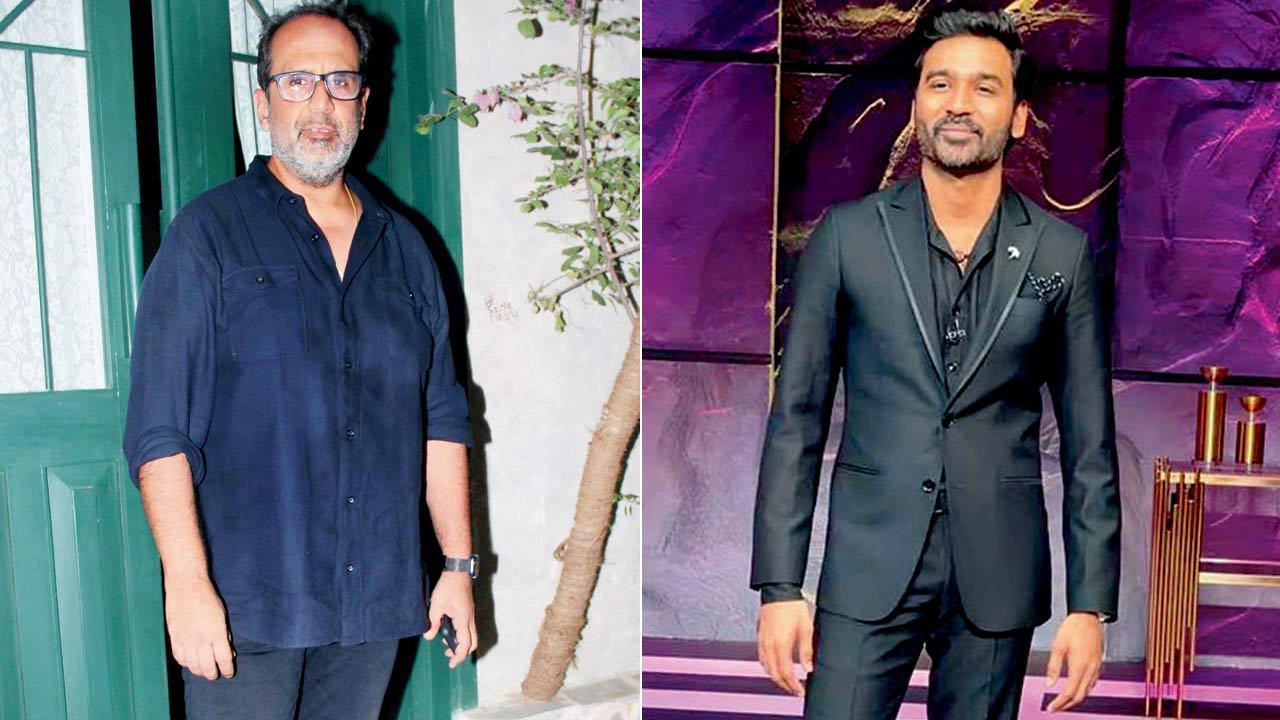
Anshul Chaturvedi (BOMBAY TIMES; November 17, 2025)
In an industry fixated with figuring out what the audience will opt for next, director Aanand L Rai insists that the real crisis isn’t of misreading the audience, but of diminishing honesty and genuineness from the filmmakers. It wasn’t the audience that changed, he says – it was the filmmakers whose conviction began to wobble. From his learnings from the success of Raanjhanaa and Tanu Weds Manu, and the failure of Raksha Bandhan, to the coming full circle and trying to reconnect to his middle-class grounding, the director opens up about an internal battle that many artists face, but few admit to.
Why are Hindi filmmakers often struggling to predict audience behaviour?
The audience has become very – how do I put it – woh thodi se bhi beimaani ab nahi le pa rahe hain storytelling mein.
What does that mean? Audience ka imaan jaag gaya hai ab?
Nahi, I think woh toh aise hi thay, hum (filmmakers) beimann ho gaye. Humko lagne laga, achcha, unka yeh emotion exploit kiya ja sakta hai. Iss tarah ki kahani, uss tarah ki kahani unko pasand aayegi. But in all that, joh ek cheez chali gayi in filmmaking, woh thi conviction – jo ki ek Pushpa ya KGF ya Kantara – inmein hai. They have proved that conviction works.
Define conviction. What’s the difference here?
Our approach to the film was just to please the audience. Their approach was to tell a story. There is a huge, huge difference between the two. I can speak for myself – kahani hi banayi thi na Tanu Weds Manu, kahani hi banayi thi na Raanjhanaa. But jahan mujhe laga ki audience ko yeh pasand aayega – Raksha Bandhan – nahi! It didn’t work for anyone.
So, when you made an audience-led film, it didn’t work because it was not with your personal conviction?
My conviction was that they will like it.
‘Maine detour liya toh mujhe sab yaad aaya’
When I was shooting last in Delhi, over a year back, I was staying near Nehru Place. And early morning I was on my way to the shooting location when I asked my driver to take a short detour to Sadiq Nagar. Our family stayed in Sadiq Nagar, government quarters – a Type III Quarter – that was allotted to my mother. I stayed there till my Class XII and then went to do my engineering. So on an impulse I told my driver, idhar le chal, main zara dekhoon Flat 152, Sector 1, kaisa dikh raha hai. Maine neeche khade ho kar dekha.
I remembered all those days. Roz wahin se nikalna, peeche bus stop se bus pakadna, uss window pe baithna, 2:45 pe ek ladki ka wahan se cross kar ke jaana, school uniform mein…that was such a memory. Maa ka chale jaana pyaaz ki rotiyan bana ke. Mera ghar aana, fridge mein se chhachh ka jug uthana…But if I don’t go there, all this is not happening to me. Main toh bhool gaya tha. Maine woh detour liya toh sab mujhe yaad aaya.
But the story was not your conviction?
No. Even if I make a film that I want to make, there is no assurance that it will work – but at least ek jana to khush hoga! Doosre tareeke mein toh dono hi khush nahi hain. This theory is easy, the practical – not so much. But when I think like this – mujhe mazaa aa raha hai – I can see the difference in how things go when I change the approach.
What is your learning curve of the last half a decade or so? What is your selfeducation in this journey?
My self-education is that when I was telling stories fearlessly, and at the same time, main apne pe kabhi successful film ka pressure nahi le raha tha, sirf kahani sunane ka pressure le raha tha – achche se sunane ka – tab tak meri duniya theek thi. Jab mujhe laga ki there are these growing expectations from this director, and I should go bigger – I started faltering.
That ‘formula’ work has been the reason for many an artiste to lose touch with their original craft.
Haan. At the end of the day, we are human – but at the end of the day, artiste jitna apni fakeeri mein reh jaye, utna achcha…
Artiste ki fitrat badal jaati hai toh uske kaam mein bhi farak aa jaata hai?
Aa jaata hai! Mujhe khud ko hi lagne laga ki bolta rehta hai middle class, middle class, but it doesn’t reflect in your work anymore – but it used to, earlier.
Achanak se sab badal gaya. So you keep talking about middle class, middle class, but you didn’t nurture the middle-class sensibility inside of you. My holidays changed – I began holidaying in Europe. I’m not saying that is wrong. If God has given you that success, you have to enjoy, there is nothing wrong with that. But it is a professional hazard – this profession makes you lose touch with your roots, and you have to understand that, and to hold on to it, if you want to remain in that space.
Midway nahi hai yahan. Ya toh aisa kar lo, ya toh phir udd jao. Be clear ki main toh aaya hi paise kamane ke liye tha. That is a different direction, a different track. But if you want to tell the stories that are inside you, then you have to stay grounded, stay in that world, and tell your stories.
And where are you placed – returning back to your original world?
Yes, I feel I am coming back to my world, jahan mujhe maza aayega.
What has changed in your approach to filmmaking now, as you come back?
I think if I am evolving, I should try to have my audience evolve with me. I will never be scared of telling an old story in a new way. I think the man-woman relationship was not depicted as an equal one for a long time. Many filmmakers got it wrong, and I need to make it right – that is my learning. Shayad main Tanu Weds Manu ya Raanjhanaa ke waqt iss tarike se nahi sochta tha, lekin ab sochta hoon.
You got a fair amount of flak for Raanjhanaa – not entirely unfair – in terms of your depiction of how a man behaved with a woman.
Yes, yes, and I took it. I understood. Ho sakta hai ki mere kaam mein going ahead you will see that I understood.
Hasn’t cinema sold the male entitlement pitch so often while making money at the box office? There is also a view that many of the blockbusters from the south have worked by playing that up while relatively more woke multiplex-ish Bollywood stories struggled.
I don’t disagree that many of the hits have a strong male perspective, they are very macho, and all that, but at the same time I think we cannot be the masters who decide beforehand what the audience should or should not watch.
I disagree with the thought that if we show them a lot of aggressive, macho male characters it will reflect in their behaviour. Because the reverse does not happen, does it? If I make films on Swami Vivekananda tomorrow, will all of them start doing sadhna? If they will not emulate what he does after watching a film on him, then they will not emulate the macho aggressive character either, will they?
Now you have seen me with my success and failures and trajectory. Obviously, success and failure matter, but at the end of the day, I enjoy the process. I am trying to not be afraid. I am trying to experiment. When I was making Raksha Bandhan I was thinking we don’t make enough cinema for the Tier-2 and Tier-3 cities. I thought I had it all clear in my head. But my judgement was wrong.
Staying connected is very important. Meri zameen chhoot jaati hai, phir mujhe pakadna padta hai, phir mai apne penthouse mein chala jaata hoon, phir mujhe yaad dilana padta hai apne ko Tu woh Dilli ka ladka hai, teri aadhi zindagi unn peele gharon mein guzri hai. Teri apni kahaniyan woh hain! Tu soch kyun nahi raha hai!
Isn’t it true that a lot of names, after they enter Bollywood, tend to forget the USPs or the nuances that brought them into Bollywood in the first place. Even if you’re circling back to the place you started from, mentally, that’s also part of any artiste’s graph, perhaps? And nothing teaches us more than failures, always, right?
Obviously (laughs)! The problem is that, fortunately or unfortunately, even when you have failures, so to say, your bank balance does not change dramatically. Your lifestyle does not change. So, you feel ki theek toh chal raha hai sab. After a point you have to realize that it does not matter how much you made or how much you lost in a project. You need to sit down and introspect and see how far you have drifted from your original path. If you don’t do that then even failure is teaching you nothing.
Right now I am enjoying myself. I am also relishing making films for other directors as a producer. I can’t compete with the big houses, but I will try to pick the stories that others won’t. I will search for an identity, something that is original, not a copy of anything ‘successful’. I have not reached a 200-crore movie ever. But I ask myself, what is a better option? To make something that I have fun making and have something that is still not a bad return, or to chase that number? I am not chasing that number. I am not chasing any number. I will keep my middle-class approach. Mujhe khana achcha chahiye, lekin mujhe chaandi ki thaali nahi chahiye.
It’s not just directors, though, is it?
Amol Palekar, Farooq Sheikh – they played some very relatable, everyday; then paused and said: Main dhoond raha hoon Vinod Mehra in this character. Tu mujhe bana ke de raha hai Vinod Khanna. If I do that, the character itself will change and you may not be the right fit for that version of it! Some directors complete the circle, like we were discussing, and come back to a more grounded version. But actors, if they do the same, wapas aa hi nahi paate hain. They reach a point of no return and sometimes they are neither grounded, nor superstars either.
Amol Palekar, Farooq Sheikh – they played some very relatable, everyday; then paused and said: Main dhoond raha hoon Vinod Mehra in this character. Tu mujhe bana ke de raha hai Vinod Khanna. If I do that, the character itself will change and you may not be the right fit for that version of it! Some directors complete the circle, like we were discussing, and come back to a more grounded version. But actors, if they do the same, wapas aa hi nahi paate hain. They reach a point of no return and sometimes they are neither grounded, nor superstars either.
Irrfan went to Hollywood but stayed capable of playing the everyday character, though.
Bilkul. Woh chala gaya, phir bhi aaj bhi kahaani bolte-bolte aap ruk jaate ho aur kehte ho, ‘Irrfan sahab hone chahiye thay…’ (Pauses) Bahut kahaniyan directors ke andar maar gaye woh. Ab aap suna hi nahi sakte, unke bina.
To wrap up what we’ve been talking about: Your USP, that you are rooted, gives you a nuance, an audience connect and also gives you commercial success. However, that success means that shortly thereafter, you are no longer rooted. So you lose your ability to repeat the original connect, and to do the same sort of work that brought you success in the first place.
Yes (laughs)! Yeh ajeeb sa circle hai! When you talk about great makers – and when I say great makers, I mean Hrishikesh Mukherjee or Bimal Roy, names like that – they somehow never lost connect with their roots or their storytelling. Even the Hollywood names who have taught us things about filmmaking – they have kept a consistency in their storytelling. I hope more of us can do that.
Yami Gautam in talks to come on board Kriti Sanon-Aanand L Rai’s Nayi Naveli
8:49 AM
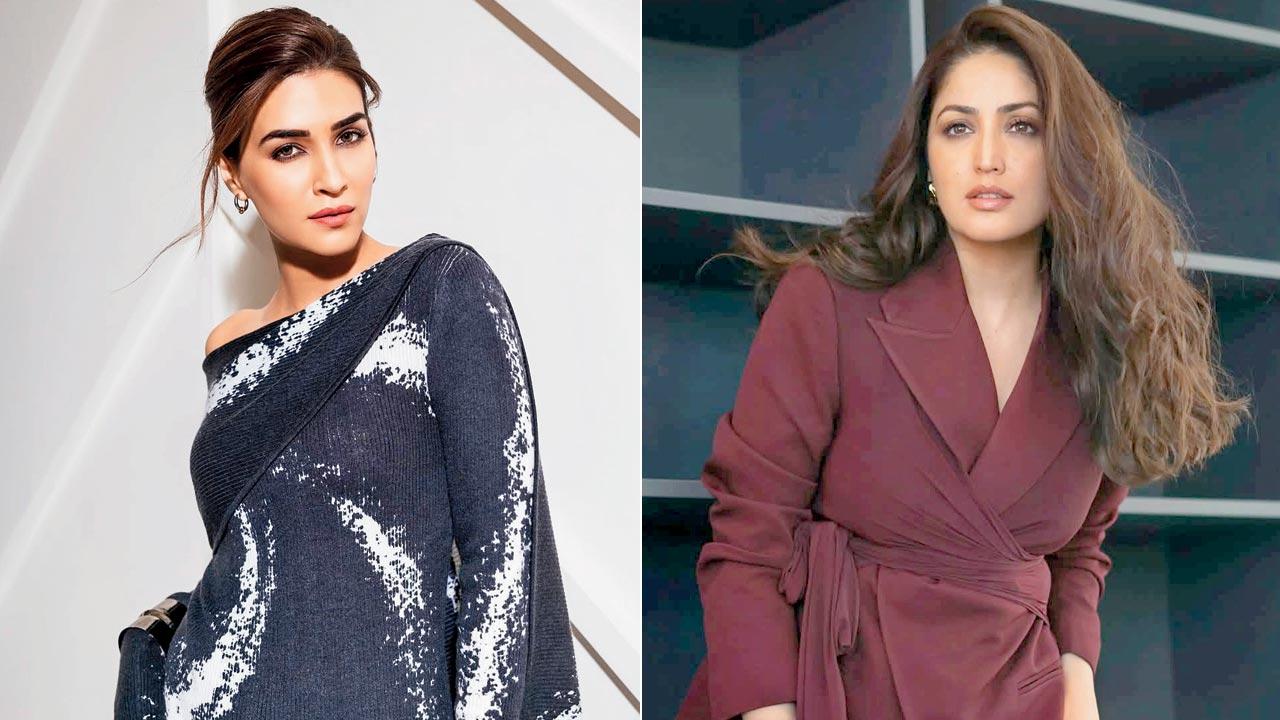
Mohar Basu (MID-DAY; October 7, 2025)
For almost a year, there has been buzz that Kriti Sanon will reunite with filmmaker Aanand L Rai after Tere Ishk Mein for Nayi Naveli. Now, mid-day has learnt that the cast may have an addition — Yami Gautam. Trade insiders reveal that the makers have been quietly assembling the film’s team over the past few months, and are keen to have Gautam as the parallel lead.
Nayi Naveli is said to draw from Indian folk tales, blending mythology with modern storytelling. A trade source reveals, “Rai has been particular about the story’s tone — he wants it to feel rooted in Indian folk tradition, but have a big-screen fantasy appeal. Casting Kriti was the first step because she has the acting prowess and star presence required for the role. She will be seen as part-folklore heroine, and part-mystical warrior. Now, they are in talks with Yami for a meaty role. The two actors haven’t shared screen space before, and that novelty will grab eyeballs,” says the source.
Though the director has yet to be finalized, the team is working towards taking the project on floors in December. For now, the production team is working out the lead actors’ dates.
An insider says, “Kriti is occupied with Tere Ishk Mein promotions throughout October, while Yami is tied up with Haq, which releases in early November. If Yami comes on board, the idea is to begin workshops and costume trials by November so that the shoot can start in December.” A chunk of Nayi Naveli will be shot in Mumbai, followed by a North India schedule.
The Raanjhanaa AI re-edit tangle: Are we in an ‘ethical abyss’?
8:52 AM
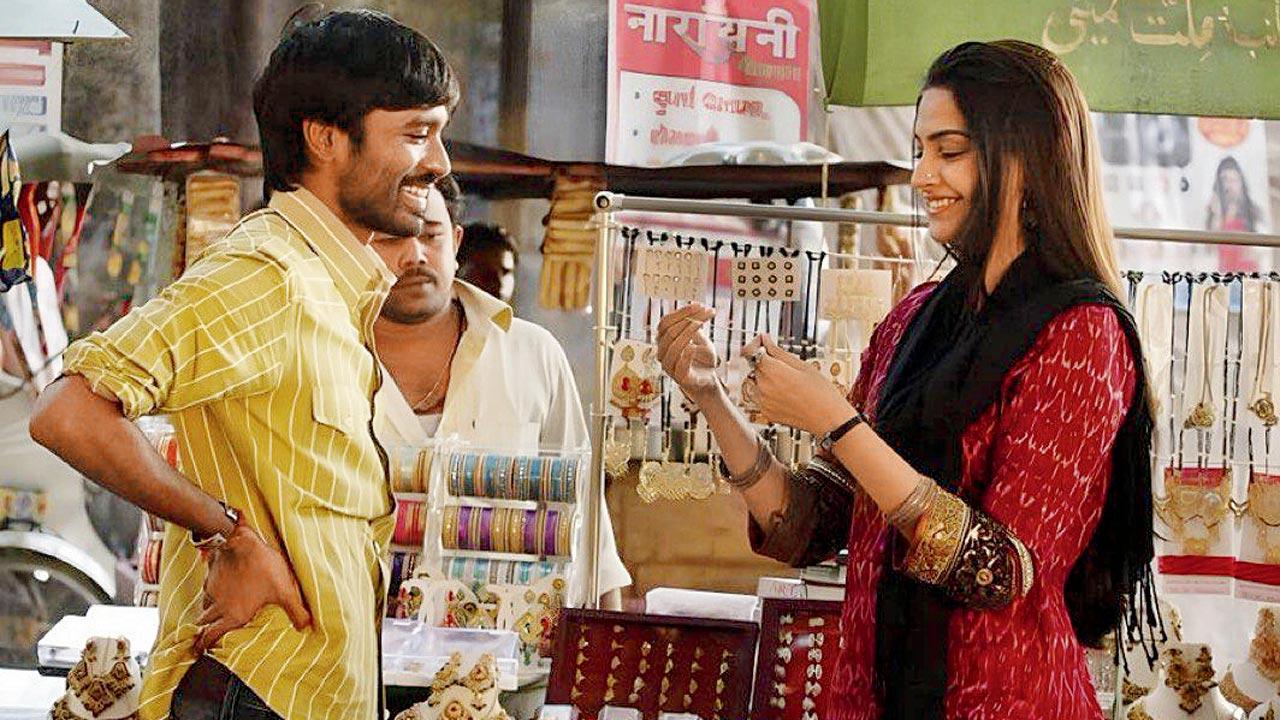
As a top studio rewrites the climax of a beloved film using AI, without the director’s consent, Bollywood is now reckoning with the grim reality that even the soul of a story can be reshaped without its storyteller, a decade after its creation
Mohar Basu (MID-DAY; July 27, 2025)
Artificial intelligence is not at the place where it can manipulate writers and creators yet. This is what we heard in February, during an interview with the acclaimed American writer Chris Keyser about the dangers of AI for screenwriters, when he was in the city for a conference. Keyser was the co-chair of the Writers Guild of America’s (WGA) negotiating committee during the 2023 strike by over 11,000 Hollywood film and television writers for better wages and conditions.
During our conversation, he had said, “We assumed that the studios were so protective of their own work that they would be scared of AI in the same way that writers were. They didn’t behave that way initially. By the end of the negotiation of the contract, (we) negotiated terms that protected writers’ core rights, their right to compensation and credit, and all their additional contractual rights for their material. It said that they can’t be forced to rewrite AI, nor can AI rewrite them, that AI can’t get credit.”
Back then, even we couldn’t have pre-empted what unfolded in India last week. Filmmaker Aanand L Rai’s 2013 hit Raanjhanaa is being re-released, but with an ending rewritten. And Rai doesn’t approve of it. The new version, scheduled for theatrical release in Tamil Nadu under its dubbed title Ambikapathy, has been altered using artificial intelligence. Without the director’s involvement or consent, the studio behind Raanjhanaa, Eros International, has digitally fabricated an alternate “happy ending” that, in Rai’s own words, vandalizes the soul of the film.
Unlike in Hollywood, where writers’ guilds have fought — and won — major protections against AI-led rewrites, Indian creators remain bound by contracts that often strip them of all future rights the moment a project is greenlit. Directors and screenwriters may shape the soul of a film, but legally, they seldom own it, as the norm is for the IP of a movie or show to transfer to the studio upon signing of agreements. With studios embracing AI for commercial “enhancements,” that legal void is turning into an ethical abyss, like in Rai’s case.
Entertainment lawyer Priyanka Khimani says while studios may assert ownership over a film’s copyright, the use of AI to fundamentally alter a creator’s original vision, especially without their consent, sits in a legally grey and ethically troubling zone.
She explains, “Studios often control 100% of the rights, although under the moral rights clause a director or author retain certain moral rights under Indian law — like the right to be identified as the author of the work, and to object to any distortion or mutilation that could harm their reputation.”
Another crucial issue relates to the Copyright Act’s 2012 amendment, which states that rights can only be assigned for formats and uses that exist at the time of the agreement. “In the case of technologies like AI, which wasn’t in existence or even foreseeable when the film was made, there’s a strong argument that the creator never assigned rights for those future uses,” Khimani tells us, adding, “The law is meant to protect authors and performers from losing control over their work in precisely these scenarios, where new technology enables uses that were never imagined at the time of creation.”
Khimani goes on to say, “In the case of Raanjhanaa, I believe the writers and actors may be on firmer legal ground if they were to challenge the AI-modified version. They can argue that the alteration compromises the integrity of their work, infringes on their personality rights, and constitutes unauthorized distortion. For the director, however, this becomes more of an ethical and moral objection rather than a strictly legal one.”
Khimani says this moment is important as “it’s opening a Pandora’s box” because if we normalize the ability to reshape existing works using AI, the long-term consequences for literature, cinema, and performance could be disastrous.
Clearly, Eros is not in agreement with this stand. Eros Group CEO Pradeep Dwivedi has been quoted saying, “We categorically reject Mr Rai’s allegations... The re-release is a respectful reinterpretation and not a ‘tampering’ of the original.”
Meanwhile, Rai is taking the matter to producer bodies. Though the matter is yet to be heard officially, a senior member of the Guild tells Sunday mid-day, “The Guild is made up of filmmakers. We’re in this industry because we’re passionate about storytelling. So when a writer or director feels their voice has been overwritten or erased, it strikes at the heart of why we do what we do. This is about respect. About honouring the soul of the work. We owe it to ourselves, and to the future of filmmaking, to have this conversation with honesty and courage.”
Dipankar Mukherjee, co-founder of Studio Blo, a new-age startup, has a sharp take here. Mukherjee tells us, “AI should be like a cinematographer — extending the vision of the creator, not replacing it. The moment it starts rewriting the emotional spine of a story without the writer or director’s approval, you’ve crossed the line. What happened with Raanjhanaa is revisionism. It’s like saying Devdas should have ended up with Paro to test better with audiences. Then it stops being Devdas. Even before AI, these lines were being crossed. AI just makes that overstep faster, cheaper, and invisible. We’re beginning to see requests to 'freshen up' past content — whether that’s to de-age characters, tweak endings, or reframe performances for newer markets. We are built from ground-up with anti-plagiarism systems integrated into our workflow. The red flag is when AI starts doing what studio executives tried doing in the ’80s, like the Harrison Ford voiceover in Blade Runner, against the wishes of Ridley Scott; or the Justice League producers’ edit after Zack Snyder stepped down. Except now, without needing a reshoot or a script change. The temptation to erase dissent, discomfort, or ambiguity is high. And in a country where creators often don’t own their IP, that temptation becomes unchecked power.”
The human cost at the end of the day when something like this happens is borne by the creator and writer — in this case, Rai and writer Himanshu Sharma. A well-known screenwriter, who was previously a part of the Screenwriters Association General Body, tells us, “We spend months, sometimes years building characters, shaping arcs, constructing emotional payoffs that mean something. And then, one day, a studio decides to rewrite the ending using a machine, without even informing the people who created it. It’s insulting. What happened with Raanjhanaa sends a very dangerous message that any writer’s vision is disposable.”
The terms
In a series of writer/creator contracts reviewed by Sunday mid-day, the terminology of the contract reads, “The Producer ... shall have the sole and exclusive right to exercise all rights ... in accordance with the Copyright Act, 1957. The Service Provider further acknowledges that the Producer shall be the sole and exclusive owner of Derivative Rights and shall have the sole and exclusive right to produce Derivative Works based on the Works and on all Modes, Media and Formats, for the entire Territory and in perpetuity.”
Raanjhanaa AI ending row: Producers say they have all the rights, not the director
10:10 AM
Eros defends call after Rai slams Raanjhanaa re-release with AI-generated alternate ending
BOMBAY TIMES (July 21, 2025)
‘THE REMARKS BY THE DIRECTOR ARE FACTUALLY INCORRECT’
Eros issued a statement saying, “We at Eros International Media Limited categorically reject and strongly object to the unfounded and sensationalist remarks made by Mr Aanand L. Rai regarding the AI-enhanced re-release of Raanjhanaa. These remarks are not only factually incorrect and misleading, but appear to be a deliberate negative PR stunt designed to distract public and industry attention from serious and ongoing legal matters concerning Mr Rai and Colour Yellow Productions Pvt. Ltd. We view Mr Rai’s public outburst, especially timed just days after these disclosures, as a conscious attempt to shift focus away from the legal and governance issues he currently faces. It is unfortunate that a filmmaker of his stature would attempt to conflate legal accountability with creative victimhood. It would be best if Mr Rai respectfully acknowledges the ownership of IP as per law of the land and his written undertakings, rather than use media unfairly as a platform to promote himself and thrive on unwarranted sensationalism.”
‘IT IS A STRATEGY TO REINTRODUCE CLASSICS TO NEWER AUDIENCE’
Defending their decision to re-release Raanjhanaa with an alternate ending, the studio states, “The re-release of Raanjhanaa in the Tamil market is part of Eros International’s broader strategy to refresh and reintroduce classic cinematic works to newer audiences in regional markets. Over a decade since its original release, the film continues to resonate deeply, and the reinterpretation of its ending aims to extend its emotional legacy and relevance. This is a creative reimagining, not a replacement, and is consistent with global industry practices including anniversary editions, alternate cuts, and modernized remasters.”
They continue, “We are the sole and exclusive copyright holder and producer of Raanjhanaa, and are fully entitled, both legally and ethically, to adapt and re-release the film. This includes re-imagining certain elements using advanced tools such as generative AI to reach newer audiences while preserving the original’s artistic soul. Contrary to the claims of “artistic vandalism”, our re-release is a respectful creative reinterpretation – clearly labelled and separate from the original version – offered as an addition to, not a replacement of, the original. Such practices are common in global cinema, and reflect our longstanding commitment to innovation, audience engagement, and cultural preservation. We reserve all our rights and intend to take all appropriate legal and remedial action to protect our reputation, brand equity, and commercial interests.”
‘EROS HAS INITIATED LEGAL PROCEEDINGS AGAINST AANAND L RAI’
The studio also stated that they have initiated legal proceedings against Rai’s production house. “It is important to bring to light that Eros has initiated legal proceedings before the Hon’ble National Company Law Tribunal (NCLT), Mumbai Bench, under Sections 241 and 242 of the Companies Act, 2013 against Colour Yellow Productions Pvt. Ltd., and its directors, Mr Aanand L Rai and Mrs Yogita Rai. The allegations include serious acts of mismanagement, lack of transparency in financial disclosures, unauthorized and related-party transactions without board approvals. On June 24, 2025, the Tribunal acknowledged these concerns and has ordered interim relief in favour of Eros,” said the studio.
What happened
Raanjhanaa which had hit the screens in 2013, is being re-released in Tamil Nadu with an altered AI generated ending, possibly a first for the industry. While director Aanand L Rai has slammed the move, the studio Eros International Media Limited describes this as a “creative reimagining” and says that the director’s comments are an attempt “to distract public and industry attention from serious and ongoing legal matters.”
The Tamil version of the unrequited romance drama, starring Dhanush and Sonam Kapoor, was titled Ambikapathy. Reportedly, Eros International has sold the AI-edited version of the film to a Tamil Nadu-based distributor. “The timeless love story returns to the big screen! #Ambikapathy rereleasing in theatres from August 1st... A new ending powered by AI,” Upswing Entertainment said while making the announcement earlier this month.
--------------------------------------------
HINDUSTAN TIMES (July 21, 2025)
After Raanjhanaa director Aanand L Rai expressed his displeasure at the AI-generated ending for his 2013 film, the production house Eros Media World reacted to his statement. “This is a creative reimagining, not a replacement, and is consistent with global industry practices. We categorically reject Mr Rai’s allegations, which are not only factually incorrect, but also legally unfounded. The re-release is a respectful reinterpretation and not a tampering of the original. It is clearly positioned as an alternate, AI-enhanced version — akin to classic cuts or re-edits seen globally,” Pradeep Dwivedi, the company’s CEO, told PTI.
The producer of a cinematographic work, under Indian law, is its legal author and moral rights vest with the producer, not the director, the company added. Asked if the film’s team was kept in the loop, they said they hold the sole copyright and producer rights of Raanjhanaa, including the legal rights.
The company added: “We regret that he (Aanand) has chosen to publicly distance himself from the project, despite the film being a product of collaborative effort where rights are lawfully vested with the producer. Our re-release is an homage to the film’s legacy, not a deviation from it. All rights, decisions, and creative control related to Raanjhanaa remain solely with Eros International Media Limited as the exclusive copyright holder.”
We reached out to Aanand, but got no response till the time of going to press.
What led to this?
The film has been re-released in Tamil Nadu with an AI-generated “happy” ending, reports PTI. The Hindi film was released as Ambikapathy in the Tamil version in 2013. Raanjhanaa director Aanand L Rai told PTI that he is “heartbroken that this is the future we’re heading towards, where intent and authorship are disposable”. He added that he will dissociate himself “from such a reckless and dystopian experiment”. A part of his statement read, “Raanjhanaa didn’t need a new climax. It had heart, and honesty. To see its ending altered without a word of discussion is a gross violation of the film.”
Aanand L Rai slams AI-altered climax of Raanjhanaa in re-release
11:06 AM
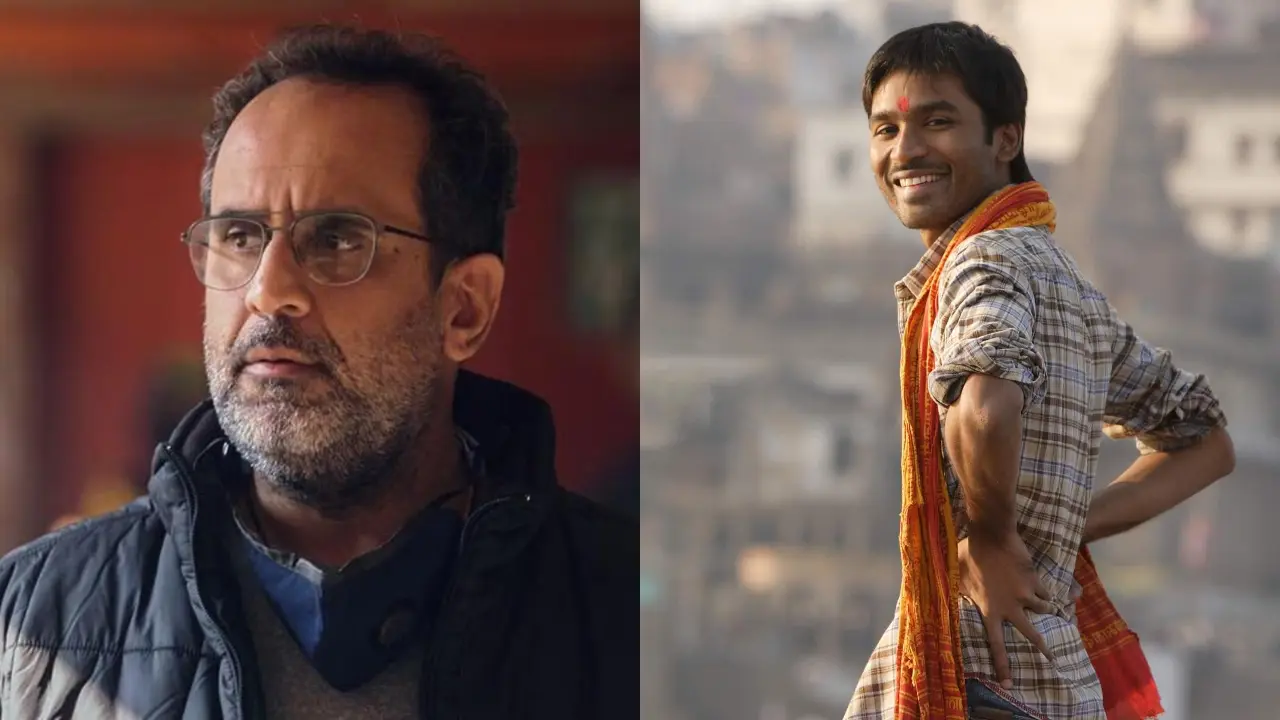
BOMBAY TIMES (July 19, 2025)
The Dhanush and Sonam Kapoor-starrer Raanjhanaa (2013) is re-releasing in theatres on August 1. However, this is unlike the spate of re-releases we’ve seen in recent times. Why? There’s a major plot twist here. Promotional posters tease “a new ending powered by Artificial Intelligence,” sparking both curiosity and controversy. Director and co-producer Aanand L Rai has voiced strong objections, stating that he was neither informed nor consulted by the studio, Eros International, before such a significant alteration was made to his original film.
Deeply upset about the altered climax, in a statement, Rai said, “Raanjhanaa didn’t need a new climax. It had heart and honesty. It became a cult film because people connected to it with its flaws and imperfections. To see its ending altered without a word of discussion is a gross violation not just of the film, but of the trust of the fans who’ve carried the film in their hearts for 12 years.”
Reportedly, Eros International has sold the AI-edited version of the film to a Tamil Nadu-based distributor. Rai added, “Eros’s actions open a dangerous door. They raise urgent legal and ethical questions, of the impact of decisions like this on the moral rights of creators. Even worse is their apparent decision to alter the actors’ contributions without their consent! How can they digitally manipulate an actor’s input almost a decade after a film’s release? This strips away their agency and raises serious concerns under personality and image rights. If this goes unquestioned, what stops anyone from 'updating' any film, performance, or legacy to suit short-term profiteering?”
We are working on the story for Tanu Weds Manu 3-Aanand L Rai
10:31 AM
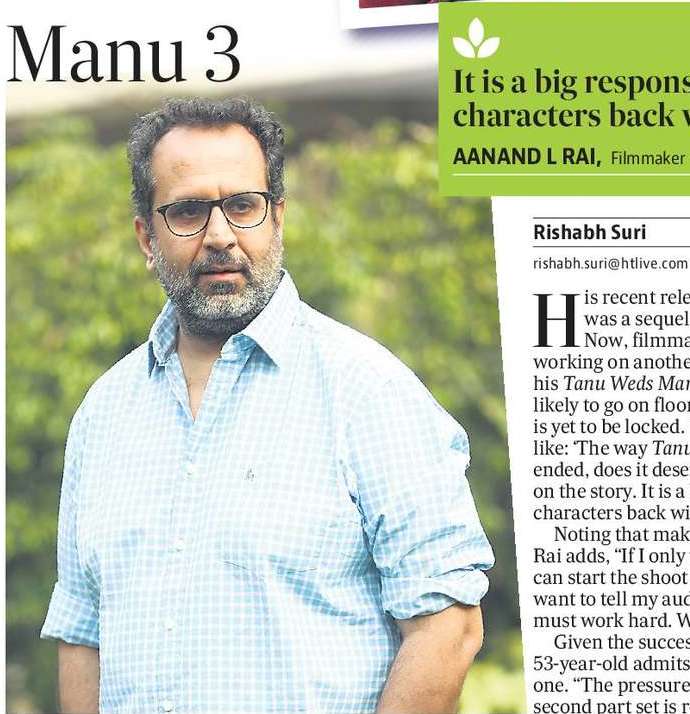
Rishabh Suri (HINDUSTAN TIMES; August 28, 2024)
His recent release, Phir Aayi Hasseen Dillruba, was a sequel to his 2021 film Haseen Dillruba. Now, filmmaker Aanand L Rai has started working on another sequel, the third instalment to his Tanu Weds Manu franchise. While the film is likely to go on floors by mid-2025, Rai says the story is yet to be locked.
“I know there have been questions like: ‘The way Tanu Weds Manu Returns (2015) ended, does it deserve a sequel?’ But we are working on the story. It is a big responsibility to get the characters back with a bigger story and I am on it.”
Noting that making a film is “all about intentions”, Rai adds, “If I only want to make money out of it, I can start the shoot in the next three months. But, if I want to tell my audience a story for satisfaction, I must work hard. Work is on in full swing.”
Given the success of the first two films, the 53-year-old admits that he is nervous about the third one. “The pressure to live up to the benchmark the second part set is real,” Rai ends.
The current generation fears getting hurt. If you fear pain, how will love happen?-Aanand L Rai
8:25 AM
With Dhanush-led Tere Ishq Mein set to roll by year-end, director Rai says film will explore conflicting ideas of love, particularly youth’s self-centred approach to it
Priyanka Sharma (MID-DAY; August 10, 2024)
It’s not the audience alone that is missing seeing romance on the big screen. Filmmaker Aanand L Rai shares the sentiment. “I can’t survive without making romantic films,” he remarks. No wonder then he is gearing up to helm another love story, Tere Ishq Mein.
“The project will go on floors by the year-end. We are in the final stage of writing and that will go on till the last minute,” he smiles.
Tere Ishq Mein is the director’s third collaboration with Dhanush after Raanjhanaa (2013) and Atrangi Re (2021). Kriti Sanon is tipped to be the leading lady (Kriti to team up with Dhanush, August 9). While the project was announced last year, Rai took considerable time to flesh out the story that presents two contrasting ideas of love.
“The two protagonists will have two definitions of love and there will be a conflict because of it. It is stemmed in how today’s generation holds their emotions back. My generation has one definition of love, and today’s generation has another.”
Through the movie, the director wants to understand the love language of today’s youth—their expectations, cynicism, and most importantly, their calculated approach to it.
“The current generation fears getting hurt. If you fear pain, how will love happen? There will be no love stories, only calculations. When people saw Atrangi Re, they thought, ‘I want a man like Dhanush.’ He will understand you, support you, but what will you do for him? [This generation] doesn’t think about that. They will hurt [others], but they shouldn’t get hurt. Also, they have a fear of showing their sadness to the world. So, if their lover leaves them, they pretend not to be in pain. Are you in love or a competition?”
Relevance is key for any artiste. With Tere Ishq Mein, Rai wants to be relevant by attuning himself with the present. “In 2011 with Tanu Weds Manu, [I] was in sync with the audience. It was a new kind of small-town love story, breaking [the mould] of foreign locales and chiffon sarees. For a maker, the biggest struggle is to stay relevant. That is possible only if I understand the present generation. I have a certain definition of love, but I have to evolve for them,” says the filmmaker, who is also producing an OTT romantic drama.
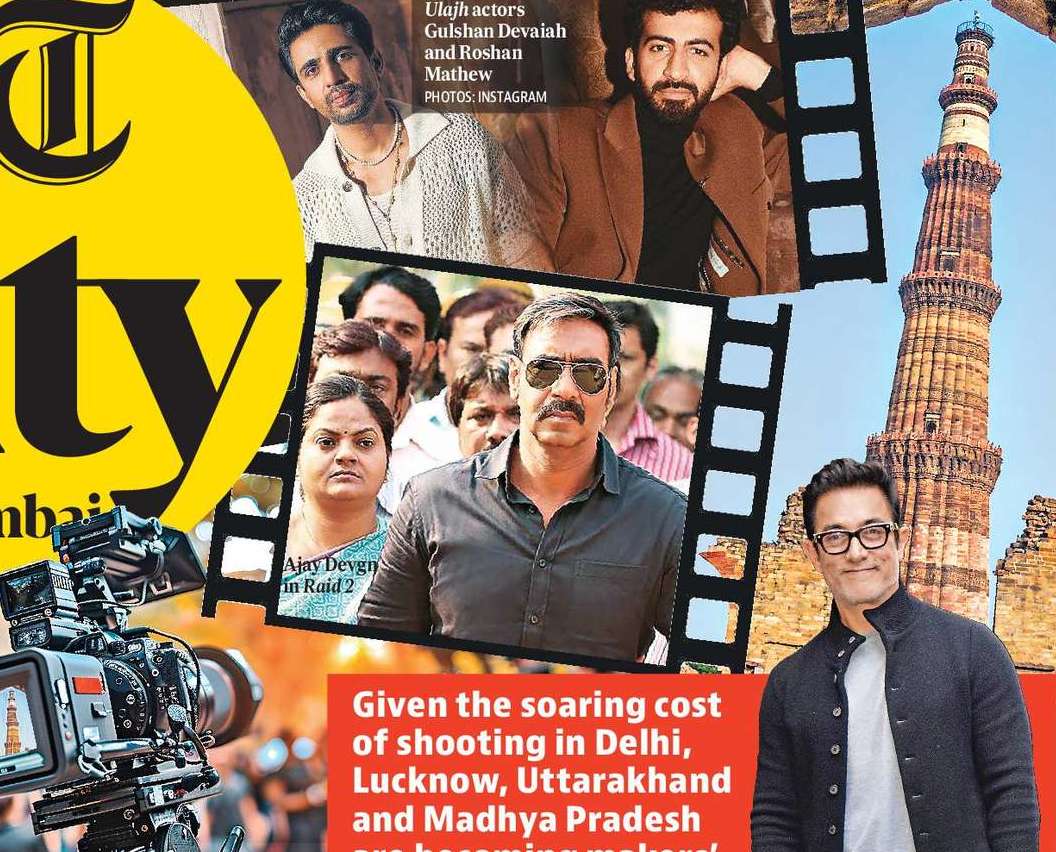
Due to high cost of shooting in Delhi, makers shift to Lucknow, Uttarakhand, Madhya Pradesh
8:26 AM
Rishabh Suri (HINDUSTAN TIMES; May 14, 2024)
If you’ve seen Delhi in any film or web show in the last one year, chances are that it’s not the city, but a recreated set in Lucknow or some place in Madhya Pradesh. Shooting in the Capital is expensive. Given the soaring costs, we have learnt that many films that were supposed to be shot in Delhi over long schedules are now being moved to other cities.
For instance, actor Aamir Khan’s Delhi schedule for Sitaare Zameen Par has been cut. A source says, “Instead of a month, the team will only shoot in Delhi in July for just 8 to 10 days now.”
On the other hand, actor Janhvi Kapoor’s Ulajh couldn’t make it to Delhi due to budget constraints. “Earlier, it was to be shot in Delhi for around two weeks. But the budget was overshot in London. So, the makers shifted the shoot to Bhopal. They will either recreate Delhi or will base the plot in Bhopal now,” the source adds. Even the Arshad Warsi and Akshay Kumar-starrer Jolly LLB 3 that was supposed to be shot in Delhi is now being shot in Ajmer.
Sharing a break-up of how shooting in Delhi looks like now, a source says that while shooting at the Rajiv Chowk metro station costs Rs. 2 lakh per hour, the international airport costs Rs. 12 lakh for four hours.
A production head, on condition of anonymity, adds: “If you want to shoot at Rajiv Chowk for four hours, Rs. 8 lakh go to the Delhi Metro Rail Corporation. GST ki baat agar nahin bhi karte hain, tab bhi Rs. 2.36 lakh go to the New Delhi Municipal Council and Rs. 1 lakh to the parking guys. Around Rs. 2 lakh go to the Delhi Police for security. So, you can do the math.”
The insider adds that makers now tell writers to not write a script around Delhi: “The haveli in Chandni Chowk that would earlier cost Rs. 25,000 is now given for Rs. 4 lakh a day.”
It’s not easy
A source says, “Delhi is an expensive city. Owners of bungalows have hiked the prices due to the soaring demand. Plus, the hotel costs are high in Delhi. While a stay in a five-star hotel in Delhi would cost Rs. 10,000, in Lucknow, it might cost Rs. 5,000.”
Line producer Navmeet Singh adds, “Hotels and travel are expensive in Delhi, which results in less work here. I am planning to change my centre of work and setting things up for shoots in Madhya Pradesh and Uttar Pradesh.”
Lucknow is the new Dilli
The makers of actor Ajay Devgn’s Raid 2 are recreating Delhi in Lucknow. “They shot in Delhi for four days, including India Gate, and then moved to Lucknow for 47 days. At least 20-25 films are being shot in Lucknow, thanks to the subsidies and quick permissions,” a person from the production team says.
Filmmaker Aanand L Rai’s Nakhrewaalii also followed suit. “The team shot in Lucknow for 40 days and recreated Delhi there. That was cheaper. They wanted to shoot in a bungalow in Barakhamba Road that’d cost them Rs. 1 lakh a day. Aanand got that for Rs. 30,000 in Lucknow,” says the source.
Money used to foster art. Today that relationship is lopsided-Anubhav Sinha
9:40 AM

(L-R) Vikramaditya Motwane, Aanand L Rai, Anubhav Sinha, Raj Nidimoru and Krishna DK
Renuka Vyavahare (BOMBAY TIMES; March 10, 2024)
The directors panel moderated by Mayank Shekhar, for FICCI Frames 2024 comprised acclaimed and diverse voices like Anubhav Sinha, Raj & DK, Aanand L Rai and Vikramaditya Motwane. The process of producing movies along with directing and writing, money dominating art and stifling emerging talent, and the need for diversity in our cinema - the session raised some crucial points.
‘Representation has marginally increased’
The discussion on representation behind the camera evoked interesting reactions. Vikramaditya Motwane, who is known for Udaan and Lootera, pointed out, “The number of female directors today as opposed to when I started out has increased. The number of female HOD’s on my crew have grown exponentially. Even on the set of the series Jubilee, I could see that and it’s not a quota thing. The women were present because they are talented.”
Anubhav Sinha shared a slightly different perspective. He added, “Representation has marginally increased. I hope it gets better. I make a conscious effort with the recruitment teams to ensure this happens. When we wrote scripts earlier, all the important characters were upper caste. Sometimes caste is inconsequential, but I ensure those surnames are there. We need to be mindful of that.”
Talent should be the only deciding factor
Raanjhanaa director Aanand L Rai stated that talent should be the only deciding factor for artists and technicians to get work. “Caste and gender don’t matter,” he claimed. Rai, known for the Tanu Weds Manu films, also took the opportunity to speak about AI. He explained, “Anything artificial can’t touch your heart. Maybe in the coming times, AI attains the intent that humans have. That intent is important. The day it (AI) gets it, I will start using AI.”
We have various regions represented, not just gender.
DK of Raj & DK, who have made The Family Man and Go Goa Gone, shared how writing can lead to representation. He said, “When we write our stories, we look for diversity. We create strong female characters. We have various regions represented, not just gender. This automatically leads to diversity in casting. When we pick our technical crew, most of us tend to choose people who suit the project. It’s a reality that in the DOP department, women are outnumbered by men. But when it comes to costume design or production design, women are in the forefront. We ensure the writer’s room has female representation to ensure the film isn’t a sausage fest..”
‘I don’t think indie films exist in theatres anymore’
Are emerging directors getting platforms to showcase their talent? Do they have the freedom to make the kind of indies that were made 15 years ago? Voicing his opinion on this, Vikramaditya said, “We got a break by making indie movies, but I don’t think indie films exist in theatres anymore. It’s easier to get a romcom made because you get a star, and you get a producer. I got to make Udaan back then, but today I don’t see that happening a lot. There are exciting new directors today like Natesh Hegde, who made Pedro or Karan Gour, who made Fairy Folk, but their work is not seen. I feel there were better opportunities back then.”
‘The flight of a director is terribly curtailed today’
Sinha believes that today “money has all the power” over creativity and that kills the director’s instinct. “Back then, the call rested with the directors. We had the confidence to follow our instincts rather than the data thrown at you as to what works and what doesn’t. Now even the distributor will talk to you about the pacing of the movie. Everyone knows everything! The flight of a director is terribly curtailed today,” he said.
‘Years ago, we had independent producers backing us’
Talking about how money drives the movie business and how that leads to creativity getting stifled, Anubhav Sinha said, “Years ago, we had independent producers backing us. Money used to foster art. Today that relationship is lopsided. Money has all the power. This algorithm is a cage. If you tell me this is what the audience wants, it intimidates and kills your instinct as a director. When a 12th Fail works it is called an aberration. When an action film, works, it’s a trend. I don’t understand why,” questioned Sinha, who has directed films like Mulk, Thappad and Article 15.
‘We became producers to make our films right & make them the way we wanted to’
All the directors present at the session unanimously pointed out that no director becomes a producer by choice. They do it because it gives them control over their own content. Raj Nidimoru elaborated, “We became producers to make our films right and make them the way we wanted to. You direct, write, conceptualize, create it… that’s why we call ourselves filmmakers. My first business card said filmmaker. If you produce your work, you have the final say in marketing, posters and publicity. It’s what any filmmaker would want. This is the time to express yourself. You have so many ways to do it.”
I recorded an audition tape for Anushka Sharma's character in Zero; it moved Aanand L Rai-Katrina Kaif
8:51 AM
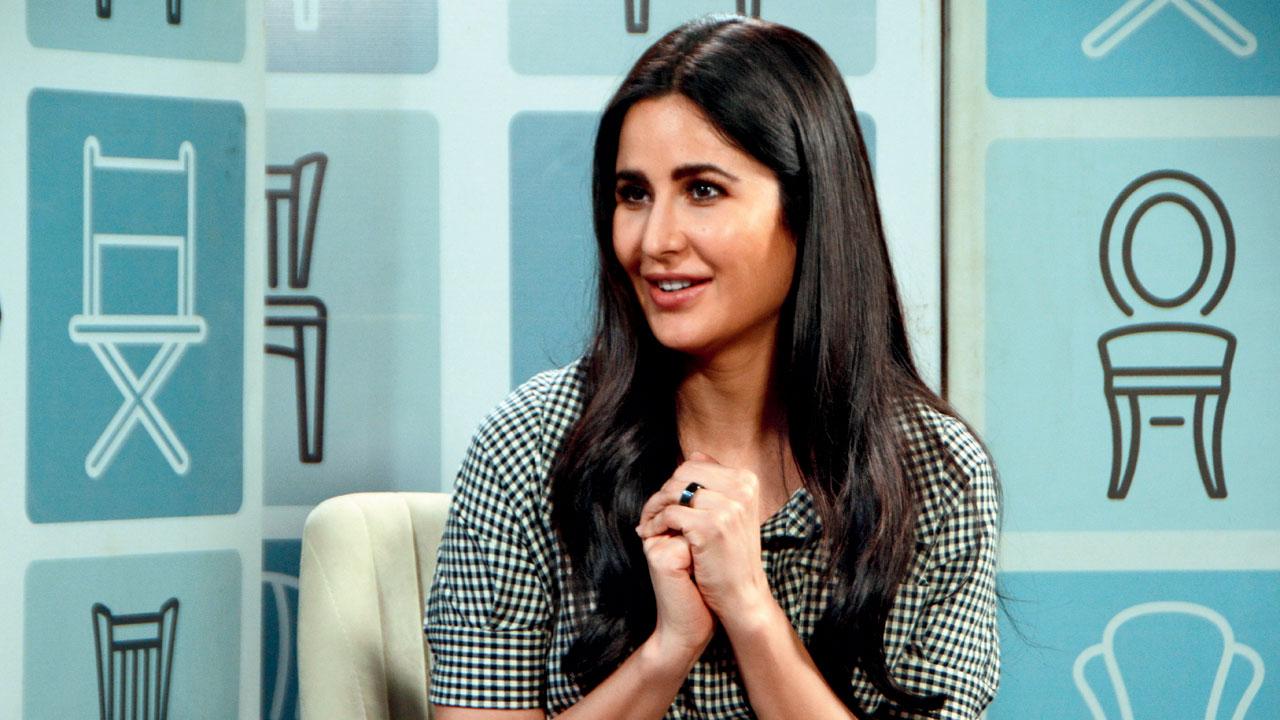
Bollywood’s unlikeliest top heroine, Katrina Kaif, on two decades of stardom
Mayank Shekhar (MID-DAY; March 2, 2024)
Surely, you’ve seen the film Bachna Ae Haseeno (2008). “If I’m not mistaken, it was Ranbir Kapoor’s second film, and his first for Yash Raj [Films],” Bollywood star Katrina Kaif informs us.
Now, there were four women in that movie. Three you know: Bipasha Basu, Deepika Padukone, Minissha Lamba. The fourth was? Katrina!
The film was, in a sense, a goal unlocked for her—she had been “vying for a Yash Raj production” for some time. Except that once she met producer Aditya Chopra, he said, “The script was getting too long—so we had to snip the fourth female part.”
Katrina recalls, “It was a limited role, yes. But I was, like, you gotta be joking! Shortly thereafter, Aditya called me to offer another film.
“He’d already taken me off a big commercial release. My response to the new offer was—he’s instead offering me a small, artsy film, with no songs, scale, dance, and with Kabir Khan, who’s a documentary filmmaker? I was not happy about it!”
Salman Khan convinced her to do the role. He had met Kabir before, discussing his debut, Kabul Express (2006), and was impressed enough—although they worked together on Ek Tha Tiger (2012) much later.
The Katrina film in question is New York (2009), a political drama, set in post-9/11 America. She says, “I walked begrudgingly on to that set, looking disdainfully [in my head], biting my teeth: such a small crew, where are the lights, cameras… I had just come off Singh Is Kinng (2008), that had been so massively loved by audiences.”
Cut to the wrap-day of the film’s shoot in New York, and she was crying: “Nobody wanted the shoot to end. Up until this day, New York remains the most amazing and eye-opening experience of my life in films.”
“The closest friends I have in the industry are from that film. It played a bit of a role in the journey of my life, thereafter. Kabir gave me the confidence to have my own voice. Something I hadn’t even considered.”
Until then, Katrina confesses, she went by a simple Bollywood playbook on sets: “Do as told. Quietly.” If you scroll through her filmography thereafter, full of male superstar-driven money-spinners otherwise, you do sense a particular pivot, post New York.
Next stop: Prakash Jha’s Raajneeti (2010), the Mahabharat, adapted into the heartland of India’s politics: “I mean, what an experience, what a shoot!”
Katrina remembers, “There was this sequence in Bhopal, where my character’s husband dies, and I take centre-stage. I look before me. There are 2,000-3,000 people, for as long as your eyes can see. I’m supposed to give a speech in front of them, like a politician, and with the film’s entire cast [on the podium]. My hands were trembling. I remember Nana [Patekar] Sir telling me, it’s going to be fine; just go ahead and do it. And it was fine!”
From here on, we can cut further to multiple parts in Katrina’s thoroughly mainstream career, with enough meat for her to juice out as an actor as well—Zoya Akhtar’s ensemble road-trip, Zindagi Na Milegi Dobara (2011, easily my favourite), to Bharat (2019), a synchronous history of contemporary India, told through the lives of its protagonists, with Katrina paired opposite Salman.
But she wants to zero-in, instead, on Aanand L Rai’s Zero (2018). TIL: Before Shah Rukh Khan (SRK) got onboard that picture, it was titled Katrina Meri Jaan, with Katrina playing a double role!
Well, to clarify, “That was a different script. It changed thereafter. But when Anand Sir was narrating me this [new script to play Babita Kumari], my ears and eyes kept perking up to the other female role [of Afiya, suffering from cerebral palsy].”
“Anand Sir said he had someone else in mind for it. I went home that day and recorded an audition tape on my iPhone for the part. I went back and showed him the recording on my laptop. It really moved him. That gave me hope, and we kept circling on it, for days.”
“I was so attached to the part [eventually played by Anushka Sharma] that I couldn’t even care if there was anything good in what was being offered to me.”
“It was Shah Rukh who said I was getting too emotionally attached, and that I should trust him, and do the film. That’s how I got a chance to do [Babita]. It’s one of the best roles I’ve ever done.”
These intercuts into some of Katrina’s more challenging parts are essential. If only to explain how she’s delivered arguably her finest role in films thus far.
That of Maria, in Sriram Raghavan’s Merry Christmas (2024), squarely shouldering a tough, tight plot, primarily set in a South Bombay apartment, flitting between a couple of male characters, while the camera stays on her, almost throughout a stunningly claustrophobic murder mystery!
It is, in many ways, a culmination of sorts. The person you’d instantly think of in that role is probably Tabu. Katrina agrees, “I think Tabu is fabulous, anyway. But I loved her in [Raghavan’s] Andhadun.”
That said, when Sriram and his co-writer, editor Pooja Ladha Surti, first narrated Merry Christmas to Katrina, she found herself asking several questions to do with the motivations of her character: “It’s at the end of this meeting, Sriram Sir said I should write the backstory of Maria—oh, no, wait, it’s been a while, it wasn’t him.”
“After that narration, I actually wrote down Maria’s backstory on my own, at home. This was during the lockdown. I emailed it to him, and he loved it. We achieved a more in-depth story, based on that. He’s the kind of filmmaker who gives you that space.”
And yet, if you go through a series of interviews with Katrina before the release of Merry Christmas, she appears to repeat one aspect of her time filming the suspense-drama—that she was crying so much, before and during the filmmaking. Strangely, none of the interviewers seem to ask her, why? Sounds awful—why would she have to cry so much?
Katrina laughs, “Some of the crying [during the shoot] was part of the script.” Clearly, that’s not all. Let’s revisit the timeline again then. “Firstly, there was a major time gap from the narration to when the film went on floors, which was literally three and half weeks after I got married [to actor Vicky Kaushal].”
“You’re in this celebratory, jubilant space. There was COVID in between. All I wanted to do was spend time with my husband that we hadn’t had together. Since I’m obsessed with my work, diving into this intense and darker film was getting difficult. In my head, I wasn’t in that zone. But once you realize it’s happening, you just have to dive into the deep end.”
The other thing, Katrina confesses she has, is a loosely streaming sense of “selective memory”: “Now, Sriram Sir had told me, and this got reconfirmed by my manager—but I had totally passed it over my head—that we had to shoot the film, separately, in Tamil as well!”
“One of those things about ignorance being bliss, but it can land you in trouble. Even Sriram Sir hesitated from bringing it up, until four days before he had to remind me, to start the film’s sequences in Tamil; after shooting in Hindi.
“I tried to convince him not to do it. I went so far as asking him to cast another actress for the Tamil part.” Why so scared? “I’ll tell you why: if this was any other film—take my last four releases—doing it in Tamil all over would be fine.”
“But this is a very conversational film. There are scenes, where there are 15 minutes of only dialogue. That much of talking, when it has to happen again in Tamil is different. That’s when the tears started.”
“The tears of quietness [before that] were for the Hindi portions. Three days, I cried a lot. I was working myself up as well. My [Tamil] dialogue coach, Deepa Venkat, came in, to drop the stress: ‘The moment you hear action, do not think; force yourself; trust what happens!’”
I’ve watched the Hindi and Tamil versions of Merry Christmas. She’s pulled off both breezily, looking equally effortless.
For most Indians, the mental image/portrait likely to emerge, once they hear the name, Katrina Kaif, is likely to be the unabashed dancing queen from Chikni Chameli, or Sheela Ki Jawani, aimed at the nation’s front rows, looking for carefree, ‘paisa-vasool’ entertainment.
In 2009, Leo Mattel modelled the Indian Barbie on the 10-on-10 Katrina, with a tote bag; then in her mid-20s. She’s been at the top of Bollywood blockbuster scene for two decades.
Yet, if you sit down to casually chit-chat cinema, series, etc—her eclectic palette could surprise you, sometimes.
For instance, in a clip sent over to me by a friend, before I meet Katrina for this edition of Sit With Hitlist, she’s seated with Vijay Sethupathi, her Tamil co-star from Merry Christmas—casually talking up Vijay’s films, Super Deluxe (2019), and 96 (2018).
Both movies would be considered prohibitively avant-garde by desi-commercial standards. Is that the ‘Vicky Kaushal’ effect on her, I gently tease—referring to how her husband, who made his debut with Neeraj Ghaywan’s Masaan (2015), could be exposing her to another world within Indian cinema!
Quick to respond, she says, “As a wife, I do pull Vicky’s leg about how he’s such an art-house film buff. And he’s, of course, totally in tune with all the latest shows and films, and what’s being made. That’s where he comes from.”
But, no, so far as the film 96 is concerned, “I got to see it, because I was approached for its Hindi remake.” Super Deluxe is her late-night OTT, as with any other movie-binger.
Even as an actor, Katrina says, “It’s not like I’ve lived in my own different land. I’ve always been in touch [with all other cinemas].”
“For example, Dibakar Banerjee’s films. It’s another matter that [a film together] couldn’t work out. That was because of me. And that’s destiny. But we’ve been in touch. Until about a year and half ago, I was regularly meeting [director] Vasan Bala, discussing ideas.”
Either way, what’s undeniable with any relationship, let alone marriage, is how one tends to inevitably expand interests and friends’ circles, as a result of the partner. With Vicky (they got married in December, 2021), Katrina says it’s been more with the meeting of large families.
“I have six sisters. He has a huge family still back in Punjab. Besides, he has a large circle of friends, from college—I think about 20 of them. Some of whom live in New York, so we meet them, when we’re there…”
Vicky’s father, Sham Kaushal is, of course, an old Bollywood hand—one of the city’s top action directors over decades, who’s equally straddled multiple movie universes within Mumbai; from Black Friday (2004) to Krrish 3 (2013).
Once you probe further, you realize Katrina isn’t as hung up in her head over off-stream and mainstream—the distinction isn’t as marked, or she hasn’t cared to creatively define it.
For instance, she says, “I want to portray myself in a new way now. I don’t wish to repeat myself too much. In several scenarios, I myself feel repetitive and bored. I’m pretty sure, the audiences will, too. I’m no more the 19-year-old, who entered this industry.”
At the same time, she’s clear, her big, 2023 release, Tiger 3, the commercial hat-trick instalment of the Salman blast-fest checks all of those novelty boxes: “Tiger 3 belongs to the amazing franchise—the space that gives me joy. It’s not repetitive at all. I found the way [director] Maneesh [Sharma] explored [lead character] Zoya’s backstory was really brave, within an action blockbuster. That’s a side of me close to my heart—I love the female action genre.”
Likewise, with dance, she adds, “When I walked into Dhoom 3, those songs, and dancing to them as a circus performer, looking athletic—that’s been my dream and passion; maybe it’s not someone else’s. Rehearsals in those dance halls is my solace. That’s who I am.”
The film New York indeed provided her a fresher “milieu”, but the film that brought her up to skill as an actor, a gamechanger of sorts, she reasons, was Vipul Shah’s Namastey London (2007): “Even though it was comical, with a romcom tone to it; it was such a great character, and story. Not the typical East meets West.”
In Namastey London, Katrina paired opposite Akshay Kumar, the other co-star, besides Salman, she’s delivered a string of roaring commercial successes with.
She thinks she’s done more films with Akshay than Salman; starting to count them on her fingertips, while this can be googled in a second. Quick search results in a tie, Salman: 7, Akshay: 7.
Besides the obvious longevity of their respective careers—both Salman and Akshay have been maxing mainstream box-office for over three decades—something she can lay claim to herself, I ask Katrina to decode these two superstars, in terms of how different they are to be on set with, as actors.
She says, “It’s just the morning and night thing—who you see more daylight with. With Akshay [a morning person], I just have to request him for a later call-time on the set. With Salman, it’s the opposite.”
“I have to ask Salman, ‘Please come early, no?’ That apart, they’re two totally different individuals. While it doesn’t look it, Salman is always thinking of the larger story of a film, rather than the scene at hand alone. With Akshay, there’s a lot more improvisation.”
Either way, her own riffing off the actors’ energies on shoot doesn’t change: “I’m not focused on what my co-actor is doing. I come prepared to the set. That’s what I do on my own. And then I incorporate that with the director and co-actor.”
To be honest, I tell Katrina, I was a little apprehensive myself, stepping into this interview. Not for the lack of prep, of course. And she’s perfectly genial, even genuinely happy/goofy, to converse with.
It’s just that she may not be the most giving of all interviewees, when it comes to delving further into her life, outside films, or her world, before films.
Even as the intention isn’t to pry on a private life; only to shine a better torch on a public figure. And so be it. A decade ago, I tell her, I had been commissioned by Caravan, a magazine of longform journalism to write a 7,000-word piece (way over twice the size of this profile) on Katrina.
I was drawing a complete blank, for days. Choosing therefore to fill up the space with more of context-setting, instead—history of Anglo-Indians in Bollywood; shift from silent cinema to talkies; the anatomy of the Hindi film dance; a growing expat sub-culture of heroines in desi-mainstream, etc.
While I had chatted with Katrina for a few hours for the piece, there were no expository personal anecdotes, at all. I had asked her then if I could speak to her British mother (Suzanne Turquotte), about her growing up years. She texted back, “Could we rather not?” Totally respect that, of course.
Yet, for a desi pop-culture story, there is none that matches Katrina’s scale—for someone who landed in Bombay, from London, in her late teens, with a friend.
Had only watched one Bollywood film (SRK-starrer, Asoka; 2001), until she made her own film debut, a couple of years later. She knew no one in town, upon arrival. She knew not a word of Hindi, before aspiring to be the quintessential Hindi film heroine, and inching towards the top-spot, soon after.
No, seriously, how? Let’s attempt a step-by-step, still. Even before she got a movie gig, Katrina had landed a contract with L’Oreal, which means she was a successful model, already. But, she says, “My heart was always here, in films. I don’t know how.” Target set, surely what followed was perseverance.
She says she would start her day at 6 am, to attend kathak classes, until noon, in a “small, non-AC room, with Guruji Veeru Krishnan—Priyanka Chopra, Lara Dutta were the seniors [in class].”
With Hindi, actor Jackie Shroff advised her to master the Devnagari script: “On the set, those days, often you’d be handed the dialogues, right before shoot. I didn’t want to be in a position, where I’m wondering what to do. The base in Devnagari saved me. There is then nothing complex [in the learning of the language].”
But beyond all of the above, it was, as Katrina puts it, “Naivete and innocence of the times. Barely at 17, I saw nothing as difficult back then. Today, I would say impossible to the same things. Which is strange. I guess that’s what happens when you have nothing to lose. At this point, of course, I have other goals—but I’ve achieved all that I’d set out to do. Yet, criticism would hurt and affect me far more.”
When she was starting out, though, “An instance, I remember, from a South Indian film, with Venkatesh [Malliswari, 2004]— I was shooting a song, and there was someone on the set, yelling, ‘This girl can’t dance.’ I’ve had people telling me to my face: ‘You will not make it. You won’t succeed.’ Somehow, I wasn’t pained. Never felt sensitive about it. For me, it was about taking in the info. It didn’t penetrate me to stop.”
“I would sit and cry, but believe in the process in the healthiest way; work a little harder to perfect my craft. Eventually, I worked with all those same people who said, ‘We won’t take you in our films!’”
In Bollywood, David Dhawan’s Maine Pyar Kyun Kiya (2005) was her second film, and her first hit (Ram Gopal Varma’s Sarkar must count as a cameo).
She debuted disastrously with Kaizad Gustad’s Boom (2003), the year’s most anticipated movie—albeit a film so deliciously bad, that it must rank up there among the greats.
As always, bad movies make for the most fun reviews—essentially, stand-up comedy on text/print. That review fetched me the job as a permanent film critic, I tell Katrina, off-record. Unwittingly, I owe her one!
Practically everyone involved with Boom pelted eggs on it, in public, post-release. Not sure about Bo Derek (also in the cast), certainly Amitabh Bachchan; also, Salman Rushdie (his girlfriend, then, Padma Lakshmi, was in the film). Katrina hasn’t said a word on it since. And she continues to maintain that stony silence. Respect her choice, of course.
Was it Tolstoy, who roughly said, a great story is one of two things—a man sets off on a journey, or a stranger comes to town. Katrina is both those splendid stories.
I offer an unsolicited advice—that she should someday write that story. Totally unfiltered, just the way she saw it, with all those things she’s kept to herself since.
She says, “No, thank you. Let’s leave some things unwritten. What I want said is the work I have done, and the work that I hope to leave behind.”
Subscribe to:
Posts (Atom)