Showing posts with label Aan. Show all posts
Showing posts with label Aan. Show all posts
Firoz Nadiadwala to launch family universe of A K Nadiadwala’s birth anniversary: "Will include new editions of Hera Pheri and Welcome"
9:55 AM

Upala KBR (MID-DAY; September 24, 2025)
Over three generations and multiple decades, the Nadiadwala family has backed numerous films, from the 1960’s hits Taj Mahal (1963) and Patthar Ke Sanam (1967) to the iconic Hera Pheri (2000). Today, as the family celebrates founder and late producer Abdul Karim Nadiadwala’s 115th birth anniversary, his grandson Firoz Nadiadwala reveals to mid-day that he is set to launch the banner’s own film universe that will include new chapters of his previous offerings Hera Pheri, Awara Paagal Deewana (2002), and many more.
Shedding light on his plan, Firoz says, “There are cop, horror, and spy universes, but after years of work, we have created a universe of all genres for the family audience. We will make sequels and prequels of Aan: Men at Work [2004], Awara Paagal Deewana, Deewane Huye Paagal [2005], and new editions of the Welcome and Hera Pheri franchise. We’ll also have new movies. All the films will be clean and larger-than-life. That’s why I call it the ‘Family Universe’, which will have new and older actors joining in and crossover characters.”
His family banner, AG Films, celebrated its 75th year in the movies this June. With the universe, the idea is to take forward the banner’s legacy of films that are a blend of comedy, romance, and thrills. The producer is also revisiting his father A A Nadiadwala’s Mahabharat (1965).
He adds, “We were the first to make a feature film on the Mahabharat. Now I am making Mahabharata — Right Over Might.”
How Bollywood has been a bridge between Egypt, India
8:15 AM

FROM TOI’S ARCHIVES: Then Egyptian President Gamal Abdel Nasser at the 1960 Filmfare Awards in Bombay. Sitting next to him are Shanti Prasad Jain (left), then chairman of Bennett, Coleman and Company Ltd (BCCL), and his wife Rama Jain (right). (Below) Nutan receiving the best actress award for the film Sujata from Nasser
From Big B To King Khan, Filmi Ties Between The Two Ancient Civilisations Have Continued To Thrive Through The Decades
Avijit Ghosh (THE TIMES OF INDIA; January 24, 2023)
Over the next few days, India-Egypt bonhomie will be further burnished by a series of bilateral agreements and the diplomatic affability will also reflect in President Abdel Fattah El-Sisi’s presence as the chief guest at the Republic Day celebrations.
But the cultural ties run deeper. Over a swathe of decades in the land of Mo Salah, many Egyptians have built a personal bond with Hindi films. They have thronged to watch Dilip Kumar’s Aan, gorged on Big B’s Mard on grainy VHS tapes and queued up for Shah Rukh Khan’s My Name Is Khan in Cairo.
It isn’t just the people, even presidents have loved Hindi cinema. Not many know that Egypt’s (then) President Gamal Abdel Nasser attended the 7th Filmfare Awards in Bombay in 1960. The attraction is mutual. Bollywood too has been fascinated by Egypt’s landscape and monuments, especially the pyramids. From Bachchan in The Great Gambler (1976) to Akshay Kumar in Singh is Kinng (2008) – Hindi cinema’s biggest and brawniest have bashed up baddies and shimmied to songs there.
Ancient as the two civilizations are, shared anti-colonial objectives have crafted modern associations between Egypt and India. The Union ministry of external affairs said in 2014 that Mahatma Gandhi and Egyptian statesman Saad Zaghloul had common goals on independence of their countries. The ties were elevated by the close friendship between Nasser and Jawaharlal Nehru, leading to a Friendship Treaty between the two nations in 1955. Nasser and Nehru, along with Yugoslavia’s Josif Broz Tito, were regarded as the three pillars of the global Non-Aligned Movement (NAM). But beyond the world of politics and diplomacy, an invisible people-to-people connection was forged beginning in the 1930s through the world of moving pictures in darkened theatres.
In an insightful paper titled, The Ubiquitous Non-presence of India, Oxford professor Walter Armbrust referred to the fan magazine Al Kawakib (The Star) to show how Hindi cinema had come to be discussed in Egypt, though not always positively, in the 1930s.
But the cultural kinship side of the cinematic association wasn’t ignored either as a 1957 article in the same magazine showed. “The secret to the success of Indian films in Egypt is that they portray a common life of both the Indian and the Egyptian, with only trivial differences attributable to environmental factors. The music in these films moves us and lifts our spirits because it springs from the same source: the magic of the East and its spirituality.”
Egypt boasts a film industry of its own and the 1940s to 1960s period is regarded as “the Golden Age of Egyptian cinema”.
Trade Guide, a Hindi film business magazine, acknowledged in 1963 that Egypt produces technically high-standard films while also importing movies from the US and UK. “The audience is sophisticated and only first-class films with powerful story and colour element will be a commercial success,” said an article headlined, World Market for Indian Films.
The 1980s marked the arrival of video cassettes, which turned cinema-viewing into home entertainment for the first time. Pirated VHS tapes further expanded the global reach of Bollywood films and stars. From the1980s onwards, Bachchan became a megastar in Egypt. “Bachchan skyrocketed into Egypt’s cinema star constellation with films like Geraftaar and Mard (1985) that viewers saw in theatres or watched on video cassette...Back in India, Bachchan’s films from the late 1980s did not attract audiences like they had at the peak of his stardom, when he was known as the ‘Angry Young Man’. But the later films still had enthusiastic fans in Egypt,” wrote Texas-based academic Claire Cooley in film journal Jump Cut.
Armbrust recalled two fascinating anecdotes that illustrate the extent of Big B’s popularity in Egypt. He wrote, “One urban legend circulating in the early 1990s was that a plane carrying Amitabh Bachchan touched down briefly in the Cairo airport for refuelling. Word got out about the Hindi star’s presence, and tens of thousands of people came to the airport hoping to catch a glimpse of him. I saw a more concrete example of Bachchan’s presence in the displays of vendors in a popular market near downtown. Some of these vendors sold tee shirts emblazoned with the face of Bachchan.”
It’s a point that Ahmad Mohd Ahmad Abdel Rahman, head, department of Urdu, Al-Azhar University, Cairo, reaffirmed in 2011. “If any Indian is spotted on the streets, the first welcoming words people utter are ‘Hello, Amitabh Bachchan,” he had told TOI then.
It’s a matter of academic exploration how an individual becomes synonymous with a nation. Egypt’s love affair with Hindi cinema has continued in recent years. In 2015, journalist Ati Metwaly wrote on Ahram Online how the Egyptians flocked to a Bollywood dance workshop at the Indiaby the Nile festival. “Young Egyptians hum Indian songs even if they don’t understand the lyrics,” Metwaly said.
Shah Rukh Khan is wildly popular in Egypt. King Khan’s immense draw is exemplified by a 2021 incident that Ashwini Deshpande, who teaches at Ashoka University, divulged on social media. She tweeted, “Needed to transfer money to a travel agent in Egypt. Was having problems with the transfer. He said: you are from the country of @iamsrk. I trust you. I will make the booking, you pay me later. For anywhere else, I wouldn’t do this. But anything for @iamsrk…” Later Shah Rukh heartwarmingly sent his autographed photos and a handwritten note to the travel agent.
The occurrence underlines the power of cinema: how it can demolish geographical distances and cultural differences and touch the heart, how it can shape attitudes towards an entire people and a country. Hopefully, there are more stanzas to be sung in this enduring duet.


People had never seen me and Dilip saab together on screen and now, we were to get married-Saira Banu
8:12 AM
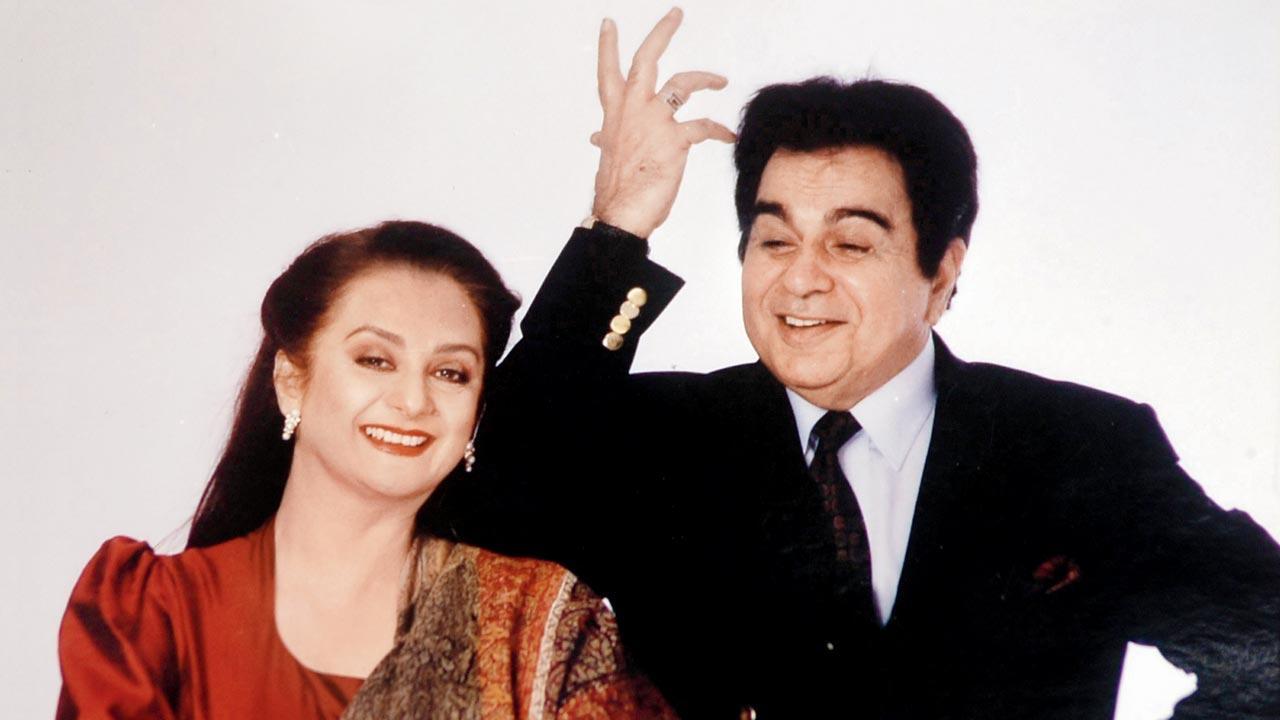
On his birth centenary, as Film Heritage Foundation gears up to celebrate legend Dilip Kumar’s iconic films on the big screen, wife Saira Banu talks ishq and yaadein in nostalgic hour with mid-day
Yusra Husain (MID-DAY; December 11, 2022)
She was the “chand ka tukda” next door, ever-so-ravishing, and loved her figure-hugging salwar suits, beehive bun with a slight fringe and the acting calibre of a veteran. He was the sombre legend, who was two decades her senior. But, no one batted an eyelid when super stars Saira Banu and “saab” Dilip Kumar said they were made for each other.
A year-and-a-half after he passed away following a prolonged struggle with prostate cancer, the Film Heritage Foundation (FHF) is celebrating 100 years of Dilip Kumar on his birth anniversary, today.
“It was a marriage of 56 years,” she tells us over the phone, apologizing for not being able to meet in person. Banu, 78, is nursing a cold and busy with the centenary preparations, but there is an eagerness in her voice to talk about her eternal love. “There was a great understanding between us, as husband and wife. Relationship is liye chali ke shuru se hee duniya jaanti hai, I was madly in love with him. And he gave me so much love in return.”
She is able to paint a vivid picture of her first sighting Kumar when she was 12. “I was schooling in London,” she says in between sips of water, “and my mother, Naseem Banu, was invited as guest of honour to the La Scala theatre in London for the premiere of saab’s film Aan. I was in pigtails, but the moment I saw him, I plummeted into love.”
The Mehboob Productions 1952 film, says Banu, was the first Dilip Kumar film she watched. “My mother knew that if I ever were to marry, it would only be him. So, in some way, our relationship goes back 66 years.”
Kumar, though, considered her a “bachchi”. “We were family friends, so he’d visit our home and treat me like a child. In fact, even after I tasted stardom with my debut film Junglee in 1961, he refused to act with me in several films.”
Had it not been for Kumar’s refusal to work with Banu, she would have been one of the female leads in Vijaya Productions, Ram Aur Shyam, in place of Mumtaz or Waheeda Rahman. “I was informed that saab had refused to work with me saying I would look very young opposite him on screen.”
Five years later, in October 1966, they were married. She was 22 and he, 44. It is said Banu’s mother played cupid. “Dhoom machh gayi thi!” she recalls of the time their engagement news leaked in the press. “People had never seen us together on screen and now, we were to get married. It was something out of the ordinary.”
An outdoor shoot in Kolkata had to be wrapped up and reshot at an indoor studio in Mumbai because it was getting impossible to shoot among fans. “Just before we were to marry,” she remembers, “we happened to be in Kolkata. I had to do an outdoor shoot, and saab was finishing some script work. When we landed, there was a huge crowd of fans waiting at the airport. At that time, we weren’t surrounded by security, and fans had gathered on the tarmac. Some had found their way inside the airplane too! It became impossible for the shoot to continue, so we had to pack up and return to Bombay.”
It’s what led the couple to get married in a hurry minus preparations, wedding cards or wedding dress. “He said, let’s just go to Bombay and exchange wedding bands in a simple ceremony. It was all done in five days.” Banu, who was a glamorous dresser, missed having an elaborate wedding dress. Her mother had to get the tailor to stitch a brocade gharara in haste. “Saab got himself a Jodhpuri suit,” she adds. “It was unplanned and unusual, and still we had thousands barge into the garden venue.”
Interestingly, Banu herself decided she would no longer act; Kumar didn’t stop her. He had not watched any of her films. “He saw some rushes of Shagird (1967) and told me that it would be unfortunate if he stopped me from working. He said the love I had for my art, and how good I was at it, was visible on celluloid. He could not take that away from me.”
The 1968 hit film Padosan, produced by comedian Mehmood, and Purab Aur Paschim (1970) by actor, director and writer Manoj Kumar, were written with Banu in mind. “Both of them came to saab and asked for ijazat to cast me as lead. If they couldn’t, they’d shelve the films.”
The love and respect is palpable in the melancholia Banu enveloped herself in after his death. Within a month, she fell violently ill. “I could barely breathe,” she remembers of the time she was rushed to intensive care. “I have not stepped out of the house since, barring visits to the hospital and doctor.”
This is atypical for someone who was out and about, and loved to go on long drives with Kumar. “My family and staff sometimes insist that I step out. Sitting in his car for the first time after his death was traumatic. Bahot dil kharab hua tha, bahot rona aaya tha. Sometimes, I do take a short drive along Carter Road in his car and reminisce about the times he’d be by my side.”
FHF is preparing to screen four of Kumar’s iconic films, Ram Aur Shyam, Aan, Devdas and Shakti, for the Hero of Heroes celebrations scheduled for this weekend, across PVR cinemas in 20 cities. Banu is going to make an exception, and step out of their Pali Hill home. “If I can, I will stay back to watch Aan, but I know it will be hard. Even today when I see him on television, mujhse bardasht nahin hota.”
This celebration is special for more reasons than one. That it’s an effort to restore classics of Indian cinema makes it an important one for Banu. “It’s a pity that studios are being brought down and the classics are biting dust. We can only watch the old films on television. FHF should be applauded for bringing some of these back to the big screen.”
Had Kumar been alive, the house, like with every birthday, would have been flooded with flowers, says Banu. They’d receive so many blooms from well wishers, friends and fans that they’d distribute them across various hospitals. “He was not the ordinary celebrity,” Banu says, adding, “He was a humanitarian. From when he was as young as 25, he started working for the blind and physically disabled. Together with industry veterans, he’d drum up support from the industry to help those affected by famine and flood. We’d ride on trucks to collect money and clothes for the poor.”
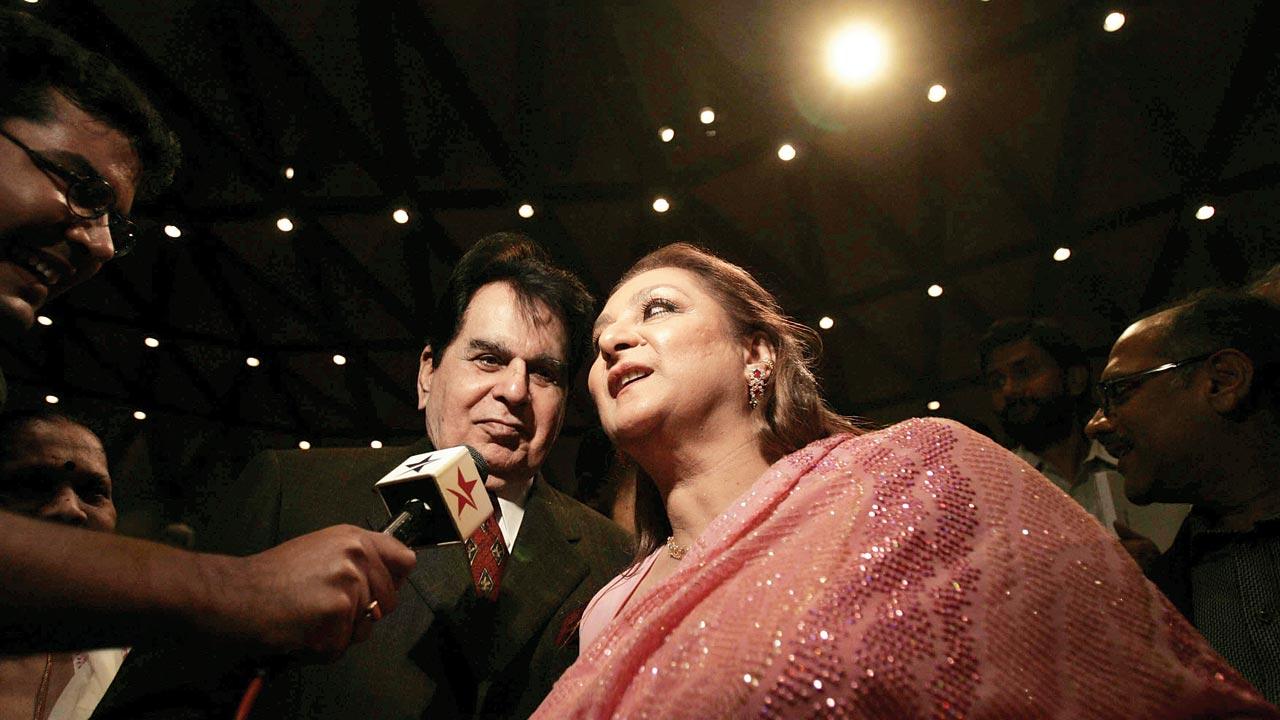
Saira Banu and Dilip Kumar at a function in Mumbai, 2005. Pics/Getty Images
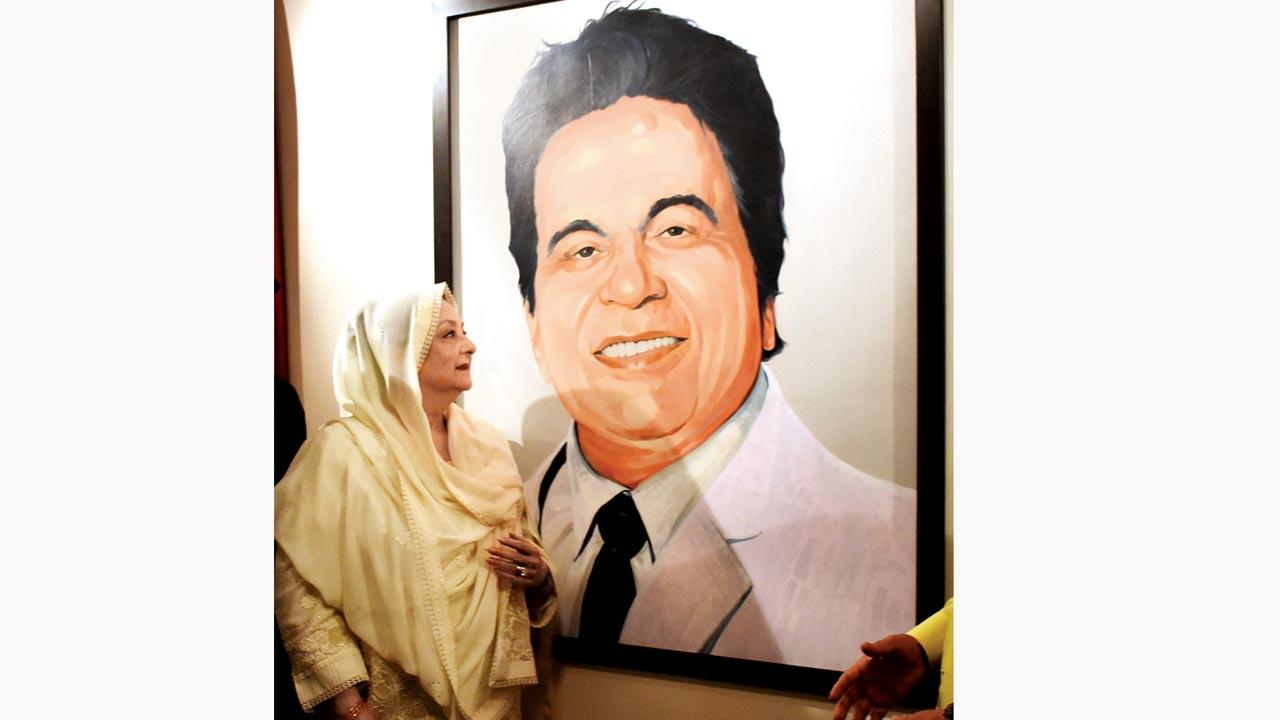
Saira Banu during the unveiling of Dilip Kumar’s mural on his 99th birthday in 2021, a few months after the actor’s death
Dilip Kumar is one of our icons, but we had limited options to pick from-Shivendra Singh Dungarpur
8:39 AM
Urging industry to act, curator of restorative marking Dilip Kumar centenary laments that only seven of 60 films of superstar preserved
Priyanka Sharma (MID-DAY; November 29, 2022)
Citing an opportunity to celebrate the rich legacy of Dilip Kumar on his 100th birth anniversary in December, the Film Heritage Foundation decided to present the actor’s prominent works across 20 cities over a two-day retrospective. However, of the 60 films that Kumar frontlined across his five-decade career, only seven, we’re told, have been preserved for public screening in a cinema hall.
Film conservator Shivendra Singh Dungarpur — who has curated the films for the upcoming event — laments that the industry lends a blind eye to restoration efforts that are essential to retain the rich cultural history of Indian cinema.
“People have the misconception that a film has survived if it is available on YouTube, or on cassettes. But, look at the quality! It is terrible,” says Dungarpur, adding that the late actor’s celebrated offering, Gunga Jumna (1961), also couldn’t be salvaged.
“[Kumar] is one of our icons, but we had limited options to pick from. We wanted to choose films that he did in his prime. We have Aan [1952], which was India’s first techni-colour film, Devdas [1955] that got him the tragic hero status, Ram Aur Shyam [1967], which showed his impeccable comic timing, and Shakti [1982], his only film with [Amitabh] Bachchan,” says Dungarpur, adding that he hopes to showcase Kumar’s versatility to the young audience with this selection.
The retrospective, titled Dilip Kumar: Hero of Heroes, will play across 20 cities in the country. “There is a hunger in the youth to see these iconic performances on the big screen, because icons like Dilip Kumar are modern in their performances. There is a demand in Chennai, which is not even a Hindi-speaking belt,” says the conservator, who presented a similar restorative of Bachchan’s works last month.
What is film restoration?
Described as a series of ongoing efforts to rescue decaying film stock, and preserve the images they contain, film restoration aims to ascertain that movies continue to exist in forms that are as close to the originals as possible, so that they can be made available to the public.
Now, a film festival to celebrate Dilip Kumar’s 100th birth anniversary
8:42 AM

A two-day festival in December will showcase his iconic films like Devdas and Ram Aur Shyam on the big screen across 20 cities
Niharika Lal (BOMBAY TIMES; November 26, 2022)
It’s time for celebration for all Dilip Kumar fans. On the occasion of the actor’s 100th birth anniversary, the Film Heritage Foundation has curated a two-day film festival titled Dilip Kumar – Hero Of Heroes. The centenary celebration of the legend will take place on December 10-11, with screening of four of his films across 20 cities. The line-up includes Aan (1952), Devdas (1955), Ram Aur Shyam (1967) and Shakti (1982).
‘DILIP KUMAR’S FILMS HAVE A CONTEMPORARY APPEAL EVEN AFTER SO MANY DECADES’
Shivendra Singh Dungarpur, archivist and Director, Film Heritage Foundation (FHF), says the purpose of these screenings is to celebrate Dilip Kumar. He says, “Dilip Kumar’s centenary anniversary was an incredible opportunity to bring back one of the greatest actors of Indian cinema on the big screen. His films have a contemporary appeal even after so many years. He truly is the ‘Hero of Heroes’, as even today the biggest stars look up to him.”
He says that even though some of these films were released nearly seventy years ago, the power of the actor’s performances, his craft as a method actor and his charisma make him ageless.
‘MANY OF DILIP KUMAR’S FILMS ARE ONLY AVAILABLE IN LOW RESOLUTION AND CANNOT BE SHOWN ON A BIG SCREEN’
However, when the foundation decided to screen the actor’s films, the organizers found that many of his iconic films were not in a condition to be shown on the big screen. Dungarpur says, “I was excited about curating several of his films to mark the occasion. How can one choose only a handful of films for an actor with such an illustrious body of work? But I was shocked and heartbroken to discover that many of his great films survived only in low-resolution formats, which could not be projected on the big screen. We have cobbled together these four films with great difficulty.”
Dungarpur adds that he’s sure the actor’s fans will question why some of their favourite Dilip Kumar films are missing from the list. He says, “We have films available on online platforms, but these are not of good quality. Now we are aware how much of his work is available and how crucial it is to save what is remaining. That’s the reason we are also launching a campaign to save Dilip sahab’s films. This is also a tribute to the work of the actors, crew members and filmmakers of that time. Filmmakers and producers need to realise that time is running out and that they should look into preserving these films before it is too late.”
Dungarpur shares that when he decided to organize a retrospective of Amitabh Bachchan’s films to celebrate his 80th birth anniversary, it was difficult to convince everyone – from the stakeholders to producers – that people would come out to watch old films. He says, “People didn’t have confidence, but I knew theatres were going to be jam-packed.”
At a film restoration session recently, Dungarpur had shared how he failed to get Prakash Mehra’s Zanjeer for a film screening once because Mehra’s family assumed that if the hall runs empty, then the aura surrounding the movie would fade. He adds, “However (at the Amitabh Bachchan retrospective), the film’s screening was fully booked everywhere and even Amitabh Bachchan called for two tickets of the film.”
So, what changed between these two screenings? He says, “Now everyone knows that people will come to watch old films and there is always going to be an audience for classics. Cities like London have theatres dedicated to screen old films, but in India we don’t have any such theatres. That’s why I have decided to curate these festivals for stars like Dev Anand and Raj Kapoor too next year.”
IT WILL BE A JOY TO WATCH DILIP SAHAB BACK ON THE BIG SCREEN, LARGER THAN LIFE, LIKE HE HAS BEEN IN MY LIFE: SAIRA BANU
Talking about the film fest, Saira Banu shared, “I am so happy that the FHF is celebrating Dilip sahab’s 100th birthday on December 11 by screening some of his most popular films on the big screen across India. They could not have chosen a more apt title to commemorate India’s greatest actor – Dilip Kumar – Hero Of Heroes. He was my favourite hero from the time I was 12, when I first saw him in Aan in technicolor. It will be a joy to watch him on the big screen again, larger than life, like he has been in my life.”
WAS DEEPLY DISTURBED TO HEAR THAT MANY OF DILIP KUMAR’S FILMS ARE NOT IN A CONDITION TO BE SCREENED IN CINEMAS: AMITABH BACHCHAN
Amitabh Bachchan says, “I am glad that we are celebrating Dilip Kumar’s legacy with this festival of films. I would urge every film lover and contemporary actor, who has not watched Dilip Kumar larger than life, to not miss the incredible opportunity of watching this stalwart back on the big screen. Even today, I learn something every time I watch his films. Dilip Kumar was and is my idol.”
Bachchan says that he was deeply disturbed to hear that many of Dilip Kumar’s films are not in a condition to be screened in cinemas. Calling it a tragedy, he adds, “Film Heritage Foundation is working to ensure that the work of legends like Dilip Kumar survives and is preserved and restored to be shown to today’s young audiences.”

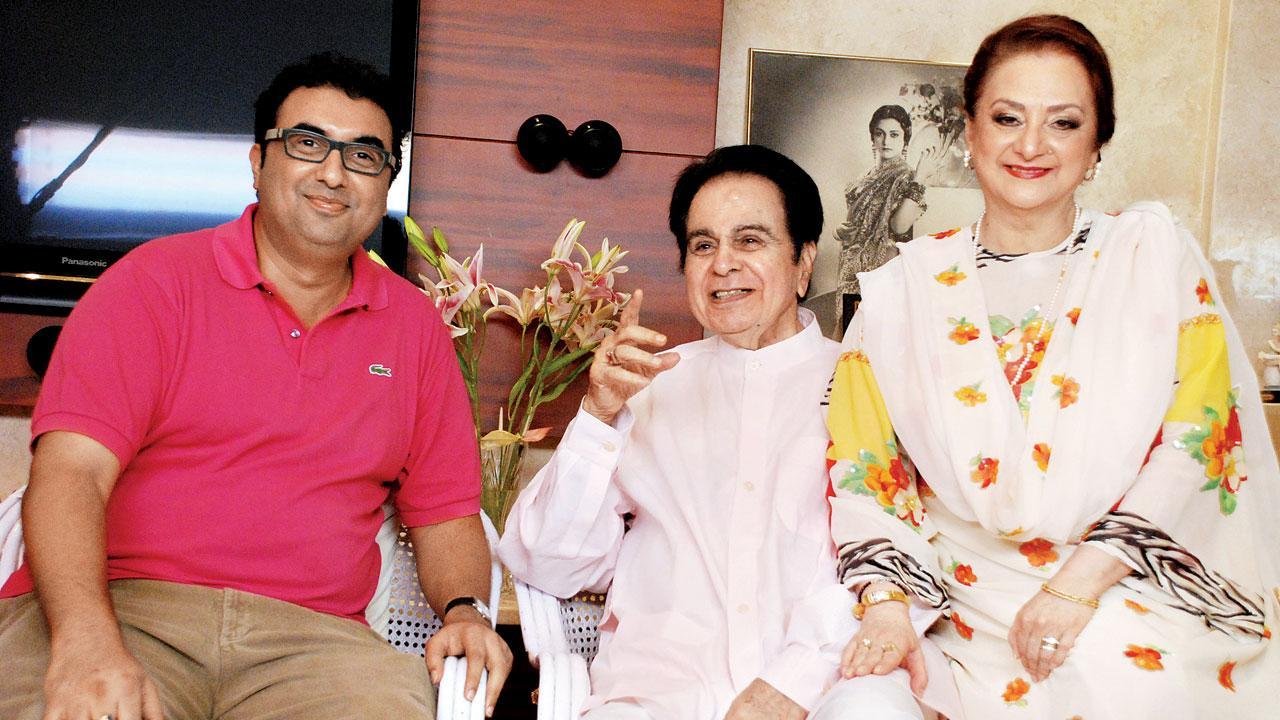
Shivendra Singh Dungarpur with late Dilip Kumar and Saira Banu
Dilip Kumar will remain the greatest actor ever of Hindi cinema
8:49 AM

Box Office India Trade Network
One of the greatest legends of Indian cinema, Dilip Kumar, passed away at the age of 98 due to a prolonged illness. Dilip Kumar started his career in just before Independence in 1944 with JWAR BHATA and had a defining career of around 55 years and a film count of only 56 films.
His first film JWAR BHATA released in 1944 and success was not too far away as films like JUGNU (1947) and SHAHEED (1948) scored at the box office after which there was no looking back. Although these things are always arguable, the fact is that Dilip Kumar is the greatest actor that the Indian screen has ever seen. The biggest actors who have come after have imbibed from him and even the actors today who may not even be aware that they are being inspired by Dilip Kumar but who they think they looking up to was in all probability inspired by Dilip Kumar. Basically acting in India all started from this man.
There was a phase in the late 40's and early 50's that his films were working only because the audience was coming to see his acting. These slow films which we can call towards the dark side were working just because of the histrionics of Dilip Kumar as no one before had seen such acting. The masses were lining up in cinemas across India to see films which may not be offering huge entertainment but they did not care as all they wanted to see was the histrionics of Dilip Kumar. This was the period where Dilip Kumar got the tragedy king tag. This has never happened with any other actor as they had to be backed by a genre or more commercial elements to pull through and this holds till today.
These films were becoming HITS due to the histrionics and then there were the BLOCKBUSTER films like AAN, AZAAD, INSANIYAT, NAYA DAUR, MADHUMATI, PAIGHAM and KOHINOOR which were more in the commercial element of those times and smashed box office records. These films created Dilip Kumar the Superstar The likes of AAN, AZAAD and INSANIYAT also set the precedent for that big budget Hindi commercial potboiler which was to dominate Hindi cinema for years and still does.
The peak of the career came in the early 60's with films like MUGHAL-E-AZAM (1960) and GUNGA JUMNA (1961) which created history and remain today among the biggest BLOCKBUSTERS of Hindi cinema. The performance in GUNGA JUMNA is also probably the greatest ever by an actor in India. The workload slowed after that though the big HITS still came with RAM AUR SHYAM (1967) and GOPI (1970) but it was difficult now to fit into that traditional hero format due to age.
Dilip Kumar took a break for a few years and then did something that no actor ever managed to do before or after as he returned as more of a character actor. But this character actor was the main lead of these films and drove those films to huge success. Films like KRANTI (1981), VIDHAATA (1982), KARMA (1986) and SAUDAGAR (1990) all were were BLOCKBUSTER films and all driven by Dilip Kumar despite playing older characters. There were others like DHARAM ADHIKARI and KANOON APNA APNA which also saw average success. This was the part of his illustrious career which sets him apart from all other actors as no one else has managed to get such success as a character artist. It has to be said that you have to be a Dilip Kumar to get such roles without being the hero and there has only been one Dilip Kumar.
Simply put Dilip Kumar will remain the greatest actor ever of Hindi cinema unless we see some miracle over the next 100 years.
Subscribe to:
Posts (Atom)