Showing posts with label A Suitable Boy. Show all posts
Showing posts with label A Suitable Boy. Show all posts
Not Ananya Panday; Tanya Maniktala to play Amrita Sher-Gil in Mira Nair’s Amri
3:08 PM

Upala KBR (MID-DAY; October 20, 2025)
For the past four years, Mira Nair has been living with the life story of Hungarian-Indian painter Amrita Sher-Gil, eager to bring it to the screen. Now, it looks like the acclaimed filmmaker has found her leading lady. While rumours were rife that Ananya Panday was approached for the biopic titled Amri, mid-day has exclusively learnt that Tanya Maniktala has been roped in to play the renowned painter. This will mark Nair’s reunion with the actor, who played the lead in her BBC television drama series A Suitable Boy (2020).
Nair had announced Amri soon after the première of the series. Through the biopic, the filmmaker wants to spotlight the painter, who is counted among the greatest avant-garde women artistes of the early 20th century. In her career that was tragically cut short by her demise in 1941, Sher-Gil captured the everyday life of people in her paintings. While they have influenced generations of Indian artistes, not much about her art is known in the West — something that Nair hopes to change with her period drama.
A source shares, “Considering the painter was born to a Hungarian mother and an Indian father, Amri will be shot in India and Hungary, and a chunk in France. Last month, the filmmaker met Tanya in Delhi and finalised her. Besides Amrita’s rise as a painter, the film will focus on how her father Umrao Singh Sher-Gil Majithia, her husband Viktor Egan, her fiancé Yusuf Ali Khan, and friend Jawaharlal Nehru influenced her life. In 2023, Mira had approached Naseeruddin Shah, Vicky Kaushal, and Jim Sarbh to play pivotal roles.”
If things go as planned, Nair will take the biopic on floors by the year-end.
Self-regulation of OTT platforms has been successful, say panellists at FICCI Frames
8:17 AM

Niharika Lal (BOMBAY TIMES; May 9, 2023)
From “overdose of kissing” to “excessive alcohol consumption” to content hurting sentiments, OTT platforms have been subjected to various complaints and FIRs in the past. From Sacred Games, Tandav, Mirzapur to A Suitable Boy, many complaints have been filed against makers of shows. There is a constant controversy vs creative freedom tussle on OTT. During a discussion titled ‘Digital Media: taking stock of self-regulation’ at FICCI Frames 2023 in Mumbai, the panellists – which also included Vikram Sahay, Joint Secretary, I&B – spoke about how self-regulation of content on OTT platforms has changed the scenario for the better.
‘ONLY 13 COMPLAINTS HAVE COME TO THE SECOND TIER IN THE LAST 22 MONTHS’
Producer Madhu Bhojwani, who is a member of grievance redressal board, shared her experience of being on the board for two years and said, “I think in 2021, when this document titled Code of Ethics was circulated, it was read with a lot of trepidation. But I think the community (of creators) has taken it very well. When the IMAI (Internet and Mobile Association of India) approached me to join the Council I was very happy because I had the privilege of learning what are the grievances and complaints that are coming forward.”
Talking about complaints, she said, “It’s been two years since and over these last 22 months, only 13 complaints have come to the second tier. On the advice of the ministry, there have been two reviews that have happened on certain platforms. I think pre-2021, the amount of litigation and discord that was prevalent and willy-nilly cases were being filed and creators were taken to the court. At that time there was a lot of concern among creators, but post 2021, once this regulatory framework has come into place, the first tier has become an interesting filter. This is such a robust framework that complaints are being addressed at the first level. What doesn’t get rectified at the first level as a filter comes to us (second level).”
‘IF CITIZENS HAVE A GRIEVANCE, THEY HAVE A FORUM TO GO TO’
Vikram Sahay, Joint Secretary, I&B said that when the self-regulatory structure started, they were not clear about what to do because the OTT space is different. He added, “We were grappling with ideas from abroad and we had various options. Some people said films coming to OTT should be pre-certified. We also had a Singapore model where they have digital media authority and then we had an e-commission model from Australia. We looked at all those options and we said, ‘No, the government has a lot of trust and faith in the creators of films and web series.’ With that faith we embarked upon the concept of co-regulation with a strong citizen-centric framework of grievance redressal. So that if citizens have a grievance they have a forum to go to. We have been working on a co-regulatory model.”
A THREE-LEVEL GRIEVANCE REDRESSAL SYSTEM
Currently, there’s a three-level grievance redressal mechanism in place for OTT content, where platforms are required to have a Grievance Redressal Officer and self-regulatory bodies, while the I&B ministry has an inter-departmental committee for hearing grievances. Majority of the OTT platforms are either registered with IAMAI-DPCGC (Internet and Mobile Association of India – Digital Publisher Content Grievances Council) or DMCRC (Digital Media Content Regulatory Council).
You might be able to buy likes, but if a song is genuinely good, it will surely travel organically-Kavita Seth
8:06 AM

The singer is content that her song, Rangi Saari, has reached far and wide organically, without any promotion or purchased likes and views online
Titas Chowdhury (HINDUSTAN TIMES; December 24, 2021)
During the lockdown last year, singer-composer Kavita Seth released Rangi Saari, a contemporary rendition of a popular thumri, in collaboration with her son, Kanishk Seth. While it took time to pick pace, it became a raging sensation on social media this year with actors, influencers, and social media users joining the bandwagon, as they made videos and reels with the track playing in the background.
“I saw a video where a guy was putting butter to his bread and Rangi Saari was playing in the background. Roz hi kuch na kuch naya dikhta hai. While some are dancing to it, others are chopping vegetables to the track,” says the singer with a laugh.
Seth shares that she had spent no money in promoting the song and that makes this success even more special. She says, “Humne socha ki isko khubshoo ki tarah phailne dein. It saw wider popularity during Diwali, when a few Bollywood actors made reels on it. It made me realise that you can’t achieve everything with money. You might be able to buy likes, but if a song is genuinely good, it will surely travel far and wide, organically.”
The musician, who has gained popularity for her ghazal series Main Kavita Hoon, recently performed at a virtual ghazal concert. Talking about how the millennial generation is open to traditional music, Seth says, “They have an appetite for Sufi, ghazal and thumri. A lot of songs composed by me from A Suitable Boy (2020) were also well-received. If the audience didn’t appreciate such music, these songs wouldn’t have become popular.”
She adds, “There was a time when the live audience would only enjoy upbeat dance tracks. Now they have begun appreciating Sufi numbers. It’s great that the audience is open to listening to good music in its truest essence.”
Shia board sends notice to makers of A Suitable Boy
8:13 AM
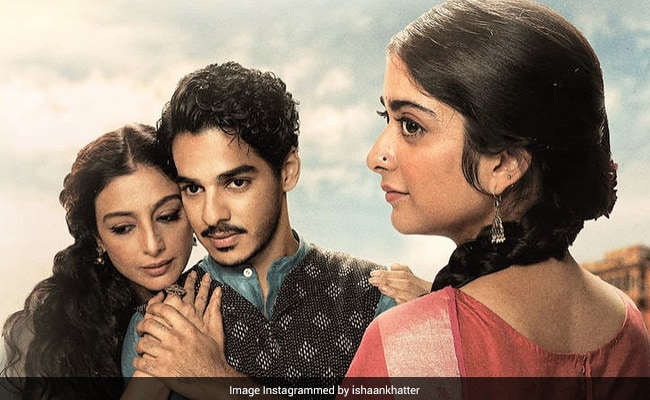
Yusra Husain (THE TIMES OF INDIA; November 8, 2021)
Lucknow: The All India Shia Personal Law Board on Sunday sent a legal notice to Netflix and makers of web series ‘A Suitable Boy’ for “intentionally hurting the religious sentiments of Shias” by showing desecration of a “tazia” (replica of Imam Husain’s mausoleum) in one of the episodes.
The board, through its legal cell, demanded that the producers remove the scene from the web series and issue a public apology. The AISPLB said a scene in Episode 4 shows deliberate desecration of a “tazia”, which has hurt the sentiments of not only the Shia community but also of all those Hindus, Husaini Brahmins, and Sunnis who observe Muharram and hold “tazia” in high regard.
I can’t have a plan for anything in life. It’s worked for me so far, so why change it?-Tabu
8:07 AM

Madhureeta Mukherjee (BOMBAY TIMES; January 28, 2021)
She’s pure, raw energy — on screen, and in flesh and blood. The Tabu you see for real is starkly different from the plethora of roles she plays out on celluloid with her terrific talent on display at all times. She insists that the word ‘layers’ is overused in cinema, but some dimension in characters is necessary. Fair point. Her choices in movies reflect it all — powerfully written roles, characters with rough edges and fine strokes. Parts that she truly deserves and impeccably pulls off. She draws you in with a compelling conversation — enough to relish, but so much more left to dig in that lies layers deep. That’s Tabu! An unfathomable revelation with every role, every conversation. Read on…
In the year gone by, most actors who were awaiting the release of their films, saw them getting pushed way ahead. You, on the other hand, had two theatrical releases — Jawaani Jaaneman, Ala Vaikunthapurramuloo (Telugu), and a much-acclaimed web series. For someone who is known to do select few projects, the year of the Coronavirus pandemic, career-wise, has been quite eventful for you, hasn’t it?
I guess with me it’s extreme — all or nothing (laughs!). I was lucky to do a Telugu film after 11 years, I loved working on it, and it did so well. I finished shooting for A Suitable Boy, Jawaani Jaaneman released, and then the lockdown happened. I am glad I was done with my major events, and through all of last year, I took time to process all this. Just before the lockdown, we were shooting for Bhool Bhulaiyaa 2 in Lucknow. We had shot for about six-seven days and had to pack up and return to Mumbai. Now when we go on the floors again, it will be like going back to a new film. We are all living in strange times, I believe that as much as you can…iss time ko achhe se guzaar lo. Lay low and ride it out.
Today, there is such a variety of roles for women across age groups, and refreshingly, they aren’t relegated to playing the typical mom, sister, etc. You made choices that stood out, right from films like Chandni Bar, Astitva to Maqbool, Haider and many more. Your career choices reflect that you weren’t really conscious about the way you appeared on screen and the perceptions that it could have created.
It was never important for me to see how I am appearing on screen as an actor. That part of my identity takes a backseat, and the part I am essaying, and the depth of the character takes precedence. It takes over completely. Anyone can add whatever label they want to the character — bhabhi, mom, sister — it is their call. It’s up to them. If I want to call Aditi of Astitva the hero, I can do that. If someone wants to call her Aniket’s mother or Sri’s wife, it is up to them. It is important for me to know if my presence means anything to the story, even if she (my character) is there for a few scenes or the entire length of the film.
But it’s these very labels that actors fear, and it often deters them from taking chances, even when they know that they have the calibre to pull it off. You had no such fears, I believe.
If I had, I wouldn’t have said yes to these roles. Something in those characters called out to me strongly. All I was thinking of was whether I could be convincing in that part or not. Look, the reason for choosing a certain part could be that something in that character has resonated with me personally, or I wanted to bring these kinds of characters to life for the audience. Sublimely, I guess that was my desire, which I didn’t realise at the start, maybe I am articulating it better now. Also, it’s not that every script that came to me had to be different, and had to break the mould and that’s why I did it. I was never trying to be different for the sake of being different. That’s not me. I am sure every actor will agree that it’s always exciting when they get characters that have dimension and layers. I think this is one area where we have evolved — today, women in Indian films are not just unidimensional characters, and they are not playing roles on just one plateau. I am not judging the roles that we did, those will still be there, and it is fine. We need a variety of characters. We can’t have one blanket way of portraying characters. I know that this word ‘layers’ is overused, but some dimension in characters is necessary.
You are drawn to characters that are complex, grey, even quirky, and clearly stand out for what they represent. Do you feel that the characters which are often sketched out in our cinema are too perfect, shiny and unreal? Several roles that you have portrayed evidently break away from that pattern.
I know of the existence of complexities in the realm of the human mind and in relationships, and I don’t know why there has to be any form of denial in portraying that on screen. If you want to show lust where a woman is concerned, or greed for power, I don’t see it as wrong or blasphemous. I don’t understand why we have to wonder… aise kaisa ho sakta hai duniya mein? Who are we fooling? It is fine to have characters with all the correct moral values, I am a big fan of that, too. At the same time, I don’t see why all these intense emotions and unconventional relationships should not be explored on screen. In fact, I find it interesting and satisfying to delve into such roles. What is so indigestible about it? I don’t shy away from portraying unconventional relationships and characters on screen.
2021 marks the turn of two decades, and you started your career during that period — in 1991 with a Telugu film, Coolie No 1. What according to you has changed the most about the film industry in these 20 years?
The biggest change has been the large presence of media and so many more departments in the film industry. The promotional plan of every film release is huge now, in fact, it has become a part of the whole package of doing a film. The preps have become longer. Earlier, we would land on set on the first day of the shoot, wear our costume and face the camera. Also, now we have vanity vans, we didn’t back in the day. There are a lot of other minor changes, these are the visible ones. Actors are now doing about one or two films at a time, which is good. Earlier, it was okay to be doing 10 films together and running from one set to the other, because that’s how it worked. Ab pehle se films waise bhi kum banne lagi hai, and actors don’t feel the need to do so many films at a time.
Like you said, actors are doing fewer films, so do you think there is huge pressure on them as they have so much riding on the few projects in hand?
I don’t know if the younger generation takes that kind of pressure. As for me, after the last day of shoot or dubbing, I am done with the film! Of course, I want to know if it has done well, but I generally de-link myself from the film. To keep being in that zone post release is too exhausting. I just want to know ki picture chali hai ki nahin. Flop bhi ho gayi hai toh we will get over it in a week and move on. I think I was probably more affected by it at the beginning of my career, but then, we were also doing so many films, koi na koi toh chal jaati thi (laughs!). Pehle bhi, hero pe pressure rehta hi tha. Industry would want to know ki hero ki picture chali ya nahin. Which hero brings in the initial, opening kisko lagti hai? Actors obviously want the film to do well, but there is always going to be pressure on the producer and director. As an actor, I feel the need to disengage from a film when I am done working on it.
In an earlier interview with us, you had said, “I never really cut down on work consciously, but I was definitely conscious about what I didn’t want to do.” So, what is it that you clearly don’t want to do now?
I have never thought that mein toh yeh kabhi nahin karungi, but when a script comes to me, then I am able to discern and say…yeh toh mujhe nahin karna hai. I never had a game plan, I am not blessed or cursed with that kind of mind where I can plan anything in life. If I say ki kal toh mein yeh karne wali hoon, I am sure it will go completely the other way. So, I don’t plan. I am wired to work in a more fluid environment and space. I can’t have a plan for anything in life. It’s worked for me so far, so why change it?

Why Rasika Dugal feels guilty about positive things in 2020
7:58 AM

Rishabh Suri (HINDUSTAN TIMES; December 29, 2020)
Work came to a halt due to the Coronavirus pandemic, dynamics of showbiz changed, but for actor Rasika Dugal 2020 was a prolific year. A lot of her work released on OTT platforms, and each got her noticed. But when you ask her to describe it, the actor says 2020 feels like a “year out of a dystopian novel”.
She explains, “It also reinstated my faith in humanity. I was very moved by how civil society rose to the occasion and there were timely and sensitive initiatives to help people who were hit worst by the pandemic.”
And because there was so much misery around, Dugal almost felt “guilty”, she confesses, and adds, “There were so many positive things happening for me on the work front when it wasn’t the case for many around me.”
The 32-year-old was amazed by how quickly people reinvented themselves during this phase.
“Before I knew it, I was dubbing for A Suitable Boy from home, promoting Lootcase online, and recording for an audio series. Then Mirzapur 2 and A Suitable Boy released on the same day. Two different genres on different platforms and two completely distinct roles for me. I felt thrilled about getting an opportunity to be two completely different people, Savita (from A Suitable Boy) and Beena Tripathi (from Mirzapur 2). And to receive how both were perceived by the audience,” shares the actor.
That was not all. Lootcase, her film with Kunal Kemmu, which was meant for a theatrical release, opted for a digital route and managed to become one of the most liked films of the year.
“With Lootcase and Banana Bread — a short film I co-created and shot entirely from home during the early days of lockdown — I felt happy that I could be part of bringing some cheer and light heartedness to people’s lives (and to my own) in gloomy times,” says Dugal.
Awards were aplenty, too. Her web show Delhi Crime won an International Emmy, and that naturally is a high point for her. She gushes, “I was honoured and grateful that Delhi Crime got the recognition that I felt it deserved. But beyond awards and accolades, Delhi Crime will always hold a special place in my heart because of the skill and sensitivity with which it tells a very important story. I will be eternally grateful to have had the opportunity to collaborate with Richie Mehta, Shefali Shah, Rajesh Tailang and the entire cast and crew.”
I don't believe it's a gag order, says Manoj Bajpayee as OTT platforms come under the purview of I&B Ministry
8:15 AM

Even as he opposes censorship, The Family Man star Manoj Bajpayee is optimistic about OTT platforms coming under the purview of I&B Ministry
Mohar Basu (MID-DAY; November 26, 2020)
At a time when most big-ticket films are shying away from the marquee, makers of Suraj Pe Mangal Bhari took the brave step, making it the first Bollywood release post the pandemic. Leading man Manoj Bajpayee is grateful that people stepped out to watch the comedy despite the current scenario. "It was a risk and a triumph. More than anything, it was a gesture to indicate that we, as the film industry, support theatres," he says.
Manoj Bajpayee, who recently won the Best Actor gong at the Asian Academy Creative Awards for his performance in The Family Man, is eagerly awaiting its second season. However, the past few weeks have been perplexing for artistes and filmmakers dabbling in digital entertainment. Earlier this month, the government brought the video-streaming platforms under the ambit of the Information and Broadcasting Ministry. Even though rumours suggest that the platforms may have to apply for approval of the content they wish to stream, details of the regulation are unclear.
Ask the actor if he is wary of the move, and he states, "I don't believe it's a gag order. I staunchly oppose censorship, but people are unnecessarily reacting before understanding what it entails. When OTT platforms initially came to India, they had absolute freedom. Some filmmakers went overboard with expletives and depiction [of gore and sex]. Eventually, quality work like The Family Man, Scam 1992, Asur and Delhi Crime came in. Filmmakers are consciously restraining themselves to tell stories more responsibly." To make his case, the actor adds how makers Raj-DK (Raj Nidimoru, Krishna DK) had a constant discussion on the sets of The Family Man about the usage of expletives in the series. "If our show is watched by every member of a family, it will be good for us. We are mindful of what we show on screen."
In telling the story of an undercover intelligence officer, the Amazon Prime Video venture offered a sharp political commentary. However, over time, a shadow of fear has loomed large over artistes who try to reflect politics in their work. Does he feel threatened? "The Family Man sparked a healthy conversation on subjects that mattered to us. The idea of art is to mirror society and allow the audience to have the dialogue. Storytellers aren't supposed to take a stand; being part of the solution is the government's job. An artiste doesn't need to bring his politics to his work. Sometimes, I feel there's unwanted pressure on actors to take a stand when millionaires and billionaires get away remaining silent." Bajpayee is optimistic that the second season of the espionage thriller will be unscathed despite the I&B Ministry regulation. "I won't presume things and won't worry till there is reason to. If the worst happens, we will decide where we stand."
But surely, he can't discount the extent of moral policing that filmmakers are constantly being subjected to — recently, an FIR was registered against Netflix India for depicting a kiss between a Hindu woman and a Muslim boy in a temple, in A Suitable Boy. Bajpayee, however, brushes off these fringe elements. "Since time immemorial, fringe elements in some far-flung corner of the country have been objecting to something we have made. This has happened to some of my films as well. India has a massive number of people, each with his own agenda. I don't think there's a reason to worry about it."

OTT platform Netflix officials booked for Madhya Pradesh temple ‘kissing scenes’ in A Suitable Boy
8:06 AM

THE TIMES OF INDIA (November 24, 2020)
Bhopal/Khargone: An FIR was registered against two officials of Netflix in Rewa on Monday over the shooting of kissing scenes at Maheshwar. Khargone collector Anugraha P, however, said no action was needed as that portion of the web series wasn’t shot in a temple.
Madhya Pradesh home minister Narottam Mishra, who had ordered an ‘examination’ of the scenes, on Monday said: “It has been found that ‘A Suitable Boy’ hurts the religious sentiments of a community. So, an FIR will be registered under IPC section 295A against Netflix office-bearers Monika Shergill and Ambika Khurana.”
The IPC charge carries up to three years’ imprisonment for ‘deliberate and malicious acts, intended to outrage religious feelings of any class by insulting its religious beliefs’. It’s a cognizable, non-bailable offence, which means police can arrest without a warrant. Shergill is VP (content) and Khurana is director-public policies for Netflix.
TIMES VIEW: “Hurting religious sentiment” is a catch-all expression that can encompass anything. In any modern society, certain broad principles of creative freedom must be agreed upon. Art should be protected from such frivolous onslaughts. Otherwise it will be difficult to create anything without offending someone or the other.
I wanted to burn every print that existed of my film Kama Sutra-Mira Nair
8:16 AM

From matar paneer to the movies, that sweet taste of Indian-American success from another age
Mayank Shekhar (MID-DAY; November 21, 2020)
Mira Nair's journey as an Odisha-born/bred filmmaker in America will seem greater to you, if you consider the first thing she did, landing up as an under-grad student at Harvard in the mid '70s. She went over to her course-mate from Bombay, Sooni Taraporevala, desperately to check on who the other Indians around were.
There were only two — studying film. One of them, a gentleman named Anand Mahindra; the industrialist, whose surname carries the massive fleet of automobiles on Indian roads. "Anand was a really talented filmmaker. He's still an artist in his soul. I'll never forget the wonderful thesis-film he made, following a holy man up a mountain," Mira remembers.
Screenwriter Sooni and Mira of course became great friends and colleagues thereafter — collaborating on notable productions like Salaam Bombay (1988), Mississippi Masala (1991), and The Namesake (2006). Anand was the "big brother, who'd encourage everyone to move back to India [once done with studies]." As he did, taking over his family empire.
Speaking of famous associations from unrelated fields, a picture that once got widely circulated online was of Mira as Cleopatra and Shashi Tharoor as Mark Antony, in an inter-college Shakespearean production from the '70s. Mira was a student at Delhi University's Miranda House then; Shashi Tharoor, the undisputed star of St Stephen's College.
She's been asked about this picture on occasion during interviews. And I gauge from her responses before — it doesn't seem like she liked the college-kid Shashi Tharoor much! Did he throw big words at her? "Oh no, I just didn't like kissing him [in the play]. Back then, you know how it was — even if you got slightly physically close to someone, people would start cat-calling. It was ridiculous."
As for the Tharoorosaurus bit, "Well, we used to tease Shashi [who hadn't lived or been abroad yet] about where he had got that accent from. We used to say that his mother flew over England, when she was pregnant, and you know, wahaan se thoda atmosphere aa gaya! But he's always been a sport. He used to take it well!"
Which instantly reminds you of Vivek Gomber's character Arun Mehra from Mira's A Suitable Boy, who has similarly never set foot in England, but throws a thick British twang, chiefly to denote class: "Arun Mehra, of course, is [straight] from Vikram Seth's novel [of the same name]." On which the six-part series is based.
In fact the language/diction has been a pet peeve for a lot of people who have dissed the show. In her defense, Mira says, "I feel like we were very nuanced with the language [back then] — trying to be 'angrez', and we were taught to be so. But it is a world that people literally don't know now. They don't hear that world."
To be fair, you do hear that over-intonated, cleanly clipped British-English in old clips, especially of Indian statesmen or women from the time — say, Nehru, or Sarojini Naidu, whose black-and-white video pops up quite often on social media feeds.
"I don't get that [dialogue/language] comment from people of my mother's generation. Because that was the world familiar to them. I tempered a fair amount of dialogue that I could, during the making of A Suitable Boy — primarily, getting 20 per cent of it back into Urdu/Hindustani and Awadhi. Which wasn't the case before."
"They didn't even think of it. Anyway, so I know that it is new and different to the ear. But I stand by it. Of course, it was from the get-go written by someone else [Andrew Davies]. It could be different. But the book is what we largely followed."
For its setting (early '50s), and set-up (BBC production, streaming on Netflix), Mira has in jest described A Suitable Boy as 'The Crown in brown, within a fraction of the budget!' It is by no means her most loved work, even while rants and raves are subjective by nature. One wonders if, after over 40 years of being an active filmmaker, she cares so much for all that's written about her latest film, or debut series, as in this case?
"That I am always creatively absorbed in another world provides a protection. So I am not waiting to hear your words; what's the point? And social media is a weirdly interesting space, where I just kinda get a vibe, than actually read a full review. Especially if there is something nasty in the headline," she laughs, flipping her fingers, as if quickly turning pages!
Taking away nothing from the fact that Mira remains still one of the most critically acclaimed filmmakers — for a majority of her filmography. A creative slump/dissatisfaction, if one may call it that, is something she attributes only through self-introspection. Which is how she felt after Kama Sutra (1996): "I wanted to burn every print that existed of that film!" It's not something you'll hear many directors publicly admit, even in hindsight.
As she puts it, "It was also dovetailed with me moving to Cape Town with my husband [Mahmood Mamdani], who was heading the African Studies department at the university. Our son [Zohran] was six and I didn't want to leave him. It was a dove tailing of all those things. I didn't quite know how to work it. We made this film in two months, My Own Country [1998], which Sooni and I wrote after. That was good. I have to keep doing/making things. It was in that wandering that I found myself making a [documentary] film, Laughing Club of India [2001], in my state of malaise." What happened with the shooting of that film in the rain, using old Hindi movie songs? "On its own, it became the seed for what became the style of Monsoon Wedding [2001]. That's what I share with people — to be fallow is also important."
Mira is formally trained in cinema verite — art/technique, mostly associated with documentary filmmaking, intended to convey realism. Well before Reese Witherspoon in Mira's costume/period piece Vanity Fair (2004); even before Denzel Washington, a top-draw Hollywood star, who said yes to her mixed-race romance, Mississippi Masala (1991) — struck by the Oscar-nominated Salaam Bombay (1988) — the main muse for Mira's realistic lens was in fact the city of Bombay itself.
Which is where I'm speaking to her from, and where Laughing Club of India is set (in Malabar Hill, to be more precise). So are her two early documentaries: Children Of A Desired Sex (1987), on gender-determination foetus tests. And India Cabaret (1985), following lives of two Bombay strip-club dancers, before dance-bars became a thing (and thereafter became illegal). And anybody had thought of Maximum City, or Slumdog Millionaire!
I watched India Cabaret recently (on YouTube). And the warm yet brutal gaze still holds. As with Salaam Bombay, that it subsequently inspired: "It was not a pretty Bombay for sure — pigs careening in the mud; cruelty and violence over how men treated women…. In that type of filmmaking, you don't take holidays. It is about what is happening around you. I remember going to see Shekhar Kapur, who is an old friend, but I almost had no language to understand his Juhu life — after living the life I was, back in 'Antophi' (Antop Hill)! Most days, I would just go to a beautiful handloom shop called Kasab, which is still there on Napean Sea Road, and sit there for hours [for mental peace]."
"Now they can call me a New York-based filmmaker in Bombay, but the fact is that not many saw Salaam Bombay, right under their noses. It was a life around us. When you live in it all the time, you can't see it well — having numbed yourself to it."
This seamless transition from documentary filmmaking to fiction — something that writers of non-fiction find harder to be equally adept at — Mira admits, has helped define her work. And you can still sense strong stamps of it, even in later movies like Queen Of Katwe (2016; set in a slum in Kampala, Uganda), or the otherwise 'unfilmable' conversation she turned into the movie version of Mohsin Hamid's The Reluctant Fundamentalist (2012).
"Cinema of truth [cinema verite] sounds a little pretentious. It is very real, in the sense that you don't script everything. You just have to be humble enough to enter the world. Just be there. Of course your presence is shaping [the moment] to some extent. But it is also about being an observer to the situation, and eliciting things from [actors] — as they feel them, rather than you telling them what to say."
What this has also led to since her celebrated debut feature is — film after film, an established practice of casting 'real' people, as it were, or non-professional actors, alongside trained actors/stars, in the same frame. And watching this unique alchemy come to life on screen.
For instance, Mira discovered Sarita Choudhury, who played Denzel Washington's love interest in Mississippi Masala, biking on a street in Cambridge once. She found Tillotama Shome (Alice in Monsoon Wedding) in the corridors of Delhi's Lady Shri Ram College. Even better, she picked up Kamini Khanna for a typically Delhi-Punjabi Shashi Aunty in the same film — spotting her on the walking track of a South Delhi park. Does she think everyone is essentially an actor then?
"Not at all! It's about several things, but mostly instinct. I can tell immediately if the camera will love you or not. Or sometimes it doesn't matter if the camera won't love you, but can I use that in a way? Like [Pedro] Almodovar and his ladies are fantastic. And they so destroy the notion of what's beautiful before a camera. But the roles need that. So it depends on the role, of course."
While casting for Monsoon Wedding, she recalls, a newbie Vijay Raaz's face had caught her eye: "He'd walked in from the train station to Uma's [Da Cunha's] house in Churchgate. I don't know how I even remembered his name. Paresh Rawal, whom I admired a lot, had approached me for P K Dube's part. We had a workshop in Delhi, which Paresh couldn't join. So then I had to take Tillotama [Alice] back to Bombay to rehearse with Paresh [Dube]."
"Naseer bhai [Naseeruddin Shah] had given us space above his flat for rehearsal. The door opened, and my eyes fell out. Paresh had gained 30 to 40 pounds. He looked like Alice's father, and this was supposed to be a love-story with him as a tent-walla! He said, 'I'll just lose [weight].'"
"But we were shooting in literally four days! I just thought of the bald man with long ears and the widest mouth in the world, Vijay Raaz, and called him. I had not auditioned him, but I loved his look." The role expanded as Raaz came on board, killing it along the way. (This conversation between mid-day and Nair took place a day before Raaz was summarily arrested and subsequently bailed over a molestation charge on a movie set.)
He's had a solid career since. Several Indian actors in the Bombay film industry similarly owe their first frame on the big screen to Mira. Right from Nana Patekar and Irrfan in Salaam Bombay. Late Irrfan, she always felt, was cut from a different cloth from Bombay's leading men in the '80s and '90s. He delivered, arguably, his finest work with Mira in The Namesake (2006).
Or Randeep Hooda and Ram Kapoor, for that matter. They were debutants in Monsoon Wedding; bona fide stars now. Why, even Kamini Khanna! She's played multiple versions of Shashi Aunty in every other Bollywood movie. This contribution to the Bombay film industry in particular, I suspect, isn't acknowledged enough about the New York and Kampala-based filmmaker.
Even more than a keen head-hunter, Mira is an all-encompassing aesthete, wholly invested in cinematography, literature, production design, colours, costumes, the craft of moulding actors/characters… You can dive deep into her 'independent filmmaking' process on an expensive app called Masterclass.
A trait that unites Mira still with the time-honoured tradition of mainstream Indian filmmakers is her exquisite ear for desi poetry and music — whether that be L Subramaniam's musical interludes in Salaam Bombay, or the Monsoon Wedding soundtrack, that melodiously travels from Anu Malik to Farida Khanum. As do the poetry of Daagh, Mir and Ghalib set to ghazals in A Suitable Boy, or the sitar maestro Shujaat Khan showing up on the small screen.
The song playing in my head all through, talking to Mira (and while writing this excerpt) is the haunting Mehfil barkhaast hui by Kavita Seth in A Suitable Boy. Similarly, Susheela Raman's ear-worm version of Mukesh's Yeh mere deewanapan hai had invaded my brain for a full year after The Namesake: "It plays on the suhaag raat, which isn't like any another, because these are Diaspora kids. So there is jazz and blues, with echoes of their roots! They have seen Bollywood stuff and simply want to be stars on their honeymoon night," Mira reasons, before humming the song delightfully herself.
Surprisingly Susheela would simply not sing that track, when she once performed in Bombay, despite repeatedly loud requests from the pit right under the stage. Mira says that could be "because she must have been shy, to sing it in India, in that [British twang]! Even my husband, who is older and knows the real song, says, 'Yeh kya hai?' He can't take it!"
Given the résumé and musical references seeped into her work, besides an army of previous recruits from among top Bombay actors, I'm almost amazed that in all these years, Bollywood folk haven't ever attempted to co-opt Mira with a grand scheme/project?
"I am not looking for that either. But I have really lovely friendships. Yash Johar and I were very close. He was the production manager on one of my films, Buddha, with Warner Bros, in 1990-91. We travelled the whole country location-scouting. I really respect Aditya Chopra's mind. I had taken him on an idea — not for me to do, but for us to work together on. But, no, I don't think so. I think they think correctly — that I just make my own movies!"
On social networks, Mira goes by the rather odd handle, Pagli: "Don't forget the 'Ji'! Pagli is my nickname from childhood. I did weird things as a kid; still do. My son made me get on social media, when we were opening The Reluctant Fundamentalist. He asked, what's the name, ma? I didn't want my name on it. I thought I'd get hounded beyond belief. So I just said Pagli, yaar. And because people called me ji-vi and all that, usko bhi laga diya, Pagli ji — an honoured mad person."
That we can see in person in India, when she brings down Monsoon Wedding, as a stage musical, once pandemic ends, and hell freezes over. A film that would've brought Pagli ji back to Bombay — her early muse, and that too with Johnny Depp —was the adaptation of Gregory David Roberts' Shantaram.
Regrets — that the film fell through? "I only regretted that I gave one-and-a-half years of my life to it. And we really had a good thing going. Not, otherwise. They were starting it again, and I was not interested!"
Mira also famously let go of directing the fourth Harry Potter film, for the sake of The Namesake. She declined The Devil Wears Prada, going by the same measure of what interests her — and what she can do, better than similar directors on hire.
"I am very nihilistic like that, I suppose. I just turned down something also very huge few days ago. That's when I fell down into a khadda [a ditch on the street]," she says from her Manhattan apartment, nursing a shoulder pain.
Exuding power, all right, in an industry that when she entered it — doing theatre in New York during day, waiting tables at night — there were barely any coloured people around, let alone desis, or women. It's a world very far away from the one with M Night Shyamalans and Mindy Kalings that we know.
Mira first got on the road, splitting rent for an editing suite at a basement collective for offbeat artistes in New York. This is after she had shot Salaam Bombay. Which she knew the West had no similar reference point for.
Spike Lee, same age, also editing his film, would pay the other half of the rent! "I also used to work at a restaurant called Indian Oven, when they really didn't know how to spell India. I'd explain cottage cheese balls fried in gravy mix of peas — for a 'matar paneer'." They get her now.


I wanted Irrfan Khan to play Nawab of Baitar in A Suitable Boy-Mira Nair
8:01 AM

Mira Nair recounts how she missed last chance of working with Irrfan Khan on A Suitable Boy
Mohar Basu (MID-DAY; October 29, 2020)
In one of the most beautiful scenes of Mira Nair's The Namesake (2006), Irrfan's Ashoke Ganguli stands by the sea and tells son Gogol, "You and I made this journey to a place from where there was nowhere left to go." Even six months after the actor's demise, his fans around the globe have yet to come to terms with his loss. With Nair's A Suitable Boy dropping on Netflix India last week, it was hard not to look for him throughout the six-part series.
It is known that Irrfan was to be part of the screen adaptation of Vikram Seth's novel of the same name, but eventually dropped out due to his ill-health. Nair, who had also worked with the late actor in Salaam Bombay (1988) and New York, I Love You (2008), says, "I had reached out to him. Frankly, he could have had any part he wanted! But I wanted him to play the Nawab of Baitar. I even tapered the role so it wouldn't be too hectic for Irrfan, but it was not to be." The role was eventually essayed by Aamir Bashir (below).
Nair admits it was disappointing to not have one of her trusted collaborators in her passion project. "The disappointment was about not working with him again. The enormous sadness for all of us is that Irrfan, who was such a light, such a fire, was gone."

Majid Majidi’s films deserve a lot of love-Ishaan Khatter
8:12 AM

Ishaan Khatter hopes to collaborate again with the maker soon; meanwhile, has a horror comedy and a war drama to resume work with
Akash Bhatnagar (MUMBAI MIRROR; October 7, 2020)
In 2018, Ishaan Khatter came, was seen, and conquered with two back-to-back films, Beyond The Clouds and Dhadak. But it took him over two years to return with his third, the recently released Khaali Peeli. The actor says the actionthriller appealed to him because it’s a perfectly mixed script with all the makings of a quintessential masala film, and a contemporary treatment, making it edgy and cool. “To top it all, my character Blackie was fascinating,” he asserts, admitting that, as part of his prep, he had to master Bambaiya Hindi and undergo a body transformation.
Ever since the film’s promotions began, Ishaan and co-star Ananya Panday had been frequently spotted together. He is all praise for her, raving that she’s a delightful co-star and a warm, kind person. “Ananya’s charming and goofy at the same time, she blends in with different people without losing her own individuality,” he gushes, adding with a chuckle that she’s “the director’s pet”.
Prod Ishaan on his long break and he insists it wasn’t a conscious decision. “I really wanted to do something that excited me and gave me an opportunity to push myself in a different direction. Khaali Peeli came at the right time. This film and Mira Nair’s A Suitable Boy mark a new phase for me as an actor,” he says, insisting that the next year already looks busier than the last.
A quarter of that two-year break was due to the Coronavirus-triggered lockdown and being cooped at home was not easy for the actor. “I’m claustrophobic and very outdoorsy, so it was challenging. But I think I’ve managed to stay busy, watching a lot of films and shows, reading, dancing, training and a whole lot of reflecting,” he shares.
Ishaan believes that books provide inspiring and reliable stories to filmmakers. “It’s like having a blueprint on which you can build a deeper and more layered world,” he reasons. His favourite book adaptations are the first two films in The Godfather trilogy and Arrival based on Ted Chiang’s Story of Your Life. “It would be lovely if we did more adaptations here. Vishal (Bhardwaj) sir’s Shakespeare adaptations have all been so brilliant.”
Dance is Ishaan’s first love and being in a musical is his dream. “Down the years, our films have been musicals, but they’re getting rarer by the day. Music is ingrained in our storytelling, so, I hope we see an evolution rather than a discontinuation of such films,” he says fervently.
Ishaan reveals that Majid Majidi who directed him in his first film, Beyond The Clouds, has been a guiding force and mentor, someone he seeks advice from. “I’ve been in touch with him constantly, but since he’s in Iran, I haven’t been able to see him much,” he sighs, hoping to collaborate with the legend soon. “I just pray it happens in a manner most suiting and satisfying for him. He’s a beautiful filmmaker and his films deserve a lot of love.”
His future projects include a horror-comedy, Phone Bhoot, with Siddhant Chaturvedi and Katrina Kaif and Raja Menon’s war drama, Pippa. “There are some other exciting prospects on the horizon. I won’t take another two years to come out with a film this time,” he promises.
Maqbool Khan pitched Khaali Peeli role as Nalasopara ka Guy Ritchie-Ishaan Khatter
8:04 AM

Excited about his first outing as a mainstream hero, Ishaan on how the director sold Khaali Peeli to him
Mohar Basu (MID-DAY; October 3, 2020)
The worlds created by filmmakers Mira Nair and Maqbool Khan are as different as chalk and cheese. Yet, Ishaan Khatter blends into both universes with ease. Barely a month after headlining Nair's A Suitable Boy, the actor slips into the role of a cab driver in his latest release, Khaali Peeli. Currently in Goa, Khatter recounts how director Khan had a unique pitch for the actioner. "To summarise the film's treatment in the context of Bambaiya characters, he pitched the role as Nalasopara ka Guy Ritchie. That was hilarious and genius at the same time. It drew me in as the film has the '90s flavour that I enjoyed," he says.
Featuring Ananya Panday and him, the film appears to be a classic case of old wine in a new bottle. Did he worry that the movie, a nod to the masala films of past, might seem dated? "It depends on the treatment. This movie is self-aware, and is meant to be a tribute to the golden Hindi film era, but at the same time, the vision is contemporary. Also, it's my first 'hero' role. That's one of the reasons I chose this project after waiting over a year for the right script to come by. It didn't feel dated or forced in any way."
One of the highlights of the actioner is his chemistry with Panday. "She is talented and holds her own in every scene. I'm certain she will grow with each film. She's also one of the prettiest girls in movies right now. So, it wasn't too bad," he laughs.
Khatter has been widely applauded for his nuanced performance in A Suitable Boy, which was the closing series at the recently concluded Toronto International Film Festival (TIFF). The actor, who had an unconventional debut with Majid Majidi's Beyond The Clouds (2017), has a knack for mixing up mainstream films with international projects. "The plan is to not have a plan. If I surprise myself by throwing myself into the deep end, I will have to come through paddling. The idea of playing it safe with my choices doesn't inspire me. For me, Maan [his character in A Suitable Boy] will always remain special. I am grateful for the appreciation from England and Ireland where it aired on BBC. I wish I could attend the closing screening at TIFF, but there's always a next time."
I love the fact that I got to audition for my debut film, and it chose me on merit, no other reason-Ishaan Khatter
8:35 AM

Ishaan Khatter talks about his varied project choices, his views on OTT release for films
Rishabh Suri (HINDUSTAN TIMES; September 4, 2020)
Actor Ishaan Khatter’s three-year-old acting career has been as unconventional as it could get. How many newcomers have started off with an international, non-masala film like Beyond The Clouds (2018), then done a typical romantic drama Dhadak (2018), and again taken off to the West for Mira Nair’s series, based on the novel A Suitable Boy?
Contrary to what people might think, he had to audition for his first film, and didn’t bag it just because he was from a filmi family. Khatter tells us, “I didn’t even know what the future had for me. All I knew was that I am terribly in love with cinema. I love the fact that I got to audition for my debut film, and it chose me on merit, no other reason.”
As for his different choices, he tells us he has heard a variety of opinions. “People who are important to me were very supportive. I think my mother always understood more closely where my choices come from, but most people are also understanding, with time, why I make certain choices. I got questions from the start, people still say use labels like ‘unconventional’. I am trying to not sound pompous. I know it may be unprecedented that a young actor starts with an international film. For me, I never sought the sensational aspect of that,” confesses the 24-year-old.
Currently, Khatter has his hands full with horror-comedy Phone Bhoot, war drama Pippa, and waiting for the release of his next, Khaali Peeli.
Amid the Coronavirus pandemic, many films had to forego a theatrical release and opt for a digital one. There are rumours of Khaali Peeli, also starring Ananya Panday, heading the same route. Ask Khatter his take on this, and he says, “I think these are decisions that are more relevant for producers. They are the ones who understand the economics and invest the money into the film. Though as an actor, I think the vision of the film is a priority for me, and the way we imagined Khaali Peeli was always that it would be seen in theatres. We made it like that.”
However, considering the current crisis, and how theatres are still closed, Khatter seems prepared for anything. So, is he okay with an OTT release? He says, “Right now, we are not in a situation where one can be indulgent. Like I said, I would much prefer it in theatres if we can wait it out. It depends entirely on how the next few weeks and months will go, so I am not going to be childish and adamant about things.”
Khatter tells us that the film has been made in such a manner that a theatre going audience would have enjoyed it a lot. “The story has a large appeal. It’s an entertaining film, thrilling and interactive, the kind of film to watch in theatres. So far, anyone closely related to the film who has seen small bits, they said yeh toh cinema mein dekhni hai,” he confesses.
I have never seen any of the characters [I played so far] as heroes-Ishaan Khatter
8:08 AM

Gearing up to shoot pending portion of Khaali Peeli, Ishaan Khatter on how the film marks his first outing as mainstream Bollywood lead
Uma Ramasubramanian (MID-DAY; August 19, 2020)
"It's a funny position to be in," admits Ishaan Khatter, who has been waiting for the past five months to complete a day's shoot and call it a wrap on Khaali Peeli. The endless wait seems all the more unbearable for the actor who counts the Maqbool Khan-directed venture as his first brush with mainstream Hindi cinema. Cherry-picking projects such as Majid Majidi's Beyond The Clouds (2017), Shashank Khaitan's Dhadak (2018) and Mira Nair's A Suitable Boy, Khatter believes he has stayed away from the trappings of a Bollywood hero, so far. "It's my first hero role, so to speak. I have never seen any of the characters [I played so far] as heroes; that's not how they served the stories. But Khaali Peeli is an entertaining Bollywood movie, so the rhythm of my character is inspired by the Hindi film [protagonist]," he observes.
Hushed whispers suggest that producer Ali Abbas Zafar is seeking a digital premiere of the movie, which also features Ananya Panday. However, Khatter says he belongs to the old school of thought and romanticises the experience of going to the cinema. "As an actor, the screen size shouldn't matter. But as an audience, watching a film in a cinema changes the experience. Films made for big screens are shot in a certain way, and every aspect of the film is built taking into account that it will finally be experienced in a large dark auditorium. I hope Khaali Peeli has a theatrical release because we always imagined it as a [big-screen] outing."
I don’t think it’s all about talent in the film industry-Ishaan Khatter
8:25 AM

Rishabh Suri (HINDUSTAN TIMES; July 29, 2020)
At just 24, actor Ishaan Khatter has managed to create his own space with films such as Majid Majidi’s Beyond The Clouds (2018) and the latest being the series A Suitable Boy with acclaimed filmmaker Mira Nair. He has literally grown up being surrounded by the art form (his parents are actors Rajesh Khattar and Neelima Azeem, and Shahid Kapoor, his brother). While he has come so far in such less time, Bollywood itself is seen as a place where there are not equal opportunities for everyone, and talent maybe isn’t the only thing required to make it big.
And not mincing any words the actor says, “No, of course not, there are so many factors and things that weigh in to your success, or your positioning or recognition, whatever it is that people define success by. Opportunities are not always equal, but everybody has their own journey. Sometimes, people are given opportunities before their time, or above their capabilities, and they are not able to make much of it. Sometimes, people get opportunities despite the fact that they deserve more than what they’ve been offered. They make their place through their hard work and consistency.”
Adding that “it’s not one’s business to mull and cry too much about opportunities”, Khatter adds, “Anyone could do that, and could be like ‘mujhe yeh nahi mila, woh nahi mila’, but I feel what’s more important is to make the most of what you get. And eventually yes, if you really have the legs you will get your space and light, your moment. That’s what I believe. But no, I don’t think it’s all about talent, there are many other factors.”
Elaborating more on these factors, the actor says he has personally seen people who are hard workers, surpass talented people. “I know of people who are talented but didn’t quite develop it into a skill. So yes, it depends. While there is a lot of judgment outside, I don’t think people fully understand how things work. It’s really an amalgam of so many factors — hard work, luck, being at the right place at the right time and preparation — that result in you getting your space,” reveals Khatter who has Khaali Peeli opposite Ananya Panday, and Phone Bhoot with Katrina Kaif lined up next.
Currently garnering praises for his act in A Suitable Boy opposite Tabu, he reveals that at one point, he was almost not going to be able to do it. Khatter tells us, “I was in talks for another thing when this came around. It was one of those things destined to happen. It all started when I was called in to audition for the part of Maan. This was back when my first two films hadn’t released. I think it was in March of 2018, just before Beyond The Clouds. I was asked to read for a part and I auditioned. I didn’t know very much about the book, I only knew Mira Nair was directing it. After the first audition, my second meeting was with Mira di. She decided she wanted me to play the part. It always started off with the opportunity of working with her, and then Tabu playing Saeeda Bai. It was a very exciting opportunity.”
We have many taboos in our society. Through films and art, we can start a dialogue-Ishaan Khatter
8:15 AM

As Mira Nair's A Suitable Boy premieres on BBC, Ishaan Khatter hopes his love story with Tabu will remove the stigma around older woman-younger man romance
Uma Ramasubramanian (MID-DAY; July 28, 2020)
 Not many actors in Bollywood can boast Majid Majidi and Mira Nair projects on their résumé. If the collaborations are a testimony to Ishaan Khatter's talent, they are also telling of his urge to go beyond the conventional Hindi film hero. As Nair's A Suitable Boy dropped on BBC over the weekend, the period piece introduced the global audience to the tender love story of Maan Kapoor and Saeeda Bai, essayed by Khatter and Tabu respectively.
"One has to be free in their creative expression. Within the narrative itself, it's not a common phenomenon for someone as young as Maan to be in a passionate relationship with Saeeda bai. That's what makes it extraordinary," exclaims Khatter, aware that an older woman-younger man romance, unfortunately, continues to raise eyebrows even today.
Stating that Nair has woven the track masterfully, lacing it with gay abandon and sensitivity in equal measure, the actor hopes that the series challenges the taboo of unconventional love stories. "We have many taboos in our society. Through films and art, we can start a dialogue and bring in a new point of view. Mira is not the kind of director who believes in spoon-feeding the audience; she tells her stories unabashedly. This [Maan-Saeeda romance] is one story that couldn't be watered down."
An adaptation of Vikram Seth's novel of the same name, A Suitable Boy tells the story of Rupa Mehra's efforts to find a groom for daughter Lata. Even though it is set in post-Partition India, Khatter believes the material shares similarities with today's times. "When I read the script, I could draw parallels. There has been a lot of talk about the secular fabric of our country, and Mira has explored it through her narrative. Things have changed since 1950, but the story remains relevant."
Rasika Dugal turns home into a dubbing studio for A Suitable Boy
8:30 AM

Actor sets up isolated booth to record for A Suitable Boy, ahead of Sunday UK release
Uma Ramasubramanian (MID-DAY; July 26, 2020)
While most of the artistes associated with A Suitable Boy had wrapped up dubbing for the project before lockdowns were imposed in different parts of the world, Rasika Dugal was among the few who had to complete recording her portions at home to meet the film's United Kingdom release date, today. "Mira [Nair, director] is in New York, and the other actors are either in London or Delhi. It was nice to meet everyone online to wrap up [the dubbing]. This was an unusual experience because I had to make a soundproof booth by [cordoning off] an area in my home. It was unusual, yet surreal," says the actor.
An adaptation of Vikram Seth's 1993 novel by the same name, the film is the first to bring the story of a woman's search for a suitable husband to the screen. Certain that no other director could have enabled this story's unfolding as beautifully as Nair could, Dugal says, "I don't feel the sense of nervousness around her because she takes care of everything. She is experienced; it's easy to submit to someone when you trust them."
While the film, which also stars Ishaan Khatter and Tabu, releases in the UK today, Dugal is glad that viewers across the globe can enjoy the offering on Netflix next month.
I can't imagine what the lockdown could have been without OTT-Namit Das
8:15 AM

Apart from the fact that the digital medium serves as the primary source of entertainment for cinephiles, Das credits the platform for increasing employment opportunities as well
Uma Ramasubramanian (MID-DAY; July 12, 2020)
The success of his last web offering behind him, Namit Das has trained his attention towards his next, Mafia that aired on July 10. As the brightest of B-Town have been gradually opening up to the possibilities of the digital medium, Das was among those who realised its potential, early on. "It is the need of the hour and I can't imagine what the Coronavirus lockdown could have been without it. I was never hesitant to explore this platform," says the actor, who was last seen in the acclaimed Sushmita Sen-starrer, Aarya.
Apart from the fact that the digital medium serves as the primary source of entertainment for cinephiles, Das credits the platform for increasing employment opportunities as well. "It enables creators to come up with more stories, and actors to find employment. It has the potential to lift an actor's career," he says, quick to add that despite its immense reach, he doesn't see the platform getting the better of mediums like cinema or television. "Everything will co-exist," he says. A suspense thriller, Mafia, says Das, revolves around six friends who find themselves in unexpected situations. "[An event from the past] affects them and viewers realise that everything that looks rosy from the outside, is not actually so."
Meanwhile, Das wrapped up shooting for Mira Nair's A Suitable Boy before the lockdown was imposed. "A Mira Nair project is always on an actor's bucket list. Working with her is a dream come true."
When Mira Nair directs the scene, it's almost magical-Rasika Dugal
8:21 AM

Working with the filmmaker in the adaptation of A Suitable Boy, Rasika Dugal says Mira Nair helps push boundaries
Uma Ramasubramanian (MID-DAY; May 3, 2020)
 "Her energy is contagious," says Rasika Dugal on being thrilled to tick 'working with Mira Nair' off her bucket list. The actor insists that the filmmaker is a class apart from other directors as she helms the six-part BBC series based on Vikram Seth's novel, A Suitable Boy.
Dugal, who has wrapped up her scenes in the series says, "Despite working for so many years, Mira has the enthusiasm [of a newbie]. She brings unexpected energy to an otherwise dull scene. Reading how the script will unfold on paper, is usually very different from the outcome. When she directs the scene, it's almost magical."
She reiterates that Nair pushes boundaries with every actor. "She has a child-like energy on set. She gives you a freehand [to perform], then designs it accordingly at her end. As an artiste, it is a surreal experience to be directed by Mira as she knows how to get the best out of her actors," says Dugal, who plays the character of Savita Mehra Kapoor.
Dugal only has one regret. "I don't share much screen time with Tabu," she says, and hopes that the future yields more opportunities.
I felt a bit cheated with the book A Suitable Boy's ending-Namit Das
8:06 AM

Even as he disagrees with the novel's resolution, Namit Das on bringing the hero alive on screen in Mira Nair's A Suitable Boy
Mohar Basu (MID-DAY; April 14, 2020)
When you sit through nearly 1,500 pages of Vikram Seth's A Suitable Boy, you expect a fairy tale ending. But Seth doesn't give his readers the pleasure — in a surprising climax, an unlikely suitor by the name of Haresh Khanna marries the feisty protagonist, Lata Mehra, even as the readers root for her union with her college sweetheart, Kabir Durrani. In an interview, the author had famously stated that he himself questioned his heroine's decision to marry Haresh.
As Mira Nair brings the book to life as a BBC series by the same name, we ask Namit Das, who plays Haresh, if he struggled to imbibe the character that suffers from an inherent disadvantage. "I questioned [the climax] myself when I first read the book in 2015. After 1,500 pages, you feel a bit cheated with the ending," he quips.
Of course, he is assured that Nair, with her mastery over the craft, will be able to sell the unconventional couple with conviction. The auteur has another advantage — she shares a deep bond with Seth, whose creation Haresh was inspired by his father, Prem Seth. "Vikram is one of the producers on the show, and we spent a considerable amount of time on set with him. As I went through the process of filmmaking, I realised that Haresh is modelled on Vikram's father. One has to understand that the unusual romance between Leila Seth and her husband Prem is mirrored in the book through the union of Lata and Harish. Even in Leila Seth's autobiography On Balance, there's a chapter that draws similarities between Haresh and Vikram's father. Mira is close to Vikram and his family, so all the characters have been designed with a personal touch."
The prep wasn't easy for Das, who had to transform into a paan-chewing shoemaker from a bygone era. "I learnt the art of shoemaking, in theory. I would sit with a cobbler on the cobbled street near [Chhatrapati Shivaji Maharaj] Terminus in Mumbai and practise mending shoes. Mira was also sure that she wanted us to be comfortable in the clothes that we would be wearing at shoot. [Since the book depicts the '50s] I got high-waist pants at home and used to sleep in them. I did this so that when at shoot, I had a lived-in experience and it didn't look like I was trying them on for the first time."
Even as Nair has brought together a powerful ensemble cast that includes Tabu, Ishaan Khatter and Vijay Varma, it is inevitable that some characters from the literary world haven't made the transition to screen. "Andrew Davies [writer] and Mira have managed to keep the essence of the novel intact," states the actor, adding that the director is "brilliant at adaptations". "The Namesake [2006] is a masterpiece. She beautifully blends the Indian culture with the understanding of the Western world. Her focus is always on characters who take the story ahead, which is why her ensemble films work perfectly."
Subscribe to:
Posts (Atom)