Showing posts with label 91st Academy Awards. Show all posts
Showing posts with label 91st Academy Awards. Show all posts
Priyanka Chopra has a plan to help Gully Boy bag an Oscar
8:43 AM

Priyanka Chopra Jonas to aid Zoya Akhtar's campaign by hosting several screenings of Gully Boy in Los Angeles for India's Oscar entry
Mohar Basu (MID-DAY; October 19, 2019)
 While the brightest talents of Indian cinema have made the country proud at the Oscars, the golden statuette for the Best Foreign Language Film has unfortunately eluded us thus far. Understandably, all eyes have been on Zoya Akhtar's Gully Boy ever since it was announced as India's official entry to the 92nd Academy Awards. With its stellar performances and masterful storytelling, the Ranveer Singh and Alia Bhatt starrer is being tipped as India's ticket to the Oscars. Even as the makers have kicked off their lobbying campaign in the US, mid-day has learnt that desi girl Priyanka Chopra Jonas has thrown her might behind the film.
As a first step in the direction, Chopra hosted a screening of the movie, along with Amazon Studios and director Akhtar, at the Ray Kurtzman Theatre in Los Angeles on October 14.
A source reveals, "Priyanka has been close friends with both Farhan and Zoya, ever since she worked with them on Dil Dhadakne Do [2015]. She is also invested in the film because she is fond of Alia. Knowing the crucial role that lobbying plays in a film's graduation from the long list to the shortlist, she intends to help the film garner as much visibility as possible. The actor has lined up another screening in Los Angeles before the month-end, where she plans to invite her close friends from Hollywood. She may host a few more screenings till the year-end."
Akhtar and co-producer Ritesh Sidhwani — who have been stationed in the US over the past few days — too have been bullish with their marketing strategy, hoping to grab the Academy's attention before it announces the nomination list in January 2020.

The Tashkent Files should've been India's entry to Oscars-Vivek Agnihotri
7:11 AM
Shalabh Anand Bajpai (DNA; October 2, 2019)
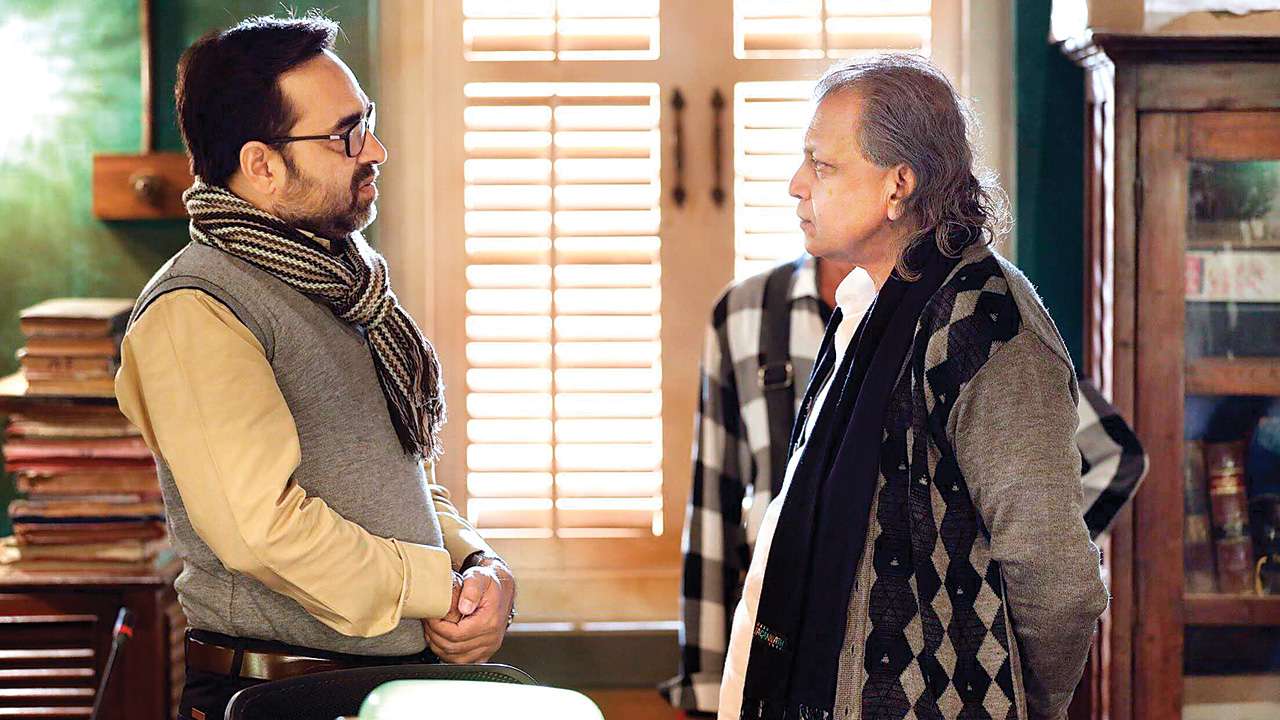
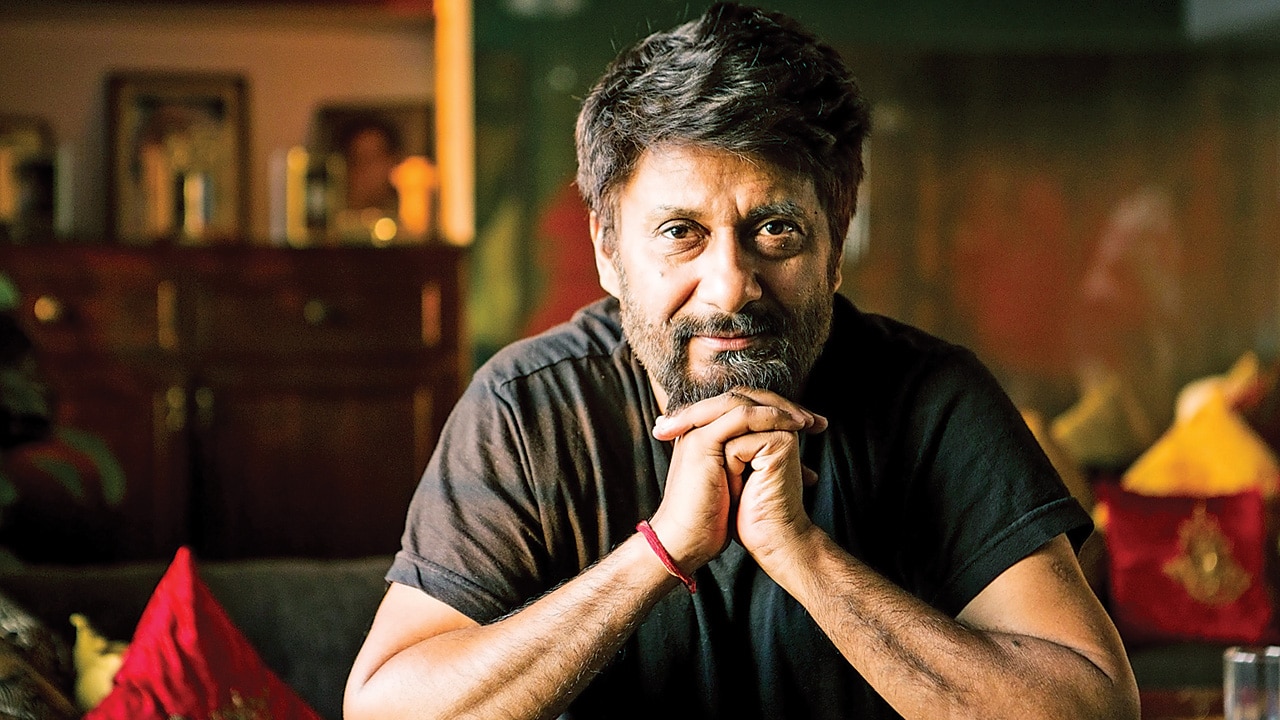
Not only Mahatma Gandhi, October 2 is also freedom fighter and former Prime Minister Lal Bahadur Shastri’s birth anniversary. To celebrate it, &pictures is all set to premier The Tashkent Files, which is based on the life and the circumstances surrounding the mysterious death of the nation’s second PM. “I’m happy that for the first time in the history of India, apart from Gandhi ji’s films, something different will be premiered on television. Watching this movie will also give facts that haven’t been clear to the new gen. Shastri ji’s life is what the youth should watch. They will know what type of India he wanted,” says director Vivek Agnihotri.
Ask him what prompted him to make a film on Shastri and he says, “I wanted a subject that was not touched by anyone. Moreover, it was a topic no one had explored because of the controversy surrounding his death. When a country’s government is involved in something, no filmmaker tries to make a film on it. It took me four years to make this movie, we filed a RTI, and also went through all the CIA, KGB and parliamentarian records. I wanted to make an honest film.”
Vivek feels The Tashkent Files should have been India’s Oscar entry. “It truly deserves to be one of the top runners but due to politics, it couldn’t make it,” says he.
About his upcoming projects, he stated he’s making another film that’s controversial. “The Kashmir Files is based on the mass exodus of Kashmiri pandits from the valley in 1989-90 due to militancy. I am also working on a web-series, based on controversial Supreme Court cases. I am penning a book called India For Sale,” shares the filmmaker.
The Tashkent Files will premiere on &pictures today at 12 pm.
Oscar fame robs UP ‘Padwomen’ of jobs
8:53 AM

A file picture of Sneha and Suman being felicitated after the film won an Oscar
Sandeep Rai (THE TIMES OF INDIA; June 2, 2019)
Kathikeda to Delhi is a 120-km journey which not many from the rough village in the heart of western UP make. In February this year, two women from there flew to Los Angeles, the place that cradles Hollywood—the heart of America’s glamour world.
Sneha and Suman had just starred in ‘Period. End of Sentence’ which won an Oscar and they thought it was the beginning of a fairy tale.
The documentary was filmed on the sanitary pad-making unit in Kathikeda and spoke of the taboo associated with menstruation in rural India.
Set up in 2017, the “factory” had begun with negative comments from villagers. Some made fun of the people who worked there while others said the work was “dirty”.
But the Oscar changed all that. Soon after news of the recognition broke, men and women from neighbouring towns and villages trooped into Kathikeda, congratulating those that made the anonymous village famous around the world. That continued for days.
If the two women, who are relatives, at the centre of the story are to be believed, the Oscar has changed their lives yet again. They told TOI on Saturday that they are in deep financial crisis and that they have lost their jobs at ‘Fly’, where the pads that are sold for Rs 20 per packet are made.
“My husband works as temporary guard at a local bank’s ATM facility and is unable to meet monthly expenses of the family,” 28-year-old Suman said.
Sneha, 22, who in the film talks passionately about her desire to become a cop, added that she will have to leave the institute where she’s taking coaching classes that will equip her to join the Delhi Police one day. “There’s no money now,” she said.
Each woman at the unit is paid Rs 2,500, which was Rs 2,000 till February and was increased after the Oscar nod. ‘Fly’ was set up after funds were raised by English teacher Melissa Berton and 10 girl students from a school in Los Angeles to donate a padmaking machine in collaboration with NGOs Girls Learn International and Action India.
According to the two, ‘Fly’ asked them to leave because they refused to hand over the money — ₹1 lakh each — that former UP CM Akhilesh Yadav had rewarded for their achievement. Another ₹50,000 each had come from the state’s governor Ram Naik. “The NGO that runs the unit says that because the film revolved around its facility and initiatives, the money belongs to them,” said Suman.
Devender Kumar, project manager for Action India, Hapur, refuted the charges. “The reality is something else,” he said. “After returning (from the Oscars), they got a grand welcome and were so engrossed with the festivities that they began neglecting work.” He added, “Suman and Sneha accepted the money and were hence asked to deposit it for the cause that made them so famous. Ours is a small unit of six people. When two don’t work, it hurts business. Despite repeated meetings with them, they showed no inclination to make amends.”
Oscar win is a validation that I am headed the right way-Guneet Monga
8:18 AM

Valiant Versova producer Guneet Monga on bringing home Oscar for Period. End Of Sentence in the Best Documentary (Short) category
Mohar Basu (MID-DAY; February 26, 2019)
A decade after A R Rahman brought home two golden statuettes for his work in Slumdog Millionaire (2008), producer Guneet Monga made India proud at the 91st Academy Awards as Period. End Of Sentence bagged the Oscar for Best Documentary Short Subject. Hours after the win, the co-producer stole a few minutes from the Netflix after-party to speak to mid-day.
"I am on top of the world, I can't describe it in words. We hoped for this win. We were crying, shivering [as the award was announced] and A R Rahman was sitting in the row ahead of us. It was a huge moment."
Conceptualised by a bunch of school kids and their producer-teacher Melissa Berton of Oakwood School in Los Angeles, the documentary tackles the stigma associated with menstruation in India. Monga helped the crew shoot the film in Hapur, India.
"The documentary follows the journey of a girl and her village where they set up a pad-vending machine. It is a commentary on how the girls' lives change in the area. There is a lot of Goddess energy associated with this film. Rayka Zehtabchi reached out to me as they couldn't navigate through India."
Monga, whose understanding of cinema is evident in the acclaimed projects she backs, says the victory only urges her to do better. "It is a validation that I am headed the right way."
Sneha Kumari, one of the women featuring in the documentary, can hardly contain her joy: "Mere liye ye film ka jeetna zaroori tha. Humne Hapur walo ko nahin bataya. Unke liye thoda suspense hai."
Co-producer Mandakini Kakkar says the film has piqued interest worldwide: "We are flooded with requests of people wanting to meet the girls who made this film happen."
By women, for women
"People in India and Los Angeles have supported this film. Mandakini [co-producer] and Guneet [Monga] helped us pull through the film. Women shouldn't be deprived of opportunities for their biology. We tried to bring focus on this issue."
- Rayka Zehtabchi, director


After we won the Oscar, I couldn’t stop crying and shivering for 30 minutes-Guneet Monga
8:14 AM

Rachana Dubey (BOMBAY TIMES; February 26, 2019)
 Although it wasn’t India’s official entry to the 91st Academy Awards held in Los Angeles, the documentary Period. End of Sentence, bagged the Oscar in the Documentary Short Subject category, sparking off celebrations and conversations in the country.
The film is directed by Iranian-American filmmaker Raykar Zehtabchi and producer Guneet Monga is one of the key figures behind this bold film on the stigma of menstruation. The 26-minute film follows girls and women in Hapur in Uttar Pradesh and their experience with the installation of a pad machine in their village. “I’m not crying because I’m on my period or anything. I can’t believe a film on menstruation won an Oscar,” said Zehtabchi in her acceptance speech.
BT spoke to Guneet Monga about the win. Excerpts from the interview...
It must be overwhelming to win an Oscar for the documentary, Period. End Of Sentence. What was that moment like when your film was announced as the winner?
It was overwhelming. I couldn’t stop crying and shivering for 30 minutes. My entire team from India is here with me. Sneha, one of the key speakers in the film, was with me when we were declared winners. Mandakini Kakar, my associate who became the voice of the film, did a lot of the ground work with the team. We were screaming so loud that I eventually tweeted to A R Rahman apologizing if we were too loud because he was sitting right ahead of us. This film has been fundraised by school girls from LA and it has been made to support the conversation around menstruation and hygiene. It’s very difficult to produce such a film because it requires a lot of muscle and a lot of thinking, conviction and determination. I’m extremely happy for Sneha. She wanted to make her family, particularly her father proud of her, by becoming a cop in the Delhi Police department. She said, “Mujhe to lagta hai maine aaj hi wo kaam kar diya.” I just wish today that her dream to become a cop gets fulfilled really soon. She’s extremely hardworking.
Over the last few years, the world has started talking about women’s issues and taking cognisance of what they have to say. Your win seems to be perfectly timed, too.
Yeah, there couldn’t have been a better time for this, particularly from India’s point of view. Now, women are loud and clear about what they want to say and they are being heard. Of course, women have been saying these things all along. Like the subject of this documentary. We have been talking about menstrual hygiene for a very long time. Periods are not something new. Action India’s head Gauri Chaudhary made a valid point when we were on stage that this will now get men talking about the subject. We can’t do it alone. It needs everyone’s contribution. The win is relevant today because we’ve put women’s struggles on the map, we’re trying to break the glass ceiling. Women have been the significant others for way too long. Their voices have often been suppressed. This Oscar win will help us make a difference in this respect.
How did you put this project together and how long did it take?
Gauri Chaudhary has been working on creating awareness around menstrual hygiene for about 40 years, but this film was born out of Melissa Berton’s effort. She’s from Oakwood School in LA. The project started off seven years ago when she was trying to donate a pad making machine for which she got in touch with Action India. Gradually, she felt that making a movie could help the conversation reach more women and men. It took the entire team three-four years to start a campaign, pool in the funds, get the logistics in order and crack the documentary.
Arunachalam Muruganantham, a part of your documentary, also inspired Pad Man featuring Akshay Kumar. Did that at any point become a deterrent because both films were talking about the same issue in different formats?
Not at all, in fact we could do with another 100 films around this subject. Pad Man just normalised the conversation around menstrual hygiene. More films will mean more conversations and that will help in a big way. Our film is about women — telling their and other womens’ stories and struggles with this taboo. That makes the narrative powerful. There were women working on our project, on camera and off it. If you see the film, you will realise that women from Hapur feel so liberated now, and the film has won hearts because of that. It has the women’s point of view from the grassroots, from women who have come out of their shells and begun to change things around them. Our previous generations fought so many other taboos; we need to fight the taboo around menstruation. Periods can’t stop girls from pursuing education or doing any other work. Sadly, there are so many schools were they don’t have proper toilets because of which girls slowly stop coming in and then drop out completely. We also have to stop joking and making remarks about periods. ‘Why is she PMSing?’. Periods are as normal as any other function of the body. People need to get that, once and for all.
You haven’t associated with a mainstream Hindi film for a while now. Do you think that decision has paid you dividends?
I have been challenged and questioned for all my choices so far. I have also been told that whatever little that I have achieved is by fluke. It might not happen again. It’s not been an easy journey for me and so I am glad that I have gotten this far. This win is as relevant as it gets.
India has always yearned for an Oscar. You entered your film independently and saw it through. What do you think worked in your film’s favour?
I have spoken about how flawed our system of nominating films for the Oscars is on several occasions. It needs to change. You have to send films to festivals. Period. End of Sentence was screened at so many festivals, it participated in competitions and won at eight festivals. That built credibility. You can’t wake up one morning and decide to start your campaign for the Oscars. You can’t send a film just because a bunch of people like it. It’s a year-long exercise. You have to weigh the film on its strengths and the credibility it has built. It’s important to find the right machinery to get your film noticed at the right places. You have to select a film that has legs to walk in America. The film found overwhelming support once it was put out there for everyone to see. The team, the story, the women in the film — it all worked in its favour.
Indian cinema and filmmakers have always had the desire to win an Oscar, but none of our official entries have brought home the honour. Today, a film that was not officially backed by India has managed to do just that. How do you think people will perceive this?
Back in the day, I wrote to so many people wanting to show the film to them, including the PMO. But that’s in the past. We make simple films and take them where they will be appreciated. Today, we hope that India embraces this film and we can show it at colleges and schools. We want to involve the ministries of education and health and get this documentary out to as many young people as possible.
Does the Oscar victory put the pressure on you for your future projects?
Not at all, you show up every morning and keep at it. Who thinks about the rest? We set out to make this film with integrity and passion. It’s such a fantastic collaboration with so many people. Stacey Sher and Lisa Taback have taught me what it takes to get a film out there. They and many others have supported us to put India on the map. The academy recognised that effort and the fact that the time is so relevant for this film.
--------------------------------
MUMBAI MIRROR (February 26, 2019)
Guneet Monga, one of the executive producers of the documentary Period. End of Sentence, is elated with the film’s Oscar win in the Best Documentary Short Subject category. Directed by Rayka Zehtabchi, it is about the women of Hapur, Uttar Pradesh, and how low-cost sanitary pad machines changed their lives. Recounting the win, Guneet says, “The moment the first alphabet of the title was announced, we started screaming and crying. All I remember is A R Rahman was sitting in front of us.”
Guneet wore a Tarun Tahiliani dhoti-saree for the big day. “I always wanted to wear a saree to the Oscars. Post the ceremony we were at an after party till 12 am. It’s been a long day and we have worked hard on this film, so the celebrations will continue even after we get back to work.”
Speaking to Mirror earlier (January 24), Guneet had revealed that the idea for the film had come about when a group of 12-14-year-old girls from a Los Angeles school raised $40,000 to help pay for pad machines. They had read about girls in Indian villages who have to skip school during their menstrual cycle, and decided to help out.

Oscar win for Period. End of Sentence puts little known UP village Kathikeda on world map
8:11 AM

Ishita Bhatia (THE TIMES OF INDIA; February 26, 2019)
Kathikeda (Hapur): Tucked away in a corner of Hapur district in UP, some 120km from Delhi, Kathikeda was an obscure village - till Monday. As news spread about the film ‘Period. End of Sentence’ winning an Oscar for best documentary, people from adjacent villages began arriving to celebrate.
The movie has been filmed on the sanitary pad-making unit here. Ironically, when the unit was set up in 2017, it had led to negative comments from villagers. Some made fun of the people employed here while others said the work was ‘dirty’.
“I dropped out of school after Class IX due to lack of funds. I always wanted to complete my education and become a singer. However, I could not contribute to the family’s income. Then, the unit was started. At first, I told my family that I used to make diapers for kids; I told them the truth much later. They eventually allowed me to continue working, although they protested at first. I get Rs 2,500 a month now and I am saving the money to complete my education and fulfil my dream of becoming a singer,” said 18-year-old Ruksana.
She is among the several whose dreams have got wings thanks to ‘Fly’ sanitary napkins made here. Currently a workplace for seven women, the unit operates from the house of Suman, who was in Los Angeles for the Oscar ceremony on Monday, along with the film’s lead figure, Sneha.
--------------------------------
Ishita Bhatia (THE TIMES OF INDIA; February 26, 2019)
Things have changed in the village of Kathikeda in Hapur district – for the better – after a sanitary pad-making unit was set up and the movie ‘Period. End of Sentence’ was filmed. The village women, who did not know about sanitary napkins and used cloth during their periods, now use pads. The pads are now distributed from door to door. They are also made available at shops, priced at Rs 20 for a packet of six. Each woman at the unit is paid Rs 2,500 – which was Rs 2,000 till last month, and was increased only after their movie got nominated for the Oscars.
Rakhi, the manager of the pad-making unit, said, “Earlier girls used to drop out of school once their periods started because it became embarrassing for them when their clothes got stained. I was so shy that I couldn’t even tell my father that I worked at a pad-making unit. My mother had to tell this to him. But now, menstruation is no more a taboo.” She has completed her BA and plans to become a teacher. The other women working at the unit include Sushma (32), Preeti (20), Neeshu (18), and Arshi(18), apart from Sneha and Suman who were in Los Angeles on Monday.
The villagers were shown the movie on a projector by the filmmakers some months back. “When we used to talk about menstruation or sanitary napkins, people would abuse us and call us ‘bad women’. But when the movie was shot and interviews taken even from the men, people opened up about the issue,” said Shabana Khan, area coordinator (Hapur), Action India NGO. Now, another pad-making unit has been set up in Sudhna village of Hapur. The unit was set up after funds were raised by an English teacher Melissa Berton and 10 girl students from a school in Los Angeles to donate a pad-making machine in collaboration with NGOs Girls Learn International and Action India.
With the movie winning an Oscar, the village has become world-famous, said Poonam, Sneha’s cousin. “Earlier the relatives of my in-laws used to ask where was Kathikeda. Now we can pick up any newspaper and show them on page 1.”
Ashvin Kumar re-releases Oscar-nominated short Little Terrorist in wake of Pulwama terror attack
8:06 AM

Little terrorist director Ashvin Kumar on re-releasing his 2005 Oscar-nominated short in wake of Pulwama terror attack
Mohar Basu (MID-DAY; February 25, 2019)
 Almost 14 years after Little Terrorist earned a nomination at the 2005 Academy Awards for Best Live Action Short Film, director Ashvin Kumar has re-released it on YouTube. The 15-minute drama, he says, is pertinent today given the political climate between India and Pakistan, following the Pulwama terror attack.
“We were set to release Little Terrorist during the Oscar week to mark the 15th anniversary of the film going to the awards gala in 2005. However, the events [that transpired in] Kashmir recently made us pause. Seeing the mindless assault on every voice of reason, we were advised not to proceed. A fear of backlash also prevailed,” says the director.
However, a rethink made him realise that he wanted to spread the film’s message of compassion among viewers. “Given the wave of violence and hostility that has seized the nation since, we reasoned if we don’t release it now, then when? What better time for a film that speaks about the triumph of empathy and compassion over hate and violence, to be made freely available to the public?”
The 2004 release traces a Pakistani boy who accidentally crosses the India-Pakistan border while playing cricket. The drama goes on to show his bond with a Hindu Brahmin who gives him shelter. “The film is about people who are divided by borders, but are essentially similar. It is about acceptance and peace,” says Kumar, whose next No Fathers In Kashmir is awaiting a Censor certificate since seven months.
I don’t believe in shoving feminist issues in anyone’s face-Rima Das
9:52 AM

Saptaparna Biswas (BOMBAY TIMES; February 24, 2019)
With an enviable record of three acclaimed films to her name, National Award winner Rima Das is the toast of the international filmmaking community. Her film Village Rockstars brought the Assam girl critical recognition and fame, but few know that direction was not always on her radar. Rima went from Chhaygaon to Mumbai with dreams of becoming an actress. However, rejection and a chance encounter with works of Satyajit Ray, Majid Majidi and Abbas Kiarostami gave her a new direction in life, quite literally. After making waves with Village Rockstars, which was India’s official entry to the Oscars 2018, and Bulbul Can Sing, which is currently earning praises at multiple film festivals, Rima has overcome gender disparity and language barriers to emerge as an influential name in the field of filmmaking. In a chat with us, she speaks about breaking the glass ceiling, why women should believe in themselves and what can be done to make Indian films Oscar-worthy. Excerpts:
‘MANY PEOPLE DIDN’T BELIEVE IN MY METHOD AND QUESTIONED MY APPROACH’
At the Berlin International Film Festival aka Berlinale, festival director Dieter Kosslick pledged for gender equality in film submissions by 2020, in addition to ensuring better gender representation. Speaking about the same, Rima says, “I can happily state that India was well represented by Zoya Akhtar, Udita Bhargava and my films. These were screened with other big names of international cinema. I think this pledge shows that there is a conscious movement to decrease the gender gap in the field of cinema. It will certainly encourage women to tell the stories they want to.”
For Rima, the journey to her first directorial was not a bed of roses. She hit a low point in her life before taking things in her hands. She shares, “Women must put more faith in themselves than others. In my school and college, I was always the best actress. But in Mumbai, the story was different. I was not accepted because of things like my accent, no film school background etc. I slipped into depression and resorted to watching world movies alone. However, that proved to be a turning point as it opened a whole new world to me. The films mesmerised me and direction took over. I realised that I wanted to create my own world, rather than being restricted to that of others. That is when I decided to tell stories from my native village through my characters.”
With her cousin Mallika Das’ support and a new DSLR camera, Rima ventured into filmmaking. “When I started my first film, Man With The Binoculars, there were many who did not believe in my methods and questioned my approach towards topics. By the second film, I decided to overlook all these hiccups and stuck to my stories that spoke of a dreamy-eyed village girl Dhunu (Village Rockstars) or the free-spirited Bulbul (Bulbul Can Sing), despite the lack of faith from people in my craft.” Agreeing that it takes a lot more for a female filmmaker to prove their worth, especially if the film is speaking about women from their perspective, Rima says, “See, I’m a woman who has grown up observing things around her. So, when I tell stories, the issues that women face in India naturally get highlighted. Having said that, I don’t believe in shoving feminist issues in anyone’s face. I’d rather present them subtly, through organic visuals, for better understanding. Things have to be believable to be taken seriously.”
‘THE WORLD NOTICED THAT A WOMAN CAN SINGLE-HANDEDLY MAKE GOOD FILMS’
Rima doesn’t regret the struggle and, in fact, calls it her ‘film school education’. “Since I do not have any professional training, I have had to pretty much learn everything through the process of filmmaking. I was handling multiple departments at the same time. It was tough yet liberating. With Village Rockstars and Bulbul Can Sing getting international recognition, I finally found my footing, and the world noticed that a woman can also single-handedly make good films. Going ahead, I will collaborate with big production houses, mainstream filmmakers and more. In a way, the real struggle will begin when I do that,” says Rima.
‘VISIBILITY IN THE US IS KEY FOR AN OSCAR NOMINATION’
Though Village Rockstars couldn’t make it to the Best Foreign Language Film category at the Oscars, Rima refuses to get bogged down by the setback. Instead, she focuses on what more could’ve been done. “I think we need more time to market and promote our films. Visibility in the US is necessary. Members of the guild need to watch the movie. There are around 5000 members who vote for the top nominations after that. A total of 87 films from all over the world were in the category, including films like Roma and Shoplifters, which had ample visibility. We got only two months to campaign and promote Village Rockstars and that’s not enough,” says Rima, adding that support from the government and private firms is essential for any Indian film to make it to the Oscar nomination list.
‘SATYAJIT RAY SHOWED ME THE WAY’
When people drew parallels between Village Rockstars and Satyajit Ray’s Pather Panchali at a film festival, Rima was overwhelmed. “They said that I have a realistic and organic approach, just like Ray. I would say that Ray is the master who showed me the way. And there’s still a long way for me to go,” she concludes, hoping for better collaborations and stories to come forth in the near future, and this time, not just from Assam.

For Alfonso Cuaron fans visiting Mexico, all roads lead to ‘Roma’
7:08 AM

A woman walks by a day care centre in the neighbourhood where the Netflix film ‘Roma’, with 10 Oscar nominations, was filmed in Mexico City
THE TIMES OF INDIA (January 28, 2019)
The success of ‘Roma’, which garnered 10 Oscar nominations this week, has made a star out of one of the movie’s key protagonists: the Mexico City neighbourhood that gave it its name.
Directed by Academy Award-winning filmmaker Alfonso Cuaron, who sumptuously shot it in black and white, the movie is set in the 1970s in the Mexico City neighbourhood where he grew up, La Roma — today a magnet for filmbuff tourists seeking the modern-day, full-colour version.
The neighbourhood Cuaron depicts as an upper-middle-class bastion of spacious art-deco houses and fancy chrome-clad cars fell on hard times when it was devastated by a 1985 earthquake that killed more than 10,000 people in Mexico City. But its central location and leafy streets helped bring it back, and today it is a hipster paradise of trendy bars, cafes, restaurants and shops.
One of those streets in particular has drawn an unprecedented flow of tourists since ‘Roma’ came out, according to residents: Tepeji street, where Cuaron grew up and meticulously recreated his boyhood home for the film. Outside number 22 Tepeji, a newly installed metal plaque informs visitors: “This is where ‘Roma’ was filmed, 2016-2017.”
“We loved the movie. It captivated us from the first moment. We decided to come see the house in person,” said Esteban Alvarez, 27, a musician from Costa Rica who was making the pilgrimage with his girlfriend. They have joined a stream of tourists hunting for locations where the highly autobiographical film was shot.
There is even a guidebook for people trying to retrace the film’s steps, while Conde Nast published an article this week to help tourists find “Mexico City Airbnbs that Could Have Been in ‘Roma.’” ‘Roma’ is an intimate portrait of the two women who raised Cuaron: his nanny, played by breakout star Yalitza Aparicio, and his mother, played by Marina de Tavira — both up for Oscars.
I want Hapur girls to walk the Oscars red carpet-Guneet Monga
8:12 AM

Guneet Monga ecstatic as her documentary is in the running for an Oscar
Natasha Coutinho (MUMBAI MIRROR; January 24, 2019)
 Guneet Monga is “over the moon” since learning that her documentary short on mensuration, Period. End of Sentence, has been nominated for the 91st Academy Awards. The film features young girls and women from Hapur in Uttar Pradesh and talks about how low-cost sanitary pad machines impacted their lives.
One of the many executive producers, an elated Guneet told Mirror that late last year they learnt that they had made it to the top 10 in the Documentary Short Subject category. On Tuesday, they were informed that they are among the top five nominees. “I am also an Academy member and I get to vote too but not in this category,” she was quick to point out.
Guneet admits that in LA there have been several screenings of the shortlisted films, but she hasn’t had a chance to watch them. “But I will do that now,” she asserts, going on to recall her previous Oscar outing, an eventful one. “In 2010, I had a short film, Kavi, in the running for an Oscar and really wanted to attend the ceremony but had no money. The film was based on a kid from a slum and the government at the time, in particular Prithviraj Chauhan, the then Science and Technology minister, helped me get a visa and tickets. My stay in LA was sponsored by a travel company.”
This time, she wants to take the girl from the NGO, Action India, who facilitated the project, and Sneha, a girl who features in the film who is funding her training for Delhi Police by selling pads. “I want them at least on the red carpet,” she states.
She goes on to inform that some 12-14-year-old girls of Los Angeles’s Oakwood School through bake sales, kickstarters and yogathons raised, 40,000 dollars. They had read that there are girls in villages of India who are unable to attend school when they have their periods and decided to fund a couple of pad machines. These machines in India are made by Arunachalam Muruganantham. “They got in touch with the NGO which works in Hapur. When we learnt this, we thought of making a film about how these machines can impact lives and become a larger movement,” she says. They hired an award-winning director Rayka Zehtabchi who has just graduated from film school.
Quiz her on how she came on board and she says the mother of one of the girls, Stacey Sher, has produced Quentin Tarantino’s films. “She reached out to me saying her daughter and her friends were trying to make the movie in India and if I could help. I met them and came on board to produce it from India,” she explains, saying her associate Mandakini Kakar, also a young producer herself, did a lot of the research and ensured the women featured in the film were comfortable on camera. “It’s also Mandakini’s voice asking the women questions.”
-------------------------
Shaheen Parkar (MID-DAY; January 24, 2019)
Guneet Monga was in Indore on Tuesday when she learnt that her production, Period. End Of Sentence, has earned a nomination in the Best Documentary Short Subject category of Oscars 2019.
As the congratulatory calls started pouring in, the producer celebrated by treating herself to golgappas. “I was in Indore to attend the wedding of Sneha Khanwalkar [musician] and Kanu Behl [director]. I did mooh meetha of all the guests by offering them paan,” laughs Monga.
A day later, she says the news has yet to sink in. “Last year, the film bagged several awards all over the globe. Now, this is the ultimate award ceremony,” says Monga, whose previous productions Gangs of Wasseypur (2012), The Lunchbox (2013), and Masaan (2015) have won acclaim at international film festivals.
The idea to make a film on the taboo that surrounds the subject of menstruation came from a bunch of school kids and their teacher, Melissa Bertin, at Oakwood School in Los Angeles. “When they learnt that girls in Hapur had to drop out of schools because of their menstrual cycle and the stigma associated with it, through the NGO, Action India, they decided to install a pad vending machine in the village.”
With barely a month to go for the ceremony, the producer wants the real- life heroes to be by her side on the big day. “I want them [girls from Hapur and Action India] to walk the red carpet. I have to start looking for sponsorships. Some do not even have a passport.”
Organising screenings of the film before the final voting on February 19 is also on the agenda.
India’s official entry Village Rockstars out of the Oscar race
8:01 AM

Rachana Dubey (BOMBAY TIMES; December 19, 2018)
Director Rima Das’ Village Rockstars, which was chosen as India’s official entry to the Oscars in the Best Foreign Language Film category, is out of the race. The Academy of Motion Pictures Arts and Sciences announced that nine films have advanced to the next round of voting for the 91st Academy Awards. Colombia’s Birds Of Passage, Denmark’s The Guilty, Germany’s Never Look Away, Japan’s Shoplifters, Kazakhstan’s Ayka, Lebanon’s Capernaum, Mexico’s Roma, Poland’s Cold War and South Korea’s Burning have moved to the next round of voting.
Village Rockstars, which was shot in Assam, revolves around children who lead a fun-filled life despite their adversities and had won the National Award for the Best Film, too. Filmmaker Ananth Mahadevan, who was among the jurors who selected the film as India’s entry to the Oscar, told BT, “I still stand by the selection we made. Rima’s film offered an improvised look at relationships and it belonged to a part of India that has seldom been explored before. I have always maintained that with respect to filmmaking, the world is miles ahead of us. Their concepts and execution is far superior. Village Rockstars was competing with Roma, which according to reports, is the Oscar favourite this year. Shoplifters was a favourite at Cannes. Village Rockstars came very close to being selected in the top nine and it lost out to some of the best works in the world.”
He adds, “We have to improve our standards in filmmaking. Unless we have the fire to stand at par with world cinema and until producers don’t step in to help, we will languish with mediocre stuff. It’s like, why aren’t we at par with the best teams in football? I am not too taken aback by the Academy’s decision, but I still believe that no other film from India could have represented us this year. Our best effort fell short and there is a bitter lesson to be learnt here. Rima has nothing to be disheartened about because her work was knocked off the list while competing with the best the world had to offer.”
Why should films backed by big studios be the only ones to go for Oscars?-Rima Das
8:49 AM

Rima Das, whose film Village Rockstars is India’s nominee for the 2019 Academy Awards, on why she doesn’t mind being an independent filmmaker
Kunal Guha (MUMBAI MIRROR; November 4, 2018)
“There were no natural disasters, we had fun,” says Rima Das, about the floods she experienced as a child in Kalardiya, 50 km southwest of Guwahati. “As a child, you looked forward to heavy rain and water all around. We would make rafts out of banana leaves to go to school, go fishing and sometimes, school would be shut too.”
It’s this childlike perspective that Das, 36, has tried to capture in her multiple National Award-winning Village Rockstars, which is India’s entry for the 2019 Academy Awards. Set in rural Assam, the film follows the story of a young girl who dreams of owning a guitar and forming her own band. Das says it’s a story that reflects her own dreams and aspirations. “Miracles happen. If you dream, they can be achieved,” says the one-woman-crew who wore multiple hats during the production — that of a director, producer, editor and cinematographer.
Das, who aspired to be an actress, considers herself to be an accidental filmmaker. When she arrived in Mumbai in 2003, after completing her masters in Sociology from Pune University and after clearing the National Eligibility Test (to pursue teaching like her father), it seemed her tinsel town ambitions would never take off. “I did a few plays at Prithvi, but I wasn’t getting the roles I wanted,” she says. “So I thought I would make a film and create a role for myself.” This is when Das came across the Canon 5D, “a small camera which offered cinematic results”. Her first “experiment” resulted in the short film Pratha (2009), which was well received on the festival circuit and gave her the “confidence to go ahead”.
A few years later, Das released her first feature Antardrishti (Man With The Binoculars), inspired by a friend who had purchased a pair of binoculars for his father in Kalardiya. The film, which was shot in Kalardiya, was completed in 2016. While Das was determined to make it to the front of the camera, she found being both an actor and director too much to handle. “I couldn’t focus on either and eventually direction took over.” Antardrishti was screened at Cannes in 2016, the Mumbai Film Festival and the Tallinn Black Nights Film Festival in Estonia the same year. “When I started out, people told me there are 10,000 films submitted for Toronto Film Festival and 12,000 films submitted for Cannes, who is going to watch your film? But we are here, right? People told me a women empowerment film won’t win a National Award. But here we are.”
The idea for Village Rockstars struck Das when she was filming Antardrishti and came across a group of children dancing with make-believe musical instruments to a tune playing from a loudspeaker. As the movie enters its fifth week in theatres, Das feels “it’s truly a regional film that has gone mainstream.”
But this isn’t the response she expected. “When I made Village Rockstars, it was, for me, a festival film. There is no background score, there are many layers and it is not a structured film. But the response was heartening.”
Das credits the festival circuit as an enabler, as it “helps [the film] reach out to a wider audience”. “I didn’t even think of various interpretations [of the film] that others pointed out during the one-on-one audience interactions.” To create a buzz around her Oscar contender, Das has acquired an agent in LA and plans to host screenings to build awareness and generate interest.
While Das has received Rs 1 crore from the Assam government towards her Oscar campaign, she agrees that being backed by a studio would’ve made things smoother. On the other hand, she isn’t entirely sure if it would allow her complete autonomy over her project. “A few [studios] who have approached me lately, say they will give me the freedom to do whatever I want… but I can’t say how it would be because I haven’t experienced it yet. Mine has been a different journey,” she says. “When I take money from other producers, I would have to be more careful and listen to them too.” But she also admits that lack of funds can be detrimental when lobbying for a film that hasn’t had an international release. “There are 87 films being entered in the Best Foreign Language Film category so people should know about our film too. Films like Roma (Spanish) and Shoplifters (a Japanese film which won the Palme d’Or at the Cannes Film Festival this year) are backed by big studios and can afford to spend over 10 crore to create visibility, we can probably spend one, but it’s OK. Why should films backed by big studios be the only ones to go for Oscars?”
I value every penny people have extended for Village Rockstars-Rima Das
8:12 AM

Rima Das, the National Award winning filmmaker, whose film has been chosen as India’s official entry to the Oscars this year, charts the journey ahead
Rachana Dubey (BOMBAY TIMES; November 2, 2018)
Filmmaker Rima Das is relieved that the government of her home state, Assam, has contributed Rs 1 crore to help her promote Village Rockstars in the US. The National Award-winning film was unanimously chosen as India’s official entry to the Oscars, 2019. It beat 27 films, including contenders from Hindi cinema and other languages, to bag the honour two months ago. Back then, Rima, in her interview to BT, had said, “As an individual, it will be very difficult for me to gather so much money on my own. My journey with Village Rockstars began five years ago. I have made it with my own money and travelled with it all over the world. Now that it’s gearing up to represent India, the country needs to step forth and help it get there.”
 Her plea was heard and the government of Assam, where the film was also shot, has contributed Rs 1 crore for her impending Oscar journey. More contributions, big and small, have also been made by individuals. Rima can’t thank the state government enough for their contribution. Manish Mundra, the producer of Newton, which was India’s entry to the Oscars last year, has also helped Rima with a handsome amount, though no one from mainstream Bollywood has stepped in to help her.
Rima says, “Promotions for the Oscar run is a very big deal and I am still figuring my way forward. Thankfully, I didn’t have to work too hard for the CM of Assam to grant the money. I value every penny and whatever little help that people have extended so far. My state was celebrating Village Rockstars’ selection for the Oscars. I met our CM and a couple of other ministers. Everyone has seen the film and they willingly came forth to help me.”
For Rima, the Oscar chase is unlike anything she has experienced in her journey across international festivals. With the money granted to her, she has hired a publicist and is seeking advice from some of her friends, who she met at international film fests. “We have hired a publicist. I have been travelling to festivals for three years now. I’ve found some genuine people who are guiding me for putting together a team that will help me publicise the film and cover some ground in the Oscar run. We are now looking at exploring other avenues for visibility in America. I’m paying everyone in instalments. Crowdfunding is not a cakewalk. People are chipping in. I am talking to corporates, too, but all this takes a while,” says the filmmaker.
Rima will head to Los Angeles on November 5 and spend two months there, promoting her film and screening it for the Oscar lobbyists. “People across the world have responded well to my film. So, I am hopeful that it will impress people at the Oscars, too,” she says. Rima had applied for visas for her child actors, Bhanita and Mallika, who headline the cast of her film. However, their applications were rejected. “I want them to travel to America and promote the film there. Their application was rejected for the lack of documents, but I will try again and hopefully, I will be able to fly them to the US, which will be great for the film’s visibility,” she explains.
The director, in the last two months, has not had time to breathe. She believes that every work of art has its own destiny, and though she panics sometimes, it always helps to be calm in every scenario. “I just hope we do our best,” she sums up.

Subscribe to:
Posts (Atom)