Showing posts with label 48th Toronto Film Festival. Show all posts
Showing posts with label 48th Toronto Film Festival. Show all posts
OMG 2 director Amit Rai's Dear Jassi wins an award at TIFF
8:32 AM

OMG 2 director Rai says his next Dear Jassi, which examines honour killing, won an award at Toronto film fest due to its universal theme of cultural estrangement
Mohar Basu (MID-DAY; September 19, 2023)
On Sunday, Tarsem Singh Dhandwar’s directorial venture Dear Jassi shone bright at the closing ceremony of the 48th Toronto International Film Festival (TIFF), winning the Platform Award. This time around, Dhandwar has trained his lens on the issue of honour killing in India through the Pavia Sidhu and Yugam Sood-starrer. The director, along with writer Amit Rai, drew inspiration from the 2000 honour-killing episode of Indo-Canadian beautician Jaswinder Kaur Sidhu, who was murdered by assailants following the orders of Sidhu’s mother.
Telling such a story is never easy. Rai, whose last offering OMG 2 worked its charm at the box office, says authenticity was crucial when writing Dear Jassi. “A story of this nature has to be authentic to the T—from the writing, to the costumes. For me, it was refreshing. OMG 2 and Dear Jassi belong to two different milieus altogether. This film is international in its making, while its story is universal,” he says.
Dear Jassi revolves around Indo-Canadian Jassi, who encounters rickshaw driver Mithu while visiting her extended family in Punjab. As the two begin exchanging affectionate letters, they fall in love, not realizing the tough road that lies ahead. Rai, however, takes objection against terming it as a movie about honour killing.
“It’s a story of cultural estrangement. When people from India move abroad, they want to create a microcosm of what they remember of their culture. But when the kids grow up in an American/Canadian world, home feels like a culture shock. We’ve played it in a Romeo-Juliet way, but amped up the dark element. It’s a powerful story at its core.”
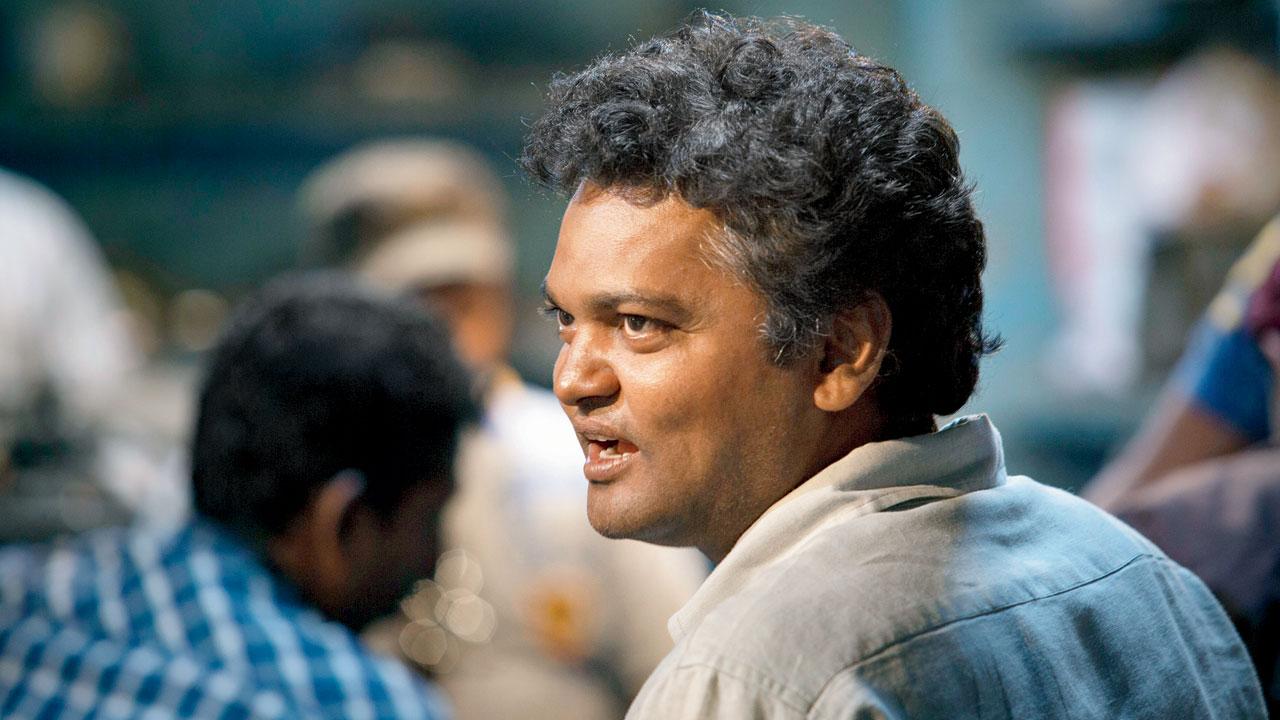
The arranged marriage programme felt like ragging in colleges-Jayant Digambar Somalkar
8:44 AM
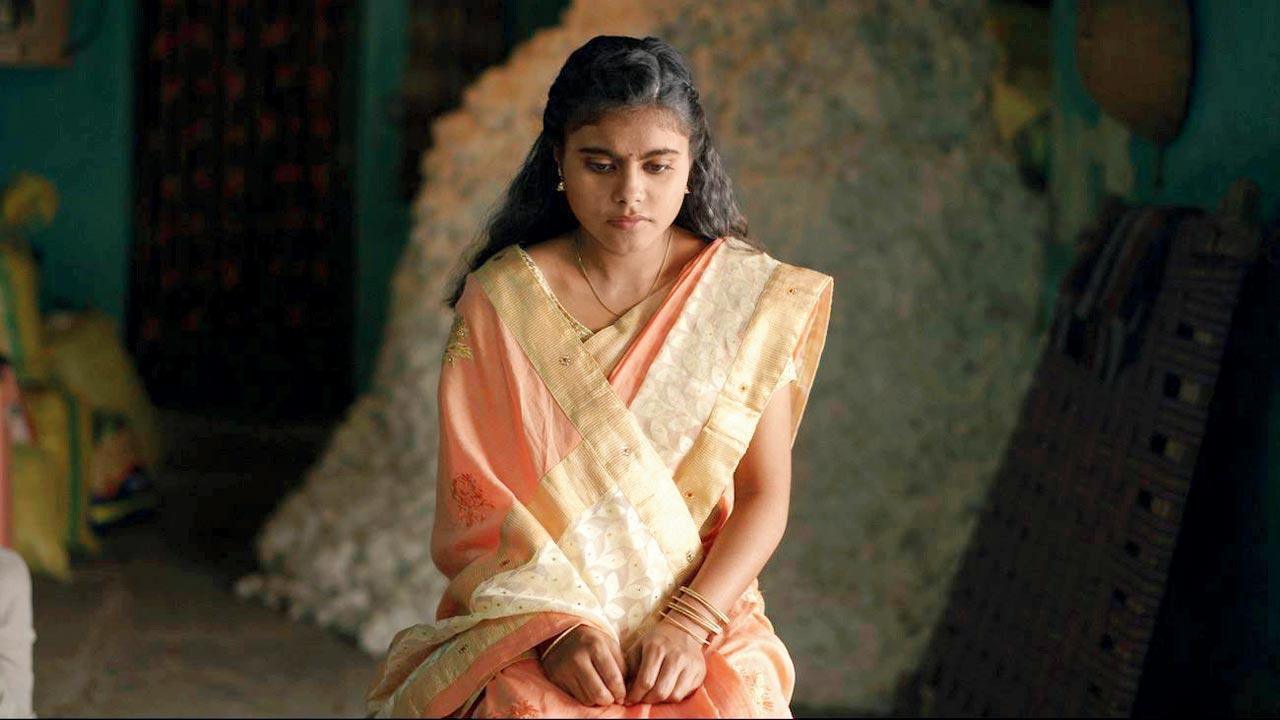
A Marathi debut feature set to premiere at the Toronto International Film Festival this week examines deep-rooted social evils through the lens of match-making traditions in rural Maharashtra
Sucheta Chakraborty (MID-DAY; September 3, 2023)
“It's called a ‘kanda-poha’ programme in Marathi,” Jayant Digambar Somalkar tells us over a video call, referring to the “match-making” ritual where potential suitors come to gauge young girls for prospective marriages. The popular Maharashtrian snack, which is typically served in such situations, has come to stand for such formal meetings for arranged marriages. It is this repeated ritual that a young girl is put through in a village in Maharashtra, throwing up deep-rooted issues of colourism and patriarchal prejudices in our society, that forms the subject matter of Sthal (A Match), Somalkar’s writing and direction debut set to premiere at the 48th Toronto International Film Festival starting this week. Sthal is the only Indian film selected in the festival’s Discovery Programme this year.
Somalkar, who shot the film in his native village of Dongargaon in the Chandrapur district of Maharashtra, explains that as the youngest in the family with two sisters, he has witnessed several such match-making programmes growing up. It was at one such event, that he attended with a cousin, that the idea for the film first came to him.
“I started thinking about what the girl must be feeling, while surrounded by a group of men asking her questions. I have an engineering background and am familiar with rituals of ragging, and this felt just like that,” he says.
Somalkar, who has in recent years co-written the Amazon Prime Video show Guilty Minds, calls the film a passion project filled with personal connections and memories. Produced by Dhun, the production house run by Somalkar, his wife and fellow director Shefali Bhushan, Karan Grover and Riga Malhotra, Sthal features locations from the director’s own childhood as well as members of his village and extended family.
“I was born in the house where we shot and studied at the college that our protagonist, Savita, attends. I still remember taking an exam sitting on the third bench in the same classroom where we shot scenes for the film,” Somalkar recalls.
The film includes a cast of all non-actors, hailing from his native village. The people of Dongargaon speak a dialect of Marathi known as Varhadi, and he explains that he wanted the characters of his film to be able to speak it fluently.
“I wanted to work with non-actors because I wanted the film to bear a real and authentic look. The character of the girl’s father, for instance, is played by an old friend while her mother is played by a cousin who runs a flour mill in the village. I noticed the nuances and mannerisms they had and wanted them to retain those in the film. I didn’t have to direct them to get into the skin of a character as they already were those people in real life. There is a lot of talent there, it was just a question of discovering it. I felt that if I could come to Mumbai and accomplish something, they could too,” he says.
But, he adds, since these individuals had never faced a film camera, they had to be familiarized with the technicalities. “They managed the wide-angle shots but for the close-ups, we had to guide them as to where to look, as they would get too conscious.”
For Shefali Bhushan, working with a shoestring budget and being the producer on set in charge of ensuring that the film was completed within the resources that they had pooled, not to mention the unpredictable circumstances of working in a village where no film had been shot before, and where no replacement crew could be arranged for in case of a problem, proved a major challenge. “My director doesn’t like to say cut. He just goes on rolling and rolling,” she laughs.
“So I was the one having to worry about the fact that the hard drives might run of out space and that it would take very long for another set of hard drives to arrive from Mumbai. These are things I’ve never worried about earlier.” It was also important not to interfere with the director’s vision, she adds, which was yet another challenge for a fellow director like her who was on the sets in the role of a producer.
As Somalkar’s wife shooting in his home village, Bhushan’s personal and professional roles saw a clash too. “It is my sasuraal in a sense and they’ve never seen me in my professional avatar. I was dressing, behaving and talking differently. They’re not used to seeing women in any sort of position of command, especially like a producer. So, some of his relatives would call me ‘Shefali Madam’, and it was really awkward for me because I call them tai and dada,” she tells us, pointing out that there were other sensitivities to be handled too, because they were shooting in people’s houses, many of whom were relatives and acquaintances.
She goes on to narrate how, during the shooting of a scene in the local college, parents of students who were in the scene started showing up in the evening, livid that their children still hadn’t returned home. “There was this one parent who was really mad and when I tried to talk to him, he just yelled ‘shut up!’ There were all kinds of things to be handled, which was a very new challenge for me, because I’d never been on that side of things.” she laughs.
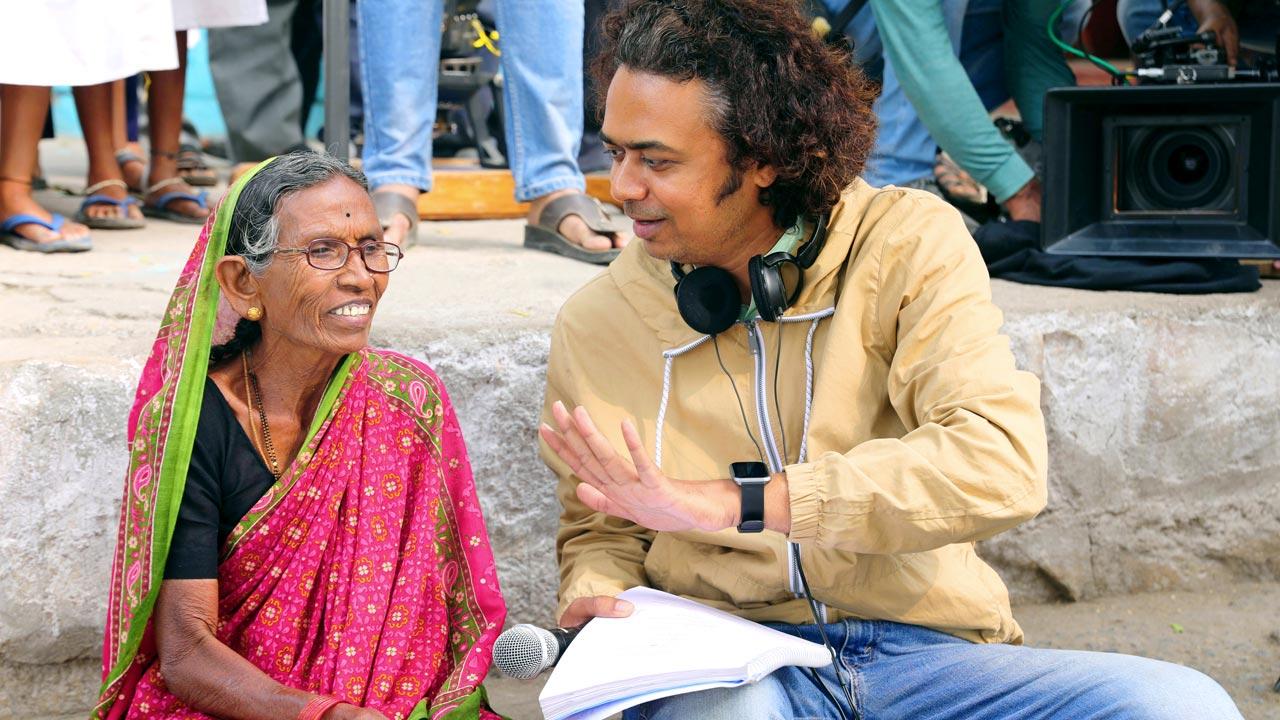
Jayant Digambar Somalkar who shot Sthal in his native village of Dongargaon in the Chandrapur district of Maharashtra cast family members and villagers to retain the authenticity and rawness of the place
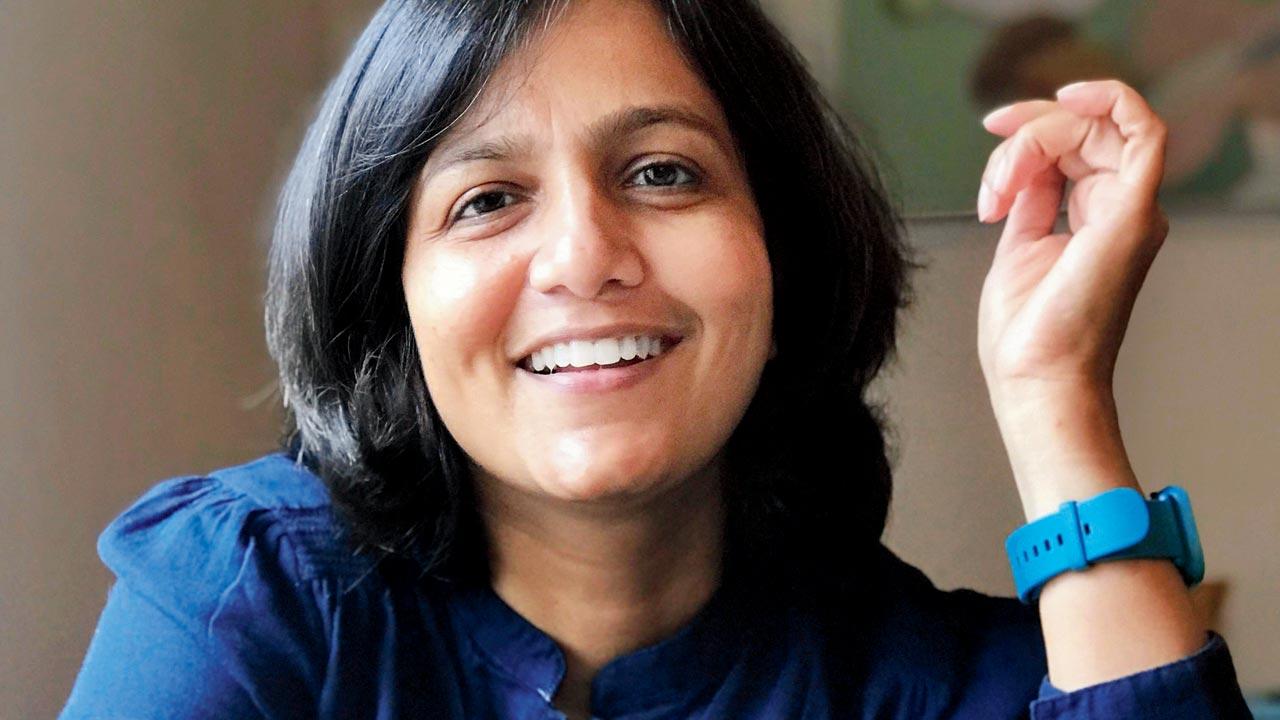
Shefali Bhushan
Hollywood strikes to take glitz off film festivals, kill movies’ Oscar buzz
8:05 AM

NYT | THE TIMES OF INDIA (July 17, 2023)
With summer movie season at its midpoint, Hollywood typically begins to turn its gaze toward the fall, when a trio of major film festivals acts as the unofficial kickoff to Oscar season. But now that SAG-AFTRA and the Writers Guild of America are both on strike, could a protracted battle between the unions and the studios cause those fall launchpads to fizzle?
Though the writers’ strike, which began May 2, didn’t have much of an effect on the Cannes Film Festival that month, the actors’ strike that started Friday may significantly reshape coming fests in Venice, Telluride, Colorado, and Toronto. That’s because SAG-AFTRA is prohibiting members from promoting any film while the strike is on, an across-the-board ban that includes interviews, photo calls and red-carpet duties. Without those appearances, festivals will be sapped of the star power that is invaluable to raising a film’s profile.
The first event that will probably be affected is the Venice Film Festival, which begins its 80th edition on August 30 with the premiere of the sexy tennis comedy “Challengers,” starring Zendaya. Venice has lately rivaled Cannes for glamour and headlines, so the loss of actors would be a big blow. The festival will announce its full lineup on July 25, and buzz suggests it could include highly anticipated films like Bradley Cooper’s Leonard Bernstein biopic, “Maestro”; Sofia Coppola’s “Priscilla,” about the relationship between Elvis Presley and his wife, Priscilla; “The Killer,” a David Fincher thriller starring Michael Fassbender.
The Telluride Film Festival, which runs September 1-4should be less stricken by the absence of stars: That intimate Colorado gathering is a favourite of famous attendees because they’re not required to do photo ops or media blitzes.
But the Toronto International Film Festival, beginning September 7, is a heady 10-day affair filled with red carpets, portrait studios and press junkets that will all shrink if actors are forbidden to attend. There is a workaround, but it’s a slim one: Duncan Crabtree-Ireland, the SAG-AFTRA negotiator, said that “truly independent” films able to secure interim agreements with the guild could allow their stars to do media duties.
Still, that’s a proviso more likely to spare the indie-focused Sundance Film Festival in January rather than fall festivals, where the biggest titles tend to hail from major studios. And if the SAG strike continues, it will be more than just festivals that feel the pinch.
A months-long strike would hit the awards-season ecosystem with its toughest test since Coronavirus: If stars can’t attend ceremonies, could the events be held at all? (At least when these things were on Zoom, the nominated stars showed up.) Post-pandemic, prestige films need all the help they can get at the box office. If they can’t be sustained by awards chatter and media-happy movie stars, studios could opt to move some more vulnerable year-end titles to 2024. Will a deal in this bitter battle be reached in time to save awards season?
Even if both sides can compromise before the televised ceremonies begin, one change is likely to still be felt: Don’t expect the usual list of studio executives to be quite so effusively thanked in acceptance speeches.
Subscribe to:
Posts (Atom)